
Home » Harm (Page 6)
Category Archives: Harm

Fighting the Tide or Following the Current?

This week’s blog is a reflective piece that will, I think, resonate with some of my ‘Outsiders’ students and perhaps with criminologists more broadly. It concerns the nagging tension between being a reluctant capitalist subject and a critical criminologist, more specifically between the roles of consumer and critic. Whilst criminology undoubtedly possesses transformative potential, particularly in its critical and ultra-realist forms, some sections of the discipline and arguably some, but certainly not all, of its proponents sit comfortably within the very structures subject to criticism during the ‘working day’. Indeed, we (and I include myself in this) hold the world to rights from 9-5 Monday to Friday then disavow the many harms we so vehemently lecture/write about whilst indulging in conspicuous consumption on weekends; fitting neatly into the circuitry of consumer capitalism.
Whilst I resolutely resist the drive to mask the fallout of free-market capitalism by not giving to charity, which is, as Žižek (2009:19) notes, the quintessential “humanitarian mask hiding the face of economic exploitation”, I am guilty of indulging a range of consumer impulses. It would be nice if this dilemma was as simple as being a hypocrite, something I could rectify by having a strong word with myself. Unfortunately, the reality is that this reflects a tension that emerges from occupying a social terrain that requires a dual identity and one within which the risks of protesting too ardently are severe.
Yet rather than serving as a vestigial port from which to take critical aim at pressing issues the university sector, as an industry, compounds this tension further. For criminology in particular the irony is painful. We occupy positions in what is now a heavily marketised sector; one that dictates the state of play based on the logic of the market, on catering for elusive customers rather than educating students. The irony of course is that, as criminologists, we are employed to research, write and lecture about criminalised and un-criminalised harms that pervade the social world by a sector whose neoliberal institutions have no qualms about inflicting severe harm on those who work and study within them. Universities seem to have become marketised, profit seeking institutions that pay lip service to helping communities whilst adopting the very structures that cause severe harm to society.
Perhaps the university can no longer be seen as a place from which to do some good. Or perhaps there is still a great deal of good that can be done from under the neoliberals’ nose. Either way, we cannot retain a blind and baseless optimism that refuses to acknowledge and tackle the many harms of neoliberalism, including those inflicted by the university sector. Rather, we should maintain an ultra-realist commitment to “explaining the world as it is, warts and all” (Winlow and Hall 2013:175).
Justin Kotzé, July 2017
References
Winlow, S. and Hall, S. (2013) Rethinking Social Exclusion: The End of the Social? London: Sage Publications Ltd.
Žižek, S. (2009) Violence: Six Sideways Reflections. London: Profile Books Ltd.
Share this:


The business of government

A few weeks ago, the gas company started digging up the road outside my house as part of major works to replace gas pipes in the village. Days after starting the work, holes filled with water and a muddy stream gushed out across the pavement and down the street. Belatedly, the water company turned up and promptly blamed the gas company for the problem. They were unable to do any repairs owing to a submerged electrical cable fizzing away. The electricity company wouldn’t do any work until they knew who would pay for it. Several days later following intervention of the local highways department the matter was resolved. But the mud left on mine and my neighbour’s drive, the pavement, and the street had to be cleared by me and my neighbours. Not cost effective to clean up I guess.
What rapidly became apparent is that the driving force behind the work and the argument over who pays is profit, not public service, purely finance. Friedman (1962) advocated that the only duty of a business was to maximise profits for the benefits of the company and its shareholders, it had no responsibility to the public or society. I don’t have problem with this ideology, business is about making money not providing public services. So, who has responsibility for looking after the public’s interests, well that’s government surely. After all, as Locke advocated in the 17th century, it is government that has a duty to ensure ‘the peace, safety and public good of the people’ (Locke 1689:299).
Much of what the public need, in the way of welfare, health services, social services, criminal justice, education and a myriad of other service provisions are not profitable, in fact they are in a true business sense not financially viable. It is government that needs to take the lead on these and it is government that needs to ensure that the services are run for the public good. So why then do we hear every service state that they are in financial difficulties, that they need to cut back services, that they cannot cope? Because government has not done its job. It doesn’t really matter what flavour government you prefer, left or right, conservative or labour, socialist or capitalist, over the last half a century, government has quite simply failed to deliver. Instead it has abrogated responsibility to business, social enterprise, voluntary organisations, and the public. It blames society, the poor, the underclass, the immigrants and youth. It blames those running its own apparatus, the police the prisons, the schools, and the health service amongst others. Government has become self-serving and introspective, it has taken on a business ethos. It sets its own agendas based on not what is good for the people but what is good for government and those that serve in it. Government congratulates itself on its own defined successes and glosses over disasters. Government has forgotten its true purpose.
The small hiccup in my road is inconsequential compared to the recent tragic events in our country but it served as a reminder, if ever I needed one, that business and the business of government are a toxic mix. Government would do well to remember ‘Salus populi suprema lex esto’, ‘Let the welfare of the people be the supreme law’, (Locke 1689: title page).
Friedman, M. (1962) Capitalism and Freedom: Fortieth anniversary edition, reprint, London: University of Chicago 2002.
Locke, T. (1689) Two Treatises of Government, reprint, London: Whitmore and Fenn 1821 [online] available at https://archive.org/details/twotreatisesofg00lockuoft [accessed 26/6/2017].
Share this:


Terrorism? No thank you

Recent terrorist attacks in Manchester and the capital, like others that happened in Europe in recent years, made the public focus again on commonly posed questions about the rationale and objectives of such seemingly senseless acts. From some of the earliest texts on Criminology, terrorism has been viewed as one of the most challenging areas to address, including defining it.
There is no denial that acts, such as those seen across the world, often aimed at civilian populations, are highly irrational. It is partly because of the nature of the act that we become quite emotional. We tend question the motive and, most importantly, the people who are willing to commit such heinous acts. Some time ago, Edwin Sutherland, warned about the development of harsh laws as a countermeasure for those we see as repulsive criminals. In his time it was the sexual deviants; whilst now we have a similar feeling for those who commit acts of terror. We could try to apply his theory of differential association to explain some terrorist behaviours. however it cannot explain why these acts keep happening again and again.
At this point, it is rather significant to mention that terrorism (and whatever we currently consider acts of terror) is a fairly old phenomenon that dates back to many early organised and expansionist societies. We are not the first, and unfortunately not the last, to live in an age of terror. Reiner, a decade ago, identified terrorism as a vehicle to declare crime as “public enemy number 1 and a major threat to society” (2007: 124). In fact, the focus on individualised characteristics of the perpetrator detract from any social responsibility leading to harsher penalties and sacrifices of civil liberties almost completely unopposed. As White and Haines write, “the concern for the preservation of human rights is replaced by an emphasis on terrorism […] and the necessity to fight them by any means necessary” (1996: 139).
For many old criminologists who forged established concepts in the discipline, to simply and totally condemn terrorism, is not so straightforward. Consider for example Leon Radzinowicz (1906-1999) who saw the suppression of terror as the State’s attempt to maintain a state of persecution. After all, many of those who come from countries that emerged in the 19th and 20th centuries probably owe their nationhood to groups of people originally described as terrorists. This of course is the age old debate among criminologists “one man’s terrorist is another man’s freedom fighter”. Many, of course, question the validity of such a statement at a time when the world has seen an unprecedented number of states make a firm declaration to self-determination. That is definitely a fair point to make, but at the same time we see age-old phenomena like slavery, exploitation and suppression of individual rights to remain prevalent issues now. People’s movements away from hotbeds of conflict remain a real problem and Engels’ (1820- 1895) observation about large cities becoming a place of social warfare still relevant.
Reiner R (2007), Law and Order, an honest citizen’s guide to crime and control, Cambridge, Polity Press
White R and Haines F (1996), Crime and Criminology, Oxford, Oxford University Press
Share this:


Safe data: your inside leg measurement is?

Data is now an intrinsic part of our lives. It always has been, but those of you that are old enough to remember the pre-computer days (PCD) that’s not the Neolithic period, only a matter of 40 odd years ago, data didn’t seem that relevant.
In the PCD, if a shop assistant asked you for your details, i.e. name, address and telephone number, it was for a guarantee or a mail shot or at worst, to miss sell PPI. Now you are asked as a matter of course for your name, address, phone number and email address (not available PCD). Refuse and you are looked upon with incredulity or even disdain and woe betide if you dare to ask why the information is needed? But, provide the information and this is what happens…
I needed new tyres for the car and on Saturday, whilst on my way into town, I popped into a well-known supplier. I negotiated a reasonable deal, actually that was always going to be the price but it makes me feel better to say that, and I paid for the tyres. I was asked for and provided the usual details i.e. name, postcode, house number etc. Job done, didn’t think about it any further.
Monday morning, phone call on the mobile, private number; I duly answer. Is that Mr (full name), yes, I reply, thinking I wonder who this is, sounds official. I’m Sandra from UK Investments, can I confirm your address as (address given) … Sorry who are you, I ask and Sandra reiterates the company name. How did you get my phone number, asked in a somewhat annoyed tone…? You must have ticked a box… I don’t recall ticking any box and I’m not interested in any investment… please explain how you got my number … and the phone goes dead.
Coincidental that I gave away the information on Saturday and now it’s being used on Monday? Maybe, maybe not, but I suspect my details have been sold on.
Sometime ago I had an accident in my car and had a phone call from the other parties’ insurance company to get my details and sort out my claim. Two days later, a phone call on my mobile from someone asking about the accident and whether I had been injured at all… where there’s blame there’s a claim… and lots of money for the lawyers. I gave them short shrift but a couple of weeks later another call on my house landline… same thing and another short conversation involving how did you get my number and a phone going dead.
Two months later, my partner, same address, different surname, received a call on her work mobile… has someone at this address been involved in an accident… and a few weeks after that the same call on her personal mobile? How on earth do they tie all of these together?
So, when my doctor’s surgery asks me whether I consent to allow my details to be input onto a national database, because this will benefit me when being treated anywhere in the country, I am somewhat reluctant and sceptical.
Whilst I think back to the recent hacking of NHS computers, hacking is probably the least of my worries. Back in the PCD my personal data felt relatively private and respected, in contemporary society privacy seems to be an antiquated notion that is wilfully ignored in the pursuit of financial gain. Privacy and your data, think again and oh, my inside leg measurement is…
Share this:


What’s That Got to do With Criminology?

When discussing pressing social issues I am often asked ‘what’s that got to do with criminology?’ Perhaps unsurprisingly this question normally comes from people who are unfamiliar with the discipline and possibly expect that anything not commonly associated with things like policing or punishment falls outside of its orbit of inquiry. Yet criminology concerns itself with many facets of the social world and makes use of a number of related fields of study in order to explore and explain crime and criminality. Criminology is therefore what we would call an interdisciplinary subject that, whilst may be described in a number of different ways, could be understood as the social scientific investigation of the causes of crime and criminality and of society’s reaction to criminal and deviant acts.
Because of this broad remit criminology is a complex subject and criminologists certainly have their work cut out for them. To adequately explore the complexity of crime and its causes those who study criminology must look beyond common sense notions, administrative pandering and official discourse. We must explore wider social, political, economic and cultural issues because crime cannot be viewed in isolation from these factors. Therefore, far from being confined to issues of policing, punishment, and other mechanisms of criminal justice, criminology tackles a whole range of other pressing social issues that have the potential to cause harm. Rather than functioning as a telescope fixed on one single element, criminology could perhaps be described as being more like a kaleidoscope in that it views a number of different elements together and considers how they interact and potentially influence crime.
Whilst the picture may be less than clear it is the job of the criminologist to try and make some sense of it, to try and put crime into perspective. This requires us to analyse the wider social, economic, political and cultural context within which crime occurs, society reacts and criminal justice operates. What may appear at first glance to have very little to do with criminology may, upon closer inspection, turn out to be of considerable criminological concern. For example, do zero-hour contracts not have the potential to push people into criminality because of their instability? Does the societal drive to both stand out and fit in by having the latest fashion not have similar potential? Do rapid resource depletion and the enforced mass migration that follows not have the potential to fuel trafficking networks? As social scientists criminologists must maintain a broad contextual view of the social world in order to explore not only acts officially defined as crime but also things that may cause harm. What do consumerism, fashion, social competition and the X Factor have to do with criminology? Probably a lot more than you might think.
Justin Kotzé, May 2017
Share this:


Plagiarism on trial
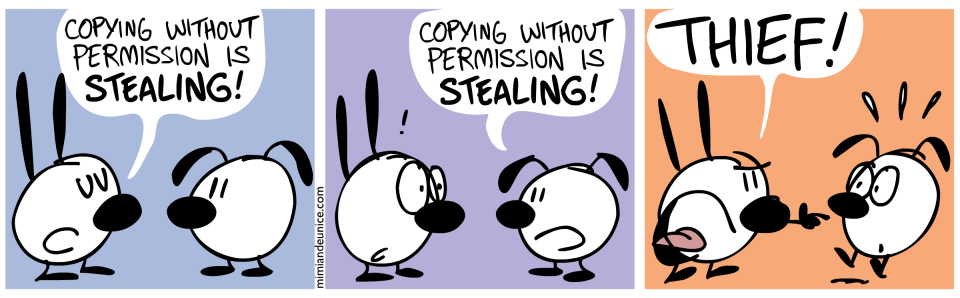
For many students, I suspect it is difficult to imagine what an academic does aside from lectures, seminars and marking. The answer can range across several different activities including module or programme development, research, reading, university/faculty committee meetings, working groups and so on. Alongside my responsibilities within Criminology, I am also an Academic Integrity and Misconduct Officer (or AIMO for short). I have undertaken this role for the past few years and thought it might be interesting to share some of my thoughts.
The process involved in suspected academic misconduct is relatively straightforward. The marking tutor spots an issue, either through their subject knowledge, or increasingly with the help of originality reports such as those provided by Turnitin. They then make a referral, complete with the evidence they have compiled and hand it over to be dealt with by an AIMO. The AIMO reviews the evidence and decides whether to interview the student. After this they write a report and the student is informed as to the outcome. All of the above sounds extremely procedural but plagiarism and academic misconduct more generally are far more complex than this would suggest.
As a criminologist, I am used to studying theories around offending, rehabilitation, punishment, recidivism and so on. Perhaps that is why it seems obvious to me to conceptualise academic misconduct along the same lines. For instance; the referral process is undertaken by the university police (that is the referring tutor) who gathers together the evidence for submission to the CPS. In the case of suspected academic misconduct this referral comes to an AIMO who makes the decision as to whether or not there is a case worth answering. If the evidence appears compelling, the AIMO will explore the issue further, in essence, taking the place of the Magistrates’ Court in the CJS. If the offence is deemed to be relatively minor or a first time offence, sentence can be passed by the AIMO. Alternatively, the case can be passed to the Crown Court an Academic Misconduct Panel where the evidence will be heard by three AIMOs. These panels have far greater sanctions available to them (including termination of studies) and they can also hear appeals.
So far the analogy works, but what about the other, more human, aspects. When considering criminal motivation, it is clear the reasons for committing academic misconduct are as wide-ranging as those detailed in court. As with crime, some admit to their wrongdoings at the first opportunity whilst others do not accept that they have done anything wrong. Likewise, in terms of mitigation both types of “suspect” cite family problems, mental health issues, financial problems, as well as, ignorance of the rules and regulations.
But in the case of academic misconduct; who is the victim? Arguably, the answer to that is academia as a whole. If there is an absence of integrity in any, or all of our studies, academia is impoverished and ultimately the academy and its pursuit of knowledge could fall. As with crime, the impact on individuals is immeasurable and hugely detrimental to wider society.
As would be expected in an entry about academic misconduct, the image used is copyright free. It is available for use and modification from wikimedia
Share this:


(The Absence of) Technology in the Classroom
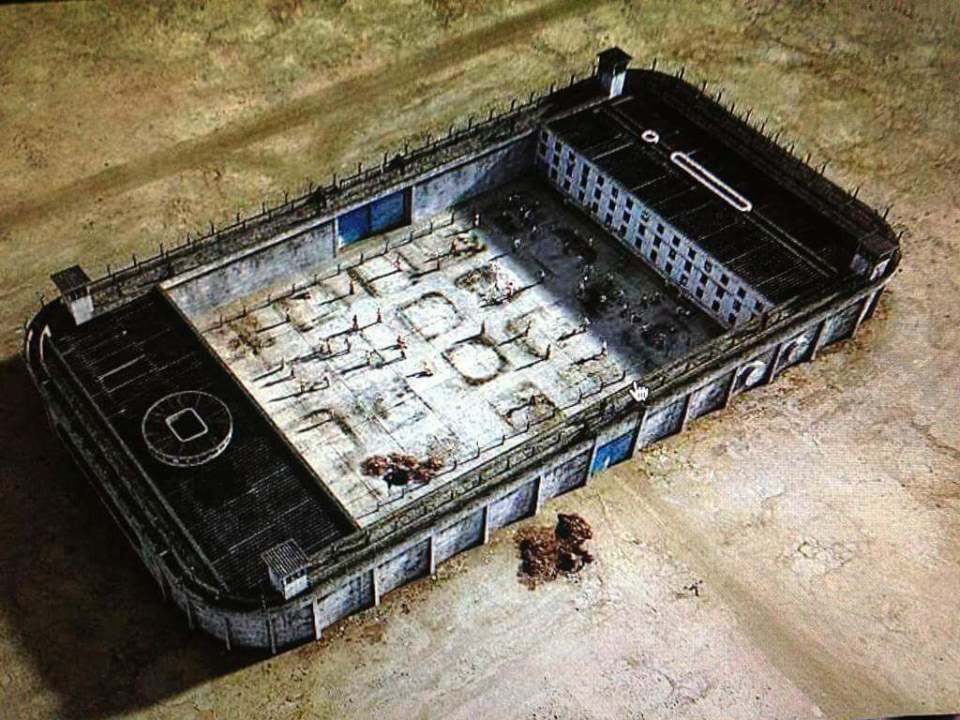
Following on from Manos’ ‘Reflections from a pilot’ I shall continue in a similar vein. The pilot has formed part of our academic thoughts and discussions for some months and now it has finished we are in reflective mode. Much of what we have experienced throughout the pilot was striking and will give us food for thought for some time to come. For this entry, I am going to focus on an aspect that I had not really considered, or at least, not very much beyond the prosaic.
We knew before the pilot that prison and technology do not make comfortable bedfellows. Whilst on the outside, technology permeates virtually every aspect of our waking lives, the same cannot be said for those incarcerated. From the moment you step inside the prison gate, signs remind you of what you cannot bring into the carceral environment; top of the list are mobile phones, computers, USBs and recording devices. This meant that in very basic terms there could be no powerpoint, video clips or recordings of lectures. It also meant that we could not rely upon the internal learners having a shared knowledge of current affairs beyond that which was available in newspapers or on radio or television. All the above could be perceived as inadequacies and deprivations, however, we found a number of positives side-effects of these supposed failings.
In the university classroom, technology is commonplace; smartboards, computer lecterns, laptops, tablets and smartphones. All of this technology can enable learning on many levels, but can also provide irresistible diversion from the task at hand. Whilst the intention may be educational; for example taking notes on a laptop, the temptation to drift into social media, email and so can prove to be seductive. Conversely, the prison classroom contains little to attract attention, beyond some posters on the wall and the view from the windows which offered nothing of real interest. From the outset, and throughout the entire pilot, it appeared that the absence of technology heightened concentration. This was observable through increased eye-contact, body language and engagement with both academic discussions and general conversations across all learners. Furthermore, the absence of technological distraction impelled students to self-reliance in way (for the external learners, at least) they were largely unused to and generally unprepared for.
It should be acknowledged that this increase in engagement may also have been impacted by the strangeness of the prison environment (for the external students) and the anxiety involved in meeting new people (for all students). Nevertheless, engagement did not seem to decrease despite increasing familiarity with both the surroundings and participants.
All of the above is not to say that technology has no place in education; the ease of access to educational materials and the ability to engage in academic discourse globally demonstrate its power. What I would suggest it does is offer us all an opportunity to reflect upon our own use (and dare I say, reliance) upon technology as a replacement for deep learning.


