
Home » Graduate entry (Page 4)
Category Archives: Graduate entry

An Officer’s Perspective

Northampton University…. In 2011, I first moved up to Northampton to study criminology and sociology. At the time I had never moved away from home before and it was a somewhat daunting experience. However, now looking back at this, it was one of the best decisions I have made.
Before I set out to go to university I had always said to my family I wanted to join the police force. I chose to study criminology as I believed this was going to help me with joining the police and also provide me with an insight as to what I was potentially going to be letting myself in for.
From studying criminology for three years I learnt about various ideas surrounding police and their interactions with communities, portrayal within the media and about the history of the police and how it has developed into the service we have today.
I remember, in particular, being interested in the way in which the media portrayed the police and the impact this had on how young people, and whether this influenced their opinions on police, so much to the point I completed a dissertation on this topic. This interest came about from a module called YOUTH CRIME AND MEDIA. Ultimately, I found that young people, in particular those aged between 18-25, were influenced by the media and this helped them form their opinions of the police.
Whilst I was at Northampton University, I was a Special Constable for the Metropolitan Police having joined them in 2013, my third year at uni. This began to give me some experience into what the police dealt with on a day to day basis. Although I was only doing this for 16 hours per month, I would recommend this to anybody who is considering joining the police.
Since graduating from Northampton University, I joined the Metropolitan Police as a PC and I have been with the Met now for 2 years. I can honestly say that, when people say this is a job like no other, they are all correct. I go to work not knowing what I am going to encounter from one call to the next. The one thing which has really stood out for me since joining as a PC, and having graduated from university, is how misunderstood the role of police appears to have become. When I was growing up I remember thinking that the role of police was to chase criminals and drive fast cars. However, this nowadays is a small proportion of the work we do and the role of police officers is a lot more diverse and changing daily. We have a lot of interactions with people who are suffering a mental health crisis who may need our assistance because they are feeling suicidal, investigate the disappearance of missing people and even attend calls where someone is suffering a cardiac arrest and a defibrillator is required, as police officers now carry these in their vehicles.
However. I feel the biggest thing that my criminology degree has assisted me with in relation to my job is how I analyse situations. Criminology was largely centred around different theories and analysing these perspectives. On a day to day basis I regularly find myself analysing information provided to me and trying to understand different accounts people provide me with and trying to use these accounts to decide what action needs to be taken. Overall criminology has allowed me to take a step back from somewhat stressful situations and analyse what has happened. This has given me the confidence to present different viewpoints to people and also challenge people at times on controversial topics or viewpoints they may have.
I do think that I took the right path to becoming a police officer; criminology did equip me with various different skills that I utilise in my day-to-day role. I wouldn’t change the path I took. I enjoyed every bit of my degree, and the lecturers were always supportive.
Share this:

Just Keep Swimming

This isn’t going to be the intellectual blog post I had expected myself to write. I am writing this as I am undertaking my post-grad dissertation and in all honesty, I can’t be bothered anymore. And I feel secure in the fact that I am not the only person who feels this and I most certainly will not be the last. Heck, I’ve been close to giving up altogether a handful of times throughout both my under and post-grad. I will be the first to admit that I don’t know how to leave work mode alone when I have deadlines due. And it is only through friends and family that I have to be reminded that all work and no play, doth not make for a mentally healthy Bronagh. I have always struggled separating the two and have been known to cancel or decline plans so I can do work; low and behold, I don’t write a word.
Be mindful of your mental health. You can’t work at it constantly. Between work and uni, you need to allow yourself those stress-free days off so you can produce the best work that you are capable of. I hate to harp on about the most obvious scenario. But as someone who felt bad for taking time off to have fun and as someone who is currently struggling for the motivation to complete this dissertation, just know that you are not alone. It is not uncommon to feel burnt out towards the end of your degree, be it 1 year, 3 years, or more. Just know that you have not come this far to fall at the final hurdle.
My biggest motivation was having friends going through the same situation. Meeting up to go the library so none of us bailed. Telling one another to “shut up, we need some quiet time”, putting headphones in so as not to get dragged into another one-hour chat about that dire television show we all watched the other night. As with everything, it’s all about moderation. You are your own worst enemy, but it is you who will pull yourself out of your slump and show your self-doubt that you are both capable and worthy. This isn’t forever and you will relish those days where you have no deadlines to worry about, but trust me, you will also miss them. Do not let these tough times get the better of you and certainly do not let them put you off any possibilities of further education. The motivation will come and you will get there in the end. Carry on doing the things you enjoy and take everything in your stride.
Just keep swimming, you’ve got this.
Share this:


The Voice Behind the Music

Marginalised voices were the focal point of my dissertation.
My dissertation explored social issues through the musical genres of Rap and Hip-Hop. During the time period of writing my dissertation there was the rising debate surrounding the association of a new genre, Drill music, being linked to the rise in violent crimes by young people in England (London specifically). The following link to an article from the Guardian newspaper will provide a greater insight to the subject matter:
The idea of music having a direct correlation with criminality sweeps issues such as poverty, social deprivation, class and race all under the rug; when in reality these are just a few of the definitive issues that these marginalised groups face. We see prior examples of this in the late 80s, with rap group N.W.A with their song “F*** the police”. The song surrounded the topic of police brutality and brought light to the disgust and outrage of the wider community to this issue. Simultaneously to this, the N.W.A were refused from running concerts as they were accused of starting revolts. The song was made as a response to their environment, but why is freedom of speech limited to certain sectors of society?
In the present day, we see young people having lower prospects of being homeowners, high rates of unemployment, and the cost of living increasing. In essence the rich are getting richer and the poor continue to struggle; the violence of austerity at its finest. Grenfell Tower is the perfect example of this, for the sake of a cheaper cost lives were lost. Simply because these individuals were not in a position to greatly impact the design of their housing. Monetary status SHOULD NOT determine your right to life, but unfortunately in those circumstances it did.
The alienation of young people was also a topic that was highlighted within my research into my dissertation. In London specifically, youth clubs are being closed down and money is being directed heavily towards pensions. An idea would be to invest in young people as this would potentially provide an incentive and subsequently decrease the prospect of getting involved in negative activities.
In no means, was the aim to condone the violence but instead to simply shed light on the issues that young people face. There is a cry for help but the issue is only looked at from the surface as a musical problem. If only it were that simple, maybe considering the voice behind the music would lead to the solution of the problem.
Share this:

Divided States of America

Nahida is a BA (Hons) Criminology graduate of 2017, who recently returned from travelling.
Ask anyone that has known me for a long time, they would tell you that I have wanted to go to America since I was a little girl. But, at the back of my mind, as a woman of colour, and as a Muslim, I feared how I would be treated there. Racial discrimination and persecution is not a contemporary problem facing the States. It is one that is rooted in the country’s history.
I had a preconceived idea, that I would be treated unfairly, but to be fair, there was no situation where I felt completely unsafe. Maybe that was because I travelled with a large group of white individuals. I had travelled the Southern states, including Louisiana, Texas, Tennessee and Virginia and saw certain elements that made me uncomfortable; but in no way did I face the harsh reality that is the treatment of people of colour in the States.
Los Angeles was my first destination. It was my first time on a plane without my family, so I was already anxious and nervous, but on top of that I was “randomly selected” for extra security checks. Although these checks are supposedly random and indiscriminate, it was no surprise to me that I was chosen. I was a Muslim after all; and Muslim’s are stereotyped as terrorists. I remember my travel companion, who was white, and did not have to undergo these checks, watch as I was taken to the side, as several other white travellers were able to continue without the checks. She told me she saw a clear divide and so could I.
In Lafayette, Louisiana, I walked passed a man in a sandwich café, who fully gawked at me like I had three heads. As I had walked to the café, I noticed several cars with Donald Trump stickers, which had already made me feel quite nervous because several of his supporters are notorious for their racist views.
Beale Street in Downtown Memphis is significant in the history of the blues, so it is a major tourist attraction for those who visit. It comes alive at night; but it was an experience that I realised how society has brainwashed us into subliminal racism. The group of people I was travelling with were all white and they had felt uncomfortable and feared for their safety the entire time we were on Beale Street. The street was occupied by people of colour, which was not surprising considering Memphis’ history with African-Americans and the civil rights movement. That night, the group decided to leave early for the first time during the whole trip. I asked, “Do you think it’s our subconscious racist views, which explains why we feel so unsafe?” It was a resounding yes. As a woman of colour, I was not angry at them, because I knew they were not racist, but a fraction of their mind held society’s view on people of colour; the view that people of colour are criminals, and, or should be feared. That viewpoint was clearly exhibited by the heavy police presence throughout the street. It was the most heavily policed street I had seen the entire time I was in the States. Even Las Vegas’ strip didn’t seem to have that many police officers patrolling.
It was on the outskirts of Tennessee, where I came across an individual whose ignorance truly blindsided me. We had pulled up at a gas station, and the man approached my friends. I was inside the station at this point. The man was preaching the bible and looking for new followers for his Church. He stumbled upon the group and looked fairly displeased with the way they were dressed in shorts and skirts. He struck a conversation with them and asked generic questions like “Where are you from?” etcetera. When he found out the group were from England, he asked if in England, they spoke English. At this point, the group concluded that he wasn’t particularly educated. I joined the group outside, post this conversation, and the man took one look at me and turned to my friend who was next to him, and shouted “Is she from India?” The way he yelled seemed like an attempt to guage if I could understand him or not. Not only was that rude, but also very ignorant, because he made a narrow-minded assumption that a person of my skin colour, could not speak English, and were all from India.
I was completely taken aback, but also, I found the situation kind of funny. I have never met someone so uneducated in my entire life. In England, I have been quite privileged to have never faced any verbal or physical form of racial discrimination; so, to meet this man was quite interesting. This incident took place in an area populated by white individuals. I was probably one of the very few, or perhaps the first Asian woman he had ever met in his life; so, I couldn’t make myself despise him. He was not educated, and to me, education is the key to eliminating racism.
Also, the man looked be in his sixties, so his views were probably set, so anything that any one of us could have said in that moment, would never have been able to erase the years of discriminatory views he had. The bigotry of the elder generation is a difficult fight because during their younger days, such views were the norm; so, changing such an outlook would take a momentous feat. It is the younger generation, that are the future. To reduce and eradicate racism, the younger generation need to be educated better. They need to be educated to love, and not hate and fear people that have a different skin colour to them.
Share this:

White and Male: the diversity of the judiciary
My name is Anita and I graduated with a Criminology degree in 2016. I did have a great time at the University of Northampton. The course was challenging and intense however this meant that it provided me with the opportunity to overcome my barriers and develop myself both academically and personally. I miss going to lectures and seminars, revising for exams and even writing the dissertation. If you are reading this and you are in your third year, you are probably thinking that I am mad but I do miss it. I can’t help it! I can honestly say that going to University was the best decision I ever made and I would love to go back and do a postgraduate course. My advice to all students is enjoy it because time goes by so fast.
Before we start, please stop and think…… What percentage of court judges would you guess are women? How many members of the judiciary are from ethnic minorities?
If your guess is that we have a substancial amount of women and members from ethnic minorities in the judiciary, then this blog post might dissapoint you.
Let’s define the judiciary before we progress any further. The judiciary can be defined as ‘the judges of a country or a state, when they are considered as a group’ (Hornby, 2000, p.700).
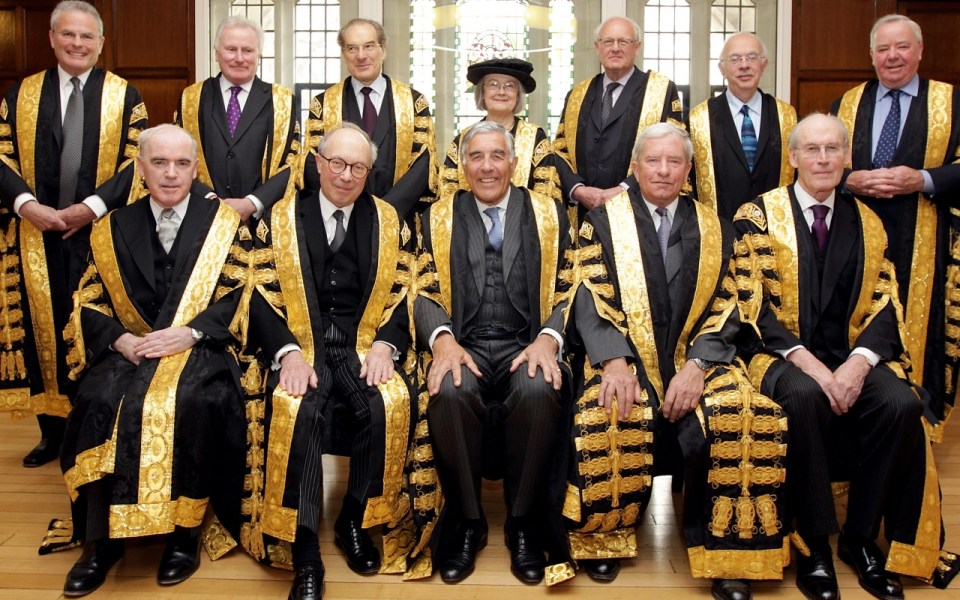
The judiciary in the UK is dominated by Oxbridge educated white middle-class men. It is estimated that three quarters of all judges in England and Wales are male and 95% are white (Lieven, 2017). The gender imbalance can be well illustrated by looking at the Supreme Court. There is only one woman among the 12 Justices on the Supreme Court. Lady Hale is the only woman ever to serve on the Court and all of the judges are and have always been white. Only Armenia and Azerbaijan have lower proportions of women in their judiciary than the UK (Lieven, 2017). This is unacceptable in 2018, changes must be made to address this gender imbalance.
In terms of race, as at 1 April 2017, only 7% of court judges were Black, Asian or Minority Ethnic (BAME). Of these Asian and Asian British accounted for 3% and the remaining three groups, Black and Black British, Mixed Ethnicity and Other Ethnic Group at around 1% each (Ministry of Justice, 2017).
This shows that judges are not reflective of wider society. This is a significant problem because the public should be confident that the judiciary delivers justice fairly. The lack of diversity means that concerns about the legitimacy and objectivity of judgements may be raised.
There are three main explanations for the continuing lack of diversity. The first explanation is that there are not enough women, BAME people and people from less privileged backgrounds who would be suitable for appointment. However, I would question the validity of this argument. This explanation seems to suggest that women or BAME people might be lacking lacking adequate knowledge or experience. There is no evidence to support this argument.
The second explanation given is that women and BAME candidates do not apply for appointment. However, it could be argued that the issue is more complicated than simply failing to apply. For example, Allen (2009) found that when BAME candidates and solicitors do apply for appointment they are significantly less likely to be successful than white candidates or barristers. This shows that the issue is not the lack of applications received from women or BAME candidates but perhaps the discriminatory recruitment process.
The third explanation is that the key principle governing our appointments to judicial office is merit. Unfortunately, the term ‘merit’ is not defined, but the implication is that achieving merit and diversity are at odds.
In conclusion, the lack of diversity in the judicial system is very concerning and should be addressed as soon as possible. This needs to be done to ensure that our justice system is fair, accessible and efficient. It is in our interest to produce a judiciary of the highest quality that reflects the make-up of our nation. Difference should be valued and not feared.
References
Allen, A (2009) Barriers to Application for Judicial Appointment Research. London: Judicial Appointments Commission.
Hornby, A.S (2000) Oxford Advanced Learner’s Dictionary. 6th ed. Oxford: Oxford University Press.
Lieven, N (2017) Increasing judicial diversity. London: Justice.
The Ministry of Justice (2017) Judicial Diversity Statistics 2017. London: MOJ.
Share this:

That Fat-Tuition: International Students’ Career Prospects

Sallek is a graduate from the MSc Criminology. He is currently undertaking doctoral studies at Stellenbosch University, South Africa.
As an international student studying for my doctorate in South Africa, I have been pushed and compelled to think more and more about life after studies. This push does not often come from the most caring hearts. It would seem some South Africans have been wired to ask every ‘foreign national’ they meet, ‘would you go back to your country when you are done studying?’ The motive for asking this question is not as important for me as the reality packed in the question. This reality is that of the post-PhD blues, a time of unsettling emotions, and transitioning from studying to a career or post-doctoral study. Experience shows that the waiting period stirs emotions of rejection after interviews or for just not being shortlisted and when the value of one’s research and academic competency is questioned. For some the experience is short, others simply return to their former employment, while for many others, it could take a year or two, or even more.
Recently, the thought of graduating and life after the ‘PhD’ has been in my mind, and sometimes, it encroaches into my active study hours. However, this entry does not depict the reality of life after PhD alone. I had this moment after my bachelor degree and even more after my Criminology degree at UoN when I had to consider the thought of returning to my home country. I am certain some international students would relate with this. I have had numerous conversations and have heard the opinions of many on this. However, given that graduation is not only an end, but a new beginning as Helen rightly notes, careful thought out plans, perseverance and patience has helped me navigate these periods.
As the labour market has become more competitive, the need for perseverance, thought-through plans and sometimes, ingenuity has become even more important after studying and receiving beautiful grades. Statistics indicates that a significant percentage of faculty positions are non-permanent appointments and this makes the academic career prospect of young and aspiring researchers unpromising. Outside of the academia, not only is the labour market competitive, but applicants are stifled with years of experience requirements and these issues brings me to the crux of this entry.
Beyond doubt, the cost of studying for international students in most countries is comparably higher than those of ‘home’ students. I do not refer to the economic costs in terms of higher tuition, international registration fee requirements, and other sundry maintenance requirements only. Added to this is the immense social cost such as the loss of personal relationship with family, friends and one’s social network. For some, studying in Europe or the West generally attracts certain prestige and a huge pressure from social-expectation that one will return to begin a lucrative work. But, the reality is far from this. Africa has an existential youthful unemployment crisis, serious insecurity challenges and several countries lack basic infrastructures and social amenities. Hence, after studying, some elect to never return, even if it means keeping that beautiful certificate away, picking a menial job or staying back illegally. After all, besides selling all their possession or borrowing to pay the huge tuition, they have nothing to return to and have to eke out a living. These factors undermines and affects the career prospects of international students.
Share this:

The Power of Education
“Education is the most powerful weapon which we can use to change the world” (Nelson Mandela)
My name is Stephanie, and I was a Criminology (with Education Studies) student at Northampton from 2012-2015. After graduating, I proceeded with my masters in International Criminal Law and Security at Northampton still. I graduated with my Masters in February 2018. This blog post is a dedication to how one lecture and one seminar, from 2 different modules at different points in my university ignited a fire in me, which is still in me today.
Education opens our minds to new things; we see things differently and can use it as a force to make the world a better place and we can better understand the world around us. It can empower us to make change, teach and impart our knowledge to others.
During the 1st year of my undergrad, in a lecture in Crime and Society focussing on sexual crime, my heart sank. I thought back to when I was 13 years old, I was sexually assaulted at school. I didn’t realise it at that time, until that session on sexual crime.
I reminisced of the horrible occasion, telling the boy who assaulted me to stop and pushed his hands away. Despite any efforts to stop him, he still invaded my personal space and touched me without my consent, leaving deep emotional scars, my body feeling utterly violated, physically sick and was uncomfortable in my own skin (of which hung with me for a number of years after).
In the session on sexual crime, anger and distress bubbled in my stomach, as I tried to ignore the memories that were resurfacing. It was not until my final year in a Crime and Punishment seminar, where a role play of a rape victim reporting to the police demonstrated in class was done that a fire of inspiration was ignited. A fierce passion burned inside me, and I deeply felt that I had to do something.
This was inspiration behind my petition on making it compulsory to teach consent in schools: https://www.change.org/p/rt-hon-justine-greening-mp-to-make-it-compulsory-to-teach-consent-within-secondary-school-pshe-sex-education-classes
That seminar left me feeling a mixture of things; firstly, I was (and still am) appalled by the rape myths that are riddled in our society and justice system, and the lack of compassion shown to rape victims. I felt angry and somewhat distressed, because of my own experience of sexual assault.
It most importantly, started a fire of wanting to make change to better inform people in society of these rape myths, and to understand consent. To all who have read this, please sign, share and encourage others to do the same for this petition.
On another note, you are also more than welcome to follow my personal blog here at: https://wordpress.com/stats/day/flowervioletblog.wordpress.com
Share this:

Public attitudes towards male victimisation

I graduated from the University of Northampton as a Criminology student in July 2016 and not a day goes by where I don’t miss studying. I miss everything about the University experience, from the lectures and seminars, to the countless hours spent working in the library. One of the positive things about being a graduate however, is that any time spent scrolling through social media or binge-watching a Netflix series is guilt-free. There is no dissertation to write or any exams to revise for any more, meaning you can enjoy your leisure time without the dreaded guilt that you’re not spending your time productively. I have, admittedly, taken this privilege too far, and spend far too much time on my phone. Bizarrely, I spend a lot of my time scrolling through comments on social media posts, even when I know there are bound to be comments which will annoy me.
For instance, last month, a video clip from ITV’s ‘This Morning’ emerged on Twitter and Instagram, in which Phillip Schofield and Holly Willoughby interviewed a young male who had suffered as a victim of domestic violence at the hands of his female partner. He revealed how he had been starved, physically and mentally abused by his girlfriend and that his injuries were so severe, they were almost fatal. What was really encouraging to see, were the hundreds of supportive comments left by people online. The majority of people were praising the man for his bravery and recognised that there needs to be much greater awareness for male victimisation. Sadly, the comments that caught my attention were “what a wimp” and “…he shoulda manned up sooner!”. These comments really riled me, as for my own dissertation, I interviewed an organisation specialising in support for male victims of domestic violence. It was shocking to discover the challenges the organisation face in terms of securing public funding, professional support, and most importantly, encouraging male victims to come forward and seek help. One of the over-arching themes which emerged was that men are still very reluctant to seek help, largely due to embarrassment and fears of being ridiculed. There is still a societal perception that men should be able to deal with problems by themselves, and that if they are unable to, they must be “weak”. It is for this reason that these particular comments left by strangers online infuriated me so much. Quite simply, domestic violence is a human issue, not just a gender one. Not only this, but these few words have the potential to be extremely damaging and may deter men who are suffering in silence from getting the help they need.
Over two years have passed since I carried out my research on this topic area and I am still very passionate about it. I have nothing but admiration for the young male on ‘This Morning’ and am hopeful that his bravery will encourage other male victims to seek help. I also hope that the positive comments online will always overshadow the thoughtless, negative ones. Help is out there and no victim, regardless of their gender, should be discouraged from seeking it.
Share this:

My Calling in Life

I used to think waking up for lectures was the hardest thing in life. Little did I know that the 9am until 5pm isn’t a joke!
I graduated nearly 3 years ago now. Since then I have been trying to find my ‘calling’ in life. The world showed me it is not always easy finding this calling. If you want something you have to go and get it. Having a degree does not mean you will be successful. I had to start from the bottom and through trial and error; I can say I am starting to get there. Initially I was applying for any and every job possible. My first job was for an IT and Business training company and I was made redundant. That was difficult. Here I was thinking redundancy is for old people. Life had just started teaching its lessons.
After that I realised my passion was Criminology and I was determined in finding a job within this sector. So I started working for my County Court as clerk. I realised that I was definitely not cut out for the public sector. The frustration from the public because the court system is so slow (which I completely understood I would have been annoyed too). Don’t even get me started on the fact that I had to use dial up internet and buy my own teabags and milk! From that moment on I knew I had to get back into the private sector but still have a job in Criminology
I applied for a job as a Financial Crime Analyst for a bank and I was given the job without an interview! I knew I had found my ‘calling’. It is more Compliance based. I have had to start from the bottom. My senior managers appreciate the fact that I have a Criminology degree. But my colleagues make remarks like “Oh, you went to uni and we are still at the same level”. It is a slap in the face. But I am grateful for my degree. It has made me humble and look at people in a different light. When my colleagues are laughing at the crimes people commit such as an 80 year old man being involved in the drug trade or an 18 year old running a brothel. As a Criminologist I can ask questions such as “I wonder if this person is being coerced into this” or “I wonder if they have an drug problem or they did not grow up in a happy home”. I can empathise with these people and see beyond the information that is presented in front of me. I have been told I am too soft. But that is the life of a Criminologist and I would not change it for the world!
Share this:

The Next Step: Life After University

My name is Robyn Mansfield and I studied Criminology at the University of Northampton from 2013 to 2016. In 2016 I graduated with a 2:2. The University of Northampton was amazing and I learnt some amazing things while I was there. I learnt many things both academic and about myself. But I honestly had no idea what I wanted to do next. I went to University wanting to be a probation officer, but I left with no idea what my next step would be and what career I wanted to pursue.
My first step after graduating was going full-time in retail because like most graduates I just needed a job. I loved it but I realised I was not utilising my degree and my full potential. I had learnt so much in my three years and I was doing nothing with my new knowledge. I started to begin to feel like I had wasted my time doing my degree and admitting defeat that I’d never find a job that I would use my degree for. I decided to quit my job in retail and relocate back to my hometown.
I was very lucky and fell into a job working in a High School that I used to attend after I quit my retail job. I became a Special Educational Needs Teaching Assistant and Mentor. I honestly never thought that I’d be working with children after University, but the idea of helping children achieve their full potential was something that stood out to me and I really wanted to make a difference. The mentoring side was using a lot that I’d learnt at University and I really felt like I was helping the children I worked with.
I am currently an English Learning Mentor at another school. I mentor a number of children that I work with on a daily basis. As part of my role I cover many pastoral issues as well. I am really enjoying this new role that I am doing.
Eventually, in the short-term I would love to do mentoring as my full role or maybe progress coaching in a school. In the long-term I would love to become a pastoral manager or a head of year. The work I have been doing is all leading up to me getting the experience I need to get me to where I want to be in the future.
The best advice I would give to people at University now or who have graduated is not to worry if you have no idea what you want to do after you’ve got your degree. You might be like me, sat at University listening to what everyone else has planned after University; travelling, jobs or further education. Just enjoy the University experience and then go from there. I had no idea what I was doing and at certain points I had no job for months. But in a months time, a years time or longer you will finally realise what you want to do. It took me doing a job I never expected I would do to realise what I wanted to do with my degree.

 Thoughts from the criminology team