
Home » Gender (Page 6)
Category Archives: Gender

Interview with a sex offender
Bethany Davies is an Associate Lecturer teaching modules in the first year.
“Was this your first arrest?”
“Yes I’ve been in trouble with the police before, but just like cautions, like some old man called the police because we played football on the grass near his house. That was literally only about a couple months before i got arrested… for rape.”
I had just turned 20 years old when I conducted my first interview with a sex offender. I was prepping for my dissertation in the summer before my final year, conducting research in a probation office I volunteered at. I was allowed to observe, teach and in the final week I would be able to interview 3 males I had been observing. I interviewed the first two males who both I had taught some very basic numeracy skills to, they were both as they were in my observations, very calm and just trying to get through each day without breaching their probation orders. My final interview was with a young male who I had been helping prepare to apply for a construction worker card, which would allow him to apply for building work. In my months of observing and teaching him I felt like he was no different to males I went to school with or anyone you would pass on the street. I did not want to know what his crime was, as a probation mentor that was never my focus, nor my business to know.
Ethically speaking, I was challenged by the idea that I was conducting an interview and research with the consent of an individual who in my eyes did not understand the concept of consent. That may seem like a harmful way to view this man and the outlook of his time in probation as ultimately it was about reform and reintegration after his time in prison. I have progressed a lot since this day and I no longer view this person so hopelessly in my memory, then again, I am unsure of what he is doing now.
Each time I remember the interview and my experience there, I have different thoughts and different feelings, which I suppose is human nature. I also get annoyed at myself that I cannot seem to understand or rather pinpoint my own thoughts on it, I go between thinking what I did (teaching) was a good thing and it may have helped him, to thinking what I did was waste my time on someone who probably didn’t deserve it in many people’s eyes.
I had always felt I was very understanding of those labelled ‘ex-offenders’ and the cycle they can become trapped in. But before this experience, I had always worked with those whose crimes seemed relatively minor comparatively. Sexual violence is not something to me that is as simple to categorise or try to understand. I remember getting home a few hours later and sobbing for a victim I knew nothing about other than her perpetrator.
The experience has always stuck with me and made me appreciate the complexity of not only sexual offences but also the role of reform with sexual offences. It has led me to explore research around sexual violence and I have recently been exploring the work of Elizabeth Stanko and also revisiting my books by Susan Brownmiller. Both examine the role of the victim of sexual violence and raise questions about how historically sexual violence has been viewed.
This is a personal experience and not something I think everyone will relate to, but from experiences shared, there are lessons to be learnt.
Share this:


Questions, questions, questions…..
Over the last two weeks we have welcomed new and returning students to our brand-new campus. From the outside, this period of time appears frenetic, chaotic, and incredibly noisy. During this period, I feel as if I am constantly talking; explaining, indicating, signposting, answering questions and offering solutions. All of this is necessary, after all we’re all in a new place, the only difference is that some of us moved in before others. This part of my role has, on the surface, little to do with Criminology. However, once the housekeeping is out of the way we can move to more interesting criminological discussion.
For me, this focuses on the posing of questions and working out ways in which answers can be sought. It’s a common maxim, that within academia, there is no such thing as a silly question and Criminology is no exception (although students are often very sceptical). When you are studying people, everything becomes complicated and complex and of course posing questions does not necessarily guarantee a straightforward answer. As many students/graduates over the years will attest, criminological questions are often followed by yet more criminological questions… At first, this is incredibly frustrating but once you get into the swing of things, it becomes incredibly empowering, allowing individual mental agility to navigate questions in their own unique way. Of course, criminologists, as with all other social scientists, are dependent upon the quality of the evidence they provide in support of their arguments. However, criminology’s inherent interdisciplinarity enables us to choose from a far wider range of materials than many of our colleagues.
So back to the questions…which can appear from anywhere and everywhere. Just to demonstrate there are no silly questions, here are some of those floating around my head currently:
- This week I watched a little video on Facebook, one of those cases of mindlessly scrolling, whilst waiting for something else to begin. It was all about a Dutch innovation, the Tovertafel (Magic Table) and I wondered why in the UK, discussions focus on struggling to feed and keep our elders warm, yet other countries are interested in improving quality of life for all?
- Why, when with every fibre of my being, I abhor violence, I am attracted to boxing?

3. Why in a supposedly wealthy country do we still have poverty?
4. Why do we think boys and girls need different toys?

5. Why does 50% of the world’s population have to spend more on day-to-day living simply because they menstruate?
6. Why as a society are we happy to have big houses with lots of empty rooms but struggle to house the homeless?

7. Why do female ballroom dancers wear so little and who decided that women would dance better in extremely high-heeled shoes?
This is just a sample and not in any particular order. On the surface, they are chaotic and disjointed, however, what they all demonstrate is my mind’s attempt to grapple with extremely serious issues such as inequality, social deprivation, violence, discrimination, vulnerability, to name just a few.
So, to answer the question posed last week by @manosdaskalou, ‘What are Universities for?’, I would proffer my seven questions. On their own, they do not provide an answer to his question, but together they suggest avenues to explore within a safe and supportive space where free, open and academic dialogue can take place. That description suggests, for me at least, exactly what a university should be for!
And if anyone has answers for my questions, please get in touch….
Share this:

Changes in Life
When I suggested writing for this blog to certain colleagues I was told that this topic would be of no interest and nobody would read it as it is not relevant. I consider the topic very relevant to me and to every woman. The term used is ‘women of a certain age’ (I hate the expression) to explain the menopause.
I am a 55-year-old woman who is going through the menopause and I make no apologies as there is nothing I can do about it. There is acceptance of women starting their periods and the advertisements for period poverty. There are extensive adverts, promotions, books all on pregnancy but very little about the menopause. At last, just this evening, I have seen an advert by Jenny Éclair on TV about a product for one symptom of the menopause. I fail to understand why this subject is not discussed more openly?
Having reached the menopause, I can honestly say this is the worst I have ever felt both emotionally and physically. The brain fog, not being able to put a sentence together sometimes, clumsiness, the lack of sleep, loss of confidence, weight gain; aching limbs. The list goes on. I know that each woman is different, and their body responds differently so I speak for me. I know that I am not alone though just by the conversations I have with other women and on the menopause chat room.
In accepting my situation and desperately trying to work through these symptoms I reflect on an incident where my mother was arrested for shoplifting. She would have been my age at the time. I was so angry at her as I was a serving police officer and I was so embarrassed. I never tried to understand why she did it. Did the menopause contribute to the theft of cushion covers she did not need? To this day we have never spoken about the incident and never will.
Also, my thoughts around this situation extends to the research I am conducting around the treatment of transgender people in prison. Researching the prison estate, I find that the prison population is getting older and the policies link to women in prison, catering for women and babies, addictions, mental health etc but there is no mention of older women going through the menopause?
I served in the police at a time when women were not equal to men and I would never have raised, and written this blog entry exposing ‘weaknesses’. To write this is progress for me and I can even see that the police are addressing the issues of the menopause through conversations, presentations and support groups. They have come a long way. All family, friends, colleagues and employers need to try and understand this debilitating change in life for us ‘women of a certain age’.
Share this:


Thoughts from the British Society of Criminology Conference at Birmingham City University

I attended the BSC conference last week, presenting a paper from my PhD research, doing the usual rounds of seeing familiar faces, meeting some new faces and hoping nobody uttered the words ‘well its more of an observation than a question’. There was one session which particularly inspired me and so is the focus of this blog. The key theme was that as criminologists and educators, we need to review the quality of methods of teaching to keep students engaged, but crucially, not to lose sight of the importance of the content. We must continue to introduce students to more challenging ideas and shift their thinking from accepted wisdom of how to ‘do justice’ and ‘why people commit crime’.
The session attended was on ‘Public Criminology’, which included papers on the experiences of LGBTQ communities in Turkey, with regards to police response to victimisation, another on the use of social media and other forms of broadcast used by academics on criminology programmes, the impact of the 2011 riots on social capital in the UK and the need to re-introduce political issues in teaching criminology. As with many sessions at large conferences, you never quite know what will emerge from the range of papers, and you hope there are some common themes for the panel and delegate to engage with in discussions. This certainly happened here, in what seems to be a diverse range of topics, we generated interesting discussions about how we understand crime and justice, how the public understand this, what responsibilities we have in teaching the next generation and how important it is to retain our critical focus. The paper that really resonated with me was delivered by Marc Jacobs from the University of Portsmouth on ‘The Myopia of Public Criminology and the need for a (re) Politicised Criminology Education’. Marc was an engaging speaker and made a clear point about the need to continue our focus on the work of activist criminologists, who emerged during the 1970s, asking important questions about class, race and gender issues. He cited scholars such as Jock Young, Stuart Hall, Frances Heidensohn as pioneers in shining a light on the need to understand crime and justice from these diverse perspectives.
This is certainly what I remember from studying criminology as a post-graduate, and they have informed my teaching, especially criminological theories – I have always had a closer personal affinity with sociological perspectives, compared to biological and psychological explanations of crime. It also reminded me of a running theme of complaint from some students – political issues are not as interesting as say, examining the motivations of serial killers, neither are those lectures which link class, race and gender to crime, and which highlight how discrimination in society is reflected in who commits crime, why they do it, and why we respond the way we do. There is no doubt presenting students with the broader social, political and cultural contexts means they need to see the problem of crime as a reflection of these contexts, that is does not happen as a rare event which we can always predict and solve. It happens every day, is not always reported, let alone detected and solved, meaning that many people can experience crime, but may not experience justice.
As tempting as it might be to focus teaching and engage students through examining the motivation for serious crimes to reinforce students’ expectations of criminology being about offender profiling and CSI techniques which solve cases and allow us all to sleep safely, I’m afraid this means neglecting something which will affect their lives when they do look up from the fascinating case files. I am not advocating the exclusion of any knowledge, far from it, but we need to ensure that we continue to inform students about the foundations of our discipline, and that it is the every day events and the lack of access to justice which they also need to know about. They reflect the broader inequalities which feed into the incidences of crime, the discriminatory policies and practice in the CJS, and the acceptance of this by the public. Rawls (1971) presented justice as a ‘stabilising force’, a premise picked up by New Labour in their active citizenship and neighbourhood renewal agenda. There was an attempt to shift justice away from punitive and retributive responses, to make use of approaches which were more effective, more humane and less discriminatory. The probation services and courts were an important focus, using restorative and problem-solving approaches to genuinely implement Tony Blair’s manifesto promise to be tough on the causes of crime. However, he also continued the rhetoric of being tough on crime, and so there was sense of using community sentencing and community justice in a tokenistic way, and not tackling the broader inequalities and problems sufficiently to allow the CJS to have a more transformative and socially meaningful effect on crime (Donoghue, 2014; Ward, 2014). Since then, the punitive responses to crime have returned, accepted by the public, press and politicians, as anything else is simply too difficult a problem to solve, and requires meaningful and sustained investment. This has been a feature of community justice, half hearted attempts to innovate and adopt different approaches, all too easily overtaken by the need for a day in court and a custodial sentence. It shows what happens when the public accept this as justice and the function of the CJS, even though they are not effective, put the public at risk, and mean entrenched biases continue to occur.
This all emphasises the need to remember the foundations of our discipline as a critical examination of criminal justice and of society. In my own department, we have the debates about where we place theory as part of these foundations. These discussions occur in the context of how to engage students and maintain our focus on this, and it remains an important part of higher education to review practice, content and adapt to broader changes. Moving to a new campus means we have to re-think these issues in the context of the delivery of teaching, and I am all for innovations in teaching to engage students, making use of new technologies, but I firmly believe we need to retain our focus on the content which will challenge students. This is the point of higher education, to advance knowledge, to raise students’ expectations of their own potential and ask them to rethink what they know. The focus on ‘public criminology’ has justified using different forms of broadcast, from TV, tabloid press and social networking to disseminate knowledge and, hopefully, better inform the public, as a counter measure to biased reporting. I don’t think it is desirable to TV producers to replace ‘I am a Killer’ on the Crime and Investigation network with ‘Adventures of a Problem-Solving Court’ or ‘Restorative Justice: The Facts’. Writing for the tabloid press seems to me an act of futility, as they have editorial control, they can easily misrepresent findings, and are not really interested in anything which shifts the notion of justice as needing to have a deterrent effect and to be a retributive act. Perhaps social networking can overcome this bias, but in an age of claims of fake news and echo chambers, this surely also has a limited affect. So, our focus must remain on our students, to those who will work within the CJS, social policy departments as practitioners, researchers and future academics. They need to continue to raise the debates about crime and justice which affect the marginalised, which highlight prejudice, discrimination and which ensure we continue to ask questions about these thorny, difficult and controversial issues. That, I think, is the responsibility we need to grasp, and it should form a core function of learning about criminology and criminal justice at University.
Susie Atherton
Senior Lecturer in Criminology
This entry was re-blogged by the British Society of Criminology blog on 17 July 2018
References
DONOGHUE, J. (2014) Transforming Criminal Justice? Problem-solving and court specialisation. London: Routledge.
RAWLS, J. (1971) A Theory of Justice. Cambridge, MA: Harvard University Press.
WARD, J. (2014) Are problem-solving courts the way forward for justice? London: Howard League for Penal Reform.
Share this:


White and Male: the diversity of the judiciary
My name is Anita and I graduated with a Criminology degree in 2016. I did have a great time at the University of Northampton. The course was challenging and intense however this meant that it provided me with the opportunity to overcome my barriers and develop myself both academically and personally. I miss going to lectures and seminars, revising for exams and even writing the dissertation. If you are reading this and you are in your third year, you are probably thinking that I am mad but I do miss it. I can’t help it! I can honestly say that going to University was the best decision I ever made and I would love to go back and do a postgraduate course. My advice to all students is enjoy it because time goes by so fast.
Before we start, please stop and think…… What percentage of court judges would you guess are women? How many members of the judiciary are from ethnic minorities?
If your guess is that we have a substancial amount of women and members from ethnic minorities in the judiciary, then this blog post might dissapoint you.
Let’s define the judiciary before we progress any further. The judiciary can be defined as ‘the judges of a country or a state, when they are considered as a group’ (Hornby, 2000, p.700).
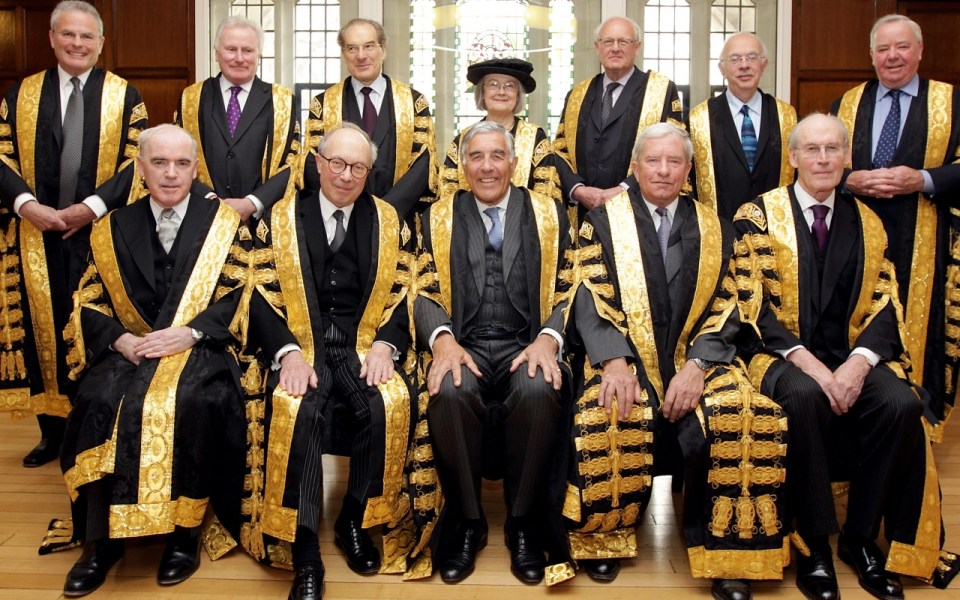
The judiciary in the UK is dominated by Oxbridge educated white middle-class men. It is estimated that three quarters of all judges in England and Wales are male and 95% are white (Lieven, 2017). The gender imbalance can be well illustrated by looking at the Supreme Court. There is only one woman among the 12 Justices on the Supreme Court. Lady Hale is the only woman ever to serve on the Court and all of the judges are and have always been white. Only Armenia and Azerbaijan have lower proportions of women in their judiciary than the UK (Lieven, 2017). This is unacceptable in 2018, changes must be made to address this gender imbalance.
In terms of race, as at 1 April 2017, only 7% of court judges were Black, Asian or Minority Ethnic (BAME). Of these Asian and Asian British accounted for 3% and the remaining three groups, Black and Black British, Mixed Ethnicity and Other Ethnic Group at around 1% each (Ministry of Justice, 2017).
This shows that judges are not reflective of wider society. This is a significant problem because the public should be confident that the judiciary delivers justice fairly. The lack of diversity means that concerns about the legitimacy and objectivity of judgements may be raised.
There are three main explanations for the continuing lack of diversity. The first explanation is that there are not enough women, BAME people and people from less privileged backgrounds who would be suitable for appointment. However, I would question the validity of this argument. This explanation seems to suggest that women or BAME people might be lacking lacking adequate knowledge or experience. There is no evidence to support this argument.
The second explanation given is that women and BAME candidates do not apply for appointment. However, it could be argued that the issue is more complicated than simply failing to apply. For example, Allen (2009) found that when BAME candidates and solicitors do apply for appointment they are significantly less likely to be successful than white candidates or barristers. This shows that the issue is not the lack of applications received from women or BAME candidates but perhaps the discriminatory recruitment process.
The third explanation is that the key principle governing our appointments to judicial office is merit. Unfortunately, the term ‘merit’ is not defined, but the implication is that achieving merit and diversity are at odds.
In conclusion, the lack of diversity in the judicial system is very concerning and should be addressed as soon as possible. This needs to be done to ensure that our justice system is fair, accessible and efficient. It is in our interest to produce a judiciary of the highest quality that reflects the make-up of our nation. Difference should be valued and not feared.
References
Allen, A (2009) Barriers to Application for Judicial Appointment Research. London: Judicial Appointments Commission.
Hornby, A.S (2000) Oxford Advanced Learner’s Dictionary. 6th ed. Oxford: Oxford University Press.
Lieven, N (2017) Increasing judicial diversity. London: Justice.
The Ministry of Justice (2017) Judicial Diversity Statistics 2017. London: MOJ.
Share this:

Public attitudes towards male victimisation

I graduated from the University of Northampton as a Criminology student in July 2016 and not a day goes by where I don’t miss studying. I miss everything about the University experience, from the lectures and seminars, to the countless hours spent working in the library. One of the positive things about being a graduate however, is that any time spent scrolling through social media or binge-watching a Netflix series is guilt-free. There is no dissertation to write or any exams to revise for any more, meaning you can enjoy your leisure time without the dreaded guilt that you’re not spending your time productively. I have, admittedly, taken this privilege too far, and spend far too much time on my phone. Bizarrely, I spend a lot of my time scrolling through comments on social media posts, even when I know there are bound to be comments which will annoy me.
For instance, last month, a video clip from ITV’s ‘This Morning’ emerged on Twitter and Instagram, in which Phillip Schofield and Holly Willoughby interviewed a young male who had suffered as a victim of domestic violence at the hands of his female partner. He revealed how he had been starved, physically and mentally abused by his girlfriend and that his injuries were so severe, they were almost fatal. What was really encouraging to see, were the hundreds of supportive comments left by people online. The majority of people were praising the man for his bravery and recognised that there needs to be much greater awareness for male victimisation. Sadly, the comments that caught my attention were “what a wimp” and “…he shoulda manned up sooner!”. These comments really riled me, as for my own dissertation, I interviewed an organisation specialising in support for male victims of domestic violence. It was shocking to discover the challenges the organisation face in terms of securing public funding, professional support, and most importantly, encouraging male victims to come forward and seek help. One of the over-arching themes which emerged was that men are still very reluctant to seek help, largely due to embarrassment and fears of being ridiculed. There is still a societal perception that men should be able to deal with problems by themselves, and that if they are unable to, they must be “weak”. It is for this reason that these particular comments left by strangers online infuriated me so much. Quite simply, domestic violence is a human issue, not just a gender one. Not only this, but these few words have the potential to be extremely damaging and may deter men who are suffering in silence from getting the help they need.
Over two years have passed since I carried out my research on this topic area and I am still very passionate about it. I have nothing but admiration for the young male on ‘This Morning’ and am hopeful that his bravery will encourage other male victims to seek help. I also hope that the positive comments online will always overshadow the thoughtless, negative ones. Help is out there and no victim, regardless of their gender, should be discouraged from seeking it.
Share this:


Oh, just f*** off.

A strange title to give to a blog but, one that expresses my feelings every time I turn the television and watch politicians procrastinating about a major issue. How else do I try and express my utter contempt for the leaders of this country that cause chaos and misery and yet take no responsibility for what they have done.
I watch Donald Trump on television and I’m simply given to thinking ‘You’re an idiot’, I appreciate that others may have stronger words, particularly some immigrants, legal or illegal, in the United States. I will draw parallels with his approach later, how could I not, given the Empire Windrush disgrace.
A week or so ago a significant topic on the news was the gender pay gap. The Prime Minister Theresa May was all over this one, after all it is the fault of corporations and businesses the pay gap exists. No responsibility there then but votes to be had.
Within the same news bulletin, there was an interview with a teacher who explained how teachers were regularly taking children’s clothes home to wash them as the family couldn’t afford to do so. Children were appearing at school and the only meal they might have for the day was the school meal. Now that might seem terrible in a third world country but he wasn’t talking about a third world country he was talking about England. Surprisingly, the prime minister was not all over that one, no votes to be had.
Within the same time frame there were more deaths in London due to gang crime. The Prime Minister and the Home Secretary Amber Rudd were all over that one, well of sorts, but then it is a political hot potato. The police and the community need to do more, an action plan is produced.
Then we have the Windrush debacle, tragedy and disgrace. The Home Secretary eventually said she was sorry and blamed the civil servants in the Home Office. They had become inhuman, clearly not her fault. The Prime Minister said sorry, it was under her watch at the Home Office that the first seeds of this disaster were plotted and then hatched, clearly though not her fault either. Got the right wing votes but seem to have lost a few others along the way.
What ties all of these things together; class structure, inequality and poverty and an unwillingness in government to address these, not really a vote winner. The gender pay gap is someone else’s fault and even if addressed, won’t deal with the inequalities at the bottom of the pay structure. Those women on zero hour contracts and minimum wages won’t see the benefit, only those in middle or higher ranking jobs. Votes from some but not from others, a gain rather than any loss.
The fact that children exist in such poverty in this country that teachers have to intervene and take on welfare responsibilities is conveniently ignored. As is the fact that much of the violence that plagues the inner city streets happens to occur in poor neighbourhoods where social and economic deprivation is rife. The Windrush issue is just another example of right wing rhetoric leading to right wing action that impacts most on the vulnerable.
When the gender pay gap hit the news there was a senior figure from a company that appeared in the news. He said that addressing the gender pay gap by having more women in higher positions in his company was good for the company, good for the country, and good for the economy.
Judging from the example given by the country’s senior management, I have to say I am far from convinced. And yes as far as I’m concerned, when they open their mouths and pontificate, they can just f*** off.
Share this:


You know what really grinds my gears…

Jessica is an Associate Lecturer teaching modules in the first year.
Unlike the episode from Family Guy, which sees the main character Peter Griffin present a segment on the Quahog news regarding perhaps ‘trivial’ issues which really grind his gears, I would hope that what grinds my gears is also irritating and frustrating for others.
What really grinds my gears is the portrayal of women without children being pitied in the media. Take a recent example of Jennifer Aniston who has (relatively recently) split from her partner. The coverage appears to be (and this is just my interpretation) very pitiful around how Jennifer does not have any children; and this is a shame. Is it? Has anyone bothered to ask Jennifer if she feels this is a shame? Is this something Jennifer feels is missing from her life? Who knows: It might be the case. But the issue that I have, and ultimately what really grinds my gears, is this assumption that as a woman you are expected to want and to eventually have children.
There are lots of arguments around how society is making progress (I’ll leave it amongst yourselves to argue if this is accurate or not, and if so to what extent), however is it in this context? If women are still pressured by the media, family and friends to conform to the gendered stereotype of women as mothers, has society made progress? I am not for one minute saying that women shouldn’t be mothers, or that all women should be mothers; what I am annoyed about is this apparent assumption that all women want to be mothers and more harmful, the ignorant assumption that all women can be mothers.
It really grinds my gears that it still appears to be the case that women are not ‘doing gender’ correctly if they are not mothers, or if they do not want to be mothers. Families and friends seem to assume that having a family is what everyone wants and strives to achieve, therefore not doing this results in some form of failure. How is this fair? The human body is complex (not that I have any real knowledge in this area), imagine the impact you are having on women assuming they want and will have a family, if biologically, and potentially financially, having one is difficult for them to do? Is it not rude that you are assuming that women want children because their biology allows them the potential to have them?
In answer to the last question: Yes! I think it is rude, wrong and ultimately irritating that it is assumed that all women want children and them not having them somehow means their life has missed something. As with all lifestyle choices and decisions, not every lifestyle is for everyone. Therefore I would greatly appreciate it if society acknowledged that women not wanting or having children does not mean that they have accomplished less in life in comparison to those who have children, it just means they have made different choices and walked different paths.
For me, this just highlights how far we still have to go to eradicate gender stereotypes; that is, if we even can?

 Thoughts from the criminology team