
Home » Free will
Category Archives: Free will

It’s all about me: when did I become invisible?
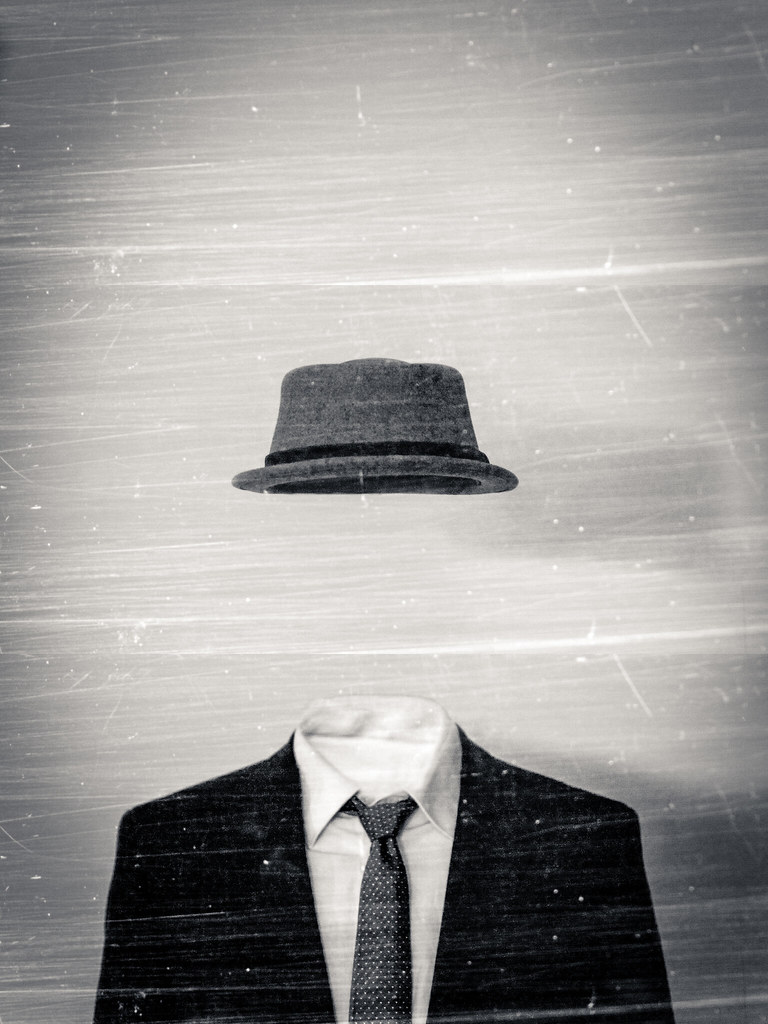
I wander around on the pavement, earbuds neatly fitted, mobile phone conveniently held in front of me so I can see the person I’m talking to. You can all listen to my conversation whilst attempting to navigate around me, oops, someone bumped into me, a small boy left sprawling, I laugh, not at the small boy, but the joke my mate has just relayed, it’s funny right. People weave left and right but me, I don’t worry, I walk straight on, embroiled in my conversation, it’s not about them, it’s about me.
There’s my friend and his family, let’s stop here, in the middle of the pavement and let’s talk. What, people are having to walk in the road to get past, I’m discussing weighty matters here, can’t you see, it’s not about you, it’s about me.
I hop on the bus, earbuds, I’m not sure where they are. Now where’s that YouTube video my mate told me about, oh yeah, here it is. Now that’s hilarious, can’t hear it because of all the hub bub around me, turn it up and enjoy, I’m having a gas. Didn’t want to listen to that? It’s not about you, it’s about me.
And now at work, I take up the laptop and watch some TED talk video, I need to go somewhere so with laptop open, speaker on full, I wander across the office and out through the door held open for me. I don’t acknowledge your politeness, I don’t see you, it’s not about you, it’s about me.
I sit waiting for a colleague to join me in an open area, people around using laptops, having conversations, I turn the volume up, this video is good, I need to hear it, it’s not about the rest of you, it’s about me.
I go to the work restaurant with my friend, it’s a bit busy, never mind we can sit here. I push my chair back banging into another chair, catching the knuckles of someone that happens to be leaning on the chair. I don’t see it, I don’t see you, I want to sit here right, it’s not about you, it’s about me.
And when I learn to drive, I’m going to speed even if it is dangerous because I will need to get to where I am going quickly, it’s not about the rest of you, it’s about me. And I will be the one that overtakes all the cars in the queue, only to push in at the last moment. My indicator tells you to give me room, it’s not about you, it’s about me.
And when I have kids, I will park right outside the school, never mind if I obstruct the road, I need to pick up my little darlings, it’s not about you, it’s about me.
And in my real world, when I have to constantly move out of the way of people on phones, have to listen to videos and conversations I have no interest in, hold doors open without even a glance from the person that has walked through, have my knuckles scraped with the back of a chair, without even an acknowledgement that something has happened, despite my yelp from the pain, when I sit watching the idiots overtaking and have to brake to avoid a collision as they push into the queue, when I sit and wait in the road whilst someone strolls along, little one in tow and straps them in the back seat before having a quick chat with another parent, I inwardly shout to myself; WHEN WAS IT THAT I BECAME INVISIBLE? I’s not just about you, it’s also about me.
Share this:


Welcome to class. What’s your name?
Often when I ask my newest students to introduce themselves in class – to say and hear their names called out loud – I am reminded that this part of the classroom experience is a fresh opening-up of the classroom as a learning space. I share my full name and invite students to address me as they please. First-year university students often arrive with the weight of their own names – and identities – from their school days. There are often unseen wounds, perhaps unknown. They often arrive in “our” classrooms primed to refashion their own professional personae. A great introduction is their most important networking tool.
On the first day of second grade at my new school, our teacher said my name was so complicated that she nicknamed me by my initials, D.K., which I was called until I decided otherwise. That happened precisely, and abruptly, in the summer between middle and high school, culminating in September 1989. I remember begging my aunt to take me to the music store so I could buy the new Rhythm Nation 1814 cassette.
By then, most of us had attended this same, small school the whole time, so we all knew one another well. I decided to return as a high schooler, and asked folks to call me Diepiriye, no longer D.K. All did, seamlessly.
What’s more, when we’d have a substitute teacher, several of my classmates would yell out my name when they stumbled in taking the roster. They’d always stumble. I’d memorised the roster early on in elementary school; I knew I came between J. King and M. Love. I’d wait.
Caldwell, Cannon, Cummings, Dunbar, Eubanks, Friedman, Gage, Howard (getting closer). While waiting for my name, I’d even write sentences in my mind’s eye using the last names of the kids sandwiching mine – King, Kuku, Love. I could see our names lined-up on the printed page, put together in this order – for years – by the hands of fate. I’d manoeuvre the words around in space, hear how they fit together differently, or in phrases. Stevie Wonder would have a field day with these three words.
I wouldn’t understand this until decades later, but this is one of the typical sorts of imagination that comes along with dyslexia. It’s not just that we mix-up letters and words, rather, our imaginations are less fixed to any simple meaning like in neurotypical people’s minds. Love, King Kuku could have many deeper endings than last names, depending on how you see it. I’m depending on you to use your imagination, here, too. Depending on how you see it, the ship is free, or it is sinking.
McConnell, McGimsey, Montgomery, O’Neil, Palma, Palmer…Todd, Trimmer… Watkins, Welsch, Williams.
It seemed like all but I and one of my classmates’ last names were not English (or Anglicised). Not only that, both our two dads were actually from Nigeria, and our were mothers were best friends from college. Not only that, both our parents grew up on the east and west sides of their respective communities/countries. While I have a funny African name – according to kids – my friend had a Christian first name, and his last name is recognisably Yoruba.
Of course, there was never any civil war between the east and west ends of Louisville, Kentucky – both had black ghettos. Also, both our mothers had ‘desegregated’ every classroom they’d ever entered since elementary in that era’s culture wars. Kids were placed on the frontlines of that war, as author Toni Morrison was quick to remind us.
Both our dads had ended up in America on government scholarships at the University of Louisville, in the aftermath of the chaos of the Nigerian Civil War, albeit through radically differing paths. My dad was a Biafran child soldier. His mother rescued him from a camp, and whisked him out of the country. She named me.
Now, as an educator, I hold the roster. Today, in the UK, roster power is even tied to enforcing national borders. Also of critical value, students’ names will be called many times in class: Called upon to read or respond to text; comment on images; offer perspective or analysis; share lived experience; and crucially, pose critical questions to instructors and peers. The classroom is a busy place.
Call me by my Name.
Too often, in the business of running the classroom, we may overlook simply honouring one another by name, to make the effort to call, recall, and call upon one another in the learning space. As educators, we are called upon to continually demonstrate good practice, shows of good faith.
Everyone uses nicknames in the American South, and uniquely at my school, we called our teachers by their first names. This was one of many ways our ‘liberal’ school broke away from traditional power hierarchies. My second-grade teacher gave me a nickname as a way to shield myself, so I could enter and participate in the learning community untethered. I used this shield until I was strong enough to fly in my own right/light.
University students are in the unique position of fashioning their authentic professional selves. Our students need space to practice calling their names as they wish to be called, professionally. We can share our own curiosity with the stories of all our names, yes, even when we have to be reminded a million times. Yes, even when they have funny African names like Doctor Kuku. Yes, it’s also the proverbial ‘you’re a name not a number’. Sharing is the ethos of community… and crucially, learning. Call me by my Name.
It’s not just my ‘magination, but, we’ve all seen someone respond to an unfamiliar name with the ugly, squished-up face. No one should have their name responded to with what looks like disgust, let alone a child…let alone any student, at any level, in any learning community.
Calling students by name is an important first step in building trust. “Trust,” bell hooks reminds us in Conflict, the 15th the 32 short chapters of her Engaged Pedagogy guide, Teaching Critical Thinking, “must be cultivated in the classroom if there is to be open dialectical exchange and positive dissent.” Trust provides space for students to allow themselves to be known.
Trust also reifies mutual respect. In turn, mutual respect forms the needed basis for the rigorous inquiry, discussion, and crucially, dissent and debate which enlivens and enriches each collective learning experience.
As Badu says: I think y’ betta call Tyrone. Call him! And tell him c’mon … let his voice be heard in class. Call Keisha, Tasha, Joanne, Sian, and Jo, Joey, Joachim, Jane, Paul, Precious, Jean-Paul, Ali, Aliyah, Amadou, Kalliah and Khalil … all of “they and them,” too. And, teachers, let students know stories of your name, too. For example, I wasn’t born Dr. Kuku, but now you can certainly call me by my name!

Pictured here during my first year at college. A high school classmate & I honouring Lyman T. Johnson, a civil rights leader/educator we’d interviewed for our 12th grade oral history project.
Share this:


Is Easter relevant?

What if I was to ask you what images will you conjure regarding Easter? For many pictures of yellow chicks, ducklings, bunnies, and colourful eggs! This sounds like a celebration of the rebirth of nature, nothing too religious. As for the hot cross buns, these come to our local stores across the year. The calendar marks it as a spring break without any significant reference to the religion that underpins the origin of the holiday. Easter is a moving celebration that observers the lunar calendar like other religious festivals dictated by the equinox of spring and the first full moon. It replaces previous Greco-Roman holidays, and it takes its influence for the Hebrew Passover. For those who regard themselves as Christians, the message Easter encapsulates is part of their pillars of faith. The main message is that Jesus, the son of God, was arrested for sedition and blasphemy, went through two types of trials representing two different forms of justice; a secular and a religious court which found him guilty. He was convicted of all charges, sentenced to death, and executed the day after sentencing. This was exceptional speed for a justice system that many countries will envy. By all accounts, this man who claimed to be king and divine became a convicted felon put to death for his crimes. The Christian message focuses primarily on what happened next. Allegedly the body of the dead man is placed in a sealed grave only to be resurrected (return from the death, body and spirit) roamed the earth for about 40 days until he ascended into heavens with the promise to be back in the second coming. Christian scholars have been spending time and hours discussing the representation of this miracle. The central core of Christianity is the victory of life over death. The official line is quite remarkable and provided Christians with an opportunity to admire their head of their church.
What if this was not really the most important message in the story? What if the focus was not on the resurrection but on human suffering. The night before his arrest Jesus, according to the New Testament will ask “Father, if thou be willing, remove this cup from me” in a last attempt to avoid the humiliation and torture that was to come. In Criminology, we recognise in people’s actions free will, and as such, in a momentary lapse of judgment, this man will seek to avoid what is to come. The forthcoming arrest after being identified with a kiss (most unique line-up in history) will be followed by torture. This form of judicial torture is described in grim detail in the scriptures and provides a contrast to the triumph of the end with the resurrection. Theologically, this makes good sense, but it does not relate to the collective human experience. Legal systems across time have been used to judge and to punish people according to their deeds. Human suffering in punishment seems to be centred on bringing back balance to the harm incurred by the crime committed. Then there are those who serve as an example of those who take the punishment, not because they accept their actions are wrong, but because their convictions are those that rise above the legal frameworks of their time. When Socrates was condemned to death, his students came to rescue him, but he insisted on ingesting the poison. His action was not of the crime but of the nature of the society he envisaged. When Jesus is met with the guard in the garden of Gethsemane, he could have left in the dark of the night, but he stays on. These criminals challenge the orthodoxy of legal rights and, most importantly, our perception that all crimes are bad, and criminals deserve punishment.
Bunnies are nice and for some even cuddly creatures, eggs can be colourful and delicious, especially if made of chocolate, but they do not contain that most important criminological message of the day. Convictions and principles for those who have them, may bring them to clash with authorities, they may even be regarded as criminals but every now and then they set some new standards of where we wish to travel in our human journey. So, to answer my own question, religiosity and different faiths come and go, but values remain to remind us that we have more in common than in opposition.
Share this:


A microcosm of deviancy

A little over a week ago our university introduced the compulsory wearing of face masks indoors. This included wearing of masks in classrooms as well as common areas and offices. Some may argue that the new rules were introduced a little too late in the day, whilst I’m sure others will point to the fact that government guidance is that the wearing of face masks is advisory and therefore the introduction of the new rules was unwarranted. Let’s be honest the government and their political party haven’t set much of an example regarding the basic safety ideas, let alone rules, as evidenced by the recent Conservative party conference. The new rules at the university, however, are not enforced, instead there is a reliance that students and staff will comply. This of course creates several dilemmas for students and staff where there is a failure to comply and it makes for some interesting observations about general human behaviour and deviance. To that extent, university life might be viewed as a microcosm of life in the general population and this lends itself quite nicely to the analogy of behaviours whilst driving on a road.
Driving behaviours vary, from those drivers that consistently and diligently stick to the speed limit despite what others may be doing, to those that have complete disregard for limits or indeed others including those that police the roads. Let us be quite clear at this stage, speed limits are nearly always there for a reason. There is ample research that speed kills and that reductions in speed limits injuries and saves life. Whilst those drivers that drive over the speed limit will not always be involved in a collision and that a collision will not always result in serious injury or death, there is a much greater potential for this. The risks of course are spread across the population in the locality, the impact is not just felt by the speeding driver but other drivers and pedestrians as well. To some extent we can make the comparison to the risks associated with catching Covid and the wearing of masks and social distancing, failure to comply increases risks to all. As a quick reminder, the wearing of masks is to protect others more so than it is to protect the individual mask wearer.
Observations of behaviours regarding staff and students wearing masks at the university are interesting. There are those that comply, regardless of what others are doing, some of these will have been wearing masks indoors before the new rules came in. Not dissimilar to the careful driver, sticking to the speed limit but also prepared to drive slower where they perceive there is a greater risk. Then there is the well-intentioned mask wearer, the one that knows the rules and will stick to them but through absent mindedness or through some of life’s many distractions, they fail to wear their masks at various points of the day. As with the well-meaning driver, they are easily reminded and often apologetic, even if it is only to themselves. Of course, there is the ‘follow the flock’ wearer, the person that could quite easily be persuaded to not wear their mask by the rest of the flock as they fail to wear theirs. The driver that joins the rest and drives at 40mph in a 30mph limit because the rest of the traffic is doing so. Next is the deviant that has disregard for the rules as long as no one in authority is looking. The person that keeps their mask handy, probably under their chin and then when challenged in some way, perhaps by a disapproving look from a member of staff or by a direct challenge, puts their mask on but only for the duration they are under observation. Not dissimilar to the speedster that slows down when they see a police vehicle or a static speed camera only to speed up again when the danger of being caught and sanctioned has passed. Finally, there is the person that has complete disregard for any rules, they will blatantly fail to wear a mask and wave away with complete disdain any attempt by student ambassadors positioned at the door to offer them a mask. They like the speeding driver that fails to obey any of the rules of the road have complete disregard for the rules or indeed any rules.
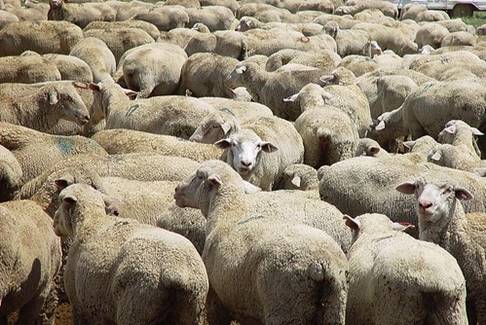
Whilst we may lament the fact that some people forget, are distracted but are generally well meaning, we probably wouldn’t want to impose any sanction for their deviance. But what of those that have complete disregard for the rules? It is worth returning here to the general ethos of wearing masks; to protect others. The disregard for the rules is inter alia a disregard for the safety of others. Whilst we might observe that the deviancy is apparent amongst several students (a problem that might be generalised to society), it is somewhat disconcerting that there are a significant number of staff who clearly do not think the rules apply to them. They seem to neither care about their colleagues nor the students and it would seem consider themselves above the rules. Another comparable trait in general society where those in positions of power seem to have a disregard for rules and others. Finally, we might consider how we could police these new rules as clearly our university society of students and staff are unable to do so. I can hear the cries now, haven’t you got anything better to do, this is a sledgehammer to crack a nut and all the usual rhetoric endured by the police across the land. If you make a rule, you must be prepared to enforce it otherwise there’s no point in having it. Imposing an unenforceable rule is simply playing politics and attempting to appease those that question the conditions in which students and staff work. Imagine speed limits on the road but no enforcement cameras, no police and no sanctions for breaches. It will be interesting to see how long the general population at the university follow the new rules, recent observations are that the flock of sheep mentality is starting to come to the fore. As a parting thought, isn’t it amazing how easy it is to study crime and deviance.
Share this:


A moment of volition and free will

On Good Friday, Christians will remember one of the most important covenants in their faith. The arrest, trial and execution of the head of their church. Jesus, an inspiring figure across centuries, will be in the garden of Gethsemane asking his father “to take this cup from me” (Luke 22:42), but finally accepting his fate. The significance of this self-sacrifice is the glue that connects the faith to its followers, because it is a selfless act, despite knowing in advance all that is to follow. The betrayal, the rejection, the torture, the humiliation and the eventual death. Even the resurrection, appears distant and therefore he will momentarily wish to abstain. Then, comes the thought; if not me, who? This act is conditional to all that will follow and so his free will ultimately condemn him.
These are steps that inspired many of his followers to take his word further across the world and subject themselves to whatever fate they were to suffer. The message rests in pure religious motives and motivations and over the years has eroded the implicit humanity that it contains. People have been able to demonstrate their destructive nature in wars, crime and continued injustices. Against them some people have taken exception and in acts of altruism willingly, sacrifice themselves for the greater good. People of, or without, faith, but with a firm conviction on the sacrament of humanity.
People stood up against oppression and faced the judgement of the apartheid regime that murdered them, like Steve Biko. People who spoke out against social injustice like Oscar Romero, who was shot during mass. Those who resisted fascism like Ilektra Apostolou, a woman tortured and executed by the Nazis, and countless others throughout time. These people maybe knew the “risks” of speaking out, of making a stand, but did it anyway. A free will that led them to their damnation, but for millions of others, they became an inspiration. At the worst of times, they shine and take their place in history, not for conquering and victories, but for reminding us all of the nobility in being principled.
Selflessness offers a signal to all, of how important it is, for all of us to be part of our society. It is when we dig deep on those qualities, that some may not even know that they have. I remember reading the interview of a person tortured during a dictatorship, being described as a hero; their response was incredibly disarming. “I am not a hero; I was just there”. I am quite aware that I write this blog at a time of self-isolation, lockdowns and the daily body count of the dead. Over a period of weeks, our lives have radically changed, and we live in self-imposed confinement. We are spectators in a medical drama with serious social implications. Those we do not quite know, but it looks very likely that these reverberations will last for at least a while.
It is interesting to see a renewed appreciation for professionals, namely health care and for those professions that we did not hold in high regard previously. Hero as a term seems to be rebranding itself and this may be one of those long-term effects afterwards. Just to remind us all that on this Good Friday, numerous professionals in the health care system, carers, teachers, public transport, logistics, council and retail workers will be going to work with their free will, knowing some of the risks for them and their families. This is their testament, this is their covenant and that forms part of our collective civilisation. Whilst people remind us to wash our hands, I kiss their hands for their altruism
Share this:


Things I used to could do without a phone. #BlackenAsiaWithLove
A Spoken Word poem for young people everywhere, esp Youth in Asia, who may never know WE LIVED before smartphones…and live to tell about it.
Walk.
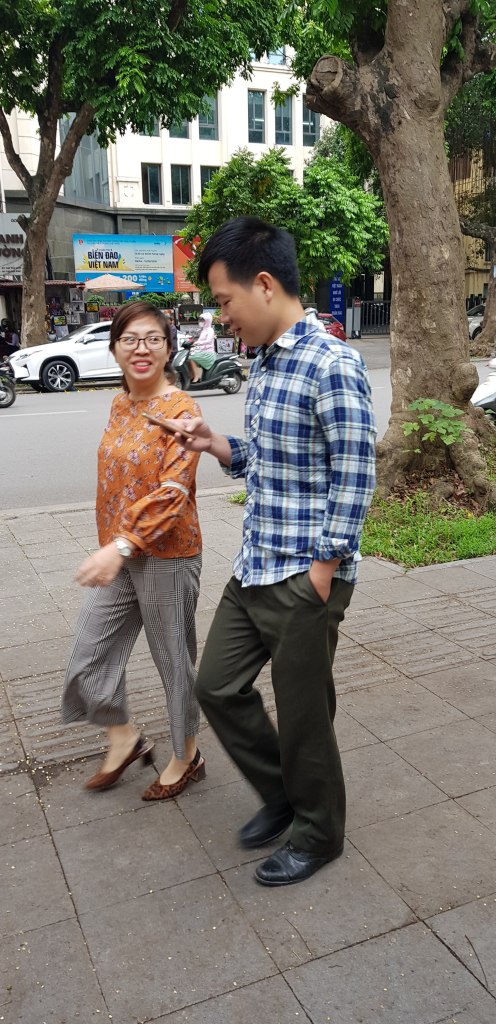
Walk down the street.
Find my way.
Go someplace.
Go someplace I had previously been.
Go someplace I had previously not been.
Meet.
Meet friends.
Meet friends at a specific time and place.
Meet new people.
Meet new people without suspicion.
Strike up a conversation with a stranger.
Make myself known to a previously unknown person.
Now, everything and everyone unknown is literally described as ‘weird’.
Eat.
Eat in a restaurant by myself.
Pay attention to the waiter.
Wait for my order to arrive.
Sit.
Sit alone.
Sit with others.
Listen.
Listen to the sound of silence.
Listen to music.
Listen to a whole album.
Listen to the cityscape.
Overhear others’ conversations in public.
Watch kids play.
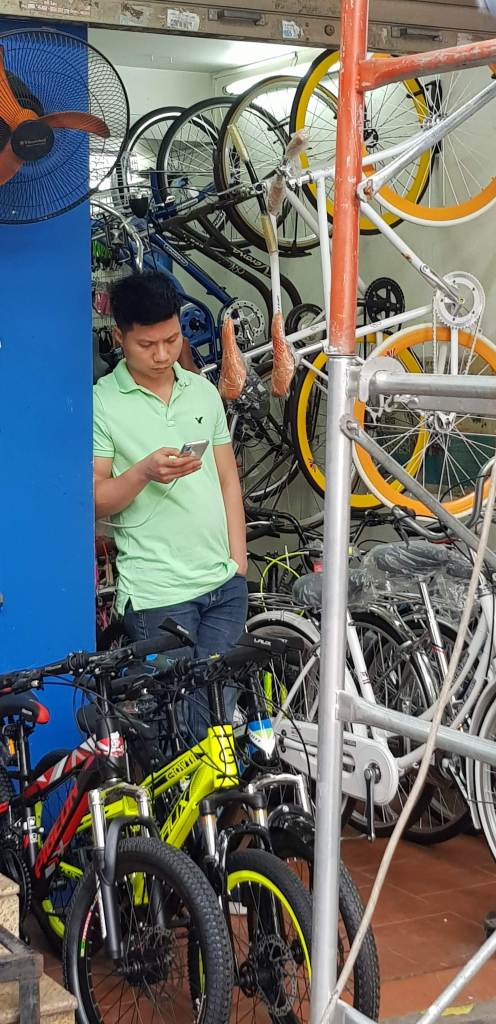
Shop.
Share.
Share pictures.
Take pictures.
Develop pictures.
Frame pictures.
See the same picture in the same spot.
Read.
Read a book.
Read a long article.
Read liner notes.
Pee.
I used to be able to stand at a urinal and focus on what I was doing,
Not feeling bored,
Not feeling the need to respond to anything that urgently.
Nothing could be so urgent that I could not, as the Brits say, ‘take a wee’.
Wait.
Wait at a traffic light.
Wait for a friend at a pre-determined place and time.
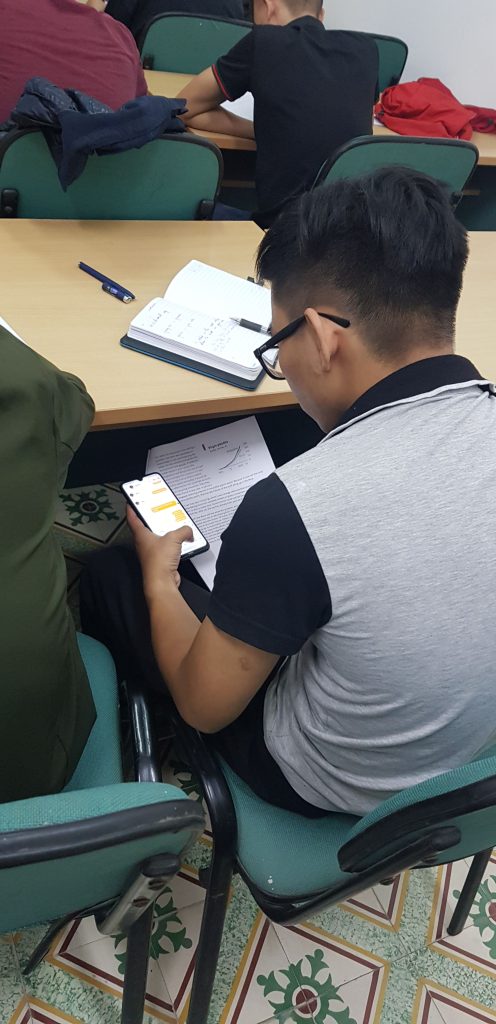
Wait for my turn.
Wait for a meal I ordered to arrive.
Wait in an office for my appointment.
Wait in line.
Wait for anything!
I used to appreciate the downtime of waiting.
Now waiting fuels FOMO.
I used to enjoy people watching…
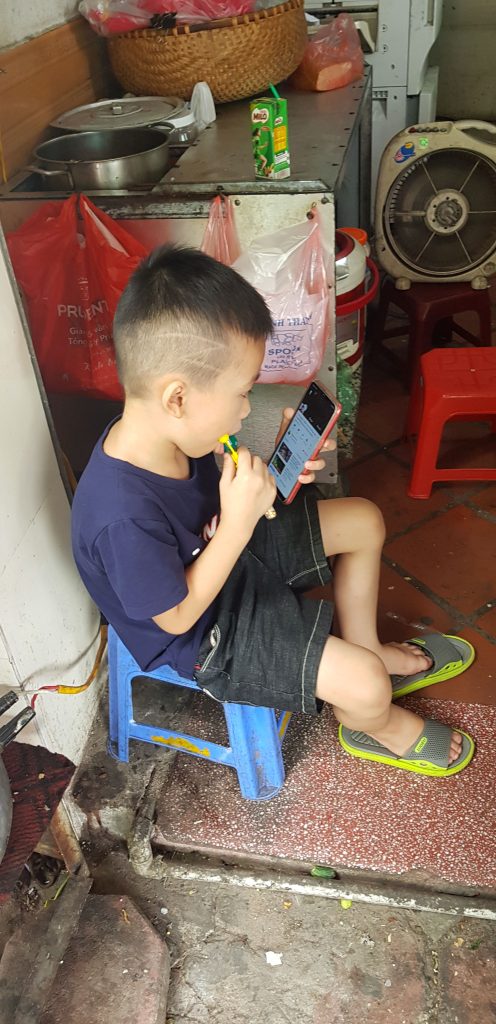
Now I just watch people on their phones.
It’s genuine anxiety.
Walk.
Walk from point A to B.
I used to could walk between two known points without having to mark the moment with a post.
Now I can’t walk down the hall,
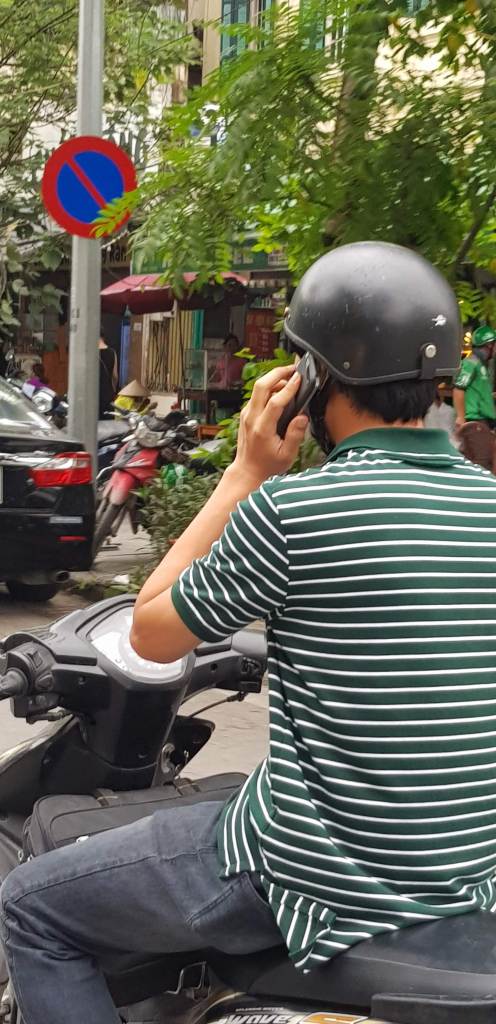
Or through the house or even to the toilet without checking my phone.
I avoid eye contact with strangers.
Anyone I don’t already know is strange.
I used to could muscle through this awkwardness.
Talk.
Have a conversation.
A friend and I recently lamented about how you used to could have a conversation and
Even figure out a specific thing that you couldn’t immediately recall…
Just by talking.
I also appreciate the examples we discussed.
Say you wanted to mention a world leader but couldn’t immediately remember their name. What would you do before?
Rattle off the few facts you could recall and in so doing you’d jog your memory.
Who was the 43rd US president?
If you didn’t immediately recall his name,
You might have recalled that the current one is often called “45” since
Many folks avoid calling his name.
You know Obama was before him, therefore he must’ve been number “44.”
You know Obama inherited a crap economy and several unjust wars,
Including the cultural war against Islam. And
That this was even one of the coded racial slurs used against him: “A Muslim.”
Putting these facts together,
You’d quickly arrive at Dubya! And
His whole warmongering cabinet. And
Condi Rice. And
General Powell’s botched PowerPoint presentation at the UN. And
Big dick Cheney, Halliburton and that fool shooting his friend while hunting.
That whole process might have taken a full minute,
But so would pulling up 43’s name on the Google.
This way, however, you haven’t lost the flow of conversation nor the productive energy produced between two people when they talk.
(It’s called ‘limbic resonance’, BTW).
Yeah, I used to be able to recall things…
Many more things about the world without my mobile phone.

Wonder.
Allow my mind to wander.
Entertain myself with my own thoughts.
Think.
Think new things.
Think differently just by thinking through a topic.
I used to know things.
Know answers that weren’t presented to me as search results.
I used to trust my own knowledge.
I used to be able to be present, enjoying my own company,
Appreciating the wisdom that comes with the mental downtime.
Never the fear of missing out,
Allowing myself time to reflect.
It is in reflection that wisdom is born.
Now, most of us just spend our time simply doing:
Surfing, scrolling, liking, dissing, posting, sharing and the like.
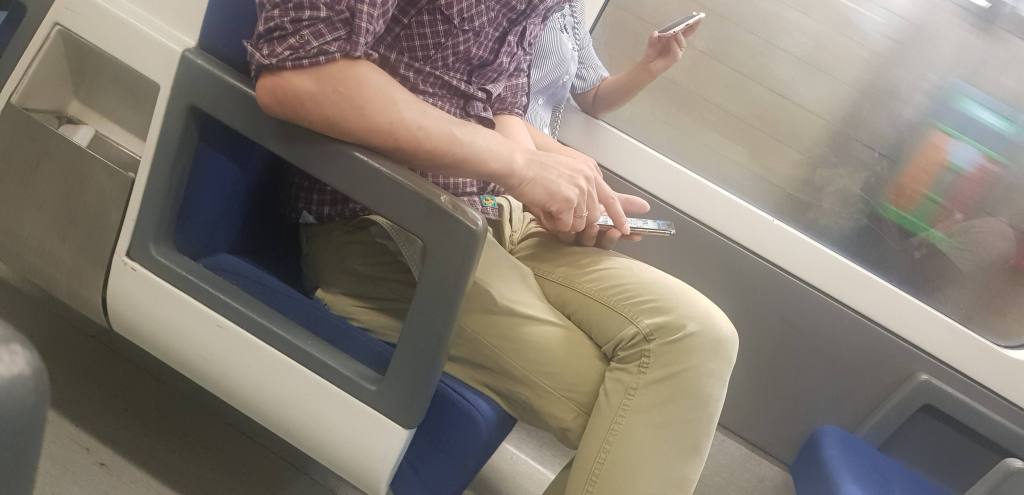
Even on a wondrous occasion, many of us would rather be on our phones.
Not just sharing the wonderful occasion –
Watching an insanely beautiful landscape through our tiny screens,
Phubbing the people we’re actually with,
Reducing a wondrous experience to a well-crafted selfie –
But just making sure we’re not missing out on something rather mundane happening back home.
I used to could be in the world.
Now, I’m just in cyberspace.
I used to be wiser.
Share this:


Teaching Criminology….Cui Bono?
Following several conversations with students and reflecting on another year of studying it got me thinking, what is or can be the quintessentially criminological issue that we can impart onto them? It is always interesting to hear from others how your ideas are transferred into their notes, phrases and general understanding. I think that there are a few things that are becoming clear early on, like the usual amazement of those outside the discipline who hear one studying criminology; a reverence as if the person reading the subject is on a par with those committing the deed. There is a natural curiosity to crime in all walks of life and those seen closer to the topic, attract part of that curiosity.
There are however some more profound issues relating to criminology that are neither clear nor so straightforward. The discipline is an amalgamation of thoughts and theories making it incredibly difficult to pinpoint a generic appreciation for the discipline. Some of us like the social discourses relating to social injustice, a matter traditionally closer to sociology or social work, while others ponder the conceptual dynamics of human behaviour, mostly addressed in philosophical debates, then there are those who find the individual characteristics and personality socio-dynamic dimensions intriguing. These distinct impressions will not only inform our understanding but will also provide each of us with a perspective, a way of understanding criminology at a granular level.
In criminological discourses, informed by law, I used to pose the old Latin question: Cui bono (who benefits)? A question posed by the old legal experts to trace liability and responsibility of the act committed. Obviously in their view crime is a choice committed freely by a deviant mind. But then I was never a legal expert, so my take on the old question was rather subversive. The question of who benefits can potentially lay the question of responsibility wide open, if it is to be looked from a social harm perspective. The original question was incredibly precise to identify a person for the benefit of a trial. That’s the old criminal evidence track.
Taking this question outside the forensic setting and suddenly this becomes quite a loaded query that can unpack different responses. Cui bono? Why are we talking about drug abuse as a crime and not about tax avoidance? Why is the first regarded a crime, whilst the second is simply frowned upon? Cui bono? When we criminalise the movement of people whose undocumented by we have very little information for those who have procured numerous properties in the country? If our objection is on transparency of movement then there is clearly a difference of how this is addressed. Cui bono? When we identify violence at interpersonal level and we have the mechanisms to suppress it, but we can engage in state violence against another state without applying the same mechanisms? If our objection is the use of violence, this is something that needs to be addressed regardless of the situation, but it is not. Ironically some of the state violence, may contribute to the movement of people, may contribute to the exploitation of population and to the use of substances of those who returned home broken from a violence they embraced.
Our criminology is merely informed from our perspective and it is my perspective that led me to those thoughts. I am very sure that another colleague would have been making a series of different connections when asked “Cui Bono?”
Share this:


The Bride of Frankenstein

The classic novel by Mary Shelley back in the early 19th century was an apocalyptic piece of work that imagined the future in a world where technology appeared to be a marvel that professes to make everyday people into gods. The creation of a man by a man (deliberately gendered) in accordance to his wishes, and morals. The metaphysical constraints of the soul seemingly absent, until all comes to head. This was dystopic, but at the same time philosophical, of the future of humanity.
In the 20th century John B. Watson believed that he could shape the behaviour of anyone, mostly children in any possible way. Some of his ideas even made it into popular psychology where he offered advice to parents of how to raise their children. Although no monster is mentioned, there is still the view that a man can shape a child in whatever way he chooses. A creationist and most importantly, arrogant view of the world.
Decades later Robert Martinson, a sociologist will look at all these wonderful and great programmes designed to challenge behaviours and change people, so they can rehabilitate leaving criminality behind. He found the results to be disappointing. In the meantime, child psychologists could not achieve this leap that Watson seem to think they could make in changing people.
In the 21st century we began to realise at a discipline level that forcing change upon people is rather impossible. How about a man creating a man? Can you develop a new human that will be developed espousing the creator’s desired attributes and thus become a model citizen? In recent years we have been talking about designer babies, gene harvesting and genetic modification. Such a surprising concept considering the Lebensborn experience during the Nazi regime. That super-man concept was shattered in thousands little pieces, and for many relegated to history books. Therefore, designer babies are such a cautionary tale.
As a society we are still curious on what can technology can achieve, how far can we go and what can we develop. Still in science there are seeds of creationism proposing ideas of that we can develop; a world of people without illness, disorder and deviance. Pure, healthy and potentially exceptional individuals who may be physiologically right but sadly devoid of humanity. Why devoid? Because what makes a person? Our imperfections, deviances and foibles. These add to, rather than substract from, our uniqueness and individuality.
In a recent twitter discussion one of my colleagues engaged in a discussion about the repatriation of one of those women called “Isis brides”. The colleague posed the question, why not allow her to return, only to receive in response, because these are no humans. As I read it I thought, well this is a new interpretation of the monster. A 21st century monster that we can chase out of the proverbial village with torches because its alive and it shouldn’t be. We can wish for people to be good to us, open armed and happy all the time, but that is not necessarily how it is. We know that this is the case and of course we want to be reminded of our humanity, not for the positives but for the negatives. Not what we can be but what the others are not. So, we can always be the villagers and never the monster.
Mary Shelley (1888) Frankenstein or The Modern Prometheus, London, George Routledge and Sons.
Share this:


Are we really free?

This year the American Society of Criminology conference (Theme: Institutions, Cultures and Crime) is in Atlanta, GA a city famous for a number of things; Mitchell’s novel, (1936), Gone with the Wind and the home of both Coca-Cola, and CNN. More importantly the city is the birthplace and sometime home of Dr Martin Luther King Jr and played a pivotal role in the Civil Rights Movement. Throughout the city there are reminders of King’s legacy, from street names to schools and of course, The King Center for Non-Violent Social Change.
This week @manosdaskalou and I visited the Center for Civil and Human Rights, opened in 2014 with the aim of connecting the American Civil Rights Movement, to broader global claims for Human Rights. A venue like this is an obvious draw for criminologists, keen to explore these issues from an international perspective. Furthermore, such museums engender debate and discussion around complex questions; such as what it means to be free; individually and collectively, can a country be described as free and why individuals and societies commit atrocities.
According to a large-scale map housed within the Center the world is divided up into countries which are free, partially free and not free. The USA, the UK and large swathes of what we would recognise as the western world are designated free. Other countries such as Turkey and Bolivia are classified as partially free, whilst Russia and Nigeria are not free. Poor Tonga receives no classification at all. This all looks very scientific and makes for a graphic illustration of areas of the world deemed problematic, but by who or what? There is no information explaining how different countries were categorised or the criteria upon which decisions were made. Even more striking in the next gallery is a verbatim quotation from Walter Cronkite (journalist, 1916-2009) which insists that ‘There is no such thing as a little freedom. Either you are all free, or you are not free.’ Unfortunately, these wise words do not appear to have been heeded when preparing the map.
Similarly, another gallery is divided into offenders and victims. In the first half is a police line-up containing a number of dictators, including Hitler, Pol Pot and Idi Amin suggesting that bad things can only happen in dictatorships. But what about genocide in Rwanda (just one example), where there is no obvious “bad guy” on which to pin blame? In the other half are interactive panels devoted to individuals chosen on the grounds of their characteristics (perceived or otherwise). By selecting characteristics such LGBT, female, migrant or refugee, visitors can read the narratives of individuals who have been subjected to such regimes. This idea is predicated on expanding human empathy, by reading these narratives we can understand that these people aren’t so different to us.
Museums such as the Center for Civil and Human Rights pose many more questions than they can answer. Their very presence demonstrates the importance of understanding these complex questions, whilst the displays and exhibits demonstrate a worldview, which visitors may or may not accept. More importantly, these provide a starting point, a nudge toward a dialogue which is empathetic and (potentially) focused toward social justice. As long as visitors recognise that nudge long after they have left the Center, taking the ideas and arguments further, through reading, thinking and discussion, there is much to be hopeful about.
In the words of Martin Luther King Jr (in his 1963, Letter from Birmingham Jail):
‘Injustice anywhere is a threat to justice everywhere. We are caught in an inescapable network of mutuality, tied in a single garment of destiny. Whatever affects one directly, affects all indirectly’
Share this:


Lest we forget

Today marks 100 years since the end of the First World War and commemorations will be taking place across the land. I will be overseas for much of the pomp and circumstance, but the build-up each year appears to begin earlier and earlier. As a pacifist, I always find this time of year very troubling, particularly the focus on the Royal British Legion [RBL] poppy.
Most combatants (both axis and allies) in both world wars were conscripted, that is they were legislatively compelled into military uniform. This was also the case in the UK, with the passing of the Military Service Act, 1916, Military Training Act, 1939 and National Service Act, 1948 ensuring that men had little option but to spend a period of time in the military. Objections on the grounds of conscience were legally tolerated, although not always upheld. As I have written about previously, this was a particularly treacherous path to follow in WWI.
So, for many men* during the period of 1916-1960, military service was not a choice, thus it makes sense to talk about a society which owes a debt to these individuals for the sacrifice of their time, energy and in some cases, lives. Remember these men were removed from their jobs and their families, any aspirations had to be put on hold until after the war, and who knew when that was likely to occur?
Since 1960, military service in the UK has been on a voluntary basis, although, we can of course revisit criminological discussions around free will, to ascertain how freely decisions to enlist can truly be. Nevertheless, there is a substantive difference between servicemen during that period and those that opt for military service after that period. Such a distinction appears to pass by many, including the RBL, who are keen to commemorate and fetishize the serviceman as intrinsically heroic and worthy of society’s unquestioning support.
The decision to wear a poppy, whether RBL red or peace pledge union [ppu] white is a personal one. The former is seen as the official national symbol of commemoration, designed to recognise the special contribution of service personnel and their families. The latter is often attacked as an affront to British service personnel, although the ppu explicitly note that the white poppy represents everybody killed during warfare, including all military combatants and victims. It draws no distinctions across national borders, neither does it privilege the military over the civilian victims. These different motifs, each with their own specific narratives, pose the question of what it is as individuals and as a society we mean by ‘Lest we forget’.
- Do we want to remember those conscripted soldiers and swear that as a society we will not force individuals into the military, regardless of their personal viewpoints, desires, aspirations?
- Do we want to remember soldiers and swear that as a society we will not go to war again?
If it is the latter, we should take more notice of the work of RBL, who although coy about their relationships with arms dealers, accept a great deal of money from them (cf. Tweedy, 2015, BAE Systems, 2018). We should also consider the beautiful and poignant display at the Tower of London in 2014, entitled Blood Swept Lands and Seas of Red (Cummins and Piper, 2014). The week after this display began to be dismantled, a dinner for arms dealers was held at the same venue. Whilst RBL is keen to deny that their poppy is partisan and political, it is evident that this little paper flower is not neutral. Discussions and arguments on social media have demonstrated that this motif can and is used as a battering ram to close down questions, anxieties and deliberation. Even more worrying is the rewriting of history, that WWI and WWII were won by British forces, neglecting that these were world wars, involving individuals; men, women and children, from all over the globe. This narrative seems to have attached itself to the furor around Brexit, “we saved Europe, they owe us”!
For me, on an extremely personal level, we should be looking to end war, not looking for ways in which to commemorate past wars.
*For more detail around the conscription of women during WWII see Nicholson (2007) and Elster and Sørensen (2010).
References
BAE Systems, (2018), ‘Supporting the Armed Forces,’ BAE Systems, [online]. Available from: https://www.baesystems.com/en-uk/our-company/corporate-responsibility/working-responsibly/supporting-communities/supporting-the-armed-forces [Last accessed 20 October 2018]
Cummins, Paul, (2016), ‘Important Notice,’ Paul Cummins Ceramics, [online]. Available from: https://www.paulcumminsceramics.com/important-notice/ [Last accessed 11 November 2016]
Cummins, Paul and Piper, Tom, (2014), Blood Swept Lands and Seas of Red, [Ceramic Installation], (London: Tower of London)
Elster, Ellen and Sørensen, Majken Jul, (2010), ‘(Eds), Women Conscientious Objectors: An Anthology, (London: War Resisters’ International)
Military Service Act, 1916, (London: HMSO)
Military Training Act, 1939, (London: HMSO)
Milmo, Cahai, (2014), ‘The Crass Insensitivity’ of Tower’s Luxury Dinner for Arms Dealers, Days After Poppy Display, i-news, Thursday 27 November 2014, [online]. Available from: https://www.independent.co.uk/news/uk/home-news/the-crass-insensitivity-of-tower-s-luxury-dinner-for-arms-dealers-days-after-poppy-display-9888507.html [Last accessed 27 November 2014]
National Service Act, 1948, (London: HMSO)
Nicholson, Hazel, (2007), ‘A Disputed Identity: Women Conscientious Objectors in Second World War Britain,’ Twentieth Century British History, 18, 4: 409-28
peace pledge union [ppu], (2018), ‘Remembrance & White Poppies,’ peace pledge union, [online]. Available from: https://ppu.org.uk/remembrance-white-poppies [Last accessed 11 November 2018]
Tweedy, Rod, (2015), My Name is Legion: The British Legion and the Control of Remembrance, (London: Veterans for Peace UK), [online]. Available from: http://vfpuk.org/wp-content/uploads/2016/10/my_name_is_legion-web.pdf [Last accessed 14 May 2017]

 Thoughts from the criminology team