
Home » Education (Page 2)
Category Archives: Education

Zemiological Perspective: Educational Experiences of Black Students at the University of Northampton

As a young Black female who has faced many challenges within the education system, particularly related to behavioral issues, I noticed how the system can unintentionally harm black students. I observed that Black children’s experiences in the education system are not always viewed from a deviant perspective, because they are not inherently deviant. The institutional harm faced by Black students is not always a ‘crime’ nor is it illegal, yet it is profoundly damaging.
This realisation prompted me to adopt a zemiological perspective, drawing upon the work of Hillyard et al. (2004) to highlight the subtle yet impactful harms faced by Black students in the educational system. My primary objective was to uncover the challenges these students face, as outlined in my initial research question: ‘To what extent can the experiences of Black students in higher education be understood as a form of social harm?’ To achieve this, I analysed the educational experiences of Black students at the University of Northampton. This involved reviewing the university’s access and participation plans, which detail the performance, access, and progression of various demographics within the institution, with a particular focus on BAME students.
Critical race theory (CRT) was the guiding theoretical framework for this research study. CRT recognises the multifaceted nature of racism, encompassing both blatant acts of racial discrimination and subtler, systemic forms of oppression that negatively impact minority ethnic groups (Gillborn, 2006). This theoretical approach is directly correlated to my research and was strongly relevant. This allowed me to gain insight into the underlying reasons behind the disparities faced by Black students in higher education. As well as enabling me to unpack the complexities of racism and discrimination, providing a comprehensive understanding of how these issues manifest and persist within the educational landscape.
Through conducting content analysis on the UON Access and Participation Plan document and comparing it to sector averages in higher education, four major findings came to light:

Access and Recruitment: The University of Northampton has made impressive progress in improving access and recruitment for BAME students, fostering diversity and inclusivity in higher education, and surpassing sector standards. Yet, while advancements are apparent, there remains a need for more comprehensive approaches to tackle systemic barriers and facilitate academic success across the broader sector.
Non-Continuation: Alarmingly, non-continuation rates among BAME students at the University of Northampton have surpassed the sector average, indicating persistent systemic obstacles within the education system. High non-continuation rates perpetuate cycles of disadvantage and limit opportunities for personal and professional growth.
Attainment Gap: Disparities in academic attainment between White and BAME students have persisted and continue to persist, reflecting systemic inequalities and biases within the academic landscape. UON is significantly behind the sector average when it comes to attainment gaps between BAME students and their white counterparts. Addressing the attainment gap requires comprehensive approaches that tackle systemic difficulties and provide targeted support to BAME students.
Progression to Employment or Further Study: UON is also behind the sector average in BAME students progression in education or further study. BAME students face substantial disparities in progression to employment or further study, highlighting the need for collaborative efforts to promote diversity and inclusivity within industries and professions. Addressing entrenched biases in recruitment processes is essential to fostering equitable opportunities for BAME students.
Contributions to Research: This research deepens understanding of obstacles within the educational system, highlighting the effectiveness of a zemiological perspective in studying social inequalities in education. By applying Critical Race Theory, the study offers insights that can inform policies aimed at fostering equity and inclusion for Black students.
The findings hold practical implications for policy and practice, informing the development of interventions to address disparities and create a more supportive educational environment. This research significantly contributes to our understanding of the experiences of Black students in higher education and provides valuable guidance for future research and practice in the field.
Aside from other limitations in my dissertation, the main limitation was the frequent use of the term ‘BAME.’ This term is problematic as it fails to recognise the distinct experiences, challenges, and identities of individual ethnic communities, leading to generalisation and overlooking specific issues faced by Black students (Milner and Jumbe, 2020). While ‘BAME’ is used for its wide recognition in delineating systemic marginalisation (UUK 2016 cited in McDuff et al., 2018), it may conceal the unique challenges Black students face when grouped with other minority ethnic groups. The term was only used throughout this dissertation as the document being analysed also used the term ‘BAME’.
This dissertation was a very challenging but interesting experience for me, engaging with literature was honestly challenging but the content in said literature did keep me intrigued. Moving forward, i would love Black students experiences to continue to be brought to light and i would love necessary policies, institutional practises and research to allow change for these students. I do wish i was more critical of the education system as the harm does more so stem from institutional practices. I also wish i used necessary literature to highlight how covid-19 has impacted the experiences of black students, which was also feedback highlighted by my supervisor Dr Paula Bowles.
I am proud of myself and my work, and i do hope it can also be used to pave the way for action to be taken by universities and across the education system. Drawing upon the works of scholars like Coard, Gillborn, Arday and many others i am happy to have contributed to this field of research pertaining to black students experiences in academia. Collective efforts can pave the way for a more promising and fairer future for Black students in education.
References
Gillborn, D. (2006). Critical Race Theory and Education: Racism and anti-racism in educational theory and praxis. Discourse: Studies in the Cultural Politics of Education, 27 (1), 11–32. [Accessed 21 April 2024]
Hillyard, P., Pantazis, C., Tombs, S. and Gordon, D., (Eds), (2004). Beyond Criminology: Taking Harm Seriously, London: Pluto Press.
Milner, A. and Jumbe, S., (2020). Using the right words to address racial disparities in COVID-19. The Lancet Public Health, 5(8), pp. e419-e420
Mcduff, N., Tatam, J., Beacock, O. and Ross, F., (2018). Closing the attainment gap for students from Black and minority ethnic backgrounds through institutional change. Widening Participation and Lifelong Learning, 20(1), pp.79-101.
Share this:


Embracing Technology in Education: Prof. Ejikeme’s Enduring Influence
Sallek Yaks Musa, PhD, FHEA
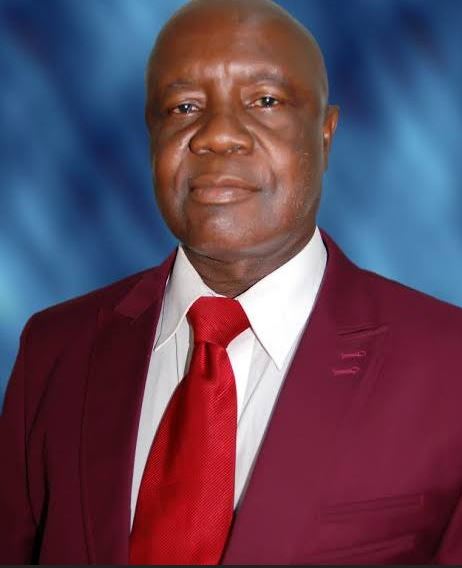
When I heard about the sudden demise of one of my professors, I was once again reminded of the briefness and vanity of life —a topic the professor would often highlight during his lectures. Last Saturday, Prof. Gray Goziem Ejikeme was laid to rest amidst tributes, sadness, and gratitude for his life and impact. He was not only an academic and scholar but also a father and leader whose work profoundly influenced many.
I have read numerous tributes to Prof. Ejikeme, each recognizing his passion, dedication, and relentless pursuit of excellence, exemplified by his progression in academia. From lecturer to numerous administrative roles, including Head of Department, Faculty Dean, Deputy Vice Chancellor, and Acting Vice Chancellor, his career was marked by significant achievements. This blog is a personal reflection on Prof. Ejikeme’s life and my encounters with him, first as his student and later as an academic colleague when I joined the University of Jos as a lecturer.
Across social media, in our graduating class group, and on other platforms, I have seen many tributes recognizing Prof. Ejikeme as a professional lecturer who motivated and encouraged students. During my undergraduate studies, in a context where students had limited voice compared to the ‘West,’ I once received a ‘D’ grade in a social psychology module led by Prof. Dissatisfied, I mustered the courage to meet him and discuss my case. The complaint was treated fairly, and the error rectified, reflecting his willingness to support students even when it wasn’t the norm. Although the grade didn’t change to what I initially hoped for, it improved significantly, teaching me the importance of listening to and supporting learners.
Prof. Ejikeme’s classes were always engaging and encouraging. His feedback and responses to students were exemplary, a sentiment echoed in numerous tributes from his students. One tribute by Salamat Abu stood out to me: “Rest well, Sir. My supervisor extraordinaire. His comment on my first draft of chapter one boosts my morale whenever I feel inadequate.”
My interaction with Prof. Ejikeme significantly shaped my teaching philosophy to be student-centered and supportive. Reflecting on his demise, I reaffirmed my commitment to being the kind of lecturer and supervisor who is approachable and supportive, both within and beyond the classroom and university environment.
Prof. Ejikeme made teaching enjoyable and was never shy about embracing technology in learning. At a time when smartphones were becoming more prevalent, he encouraged students to invest in laptops and the internet for educational purposes. Unlike other lecturers who found laptop use during lectures distracting, he actively promoted it, believing in its potential to enhance learning. His forward-thinking approach greatly benefited me and many others.
Building on Prof. Ejikeme’s vision, today’s educators can leverage advancements in technology, particularly Artificial Intelligence (AI), to further enhance educational experiences. AI can personalize learning by adapting to each student’s pace and style, providing tailored feedback and resources. It can also automate administrative tasks, allowing educators to focus more on teaching and student interaction. For instance, AI-driven tools can analyse student performance data to identify learning gaps, recommend personalized learning paths, and predict future performance, helping educators intervene proactively.
Moreover, AI can support academics in research by automating data analysis, generating insights from large datasets, and even assisting in literature reviews by quickly identifying relevant papers. By embracing AI, academics can not only improve their teaching practices but also enhance their research capabilities, ultimately contributing to a more efficient and effective educational environment.
Prof. Ejikeme’s willingness to embrace new technologies was ahead of his time, and it set a precedent for leveraging innovative tools to support and improve learning outcomes. His legacy continues as we incorporate AI and other advanced technologies into education, following his example of using technology to create a more engaging and supportive learning experience.
Over the past six months, I have dedicated significant time to reflecting on my teaching practices, positionality, and the influence of my role as an academic on learners. Prof. Ejikeme introduced me to several behavioural theories in social psychology, including role theory. I find role theory particularly crucial in developing into a supportive academic. To succeed, one must balance and ensure compatible role performance. For me, the golden rule is to ensure that our personal skills, privileges, dispositions, experiences from previous roles, motivations, and external factors do not undermine or negatively impact our role or overshadow our decisions.
So long, Professor GG Ejikeme. Your legacy lives on in the countless lives you touched.
Disclaimer: AI may have been used in this blog.
Share this:


A response to the Government’s plans to address ‘Mickey-mouse degrees’.

The Government’s latest plans to scrap university courses that are being considered as ‘under-achieving’ through poor graduate outcomes and progression should deeply concern all of us who work in and who have a passion for the Social Sciences, Arts and Humanities across Higher Education. It is no secret that Rishi Sunak and his Government have traditionally favoured apprentices in replacement of graduates. It is a truth that university and higher education is not for everyone, so whilst the value of undertaking an apprentice should be unequivocally un-challenged, this moment of rupture and insecurity for the Higher Education Sector should provoke us to think about how the culture of Higher Education has changed, and why people come to university in the first place. Engaging in these perspectives will put us in a stronger position to contribute to these debates occurring across the chambers of Parliament and at dinner tables across the country. So too should we as academics be actively challenging these attacks on the disciplines that we have passion for.
Before the awakening of neoliberalism, higher education was a vocation and a pursuit for those seeking to climb the ladder of ‘social mobility’. It is without question, that UK universities, particularly in the inter-war and the early post-war period were filled with young people with pre-existing economic fortune and privilege. Universities were not spaces for the working classes, nor for individuals achieving low grades outcomes. However, we can acknowledge that the class-based, gender and racial barriers into Higher Education have improved, yet we still have progress to make moving forward. Since the 2008 Global Financial Crash and the series of events that have followed, the motivations for coming to university have largely changed. Seemingly, it is predicated on a mode of response to economic re-structuring, particularly when the opportunities in the labour markets erode and become increasingly competitive, university seems for some as a suitable option to both buy time and up-skill to ‘stand out’. A sad truth remains however that these gravitations to university have contributed to degree inflation that has changed the way we see and value a degree. These changes have partially allowed the Government to play loose and fast with degrees that they consider ‘worthless’. However, those of us who actively teach and research in the social sciences will know that these degrees are invaluable…. Invaluable through teaching students to critically think about the seemingly ‘normal world’ around them- to question the logic of everyday practices, attitudes, norms and values that are engrained into our social fabric. To work with communities and organisations to identify and respond to issues of criminal and social injustice…. Be that austerity, homelessness, poverty, miscarriages of justice, and inequality. With this in mind, as educators in the social sciences, arts and humanities, we have a duty to show-case the momentous impact of our disciplines. To show-case movements of activism, government lobbying and social change. This emphasises the importance of research, knowledge exchange and adopting pedagogies enabling students to develop these works. Only then, can we put forward cases for impacts that at a government level could challenge these narratives. So too can we utilise these cases to infuse a passion for the discipline that with luck would enable a student to make a choice of coming to university that is right for them.
As a sector, we have numerous challenges facing us…. we need to think like and be activists…. We need to embody what we teach and speak out against those who reduce our work as a ‘worthless’ or ‘Mickey-Mouse’ degree. We may not change the Government’s approach but at least if departments do get shut down…. We went with a fight.
Share this:


When will these issues be addressed?

In the realm of education, inclusivity and accessibility should be the foundation of any society aspiring for progress. However, in the case of special education schools in the United Kingdom, there exists a troubling narrative of systemic failings. Despite efforts to provide tailored education for students with diverse needs, the British educational system’s shortcomings in special education have cast a shadow over the pursuit of equal opportunities for all.
One of the main challenges facing special education schools in the UK is inadequate funding. These institutions often struggle with limited resources, hindering their ability to provide the necessary support for students with special educational needs. Insufficient funding results in larger class sizes, fewer specialized staff, and a lack of essential resources, all of which are detrimental to the quality of education these schools can offer. Furthermore, the heavy reliance on the UKs crumbling social care services and the overstretched NHS within special education settings exasperate poor outcomes for children and young people.
Special education students require a range of support services tailored to their individual needs. However, the inconsistency in the provision of support services across different regions of the UK is a glaring issue. Disparities in access to speech therapists, occupational therapists, and other essential services create an uneven educational landscape, leaving some students without the critical support they require to thrive.
Effective collaboration and communication between educators, parents, and support professionals are vital for the success of any special education school. Unfortunately, there is often a lack of seamless coordination. The lack of collaboration can and has result in fragmented support for the students, hindering their overall development and thus making it difficult to implement cohesive and effective educational plans.
The success of special education programs relies heavily on well-trained and empathetic educators. Unfortunately, the British educational system falls short in providing comprehensive training for teachers, working in special education schools. Many teachers express a lack of preparation to address the unique challenges posed by students with diverse needs, leading to a gap in understanding and effective teaching strategies. It is also important to note that many staff members that work within special education settings are not trained teachers, although they have been given the title of teachers. This further leads to inadequate education for children and young people. Moreover, post-covid has seen a high staff turnover within these settings. There have been many reports that have alluded to the notion that British schools are failing our children, but it seems that children from special education provisions are ignored, and families are dismissed when concerns are raised about the lack of education and preparation for the ‘real world’.
I am also critical of the overreliance of labelling students with specific disabilities. While categorization can be useful for designing targeted interventions, it can also lead to a narrow understanding of a student’s capabilities and potential. This labelling approach inadvertently contributes to stereotypes and stigmas, limiting the opportunities available to students with special needs….. There tends to be a focus on the troubling history of the way people with disabilities in the UK have been treated, but what I find interesting is there is a sense of disregard for the issues that are occurring in the here and now.
There is also a lack of special education provisions in the UK. This has led to many children with additional needs without a school place. And while a specific figure of the number of children being excluded from education has not been disclosed, West Northamptonshire, has awarded families over £49,000 over special education failings in 2023 (ITV, 2023). Furthermore, Education health care plan recommendations (EHCP) have not been followed within schools. These are legally binding documents that have been continuously dismissed which has led to further legal action against West Northants council in recent years (Local Government and Care Ombudsman, 2023).
The failings in special education schools have repercussions that extend beyond the classroom. Many students who leave these schools face challenges in transitioning to higher education, entering the workforce or living independently. The lack of adequately tailored support for post-education opportunities leaves these individuals at a disadvantage, perpetuating a cycle of limited prospects, which inevitably pull people with disabilities into a cycle of poor health and poverty (Scope, 2023). The disability employment gap in the UK is 29% and the average disabled household faces a £975 a month in extra costs (Scope, 2023) access to employment and financial independence is out of reach for disabled people due to failings within education because lack of preparation for life beyond school.
There needs to be reform in British schools from mainstream to special education. There are failings across the board. Adequate funding, improved teacher training, consistent support services, enhanced collaboration, and a shift away from overreliance on labelling are all crucial steps toward creating an inclusive educational environment. It is difficult to draw on optimism when the UK government continues to ignore age old concerns. This blog entry is to bring awareness to an issue, that may not be on your radar, but will hopefully get you to reflect on the copious barriers that people with disabilities face. Childhood should be a time when there is a fence built to protect children is schools. As we get older and face the challenges of the wider world, we should be equipped with some skills. Special education schools should not be used as a holding place until a child comes of age. There should be provisions put in place to give all young people an equitable chance.
Share this:


Welcome to class. What’s your name?
Often when I ask my newest students to introduce themselves in class – to say and hear their names called out loud – I am reminded that this part of the classroom experience is a fresh opening-up of the classroom as a learning space. I share my full name and invite students to address me as they please. First-year university students often arrive with the weight of their own names – and identities – from their school days. There are often unseen wounds, perhaps unknown. They often arrive in “our” classrooms primed to refashion their own professional personae. A great introduction is their most important networking tool.
On the first day of second grade at my new school, our teacher said my name was so complicated that she nicknamed me by my initials, D.K., which I was called until I decided otherwise. That happened precisely, and abruptly, in the summer between middle and high school, culminating in September 1989. I remember begging my aunt to take me to the music store so I could buy the new Rhythm Nation 1814 cassette.
By then, most of us had attended this same, small school the whole time, so we all knew one another well. I decided to return as a high schooler, and asked folks to call me Diepiriye, no longer D.K. All did, seamlessly.
What’s more, when we’d have a substitute teacher, several of my classmates would yell out my name when they stumbled in taking the roster. They’d always stumble. I’d memorised the roster early on in elementary school; I knew I came between J. King and M. Love. I’d wait.
Caldwell, Cannon, Cummings, Dunbar, Eubanks, Friedman, Gage, Howard (getting closer). While waiting for my name, I’d even write sentences in my mind’s eye using the last names of the kids sandwiching mine – King, Kuku, Love. I could see our names lined-up on the printed page, put together in this order – for years – by the hands of fate. I’d manoeuvre the words around in space, hear how they fit together differently, or in phrases. Stevie Wonder would have a field day with these three words.
I wouldn’t understand this until decades later, but this is one of the typical sorts of imagination that comes along with dyslexia. It’s not just that we mix-up letters and words, rather, our imaginations are less fixed to any simple meaning like in neurotypical people’s minds. Love, King Kuku could have many deeper endings than last names, depending on how you see it. I’m depending on you to use your imagination, here, too. Depending on how you see it, the ship is free, or it is sinking.
McConnell, McGimsey, Montgomery, O’Neil, Palma, Palmer…Todd, Trimmer… Watkins, Welsch, Williams.
It seemed like all but I and one of my classmates’ last names were not English (or Anglicised). Not only that, both our two dads were actually from Nigeria, and our were mothers were best friends from college. Not only that, both our parents grew up on the east and west sides of their respective communities/countries. While I have a funny African name – according to kids – my friend had a Christian first name, and his last name is recognisably Yoruba.
Of course, there was never any civil war between the east and west ends of Louisville, Kentucky – both had black ghettos. Also, both our mothers had ‘desegregated’ every classroom they’d ever entered since elementary in that era’s culture wars. Kids were placed on the frontlines of that war, as author Toni Morrison was quick to remind us.
Both our dads had ended up in America on government scholarships at the University of Louisville, in the aftermath of the chaos of the Nigerian Civil War, albeit through radically differing paths. My dad was a Biafran child soldier. His mother rescued him from a camp, and whisked him out of the country. She named me.
Now, as an educator, I hold the roster. Today, in the UK, roster power is even tied to enforcing national borders. Also of critical value, students’ names will be called many times in class: Called upon to read or respond to text; comment on images; offer perspective or analysis; share lived experience; and crucially, pose critical questions to instructors and peers. The classroom is a busy place.
Call me by my Name.
Too often, in the business of running the classroom, we may overlook simply honouring one another by name, to make the effort to call, recall, and call upon one another in the learning space. As educators, we are called upon to continually demonstrate good practice, shows of good faith.
Everyone uses nicknames in the American South, and uniquely at my school, we called our teachers by their first names. This was one of many ways our ‘liberal’ school broke away from traditional power hierarchies. My second-grade teacher gave me a nickname as a way to shield myself, so I could enter and participate in the learning community untethered. I used this shield until I was strong enough to fly in my own right/light.
University students are in the unique position of fashioning their authentic professional selves. Our students need space to practice calling their names as they wish to be called, professionally. We can share our own curiosity with the stories of all our names, yes, even when we have to be reminded a million times. Yes, even when they have funny African names like Doctor Kuku. Yes, it’s also the proverbial ‘you’re a name not a number’. Sharing is the ethos of community… and crucially, learning. Call me by my Name.
It’s not just my ‘magination, but, we’ve all seen someone respond to an unfamiliar name with the ugly, squished-up face. No one should have their name responded to with what looks like disgust, let alone a child…let alone any student, at any level, in any learning community.
Calling students by name is an important first step in building trust. “Trust,” bell hooks reminds us in Conflict, the 15th the 32 short chapters of her Engaged Pedagogy guide, Teaching Critical Thinking, “must be cultivated in the classroom if there is to be open dialectical exchange and positive dissent.” Trust provides space for students to allow themselves to be known.
Trust also reifies mutual respect. In turn, mutual respect forms the needed basis for the rigorous inquiry, discussion, and crucially, dissent and debate which enlivens and enriches each collective learning experience.
As Badu says: I think y’ betta call Tyrone. Call him! And tell him c’mon … let his voice be heard in class. Call Keisha, Tasha, Joanne, Sian, and Jo, Joey, Joachim, Jane, Paul, Precious, Jean-Paul, Ali, Aliyah, Amadou, Kalliah and Khalil … all of “they and them,” too. And, teachers, let students know stories of your name, too. For example, I wasn’t born Dr. Kuku, but now you can certainly call me by my name!

Pictured here during my first year at college. A high school classmate & I honouring Lyman T. Johnson, a civil rights leader/educator we’d interviewed for our 12th grade oral history project.
Share this:


Thinking about ‘Thoughts from the Criminology Team’

This is the sixth anniversary of the blog, and I am proud to have been a contributor since its inception. Although, initially I only somewhat reluctantly agreed to contribute. I dislike social media with a passion, something to be avoided at all costs, and I saw this as yet more intrusive social media. A dinosaur, perhaps, but one that has years of experience in the art of self-preservation. Open up to the world and you risk ridicule and all sorts of backlash and yet, the blog somehow felt and feels different. It is not a university blog, it is our team;s blog, it belongs to us and the contributors. What is written are our own personal opinions and observations, it is not edited, save for the usual grammar and spelling faux pas, it is not restricted in any way save that there is an inherent intolerance within the team for anything that may cause offence or hurt. Government, management, organisations, structures, and processes are fair game for criticism or indeed ridicule, including at times our own organisation. And our own organisation deserves some credit for not attempting to censure our points of view. Attempts at bringing the blog into the university fold have been strongly resisted and for good reason, it is our blog, it does not belong to an institution.
As contributors, and there are many, students, academics and guests, we have all been able to write about topics that matter to us. The blog it seems to me serves no one purpose other than to allow people space to write and to air their views in a safe environment. For me it serves as a cathartic release. A chance to tell the world (well at least those that read the blog) my views on diverse topics, not just my views but my feelings, there is something of me that goes into most of my writing. It gives me an opportunity to have fun as well, to play with words, to poke fun without being too obvious. It has allowed us all to pursue issues around social injustices, to question the country, indeed the world in which we live. And it has allowed writers to provide us all with an insight into what goes on elsewhere in the world, a departure from a western colonial viewpoint. I think, as blogs go it is a pretty good blog or collection of blogs, I’m not sure of the terminology but it is certainly better than being a twit on Twitter.
Share this:


Cash Strapped, Vote-Buying, Petroleum Scarcity, and the Challenge of a 21st Century Election
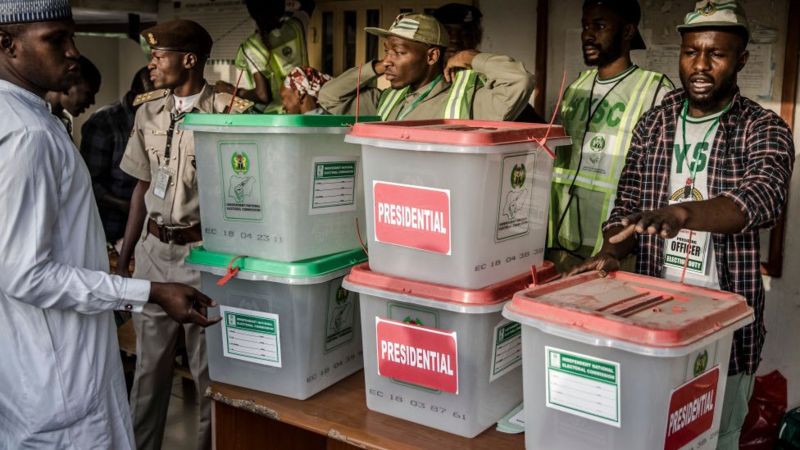
Democratic elections are considered an important mechanism and a powerful tool used to choose political leaders. However, the level of transparency and the safety of votes, the electorates, and the aspirants as recent elections in supposed strong democracies indicate is not a given. Even more, in weak and fragile states, voters grapple with uncertainties including the herculean task of deciding on whom or perhaps what to pledge allegiance to?
Nigerians face such uncertainties as over 93 million voters are set to decide the new leadership of the most populous country in Africa in less than 24 hours. Three contestants: Ahmed Bola Tinubu of the ruling All Progressive Congress (APC); Peter Obi of the Labour Party(LP); and Atiku Abubakar of the Peoples Democratic Party (PSP) are considered the major contestants of the coveted seat of the presidency. All 3 contestants are neither strangers to political power nor free of controversies. Nevertheless, a plethora of problems awaits the successful candidate, including a spiking impatience with government policies from the populace.
Since assuming office in 2015, President Muhammadu Buhari has consciously implemented numerous policies aimed at changing the tide of the crippling economy of Nigeria. One of this was tightening control of foreign exchange and forex restrictions to minimise pressure on the weak exchange rate of the naira against other currencies, and to encourage local manufacturing. Furtherance to this, the government implemented more restrictions including closing all its land borders in August 2019 to curtail smuggling contrabands and to boost agricultural outputs. These policies have been criticised for increasing the hardship of the mostly poor masses and failing to yield desired goals, despite its resulting in an increase in local production of some agricultural products.
The aviation sector and multinational companies were also heavily impacted by the forex restrictions. International airliners were unable to access and repatriate their business funds and profits. As a result, some suspended operations while some multinationals closed down completely. Flawed policy articulation and implementation and a slow or total failure to respond to public disenchantment has been the bane of the 8 years of Buhari regime which ends in a few months. While the masses grappled with surviving movement restrictions during the Covid-19 lockdown, palliative meant for to ease their suffering were hoarded for longer than necessary, thereby provoking series of mass looting and destruction of the storage warehouses.
Demands for action and accountability over police reform also assumed a painful dimension. On 20 October 2020, peaceful protesters demanding the abolishment of a notoriously corrupt, brutal, rogue, and stubborn police unit called SARS were attacked by government forces who killed at least 12 protesters. Incidents as this supports Nigeria’s ranking as an authoritarian regime on the democratic index. Unsurprisingly, the regime appears numb to the spate of violence, insecurity, and recurring killings perpetrated by a complex mix of militias, criminal groups, terrorists, and state institutions as the #EndSARS massacre demonstrates. Thus, a wave of migration among mainly skilled and talented young Nigerians now manifests as a #Japa phenomenon. The two most impacted sectors, health and education ironically supply significant professionals in nations where the political class seek medical treatment or educate their children while neglecting own sectors.
Certainly, the legacy of the Buhari regime would be marred by these challenges which his party presidential candidate and prominent party stalwarts have distanced from. Indeed, they fear electorates would vote against the party as a protest over their suffering. Suffice it that Nigerians lived through the previous year in acute scarcity and non-availability of petroleum products, which further deepened inflation. Currently, cash scarcity is causing untold hardship due to the implementation of a currency redesign and withdrawal limits policy. The timing of the implementation of the policy coincides with the election and is thought to aim at curtailing vote-buying as witnessed in party primary elections. However, there is no guarantee that bank officials would effectively implement the policy.
Thus, as Nigeria decides, the 3 contestants present different realities for the country. For some, voting in the ruling APC candidate who has a questionable history could mean a continuation of the woes endured during the Buhari regime. The PDP candidate who was instrumental in the 2015 election of Buhari has severally been fingered for numerous controversies and corruption, despite having not been prosecuted for any. Similarly, allegations levelled against the LP candidate who has found wide popularity and acceptance amongst the young population has not resulted in any prosecution. However, while the candidate is popular for his anti-establishment stance and desire to change the current system, it is unclear if his party which has no strong political structure, serving governors, or representatives can pull the miracle his campaign has become associated with to win the coveted seat.
Share this:


“Over-policed and under-protected”- School children and policing: some criminological discussions

During the first week of Semester 2, the Criminology team put on a number of small sessions designed around topic areas to encourage some ‘radical’ discussion. Topic areas were designed to deliberately encourage debate and critical consideration. Due to the increasing use of police in schools, and relatively recent (within the past few years) issues around police stop and search in schools, disproportionately being used in schools with a majority Black and Brown cohort, often framed as ‘urban’ schools: it is an area of great interest for both Stephanie and myself. We were expecting some lively discussions around whether the Police should be in schools, and if so, in what capacity: and whilst the students did not disappoint in relation to this matter, they also raised some excellent points around the policing of school children and the control the school forces upon them. It is this area of the discussions that I would like to share with you.
Policing as a form of social control, exerted by schools, not necessarily the Police force, is rife within schools: something the students were quick to draw attention to. This was raised in relation to the policing of Black children’s hair. They are told to alter their appearances based on white standards, have been sent home for not conforming to the school dress code, sent to the back of classrooms for having distracting hair: in both primary and secondary school settings. This power over Black children’s hair, stands in contrast to the idea that children have no say over their hair, and are held to white westernised standards, yet can be held criminally responsible and subject to the force of the law as they are recognised as mature enough to understand crime and its consequences.
This baffling, controlling narrative is also evident in the use of school uniforms. Students raised the inappropriateness of some of the school uniforms in relation to the length of skirts, banning trainers, and piercings, which was a method of control which removed all sense of individuality and identity. It was recognised that children are encouraged to ‘grow up’ and ‘mature’ and ‘figure out’ what they want to do, but they had the methods of exploring this, especially in relation to their identity, restricted and policed. The limited autonomy over hair, clothes, piercings and children’s bodies stands in stark contrast to the legal discourse of children being criminally responsible at the age of 10years old in England and Wales. This was baffling to us!
A further way of policing students in school was through the surveillance the schools exerted over children. The use of CCTV, fingerprints as a method of purchasing lunch was originally considered as a form of security: the all seeing eye of big brother, oops sorry the school, and the attempt to reduce bullying by removing the carrying of cash was originally framed as a way of protecting children. However, the students were very critical of whether this surveillance was intended as protection, or rather as control. The idea of being deterred from delinquency through the use of CCTV, and preventing bullying by removing the possibility of money was considered, but again this refers back to the controlling of children’s behaviour.
There isn’t enough space to include all areas of the 2 hour discussion, and the time flew by quickly as the students and staff lost themselves in considering the role police play in schools, and the role schools play in policing children. The session concluded with us considering the school as an institution and whether its primary role was that of education, or of the creation of obedient bodies. I won’t tell you where we settled, but it is worth a ponder…
With thanks to all those who attended and stimulated the critical discussions around over-policed and under-protected: school children and policing: Gloria, Lucy, Kayode, Uche, Christivie, Joseph, Rosemary, Katya, Kayleigh, Chrissy, Diamante, Shola-Renee, Ellie, Sarah, Zoe, Stephanie and Jessica.
Share this:


Don’t know what to do with your Criminology degree….meet Demi King

A very warm welcome to all of you wonderful Criminology students! My name is Demi King, your dedicated Careers Consultant here at UON. You will hear my name and be sick of the sight of me in no time! But, within good reason as I am here to help you help yourself. That’s right, I’m not here to do it for you but I will give you 100% in supporting you throughout your time here at UON and for life!! You heard it… for life!! Crazy right??? Nope… Here at UON we promise life long careers support. How awesome is that! Especially if you complete the Employability Plus Award whilst you’re here as if it comes to it we will find you a paid internship 12 months after you’ve left if you’re struggling. One to bear in mind!
Anyway, where were we… Ah yes! So as a fellow Criminology graduate myself, I know the feeling…. You could see me as your fairy god mother, who is here to put you in the right direction which I most certainly wish I had throughout my Uni experience.
I’m not here to scare you or anything but when you come to University, your careers starts then, not in final year when its all panic stations! If you stick with me, you’ll be sweet! I aim to raise your aspirations and uncover your skills/talents/interests by landing you that job you’ve always wanted or help you understand what job you even want to do! There is so much I can help you with, such as getting that CV looking sharp, applying for jobs, the hidden job market, where to look for volunteering & internships.. the list really does go on!
No goal or ambition is too big, and you will be incredibly surprised what you can really do with your degree. I mean look at me! Again, it’s fine if you don’t have a clue right now either but please don’t leave it until the last moment as you will miss out on some fantastic opportunities.
See you around guys, come say hello, book an appointment with me! Don’t be shy. You didn’t pay all this money to not use me! You can contact me demi.king@northampton.ac.uk or book an appointment with me here
Share this:


ASUU vs The Federal Government

It will be 8 months in October since University Lecturers in Nigeria have embarked on a nationwide strike without adequate intervention from the government. It is quite shocking that a government will sit in power and cease to reasonably address a serious dispute such as this at such a crucial time in the country.
As we have seen over the years, strike actions in Nigerian Universities constitute an age-long problem and its recurring nature unmasks, quite simply, how the political class has refused to prioritise the knowledge-based economy.
In February 2022, the Academic Staff Union of Universities (ASUU) leadership
(which is the national union body that represents Nigerian University Lecturers during disputes) issued a 4-week warning strike to the Nigerian government due to issues of funding of the public Universities. Currently, the striking University Lecturers are accusing the government of failing to revitalise the dilapidated state of Nigerian Universities, they claim that the government has refused to implement an accountability system called UTAS and that representatives of the government have continued to backtrack on their agreement to adequately fund the Universities.
The government on the other hand is claiming that they have tried their best in negotiating with the striking lecturers – but that the lecturers are simply being unnecessarily difficult. Since 2017, several committees have been established to scrutinize the demands and negotiate with ASUU, but the inability of these committees to resolve these issues has led to this 8-month-long closure of Nigerian Universities. While this strike has generated multiple reactions from different quarters, the question to be asked is – who is to be blamed? Should the striking lecturers be blamed for demanding a viable environment for the students or should we be blaming the government for the failure of efforts to resolve this national embarrassment?
Of course, we can all understand that one of the reasons why the political class is often slow to react to these strike actions is because their children and families do not attend these schools. You either find them in private Universities in Nigeria or Universities abroad – just the same way they end up traveling abroad for medical check-ups. In fact, the problems being faced in the educational sector are quite similar to those found within the Nigerian health sector – where many doctors are already emigrating from the country to countries that appreciate the importance of medical practitioners and practice. So, what we find invariably is a situation where the children of the rich continue to enjoy uninterrupted education, while the children of the underprivileged end up spending 7 years on a full-time 4-year program, due to the failure of efforts to preserve the educational standards of Nigerian institutions.
In times like these, I remember the popular saying that when two elephants fight, it’s the grass that suffers. The elephants in this context are both the federal government and the striking lecturers, while those suffering the consequences of the power contest are the students. The striking lecturers have not been paid their salaries for more than 5 months, and they are refusing to back down. On the other hand, the government seems to be suggesting that when they are “tired”, they will call off the strike. I am not sure that strike actions of the UK UCU will last this long before some sort of agreement would have been arranged. Again, my heart goes out to the Nigerian students during these hard times – because it is just unimaginable what they will be going through during these moments of idleness. And we must never forget that if care is not taken, the idle hand will eventually become the devil’s workshop!
Having said this, Nigerian Universities must learn from this event and adopt approaches through which they can generate their income. I am not inferring that they do not, but they just need to do more. This could be through ensuring large-scale investment programs, testing local/peculiar practices at the international level, tapping into research grant schemes, remodeling the system of tuition fees, and demonstrating a stronger presence within the African markets. As a general principle, any institution that wishes to reap the dividends of the knowledge-based economy must ensure that self-generated revenues should be higher than the government’s grants – and not the other way. So, Universities in Nigeria must strive to be autonomous in their engagements and their organisational structure – while maintaining an apolitical stance at all times.
While I agree that all of these can be difficult to achieve (considering the socio-political dynamics of Nigeria), Universities must remember that the continuous dependence on the government for funds will only continue to subject them to such embarrassments rather than being seen as respected intellectuals in the society. Again, Nigerian Universities need a total disruption; there is a need for a total overhaul of the system and a complete reform of the organisational structure and policies.

 Thoughts from the criminology team