
Home » Discrimination (Page 6)
Category Archives: Discrimination

Questions, questions, questions…..
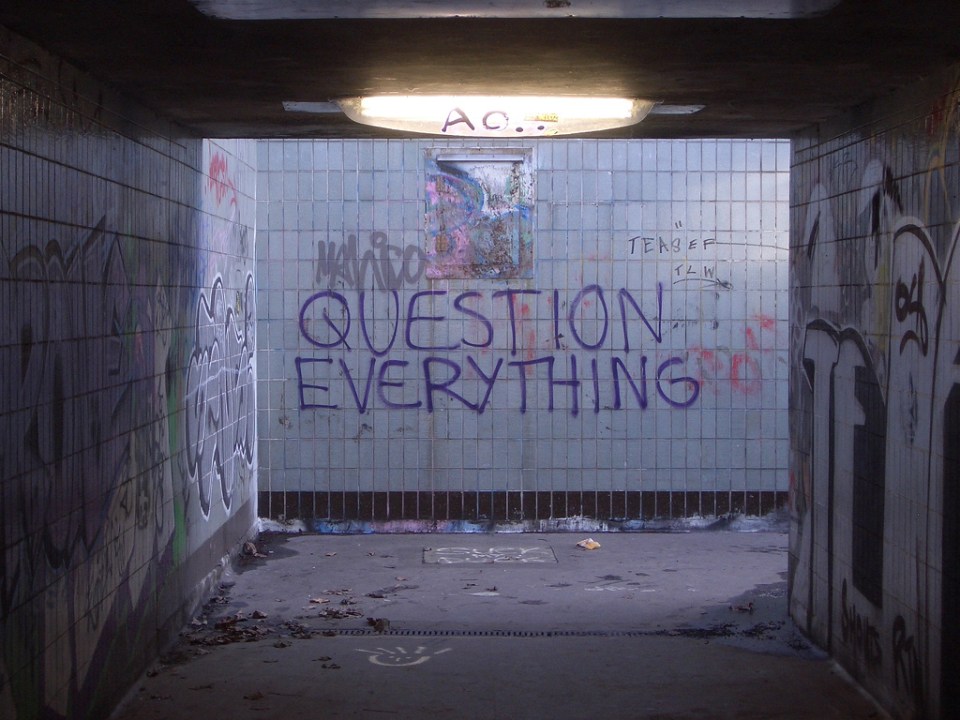
Over the last two weeks we have welcomed new and returning students to our brand-new campus. From the outside, this period of time appears frenetic, chaotic, and incredibly noisy. During this period, I feel as if I am constantly talking; explaining, indicating, signposting, answering questions and offering solutions. All of this is necessary, after all we’re all in a new place, the only difference is that some of us moved in before others. This part of my role has, on the surface, little to do with Criminology. However, once the housekeeping is out of the way we can move to more interesting criminological discussion.
For me, this focuses on the posing of questions and working out ways in which answers can be sought. It’s a common maxim, that within academia, there is no such thing as a silly question and Criminology is no exception (although students are often very sceptical). When you are studying people, everything becomes complicated and complex and of course posing questions does not necessarily guarantee a straightforward answer. As many students/graduates over the years will attest, criminological questions are often followed by yet more criminological questions… At first, this is incredibly frustrating but once you get into the swing of things, it becomes incredibly empowering, allowing individual mental agility to navigate questions in their own unique way. Of course, criminologists, as with all other social scientists, are dependent upon the quality of the evidence they provide in support of their arguments. However, criminology’s inherent interdisciplinarity enables us to choose from a far wider range of materials than many of our colleagues.
So back to the questions…which can appear from anywhere and everywhere. Just to demonstrate there are no silly questions, here are some of those floating around my head currently:
- This week I watched a little video on Facebook, one of those cases of mindlessly scrolling, whilst waiting for something else to begin. It was all about a Dutch innovation, the Tovertafel (Magic Table) and I wondered why in the UK, discussions focus on struggling to feed and keep our elders warm, yet other countries are interested in improving quality of life for all?
- Why, when with every fibre of my being, I abhor violence, I am attracted to boxing?

3. Why in a supposedly wealthy country do we still have poverty?
4. Why do we think boys and girls need different toys?

5. Why does 50% of the world’s population have to spend more on day-to-day living simply because they menstruate?
6. Why as a society are we happy to have big houses with lots of empty rooms but struggle to house the homeless?

7. Why do female ballroom dancers wear so little and who decided that women would dance better in extremely high-heeled shoes?
This is just a sample and not in any particular order. On the surface, they are chaotic and disjointed, however, what they all demonstrate is my mind’s attempt to grapple with extremely serious issues such as inequality, social deprivation, violence, discrimination, vulnerability, to name just a few.
So, to answer the question posed last week by @manosdaskalou, ‘What are Universities for?’, I would proffer my seven questions. On their own, they do not provide an answer to his question, but together they suggest avenues to explore within a safe and supportive space where free, open and academic dialogue can take place. That description suggests, for me at least, exactly what a university should be for!
And if anyone has answers for my questions, please get in touch….
Share this:


Racism in the work place

Growing up in a small town and having dealt with racism from a young age; I felt as if getting a degree would prove that I deserve to sit with the top dogs and that would be the end of me experiencing racism.
But I was sadly mistaken. I have experienced racism at 3 out of the 4 jobs I have had since graduating. I never dealt with it head on. I would just apply for other jobs and pray that the next job would be different. Thinking of reporting people for the comments they said was never an option for me as they were managers or supervisors.
Until I had the 3rd person who said a racist comment and I broke down. At this point I was done with running. I reporte d it and it was dealt with. But since then I have been dealing with covert racism. Being the only black person in a department of over 100 people has not been easy. I have not always received the same opportunities as my colleagues. But I never gave up. I might have my melt down for a few hours or days. But I knew I had to work twice as hard as a white person to even get recognition. I have a degree that relates to my occupation and have paid over a £1,000 for courses just to be recognised. Yet, my colleagues never had to pay for those courses.
The truth of the matter is, it has taken centuries for prejudicial thoughts to be embedded in people’s heads. And it will take the same amount of time to get rid of it. That does not excuse it or make it right. All, you can do is work hard and never give up. You should not have to accept being mistreated. Stand up for yourself, no matter what. Do not suffer in silence!
Share this:


The Other Side of Intelligence

After I graduated I had a bit of tunnel vision of what I wanted to do. I wanted to either work with young offenders or work with restorative justice. Many opportunities actually came up for me to do several different things, but nothing really worked out and nothing felt right.
I carried on working in retail till February 2018; I was honestly starting to lose hope that I would find something that I would enjoy. I started working for a security company that does many things; from employment vetting to gaining intelligence of various kinds. Although the role is not focused on the criminality side entirely, the theme is very much apparent. I find myself thinking about all the different concepts of criminology and how it ties in to what I am doing.
A big part of my role is intelligence and at first, I didn’t think I would enjoy it because I remember in third year in the module, Violence: Institutional Perspectives*; we looked at the inquiry Stockwell 1; an inquiry into the metropolitan police force following the death of Jean Charles de Menezes. Jean Charles was mistaken by intelligence officers for Hussain Osman, one of the terrorists responsible for the failed bomb attacks in London. This particular inquiry frustrated me a lot, because I just felt like, how is it possible for the police to mistake an individual for an innocent person. I just couldn’t accept when we were going through this case how trained officers were able to fail to identify the correct person, regardless of all the other factors that pointed to Jean Charles being the culprit. However, now being in a similar position I understand more how difficult it actually is to identify an individual and being 100% sure. There have been times in my line of work that I have had to question myself 2, 3, even 8 times if the person I found was really who I was looking for.
I do think I question it a lot more because I know how much my job can affect a person’s life and/or future. I do think criminology has been one of the best decisions I made. I know that I view things differently from other people I work with, even my family. Just little things that people tend not to notice I see myself. Thinking, but could it be because of this, or could it be because of that. Criminology really is part of everyday life, it is everywhere, and knowing everything I know today I wouldn’t have it any other way.
*Now CRI3003 – Violence: From Domestic To Institutional
Share this:


The Voice Behind the Music

Marginalised voices were the focal point of my dissertation.
My dissertation explored social issues through the musical genres of Rap and Hip-Hop. During the time period of writing my dissertation there was the rising debate surrounding the association of a new genre, Drill music, being linked to the rise in violent crimes by young people in England (London specifically). The following link to an article from the Guardian newspaper will provide a greater insight to the subject matter:
The idea of music having a direct correlation with criminality sweeps issues such as poverty, social deprivation, class and race all under the rug; when in reality these are just a few of the definitive issues that these marginalised groups face. We see prior examples of this in the late 80s, with rap group N.W.A with their song “F*** the police”. The song surrounded the topic of police brutality and brought light to the disgust and outrage of the wider community to this issue. Simultaneously to this, the N.W.A were refused from running concerts as they were accused of starting revolts. The song was made as a response to their environment, but why is freedom of speech limited to certain sectors of society?
In the present day, we see young people having lower prospects of being homeowners, high rates of unemployment, and the cost of living increasing. In essence the rich are getting richer and the poor continue to struggle; the violence of austerity at its finest. Grenfell Tower is the perfect example of this, for the sake of a cheaper cost lives were lost. Simply because these individuals were not in a position to greatly impact the design of their housing. Monetary status SHOULD NOT determine your right to life, but unfortunately in those circumstances it did.
The alienation of young people was also a topic that was highlighted within my research into my dissertation. In London specifically, youth clubs are being closed down and money is being directed heavily towards pensions. An idea would be to invest in young people as this would potentially provide an incentive and subsequently decrease the prospect of getting involved in negative activities.
In no means, was the aim to condone the violence but instead to simply shed light on the issues that young people face. There is a cry for help but the issue is only looked at from the surface as a musical problem. If only it were that simple, maybe considering the voice behind the music would lead to the solution of the problem.
Share this:

Divided States of America

Nahida is a BA (Hons) Criminology graduate of 2017, who recently returned from travelling.
Ask anyone that has known me for a long time, they would tell you that I have wanted to go to America since I was a little girl. But, at the back of my mind, as a woman of colour, and as a Muslim, I feared how I would be treated there. Racial discrimination and persecution is not a contemporary problem facing the States. It is one that is rooted in the country’s history.
I had a preconceived idea, that I would be treated unfairly, but to be fair, there was no situation where I felt completely unsafe. Maybe that was because I travelled with a large group of white individuals. I had travelled the Southern states, including Louisiana, Texas, Tennessee and Virginia and saw certain elements that made me uncomfortable; but in no way did I face the harsh reality that is the treatment of people of colour in the States.
Los Angeles was my first destination. It was my first time on a plane without my family, so I was already anxious and nervous, but on top of that I was “randomly selected” for extra security checks. Although these checks are supposedly random and indiscriminate, it was no surprise to me that I was chosen. I was a Muslim after all; and Muslim’s are stereotyped as terrorists. I remember my travel companion, who was white, and did not have to undergo these checks, watch as I was taken to the side, as several other white travellers were able to continue without the checks. She told me she saw a clear divide and so could I.
In Lafayette, Louisiana, I walked passed a man in a sandwich café, who fully gawked at me like I had three heads. As I had walked to the café, I noticed several cars with Donald Trump stickers, which had already made me feel quite nervous because several of his supporters are notorious for their racist views.
Beale Street in Downtown Memphis is significant in the history of the blues, so it is a major tourist attraction for those who visit. It comes alive at night; but it was an experience that I realised how society has brainwashed us into subliminal racism. The group of people I was travelling with were all white and they had felt uncomfortable and feared for their safety the entire time we were on Beale Street. The street was occupied by people of colour, which was not surprising considering Memphis’ history with African-Americans and the civil rights movement. That night, the group decided to leave early for the first time during the whole trip. I asked, “Do you think it’s our subconscious racist views, which explains why we feel so unsafe?” It was a resounding yes. As a woman of colour, I was not angry at them, because I knew they were not racist, but a fraction of their mind held society’s view on people of colour; the view that people of colour are criminals, and, or should be feared. That viewpoint was clearly exhibited by the heavy police presence throughout the street. It was the most heavily policed street I had seen the entire time I was in the States. Even Las Vegas’ strip didn’t seem to have that many police officers patrolling.
It was on the outskirts of Tennessee, where I came across an individual whose ignorance truly blindsided me. We had pulled up at a gas station, and the man approached my friends. I was inside the station at this point. The man was preaching the bible and looking for new followers for his Church. He stumbled upon the group and looked fairly displeased with the way they were dressed in shorts and skirts. He struck a conversation with them and asked generic questions like “Where are you from?” etcetera. When he found out the group were from England, he asked if in England, they spoke English. At this point, the group concluded that he wasn’t particularly educated. I joined the group outside, post this conversation, and the man took one look at me and turned to my friend who was next to him, and shouted “Is she from India?” The way he yelled seemed like an attempt to guage if I could understand him or not. Not only was that rude, but also very ignorant, because he made a narrow-minded assumption that a person of my skin colour, could not speak English, and were all from India.
I was completely taken aback, but also, I found the situation kind of funny. I have never met someone so uneducated in my entire life. In England, I have been quite privileged to have never faced any verbal or physical form of racial discrimination; so, to meet this man was quite interesting. This incident took place in an area populated by white individuals. I was probably one of the very few, or perhaps the first Asian woman he had ever met in his life; so, I couldn’t make myself despise him. He was not educated, and to me, education is the key to eliminating racism.
Also, the man looked be in his sixties, so his views were probably set, so anything that any one of us could have said in that moment, would never have been able to erase the years of discriminatory views he had. The bigotry of the elder generation is a difficult fight because during their younger days, such views were the norm; so, changing such an outlook would take a momentous feat. It is the younger generation, that are the future. To reduce and eradicate racism, the younger generation need to be educated better. They need to be educated to love, and not hate and fear people that have a different skin colour to them.
Share this:


Thoughts from the British Society of Criminology Conference at Birmingham City University

I attended the BSC conference last week, presenting a paper from my PhD research, doing the usual rounds of seeing familiar faces, meeting some new faces and hoping nobody uttered the words ‘well its more of an observation than a question’. There was one session which particularly inspired me and so is the focus of this blog. The key theme was that as criminologists and educators, we need to review the quality of methods of teaching to keep students engaged, but crucially, not to lose sight of the importance of the content. We must continue to introduce students to more challenging ideas and shift their thinking from accepted wisdom of how to ‘do justice’ and ‘why people commit crime’.
The session attended was on ‘Public Criminology’, which included papers on the experiences of LGBTQ communities in Turkey, with regards to police response to victimisation, another on the use of social media and other forms of broadcast used by academics on criminology programmes, the impact of the 2011 riots on social capital in the UK and the need to re-introduce political issues in teaching criminology. As with many sessions at large conferences, you never quite know what will emerge from the range of papers, and you hope there are some common themes for the panel and delegate to engage with in discussions. This certainly happened here, in what seems to be a diverse range of topics, we generated interesting discussions about how we understand crime and justice, how the public understand this, what responsibilities we have in teaching the next generation and how important it is to retain our critical focus. The paper that really resonated with me was delivered by Marc Jacobs from the University of Portsmouth on ‘The Myopia of Public Criminology and the need for a (re) Politicised Criminology Education’. Marc was an engaging speaker and made a clear point about the need to continue our focus on the work of activist criminologists, who emerged during the 1970s, asking important questions about class, race and gender issues. He cited scholars such as Jock Young, Stuart Hall, Frances Heidensohn as pioneers in shining a light on the need to understand crime and justice from these diverse perspectives.
This is certainly what I remember from studying criminology as a post-graduate, and they have informed my teaching, especially criminological theories – I have always had a closer personal affinity with sociological perspectives, compared to biological and psychological explanations of crime. It also reminded me of a running theme of complaint from some students – political issues are not as interesting as say, examining the motivations of serial killers, neither are those lectures which link class, race and gender to crime, and which highlight how discrimination in society is reflected in who commits crime, why they do it, and why we respond the way we do. There is no doubt presenting students with the broader social, political and cultural contexts means they need to see the problem of crime as a reflection of these contexts, that is does not happen as a rare event which we can always predict and solve. It happens every day, is not always reported, let alone detected and solved, meaning that many people can experience crime, but may not experience justice.
As tempting as it might be to focus teaching and engage students through examining the motivation for serious crimes to reinforce students’ expectations of criminology being about offender profiling and CSI techniques which solve cases and allow us all to sleep safely, I’m afraid this means neglecting something which will affect their lives when they do look up from the fascinating case files. I am not advocating the exclusion of any knowledge, far from it, but we need to ensure that we continue to inform students about the foundations of our discipline, and that it is the every day events and the lack of access to justice which they also need to know about. They reflect the broader inequalities which feed into the incidences of crime, the discriminatory policies and practice in the CJS, and the acceptance of this by the public. Rawls (1971) presented justice as a ‘stabilising force’, a premise picked up by New Labour in their active citizenship and neighbourhood renewal agenda. There was an attempt to shift justice away from punitive and retributive responses, to make use of approaches which were more effective, more humane and less discriminatory. The probation services and courts were an important focus, using restorative and problem-solving approaches to genuinely implement Tony Blair’s manifesto promise to be tough on the causes of crime. However, he also continued the rhetoric of being tough on crime, and so there was sense of using community sentencing and community justice in a tokenistic way, and not tackling the broader inequalities and problems sufficiently to allow the CJS to have a more transformative and socially meaningful effect on crime (Donoghue, 2014; Ward, 2014). Since then, the punitive responses to crime have returned, accepted by the public, press and politicians, as anything else is simply too difficult a problem to solve, and requires meaningful and sustained investment. This has been a feature of community justice, half hearted attempts to innovate and adopt different approaches, all too easily overtaken by the need for a day in court and a custodial sentence. It shows what happens when the public accept this as justice and the function of the CJS, even though they are not effective, put the public at risk, and mean entrenched biases continue to occur.
This all emphasises the need to remember the foundations of our discipline as a critical examination of criminal justice and of society. In my own department, we have the debates about where we place theory as part of these foundations. These discussions occur in the context of how to engage students and maintain our focus on this, and it remains an important part of higher education to review practice, content and adapt to broader changes. Moving to a new campus means we have to re-think these issues in the context of the delivery of teaching, and I am all for innovations in teaching to engage students, making use of new technologies, but I firmly believe we need to retain our focus on the content which will challenge students. This is the point of higher education, to advance knowledge, to raise students’ expectations of their own potential and ask them to rethink what they know. The focus on ‘public criminology’ has justified using different forms of broadcast, from TV, tabloid press and social networking to disseminate knowledge and, hopefully, better inform the public, as a counter measure to biased reporting. I don’t think it is desirable to TV producers to replace ‘I am a Killer’ on the Crime and Investigation network with ‘Adventures of a Problem-Solving Court’ or ‘Restorative Justice: The Facts’. Writing for the tabloid press seems to me an act of futility, as they have editorial control, they can easily misrepresent findings, and are not really interested in anything which shifts the notion of justice as needing to have a deterrent effect and to be a retributive act. Perhaps social networking can overcome this bias, but in an age of claims of fake news and echo chambers, this surely also has a limited affect. So, our focus must remain on our students, to those who will work within the CJS, social policy departments as practitioners, researchers and future academics. They need to continue to raise the debates about crime and justice which affect the marginalised, which highlight prejudice, discrimination and which ensure we continue to ask questions about these thorny, difficult and controversial issues. That, I think, is the responsibility we need to grasp, and it should form a core function of learning about criminology and criminal justice at University.
Susie Atherton
Senior Lecturer in Criminology
This entry was re-blogged by the British Society of Criminology blog on 17 July 2018
References
DONOGHUE, J. (2014) Transforming Criminal Justice? Problem-solving and court specialisation. London: Routledge.
RAWLS, J. (1971) A Theory of Justice. Cambridge, MA: Harvard University Press.
WARD, J. (2014) Are problem-solving courts the way forward for justice? London: Howard League for Penal Reform.

 Thoughts from the criminology team