
Home » Critical analysis (Page 2)
Category Archives: Critical analysis

2024: the year for community and kindness?



The year 2023 was full of pain, loss, suffering, hatred and harm. When looking locally, homelessness and poverty remain very much part of the social fabric in England and Wales, when looking globally, genocide, terror attacks and dictatorships are evident. Politics appear to have lost what little, if any, composure and respect it had: and all in all, the year leaves a somewhat bitter taste in the mouth.
Nevertheless, 2023 was also full of joy, happiness, hope and love. New lives have been welcomed into the world, achievements made, milestones met, communities standing together to march for a ceasefire and to protest against genocide, war, animal rights, global warming and violence against women to name but a few. It is this collective identity I hope punches its way into 2024, because I fear as time moves forward this strength in community, this sense of belonging, appears to be slowly peeling away.
When I recollect my grandparents and parents talking about ‘back in the day’ what stands out most to me is the community identity: the banding together during hard times. The taking an interest, providing a shoulder should it be required. Today, and even if I think back critically over the pandemic, the narrative is very singular: you must stay inside. You must be accountable, you must be responsible, you must get by and manage. There is no narrative of leaning on your neighbours, leaning on your community to the extent that, I’m under the impression, existed before. We have seen and felt this shift very much so within the sphere of criminal justice: it is the individual’s responsibility for their actions, their circumstances and their ‘lot in life’. And the Criminologists amongst you will be uttering expletives at this point. I think what I am attempting to get at, is that for 2024 I would like to see a shared identity as humankind come front and central. For inclusivity, kindness and hope to take flight and not because it benefits us as singular entities, but because it fosters our shared sense of, and commitment to, community.
But ‘community’ exists in so much more than just actions, it is also about our thoughts and beliefs. My worry: whilst kindness and support exist in the world, is that these features only exist if it does not disadvantage (or be perceived to disadvantage) the individual. An example: a person asks me for a sanitary product, and having many of them on me the vast majority of the time, means I am able and happy to accommodate. But what if I only had one left and the likelihood of me needing the last one is pretty high? Do I put myself at a later disadvantage for this person? This person is a stranger: for a friend I wouldn’t even think, I would give it to them. I know I would, and have given out my last sanitary product to strangers who have asked on a number of occasions. And if everyone did this, then once I need a product I can have faith that someone else will be able to support me when required. The issue, in this convoluted way of getting there, is for most of us (including me as evidenced) there is an initial reaction to centralise ‘us’ as an individual rather than focus on the community aspect of it. How will, or even could, this impact me?
Now, I appreciate this is overly generalised, and for those that foster community to all (not just those in their community and are generally very selfless) I apologise. But in 2024, I would like to see people, myself included, act and believe in this sense of community rather than the individualised self. I want people to belong, to support and to generally be kind and not through thinking about how it impacts them to do so. We do not have to be friends with everyone, but just a general level of kindness, understanding and a shared want for a better, inclusive, and safe future would be great!
So Happy New Year to everyone! I hope our 2024 is full of peace, prosperity, community, safety and kindness!

Share this:


Christmas Toys

In CRI3002 we reflected on the toxic masculine practices which are enacted in everyday life. Hegemonic masculinity promotes the ideology that the most respectable way of being ‘a man’ is to engage in masculine practices that maintain the White elite’s domination of marginalised people and nations. What is interesting is that in a world that continues to be incredibly violent, the toxicity of state-inflicted hegemonic masculinity is rarely mentioned.
The militaristic use of State violence in the form of the brutal destruction of people in the name of apparent ‘just’ conflicts is incredibly masculine. To illustrate, when it is perceived and constructed that a privileged position and nation is under threat, hegemonic masculinity would ensure that violent measures are used to combat this threat.
For some, life is so precious yet for others, life is so easily taken away. Whilst some have engaged in Christmas traditions of spending time with the family, opening presents and eating luxurious foods, some are experiencing horrors that should only ever be read in a dystopian novel.
Through privileged Christmas play-time with new toys like soldiers and weapons, masculine violence continues to be normalised. Whilst for some children, soldiers and weapons have caused them to be victims of wars with the most catastrophic consequences.
Even through children’s play-time the privileged have managed to promote everyday militarism for their own interests of power, money and domination. Those in the Global North are lead to believe that we should be proud of the army and how it protects ‘us’ by dominating ‘them’ (i.e., ‘others/lesser humans and nations’).
Still in 2023 children play with symbolically violent toys whilst not being socialised to question this. The militaristic toys are marketed to be fun and exciting – perhaps promoting apathy rather than empathy. If promoting apathy, how will the world ever change? Surely the privileged should be raising their children to be ashamed of the use of violence rather than be proud of it?
Share this:


Festive messages, a legendary truce, and some massacres: A Xmas story

Holidays come with context! They bring messages of stories that transcend tight religious or national confines. This is why despite Christmas being a Christian celebration it has universal messages about peace on earth, hope and love to all. Similar messages are shared at different celebrations from other religions which contain similar ecumenical meanings.
The first official Christmas took place on 336 AD when the first Christian Emperor declared an official celebration. At first, a rather small occasion but it soon became the festival of the winter which spread across the Roman empire. All through the centuries more and more customs were added to the celebration and as Europeans “carried” the holiday to other continents it became increasingly an international celebration. Of course, joy and happiness weren’t the only things that brought people together. As this is a Christmas message from a criminological perspective don’t expect it to be too cuddly!
As early as 390 AD, Christmas in Milan was marked with the act of public “repentance” from Emperor Theodosius, after the massacre of Thessalonica. When the emperor got mad they slaughtered the local population, in an act that caused even the repulson of Ambrose, Bishop of Milan to ban him from church until he repented! Considering the volume of people murdered this probably counts as one of those lighter sentences; but for people in power sentences tend to be light regardless of the historical context.
One of those Christmas celebrations that stand out through time, as a symbol of truce, was the 1914 Christmas in the midst of the Great War. The story of how the opposing troops exchanged Christmas messages, songs in some part of the trenches resonated, but has never been repeated. Ironically neither of the High Commands of the opposing sides liked the idea. Perhaps they became concerned that it would become more difficult to kill someone that you have humanised hours before. For example, a similar truce was not observed in World War 2 and in subsequent conflicts, High Commands tend to limit operations on the day, providing some additional access to messages from home, some light entertainment some festive meals, to remind people that there is life beyond war.
A different kind of Christmas was celebrated in Italy in the mid-80s. The Christmas massacre of 1984 Strage Di Natale dominated the news. It was a terrorist attack by the mafia against the judiciary who had tried to purge the organisation. Their response was brutal and a clear indication that they remained defiant. It will take decades before the organisation’s influence diminishes but, on that date, with the death of people they also achieved worldwide condemnation.
A decade later in the 90s there was the Christmas massacre or Masacre de Navidad in Bolivia. On this occasion the government troops decided to murder miners in a rural community, as the mine was sold off to foreign investors, who needed their investment protected. The community continue to carry the marks of these events, whilst the investors simply sold and moved on to their next profitable venture.
In 2008 there was the Christmas massacre in the Democratic Republic of Congo when the Lord’s Resistance Army entered Haut-Uele District. The exact number of those murdered remains unknown and it adds misery to this already beleaguered country with such a long history of suffering, including colonial ethnic cleansing and genocide. This country, like many countries in the world, are relegated into the small columns on the news and are mostly neglected by the international community.
So, why on a festive day that commemorates love, peace and goodwill does one talk about death and destruction? It is because of all those heartfelt notions that we need to look at what really happens. What is the point of saying peace on earth, when Gaza is levelled to the ground? Why offer season’s wishes when troops on either side of the Dnipro River are still fighting a war with no end? How hypocritical is it to say Merry Christmas to those who flee Nagorno Karabakh? What is the point of talking about love when children living in Yemen may never get to feel it? Why go to the trouble of setting up a festive dinner when people in Ethiopia experience famine yet again?
We say words that commemorate a festive season, but do we really mean them? If we did, a call for international truce, protection of the non-combatants, medical attention to the injured and the infirm should be the top priority. The advancement of civilization is not measured by smart phones, talking doorbells and clever televisions. It is measured by the ability of the international community to take a stand and rehabilitate humanity, thus putting people over profit. Sending a message for peace not as a wish but as an urgent action is our outmost priority.
The Criminology Team, wishes all of you personal and international peace!
Share this:


Meet the Team: Angela Charles, Senior Lecturer in Criminology

I would like to take this opportunity to say a warm hello to my colleagues and to the students at the University of Northampton.
I am Angela Charles, a senior lecturer in criminology. I have a passion and deep interest in this discipline for a number of reasons. Firstly, criminology is such a fascinating and thought-provoking subject that is constantly evolving and expanding. Secondly, criminology is a subject where I believe social justice can be fought for and in many cases achieved, through researching and gaining evidence to push for change, and through perseverance. Thirdly, criminology requires us to discuss, debate, analyse and build on what has been previously argued and discussed; thereby strengthening, tweaking or dismantling and rebuilding previous theoretical knowledge and criminological concepts.
My research interests are within prisons and penology, and race and gender. My most recent research explored and analysed the experiences of Black women in English prisons, paying particular attention to the intersections of race, class and gender. Black women are at the margins of society and face multiple intersecting oppressions. The prison is arguably a microcosm of society and perpetuates the same oppressive structural inequalities. It is often these racialised and gendered pains of imprisonment that are rarely discussed or mentioned both within scholarly literature and the public realm more widely. I hope to disseminate my research in the coming years and amplify some of the voices of Black women in UK prisons.
I’m also keen to explore research methods that arguably move away from traditional research methods and instead aim to decolonise research methods. Criminologists need to adapt the methods they use to suit the differing backgrounds and cultures of the participants that we research, and we need to incorporate different cultural aspects into the research process. I believe this not only will create richer data, but will also increase participant engagement as they become co-producers of knowledge.
Lastly, I look forward to working closely with my colleagues to learn about their research interests, passions and to collaborate on ensuring that studying criminology is enjoyable, rewarding and insightful at the University of Northampton!

Share this:


The True Crime Genre and Me

I have always enjoyed the true crime genre, I enjoyed the who dunnit aspect that the genre feeds into, I also enjoyed “learning” about these crimes, and why people committed them. I grew up with an avid interest in homicide, and the genre as a result. So, studying criminology felt like it was the best path for me. Throughout the three years, this interest has stayed with me, resulting in me writing my dissertation on how the true crime genre presents homicide cases, and how this presentation influences people’s engagement with the genre and homicides in general.
With this being my main interest within the field of criminology, it was natural that True Crime and Other Fictions (CRI1006) module in first year caught my attention. This module showed me that my interest can be applied to the wider study of criminology, and that the genre does extend into different areas of media and has been around for many years. Although this module only lasted the year, and not many other modules- at least of the ones that I took- allowed me to continue exploring this area, the other modules taught me the skills I would need to explore the true crime genre by myself. Something- in hindsight- I much prefer.
I continued to engage with the wider true crime genre in a different way than I did before studying criminology- using the new skills I had learnt. Watching inaccurate and insensitive true crime dramas on Netflix, watching YouTubers doing their makeup whilst talking about the torture of a young girl, podcasts about a tragic loss a family suffered intercut with cheery adverts. This acts as a small snapshot of what the genre is really like, whereas when I originally engaged with it, it was simple retellings of a range of cases, each portrayed in slightly different ways- but each as entertaining as the next. To me, I think this is where the genre begins to fall apart, when the creators see what they are producing as entertainment, with characters, rather than retellings of real-life events, that affects real people.
Having spent so much time engaging with the genre and having the skills and outlook that comes with studying criminology, you can’t help but to be critical of the genre, and what you are watching. You begin to look at the reasoning behind why the creators of this content choose to present it in such ways, why they skip out on key pieces of information. It all makes a bit more sense. Its just entertainment. A sensationalist retelling of tragic events.
Although studying criminology may have ruined how I enjoy my favourite genre of media, it also taught me so many skills, and allowed me to develop my understating in an area I’ve always been interested in. These skills can be applied in any area, and I think that is the biggest take away from my degree. Considering I now work as the Vice President of Welfare at the Students Union– and getting some odd looks when I say what my degree was- I have no regrets. Even if I walk away from my time at university and never use the knowledge I gained from my studies, I can walk away and know that my time was not wasted, as the skills I have learnt can be applied to whatever I do moving forward.
Share this:


Here to serve but not your slave

My wife and I were fortunate enough to go on holiday this year to a beautiful island in the Caribbean. Palm Island, a stone’s throw, well 10-minute boat ride (I’m not prone to exaggeration you understand) from Union Island, and some 45 minutes by plane to Barbados is a unique paradise described as the Maldives in the Caribbean.
The circumstances of the people that work on Palm Island (and history) are perhaps not too dissimilar to those that work in Cape Verde, a subject of a previous blog. Wages are poor, the staff are not exactly affluent, and work is hard to come by. Many have gravitated to Palm Island from nearby islands to find work and have subsequently stayed on Union Island, commuting every day after a long shift. Others stay on Palm Island in staff accommodation, returning home to their families every few months in St. Vincent and elsewhere. Whilst guests enjoy luxurious accommodation, great food and plentiful drinks, the workers receiving low wages, relying on a percentage of the service charge and tips, do not even have the luxury of a constant water supply on Union Island. Palm Island has its own water processing plant, Union Island does not. Hence the gardener telling me he had to pay $250 dollars to have water delivered to his home; £100 for the water and $150 for the delivery. The dry season is hard going and financially precarious.
The Island shut down during Covid and many of the workers returned home with no wages for the duration. Poverty is not an alien concept to them. Their lives and that of the visitors couldn’t be further apart and yet are intertwined by capitalism in the form of tourism. They need the tourists to sustain the jobs, the more tourists, the more in service charges and tips. Of course, the owners of the island want more tourists because it brings in more revenue. A moral dilemma for some perhaps, well for me anyway. I won’t be pretentious and state that I go to the island to support the local economy, vis-a-vie the poor people, I go there for a really good holiday. But here is the crux of the matter, and hence the title, I try my utmost to treat the staff with respect. I recognise that they are paid to serve me and other guests, and they do a brilliant job, but they are not my servants or slaves (the historical significance should be obvious). And yet I have witnessed people demanding drinks without a please or thank you, “give me a vodka”, “she wants a rum and coke”. I have seen people coming off yachts with day passes for the island, they came, they saw, they made a complete mess and they left…. You can clear up our mess! Glasses left all over the beach, beach towels left wherever, they last used them. “What did your last servant die of”, I ask, as they slope off into the rum filled sunset? “It certainly wasn’t old age” I shout after them. But it just seems lost on them.
I ask myself would they have treated me like that had I been the one behind the bar? I think not, perhaps the lighter colour of my skin may have persuaded them that I am worthy of some courtesy. But then who knows, it seems that some people that have money have a certain arrogance and disregard for anyone else.
Not all of the customers were like that, most were polite and some very friendly with the staff. But we shouldn’t forget the power dynamics, and above all else the privilege that some of us enjoy. Above all else it is a useful reminder that when people are there to serve, they are not your servant nor your slave and they and the job they do deserves respect.
Share this:


Is Easter relevant?

What if I was to ask you what images will you conjure regarding Easter? For many pictures of yellow chicks, ducklings, bunnies, and colourful eggs! This sounds like a celebration of the rebirth of nature, nothing too religious. As for the hot cross buns, these come to our local stores across the year. The calendar marks it as a spring break without any significant reference to the religion that underpins the origin of the holiday. Easter is a moving celebration that observers the lunar calendar like other religious festivals dictated by the equinox of spring and the first full moon. It replaces previous Greco-Roman holidays, and it takes its influence for the Hebrew Passover. For those who regard themselves as Christians, the message Easter encapsulates is part of their pillars of faith. The main message is that Jesus, the son of God, was arrested for sedition and blasphemy, went through two types of trials representing two different forms of justice; a secular and a religious court which found him guilty. He was convicted of all charges, sentenced to death, and executed the day after sentencing. This was exceptional speed for a justice system that many countries will envy. By all accounts, this man who claimed to be king and divine became a convicted felon put to death for his crimes. The Christian message focuses primarily on what happened next. Allegedly the body of the dead man is placed in a sealed grave only to be resurrected (return from the death, body and spirit) roamed the earth for about 40 days until he ascended into heavens with the promise to be back in the second coming. Christian scholars have been spending time and hours discussing the representation of this miracle. The central core of Christianity is the victory of life over death. The official line is quite remarkable and provided Christians with an opportunity to admire their head of their church.
What if this was not really the most important message in the story? What if the focus was not on the resurrection but on human suffering. The night before his arrest Jesus, according to the New Testament will ask “Father, if thou be willing, remove this cup from me” in a last attempt to avoid the humiliation and torture that was to come. In Criminology, we recognise in people’s actions free will, and as such, in a momentary lapse of judgment, this man will seek to avoid what is to come. The forthcoming arrest after being identified with a kiss (most unique line-up in history) will be followed by torture. This form of judicial torture is described in grim detail in the scriptures and provides a contrast to the triumph of the end with the resurrection. Theologically, this makes good sense, but it does not relate to the collective human experience. Legal systems across time have been used to judge and to punish people according to their deeds. Human suffering in punishment seems to be centred on bringing back balance to the harm incurred by the crime committed. Then there are those who serve as an example of those who take the punishment, not because they accept their actions are wrong, but because their convictions are those that rise above the legal frameworks of their time. When Socrates was condemned to death, his students came to rescue him, but he insisted on ingesting the poison. His action was not of the crime but of the nature of the society he envisaged. When Jesus is met with the guard in the garden of Gethsemane, he could have left in the dark of the night, but he stays on. These criminals challenge the orthodoxy of legal rights and, most importantly, our perception that all crimes are bad, and criminals deserve punishment.
Bunnies are nice and for some even cuddly creatures, eggs can be colourful and delicious, especially if made of chocolate, but they do not contain that most important criminological message of the day. Convictions and principles for those who have them, may bring them to clash with authorities, they may even be regarded as criminals but every now and then they set some new standards of where we wish to travel in our human journey. So, to answer my own question, religiosity and different faiths come and go, but values remain to remind us that we have more in common than in opposition.
Share this:


Thinking about ‘Thoughts from the Criminology Team’

This is the sixth anniversary of the blog, and I am proud to have been a contributor since its inception. Although, initially I only somewhat reluctantly agreed to contribute. I dislike social media with a passion, something to be avoided at all costs, and I saw this as yet more intrusive social media. A dinosaur, perhaps, but one that has years of experience in the art of self-preservation. Open up to the world and you risk ridicule and all sorts of backlash and yet, the blog somehow felt and feels different. It is not a university blog, it is our team;s blog, it belongs to us and the contributors. What is written are our own personal opinions and observations, it is not edited, save for the usual grammar and spelling faux pas, it is not restricted in any way save that there is an inherent intolerance within the team for anything that may cause offence or hurt. Government, management, organisations, structures, and processes are fair game for criticism or indeed ridicule, including at times our own organisation. And our own organisation deserves some credit for not attempting to censure our points of view. Attempts at bringing the blog into the university fold have been strongly resisted and for good reason, it is our blog, it does not belong to an institution.
As contributors, and there are many, students, academics and guests, we have all been able to write about topics that matter to us. The blog it seems to me serves no one purpose other than to allow people space to write and to air their views in a safe environment. For me it serves as a cathartic release. A chance to tell the world (well at least those that read the blog) my views on diverse topics, not just my views but my feelings, there is something of me that goes into most of my writing. It gives me an opportunity to have fun as well, to play with words, to poke fun without being too obvious. It has allowed us all to pursue issues around social injustices, to question the country, indeed the world in which we live. And it has allowed writers to provide us all with an insight into what goes on elsewhere in the world, a departure from a western colonial viewpoint. I think, as blogs go it is a pretty good blog or collection of blogs, I’m not sure of the terminology but it is certainly better than being a twit on Twitter.
Share this:


What’s happened to the Pandora papers?

Sometime last week, I was amid a group of friends when the argument about the Pandora papers suddenly came up. In brief, the key questions raised were how come no one is talking about the Pandora papers again? What has happened to the investigations, and how come the story has now been relegated to the back seat within the media space? Although, we didn’t have enough time to debate the issues, I promised that I would be sharing my thoughts on this blog. So, I hope they are reading.
We can all agree that for many years, the issues of financial delinquencies and malfeasants have remained one of the major problems facing many societies. We have seen situations where Kleptocratic rulers and their associates loot and siphon state resources, and then stack them up in secret havens. Some of these Kleptocrats prefer to collect luxury Italian wines and French arts with their ill-gotten wealth, while others prefer to purchase luxury properties and 5-star apartments in Dubai, London and elsewhere. We find military generals participating in financial black operations, and we hear about law makers manipulating the gaps in the same laws they have created. In fact, in some spheres, we find ‘business tycoons’ exploiting violence-torn regions to smuggle gold, while in other spheres, some appointed public officers refuse to declare their assets because of fear of the future. Two years ago, we read about the two socialist presidents of the southern Spanish region and how they were found guilty of misuse of public funds. Totaling about €680m, you can imagine the good that could have been achieved in that region. We should also not forget the case of Ferdinand Marcos and his wife, both of whom (we are told) amassed over $10 billion during their reign in the Philippines. As we can see below that from the offshore leak of 2013 to the Panama papers of 2016 and then the 2017 Paradise papers, data leaks have continued to skyrocket. This simply demonstrates the level to which politicians and other official state representatives are taking to invest in this booming industry.

These stories are nothing new, we have always read about them – but then they fade away quicker than we expect. It is important to note that while some countries are swift in conducting investigation when issues like these arise, very little is known about others. So, in this blog, I will simply be highlighting some of the reasons why I think news relating to these issues have a short life span.
To start with, the system of financial corruption is often controlled and executed by those holding on to power very firmly. The firepower of their legal defence team is usually unmatchable, and the way they utilise their wealth and connections often make it incredibly difficult to tackle. For example, when leaks like these appear, some journalists are usually mindful of making certain remarks about the situation for the avoidance of being sued for libel and defamation of character. Secondly, financial crimes are always complex to investigate, and prosecution often takes forever. The problem of plurality in jurisdiction is also important in this analysis as it sometimes slows down the processes of investigation and prosecution. In some countries, there is something called ‘the immunity clause’, where certain state representatives are protected from being arraigned while in office. This issue has continued to raise concerns about the position of truth, power, and political will of governments to fight corruption. Another issue to consider is the issue of confidentiality clause, or what many call corporate secrecy in offshore firms. These policies make it very difficult to know who owns what or who is purchasing what. So, for as long as these clauses remain, news relating to these issues may continue to fade out faster than we imagine. Perhaps Young (2012) was right in her analysis of illicit practices in banking & other offshore financial centres when she insisted that ‘offshore financial centers such as the Cayman Islands, often labelled secrecy jurisdictions, frustrate attempts to recover criminal wealth because they provide strong confidentiality in international finance to legitimate clients as well as to the crooks and criminals who wish to hide information – thereby attracting a large and varied client base with their own and varied reasons for wanting an offshore account’, (Young 2012, 136). This idea has also been raised by our leader, Nikos Passas who believe that effective transparency is an essential component of unscrambling the illicit partnerships in these structures.
While all these dirty behaviours have continued to damage our social systems, they yet again remind us how the network of greed remains at the core centre of human injustice. I found the animalist commandant of the pigs in the novel Animal Farm, by George Orwell to be quite relevant in this circumstance. The decree spells: all animals are equal, but some animals are more equal than others. This idea rightly describes the hypocrisy that we find in modern democracies; where citizens are made to believe that everyone is equal before the law but when in fact the law, (and in many instances more privileges) are often tilted in favour of the elites.
I agree with the prescription given by President Obama who once said that strengthening democracy entails building strong institutions over strong men. This is true because the absence of strong institutions will only continue to pave way for powerful groups to explore the limits of democracy. This also means that there must be strong political will to sanction these powerful groups engaging in this ‘thievocracy’. I know that political will is often used too loosely these days, but what I am inferring here is genuine determination to prosecute powerful criminals with transparency. This also suggests the need for better stability and stronger coordination of law across jurisdictions. Transparency should not only be limited to governments in societies, but also in those havens. It is also important to note that tackling financial crimes of the powerful should not be the duty of the state alone, but of all. Simply, it should be a collective effort of all, and it must require a joint action. By joint action I mean that civil societies and other private sectors must come together to advocate for stronger sanctions. We must seek collective participation in social movements because such actions can bring about social change – particularly when the democratic processes are proving unable to tackle such issues. Research institutes and academics must do their best by engaging in research to understand the depth of these problems as well as proffering possible solutions. Illicit financial delinquencies, we know, thrive when societies trivialize the extent and depth of its problem. Therefore, the media must continue to do their best in identifying these problems, just as we have consistently seen with the works of the International Consortium of Investigative Journalists and a few others. So, in a nutshell and to answer my friends, part of the reasons why issues like this often fade away quicker than expected has to do with some of the issues that I have pointed out. It is hoped however that those engaged in this incessant accretion of wealth will be confronted rather than conferred with national honors by their friends.
References
BBC (2021) Pandora Papers: A simple guide to the Pandora Papers leak. Available at: https://www.bbc.co.uk/news/world-58780561 (Accessed: 26 May 2022)
Young, M.A., 2012. Banking secrecy and offshore financial centres: money laundering and offshore banking, Routledge
Share this:

DIE in Solidarity with Diversity-Inclusion-Equality
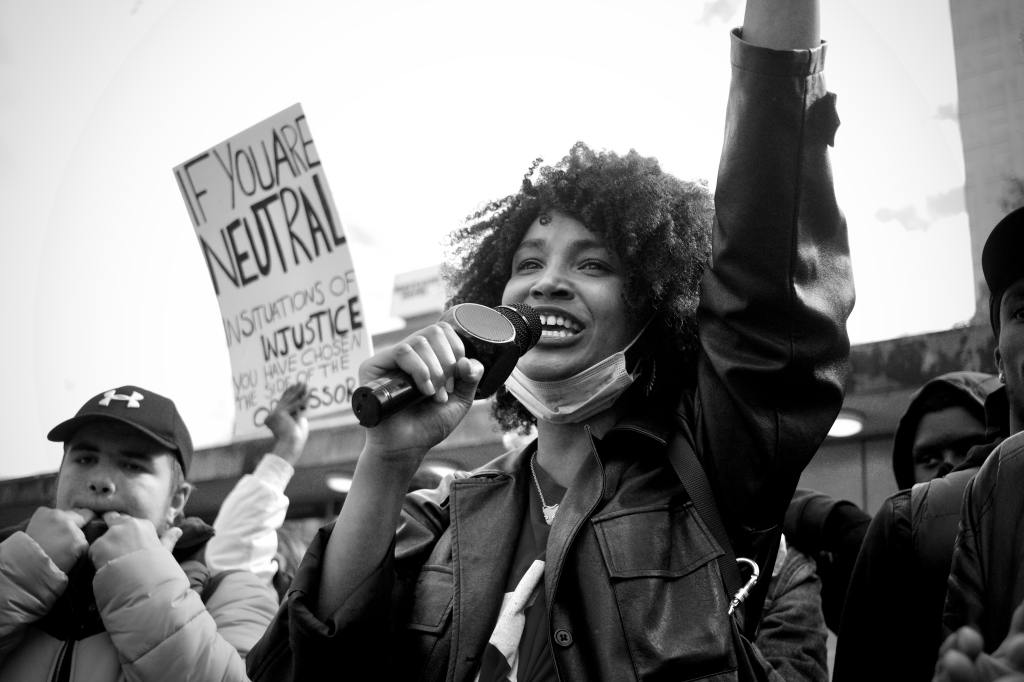
As an associate lecturer on a casual contract, I was glad to stand in solidarity with my friends and colleagues also striking as part of UCU Industrial Action. Concurrently, I was also glad to stand in solidarity with students (as a recent former undergrad and masters student … I get it), students who simply want a better education, including having a curriculum that represents them (not a privileged minority). I wrote this poem for the students and staff taking part in strike action, and it comes inspired from the lip service universities give to doing equality while undermining those that actually do it (meanwhile universities refuse to put in the investment required). This piece also comes inspired by ‘This is Not a Humanising Poem’ by Suhaiymah Manzoor-Khan, a British author-educator from Bradford in Yorkshire.
Some issues force you to protest
the way oppression knocks on your front door
and you can’t block out the noise
“protest peacefully, non-violently”
I have heard people say
show ‘the undecided’, passive respectability
be quiet, leave parts of yourself at home
show them you’re just as capable of being liked
enough for promotion into the canteen,
protest with kindness and humour
make allusions to smiling resisters in literature
they’d rather passive images of Rosa Parks all honestly
but not her politics against racism, patriarchy, and misogyny
but I wanna tell them about British histories of dissent
the good and the bad – 1919 Race Riots
the 1926 general strikes, and the not so quiet
interwar years of Caribbean resistance to military conscription
I wanna talk about how Pride was originally a protest
I wanna talk about the Grunwick Strike and Jayaben Desai
and the Yorkshire miners that came to London in solidarity
with South Asian migrant women in what was 1980s austerity
I want to rant about Thatcherism as the base
for the neoliberal university culture we work in today
I want to talk about the Poll Tax Riots of 1990
and the current whitewashing of the climate emergency
they want protesters to be frugal in activism,
don’t decolonise the curriculum
they say decolonise
they mean monetise, let’s diversify …
but not that sort of diversity
nothing too political, critical, intellectual
transform lives, inspire change?
But no,
they will make problems out of people who complain
it’s your fault, for not being able to concentrate
in workplaces that separate the work you do
from the effects of Black Lives Matter and #MeToo
they make you the problem
they make you want to leave
unwilling to acknowledge that universities
discriminate against staff and students systemically
POCs, working-class, international, disabled, LGBT
but let’s show the eligibility of staff networks
while senior leaders disproportionately hire TERFs

staff and students chequered with severe floggings
body maps of indenture and slavery
like hieroglyphics made of flesh
but good degrees, are not the only thing that hold meaning
workers rights, students’ rights to education
so this will not be a ‘people are human’ poem
we are beyond respectability now
however, you know universities will DIE on that hill
instead,
treat us well when we’re tired
productive, upset, frustrated
when we’re in back-to-back global crises
COVID-19, Black Lives Matter, femicide,
failing in class, time wasting, without the right visas,
the right accents; Black, white, homeless, in poverty,
women, trans, when we’re not A-Grade students, when we don’t
have the right last name; when we’re suicidal
when people are anxious, depressed, autistic
tick-box statistics within unprotected characteristics
all permeates through workers’ and student rights
When you see staff on strike now,
we’re protesting things related to jobs yes,
but also, the after-effects
as institutions always protect themselves
so sometimes I think about
when senior management vote on policies…
if there’s a difference between the nice ones ticking boxes
and the other ones that scatter white supremacy?
I wonder if it’s about diversity, inclusion, and equality [DIE],
how come they discriminate in the name of transforming lives
how come Black students are questioned (under caution) in disciplinaries
like this is the London Met maintaining law and order …
upholding canteen cultures of policing
Black and Brown bodies. Decolonisation is more
than the curriculum; Tuck and Yang
tell us decolonisation is not a metaphor,
so why is it used in meetings as lip service –

why aren’t staff hired in
in critical race studies, whiteness studies, decolonial studies
why is liberation politics and anti-racism not at the heart of this
why are mediocre white men failing upwards,
they tell me we have misunderstood
but promotion based on merit doesn’t exist
bell hooks called this
imperialist heteropatriarchal white supremacy
you know Free Palestine, Black Lives Matter, and the rest
we must protest how we want to protest
we must never be silenced; is this being me radical, am I radical
Cos I’m tired of being called a “millennial lefty snowflake”, when I’m just trying not to DIE?!
Further Reading
Ahmed, Sara (2012) On Being Included: Racism and Diversity in Institutional Life. London: Duke.
Ahmed, Sara (2021) Complaint. London: Duke.
Bhanot, Kavita (2015) Decolonise, Not Diversify. Media Diversified [online].
Double Down News (2021) This Is England: Ash Sakar’s Alternative Race Report. YouTube.
Chen, Sophia (2020) The Equity-Diversity-Inclusion Industrial Complex Gets a Makeover. Wired [online].
Puwar, Nirmal (2004) Space Invaders: Race, Gender and Bodies Out of Place. Oxford: Berg.
Read, Bridget (2021) Doing the Work at Work What are companies desperate for diversity consultants actually buying? The Cut [online].
Ventour, Tré (2021) Telling it Like it is: Decolonisation is Not Diversity. Diverse Educators [online].

 Thoughts from the criminology team