
Home » Criminology (Page 68)
Category Archives: Criminology

Criminology for Children
Helen is an Associate Lecturer teaching on modules in years 1 and 3.
Last term, my 9-year-old son’s class topic was “Crime and Punishment”. They took a historical perspective, comparing punishments across different periods of time and they began their topic with a “creative kickstart”: a visit to the National Museum of Justice in Nottingham (albeit two weeks later than planned because the bus failed to turn up!). They had a whale of a time! They were photographed with a range of gruesome artefacts and they took part in a mock trial (a re-enactment of a genuine historical case). My son’s group acquitted the defendant, Isabella, who was accused of stealing clothes, on the basis of insufficient evidence, but the other group from his school found her guilty.
Part of the class’s enthusiasm for this topic undoubtedly stems from the fascination of 9-year-old children with blood and guts. The teacher reported that they were particularly excited to learn about criminals who had been hung, drawn and quartered (although she refrained from playing them the clips from Gunpowder which depicted what this actually looked and sounded like!!). My son drew great pleasure from thinking about what it would be like if he was actually allowed to impose mediaeval punishments on his arch enemy. However, exploration of issues of crime and punishment has value far beyond satisfying a fascination for the gory.
Thinking about crime and punishment requires critical reasoning skills. What is fair? What is reasonable? How much evidence do I need? How good is this evidence? Why do we do things differently now? And critical reasoning skills are essential for navigating a world of social media, peer pressure, advertising and fake (or at least dubious) news that these children will soon be entering. My son’s class had a debate on the death penalty. When I asked him his views later, over tea, he thought carefully and told me that the death penalty was a good thing because if someone had done something really bad, they deserved a really serious punishment. It was a very good example of level two moral reasoning (Kohlberg, 1964): what you would expect from a reasonably well-adjusted 9-year-old. But the class vote at the end of the debate was split equally for and against, demonstrating a range of views. As we ate our tea, I explained my own position on the death penalty (formulated much later, when I was a post-graduate student), that there are some things that a good society just should not do and killing its own citizens, for whatever reason, is one of those things. That argument might have been a bit abstract for my son to take on board, but it is exactly through discussion and debate and exposure to different views that we develop and improve our critical and moral reasoning skills. It’s never too early to start!
Reference
Kohlberg, L. (1964) Development of moral character and moral ideology. In M. Hoffman and L. Hoffman (Eds.) Review of Child Development Research, Vol. 1. (pp. 381-343). New York: Russell Sage Foundation.
Share this:


A Bloody Shame

I find it fascinating that when I ask my students whether they watch or read the news the reply is generally in the negative. Maybe part of the reason might be found in the fact that so much news resides only temporarily in our conscience before it is replaced by yet another item of news, ‘fake or not’ and we are bombarded with information churned out 24/7, minute by minute. What is alarming is that important issues are reported on, sometimes in a somewhat perfunctory manner, and lost in the mix of other important and less important issues.
And so it is for an item of news that caught my eye just before Christmas. I didn’t really think much about it until somewhere in the back of my mind I had a niggling feeling that just can’t be right. The news item, as I recall it, related to a protest outside Downing Street about women’s sanitary products. A young lady led the protest about the lack of availability of the products for young people, or was it that V.A.T was being added to the products? I just remember the banal comments made by some supporting actress and what I thought were somewhat distasteful banners being displayed. But on reflection all of this masked a serious issue, that of equality and Human Rights. Part of the storyline behind the news was that some young women were not going to school at certain times because they could not afford sanitary products. I couldn’t even imagine the embarrassment this must cause for young ladies. And then I thought about how it might affect other women on low or no income.
There has been much in the news about equality for women recently, most notably around the issue of equal pay. But this issue of sanitary products is even more fundamental. If you don’t have a decent education, how can you get into the work place, let alone achieve parity on pay?
The last time I looked, education was a Human Right. I don’t think the basis of this was something along part time education according to certain times of the month. Women did not ask to be put into this position and it isn’t something that afflicts men. I bet if it did, sanitary products would be available in every public toilet for free and you could probably order your free delivery on line.
I’m not sure how it should work but if we believe in Human Rights and we believe in equality, sanitary products, or the lack of should not be allowed to hold women back. There may be a cost but the payback would be tremendous.
More recently in the news, the Prime Minister, Mrs May, has been visiting China and according to the news had some difficult conversations about Human Rights records. I would suggest that perhaps she ought to look closer to home. And as for the media, perhaps some issues should linger longer to have a chance of embedding themselves in the public’s conscience.
Share this:


Why you should trust your work

Bethany Davies is an Associate Lecturer teaching modules in the first year.
It is only human to doubt yourself in certain situations; however, academia can be a problematic situation to doubt your ideas and abilities. It can lead you to change your standpoint unnecessarily and also create so much stress that you give up on an idea or project entirely.
I deal with this less so now since my university experience but still regularly and I felt it may provide comfort to those currently studying or recently graduated, these examples are personal and are only two of many. In particular I want to address doubting your own ideas and work and how important it is to keep challenging those thoughts.
Upon starting university, my first ‘big essay’ (I describe this with humour as it was 3000 words, but as a first year that can seem like quite the ask) was a biographical assignment. This assignment required an interview with a family member or anyone who would be willing to talk to you and to apply that to research by highlighting some key events/accomplishments. I feared writing that essay as I had many friends with parents who were lawyers or grandparents who had been in the war or immigrants. These stories surely would be so interesting and my essay on my dad who worked in a warehouse would be seen as boring, perhaps. This was my first experience with fear and doubt over my work, but then I did the interview, wrote the essay, took a deep breath and submitted. Turns out it was one of my favourite pieces of work and the programme leaders liked it. It was an honest essay and while not glamorous, it was personal to me and that made the approval and grade that more rewarding.
In my second year, I conducted my placement at a probation office and based my research around a case study of one male who was doing an English class and aimed to discuss the success of that class. After around 8 weeks of observations and an interview with the male. I went to my seminar leader at the time (@paulaabowles) in a complete panic and almost teary-eyed. I told her how I felt my research was not good enough because the male was lying to me, in fact he was almost lying to the whole probation experience as he was more or less just turning up to tick the boxes he needed but then conducting his behaviour differently to me in certain situations and the interview. I felt I had failed as a researcher and also as a teacher almost, as I was assisting in the teaching of the class he was in. I was then told some of the great truths of research and also why I had not failed and actually I had done very well. My research was good research and I just had not realised it. The research didn’t find what I wanted it to, in fact it found the opposite, which was still good research. My research which I had titled ‘Playing the system’ had actually proved to not be a failure and my doubts were unnecessary but not anything to be ashamed of. As in my quest at the time to find answers of why was I such a ‘bad researcher’ and interviewer, I found a plethora of other people online and among peers with the same doubts over some great work they had produced.
Whether it be doubts or fear of speaking up in fear of failure or sounding stupid, I hope others may be able to see not only are they not alone, but actually you are normal because of these doubts. We should just maybe work on believing in our work more and not waiting to get the approval of others for those ideas. With this I feel it is fitting to use one of my favourite quotes from Bertrand Russell:
“The whole problem with the world is that fools and fanatics are always so certain of themselves, and wiser people so full of doubts.”
Share this:


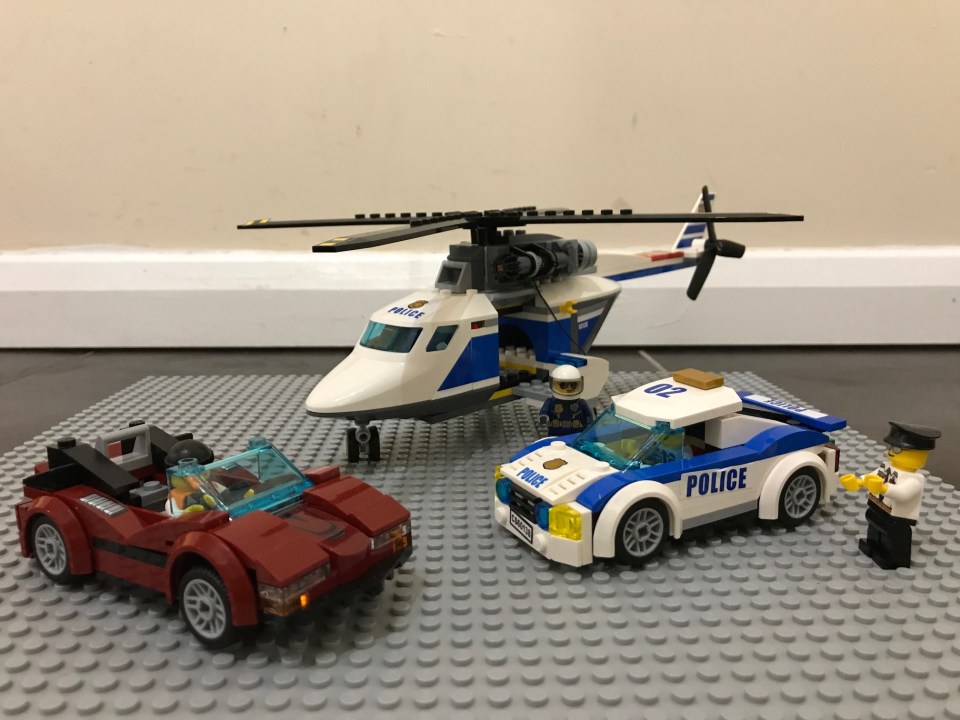
Is education more fun than building a Lego Yellow Submarine? Discuss

This week some students, independently and across the years, introduced me to the novel idea that education should be “enjoyable” and “fun”. Furthermore, if it wasn’t enjoyable, it wasn’t being done right. Given Criminology’s subject matter is often grim, dark, focusing on the worst aspects of humankind, enjoyable and fun are not descriptions that often appear in relation to the discipline. Certainly, such a perspective is not one that I personally recognise; a day at an art gallery, playing Hungry Hippos with two little people, a nice bottle of wine, lunch with friends, building a Lego Yellow Submarine etc are things that I would say are enjoyable, perhaps even fun. But education……I’m not convinced! What follows are my vague ramblings around a subject which is very close to my heart (you are warned!).
All of the enjoyable activities I have described above are ones that I spend very little of my time doing and that to me, is part of their enjoyability (if such a word exists). They are attractive because they are rare and unusual, in my life at least. But education, learning, knowledge are part and parcel of my everyday existence, and dare I say fundamental to who am I. However, does any of this preclude education from being fun? Maybe, I just take for granted my thirst for knowledge in the same way as my thirst for water, just everyday appetites that need to be fed to maintain equilibrium and optimal performance.
I love considering new ideas and new perspectives, particularly if they challenge my thinking and jolt me out of complacency, so I want to consider this concept of enjoyable education. I’ve always been a curious person, there’s lots of questions that I want to know the answer to and they generally begin with “why”? Like all children, I expect I drove my parents mad with the constant questions; never fully satisfied with the answer. I can trace my first early, tentative steps into criminological thinking to when I was a child and regularly had to pass HMP Holloway[1] on the way to various hospital appointments. I used to wonder who lived in this huge, forbidding building, why they were there, what had they done, when would they get out and where would they go? Some decades on, I have answers to some of those questions but I’m still actively searching for the others. This, of course, is experiential learning and children’s books (at that time) offered little by way of answers to such profound criminological questions.

At school, the type of learning I liked best was when I could explore for myself. An experienced and knowledgeable teacher or lecturer explaining complex ideas could open the door so far, but I wanted to find out for myself as much as possible. For me, the best educationalists are those that gently guide and enable, not those who deliver information on demand. They also engender self-confidence and self-discipline encouraging the scholar to take control of their own intellectual journey. All of this leads me to the conclusion that learning is intrinsically neither enjoyable nor fun, although both may be by-products. Education, knowledge, learning, all of these are painful, challenging, at times they appear almost impossible. But! The level of personal satisfaction, achievement and growth means that ‘some kind of happiness is’, not as the Beatles suggest ‘measured out in miles’, but through intellectual endeavour (Lennon and McCartney, 1969). And to answer the essay question I set in the title, Lego has many charms but independent, self-direction is not one of them. Provided you follow the step-by-step illustrated instructions you will have your very own Yellow Submarine, but there are no surprises, whether positive or negative, which means I have no intellectual investment in the process. Furthermore, take the instructions away and I would not be able to recreate this “masterpiece”. Having said that, it does look rather lovely on my book case 🙂
Lennon, John and McCartney, Paul, (1969), Hey Bulldog, [LP]. Recorded by The Beatles in Yellow Submarine, Northern Songs: Apple
[1] HMP Holloway closed its doors for the final time in July 2016.
Share this:


Modern University or New University?

As I am outside the prison walls on another visit I look at the high walls that keep people inside incarcerated. This is an institution designed to keep people in and it is obvious from the outside. This made me wonder what is a University designed for? Are we equally obvious to the communities in which we live as to what we are there for? These questions have been posed before but as we embark in a new educational environment I begin to wonder.
There are city universities, campuses in towns and the countryside, new universities and of course old, even, medieval universities. All these institutions have an educational purpose in common at a high level but that is more or less it. Traditionally, academia had a specific mandate of what they were meant to be doing but this original focus was coming from a era when computers, the electronic revolution and the knowledge explosion were unheard of. I still amuse my students by my recollections of going through an old library, looking at their card catalogue in order to find the books I wanted for my essay.
Since then, email has become the main tool for communication and blackboard or other virtual learning environments are growing into becoming an alternative learning tool in the arsenal of each academic. In this technologically advanced, modern world it is pertinent to ask if the University is the environment that it once was. The introduction of fees, and the subsequent political debates on whether to raise the fees or get rid of them altogether. This debate has also introduced an consumerist dimension to higher education that previous learners did not encounter. For some colleagues this was a watershed moment in the mandate of higher education and the relationship between tutor and tutee. Recently, a well respected colleague told me how inspired she was to pursue a career in academia when she watched Willy Russell’s theatrical masterpiece Educating Rita. It seems likely that this cultural reference will be lost to current students and academics. A clear sign of things moving on.
So what is a University for in the 21st century? In my mind, the university is an institution of education that is open to its community and accessible to all people, even those who never thought that Higher Education is for them. Physically, there may not be walls around but for many people who never had the opportunity to enjoy a higher education, there may be barriers. It is perhaps the purpose of the new university to engage with the community and invite the people to embrace it as their community space. Our University’s relocation to the heart of the town will make our presence more visible in town and it is a great opportunity for the University to be reintroduced to the local community. As one of the few Changemaker universities in the country, a title that focuses on social change and entrepreneurship, connecting with the community is definitely a fundamental objective. In this way it will offer its space up for meaningful discussions on a variety of issues, academic or not, to the community saying we are a public institution for all. After all, this is part of how we understand criminology’s role. In a recent discussion we have been talking about criminology in the community; a public criminology. One of the many reasons why we work so hard to teach criminology in prisons.
Share this:


Homelessness: Shedding an unfavourable light on a beautiful town!

Let me start by apologising for the tone of this blog and emphasis that what follows is rant based on my own opinion and not that of the university or co-authors of the blog. On 3 January I was incensed by a story in the Guardian outlining comments made by Simon Dudley, the Royal Borough of Windsor and Maidenhead’s Conservative leader, regarding homelessness and the impact (visually) that this could have on the forthcoming royal wedding. Mr Dudley commented that having homeless people on the streets at the time of the wedding would present “a beautiful town in a sadly unfavourable light” and that “Windsor is different and requires a more robust approach to begging” (Dudley, cited in Sherwood, 2018, online). Unfortunately, I am no longer shocked by such comments and have come to expect nothing less of Conservative leaders. I am however profoundly saddened that such a deep rooted social issue is brought back into the spot light, not because it reflects wider issues of inequality, disadvantage, poverty, or social exclusion that need addressing but because of a class based narrative driven by a royal wedding. Is Windsor really in need of special treatment? Is their experience of homelessness really worse than every other city in the UK? Or is simply that in an area with such wealth, and social connection, showing the world that we have a problem with homelessness is taking it a step too far. Whatever the reason, Shelter’s[1] (2017) tweet on the 29 December reminds us that homelessness is ‘…a crisis we are not handling as a country’.
As we approached the Christmas period it was estimated that children experiencing homelessness had reached a 10 year high with headlines like ‘Nearly 130,000 children to wake up homeless this Christmas’ (Bulman, 2017) marking our approach to the festive season. Similarly, Shelter warned of a Christmas homeless crisis and as the temperatures dropped emergency shelters were opened across London, contrary to the policy of only opening after three consecutive days of freezing temperatures (TBIF, 2017). Yet the significance of these headlines and the vast body of research into the homelessness crisis appears lost on Mr Dudley whose comments only add to an elitist narrative that if we can’t see it, it isn’t a problem. My issue is not with Mr Dudley’s suggestion that action is needed against aggressive begging and intimidation but with his choice of language. Firstly, to suggest that homelessness is a ‘sad’ thing is a significant understatement made worse by the fact that the focus of this sadness is not on homelessness itself but the fact that it undermines the tone of an affluent area. Secondly, the suggestion that the police should clear the homeless from the streets along with their ‘bags and detritus’ (Dudley, cited in Sherwood, 2018) is symbolic of much of the UK’s approach to difficult social issues; sticking a band aid on a fatal wound and hoping it works. Thirdly, and more deeply disturbing for me is the blame culture evident in his suggestion that homelessness is a choice that those begging in Windsor are ‘…not in fact homeless, and if they are homeless they are choosing to reject all support services…it is a voluntary choice’ (Dudley, cited in Sherwood, 2018). Homelessness is complex and often interlinked with other deeply rooted problems, therefore this blame attitude is not just short sighted but highly ignorant of the difficulties facing a growing proportion of the population.
Shelter. (2017) A safe, secure home is a fundamental right for everyone. It’s a crisis we are not handling as a country [Online]. Twitter. 29 December. Available from: https://twitter.com/shelter?lang=en [Accessed 4 January 2018].
Sherwood, H., (2018) Windsor council leader calls for removal of homeless before royal wedding. The Guardian [online]. Available from: https://www.theguardian.com/society/2018/jan/03/windsor-council-calls-removal-homeless-people-before-royal-wedding [Accessed 04 January 2018].
The Big Issue Foundation. (2017) TBIF joins the Mayor of London’s Coalition to tackle rough sleeping [Online]. The Big Issue Website. Available from: https://www.bigissue.org.uk/news [Accessed 4 January 2018].
[1] a charity offering advice and support to those facing or experiencing homelessness
Share this:


Thank f**k it’s Christmas!

Jessica is an Associate Lecturer teaching modules in the first year.
We have arrived at that time of the year once again: CHRISTMAS! ‘Tis’ the season to celebrate, party, give and receive gifts, catch up with friends and family, and most importantly… catch up on some much needed sleep. We have arrived at the end of the first term of the academic year, and all I can think is: Thank f**k it’s Christmas. The first term always feels the longest: whether you are first years beginning your academic journey, second and third years re-gathering yourselves after the long summer, or staff getting back into the swing of things and trying to locate and remember all the new and old names. But now is the time to kick back, relax and enjoy the festive season: ready to return to academic life fresh faced and eager come the New Year, ready to start it all over again. Well not quite…
According to Haar et al., (2014) work-life balance is something which is essential to all individuals, in order to ensure job satisfaction, life satisfaction and positive mental health. If Christmas is as needed as it feels; perhaps we are not managing a good work-life balance, and perhaps this is something we can use the Christmas break to re-consider. Work-life balance is subjective and relies on individual acceptance of the ‘balance’ between the commitments in our lives (Kossek et al., 2014). Therefore, over the Christmas break, perhaps it would be appropriate to re-address our time management skills, in order to ensure that Easter Break doesn’t feel as desperately needed as Christmas currently does.
Alongside an attempt to re-organise our time and work load, it is important that we remember to put ourselves first; whether this be through furthering our knowledge and understanding with our academic endeavours, or whether it is spending an extra 15 minutes a day with a novel in order to unwind. Work-life balance is something we are (potentially) all guilty of undermining, at the risk of our mental health (Carlson, et al., 2009). I am not suggesting that we all ignore our academic responsibilities and say ‘yes’ to every movie night, or night out that is offered our way. What I am suggesting, and the Christmas break seems like a good place to start, is that we put the effort in with ourselves to unwind, in order to ensure that we do not burn out.
Marking, reading, writing and planning all need to be done over the Christmas break; therefore it is illogical to suggest taking our feet off the pedals and leaving academia aside in order to have the well needed break we are craving. What I am suggesting, is that we put ourselves in neutral and coast through Christmas, without burning out: engaging with our assignments, marking and reading, therefore still moving forward. BUT, and it is a big but, we remember to breathe, have a lie in, go out and socialise with friends and family, and celebrate completing the first term of this academic year. And with this in mind, try to consider ways, come the new term, where you can maintain a satisfying work-life balance, so that when Easter comes, it doesn’t feel so desperately needed.
However, it is highly likely that this will still be the case: welcome to the joys and stresses of academia.
Merry Christmas everyone!
References:
Carlson, D.S., Grzywacz, J.G. and Zivnuska, S. (2009) ‘Is work family balance more than conflict and enrichment?’ Human Relations. 62(10): 1459-1486.
Haar, J.M., Russo, M., Sune, A. and Ollier- Malaterre, A. (2014) ‘Outcomes of work-life balance on job satisfaction, life satisfaction and mental health: A study across seven cultures’. Journal of Vocational Behaviour. 85: 361-373.
Kossek, E.E., Valcour, M. and Kirio, P. (2014) ‘The sustainable workforce: Organizational strategies for promoting work-life balance and well-being’. In: Cooper, C. and Chen, P. (Eds) Work and Well-being. Oxford: Wiley-Blackwell. Pp:295-318.
Bibliography:
Ashurst, A. (2014) ‘How to… Manage time and resources effectively’. Nursing and Residential Care. 16(5): 296-297.
Kuhnel, J., Zacher, H., De Bloom, J and Bledow, R. (2017) ‘Take a Break! Benefits of sleep and short breaks for daily work engagement’. European Journal of Work and Organization Psychology. 26(4): 481-491.
Logan, J., Hughes, T. and Logan, B. (2016) ‘Overworked? An Observation of the relationship Between Student Employment and Academic Performance’. Journal of College Student Retention: Research, Theory and Practice. 18(3): 250-262.
Lyness, K.S. and Judiesch, M.K. (2014) ‘Gender egalitarianism and work-life balance for managers: Multisource perspectives in 36 countries’. Applied Psychology. 63(1): 96-129.
Mona, S. (2017) ‘Work-life Balance: Slow down, move and think’. Journal of Psychological Nursing and Mental Health Services. 55(3):13-14.
Share this:


“A Christmas Carol” for the twenty-first century

The build up to Christmas appears more frenetic every year, but there comes a point where you call it a day. This hiatus between preparation and the festivities lends itself to contemplation; reflection on Christmases gone by and a review of the year (both good and bad). Some of this is introspective and personal, some familiar or local and some more philosophical and global.
Following from @manosdaskalou’ recent contemplation on “The True Message of Christmas”, I thought I might follow up his fine example and explore another, familiar, depiction of the festive period. While @manosdaskalou focused on wider European and global concerns, particularly the crisis faced by many thousands of refugees, my entry takes a more domestic view, one that perhaps would be recognised by Charles Dickens (1812- 1870) despite being dead for nearly 150 years.

One of the most distressing news stories this year was the horrific fire at Grenfell Tower where 71 people lost their lives. [1] Whilst Dickens, might not recognise the physicality of a tower block, the narratives which followed the disaster, would be all too familiar to him. His keen eye for social injustice and inequality is reflected in many of his books; A Christmas Carol certainly contains descriptions of gut wrenching, terrifying poverty, without which, Scrooge’s volte-face would have little impact.
In the immediacy of the Grenfell Tower disaster tragic updates about individuals and families believed missing or killed in the fire filled the news channels. Simultaneously, stories of bravery; such as the successful endeavours of Luca Branislav to rescue his neighbour and of course, the sheer professionalism and steadfast determination of the firefighters who battled extremely challenging conditions also began to emerge. Subsequently we read/watched examples of enormous resilience; for example, teenager Ines Alves who sat her GCSE’s in the immediate aftermath. In the aftermath, people clamoured to do whatever they could for survivors bringing food, clothes, toys and anything else that might help to restore some normality to individual life’s. Similarly, people came together for a variety of different celebrity and grassroots events such as Game4Grenfell, A Night of Comedy and West London Stand Tall designed to raise as much money as possible for survivors. All of these different narratives are to expected in the wake of a tragedy; the juxtaposition of tragedy, bravery and resilience help people to make sense of traumatic events.
Ultimately, what Grenfell showed us, was what we already knew, and had known for centuries. It threw a horrific spotlight on social injustice, inequality, poverty, not to mention a distinct lack of national interest In individual and collective human rights. Whilst Scrooge was “encouraged” to see the error of his ways, in the twenty-first century society appears to be increasingly resistant to such insight. While we are prepared to stand by and watch the growth in food banks, the increase in hunger, homelessness and poverty, the decline in children and adult physical and mental health with all that entails, we are far worse than Scrooge. After all, once confronted with reality, Scrooge did his best to make amends and to make things a little better. While the Grenfell Tower Inquiry might offer some insight in due course, the terms of reference are limited and previous experiences, such as Hillsborough demonstrate that such official investigations may obfuscate rather than address concerns. It would seem that rather than wait for official reports, with all their inherent problems, we, as a society we need to start thinking, and more, importantly addressing these fundamental problems and thus create a fairer, safer and more just future for everyone.
In the words of Scrooge:
“A merry Christmas to everybody! A happy New Year to all the world!” (Dickens, 1843/1915: 138)
[1] The final official figure of 71 includes a stillborn baby born just hours after his parents had escaped the fire.
Dickens, Charles, (1843/1915), A Christmas Carol, (Philadelphia: J. B. Lippincott Co.)
Share this:


The true message of Christmas

One of the seasonal discussions we have at social fora is how early the Christmas celebrations start in the streets, shops and the media. An image of snowy landscapes and joyful renditions of festive themes that appear sometime in October and intensify as the weeks unforld. It seems that every year the preparations for the festive season start a little bit earlier, making some of us to wonder why make this fuss? Employees in shops wearing festive antlers and jumpers add to the general merriment and fun usually “enforced” by insistent management whose only wish is to enhance our celebratory mood. Even in my classes some of the students decided to chip in the holiday fun wearing oversized festive jumpers (you know who you are!). In one of those classes I pointed out that this phenomenon panders to the commercialisation of festivals only to be called a “grinch” by one of the gobby ones. Of course all in good humour, I thought.
Nonetheless it was strange considering that we live in a consumerist society that the festive season is marred with the pressure to buy as much food as possible so much so, that those who cannot (according to a number of charities) feel embarrassed to go shopping; or the promotion of new toys, cosmetics and other trendy items that people have to have badly wrapped ready for the big day. The emphasis on consumption is not something that happened overnight. There have been years of making the special season into a family event of Olympic proportions. Personal and family budgets will dwindle in the need to buy parcels of goods, consume volumes of food and alcohol so that we can rejoice.
Many of us by the end of the festive season will look back with regret, for the pounds we put on, the pounds we spent and the things we wanted to do but deferred them until next Christmas. Which poses the question; What is the point of the holiday or even better, why celebrate Christmas anymore? Maybe a secular society needs to move away from religious festivities and instead concentrate on civic matters alone. Why does religion get to dictate the “season to be jolly” and not people’s own desire to be with the ones they want to be with? If there is a message within the religious symbolism this is not reflected in the shop-windows that promote a round-shaped old man in red, non-existent (pagan) creatures and polar animals.
According to the religious message about 2000 years ago a refugee family gave birth to a child on their way to exile. The child would live for about 33 years but will change the face of modern religion. He promised to come back and millions of people still wait for his second coming but in the meantime millions of refugee children are piling up in detention centers and hundreds of others are dying in the journey of the damned. “A voice is heard in Ramah, mourning and great weeping, Rachel weeping for her children, because her children are no more” (Jeremiah 31:15). This is the true message of Christmas today.
Happy Holidays to our students and colleagues.
FYI: Ramah is a town in war torn Middle East
Share this:


Driving value for money: My fairy tale

A few years ago I had the good fortune of being able to go to a driving experience event where I was able to drive an Aston Martin (my dream car) around a race track.
I arrived on the day and presented my provisional driving licence, a full licence was required really, but the nice people there said I could have a go as I said I loved Aston Martin cars and I would try really hard to learn to drive them.
There was a briefing about car safety that I went to and I listened but don’t think I took that much in, it was a bit boring, just some chap talking really. Then we were given the opportunity to be driven, in groups of three, around the track by an experienced driver. He would show us how to drive and the best lines to take so that we could take the corners at speed. I was a bit nervous about this and I didn’t want to be in the car with others so I missed this bit. Another nice driver took me out on my own and showed me what to do.
After that I got to drive my first Aston Martin, I took it steady because the driver kept telling me to do things and I wanted to stop because my phone was pinging and I needed to look at it. Anyway we did the track about ten times, it got a bit boring in the end. After the drive I was told to go to the briefing room and get further instructions about a time trial. I went and got some coffee and looked at Facebook on my phone, I didn’t need to go to the briefing because I’ve done the track anyway and it’s not very exciting. I did the time trial thingy, I didn’t do very well, and I don’t think they taught me much about driving or about Aston Martins.
Three weeks later I was asked by a research company what I thought about my driving experience. I said it wasn’t very good. I remember one of the questions was about value for money. The whole day cost me a lot of money and I don’t think it was value for money at all.*
Anyway I’m off to read that National Audit Office report on universities, I’m thinking about going to one sometime soon.
*The reality was that my driving experience in an Aston Martin was both frightening and exhilarating. I learnt so much on the day but it was hard work concentrating on the instructions being given and pushing myself to the limit in respect of my driving capabilities. The staff were brilliant and in the end I think I got it but there is so much more to do and as for value for money – I want to go back, that should say it all.


