
Home » Criminology (Page 57)
Category Archives: Criminology

At what point do we act? There is plastic in the Mariana Trench!

I do not usually write about environmental issues, but I have reflected and read recently on zemiological perspectives with regard to social harms caused by excessive consumerism, and those in powerful positions who are determined to deny the impact of this on the planet. I examine this to some degree in my year two module on ‘Outsiders’, to ask students to think about their own consumer habits, perceived needs and also, the admiration and aspirations associated with wealth. I try to do my bit – I recycle, I am eating more vegetarian meals, but I also drive pretty much everywhere, and it is clear I could do more. However, I really do sympathise with those who ask whether concerned individuals can actually make a difference. This seems impossible in light of the scale of CO2 emissions from industrialised countries with high productivity and an unrelenting focus on increasing GDP. We also see football field sized areas of trees being cut from the Amazon rainforest on a daily basis, plastic in our oceans and food chains, and just recently, found at the bottom of the Mariana Trench. As consumers, we can perhaps demand change, shift our consumer habits to use more recycled materials, move towards using sustainable resources where we have the choice and contribute to broader campaigns for change.
But this can feel insignificant in the light of world leaders denying there is a problem, refusing to invest in alternative energy resources and therefore, enabling the plundering of Earth’s resources. I am not sure what it will take to change our behaviour – I am hopeful younger generations, groups like Extinction Rebellion and campaigners such as Greta Thunberg mean governments who refuse to engage with the need for change will find themselves consigned to the past, with a legacy of being very much on the wrong side of history. I hope in 10 years time we can talk about being taken to the brink and pulling back, recognising the harms being caused, meaning we focus more on the welfare of the planet and less on accruing wealth and goods. Jacinda Ardern, the Prime Minister of New Zealand recently spoke out about changing the priorities of her government in a pre-budget speech, which demanded a focus on environmental change through developing a low emissions economy and considering the welfare of citizens alongside economic growth. Alexandra Ocasio-Cortez, who serves as the U.S. Representative for New York’s 14th congressional district presented her ‘Green New Deal’, to the US Congress, receiving both criticism and praise for the bold ideas – the central premise being the need to ‘reject economic orthodoxy to confront climate change’ (Guardian, 2019). Those facing harms of climate change have been and still are disproportionally represented by developing countries, less powerful states who struggle to get their voice heard, compared to world leaders who still focus on GDP and their own interests. Now that climate change is affecting North America and Europe more consistently, with rising temperatures and extreme weather patterns, we might start to see a response to these calls for change.
It is serendipitous that I write this during the British Society of Criminology conference at the University of Lincoln, where green criminology has a clear presence and profile. By following the twitter feeds @BscGreenCrim and @BSCLincs_19, we can see a range of issues being explored under the remit of #greencriminology, which has sparked my interest further and made me regret not going this year – there is always next year at the University of Liverpool! The papers include an examination by John E. McDonnell (2017) on Genocide and Green Criminology, looking at the case of the ‘Merauke integrated food and energy estate’ – a quick search reveals a project billed as increasing self-sufficiency and wealth for Indonesia is actually a ‘land grab’ and displacement of indigenous populations, alongside deforestation and numerous other impacts, all to produce food for export. Rowland Atkinson reiterates this theme examining the impact of the over consumption of the global rich on urban life – at the conference and in an extensive list of research studies. Angus Nurse examines environmental crimes committed by corporations (Nurse, 2017), who are no doubt propped up by consumer habits which demand choice and value, at the expense of creating pollution and waste which poisons our air, oceans and rivers and, as with climate change, disproportionately affects the less powerful. Finally, a shift to another fascinating area of research was presented by Tanya Wyatt, exploring the link between wildlife and drug trafficking, the former being cited as a leading cause of animal extinction (Wyatt, 2016).
Another article which then caught my eye, came from the Guardian, by Chris Packham, detailing the plans for companies who want to mine the ocean floor, the largest ecosystem on the planet, which Packham describes as ‘quite clearly an awful idea’. It amazes me that this is even been discussed as a possibility, but in light of the behaviour of some of our world leaders, perhaps this displays my own naivety as to just how far some will go to create wealth. There has to be a tipping point, a point at which we simply ask, what is more important to us? The stuff we buy? The acceptance of states enabling the use of the Earth’s resources, no matter the cost to us? The article describes oceans as the last ‘industrial frontier’, but it is also clear that more us of need to fully understand how vital they are to the health of our planet – they regulate our climate, provide food and an ecosystem which if damaged or even lost, would have serious consequences for all of us. The signs of change are there, and it is clear alongside the small efforts we make ourselves, we also need to start holding governments to account on this issue.
References
Atkinson R (2019) Necrotecture: lifeless dwellings and London’s super-rich. International Journal of Urban and Regional Research.
Guardian Editorial (2019) The Guardian view on a Green New Deal: we need it now, The Guardian.
Kenner, D. (2015) Inequality of overconsumption: The ecological footprint of the richest, Working Paper: 2015/2, Global Sustainability Institute
McDonnell, J.E. (2017) Can a genocide lens be of use in our understanding of the effects of the Indonesian Transmigration Program on the Indigenous People of West Papua?, Unpublished essay written for MA in Understanding and Securing Human Rights at the School of Advanced Study, University of London.
Nurse, Angus (2017) Green criminology: shining a critical lens on environmental harm. Palgrave Communications, 3, pp. 1-4. ISSN 2055-1045
Packham, C. (2019) In too deep: why the seabed should be off-limits to mining companies, The Guardian.
Wyatt, Tanya (2016) A comparative analysis of wildlife trafficking in Australia, New Zealand and the United Kingdom. Journal of Trafficking, Organized Crime and Security, 2 (1). pp. 62-81. ISSN 2374-118X
Share this:


The same old rhetoric, just another place
 My sister phoned me the other day in great excitement. She’d just met a former criminology student from the University of Northampton, and she had an awful lot to say about it. She wasn’t in her hometown and had asked directions from a stranger to the river embankment. Having visited the embankment, she returned to town only to bump into the stranger again who enquired whether she managed to find it. They ended up chatting, my sister can do a lot of that, and she found out that the stranger was a police officer. My sister asked whether she knew me, why she would ask that I have no idea, it seems that she has formulated some notion in her head that all police officers must know each other or at least know of each other. This is the bit that my sister got so animated about, yes, the stranger did know me, I’d taught her at the University, and she was now in a budding police career. Apparently, I had done so much to help her. Now I don’t know about being that helpful and I suspect that many of my colleagues played a part in her success story, but it reminded me about what it is that we do and aspire to do as lecturers.
Whilst waiting to play my part in talking to school children the other day I started to read a new edition of a seminal piece of work on policing, The Politics of the Police (Bowling et al., 2019). The preface alone makes interesting reading and in ‘mentioning populist political reactions towards crime’, ‘zero tolerance of the marginalised and outsiders’ and ‘laissez-faire economics’ that promotes individual interests, my mind turned to the managerialist ideals that have dogged policing for over three decades. Those ideals saw the introduction of performance indicators, targets and the inevitable policing by objectives (Hallam, 2000), that resulted in some quite appalling manipulation of data and a diminution of service rather than an improvement. The problem was that the targets were never achievable and were simply put in place for managers to simplify the social world over which they had no control. What didn’t get measured, because it never could be, were the myriad of tasks that police officers and staff undertake daily. Dealing with people with mental illness, searching for missing persons and dealing with minor disturbances are an example of just a few such tasks. Bowling et al. (op cit.) subscribe to the notion that the job of the police is to help maintain social order, an ideal that does not lend itself to measurement. Counting the number of crimes committed in an area or the number of detected crimes is only an indication of failure, not success.
How does that policing narrative fit in with my opening paragraph? The former student was not an ideal student from a managerialist viewpoint. She didn’t attain so called ‘good grades’, I’m not even sure if she fully completed her studies. In terms of performance measurement, she doesn’t even feature and yet she, like so many others we have seen in Criminology, has flourished. Whilst concentrating on ‘retention and progression’ and ‘fails’ and ‘good grades’ we neglect the very reason we exist. Just as in policing where the figures were pored over by managerialist who had not slightest notion of the reality of the social world, so too are we in danger of simply seeking pleasing statistics to keep the wolves from the door because explanations of real success and failure are too complex for managers to understand or manage.
Imagine a world where the police just helped maintain social order, where probation were not plagued by notions of payment by results, where patients were just seen in A&E in a reasonable time and where lecturers just opened the minds of students and allowed them to think for themselves. Imagine the time and expense that could be saved and reinvested in providing real service and dare I say it ‘value for money’ if we stopped gathering meaningless data. Imagine managers casting aside the shackles of neoliberalist ideals and managing people, not using numbers as an indication of failure and impending doom. We can but dream, but my reality, as I’m sure is the reality of many of my colleagues, is the success stories that I occasionally hear and can reminisce about. No amount of number crunching can take that away and nor will it ever provide evidence of success or failure.
Bowling, B. Reiner, R. and Sheptycki, J. (2019) The Politics of the Police. (5th ed.) Oxford: OUP.
Hallam, S. (2000) Effective and Efficient Policing: Some Problems with the Culture of Performance, in Marlow, A. and Loveday, B. (eds.) After MacPherson: Policing after the Stephen Lawrence Inquiry. Lyme Regis: Russell House
Share this:


How to boil an egg…A criminological issue?

Another academic year is coming close to an end. After the plans and the changes made there is always a little time for reflection to ask what is in a year? The rhetorical question implies that there is an expected answer and that is true, well sometimes! After years serving HE it is becoming clear that things change “τα πάντα ρει”, everything flows as Heraclitus once said. Education is about knowledge and as it progresses, we progress with it.
In previous posts the value of education and reading for a subject like criminology has been argued, but ultimately what does it really mean to complete one year of education in HE? Well if you are on your first year it is the recognition that you can do this! The first step in many more to follow on the road to academic understanding. If you are on your second year you demonstrate perseverance, sticking with the subject you chose, and you continue to read more of it. Finally, if you are on your third year it is the anticipation of completion of a course of study. The successful conclusion of studies that will award you with a title.
This end for some is the end of the formal part of their higher education, whilst for others it is simply the beginning of the end of a longer and more arduous journey in learning. An exam board shall mark this end when all colleagues will read name after name, grade after grade, but this is only part of that story. The other part is the memories on learning that it will launch. I still hear stories of students remembering a lecture with a slide title “Lesbian Vampire Killers” on a session on media and crime which seems to tickle our alumni, or a phrase used in a class again and again for emphasis. Using a metaphor or an example that takes you away from the prescribed values. Some of the readers may remember my question “How long to hard boil an egg?” A question that revealed some of us have limited culinary skills, but the intended purpose was to allow us to look at the question of positionality and context. It only takes a couple of pre vs post- war Italian cookbooks to realise that the question can be answered considering the social situation and the energy requirements of its time. A country famed for its culinary status, but also broken from a second world war that decimated infrastructures and harmed population. Poverty, theft, antisocial behaviour, violence but also recriminations for the incurred destruction became the other effects hidden behind a seemingly random change in a number on a cookbook. *
My personal favourite was going over a criminal profiling case with students of the wrong year who were looking at me rather confused on the content. I shall never of course forget my sex offenders lecture to accounting students (I got the place and time wrong) which according to my bemused colleague who was watching me from the corner an interesting interlude from his session! These little anecdotes do not sustain knowledge, but they remind us how we got to be in that place.
Regardless of the subject of study or its level, all “participants” who engage in higher education gain one significant attribute, that of perspective. The ability to look closely of a idea through the disciplinary lens but also to zoom out and look at the bigger picture, thus making perspective more relevant. Perspective is distance and as we gain more knowledge, the better our judgement becomes in using this lens to zoom in and out. This is what we acquire as we progress through higher education.
*I could also point out the existential symbolism of the egg as the representation of the soul and the time to boil it is a metaphor for torment in the proverbial purgatory…but I will not
Share this:


Animal therapy in prisons – a loyal friend where it is needed most

This week I could have written about Brexit, the Tory Leadership contest, Trump’s visit or climate change, but I decided all of it was too depressing and anxiety inducing, so this week – Dogs in Prisons! There is a serious message behind this, as it is clear there needs to be a rethink about the use of prison and more attention paid to conditions if we are ever going to meaningfully address high re-offending rates. This is where I would normally link this to austerity and a need for wholescale reform in the delivery of justice. While this is important, I decided this week, it would be nice to focus on the positives of initiatives which aim to help the most marginalised in our society.
Animal Assisted Therapies (using animals to create a therapeutic environment) have been adopted in health settings, to enhance social care and mental health treatment, and findings from research show positive results (Durcan, 2018). The pilot for this innovation to be used in prisons was introduced by Rethink Mental Illness in the North East, and involved the use of therapy dogs working with men, women and young men. It was the result of a partnership between Her Majesty’s Prison and Probation Service (HMPPS), Rethink and the National Health Service (NHS). The evaluation showed a ‘considerable, measurable, and statistically significant benefit to the scheme’s participants’ (p.4) during its inception, as represented by clinical ratings such as the reduction of self-harm.
The observations from the study noted the calming effects of therapy dogs – anyone who has a pet will know all about this – and, they also helped with coping skills, supporting engagement and provided prisoners with a space in which to express emotion and not feel judged. Of course, with findings like this they make a case for recommending roll out of the scheme, but also that the prison service needs to tackle the stigma which was reported by staff, about taking part in such innovations, cited as part of the ‘rehabilitative culture’ (Durcan, 2018). The title of the report itself is ‘restoring something lost’ and this struck a chord as I reflected that the loss is perhaps the rehabilitative function of prison. Instead we have a penal system which is dominated by security concerns and tough on crime rhetoric, meaning our prisons have become ‘abject places of despair built on the infliction of punishment and pain’ where prisoners feel ‘bereft, disorientated and terrorised’ (Simms, 2015 – see https://www.crimeandjustice.org.uk/resources/beyond-govism). Therefore, anything which changes this state of existence in prisons should be adopted, especially if it improves engagement between staff and prisoners and gives them a sense of normality in a place so far removed from life outside. Along with improving coping skills, better engagement could also mean prisoners are more invested in their rehabilitation and open to interventions which may change their behaviour in a way which leads to desistance.
This was certainly found to be the case with arts and music therapy in prisons as shown by an evaluation of the ‘Good Vibrations’ project, a music-based therapy programme used in HMP Grendon (Wilson et al, 2009). A key finding was that participation led to better engagement with other forms of education and skills training, building a sense of confidence among prisoners that they were capable of learning something new. As with the animal assisted therapy scheme, the findings also reported that prisoners felt a sense of calm and had better relationships with staff. Desistance theorists highlight the importance of understanding the interaction between individual motivation to change and external conditions required to support this (Maruna, 2001; King 2012). That said, it is also widely accepted that even with both in place, desistance is likely to be a process of dealing with obstacles, un-intended consequences and unforeseen risks. I would argue no amount of pet therapy can help anyone overcome the challenges of being labelled an ex-offender, seeking jobs, training, housing and support to resettle into a community which may or may not support them. However, if the support is in place, alongside more meaningful and widespread reforms, animal therapy and arts and music-based programmes could trigger a change of direction for those prisoners who feel a loss of hope and sense of despair.
David Gauke, the (current) Secretary of State for Justice has promised to abolish prison sentences under six months this summer – at a time when the make up of the Cabinet could be changing in late July, this may be another bold promise which will not be delivered. But much more needs to be done. Perhaps this reflects acknowledgement of the need for more radical change, and that innovations such as animal assisted therapies, problem solving approaches and restorative practice should be considered as part of the reforms of the justice system. My more cynical view is a change of cabinet roles will once again mean an announcement which may take us in the right direction becomes consigned to the past, and ‘normal’ service resumes. It makes the efforts of organisations such as Rethink, Good Vibrations and the hundreds of other charities which support marginalised groups more vital. Of course, they should be better supported and incorporated into mainstream policies, rather than left tinkering at the edges, on a constant scrabble for funding and subject to the whims of ministerial judgements on what is important. However, to end on a more hopeful note, the fact that there are people and organisations who still seek to find ways to improve the lives of those in prison, whether as part of rehabilitation or just in some small way to make prison bearable is something to be cherished. In the face of all the challenges, they carry on with their work and refuse to give up, much like our loyal pets who bring so much joy, wherever they are.
References
DURCAN, G. (2018) Restoring something lost: The mental health impact of therapy dogs in prisons, Centre for Mental Health, London.
KING, S. (2012) Transformative agency and desistance from crime. Criminology and Criminal Justice. 13 (3), 366-383.
MARUNA, S. (2001) Making Good: How ex-convicts reform and rebuild their lives. Washington DC: American Psychological Association Books.
SIMMS, J. (2015) Beyond Govism, Centre for Crime and Justice Studies, https://www.crimeandjustice.org.uk/resources/beyond-govism.
WILSON, D., CAULFIELD, L. AND ATHERTON, S. (2009) Good Vibrations: The long-term impact of a prison based music project. Prison Service Journal, 182, pp. 27-32
Share this:


A crime, but who cares?
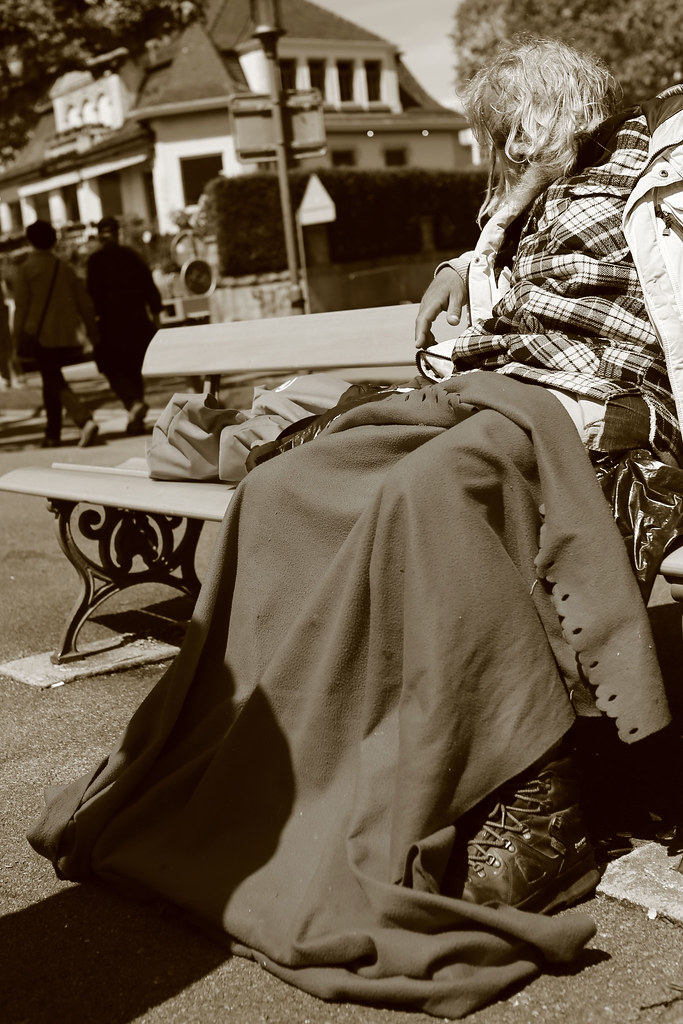
“IMG_8755 – Copy” by stivoberlin is licensed under CC BY-NC-ND 2.0
Amongst all the furore over Brexit, the European elections and the disintegration of the main political parties in the United Kingdom, a small but not insignificant news story crept into the news melee.
‘The number of physically disabled people affected by homelessness in England increased by three quarters during an almost 10- year period’ (BBC, 2019a, Ministry of Housing, Communities and Local Government, 2019). It is not merely coincidental that the ‘almost 10-year period’ aligns with the austerity measures introduced by the coalition government in 2010. Measures, continuously pursued by the Conservative Government until October 2018 when Theresa May, the soon to be former prime minister, declared at a Tory party conference that austerity was over adding, ‘the end is in sight’ and there are ‘better days ahead’ (Independent, 2018a). Give her her dues, with the demise of the Tory party, the latter part was an insightful prediction. Let’s not let the Liberal Democrats off the hook though, reluctant bedfellows they may have been in the coalition government, but bedfellows they were, and they had the power to vote down many of the Tory party dictats. They may have curried favour with the electorate during the European elections, but we should not forget their part in the austerity measures.
Alongside the issues of homelessness, we see the use of foodbanks has increased phenomenally (Independent, 2018b), fuel poverty affects over 10% of English households (Independent, 2018c) and social care is collapsing (BBC, 2019b; Guardian, 2018). To put it as simply as possible, the common denominator is the austerity measures introduced by government that directly impact on the most vulnerable in our so-called civilised society. This and previous governments can point to the budget deficit, the ineptitude of the previous government and the economic downturn caused by the banking crisis (The Economist, 2013), but how do they justify the impact of their policies on the disadvantaged and those who can least afford any cuts? Bizarrely, the least vulnerable have seen little or no impact on their standard of living other than perhaps for the middle classes there is the monotonous moan about access to doctors or dentists in a timely manner (the rich don’t even have to worry about this).
In my visits around schools I discuss what we mean by the term crime. Reiner (2007:21) states that ‘[t]he term ‘crime’ is usually tossed about as if it has a clear and unambiguous meaning’, but nothing of course is further from the truth. One of the key ideas I posit is that of harm caused. This of course has its own problems in terms of definition and scope, but it does allow one to focus on what is important. If harm done is a measure of crime, or crime is defined by the harm done then we begin to see the world, actions by government, institutions and individuals in a different light. With this notion in mind, we can start to ask when and how do we bring the greedy and those that abuse their power either intentionally or recklessly to book? Maybe, just as Boris Johnson might well be prosecuted for misconduct in a public office over the alleged lies, he made relating to Brexit (BBC, 2019c), we might see ministers held to account for decisions they make that have catastrophic consequences for thousands of the most vulnerable in society.
BBC (2019a) Homeless and disabled: ‘I’m at my wits’ end’, [online] Available at www.bbc.co.uk/news/av/disability-48433225/homeless-and-disabled-i-m-at-my-wits-end [accessed 29 May 2019].
BBC (2019b) English ‘short-changed on care funding’ [online] Available at http://www.bbc.co.uk/news/health-48438132 [accessed 30 May 2019].
BBC (2019c) Brexit: Boris Johnson ordered to appear in court over £350m claim, [online] Available at http://www.bbc.co.uk/news/uk-politics-48445430 [accessed 29 May 2019].
Independent (2018a) Theresa May declares ‘austerity is over’ after eight years of cuts and tax increases, (3 Oct. 2018), [online] Available at www.independent.co.uk/news/uk/politics/theresa-may-austerity-end-over-speech-conservative-conference-tory-labour-a8566526.html [accessed 30 May 2019].
Independent (2018b) Food bank use in UK reaches highest rate on record as benefits fail to cover basic costs (24 April 2018) [online] Available at www.independent.co.uk/news/uk/home-news/food-bank-uk-benefits-trussell-trust-cost-of-living-highest-rate-a8317001.html [accessed 30 May 2019].
Independent (2018) More than one in 10 households living in fuel poverty, figures show (26 June 2018) [online] Available at www.independent.co.uk/news/uk/home-news/fuel-poverty-uk-figures-poor-bills-cost-households-a8417426.html, [accessed 30 May 2019].
Ministry of Housing, Communities and Local Government (2019) Live tables on homelessness [online] Available at http://www.gov.uk/government/statistical-data-sets/live-tables-on-homelessness , [accessed 30 May 2019].
Reiner, R. (2007) Law and Order: An Honest Citizen’s Guide to Crime and Crime Control, Cambridge: Polity.
The Economist (2013) The origins of the financial crisis: Crash course [online] Available at www.economist.com/schools-brief/2013/09/07/crash-course [accessed 30 May 2019].
The Guardian (2018) The social care system is collapsing. So why the government inaction? (3 Oct. 2019) [online] Available at www.theguardian.com/commentisfree/2018/oct/03/social-care-collapsing-government-inaction [accessed 30 May 2019].
Share this:


Who cares what I think?

Erzsébet Korb (1923) Girl’s Portrait (Thinker; Contemplation)
The other week, I went for a meal with a friend. The food was lovely, the staff and environment welcoming and friendly and company, fabulous. A couple of days later I was thinking about that evening and I wondered why I had not felt the need to write some positive feedback on google, or similar. The answer was because I felt that I and my dining companion, had expressed our pleasure both in word and deed (the plates were clean!). Thus, the relationship between diners and restaurant staff had been overwhelmingly positive and this had been expressed by both.
However, wherever we go nowadays, we are regularly confronted by requests for feedback; “how is my driving?”, “did you enjoy your meal?” “would you recommend our services to others”? Often these questions are accompanied by Likert scales, so we can record our opinion on almost everything. Sometimes we might take some time to consider the options, other times we might just tick random boxes, more usually (if I’m anything to go by) I just don’t engage with such requests. Despite their often-jolly appearance, these questions are not harmless, they have an impact, most usually to measure individuals’ performances.
Whether we engage with such requests or not, we do not question whether we are well-placed to judge. So, for instance, as a driver of probably one of the smallest cars on the market (that’s me!), I’m expected to be able to mark the driver of a lorry. Or someone, who has the cooking know-how of a small child (I speak for myself again!) is expected to form an opinion on a dish prepared by a trained chef, these questions are hardly fair. More importantly, my answers are meaningless; whilst I might respond “the lorry appeared to take the corner a bit wide”, I have neither knowledge or understanding of the turning circle of a 32-tonne lorry. Similarly, my thoughts about the heat of a Bangladeshi biryani or the sweetness of a mille-feuille is neither here nor there. Given I can neither drive a lorry nor cook these wonderful dishes, who am I to voice an opinion?
Of course, there are times when it is necessary to voice an opinion, the lorry driver is behaving in a dangerous manner liable to cause an accident, or the restaurant is serving rancid or rotten food; both scenarios likely to involve serious harm. However, these concerns would need to be raised immediately, either by alerting the police (in the case of the lorry) or the management of the restaurant. In the case of the latter, you may also feel it necessary to contact environmental health if you felt that your complaint had not been addressed or you had concerns about the hygiene of the restaurant in general. However, these types of problems are largely outside the feedback requested.
In many of the scenarios/environments we are asked to comment on, we are in a relationship with the other party. Take the restaurant; if I am friendly and polite to the staff, I can expect a reciprocal relationship. If I am rude and aggressive, is it any wonder staff behave in a different way. They are constrained by their professions to focus on customer service, but this should not lay them open to abuse. Whilst the old adage “the customer is always right” might be an excellent baseline, it is not possible for this always to be the case. As someone who has spent a previous lifetime working in retail, sometimes the customer can be obtuse, rude or even downright, ignorant and abusive. Adherence to such an adage, at all costs, can only open the way for abuse.
But what about those feedback forms? On a bad day, in a rash moment, or because I’m bored, I decide to complete one of these forms. The waiter kept me waiting, the food was too spicy, I didn’t like the feedback I was given on my job application, my essay was critiqued, my teeth haven’t been flossed regularly, I didn’t like the book recommended to me by the librarian or the book seller, I can’t believe my line manager has turned down my application for annual leave. I can easily demonstrate my unhappiness with the situation with a few judiciously placed ticks, circles or smiley/sad faces. Can I say the waiter, the chef, the HR professional, the lecturer, the dentist, the librarian, the book seller and my line manager are performing poorly? Can I say they are unprofessional, unprepared, untrained, lacking in knowledge or skills or just plain wrong? And if I do, is that fair or just? Furthermore, am I happy to be subject to the same judgement from people who do not share my experiences; professional or otherwise? Remember too much of this bad feedback, however flippant and lacking in evidence it may be, may lead to disciplinary action, including dismissal.
There is an oft-cited, albeit crude, truth: “Opinions are like arseholes; everyone has one”! Ultimately, whether we choose to share (either) in public is up to us! Think carefully before ticking those boxes and encourage others to do the same. Who knows, someone may well be ticking boxes about you!
Share this:


Teaching Criminology….Cui Bono?

Following several conversations with students and reflecting on another year of studying it got me thinking, what is or can be the quintessentially criminological issue that we can impart onto them? It is always interesting to hear from others how your ideas are transferred into their notes, phrases and general understanding. I think that there are a few things that are becoming clear early on, like the usual amazement of those outside the discipline who hear one studying criminology; a reverence as if the person reading the subject is on a par with those committing the deed. There is a natural curiosity to crime in all walks of life and those seen closer to the topic, attract part of that curiosity.
There are however some more profound issues relating to criminology that are neither clear nor so straightforward. The discipline is an amalgamation of thoughts and theories making it incredibly difficult to pinpoint a generic appreciation for the discipline. Some of us like the social discourses relating to social injustice, a matter traditionally closer to sociology or social work, while others ponder the conceptual dynamics of human behaviour, mostly addressed in philosophical debates, then there are those who find the individual characteristics and personality socio-dynamic dimensions intriguing. These distinct impressions will not only inform our understanding but will also provide each of us with a perspective, a way of understanding criminology at a granular level.
In criminological discourses, informed by law, I used to pose the old Latin question: Cui bono (who benefits)? A question posed by the old legal experts to trace liability and responsibility of the act committed. Obviously in their view crime is a choice committed freely by a deviant mind. But then I was never a legal expert, so my take on the old question was rather subversive. The question of who benefits can potentially lay the question of responsibility wide open, if it is to be looked from a social harm perspective. The original question was incredibly precise to identify a person for the benefit of a trial. That’s the old criminal evidence track.
Taking this question outside the forensic setting and suddenly this becomes quite a loaded query that can unpack different responses. Cui bono? Why are we talking about drug abuse as a crime and not about tax avoidance? Why is the first regarded a crime, whilst the second is simply frowned upon? Cui bono? When we criminalise the movement of people whose undocumented by we have very little information for those who have procured numerous properties in the country? If our objection is on transparency of movement then there is clearly a difference of how this is addressed. Cui bono? When we identify violence at interpersonal level and we have the mechanisms to suppress it, but we can engage in state violence against another state without applying the same mechanisms? If our objection is the use of violence, this is something that needs to be addressed regardless of the situation, but it is not. Ironically some of the state violence, may contribute to the movement of people, may contribute to the exploitation of population and to the use of substances of those who returned home broken from a violence they embraced.
Our criminology is merely informed from our perspective and it is my perspective that led me to those thoughts. I am very sure that another colleague would have been making a series of different connections when asked “Cui Bono?”
Share this:


Reflections on teaching ‘justice’

In the midst of the marking mountain (currently at Everest base camp), it is nice to reflect on another aspect of my role as a lecturer in criminology – teaching. In between marking I was thinking about putting together a seminar to focus on the meaning of justice and how this relates to broader structural inequalities, human rights and the need for reform. This is to contribute to my new module on ‘community justice’, as it is a place where I want to examine these terms as separate concepts, and also as a term which encompasses punishment delivered outside the prison walls, in spaces where people live, work and interact with others.
I always think it is important for students to critically examine accepted definitions and in this case, the many social constructions of justice. The article I came across, ‘Discussing Alternatives to Justice’ (edited by Allison and McMahon, 2015) very nicely presents a series of debates, discussions and poses important questions which require us to re-examine the criminal justice system and our society. It is presented as a series academics presenting radical changes they would make to shift us away from a punitive, ineffective and socially harmful system.
Professor Steve Tombs starts off the debates asking for an ‘alternative to the corporation’ – describing is as an ‘amoral, essentially destructive entity which causes far more physical, social and economic harm than the incivilities upon which criminal justice systems overwhelmingly concentrate’ (Tombs, 2015: 3). There is a clear need to reconsider our notion of what is criminal when we examine those events which lead to extensive social harms, but also the social structures and policies which enable these harms to occur and accept a muted response from our justice system. One theme of Tomb’s article is the need to shift the ownership and governance of services from the private sector to the public sector, to improve compliance and adherence to regulations and safety concerns. He also demands a need to challenge claims of efficiency and effectiveness – anyone seeing recent developments in probation and the consequences of the Transforming Rehabilitation agenda should also be asking some pertinent questions about such claims. This requires a radical shift from our acceptance of remaining a consumerist society, and placing trust in corporations to understand there are many other ways to structure economics and the distribution of capital, such as social and employee owned enterprises and co-operatives. Bell (2015) continues this theme with a rallying call to shift from neoliberal politics which have ‘fuelled the current penal crisis, characterised by mass incarceration and the criminalisation of social problems’ (p.4). For me, these two articles already present different ideas, debates and reinforce the need for students to consider crime and justice in the context of social, political and economic systems. This would then also enable a more critical examination of justice – especially a criminal justice system which is harmful, punitive and ineffective. Bell (ibid) aptly critiques neoliberalist claim of freedom of choice as misrepresentations which actually enable corporations to use the Earth’s resources without consideration for the harms caused to consumers, who accept this risk in favour of cheap goods and services and the promise of more to come. She advocates a participatory democracy in all forms of life, including penology, to allow offenders to be part of the discussion on ways they can redress harms and shift the notion of justice from being predominantly punitive, to restorative and reparative.
Pike, (2015) then provides a more focused policy idea change – to build more schools and fewer prisons. This echoes the theme of this edited collection, to pose radical changes, and reinforces the need to understand crime as a reflection of an unequal society. There is a clear focus on prevention, not punishment, a need to rethink justice as a reactive force, to a more stabilising force (Rawls, 1971). Education is presented as vital to creating a more fair society and to stop the discrimination against the disadvantaged who are disproportionately present in our victimisation figures and our justice system.
In a discussion close to my own interests, Drake and Samota (2014) discuss the need for collective capacity in policy making, to understand the impact of the apathy which has allowed a rhetoric of being tough on crime to dominate, and indeed to be overtaken by the language of war and conflict as the only adequate response. This collective needs to comprise academic criminologists, practitioners, volunteers – those understanding crime and justice from a range of perspectives to come together and share expertise, engage the public in these debates and stimulate discussion on viable alternatives. This would be a firmer foundation for policy making, compared to the knee jerk reactions of ministers attempt to appease public outrage, fuelled by media misrepresentations. Drake and Samota (ibid) also refer to the misunderstanding of justice among the public and the need for collective hubs to counteract the misleading news and spin which feeds populist punitiveness and the assumptions that justice must be retributive and deterrent, and little else.
It may seem at first glance these are complex ideas for undergraduates to grapple with, but with guided discussion, debate and using examples to illustrate what is meant by social harms, injustices, ineffectiveness, I think they could form an important foundation for learning about the criminal justice system, and what we understand as criminal. It is with these ideas in mind, that students can then perhaps understand the need to critically examine what they then learn in their studies, and they also chime with younger generations broader concerns about inequalities, social justice and social harms. It may well be the case with the rising engagement in politics, concerns about the environment and the impact of consumerist lifestyles, that these ideas are not so complex or radical as they might at first seem.
Allison, C and McMahon, W. (2015) Discussing Alternatives to Criminal Justice, Centre for Crime and Justice Studies, London.
Rawls, J. (1971) A Theory of Justice, Harvard University.
Share this:


A little case of murder

In recent weeks a man serving in the military was arrested by the police accused of the murder of 5 women and 2 children. At this stage this is an open investigation and the police has left the possibility that there may be more victims added to the list.
So, what do we know so far? A man using dating apps approached women using the alias “Orestes[1]” allegedly for a relationship or something serious. The alleged date was when they were murdered never to be seen or heard of. In two of the cases the women had children which he also murdered, in order as he testified to the police, to cover his tracks. It took the local community by storm and caused the usual true crimes sensation which in no doubt will continue as more of the story’s dimensions unfold.
The investigation will be followed by the media in order to explain the kind of mind that led a seemingly “normal functioning” individual to do such a thing. Murder is a crime committed with “malice aforethought”. For the purposes of an open investigation that is the correct procedure; we explore a murderer’s motives, whereabouts, social and personal habits until we find enough evidence that allow the investigative team to connect the dots and make a compelling case that will be sent to court.
Professionally however when we are asked to comment on cases such as this one, our perspective is quite different. In my case, I begin asking the question of harm caused and how this happened. Seven people went missing. How? All women involved so far worked as domestic help and all were migrants. At this point I shall refrain from offering more information or analysis on the women as that unfortunate psychologist who went on the media talking about the submissive nature of the Philippine women that made me sick! One of the victims so far is from Romania so what’s what happens when experts say whatever comes to mind!
In years to come other experts will interview the murderer and ask him all sorts and test him on everything possible to ascertain what made him do it. I shall stand on what we know. He was a soldier, ranked officer, trained in interrogation techniques. He was also an accomplished photographer who approached several women with the intent to photograph them for their portfolio, those who wanted a modelling career. A person of contradictions that will fill the true crime libraries with more gruesome tales. Of course, for one more time we shall wonder if it is necessary to train people to kill without considering the implication of such training may have in their welfare and interpersonal relations.
What about the wider picture? To put the whole case in some perspective. The volume of victims (still ongoing) some of the victims have been missing for over a year, indicates an impunity that only comes from a society that fails to register those people missing. In this case migrant women, working in low paid jobs, that the justice system failed because their disappearance did not raise any alarms. A collective failing to ask the most basic question; where this person gone? In previous similar cases, we have been confronted with the same issue. The biggest accomplisher to murder is social apathy. The murder is a crude reminder that there are groups of people in any society we care very little of. Whether those are hire help, homeless or streetworkers. The murderer usually produces a story that tries to justify why he chose his victims, but the painful reality is that his focus is on people or groups of people that have become invisible. In an interesting research Dr Lasana Harris, identified that we perceptually censor our perception of homeless to stop us empathising. In social sciences we have been aware of the social construction of dehumanising effects but now we can see that these processes can affect our own physiology. The murderer may be caught, and the details of his deeds may scandalize some as we have since Jack the Ripper, but his accomplishes are still out there and it is all of us who become incredibly tribal in an ever-expanding global society.
After all that talk of murder, I feel like having a cup of my favourite tea and a marron glace to take the bitterness away.
Harris LT,
Fiske ST (2018), Dehumanizing the lowest of the low: Neuroimaging responses to
extreme out-groups, in Fiske S, Social Cognition; selected works of Susan
Fiske, London, Routledge.
[1] A cautionary tale…Orestes was the mythological character who murdered his mother and her lover; what’s in a name!
Share this:


The logic of racism

A few weeks ago, Danny Rose the Tottenham and England footballer was in the headlines for all the wrong reasons. He indicated he couldn’t wait to quit football because of racism in the game. He’s not the only black player that has spoken out, Raheem Stirling of Manchester City and England had previously raised the issue of racism and additionally pointed to the way the media portrayed black players.
I have no idea what its like to be subjected to racist abuse, how could I, I’m a white, middle class male? I have however, lived in and was for the best part of my life brought up in, a country dominated by racism. I lived in South Africa during the apartheid regime and to some extent I suppose I suffered some racism there, being English, a rooinek (redneck) but it was in the main limited to name calling from the other kids in school and after all, I was still white. There was some form of logic in apartheid; separate development was intended to maintain the dominance of the white population. Black people were viewed as inferior and a threat, kaffirs (non-believers) even though the majority were probably more devout than their white counterparts. I understand the logic of the discourse around ‘foreigners coming into this country and taking our jobs or abusing our services’, if you are told enough times by the media that this is the case then eventually you believe. I always say to colleagues they should read the Daily Mail newspaper and the like, to be informed about what news fables many of the population are fed.
I understand that logic even though I cannot ever condone it, but I just don’t get the logic around football and racism. Take the above two players, they are the epitome of what every footballing boy or girl would dream of. They are two of the best players in England, they have to be to survive in the English Premiership. In fact, the Premiership is one of the best football leagues in the world and has a significant proportion of black players in it, many from other parts of the world. It is what makes the league so good, it is what adds to the beautiful game.
So apart from being brilliant footballers, these two players are English, as English as I am, maybe more so if they spent all of their lives in this country and represent the country at the highest level. They don’t ‘sponge’ off the state, in fact through taxes they pay more than I and probably most of us will in my lifetime. They no doubt donate lots of money to and do work for charities, there aren’t many Premiership footballers that don’t. The only thing I can say to their detriment, being an avid Hammers fan, is that they play for the wrong teams in the Premiership. I’m not able to say much more about them because I do not know them. And therein lies my problem with the logic behind the racist abuse they and many other black players receive, where is that evidence to suggest that they are not entitled to support, praise and everything else that successful people should get. The only thing that sets them aside from their white fellow players is that they have black skins.
To make sense of this I have to conclude that the only logical answer behind the racism must be jealousy and fear. Jealousy regarding what they have and fear that somehow there success might be detrimental to the racists. They are better than the racists in so many ways, and the racists know this. Just as the white regime in South Africa felt threatened by the black population so too must the racists* in this country feel threatened by the success of these black players. Now admit that and I might be able to see the logic.
*I can’t call them football supporters because their behaviour is evidence that they are not.


