
Home » Criminology (Page 48)
Category Archives: Criminology

“My Favourite Things”: Paula

My favourite TV show - I am not really one for television, but I recently stumbled upon a 1960's series, called The Human Jungle, lots of criminological and psychological insight, which I adore. I also absolutely loved Gentleman Jack (broadcast on BBC1 last summer)

My favourite place to go - Wherever I go the first thing I look for are art galleries, so I would have to say Tate Modern. Always something new and thought provoking, alongside the familiar and oft visited treasures

My favourite city - I love cities and my favourite, above all others, is the place I was born, London. The vibrancy, the people, the places, the atmosphere....need I say more?

My favourite thing to do in my free time - Read, read, read, read, read, read, read, read......

My favourite athlete/sports personality - This is tricky, sport isn't really my thing. However, I do have a secret penchant for boxing,  which isn't brilliant for someone who identifies as pacifist, so I'll focus on feminism and pick Nicola Adams

My favourite actor - (Getting easier) Dirk Bogarde

My favourite author - (Too easy) Agatha Christie

My favourite drink - Day or night? If the former, tea....

My favourite food - Chocolate, always

My favourite place to eat - So many to choose from, but provided I am surrounded by people I love, with good food and drink, I'm happy

I like people who - read!

I don’t like it when people - claim to be gender/colour blind....sorry mate, check your privilege

My favourite book - (oooh very, very tricky) Virginia Woolf's A Room of One's Own primarily because of the profound effect it had and continues to have on my understanding

My favourite book character - (Easy, peasy) Hercule Poirot

My favourite film - (Despite my inner feminist screaming nooooooooo) The original Alfie with its wonderful swinging sixties' vibe

My favourite poem - (Decisions, decisions, so many wonderful poems to choose from) I'll plump for Hollie McNish's Mathematics

My favourite artist/band - The Beatles

My favourite song - (Given the previous answer) it has to be Dear Prudence

My favourite art - I love art, but hands down Picasso's Guernica is my favourite piece. To stand in front of that huge painting and consider the horror of war is profound

My favourite person from history - The pacifist, suffragette Sylvia Pankhurst, a beautiful example of the necessity to be confident in your own ethics and principles

Share this:


The logic of time
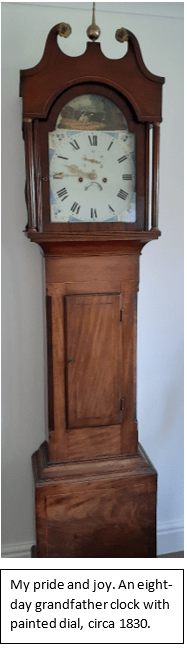
So why the love of clocks, well I’m sure some of it has to do with my propensity to logic. Old clocks are mechanical, none of this new fangled electronic circuitry and consequently it is possible to see how they operate. When a clock doesn’t work, there is always some logical reason why this is so, and a logical approach needed to fix it.

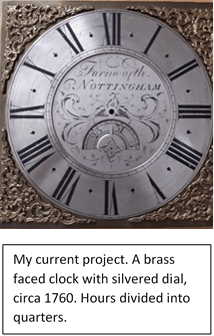
This then gives me the opportunity to investigate, explore the mechanics of the clock, work out how it ought to operate and set about repairing it. In doing so I am often handling a mechanism that is over a hundred years old, in the case of my current project, nearly three hundred years old.
There is a sense of wonderment in handling all the parts. Some appear quite rudimentary and yet other parts such as the cogs are precision pieces. Many of the parts are made by hand but clearly some are made by machines albeit fairly crude ones. How the makers managed the precision required to ensure that cogs mesh freely baffles me. What is clear though is that the makers of the clocks were skilled artisans and possessed skills that I dare say have all but been lost over the years.
Messing around with clocks (I can’t say I do more than that) also allows me to delve into history. The clock I’m currently tinkering with only has an hour hand, no minute or second hand. Whilst the hours and half hours are clearly marked on the dial, where you would normally expect to see minutes, the hours are simply divided up into quarters. A bit of social history, people didn’t have a need to know minutes, they were predominantly only concerned with the hour.
My pride and joy, a grandfather clock, dates to the 1830s. When I took it apart I found several dates and a name scratched into the back of the face plate. The dates related to when it had been serviced and by whom. I was servicing a clock that had been handled by someone over a hundred and fifty years previously. I bet they weren’t standing in a nice warm house drinking a hot cup of coffee contemplating how to service the clock. We take so much for granted and I guess the clocks allow me to reflect on what it was like when they were made and how lucky we are now. Although I do also wonder whether simple notions such as not having the need to concern ourselves with every minute might not be better for the soul.
Share this:


Solitude.
Time alone, socially with ourselves, can be a truly healing ordeal. When we’re alone, we tend to think. Thinking is hard work. It really takes a disciplined mind to reflect, to look at different items in life and piece them together differently than they are presented to us.…perhaps with more clarity. We may experience anxiety, left with our own thoughts in the solitude of quarantine. From whatever source or another, you may feel anxious about being alone. Develop calming practices. Curate calming activities in your life that bring you peace.
You may experience restlessness. What to do with all that time? Many of you will want to be productive. Do something you enjoy. What do you like to do with your (wrestling) hands? Hold a book? Saw wood? Bake? Knit me a scarf?!?
Whether you enjoy listening to music and talking about the memories and times music evokes, explore what you like to do. Me? I dance, read, write, binge on TV series, and digging my hands in dirt to grow stuff. I especially love propagating plants. I try any plant I can get ahold of. In my garden, I have a beautiful crawling flower I clipped in Barcelona. It spreads over soil and has bright green leaves with bright red flowers that unfold into a star at dusk. Curate creative activities in your life that bring you peace.
Solitude gives us time for introspection – a kind of dialogue with ourselves. We love all forms of art because of the internal dialogue with ourselves as we observe a movie, painting, sculpture, fashion, performance, etc. We know at the heart of each of those creations, there was an artist in solitude.
In my solitude…

First edition
Alice walker sat and wrote The Color Purple with pen and paper. The screenwriters later came along and did the same. Each actor received their own script. On screen we watch Ms. Sofia tell Ms. Celie to “bash Mister’s head in and think about heaven later,” after confronting her for telling her step-son to beat her. Imagine how Oprah read all of THAT from just a few letters to god. On the page, Celie acknowledges her jealousy of Sofia’s power – she’s just as “poor, Black and ugly” as she. She apologizes and reconciles by helping Harpo’s next woman recognize her own power. There’s a whole storyline about this. The book more keenly develops more characters and their transformations. In our solitude, we read The Color Purple and for the first time view it in Technicolor.
In the book, of course, we neither see the bruises and blood nor hear the screams the children must have hears when Mister beats Celie senselessly throughout their marriage. We read how Celie gained the courage to leave this batterer. Oh, and the grandest surprise is that Shug reveals to Celie that God ain’t a man, and he ain’t white, neither. If God were a white man, neither could believe in him, according to the book. Both their redemptions came from there, not as the film shows. In the film, Shug is a floozy who redeems herself by becoming ‘respectable’. The film doesn’t question the heteropatriarchal god, a central narrative in the book.
The book is really queer. Harpo loves to cook, clean and take care of kids while his woman works. Harpo resolves his Oedipal dilemma by accepting that he’s not a patriarch like his father. The film depicts his struggle but not this resolution. In the book, there’s an entire sub-narrative about how Celie’s kids in Africa – raised by her sister Nettie – reject the traditional gender roles. This is only hinted at in the film.

Celie & Shug’s only on-screen kiss
Of course, Celie’s a lesbian, Shug’s bisexual and Mister is cool with their love triangle. In the book, Mister’s redemption is there, literally becoming just a tiny bit more feminist, though still not nearly as the flashy boxer Shug later marries. Another big twist is that in the book is that Shug and her husband split amicably; he moves south of the border with Harpo’s woman, Mary Agnes, to run their very own marijuana plantation.
Celie encouraged Mary Agnes to stop people from calling her Squeak, a sub-narrative that only is hinted at in the film’s iconic Thanksgiving scene, aka Celie’s uprising. I love Celie’s nasty retort to Mister’s sinister dad in this scene: “Seem like if he hadn’t been your boy, he might a made somebody a halfway decent man.” Shug helps Mary Agnes have her own singing career, as implied in the Thanksgiving scene when she says she’s leaving with Celie and Shug Avery. In a deep hearty laugh that breaks the dramatic tension, Sofia declares: “Oh, Sofia(‘s) home.”

“You told Harpo to beat me!” Oprah’s breakout character & breakout scene
Self-love and women supporting women are huge themes that can’t be captured in a movie, it needs a whole mini-series to watch at home. Serendipitously, at the end of the scene when their boarding the car, Celie’s hex on Mister is almost taken directly from the pages. “Until you do right by me, ev’ry thing you even think about gonna fail!”
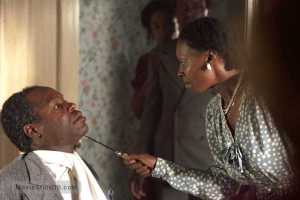
Celie’s Thanksgiving uprising
Finally, in the book, Celie and Mister eventually become friends. Come back with her long-lost kids and the dear sister Nettie he’d banished and “whoop his ass.” I love, love, love the film, but all of this was erased from book to script. I discovered all of this in my solitude.
The Color Purple was originally written as Celie’s prayers, the way she escaped the hell of her existence. In the book, she found this through love. On the paper, we can see that she stops writing to “God” and instead addresses the letters to her sister Nettie, the one who taught her to read (in both versions). The pages, not the movie, clearly reveal this spiritual transformation. Celie continues to write to Nettie, not knowing anything of her fate, only having found the old letters Mister had stashed away for years. Their love was so strong that in her solitude, writing the letters brought her peace. Curate writing activities that bring you peace.

The revised book cover following the film’s success
Do you keep a journal, dabble in poetry, admire the prose in your head? Set aside time as a family for writing and reading. Experience solitude together. Share your work. Curate activities that bring you peace. Use this quarantine to strengthen your capacity to love.
Share this:


Social Psychology in a Time of Crisis

I am currently sitting in an empty classroom because, although face to face teaching is not officially suspended until tomorrow, none of my seminar students have turned up. In this rather depressing situation, however, there is much for a psychologist to reflect upon, particularly the process of social influence.
First there is the phenomenon of obedience to authority. In his seminal series of experiments, Milgram (1974) was trying to understand the destructive power of obedience; the tendency of people to do what they are told even when it is morally wrong and they know it to be so. The current situation is different. While it is always important to question science (as anyone who has studied CRI1007) should be well aware!) large scale public health measures have no hope of working unless everyone obeys. Milgram did not just explore how obedient people can be – he also investigated the conditions under which obedience is strongest. One of the factors that enhanced obedience was an aura of scientific authority. Participants were more likely to obey when they were instructed by a person in a white coat, who worked in a smart laboratory in a reputable university and who made reference to science, research and experiments, than when they were confronted by someone in scruffy clothes in a run-down building in a tatty back street. Boris Johnson has a poor record of telling the truth and inspiring trust. It is no coincidence that he is currently delivering his daily briefings flanked by his chief medical officer and chief scientific advisor.
Then there is the phenomenon of panic buying. There is probably a deep-seated evolutionary drive that causes us to hoard food in times of potential shortage. Just as the onset of autumn drives squirrels to bury hazelnuts, so the mention of self-isolation drives humans to buy pasta and tinned tomatoes (or potatoes in the case of one of my elderly relatives). My grandmother, who was her family’s main breadwinner through the Second World War, kept a stash of sugar under her bed until the day she went into a care home. And I guess Freud might have had something to say about the fact that the items we are hoarding most fervently are toilet rolls!
Evolutionary drives are, however, not the whole story and social influences play a part too. We panic buy because everyone else is panic buying. In his research on conformity, Asch (1956) identified two main reasons why people went along with the crowd: some just wanted to fit in and be socially accepted (compliance); others doubted their own judgment and believed that everyone else must be correct (conversion). The latter process is helping to drive the current retail crisis – people think “everyone else is panic buying, so there must be a good reason to do so, so I need to do it too!”
Asch was investigating the influence of majorities but minorities can be influential too, often for similar reasons (Moscovici, 1976). As if we didn’t have enough disease to worry about, I have just passed a screen warning students about outbreaks of mumps in British universities. The reason why mumps is on the rise among students is that 20 years ago, when the current generation of students were babies, a small minority of scientific opinion suggested a link between the MMR vaccine and autism. Backed by authoritative sounding research and confident and charismatic individuals, it led parents to doubt mainstream opinion and reject vaccination for their children.
Another topic which has puzzled social psychologists for many years is that of altruism. Are we ever truly, selflessly altruistic? Or are we good to others because it has rewards for us? Looking at the Facebook group for the village where I live, there are some heart-breaking accounts of selfishness over the last few days. The grandmother desperately appealing for Calpol for a 5-month-old baby with chicken pox, because every shop she has tried has been cleared out by panic buyers. And the farm that sells eggs by the side of the road with an honesty box that is now asking customers to phone with orders because someone has stolen all the eggs and all the cash. But there are some lovely examples of altruism too. People offering to shop or collect prescriptions for the elderly and vulnerable. People offering to cook meals for health professionals. People setting up Facebook and WhatsApp groups in order to maintain social contact. And the wonderful woman who offered free mango chutney to anyone in the village, just because she was making a batch and wanted to share the love!
We live in interesting times! Stay safe, keep calm and use this opportunity to read and reflect.
References
Asch, S.E. (1956) Studies of independence and submission to group pressure: 1 A minority of one against a unanimous majority. In Psychological Monographs, 70, (9) (Whole No. 416).
Milgram, S. (1974) Obedience to Authority. New York: Harper and Row.
Moscovici, S. (1976). Social influence and social change. London: Academic Press.
Share this:


We cannot allow 'Windrush Lessons Learned' to be buried by CORONAVIRUS
When my grandparents and great-grandparents came to this country between 1958 and 1961, they came here under the Nationality Act (1948) as British citizens. It’s by some miracle that my grandparents were not sucked into the Windrush Scandal, members of a generation that saved Britain by filling in its labour shortages after the War. However, we cannot measure immigration simply in gross domestic product [GDP]. There is a human case to be made for immigration, including the Windrush Generation, who have contributed more to this country than just labour, including to the social history too. That the Windrush Scandal is as much a slight on the Windrush (1948 – 1973) as it is to their descendants, including Black British people that see themselves as much British as they are West Indian.
These descendants of slaves were now being sent back to the places their ancestors toiled, whom the British kidnapped from the African continent against their will. That my ancestors came to be in the Caribbean at the end of a sword.
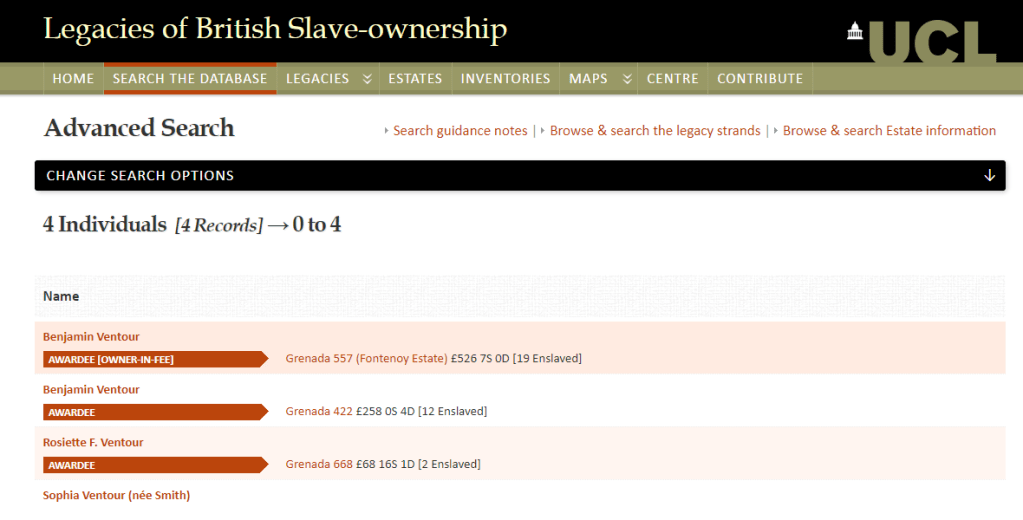
(Legacies of British Slave-ownership, UCL)
In 2018, MP David Lammy addressed the House on what became known as the Windrush Scandal; on why and how Black British citizens, members of this Windrush Generation were being detained and deported, denied their pensions, healthcare and losing their jobs – many of whom had been in this country since they were young children. Wendy Williams’ Windrush Lessons Learned depicts issues that go way beyond the Scandal.
In the Home Office, Lessons Learned shows a department not fit for purpose after institutional failures within government as well as a lack of understanding of Britain’s colonial history. Like in higher education, it showed an ignorance towards race issues that run parallel to the definition of institutional racism in The Stephen Lawrence Inquiry (1999).
After reading the report (somewhat), it feels that this is another tickbox exercise. Whilst the report does talk about the victims of institutional violence at the hands of government, it leads me to believe that the recommendations will remain as such, recommendations. That whilst students are challenging higher education to decolonise, the same must be done for government. The sincerity of Priti Patel’s apology is flimsy at best and most of the Windrush victims have still yet to be compensated properly.
People have died at the hands of the Conservative government’s hostile environment and this document comes at a time where Britain is in the thick of the worst health pandemic in a generation. To release this now when everyone is preoccupied is a testament to how the government feels about the victims. The fact that this document cannot be debated in parliament properly and scrutinised because of COVID-19. The Home Office have ticked their boxes and the victims will be no better off in the end.
Whilst the government implementing future policies to prevent things like this happening in the future would be a good thing, policies can be just policies in the same vain that recommendations can simply sit as recommendations.
If nobody is there to enforce policies; if we have politicians advocating for social cleansing; if we have eugenicist MPs making decisions; if we use terms like “herd immunity” but in reality that is a genocidal ideology… what hope is there for the Windrush Generation, whom also make up part of the population the government is willing to throw under the bus to fight coronavirus? Have lessons really being learned when Boris and company are willing to play colonialism again with its current population?
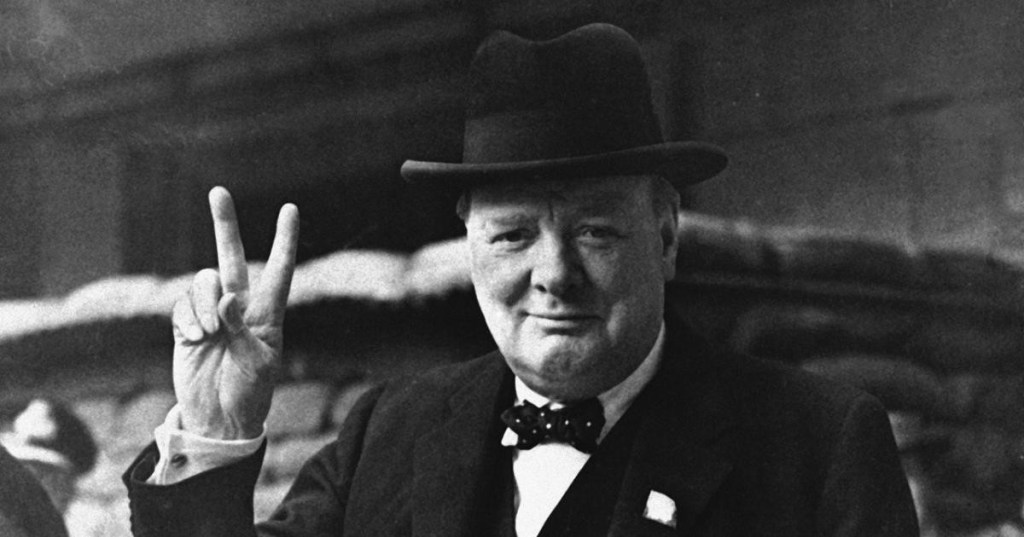
This Conservative government, particularly its promotion of eugenicist views, and Priti Patel’s tenure as Home Secretary have shown that they can no longer be a leader on human rights. The review shows a government that does not care about you unless you are a White British, with English as your first language, in other words depicting an image of quintessential “Englishness.” Splitting children from the families is not just the work of Uncle Sam, nor does deportation simply hurt the deportees.
This crisis should make us challenge what Britishness looks like and that we need to be careful who we call immigrants because the Black Man (and Woman) have been on these shores longer than the White Man (and Woman) – the Angle, the Saxon, the Jute, the Norman… longer than what denotes Englishness in the national conscience. Yet, indigenousness has been stamped on whiteness, but foreigner – interloper – immigrant – follows blackness / brownness, which in my opinion is much ado with the lapses of historical knowledge of British history in wider society.
However, wasn’t it Africans, or as they were, “The Moors”, who stood watch on Hadrian’s Wall for nearly 350 years?
Wendy Williams wants to press reset on the Home Office, changing a toxic working culture into a positive less defensive department with a new mission statement, a department that doesn’t treat criticism as a crime. She pushes for a department that gives whistleblowers protection. Diversity should be celebrated, not revered and a workforce to undergo training on Britain’s colonial history, migration and how Black Britons came to be here. In short, Williams wants to Decolonise the Home Office. Good.
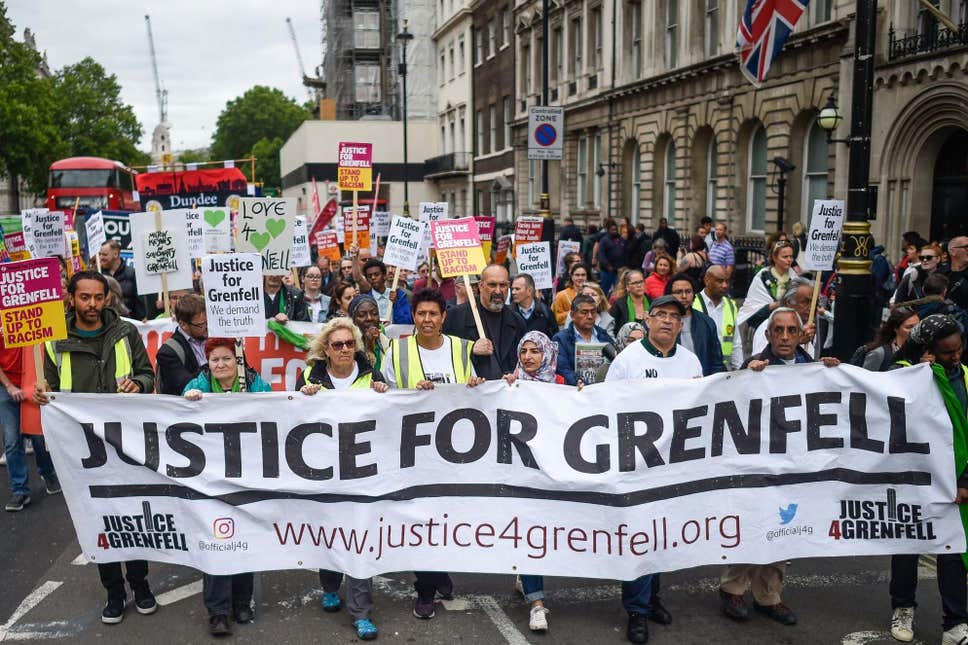
The report stops short of calling the Home Office institutionally racist. Yet, the treatment of the Windrush Generation cannot be argued to be anything but. An inquiry needs to be led into why the Home Office have repeatedly discriminated against British communities from Black, Asian and other marginalised ethnic backgrounds. The report tells us that the Windrush Scandal was no accident. It’s just another example of how institutions get away with murder (literally), in the tint of Grenfell and Hillsborough, victims still long for justice and these structures continue to give lip service.
Priti Patel’s apology is offensive. I take it with a grain of salt. For someone who is actively a racism denier, I cannot take anything she says seriously. The apology is to make people feel at ease, not a declaration of empathy from a feeling of guilt. Skin folk ain’t kin folk; she is a collaborator, one of the many people of colour recruited to hold up White Power. She is a bigot and no better than Mogg, Cummings, and the prime minister himself.
Deeds not words; if they wants to show they care, dismantle those hostile environment policies and initiate a root-and-branch independent investigation into racism in the Home Office – until that day arrives , words are just words.
Share this:


Never fear…. Spring is almost here

https://shop.royalacademy.org.uk/david-hockney-arrival-of-spring-poster
There is no doubt, we are living in a time of crisis. Everywhere we look there are signs of disorder, disruption and chaos, impinging on our real and virtual lives. You can see it in the faces of family, friends, colleagues, the old and the young from children to pensioners, and everyone in between. There is nothing else on anyone’s lips beyond what they’ve heard, what they’ve seen, how they’ve prepared, or haven’t for this human disaster. Scientific words like Covid-19, Coronavirus, criminological words such as isolation, criminalisation and newly minted words; social distancing are being pushed into conversations. These appear alongside the more prosaic questions, which shops have bread? toilet rolls? milk? eggs? Is this open, is that open, can I get there, am I allowed to go out?
Over the past week I have seen this fear develop, evolve and spread. It threatens to swallow us all up in our panic. Many people, myself included, are desperately trying to maintain the everyday, the mundane, some routine, some semblance of normality. My institution is trying to be supportive, lots of extra email, how to move your teaching online, what advice to give students, how to look after your mental and physical health and that of others, at a time like this. All of this advice is well-intentioned and aims to alleviate fear, after all scientia potentia est, or so we are told.
The problem with trying to recreate our real lives in a virtual environment is far more profound than simply changing our modes of operation. When people are worried, frightened and saddened, no amount of pretending that it is “business as usual” will distract them from the everyday lived experience. We can pretend, but when you are worried about your own health, that of your family, when you don’t know where you are going to be able to get the basics of life from, and for many, how on earth you will be able to pay for it with limited or no income, everything else pales into insignificance.
So far we have seen so much evidence of privilege: those that aren’t worried because they’re healthy, those that stockpile food and other essential products, because they can afford to and those that isolate themselves in the lap of luxury, because they have access to money, property and contacts. All of which feeds the fear by the second, minute and hour. Competing with this negativity are the stories around kindness, the narratives from the NHS, the police, carers, shop workers, the list goes on showing that the human spirit is still burning strong, that we have a choice about our behaviour, our thoughts and our feelings. That we can make a difference, if only we want to.
This week has felt like a nightmare, so dark, so stressed, the walls are closing in on all of us, forcing us into confinement. We look out of the window and nobody is moving outside. It has all the ingredients of my favourite genre, dystopic fiction, but this time we’re all fully immersed and we have no idea how the novel ends. How many will die, how many will find their finances, relationships, employment, education disrupted and/or destroyed?
That changed for me yesterday, when I stumbled upon a message from the artist David Hockney. The message was incredibly simple ‘Do remember they can’t cancel the spring’. I should declare in advance, I am a little biased, he’s one of my favourite artists, but with Hockney’s simple statement he touched on a profound truth. We are humans, infinitely resourceful, extremely adaptable, incredibly social.
Look after yourselves and each other, if not face to face, then virtually. Check in, touch base and create a life line for each other. But also remember to take some time away from the screens, look out of the window and remember the world is still a beautiful place, filled with many wonders, including humankind.
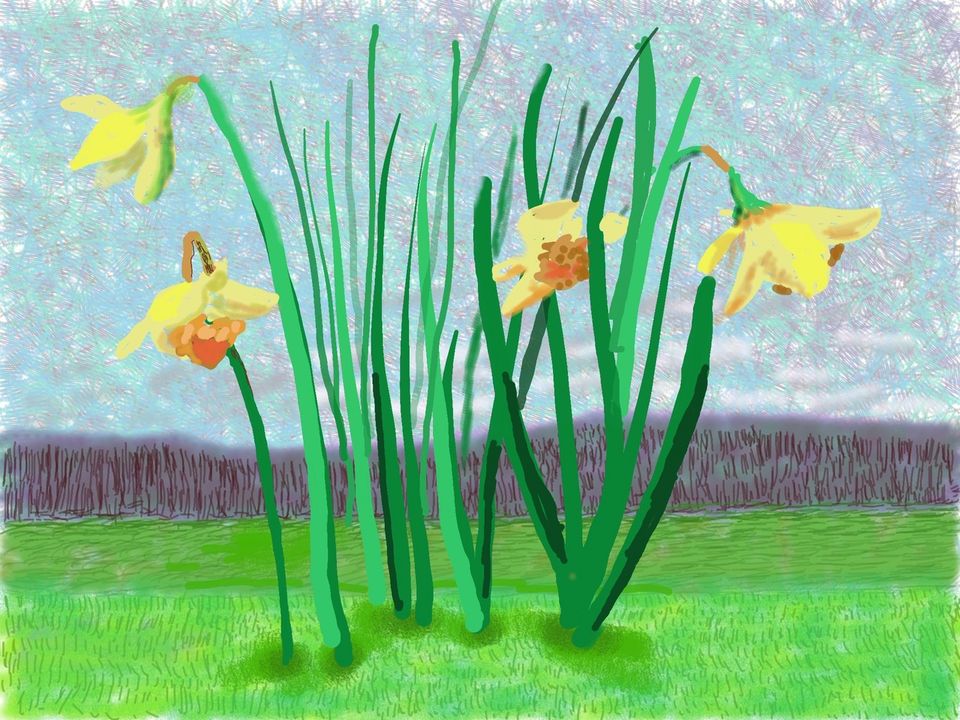
https://www.theartnewspaper.com/comment/a-message-from-david-hockney-do-remember-they-can-t-cancel-the-spring?fbclid=IwAR2iA8FWDHFu3fBQ067A7Hwm187IRfGVHcZf18p3hQzXJI8od_GGKQbUsQU
Share this:

The Ho Stro’ (A quick peek at a little sex work) #BlackAsiaWithLove

The original, unofficial Ho Stro’ theme song. Play this while reading (see below).
Sitting on the curb of a busy road along the railroad track.
Wearing a mini skirt with your legs spread, bent over
Scratching your wig with one of your long fire-engine red fingernails, while
Reaching in your purse for the matching lipstick.
It’s half past midnight, the night is young.
4 women on the Ho Stro’ between the railroad track, a busy road, and a giant city park.
Hoes stroll day and night.
I’ve been on my way to work, or
Watching the sunrise on my way home from clubbing,
Rain or shine,
These hoes are inline
On time.
Scattered along the railroad track facing the park,
Sometimes 1 by 1, sometimes in twos;
And an elderly woman within eyeshot.
I’ve seen a crack head or two, too,
Trying to push herself up to any mens passing by.
Crack or smack,
I’m not sure what these hoes do,
But I know it’s whack.
Frail, emaciated, veins popping and tattered.
They rarely cross the road and venture along the train track.
Over here it’s wide open,
The hoes along the track roam in packs…
Whereas the park side of the stroll provides the crack heads some cover.
For a while, I resisted knowing that these women were hoes.
But one evening,
A couple of hoes showed up at my favorite Beef Noodle joint as I sat for dinner.
All cheery and bubbly,
Dressed for a night out.
Greeting everyone that comes in as you do in your neighborhood joint*
One of the ladies came over towards me, all bubbly and cheery,
Stretched out and unfolded her hands as if she were about to offer me something,
Then jabbed her index finger in-and-out of… you get it.
Yes, THAT universal gesture,
Though it didn’t seem lude coming from her, over a bowl of Pho.
I politely declined, they placed their orders and sat down.
Hoes gotta eat, too.
In my after-dinner walks around the lake,
I have to watch out when I reach the long, straight, tree-lined stretch along the track.
There, there’s nothing but cars parked,
And tea stalls at both ends.
Hoes tend to congregate right in the middle.
Pulling tricks.
No man gets by unsolicited.
It’s as if the bright fire-red were their signal.
Fire-engine red lipstick and false nails to match.
Sometimes a matching skirt, purse and shoes, too.
It’s loitering, but
Soliciting men, too.
The men know where to find them, these hoes are always there.
Street crawlers know where to find them.
Rush hour or late-night,
Early morning, and absolutely at high noon…
Women can’t loiter.
Just look at how we treat women who are not even in the trade.
Meanwhile, men and boys in most parts of the world can hang out anywhere, anytime.
Men are much freer at this level of corporeal control and bodily integrity –
In public and private space.
Although I’d argue that we teach boys to disintegrate into the night.
This is exactly the breach that’s reached here.
These hoes stroll.
There is a Ho Stro’ in every city I know!
Pimps, hookers, hoes, tricks, johns and everybody in between can see.
Who do the law-keepers claim are the criminals?
Hey mister, have you got a dime?
Mister: Voulez-vous coucher avec moi ce soir?
—
*I’ve only lived here a half a year, so I’m sure this is their hood; I’m new to the party.
NB: Ho Stro’ or whore stroll is an American southern vernacular term – the first term I learned as a kid – for a red-light district. PLEASE, do not look up Ho Stroll on YouTube but if you must this one from LA is HILARIOUS And please, seriously, don’t bother looking up words for the clients of female sex workers.
Share this:


10 Things I Want to Say to Jane Austen

I
Why are you the go-to of all the women writers in history?
II
It’s so hard to cut through the whiteness of your novels. The ongoing enduring whiteness pontificating, reflected in almost all English literary canon. Not impressed.
III
Your books have no heroes or villains that look like me, despite you living in a time where you shared these British streets and roads with the Black Georgians.
IV
Thank God for Andrew Davies’ re-imagining of your unfinished Sanditon. I loved Miss Lambe! #BlackExcellence

V
George Wickham is a wasteman.
VI
Seeing Black people portrayed as actual human beings in a period drama [Sanditon] put butterflies in my stomach. Any time I saw them, I was smiling for a week. With their natural hair as well… truths universally acknowledged and all that #fightme #BlackistheNewWhite
VII
When you see these characters, you remember every detail. You recall it as memory, as a a vivid as a ballroom dance – corsets, violins and the flesh Mother Africa.
VIII
Why couldn’t you have characters like Rhoda Schwartz or Sam from Vanity Fair by Thackeray? #ohshityoudeadthen
IX
If you were around today, you’d be unstoppable on Twitter with your idealised femininity and blinding whiteness. You’d be what they call an influencer #wokeAF #edgelord
X
Badly Done, Jane.
Share this:


DNA Tinkering/Pandora’s box. #BlackenAsiaWithLove
Who would choose to be black?
To have dark skin?
Dark brown eyes?
A wide nose?
Or yellow skin?
A round face?
Not-so-blue eyes?
Who would choose this?
If given a choice, if you could go to the store…
And pick out a kid?
Now remember, like every parent, you want your kid to have a happy life.
Successful, easy, fulfilled…
All those things.
So, don’t blonds have more fun?
OK, so those of you who bleach your hair,
Would you choose to have blond kids?
Skip the bleach?
Or, for those who bleach their skin…
Would you tweak your kid’s DNA to give them lighter skin?
Or a more narrow, acauline nose?
Thinner calves and longer legs?
Plumper lips and longer eyelashes?
Or double eye-lids?
An angular jawline?
Breast size?
Would you have a kid that looked like you?
Do you hate yourself so much that if given the choice,
Would you erase you?
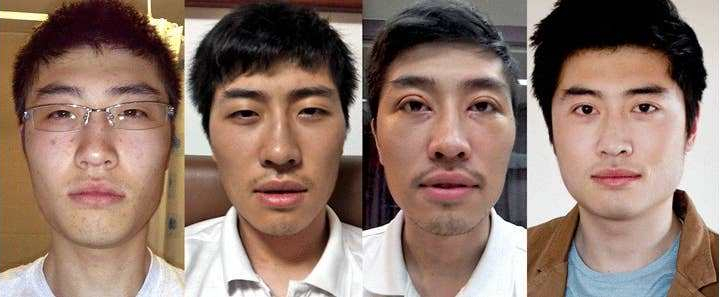
There is a race for technology right now…
One that would allow gene editing,
And needless to say, I don’t mean ‘jean’ editing like painting your denim,
Or taking a pair of shears to them, trimming them in places, selectively poking holes in others…
Needless to say, I don’t mean that,
But, ‘genes’ as in genetics,
As in DNA editing.
And not just going to a doctor to choose to have a kid- or not.
And no, I don’t mean going to a medical professional and having them test you and your partner’s blood to see if you both carry the same deteriorating genes.
Did you know that
In some places, if you and your fiancé carry the gene for some diseases, then
The state won’t sanction your relationship.
And no, I don’t mean like your fiancé being of the so-called wrong religion or the same gender.
But what about so-called diseases like Huntington’s Disease?
There are literally a litany of diseases that require better research and funding just to save lives.
And they jailed that doctor in China who gene-edited HIV immunity.
Though clearly more people are willing to pay for a thinner nose than a Sickle Cell test.
But now we have designer babies: Eye color, intelligence and height?
Freckles?
Earwax stickiness can be selected in a lab.
Fertility clinics routinely remove cells from embryos to check for diseases, sex, eye-color…
But you can go to the shop on the corner now, and
Change your hair color, and
On the next corner, you can change boring brown eyes to blue, magenta, hazel…
Anything but boring brown of the majority of the planet, BTW.
Select babies?
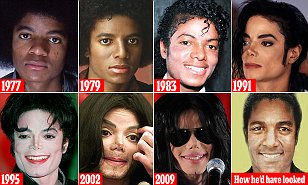
I am black.
And gay.
And in spite of my many other attributes – like my faith, my values or my politics –
These two singular characteristics have uniquely marked my life.
What if I could change these?
Being gay has caused me to doubt my own mother’s love,
Doubt my own allegiance to my community due to open homophobia towards me.
For many, now,
A gay foetus is NOT a viable foetus.
For them, gays are an ugly smear that must be erased.
Gay life is so abhorrent that they cause it harm at every turn…
Eschewing every opportunity god gives them to show compassion.
Would you edit us out of existence?
Share this:


Why do HEIs task diversity leads with solving systemic issues?
“While it is of utmost importance that universities reflect the demographic diversity of the societies they are supposed to serve, the question of demographic diversity falls short of addressing the question of decolonisation.”
(Icaza and Vázquez, 2018: 115).
When equality, diversity, inclusion work is left to a few good eggs in our universities, there is a problem. Hiring EDI leads will not make your institution less racist, sexist, ableist, homophobic or transphobic. Equity must be part of how a company hires and makes decisions, and that goes to to the very top of any establishment. From healthcare to policing and education, public and private bodies claim equality, diversity and inclusion is a priority. However, there is a gap between what institutions say, and do.
Diversity officers, equality leads, and roles with “BME” and “BAME” in their titles are blue plasters for what is essentially a tumour. Whilst I recognise these roles need to exist, EDI and race equity should be in the main objectives and KPIs of all universities. Decolonisation needs to run hand-in-hand with diversity work, and whilst universities give lip service to EDI while simultaneously not engaging in decolonial projects, what you’re telling the victims of colonisation is you don’t belong here.
Colonisation, and then its flip, decolonisation, is systemic and far-reaching. To hire an individual (singular) in these roles, often on a part-time basis to tackle systemic problems is both short-sighted and cruel. There is no quick-fix to say, institutional racism, and it’s everyone’s responsibility.

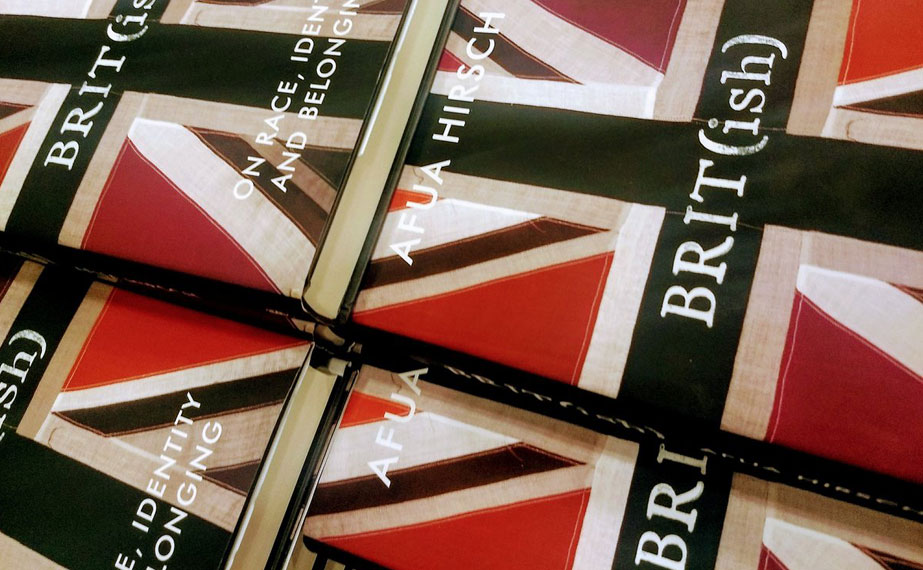
Having attended conferences ostensibly focused on racism, it is evident another profound challenge to higher education is a reluctance from institutions to talk about race – and to implement race equity as a separate division to generic EDI practice. Under race, we have: whiteness, White Privilege and (race-specific) unconscious bias, as well as identity politics impacting the life experiences of people of colour. What the African-American cultural theorist W. E. B DuBois (1903: 2) called “double consciousness,” and more recently with Afua Hirsch (2018) in Brit(ish).
Universities need to support student campaigns for race equity and diversity, including student union initiatives around decolonisation (and blacktivism) in response to national (and global) narratives, as political activism is one of the movements pushing for a more equal and fair society.
Consistently, Britain’s national response to race issues has swayed from varying degrees of reluctance to negligence and this is no more evident than in the education sector. Britain’s response to discussing its colonial past is what Shashi Tharoor called “historical amnesia” (Independent) and “today’s student movements are confronting universities with their colonial histories […] of segregation […] and the recognition of the universities’ own participation in the modern/colonial order” (Icaza and Vásquez, 2018: 122).
HEIs need to support campaigns, including those around decolonising education (and blacktivism) regardless of their source. Icaza and Vásquez discuss decoloniality as a conduit to seeing “the dynamics of power differences, social exclusion and discrimination” in relation to inequality under the umbrella of race, gender, and socioeconomic deprivation (2018: 113). Whilst their research centres on Amsterdam, contemporary Britain, is also built in the ruins of empire.When White, able-bodied heterosexual male is the default in a heteronormative society, it is safe to presume the same occurs in HE. After all, universities as with all British institutions, are part of society and thus cannot escape the same colonising imperatives.
Elite universities, such as Oxford, have been scrutinised for their part in British colonial history. The Academy was built to exclude people who were not White, rich, male, able-bodied and straight, ensuring that minorities often find themselves scaling the walls into The University.
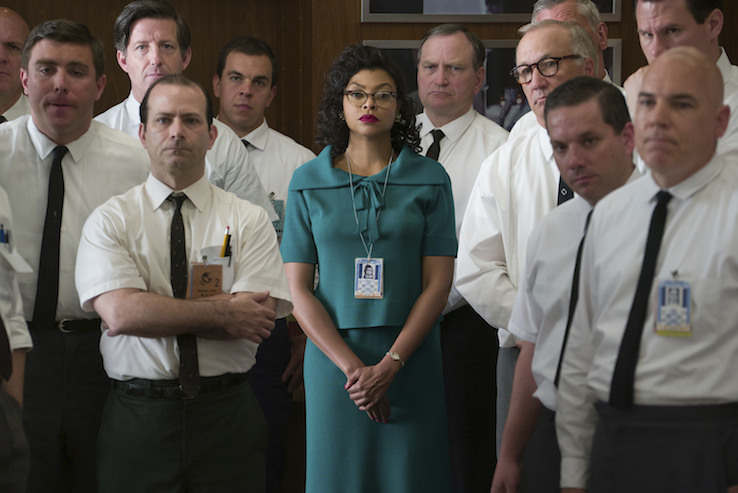
Student equality, or lack of, can be seen reflected in those teaching them on a day-to-day basis. To feel equal in the classroom, one focal point of conversation is the lack of role models – the deficit of professors in HE to be like, from varied diasporic African and Asian backgrounds.
In the Equality in higher education: statistical report 2018, Advance HE stated only 85 Black professors work at British universities (in relation to over 10,000 White). This statistic is an indictment on the lack of visibility at the very top of academia, and representation needs to extend further than race to also include disability, sexuality and religion. It is about seeing your story in those that have gone through it before, to show the next generation of potential leaders and academics it is possible.
Whilst efforts to make universities more inclusive have been implemented through initiatives like decolonising the curriculum this is a drop in the ocean in terms of diversifying the workforce, including senior management teams (Icaza and Vásquez, 2018: 115). To reach the fullest potential of diversity in HE it is essential to have as many nonnormative voices as possible in the decision-making processes. In including them, we can then more openly critique what knowledge is being produced, how it is being produced and what’s being created. How it is implemented directly impacts student equality and how they feel included in their university community:
“The implications of this whiteness and Eurocentrism go beyond history. This state of affairs mediates our whole education experiences considerably, so much so that attempting to study anything outside of the white and Eurocentric requires going the extra mile.”
Ore, 2019: 56
For race equity, especially in a student body as culturally diverse as at Northampton, it is important to consider whether the continuing use of homogeneous groups for minorities, such as BAME [Black Asian Minority Ethnic] inculcates equality or creates further division. Certainly such homogenisation inherently excludes discourses of intersectionality so necessary in ensuring equity. When universities enrol these students, it is imperative to consider if there are ample, appropriate support systems in place – from race equity to working class, sexuality and disability.
Across the sector, the dropout rate of specifically Black students is high, and one would think there would be support prevention systems to reduce the number of drop outs. At UK universities, Black students are 50% more likely to drop out than their Asian colleagues and one in ten Black students drop out, in comparison to 6.9% of all students – according to the University Partnership Programme, Social Market Foundations (Adegoke, 2019: 32-33).
Goldsmith’s Dr Nicola Rollock, for instance, believes not enough is done to investigate the cause and believes there’s a fear of talking about race in the sector:
“My concern is that these issues aren’t look at in any fundamental way: when they are, all black ethnic groups are amalgamated into one mass, and they shouldn’t be. The data doesn’t speak to distinct differences. And there’s also a fear of talking about race. If they’re talking about black and minority ethnic students, race needs to be a fundamental part of the conversation, but I would argue that as a society, and […] within education policy, race is a taboo subject” (Rollock, 2019, quoted in Adegoke, 2019: 34).
For a university as culturally diverse as Northampton (as far as students are concerned), is it right to put people into homogeneous groups, like BAME? Is there equity in grouping this way? Why are students not born into White Privilege amalgamated into one mass? Why is there a fear of talking about race in classroom but also in wider society? What if they were lesbian, gay, bisexual or transgender, as well as from the African or Asian continents?
Do HEIs have ample support systems in place – from race, gender to sexuality and disability? Moreover, universities often think it is enough to have more Black people in the building. Emotional labour is not something higher education institutions think about (Adegoke, 2019: 33).
What providers can do is engage with national reports, including the Race Equality Charter (REC) – but also 2017’s Lammy Review, and the 1999 Macpherson Report (both focused on the criminal justice system but no less relevant to universities) – and research into LGBTQ+ experiences in higher education, as shown in Education Beyond the Straight and Narrow by the National Union for Students [NUS].
Where universities see equality, diversity and inclusion work as a legal requirement under the Equality Act (2010), important and vital discussions around ethics and moral duty need to happen as well. Where HEIs often think about the money, there is a human case to be made for students!
When EDI is seen as an add-on to general practice, it can often be viewed as a “tick-box exercise.” It can frequently have an image of transitioning or adaptation, often describing “their missions by drawing on the languages of diversity as well as equality” (Ahmed, 2018: 333). Diversity should be the default setting but hiring people with BME, BAME, diversity, equality or inclusion in their title is simply a blue plaster for what is a far-reaching nasty tumour. To do diversity work, you must do decolonial work.
So, really, higher education institutions need to be thinking about how the emotional labour of equality and diversity work impacts their employees, especially women of colour.
Referencing
Acciari, L (2014). ‘Education Beyond the Straight and Narrow,’ nus.org, [online]. Available from: https://www.nus.org.uk/global/lgbt-research.pdf [Last accessed 30 December 2019]
Adegoke, Y and Uviebinené, E. (2019). Slay in Your Lane. London: 4th Estate.
Advance HE (2018). ‘Equality in higher education: statistical report 2018,’ ecu.ac.uk, [online]. Available from: https://www.ecu.ac.uk/publications/equality-higher-education-statistical-report-2018/ [Last accessed 30 December 2019]
Ahmed, S. (2018). Rocking the Boat: Women of Colour as Diversity Workers. In: Arday, J., Mirza, S. (eds). Dismantling Race in Higher Education: Racism, Whiteness and Decolonising the Academy. London: Palgrave Macmillan, pp. 331 –348.
Bhopal, Kalwant (2018), ‘The Persistence of White Privilege in Higher Education: Isn’t it Time for Radical Change?,’ Social Sciences Birmingham, [online]. Available from: https://blog.bham.ac.uk/socialsciencesbirmingham/2018/05/24/the-persistence-of-white-privilege-in-highereducation-isnt-it-time-for-radical-change/ [Last accessed 30 December 2019]
Broomfield, Matt (2017) Britons suffer ‘historical amnesia’ over atrocities of their former empire, says author. Independent [online]. Available from: https://www.independent.co.uk/news/uk/politics/shashi-tharoorbritain-india-suffer-historical-amnesia-over-atrocities-of-their-former-empire-says-a7612086.html [Last accessed: 31 December 2019]
Bulman, May (2017) Black students 50% more likely to drop out of university, new figures reveal. Independent [online]. Available from: https://www.independent.co.uk/news/uk/home-news/black-students-drop-outuniversity-figures-a7847731.html [Last Accessed: 31st December]
DuBois, W. E. B. (1994). The Souls of Black Folk. Dover Edition. New York: Dover Publications. Inc
Equality Act 2010. London: TSO.
Fanon, F. (1967). Black Skin, White Masks. New York: Grove Press.
Hirsch, A (2018). Brit(ish). London: Vintage.
Home Office. (1999). The Stephen Lawrence Inquiry. (Chairperson: William Macpherson). London: TSO.
Icaza, R., Vásquez, R. (2018). Diversity or Decolonisation? In: Bhambra, G. K., Gerbrial, D., Nişancioğlu, K. (eds). Decolonising the University. London: Pluto Press, pp. 108 – 128.
Kwakye, C and Ogunbiyi, O. (2019). Taking Up Space. London: Merky Books.
Lawton, Georgina (2018). Why do black students quit university more often than their white peers? The Guardian [online]. Available from: https://www.theguardian.com/inequality/2018/jan/17/why-do-blackstudents-quit-university-more-often-than-white-peers [Last accessed: December 31 2019]
Lodge-Eddo, R. (2017). Why I’m No Longer Talking to White People About Race. London: Bloomsbury.
Ministry of Justice (2017). The Lammy Review. (Chairperson: David Lammy MP). London: TSO.
Social Market Foundation (2017) SMF and the UPP Foundation to investigate continuation rates in higher education in London. smf.co.uk [online]. Available from: http://www.smf.co.uk/smf-upp-foundationinvestigate-continuation-rates-higher-education-london/ [Last Accessed: 31 December 2019]
Social Market Foundation with University Partnership Programme (2017). ‘On course for success? Student retention at university,’ smf.co.uk [online]. Available from: http://www.smf.co.uk/wpcontent/uploads/2017/07/UPP-final-report.pdf [Last accessed: 31 December 2019]


