
Home » Criminology (Page 47)
Category Archives: Criminology

Why do HEIs task diversity leads with solving systemic issues?
“While it is of utmost importance that universities reflect the demographic diversity of the societies they are supposed to serve, the question of demographic diversity falls short of addressing the question of decolonisation.”
(Icaza and Vázquez, 2018: 115).
When equality, diversity, inclusion work is left to a few good eggs in our universities, there is a problem. Hiring EDI leads will not make your institution less racist, sexist, ableist, homophobic or transphobic. Equity must be part of how a company hires and makes decisions, and that goes to to the very top of any establishment. From healthcare to policing and education, public and private bodies claim equality, diversity and inclusion is a priority. However, there is a gap between what institutions say, and do.
Diversity officers, equality leads, and roles with “BME” and “BAME” in their titles are blue plasters for what is essentially a tumour. Whilst I recognise these roles need to exist, EDI and race equity should be in the main objectives and KPIs of all universities. Decolonisation needs to run hand-in-hand with diversity work, and whilst universities give lip service to EDI while simultaneously not engaging in decolonial projects, what you’re telling the victims of colonisation is you don’t belong here.
Colonisation, and then its flip, decolonisation, is systemic and far-reaching. To hire an individual (singular) in these roles, often on a part-time basis to tackle systemic problems is both short-sighted and cruel. There is no quick-fix to say, institutional racism, and it’s everyone’s responsibility.

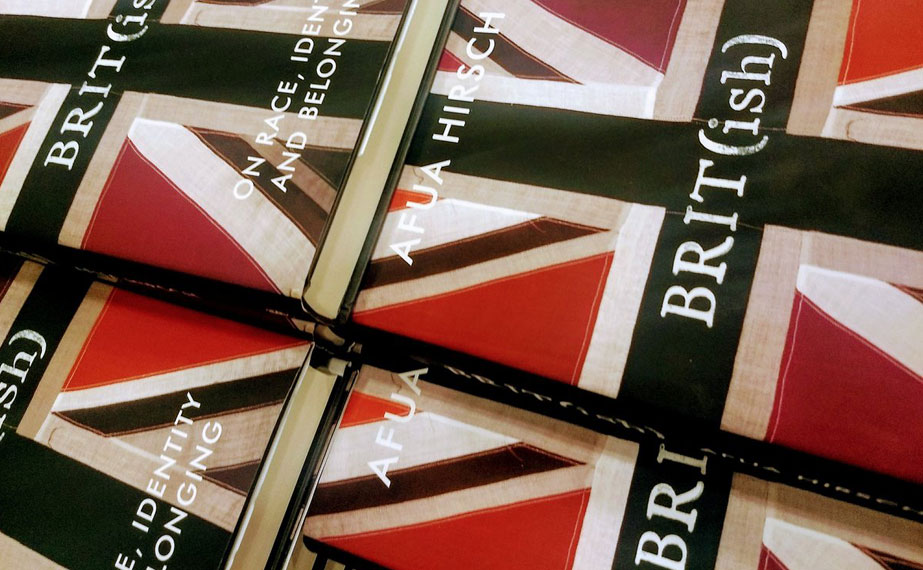
Having attended conferences ostensibly focused on racism, it is evident another profound challenge to higher education is a reluctance from institutions to talk about race – and to implement race equity as a separate division to generic EDI practice. Under race, we have: whiteness, White Privilege and (race-specific) unconscious bias, as well as identity politics impacting the life experiences of people of colour. What the African-American cultural theorist W. E. B DuBois (1903: 2) called “double consciousness,” and more recently with Afua Hirsch (2018) in Brit(ish).
Universities need to support student campaigns for race equity and diversity, including student union initiatives around decolonisation (and blacktivism) in response to national (and global) narratives, as political activism is one of the movements pushing for a more equal and fair society.
Consistently, Britain’s national response to race issues has swayed from varying degrees of reluctance to negligence and this is no more evident than in the education sector. Britain’s response to discussing its colonial past is what Shashi Tharoor called “historical amnesia” (Independent) and “today’s student movements are confronting universities with their colonial histories […] of segregation […] and the recognition of the universities’ own participation in the modern/colonial order” (Icaza and Vásquez, 2018: 122).
HEIs need to support campaigns, including those around decolonising education (and blacktivism) regardless of their source. Icaza and Vásquez discuss decoloniality as a conduit to seeing “the dynamics of power differences, social exclusion and discrimination” in relation to inequality under the umbrella of race, gender, and socioeconomic deprivation (2018: 113). Whilst their research centres on Amsterdam, contemporary Britain, is also built in the ruins of empire.When White, able-bodied heterosexual male is the default in a heteronormative society, it is safe to presume the same occurs in HE. After all, universities as with all British institutions, are part of society and thus cannot escape the same colonising imperatives.
Elite universities, such as Oxford, have been scrutinised for their part in British colonial history. The Academy was built to exclude people who were not White, rich, male, able-bodied and straight, ensuring that minorities often find themselves scaling the walls into The University.
Student equality, or lack of, can be seen reflected in those teaching them on a day-to-day basis. To feel equal in the classroom, one focal point of conversation is the lack of role models – the deficit of professors in HE to be like, from varied diasporic African and Asian backgrounds.
In the Equality in higher education: statistical report 2018, Advance HE stated only 85 Black professors work at British universities (in relation to over 10,000 White). This statistic is an indictment on the lack of visibility at the very top of academia, and representation needs to extend further than race to also include disability, sexuality and religion. It is about seeing your story in those that have gone through it before, to show the next generation of potential leaders and academics it is possible.
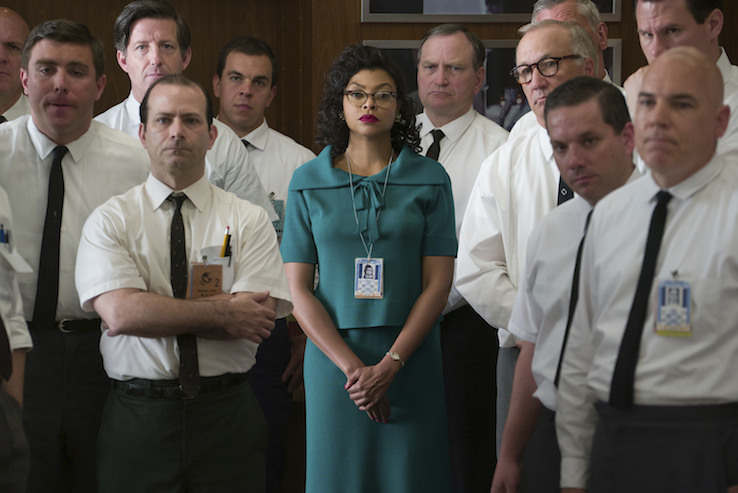
Whilst efforts to make universities more inclusive have been implemented through initiatives like decolonising the curriculum this is a drop in the ocean in terms of diversifying the workforce, including senior management teams (Icaza and Vásquez, 2018: 115). To reach the fullest potential of diversity in HE it is essential to have as many nonnormative voices as possible in the decision-making processes. In including them, we can then more openly critique what knowledge is being produced, how it is being produced and what’s being created. How it is implemented directly impacts student equality and how they feel included in their university community:
“The implications of this whiteness and Eurocentrism go beyond history. This state of affairs mediates our whole education experiences considerably, so much so that attempting to study anything outside of the white and Eurocentric requires going the extra mile.”
Ore, 2019: 56
For race equity, especially in a student body as culturally diverse as at Northampton, it is important to consider whether the continuing use of homogeneous groups for minorities, such as BAME [Black Asian Minority Ethnic] inculcates equality or creates further division. Certainly such homogenisation inherently excludes discourses of intersectionality so necessary in ensuring equity. When universities enrol these students, it is imperative to consider if there are ample, appropriate support systems in place – from race equity to working class, sexuality and disability.
Across the sector, the dropout rate of specifically Black students is high, and one would think there would be support prevention systems to reduce the number of drop outs. At UK universities, Black students are 50% more likely to drop out than their Asian colleagues and one in ten Black students drop out, in comparison to 6.9% of all students – according to the University Partnership Programme, Social Market Foundations (Adegoke, 2019: 32-33).
Goldsmith’s Dr Nicola Rollock, for instance, believes not enough is done to investigate the cause and believes there’s a fear of talking about race in the sector:
“My concern is that these issues aren’t look at in any fundamental way: when they are, all black ethnic groups are amalgamated into one mass, and they shouldn’t be. The data doesn’t speak to distinct differences. And there’s also a fear of talking about race. If they’re talking about black and minority ethnic students, race needs to be a fundamental part of the conversation, but I would argue that as a society, and […] within education policy, race is a taboo subject” (Rollock, 2019, quoted in Adegoke, 2019: 34).
For a university as culturally diverse as Northampton (as far as students are concerned), is it right to put people into homogeneous groups, like BAME? Is there equity in grouping this way? Why are students not born into White Privilege amalgamated into one mass? Why is there a fear of talking about race in classroom but also in wider society? What if they were lesbian, gay, bisexual or transgender, as well as from the African or Asian continents?
Do HEIs have ample support systems in place – from race, gender to sexuality and disability? Moreover, universities often think it is enough to have more Black people in the building. Emotional labour is not something higher education institutions think about (Adegoke, 2019: 33).
What providers can do is engage with national reports, including the Race Equality Charter (REC) – but also 2017’s Lammy Review, and the 1999 Macpherson Report (both focused on the criminal justice system but no less relevant to universities) – and research into LGBTQ+ experiences in higher education, as shown in Education Beyond the Straight and Narrow by the National Union for Students [NUS].
Where universities see equality, diversity and inclusion work as a legal requirement under the Equality Act (2010), important and vital discussions around ethics and moral duty need to happen as well. Where HEIs often think about the money, there is a human case to be made for students!
When EDI is seen as an add-on to general practice, it can often be viewed as a “tick-box exercise.” It can frequently have an image of transitioning or adaptation, often describing “their missions by drawing on the languages of diversity as well as equality” (Ahmed, 2018: 333). Diversity should be the default setting but hiring people with BME, BAME, diversity, equality or inclusion in their title is simply a blue plaster for what is a far-reaching nasty tumour. To do diversity work, you must do decolonial work.
So, really, higher education institutions need to be thinking about how the emotional labour of equality and diversity work impacts their employees, especially women of colour.
Referencing
Acciari, L (2014). ‘Education Beyond the Straight and Narrow,’ nus.org, [online]. Available from: https://www.nus.org.uk/global/lgbt-research.pdf [Last accessed 30 December 2019]
Adegoke, Y and Uviebinené, E. (2019). Slay in Your Lane. London: 4th Estate.
Advance HE (2018). ‘Equality in higher education: statistical report 2018,’ ecu.ac.uk, [online]. Available from: https://www.ecu.ac.uk/publications/equality-higher-education-statistical-report-2018/ [Last accessed 30 December 2019]
Ahmed, S. (2018). Rocking the Boat: Women of Colour as Diversity Workers. In: Arday, J., Mirza, S. (eds). Dismantling Race in Higher Education: Racism, Whiteness and Decolonising the Academy. London: Palgrave Macmillan, pp. 331 –348.
Bhopal, Kalwant (2018), ‘The Persistence of White Privilege in Higher Education: Isn’t it Time for Radical Change?,’ Social Sciences Birmingham, [online]. Available from: https://blog.bham.ac.uk/socialsciencesbirmingham/2018/05/24/the-persistence-of-white-privilege-in-highereducation-isnt-it-time-for-radical-change/ [Last accessed 30 December 2019]
Broomfield, Matt (2017) Britons suffer ‘historical amnesia’ over atrocities of their former empire, says author. Independent [online]. Available from: https://www.independent.co.uk/news/uk/politics/shashi-tharoorbritain-india-suffer-historical-amnesia-over-atrocities-of-their-former-empire-says-a7612086.html [Last accessed: 31 December 2019]
Bulman, May (2017) Black students 50% more likely to drop out of university, new figures reveal. Independent [online]. Available from: https://www.independent.co.uk/news/uk/home-news/black-students-drop-outuniversity-figures-a7847731.html [Last Accessed: 31st December]
DuBois, W. E. B. (1994). The Souls of Black Folk. Dover Edition. New York: Dover Publications. Inc
Equality Act 2010. London: TSO.
Fanon, F. (1967). Black Skin, White Masks. New York: Grove Press.
Hirsch, A (2018). Brit(ish). London: Vintage.
Home Office. (1999). The Stephen Lawrence Inquiry. (Chairperson: William Macpherson). London: TSO.
Icaza, R., Vásquez, R. (2018). Diversity or Decolonisation? In: Bhambra, G. K., Gerbrial, D., Nişancioğlu, K. (eds). Decolonising the University. London: Pluto Press, pp. 108 – 128.
Kwakye, C and Ogunbiyi, O. (2019). Taking Up Space. London: Merky Books.
Lawton, Georgina (2018). Why do black students quit university more often than their white peers? The Guardian [online]. Available from: https://www.theguardian.com/inequality/2018/jan/17/why-do-blackstudents-quit-university-more-often-than-white-peers [Last accessed: December 31 2019]
Lodge-Eddo, R. (2017). Why I’m No Longer Talking to White People About Race. London: Bloomsbury.
Ministry of Justice (2017). The Lammy Review. (Chairperson: David Lammy MP). London: TSO.
Social Market Foundation (2017) SMF and the UPP Foundation to investigate continuation rates in higher education in London. smf.co.uk [online]. Available from: http://www.smf.co.uk/smf-upp-foundationinvestigate-continuation-rates-higher-education-london/ [Last Accessed: 31 December 2019]
Social Market Foundation with University Partnership Programme (2017). ‘On course for success? Student retention at university,’ smf.co.uk [online]. Available from: http://www.smf.co.uk/wpcontent/uploads/2017/07/UPP-final-report.pdf [Last accessed: 31 December 2019]
Share this:


News Flash #BlackenAsiaWithLove #SpokenWord
This Spoken word piece was inspired by watching the TV news with my aunt Shirley. Shout-out to Evelyn from the Internets, because I’m calling in Black tomorrow.
Audience/Reader: Hum, snap, step, clap, sing ‘Another One Bites the Dust’
Newsflash at dawn:
After several overnight reports of disturbances,
Police are on the lookout this morning for a smart negro male,
Accused of bringing up racism and angering the masses.
The suspect is considered armed with intelligence,
and other deadly weapons such as pen and paper.
Bang!
9 0’clock morning News:
Police are on the lookout for a smart negro male,
Accused of bringing up racism and angering the masses.
Suspect is considered armed with intelligence and other deadly weapons.
The public is advised NOT to approach the suspect,
And notify authorities immediately…
Immediately…
So he can be shot.
Bang!
Bang! 
News at noon.
Police are on the lookout for a smart negro male,
Accused of bringing up racism and angering the masses.
This station has obtained exclusive video of today’s deadly police shooting captured by a member of the public.
This exclusive footage posted to social media shows the suspect reading a book on colonization, before advising authorities who responded immediately…
When authorities arrived,
Suspect was found holding a book,
Defacing it with pens and markers as officers approached.
This exclusive video captured by several members of the public shows suspect refusing the officers’ orders to release the book.
Suspect is seen raising the book,
At which point officers fired 32 shots,
Twelve of which landed in the suspect’s head.
After anti-terrorist units spent several hours clearing the area of any potential radical activity,
Emergency services were allowed on the scene at which point the suspect was pronounced dead.
Bang! Bang!
Bang!
Evening news flash:
This station has new, exclusive CCTV footage from the Central Library where the suspect loitered for several hours.
The suspect is captured on several different cameras,
And can even be seen interacting with several members of the public.
An anonymous informant who works for the library claims that the suspect left several notes in the suggestion box, demanding the library, quote:
“…rectify the deafening void of Black autobiographies in the library’s Great American biographies collection.”
The anonymous library informant said that the suspect always sat at the same table near the ‘African-American literature’ section,
And had been seen furiously taking notes while going through stacks of books.
The anonymous informant says that the library received
“Several complaints about these disturbances.”
None of the complainants ever went on record.
News at 5!
This station’s investigations have also uncovered the Central library’s exclusive files on the suspect.
The suspect joined the library on September 11th of 1984 under a student account and a different name. That’s right.
We’ve obtained an exclusive ‘News at 5’ interview with the suspect’s fourth-grade teacher who initially helped the suspect set-up the library account.
The teacher describes the suspect as quote disruptive and “radical to the core,”
The teacher claims that during a history lesson, the suspect once referred to this nation’s founding fathers as “Unpatriotic, patriarchal, racist oligarchs with a God complex.”
Indeed, this suspect has a pattern of radical, anti-American sentiments.
While these troubling incidents were well before the terrible radical Islamic attacks of 9-11,
The pattern suggests early radicalization!
Authorities are still trying to understand why the suspect checked out a Koran,
And other books on Islam,
Just days after those terrible, Islamic attacks.
The suspect visited the library regularly and checked out biographies of other known negro Muslim radicals such as Malcolm X and Muhammad Ali.
Experts believe that reading these texts lead to the suspect’s radicalization.
From 2006 to 2007,
The suspect checked out every collection of essays by James Baldwin.
This triggered the FBI’s terrorist watch protocols.
Nightly news flash:
New evidence has surfaced regarding today’s tragic case of domestic terrorism.
Authorities have found that the suspect was quote very active
In the known radical hate group Black-and-Proud.
Our investigative reporters have uncovered proof that
The suspect was a key member of this radical hate-group.
Apparently, authorities had infiltrated Black-and-Proud’s on-line forum as early as 2006.
An anonymous police informant closely tied to the case believes that the suspect may have worked within an organized cell within Black-and-Proud.
Authorities are not calling it a terrorist plot,
But are calling on the public for any leads.
This station has obtained exclusive footage of Black-and-proud operatives conducting an indoctrination program for kids as young as five.
In this newly obtained footage from Black-and-Proud’s own website,
The suspect can be seen reading portions of the autobiography of Malcolm X to what looks like a negro kindergarten class.
Authorities are calling it a justified homicide.
Case closed.
—
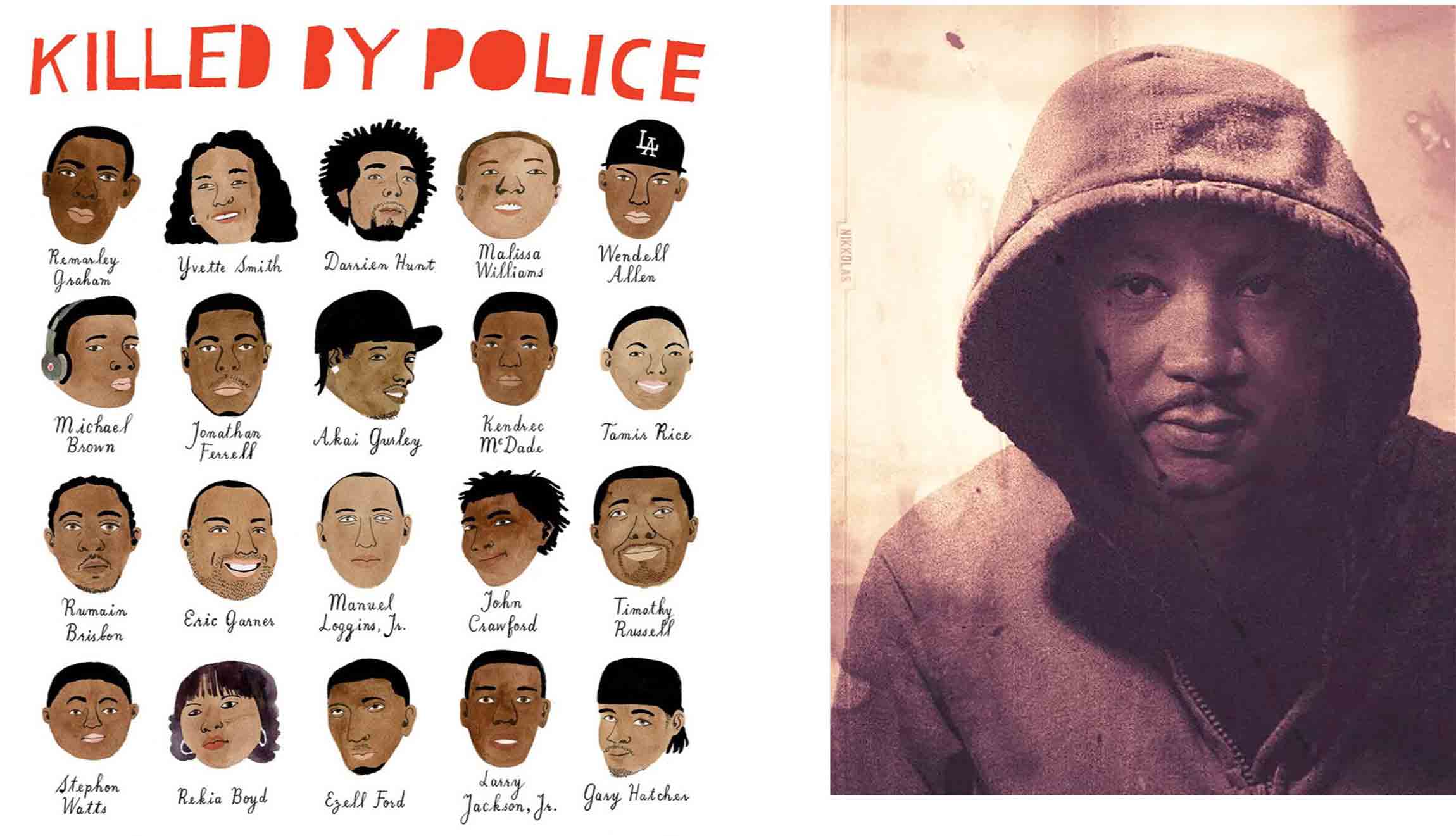
Photo credit:
The most powerful art from the #BlackLivesMatter movement, three years in
Washington Post, July 2016
Share this:


If universities are serious about decolonisation, why do they continue with BAME?

One thing I’ve noticed in my term at the Student Union but working with university departments and staff, and going to other universities, is how many different terms there is to describe people who do not happen to be born into the comfort of White Privilege. At the University of Northampton, this demographic of students are the majority, so why refer to them as ethnic minorities? We are also the global majority. However, the term “ethnic minority” is only in reference to when take into account the colonial borders that divide us. And in my role at the Union, I had no say in the naming of this role, since it was before my time.
Yet, it is a trend at universities that we have White senior leaderships speaking for what I will refer into this post as the global majority. This very European paternalism in the tint of Out of Africa, Passage to India, and Boris Johnson reciting the lines to Kipling’s Mandalay in Burma! In the public and private sector, we have many acronyms and initialisms and seldom are they properly thought out. i.e BAME / BME. Not only are these terms not widely understood by those they are about (i.e students), they also homogenise identities that don’t happen to be White Anglo-European.

“BAME” [Black, Asian, Minority, Ethnic] and “BME” [Black and Minority Ethnic] are commonly used by public bodies, including the education sector, policing and the health service when referring to the global majority. These are not household terms and you don’t know unless you know.
People of Irish heritage in the Traveller communities are also supposedly included within the acronym too; not including them in the overall term is astounding, as they are some of the most marginalised groups in the country.
With the term “BME” in my job title, I admit it is extremely ironic that I disagree with it. I do not see myself ethnically as BAME or BME, and don’t particularly like it when staff describe students in this way, or even members of staff. What ever happened to individuality? I am a very proud British man of Grenadian and Jamaican descent. In this homogenisation, higher education institutions are disregarding individuals’ cultural heritage. It’s really unacceptable, and at universities, it has often been used as term interchangeably for Black students. And even Black, is not a homogenous. Race is nuanced, and identity politics, nuanced, further still.
Furthermore, “non-White” is problematic, still showing that we only exist as an extension of whiteness. Moreover, the term “people of colour”, it’s not a homogeneous group; skin folk ain’t kin folk and diversity doesn’t equal representation
Do we say non-Black when referring to White people? No, as “to be white is to be human; to be white is universal; I know this because I am not” (Eddo-Lodge, 2017). The term BAME / BME disregards geography and cultural heritage, the loaded histories of colonialism and the fact that my country, the country I was born and raised, colonised and enslaved my grandparents’ country. It ignores customs, traditions and language and that “anyone who isn’t white, all us brown-skinned immigrants from Far Far Away, we get lumped together and put in a drawer” (Boakye, 2019)
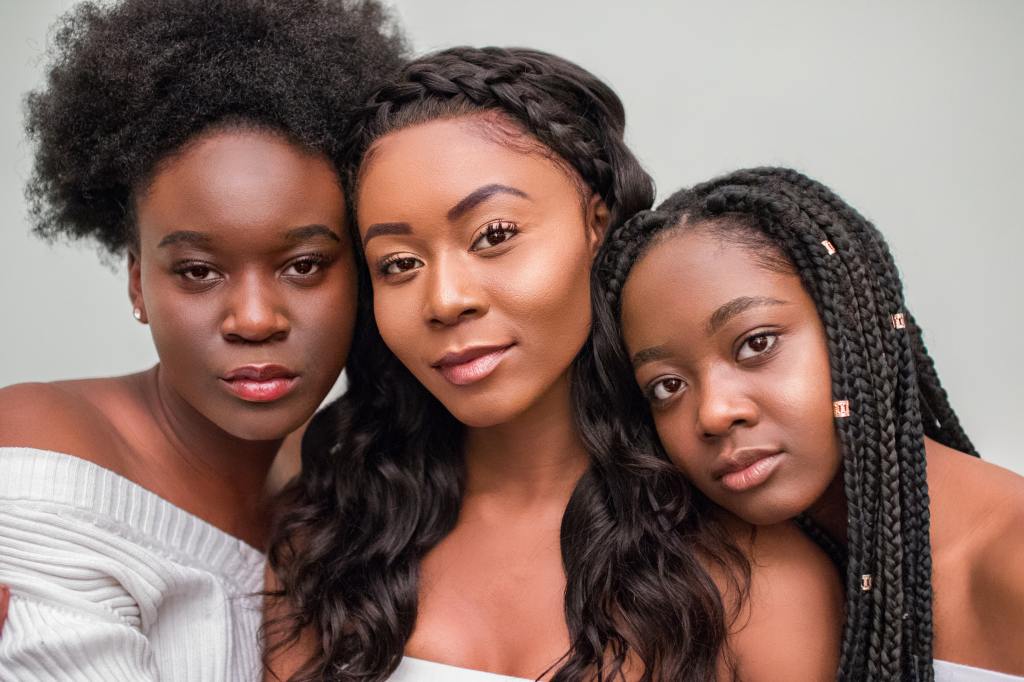
Whilst higher education institutions often give lip service to decolonial work, they continue to preach diversity and inclusion with terms like BAME, as “the words and terms we use to describe ourselves remain central to the ways we relate to our bodies. Certainly, if we want to set about work of decolonization we need to consider language” (Dabiri, 2019). Dabiri goes onto discuss the disparity between “cornrowing” (US English) and “canerowing” (Caribbean and British English) hair as a sad overhang of slavery. It could be argued that acronyms like BAME are a new brand of colonisation, keeping these Black and brown people in their place.
Universities know that they need to challenge the histories from which they were built. Just, are they a bit reluctant to do so? Yes. Is British traditionalism often standing in the way? Yes. We are living in the ruins of empire, and institutional racism is an overhang of that. And if academics and non-academics are using terminology that’s offensive and that people don’t understand, is it fit for purpose? Knowing what is appropriate language in discussions on race is the first step in this conversation.
If universities are serious about decolonisation, they need to look at more than just adding diverse authors to curricula!
Referencing
Boakye, J. (2019). Black, Listed. London: Dialogue Books.
Dabiri, E. (2019). Don’t Touch My Hair. London: Allen Lane.
Eddo-Lodge, R. (2017). Why I’m No Longer Talking to White People About Race. London: Bloomsbury.
Please Note

Any questions, email me at tre.ventour@northampton.ac.uk
Share this:


What’s in the future for criminology?

This year marks 20 years that we have been offering criminology at the University of Northampton and understandably it has made us reflect and consider the direction of the discipline. In general, criminology has always been a broad theoretical discipline that allows people to engage in various ways to talk about crime. Since the early days when Garofalo coined the term criminology (still open to debate!) there have been 106 years of different interpretations of the term.
Originally criminology focused on philosophical ideas around personal responsibility and free will. Western societies at the time were rapidly evolving into something new that unsettled its citizens. Urbanisation meant that people felt out of place in a society where industrialisation had made the pace of life fast and the demands even greater. These societies engaged in a relentless global competition that in the 20th century led into two wars. The biggest regret for criminology at the time, was/is that most criminologists did not identify the inherent criminality in war and the destruction they imbued, including genocide.
In the ashes of war in the 20th century, criminology became more aware that criminality goes beyond individual responsibility. Social movements identified that not all citizens are equal with half the population seeking suffrage and social rights. It was at the time the influence of sociology that challenged the legitimacy of justice and the importance of human rights. In pure criminological terms, a woman who throws a brick at a window for the sake of rights is a crime, but one that is arguably provoked by a society that legitimises inequality and exclusion. Under that gaze what can be regarded as the highest crime?
Criminologists do not always agree on the parameters of their discipline and there is not always consensus about the nature of the discipline itself. There are those who see criminology as a social science, looking at the bigger picture of crime and those who see it as a humanity, a looser collective of areas that explore crime in different guises. Neither of these perspectives are more important than the other, but they demonstrate the interesting position criminology rests in. The lack of rigidity allows for new areas of exploration to become part of it, like victimology did in the 1960s onwards, to the more scientific forensic and cyber types of criminology that emerged in the new millennium.
In the last 20 years at Northampton we have managed to take onboard these big, small, individual and collective responses to crime into the curriculum. Our reflections on the nature of criminology as balancing different perspectives providing a multi-disciplinary approach to answering (or attempting to, at least) what crime is and what criminology is all about. One thing for certain, criminology can reflect and expand on issues in a multiplicity of ways. For example, at the beginning of 21st terrorism emerged as a global crime following 9/11. This event prompted some of the current criminological debates.
So, what is the future of criminology? Current discourses are moving the discipline in new ways. The environment and the need for its protection has emerge as a new criminological direction. The movement of people and the criminalisation of refugees and other migrants is another. Trans rights is another civil rights issue to consider. There are also more and more calls for moving the debates more globally, away from a purely Westernised perspective. Deconstructing what is crime, by accommodating transnational ideas and including more colleagues from non-westernised criminological traditions, seem likely to be burning issues that we shall be discussing in the next decade. Whatever the future hold there is never a dull moment with criminology.
Share this:

A Walk in the Park. #Hanoi #VietNam #BlackenAsiaWithLove
A Walk in the Park.
Yesterday I decided to go for a walk. The third-largest park in Hanoi sits just across the street from my flat, and by crossing I’d walk right into the central district., heading straight along one large avenue on the other side of the park, I’d hit the old town. Taking another avenue, I’d reach the famed Hoan Kiem Lake. I could even pass the luxury mall along the way, plenty of coffee shops, and a diversity of street-food stalls en route, too. That is how I’d planned to spend this Saturday. But, I got entangled in the park.

During the day there’s plenty of hustle and bustle in the park. As a backdrop, the grounds are meticulously maintained by a large team of workers. There are motorbike parking-lots just inside each entrance, where an attendant is stationed well into the night. Plus, there’s always some tidying up going on, such as blowing leaves, trimming trees, gathering rubbish, and planting. Each dawn and dusk the park fills with patrons doing an array of physical exercises, from running and walking to groups of ladies doing aerobics. There are people fishing, running, gyming, napping, skating, skate-boarding, dog-walking courting, gaming, etc. Periodically, there are a range of festivals in the park, including the vegan fest just a few weeks ago. Late nights, I’ve even seen large-scale fishing with huge nets dredged out by boats across the entire lake.
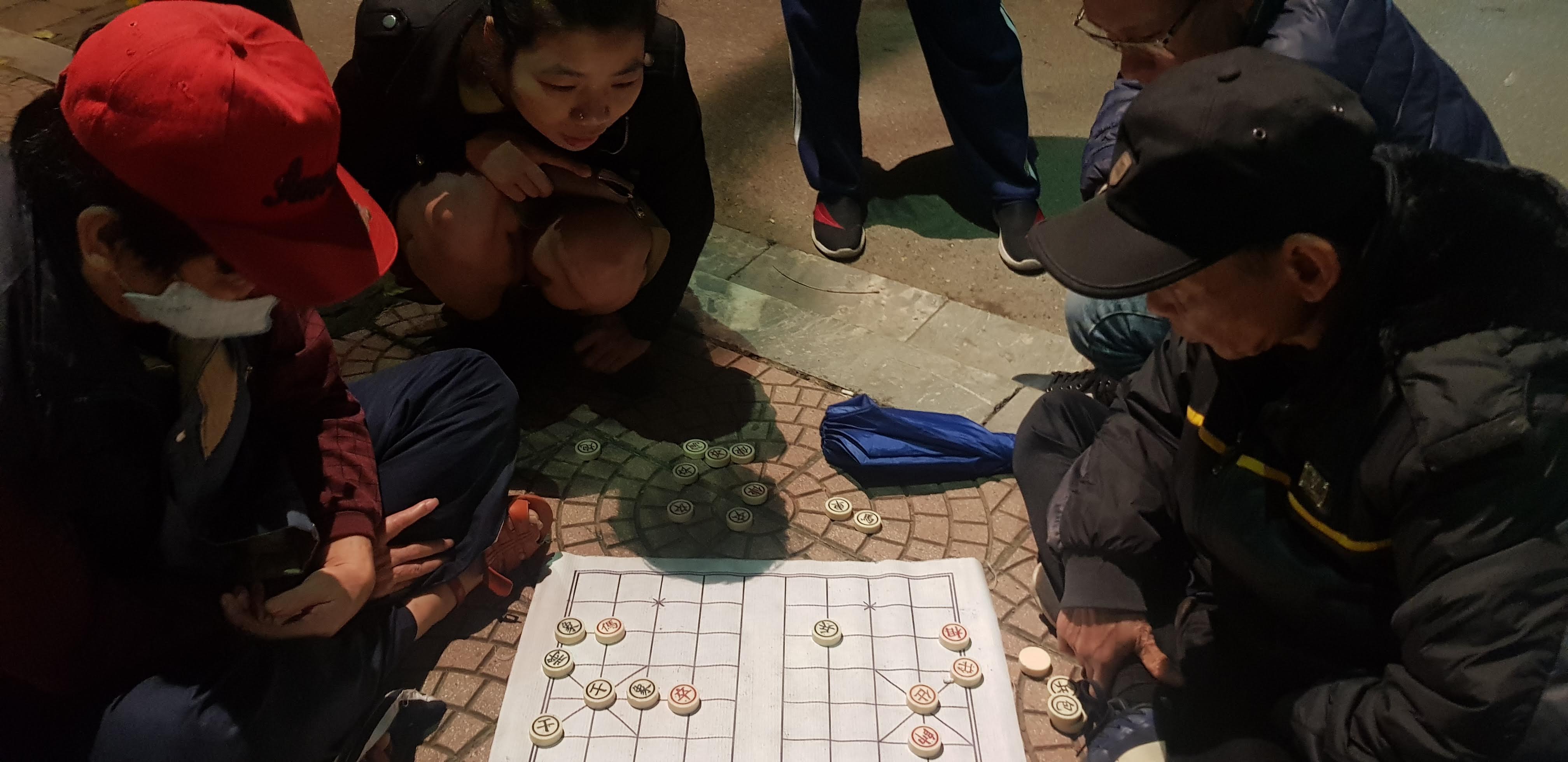
Two nights ago, I got to see my first Vietnamese chess match. Two older men played while hosts of folks looked on. Sat beneath one of the park’s large lamps, they used a canvas ‘board’ rolled out on the ground, and round chips of wood (plastic?) painted with Chinese characters to mark each position.
There are plenty of tea kiosks and stalls serving everything from fresh coffee and ice-tea to bottled drinks – including beer – and packaged snacks to charcoal roasted sweet potatoes. This only increases with moderate weather throughout the year.
During the day, there’s loads for kids of all ages. There are playground areas for different age groups from toddlers to adults. Heck, there’s an entire set of bright yellow outdoor gym equipment for adults bordering the huge sand playground for the smallest kids. Featured in the park’s online advertisements, there’s a merry-go-round, paddle-boating on the lake, bumper cars and a toy train around the park with stations named after each large Vietnamese city. Day or night, there are generally people wandering. Notably, however, there are always plenty of men and women walking in the park at night even late-night, including women walking alone – a sight I’ve rarely seen in most parts of the world. The park has its own sense of time and it don’t cost a dime.
This Saturday, it was already after 2 o’clock, and I had arranged to meet the B-boys at 7:30 in a corner of the big amphitheater at the center of the park. So, time was limited. It’s a large park and without thinking, I started along my regular walking route, as opposed to heading directly across through town. I was operating on autopilot from my regular after-dinner walks in the park, and turned left when I should have turned right. This detour lasted 4 hours.
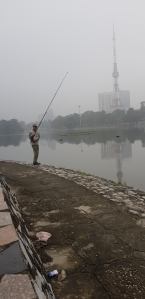
My daily walks are awesome. I get to pass a plethora of healthy temptations as this park is an authentic site of sociality and physicality. Schools are closed due to Corona virus so the park was eerily empty the first few days at one point. Now, the park’s chock full of folks.
The first pause at the exercise areas so took a few moments to stretch. My muscles were all aching from my first B-boy tutorial the night before, so this was more of a compulsion. They have two parallel bars that are a great height for Barre. A dancer can’t pass up a good Barre. That lasted another half hour, then I was on the go. Just a few steps away from this exercise area are the hacky sack courts.
The courts were full, so I couldn’t resist catching a few matches. The game fills me with sheer wonder, not least of which due to the athleticism. When the area around the lake in the central district (Hoan Kiem) is pedestrianized on weekends, circles of hacky sackers form in the middle of the wide avenues. There’re typically teens of all ages going ‘round and round. In the park, however, there are courts painted on the ground at many of this park’s nooks and intersections, extending far beyond the biggest collection. The courts allow for a whole host of net games from badminton to volleyball, and of course hacky sack. Though none of the regular players I watch on my morning walks was around, the courts were filled with people of all ages playing doubles or triples. Age is no bar in this game!
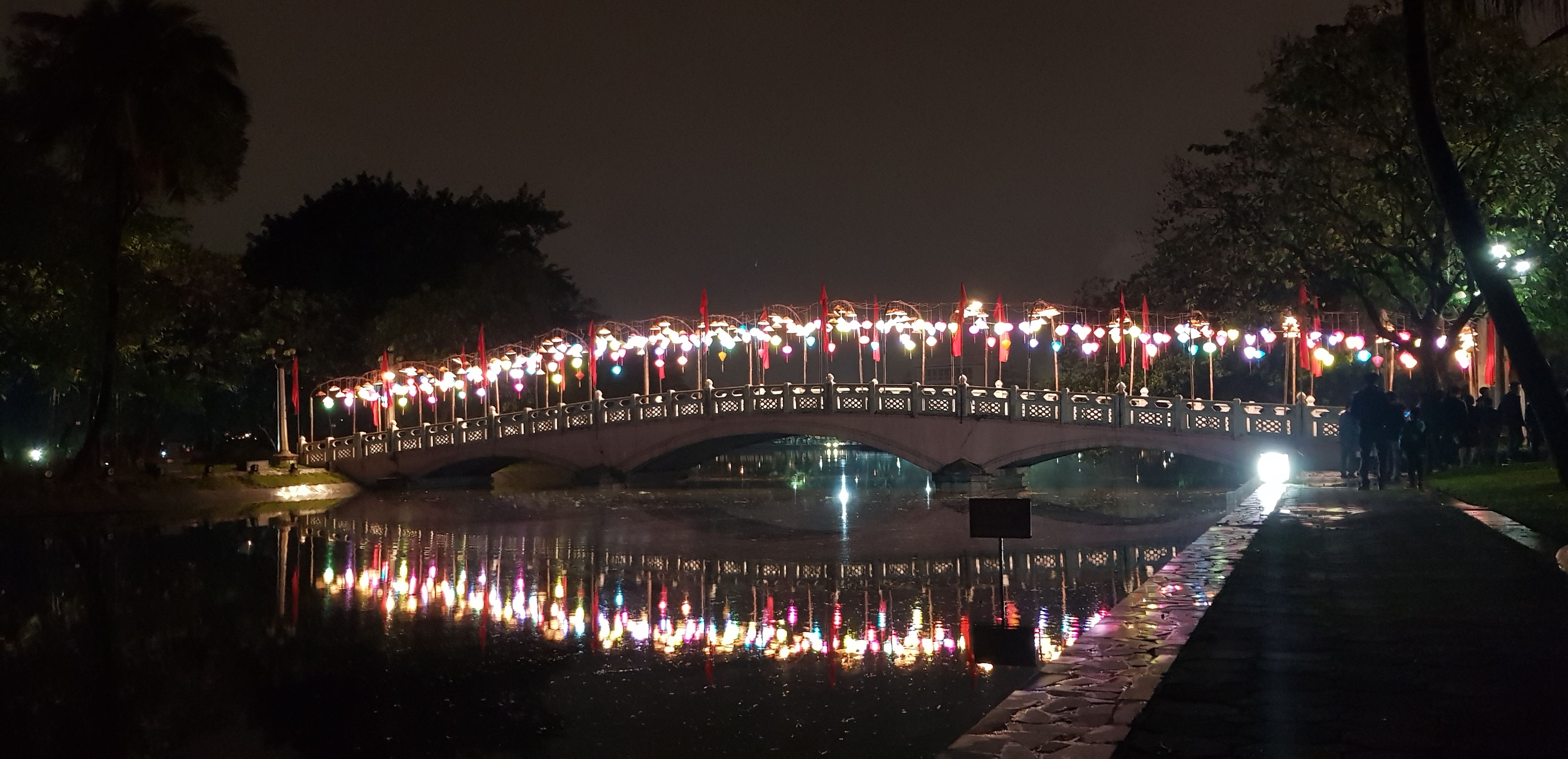
Bridge to one of the islands in the lake during Lunar New Year
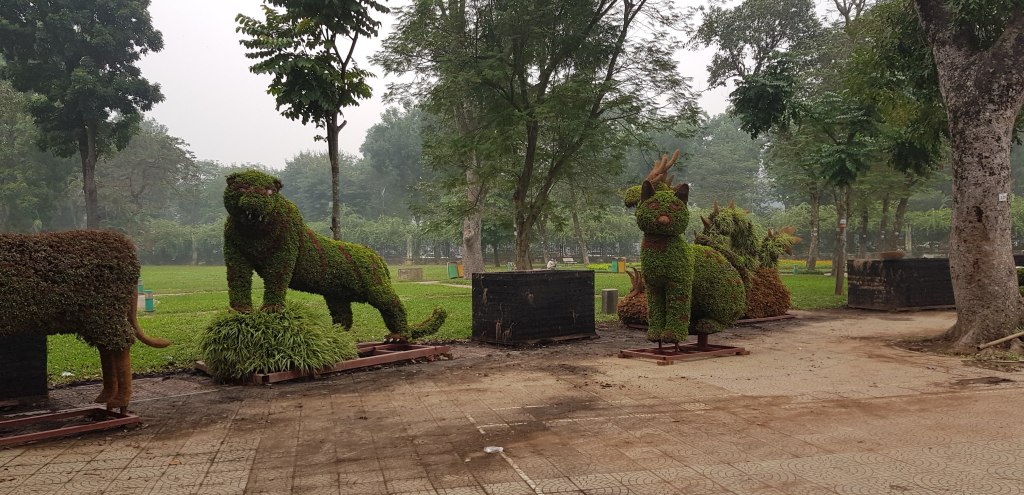
After a few matches, I moved on towards town. Along the way, there is a long straight stretch of the park along a major avenue bordering the lake. Where this stretch finally bends, there is another outdoor theater area, complete with a raised stage. Between uses, the stage area houses giant animal sculptures made of plants, which decorate the park during Lunar New Year.
The animal figures are revived annually in rotation. A monkey, snake, rat, dragon, pig, tiger, giraffe and more all stand at least 3X3 meters. Their large bodies are often covered with ever-greens, while the faces and other features are filled in with different coloured/textured plants each year. The large, organic animal sculptures provide a wonderful backdrop for dancing on the stage, but also, they are evidently an apt obstacle course for drones.
Droning is incredible! There were both kids and adults practicing navigating drones using the Virtual Reality head-gear. It was mesmerizing, so I ended up sticking around for nearly an hour. One guy was practicing loops between the giraffe’s legs, then free-falling over the surrounding high canvas of trees. A little girl was using a visually controlled drone. Whew!
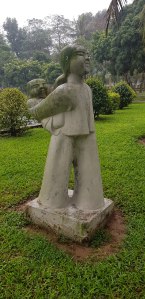
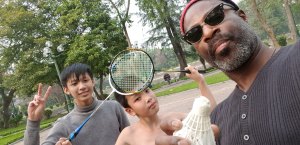
Time was ticking, so I decided to give it a go and at least make it to the nearest coffee shop to sit and write. I continued on my way along the shortest route towards town and along the way, were more courts, two large rectangles painted on the ground. In passing, I approached 3 boys playing badminton on another court. One of them, the shortest, approached me holding out a racket and birdie, as if to say: Wanna play? Why not, I thought, how often does one get the chance? Then, the little dude placed the racket on the bench atop the others and gestured towards them for me to choose. I hadn’t played this game in decades.
At first, the short dude and I played while the other two watched; after displaying my lack of skill, I gestured for the others to join in. We played doubles for a while, again, my first time in decades. What surprised me was the level of instruction each boy offered me. As we played, my teammate would call at me, then demonstrate different ways to serve. Our teams even swapped players, my new teammate offering more pointers. There were no rules and we didn’t keep score; the objective was to keep the birdie in play. We all laughed at each other’s mistakes and cheered at each one’s wins. When I passed a group of adults playing on the next court, I was reminded that I am a genuine amateur!
Badminton is a popular game here. At the very moment that I am writing, I am sitting on one of the concrete benches just eyeshot from my exit towards town. The benches encircle one of many large gazebos in the park, where a family has just shown up and set up a net. I didn’t even notice that there were three courts painted around the gazebo. Two older guys quickly get a match going, and on the other court two women get warmed up, while 4 kids play under the gazebo. Then, the older woman hits the birdie back-n-forth with the smallest kid, while on another court, the younger woman plays doubles with the other three kids. Now, a middle-aged man approaches with more rackets in tow. He quickly puts down his bag, strips off his jacket, grabs his racket and jumps in the match. Others filter in and eventually all the courts and benches are full.
By then, I was at another cross-roads. I had eaten up nearly all my time. How could I have spent the whole day in the park? Now, I barely had time to eat, as the B-boys said that I should do so at least 2 hours before practice. I headed home, had a beef Pho along the way, dropped off my backpack, and got changed to go back to the park and dance!
—
Share this:


I am a man and a brother: Black dignity in schools of White thought
Mom says “You have to work twice as hard for half of as much.” She means the odds are stacked against you if you aren’t a White, straight man. Even White women have to play the game. It’s episodes of Marvel’s Luke Cage like ‘Soliloquy of Chaos’ and ‘If it Ain’t Rough’, ‘It Ain’t Right. ‘It was Moment of Truth’ and ‘Manifest’. Or episodes of Jessica Jones like ‘AKA Sole Survivor’, ‘AKA I Want Your Cray Cray’, ‘AKA 1000 Cuts’. Oh, and ‘AKA Pray for My Patsy’. I could take some punches back then. Man, Jessica did too.
Mom and Dad talked about their grandparents but they also talked of slavery — Sam Sharp, Toussaint L’Ouverture, Nanny and the Maroons. They talked about Rosa Parks, Martin, Malcolm and Medger. They talked about people that lived life always on the offence. Back then I didn’t know enough about these people. Not slavery, America’s Civil Rights or the Windrush Generation. Stories that have been told and retold time and time again.
And in these stories there were Black martyrs but also Black villains. There were victims and guardians, like in Jordan Peele’s Get Out and the black in Black Panther. Yet, by the time I heard these stories, the narrative of Black insurrection against White power was set in stone. We speak of it always, as if it’s all we are — just people that don’t know how to smile.
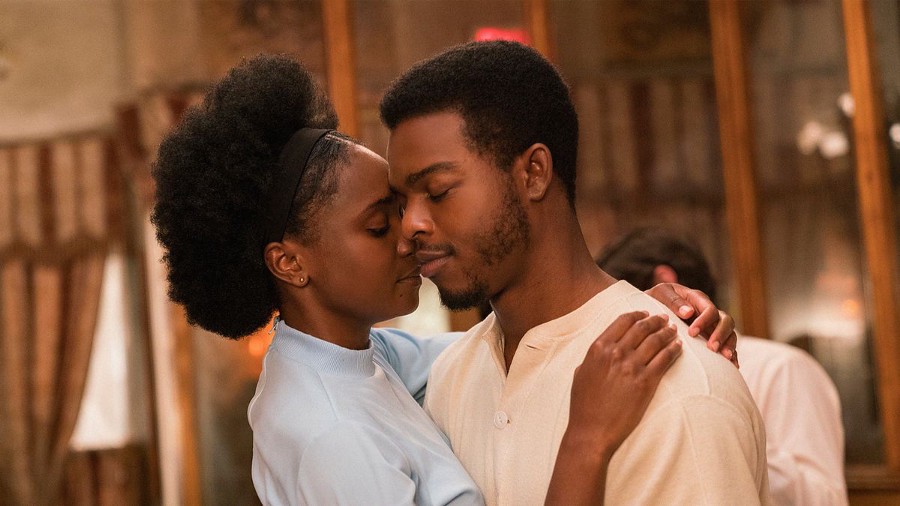
But what of the Black middle-class against the Black working-class? It’s The Real Housewives of Atlanta staring into the faces of Top Boy, School Daze, Moonlight and If Beale Street Could Talk. And even there, division runs riot. The dark ones, the light ones — is it Naomi Campbell, Reni Eddo-Lodge and Akala or is it Viola Davis, David Harewood and Idris Elba? Or Lupita sticking it to Grazia on Twitter?
It doesn’t matter. I relate to all of them. I wander through our British cities. I relate to them in their own apartheid, the retelling of stories about race and racism in Britain, as most Black people I know have tales of punishment and pain.
Sometimes it’s about the subtleties in the workplace and at others, it’s racial violence, in an epilogue of Brixton ablaze and Enoch Powell. And the retelling of stories between people of colour is meditation. It’s inner peace that protects us, our souls at least. I was raised to talk. To tell stories.
As a Black person, I follow a set of unwritten codes (when talking to White people). Don’t walk too fast, don’t raise your voice… passion can be mistaken for anger. To be anti-White supremacy can be judged as anti-White or anti-Britain. To want to talk about colonialism can be seen as Black people just being bitter. And this is the dilemma of coming from immigrants from colonised countries, living in nations that did the colonising to begin with.
My cultural identity is in-part British, but it also swims in curry goat, calypso and reggae anthems. It’s in the stories of parties in my grandparents’ front room and grown folks liming to Candy at every. It’s cricket whites, Saturday rugby and match tea. And it’s my grandfather go-karting down the hills of St. George’s. These are the stories my parents carried, growing up in the late 80s early-90s but also in-part the memories my grandparents carried, ferried from the Grenada and Jamaica.
My cultural identity is macaroni cheese as a side dish, not a main course (blasphemy!). It’s curry chicken, rice and pigeon (or gungo peas) and veg in the Flora butter container. It’s plastic on the furniture and cups, glasses and plates that are just for show. But it is also church on Sunday’s, Catholic, something left behind in Grenada by the British. Something that became part of my grandparents, as they were taught to be British too — in all ways.
I grew up in the noughties, Northampton, educated at private schools around the shire. Prior to 2010, I was the only Black person at said schools and lived a boyhood that only acknowledged my existence in order to fetishize it — from comments about my skin colour to wandering white hands in vicinity of my afro hair. I had more of it back then.
I grew up quicker than what was natural. I saw thirteen-year-old White girls smuggle vodka cocktails into school in sports bottles. Imagine that! They called their parents unrepeatable names. I was around spoilt restless rich kids that had everything and didn’t appreciate its value. I was around people whose diction and vocabulary sounded like episodes of The Crown — Wolverton Splash, Scientia Potentia Est, and Paterfamilias, living it up like Prince Philip (Matt Smith) and Princess Margaret (Vanessa Kirby).
I recall thinking if I treated any of my family like that, I’d have been knocked so hard I’d be staring at my ancestors.
I was apprehensive about inviting friends home, people who had it all, with their many acres of land… judging our terraced house in town or my grandparents’ on a housing estate outside of Northampton. That anxiety stayed with me for most of a decade. It had the ability to expose the class divide between us… differences that didn’t go beyond the surface in class — the musical accents of my mother’s parents in the landscape of fried plantain, dumplings, and fish cakes laced in Scotch Bonnet pepper.
Explaining the nuances of growing up in a non-White British household is exhausting. It’s something that holds people of colour together but it also creates a double consciousness, sometimes triple, in terms of identity. “People of colour” aren’t a homogeneous group but some things we share.
And I’m British though. Mate. Innit. Can’t you tell?
There was a plurality in my existence, that one friend remarked on. She said “You’re lucky to be different and English is boring.” I had calypso in my walk but the Queen’s sceptre in my voice and sugarcane in my bones. And this identity crises, even at ten, made me feel three times my age (at least).
Like Lin Manuel Miranda says:
“I’m only nineteen but my mind is older”
My bitterness towards British private school culture now, looking back on my life, is just how traditional it was. I recall a recent conversation with a friend about cricket matches (a game that I love) but only now analysing how it was a tool of colonising. It got me thinking about my teachers and how they waltzed around corridors in capes, caps and gowns.
The houses, the brotherhoods, the fellowships and the sports matches and tournaments — it was all a bit Victorian. One school I went to, on its plaque, states Since 1595. Where were my family in 1595? Likely in the hulls of slave ships or on the lands of West Africa, oblivious to what was coming.

The schools I went to, many families reeked of old money, whose ancestors may have had interests in slave plantations or distant ancestor cousins that were officers in India or Burma. They could see I didn’t look like them but when someone said “But you’re not properly Black,” what they meant was, I wasn’t living on a council estate near Grenfell Tower. To be Black was to be poor… on drugs… suffering… a victim. Thief, slave, comedian… a caricature. Is this a truth universally acknowledged?
Safe to say, I was somewhat offended; and this revealed the crazy super-rich White fear towards poor Black people. Is this also another colonial trait, passed down through the centuries? This came from the mouths of people that swore by Rudyard Kipling and could probably recite the lines to Mandalay word perfect. I knew this wasn’t representative of White Culture but these were the people that we have to keep an eye on, the super-rich White racists. Men like Nigel Farage, who Russell Brand called “a poundshop Enoch Powell.” That made me chuckle but “we gotta watch him,” — as Brand puts.
What’s unique is that I see people like Farage and Mogg as products of the education system that made me.
But I came from estates and small houses where shoes were left at the door and where there was plastic on the furniture and monochrome photographs of my grandparents not long after they arrived in the UK. Times where, and still do, aunties and uncles and friends pass in and out of our houses. My grandparents’ front room / dining room is the shrine. It’s the Holy Grail and once upon a time, you could come without calling ahead.
Grandma tells me about how her mother, (my great-grandmother) would prepare soup every Saturday. Aunties, uncles, cousins, my uncle’s friends — everyone would turn up for a bowl. Black people, White people — and this was in the time of Britain’s No Irish, No Blacks, No Dogs – there was still community in those small rooms of Bostock Avenue and she cooked extra.
In 2004, I we wore this ugly shamrock green blazer. They were Old England like Agatha Christie and Enid Blyton novels. It was coastal wrecks, horse-riding, and Summer Rig (an open-neck shirt in the summer). Why it was called Summer Rig is beyond me. Summer Rig was the most normal thing about schooling. It was the thing that placed that school in the land of the living, the land of society and civilisation, the land of real people of flesh and bone. Summer Rig was a cashpoint machine and a Mars bar. It was Pizza Hut, late brunch, Brits in Benidorm and Hyde Park Corner.
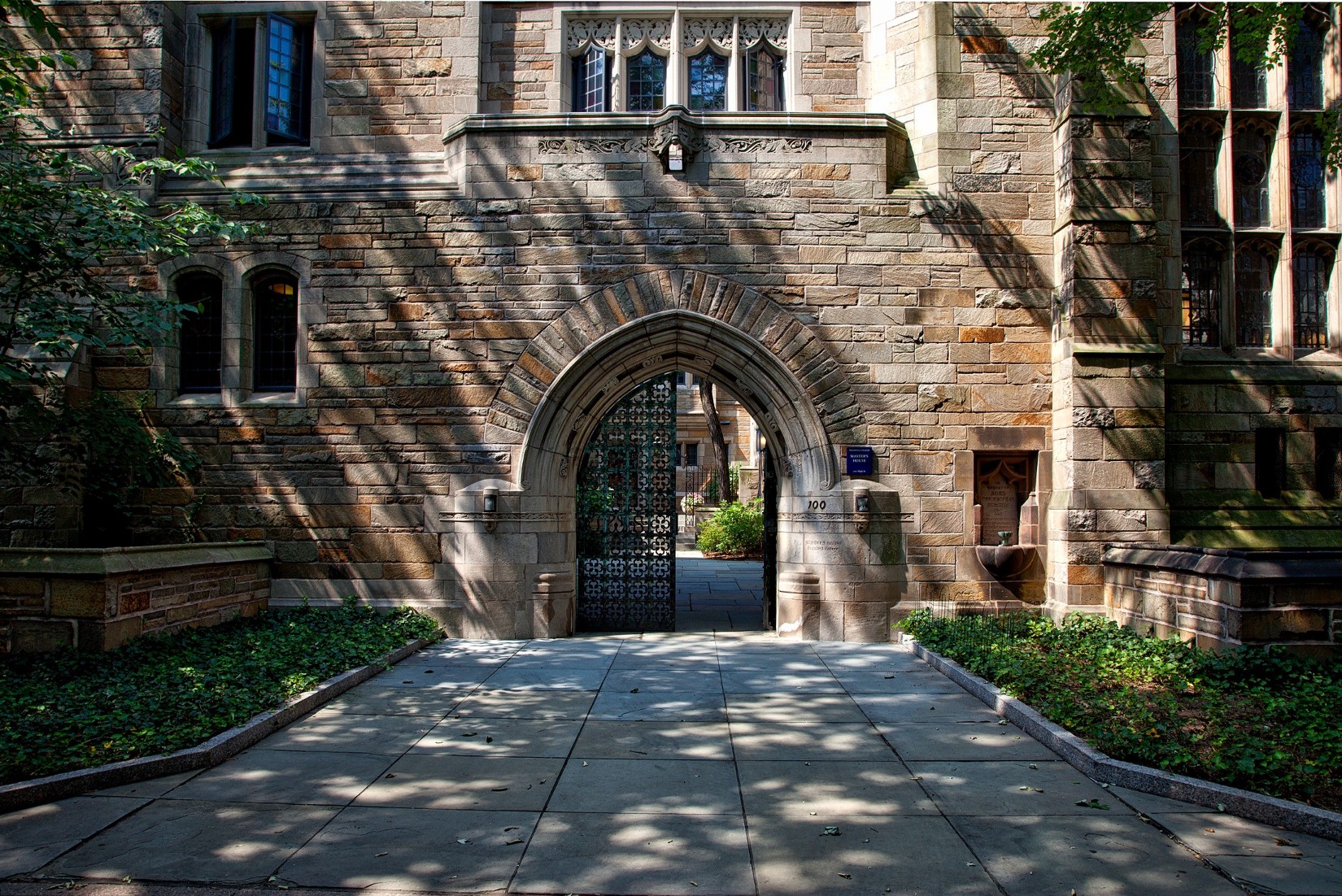
As a teenager, my relationship with myself centred around Britishness. My teenage years is when I was politicised. Thanks Auntie Luisa! I began to see myself as British first, and Black second and now I see myself as equally both. But my pet peeve is “You don’t look British” — since Britishness has been whitewashed. Britishness is not a pigment. I would argue it’s an ideology, a state of mind, more to do with identity than anything else. I’ve had “nice for a Black boy” — I’ve had “nigger” and “Go back to the trees you came from” — and “Has your dad been to prison?”
That last one was straight up cold! But it is in-part thanks to our racist media, or what Chimimanda Ngozi Adichie, in her TED Talk calls “The Danger of the Single Story.”
Belonging, to me, is a psychological process. It can be about race and class. But my own narrative was more about finding people who share like-interests. And I have spent many years trying to find those people, doing my best trying not to comply with the needs of the rest of society. I have even relegated myself to tick boxes. Will you accept me if I don’t talk about arts or politics? And instead, talk about gossip media and things I don’t care about? That if I perched on the end of the bench and remained invisible, that if I became like Harry, the boy under the stairs, will you accept me?
And aspiring to the culture of the super-rich of my youth, I had neglected the other parts of myself. It required me to sever the links to calypso, steel drums and supporting the West Indies cricket team even though they’re shit! Haha!
Look at the child I could have been if I didn’t scour the Earth for validation. It was being told Christopher Columbus accidentally discovered the Americas and the West Indies looking for India, by a White teacher despite the Arawak, Carib and Amerindian peoples living there before he arrived.
It’s that nothing exists until the European discovers it. And that my heritage is forever being whitesplained to me by White people that claim to know it better than I do…
Through having my existence contested, I learned how to smile, at the titles of those episodes like footnotes to the past. I smile at them like how my school had coined a term for an open-necked shirt. “Summer Rig” , capitalised, hilarious. That my experience was valid because it’s mine, sticking it to The Man. It meant growing up in a multiverse of childhoods.
My first coming-of-age was listening to the stories of my ancestors; the second coming-of-age was writing my own.
Share this:


Happiness is, happiness ain’t. #BlackenAsiaWithLove
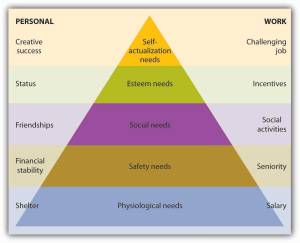
Outside of ecumenical discussions, far too little is said about the subject of happiness. This is a drawback of western secularism, as discussed below. In the world of work, Occupational Health and Leadership have taken up this mantle, yet still only manage to approximate happiness through measurable factors that contribute to increasing satisfaction and decreasing dissatisfaction (i.e. Herzberg’s 2-Factor Theory). Taking Maslow’s Hierarchy of Needs into greater account, that understanding eventually incorporated terms such as wellbeing. Yet, again, outside of ‘continuing professional development’ aimed at improving workplace efficiency and effectiveness, far too few resources seem devoted to higher needs such as belonging, esteem and self-actualisation.
Those management terms all circle back to mindfulness, to personal empathy and the ability of both the individual and environment to foster dialogue in order to transform conflict. Be it conflicts or differences in needs/wants between co-workers – or across the bargaining table – the ability to communicate and find common ground is increasingly the skill that distinguishes human talents from Artificial Intelligence (AI).
Now, at least, there is a greater focus on developing so-called ‘soft skills’. This trend responds to our failure to contend with an increasing reliance on, and addiction to technology. What’s more, still, as technology increasingly supplants entire portfolios of routine management duties, how will future workplaces valorise empathy within known matrices?
How do we teach students the value of happiness, the practice of compassion and the skills for effective communication, negotiation and conflict resolution? In so far as leading culturally diverse workforces, the research is as clear as a prayer bell: Innovation requires dialogue – actual talk between equals. Innovation is therefore built on collaboration. Collaboration requires cooperation. Cooperation requires commitment. Commitment cultivates inclusion. Inclusion fosters commitment. Commitment depends on trust-building. Trust-building requires dialogue. Cooperation must be practiced and rehearsed, in addition to celebrated and applauded. We are effectively teaching how to work within a community. Those tools must play the greater part of management toolkit, over and well-over more punitive means of enforcing compliance to rules.
“I’m not here to be your friend.”
Those are words I hope no one would ever hear neither in the classroom from educators, nor in the workplace from managers. It implies the speaker’s inability to distinguish friendliness from being friends. It is indeed a thin line. Social media interactions with colleagues have virtually erased that line – at least re-drawn it. Irregardless – as we say in Kentucky for emphasis – kindness matters! I genuinely pity those who have not learned kindness at home or school; it’s traumatic.
In order to collaborate, to genuinely work together, requires some level of friendliness, beyond cordiality. It is irrational to lead through control and project the image of being in control through distant, dispassionate unfriendliness. BTW, the notion of dispassionate rationality and objectivity have been historically valorized academia even when it was clear.
I would not be the first university student to observe (though lacking the skills to explain): “The professors who prided themselves on their capacity to be objective were most often those who were directly affirmed in their caste, class, or status position” (hooks, 2003: 128). Their inability to connect, acknowledge and come to peace with their own emotionality and spirituality. “At times objectivism in academic settings is a smokescreen, masking disassociation (ibid: 129). Objectivity is a crutch:
“Denying the emotional presence and wholeness of students may help professors who are unable to connect focus more on the task of sharing information, facts, data, their interpretations, with no regard for listening to and hearing from students. (ibid: 129).”
The smoke and mirrors masks a pain so cutting so deep that skilled educators carve it out of their work, and further discourage it in peers and students. Sadly, I believe that managers have been taught to operate under the same logic. Hurt people hurt people.
Hurt people hurt people.
Today, we’re better able to acknowledge the maturity needed to reveal both one’s strengths and weaknesses – including with subordinates. The key skill is emotional flexibility and consequentially, the ability to seek and offer support. Failing to do so reduces opportunities for team members’ whole-hearted contributions of knowledge and skills. While it is still professional to keep some amount of distance between one’s private and personal lives, social media is a typical example of how those norms no longer apply. Yeah, it’s weird if you’re not Facebook friends with at least some of your colleagues.
What are responsible ways to use one’s public image that aligns with our own personal ambitions and goals? This was simply NOT an area of thinking in the classroom prior to social media. Yet, ‘bullying’ is a relatively modern concept brought to light by the LGBTQ community response to the suicide of a university student as a result of cyber-bullying because he was gay.
In 2010, Tyler Clementi, a first-year university student in America, was secretly filmed being intimate with another man by his roommate and a mutual friend, (or so he believed). The two colluded to threaten to out Clementi in what they all knew as a homophobic (university) environment. This resulted in Clementi’s suicide. Imagine such blackmail, bullying and harassment at work! What skills should the educational environments have provided Tyler and his roommates?
The response from the queer community was clear: Hope. For example, activist/journalist Dan Savage launched an internet campaign that encouraged LGBTQ+ youth, which was picked up by mainstream media outlets and entertainment. The #ItGetsBetter campaign quickly amasses hundreds of posts by celebrities of all flavors to combat anti-gay bullying. Things did get better. We put bullying on the map! Be it work or school, bullying is no longer tolerated…at least formally.
Yet, what of genuine happiness, not just survival? While I can’t speak for every faith, the notion of happiness if central to Buddhist philosophy. “The gratification of desire is not happiness,” writes Buddhist teacher Daisaku Ikeda in his 2017 essay collection, Hope is a Decision. What’s more, individual happiness is tied to our interconnectivity. The Soka Gaikkai, a global Buddhist organisation mentored by Ikeda, operates under the slogan “World peace through individual happiness” to acknowledge the interconnectivity of both humanity as a whole, and the place of happiness with the broader objective of peace.
Seen one way, happiness is neatly balanced at the tip of the pyramid of needs, and its inverse: wants and desires. For clarity: While adults may scoff when a teenager says they “need” the latest iPhone or they’ll ‘die’ we responsibly know that those youthful aches and pains are as real to them as any physical trauma one might suffer. We know that showing up at school with the latest cool gadget has as much to do with the higher-order needs for them as we may wish them to perceive their basic needs such as food, shelter and security. Hence, the parenting task becomes one of teaching skills to contextualise such desires and value delayed gratification.
These lessons are too often relegated to parenting due to the secularisation of schooling and workplaces in the west. Western secularism often fails to distinguish religion from spirituality, to the detriment of the latter since we remain staunchly Christian societies, especially to the extent of chauvinism when faced with an ‘other’. Any non-Christian in the west can see the secularism is superficial – even Stevie Wonder can see that. Echoing her own call for greater attention to spirituality in secular education bell hooks quotes HH Dalai Lama’s thoughts in the need for the distinction in the second installment of her seminal teaching trilogy:
 Spirituality I take to be concerned with those qualities of the human spirit—such as love and compassion, patience, tolerance, forgiveness, contentment, a sense of responsibility, a sense of harmony—which brings happiness to both self and others. … (hooks, ‘Spirituality in Education’ in Teaching Community: A Pedagogy of Hope, 2003 pg. 157-164)
Makes place in and around the classroom. As a lecturer, I am a coach, guide, mentor, leader and have even befriended students (particularly after their graduations). One primary aim and source of satisfaction in the classroom is facilitating values-based dialogue across differences in perspectives. My role is not just to dump selective parts of my knowledge into students’ heads, nor simply to train certain skills. Nay, we’re always teaching how to live in a diverse community.
To get more in-formation:
- hooks, bell. Teaching Community: A Pedagogy of Hope. New York: Routledge, 2003. Print.
- Ikeda, Daisaku (2017). Hope Is a Decision: Selected Essays. Middleway Press. ISBN 978-0-9779245-8-5.
Share this:


Daredevil taught me forgiveness
Until just before starting university I held anger for a certain member of my family. Throughout my life, this person and I had always been at odds and when I was around fifteen years old, I decided to cut this person loose. I did not speak to them again for nearly three years, much to the pain of my relatives.
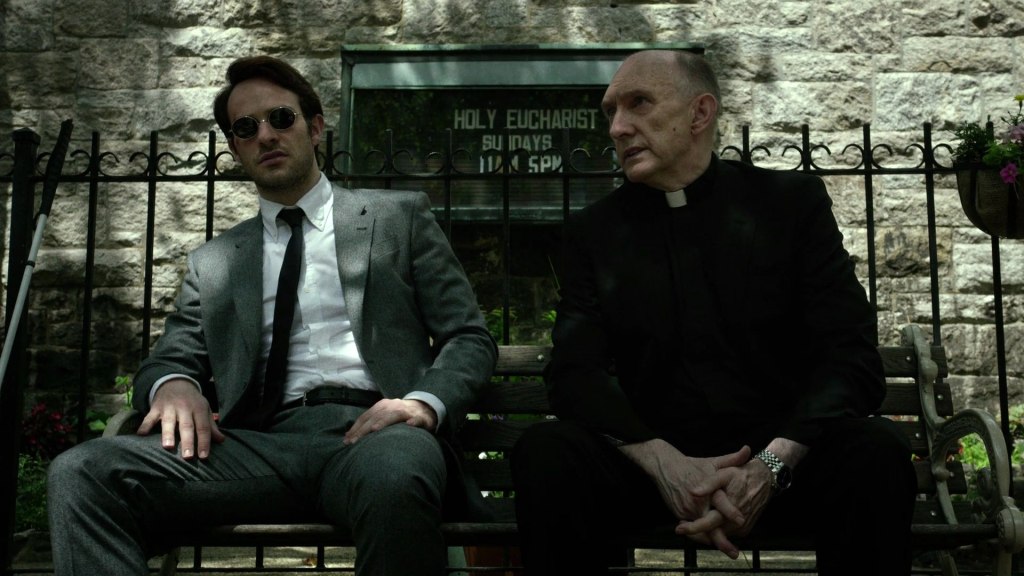
In the April of 2015, the maiden season of Daredevil premiered on Netflix. Based on the Marvel Comics by Stan Lee and Bill Everett, it follows Matthew Murdoch (Charlie Cox), a blind lawyer by day and a costumed vigilante by night. With the theme of forgiveness running through season one, he is also a Catholic, whilst he beats bad people to within an inch of their lives!
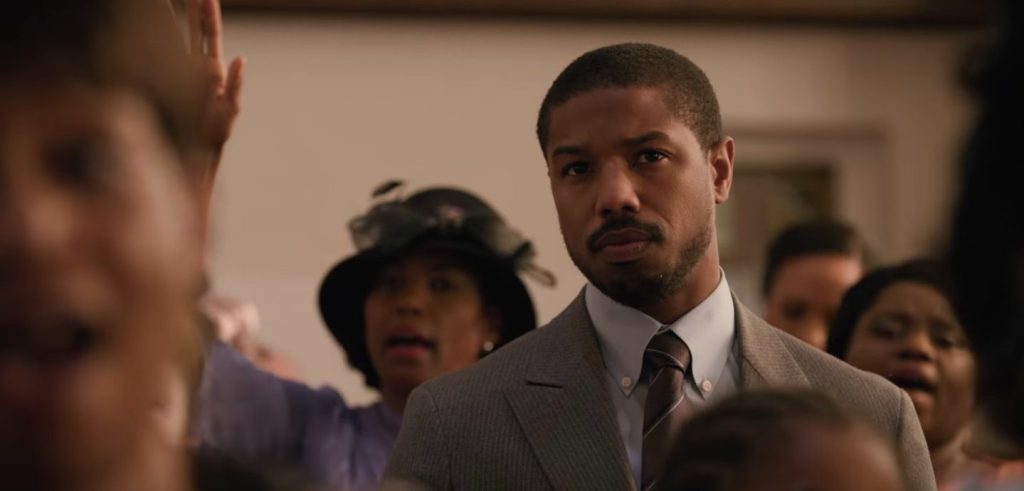
Watching Matt in pits of Hell’s Kitchen showed me the darkness I held in my heart. You can forgive but never ever forget. The weight we hold as human beings is ear-splitting. In Tim O’Brien’s The Things They Carried, the characters are burdened with abstract things, including grief and guilt. We are only as human as we allow ourselves to be. In the film Just Mercy, in its final moments, Michael B. Jordan’s Bryan Stevenson states “we all need grace, we all need mercy.” The film also states 1 in 9 death row inmates are wrongfully convicted, and 165 have been exonerated since 1973.
What if Bryan Stevenson hadn’t shown mercy or grace to those committed to death row? Despite being imprisoned, they are still human beings, as Fyodor Dostoyevsky puts it:
“A society should be judged not by how it treats its outstanding citizens but by how it treats its criminals. The degree of civilization in a society can be judged by entering its prisons. If he has a conscience he will suffer for his mistake. That will be his punishment-as well as the prison.”
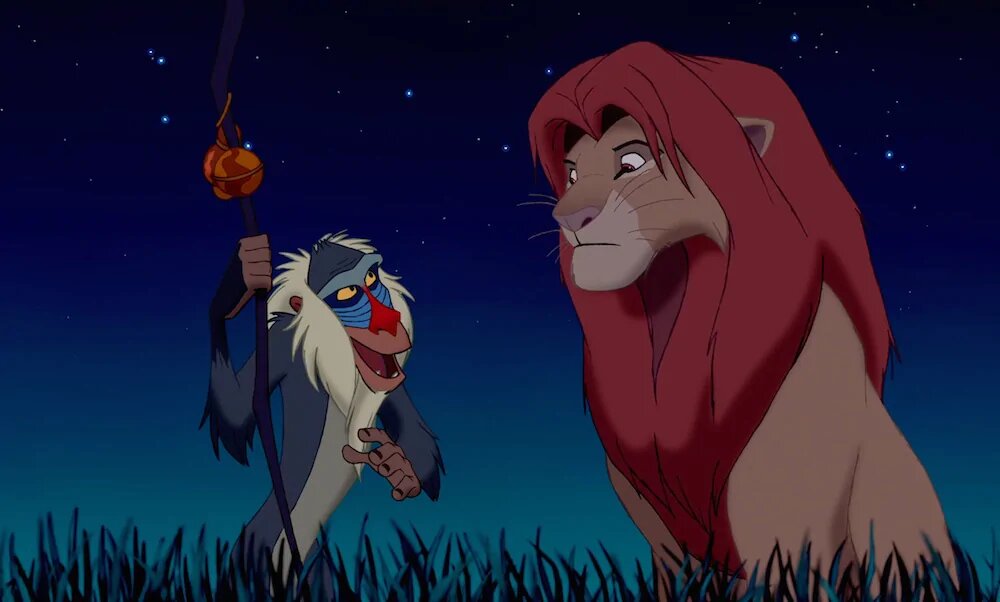
How human beings hold on to things can be a mental block to stepping forward or progression. In Disney’s Lion King, Rafiki says “Oh yes, the past can hurt. But you can either run from it, or learn from it.” And that stone in our stomachs hurts more when we hold on to stuff – for example me avoiding a single person for three years, and your world can shrink exponentially. Living a life looking over your shoulder is mentally draining.
But once you forgive, new roads can open; and in that moment, there is no past or future, just you in the present moment and an open road to the rest of your life.
The only business we have with the past is how we can learn from it. And watching Daredevil all those years ago is in-part responsible for the mild-mannered human being I am now. Murdoch seeing it as his Catholic duty to protect Hell’s Kitchen from those who would see it harm, tied with his mentor Father Lantom (Peter McRobbie) make for an excellent partnership.
Episode one starts with Matt in a confession booth with Father Lantom, and their conversations appear every so often throughout this show’s three-season run. “Nothing shines up a halo faster than death Matthew. But funerals are for the living… and revising history… only dilutes the lessons we should learn from it” says Lantom, and this will always ring true, so long as we humans continues to disregard history and make the same mistakes.
At eighteen, when you think you know everything and you really know nothing, I found Daredevil. Its exploration of forgiveness, mercy and grace in the tint of political violence, corruption, immorality and populist media. Its maiden season showed me how to forgive because its protagonist had every reason not to. This theme of mercy followed with Jessica Jones, Luke Cage and Iron First, as well The Punisher. All these characters loved and lost, and were betrayed, lives written in violence like mine had been.
And yet, these characters and this world saw looking with your eyes makes you blind, as there are other ways to see.
Share this:


“When white women cry, Black men get hurt” – On ‘White Fragility” by Robin DiAngelo
Once upon a time, if you spoke to British-born and raised White people they would have told you that everybody in this country was equal. Yet, Britain’s wealth and to a degree, identity, comes from slavery, empire and stolen land. Why Britain calls itself great comes from the toil and torture of enslaved Africans’ labour on plantations in America and the West Indies.
“Social justice warrior bullshit” is a term I have come across when speaking to White Anglo-Europeans online, foolishly engaging in online debates on race and racism. The fact that many of these trolls can’t seem to understand the barriers that face marginalised communities, and the more communities you fit into, the worst it can be. And the fact that Boris Johnson’s cabinet is the most diverse a cabinet has ever been is not progress. Diversity does not equal representation; and the Priti Patels of this world, who inhabit whiteness and use it to pull the ladder up from other localised disparities in terms of race. i.e increased powers in Section 60.
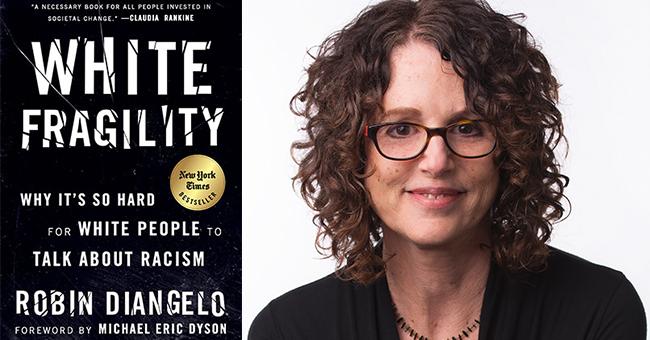
Reading White Fragility by sociologist Dr. Robin DiAngelo for the FBL Book Club (but open to all) – all the instances of White people not being able to talk about race mentioned in the text, I have seen at one point in my life or another. The classic is “I was raised to treat everyone equally” or “I don’t see colour”, and “I don’t care if you’re pink, purple, polka-dotted” and so forth.
One of the worst and most potent forms of White fragility is White people that think they understand racism because they have mixed-race children or relatives. The instinctive defensiveness is at every level of society; from the White working class that don’t feel “privileged” because they use food banks, universal credit or the benefits system to the I-have-a-Black-friend-community-so-I-can’t-be-complicit-in-White-supremacist structures sorts.
In her book, DiAngelo breaks whiteness down into layman’s terms. She deconstructs whiteness, White fragility and Privilege. How society is constructed is for the benefit of Whites. They are the default, so it’s White and the Rest; from the history we learn in schools to “flesh-coloured” plasters which fit the hue of Caucasians. Due to societal design, this also means they have a deficit of “racial stamina” to engage in this discourse without implementing their racial triggers. People of colour are the global majority but colonial borders still dissect us down into “ethnic minorities.”

Whilst this book is about North America, we need to stop thinking about racism as something only “bad people” do, as DiAngelo says in her book. Racism isn’t only the tool of the far right. It’s also the tool of seemingly good institutions; from policing to higher education and The Academy. We need to be looking at the Enoch Powells of this world, and not just the little man.
Robin DiAngelo’s words will pick at the skin of White people’s fragility and their lack of racial stamina to have these conversations. The White people that manage to get through this book to the end will undergo some humility (I hope), analysing all the times they’ve been treated better than their non-White colleagues in exact same situations. She is intentionally provoking discomfort to be critical of the sensitivity White people show when you tell them they are part of society’s institutional racism. And that well-meaning White folks aren’t as liberal and democratic as they often think they are.

In light of Brexit and the ongoing Windrush Crisis #Jamaica50, I am not sure we can say racism in this country is nuanced (anymore). The Tory government’s obsession with stop and search as a way to combat County Lines and knife crime… you cannot arrest your way out of this, nor can you continue to stop Black people at a disproportionate rate to White people, and expect a community with shaky faith in the police to support you.
Rich White people are the biggest smokers of marijuana I know; I can say that because I went to private school, but on what planet has whiteness ever been linked to criminality?
“This book is centred in the white western colonial context, and in that context white people hold institutional power.” In this quote, we need to understand that racism is more than individuals calling each other names, it’s a system of power. In the UK, it privileges whiteness, economically and socially. All people have racial bias, but only with White people in Europe and North America is that bias backed by institutional power.

It is not the job of people of colour to explain racism to White people. When a White woman cries (they’re also complicit in white supremacy), Black men get hurt. Racism is the problem of White people. They created it and the responsibility to dismantle those systems lies with the White masses.
People that look like me are there to support, but racism is trauma. Is it really ethical to expect people of colour to take on this burden? What White people need to ask themselves, and in the words of the late James Baldwin, “why it was necessary to have a nigger in the first place because I’m not a nigger, I’m a man, but if you think I’m a nigger, it means you need it.”
And perhaps in the reading and knowledge-gathering at FBL’s Book Club, in how whiteness operates (insidious and pervasive), united we can attempt to push back against the racial inequalities at work in the University on a day-to-day.
Share this:


Managerialism, students and the language of failure

Imagine that every professional or semi-professional footballer in the country had the same ability and the same fitness levels. How would it be possible to distinguish between them, how would league tables be established, who would play for the top teams? Nonsense of course because we know that not every football player can have the same ability or fitness levels for that matter. And there is a myriad of reasons why this may be the case. However, there is probably little doubt that those that have been professionally coached, even at the lowest level in the professional game can run rings round most part time amateur players.
Not everyone can be at the top, in the Premier League. If we took a sample of players across the leagues and were to somehow measure ability then the likelihood would be that we would find a normal distribution, a bell curve, with most players having average ability and a few with amazing ability and a few with some but perhaps inconsistent ability. It is probably likely that we would find those with the most ability in the Premier League and those with the least in lower or non-league clubs and these are probably semi-professional or amateurs. Perhaps it would be prudent to reiterate that those with the least ability are still way ahead of those that do not play football or just dabble in it occasionally. This then is not to say that those at the lower end of the skills distribution curve are rubbish at playing football, just that they, for whatever reason, are not as skilled as those on the opposite side of the curve. And those that have average skill i.e., the greatest number of footballers, are very good but not quite as good as the most skilled. Make sense so far, I hope so?
If we apply the logic to the skill of footballers can we not apply the logic elsewhere, in particular to university students. Surely, in terms of academic ability, we would find that there were those at the one end of the curve achieving A and B grades or 1st degrees and then the majority in the middle perhaps achieving C and D grades of course tailing off to those that are achieving perhaps low D and F grades. We would probably hope to find a normal distribution curve of sorts. We could probably say that those with lower grades have far greater academic ability than anyone that hasn’t attended university. We could certainly say that the majority i.e. those getting C and higher D grades are good or very good academically when compared to someone that hasn’t attended university but not quite as good as those achieving A and B grades. The assessment grading criteria seems to confirm this, a D grade is labelled as ‘satisfactory’, a C grade ‘commended’ a B grade ‘of merit’ and an A grade ‘distinguished’. Just to reiterate, achieving a D grade suggests a student has displayed ‘satisfactory’ academic ability and met the requisite ‘learning outcomes’.
Why is it then that degrees at institutional level are measured in terms of ‘good degrees’? These are a ‘1st and 2.1. At programme level we talk of ‘good grades’, ‘A’ grades and ‘B’ grades. The antithesis of ‘good’ is ‘bad’. This logic then, this managerialist measurement, suggests that anything that is not a 1st or a 2.1 or an ‘A’ or ‘B’ grade is in fact a ‘bad’ grade. Extending the logic further and drawing on more managerial madness, targets are set that suggest 80% of students should achieve a ‘good grade’. A skewing of a distribution curve that would defeat even the best statistician and would have Einstein baffled.
Let me revisit the football analogy, using the above language and measurements, a comparison would suggest that any player outside of the Premier League is in fact a ‘bad’ player. Not only that but a target should be set where 80% of players should be in the Premier League. The other leagues then appear to be irrelevant despite the fact that they make up probably 90% of the national game and prop up the Premier League in one form or another.
With such a use of language and a desire to simplify the academic world so that it can be reduced to some form of managerial measurement, it is little wonder that perfectly capable students consider their work to be a failure when they earn anything less than an A or B grade or do not achieve a 1st or 2.1 degree.
It is not the students that are failing but higher education and academic institutions in their inability to devise more sophisticated and meaningful measurements. In the meantime, students become more and more stressed and disheartened because their significant academic achievements fail to be recognised as achievements but are instead seen at an institutional level as failures.

 Thoughts from the criminology team