
Home » Criminology (Page 38)
Category Archives: Criminology

“A small case of injustice”

Pride as a movement in the UK but also across the world signals a history of struggles for LGBTQ+ community and their recognition of their civil rights. A long journey fraught with difficulties from decriminalisation to legalisation and the eventual acceptance of equal civil rights. The movement is generational, and in its long history revealed the way social reactions mark our relationship to morality, prejudice, criminalisation and the recognition of individual rights. In the midst of this struggle, which is ongoing, some people lost their lives, others fell compelled to end theirs whilst others suffer social humiliation, given one of the many colourful pejoratives the English language reserved for whose accused or suspected for being homosexuals.
This blog will focus on one of the elements that demonstrates the relationship between the group of people identified homosexual and the law. In sociological terms, marginalised groups, has a meaning and signals how social exclusion operates against some groups of people, in these case homosexuals but it does apply to any group. These groups face a “sharper end” of the law, that presumably is equal to all. This is the fallacy of the law; that there are no inherent unfairness or injustice in laws. The contention for marginalised groups is that there are presumptions in the law on purported normality that disallows them to engage fully with the wider community in some cases forced to live a life that leads all the way to segregation.
Take for example “entrapment”. Originally the practice was used by law enforcement officers to identify counterfeit money, later to investigate the sales of untaxed tobacco or the use of unlicensed taxis. The investigation in law allows for the protection of the public, non uniform officers to pose as customers in order to reveal criminalities that occur in the dark corners of society. The focus predominantly was to protect consumers and the treasury from unpaid tax. So, from that how did the law enforcement officers use it to arrest homosexuals? It is interesting to note we can separate the letter of the law as opposed to the spirit of the law. This distinction is an important one criminologically whilst for the law enforcement agencies evidently there is no such distinction.
The most recent celebrity case led to the arrest of George Michael in Los Angeles, US; the operation led to the outing of the artist and his conviction. As a practice across many years, entrapment played a significant part in the way numerous homosexuals found themselves arrested given a criminal record, loss of employment and in some cases ending up in prison. It is important to note that prior to the Sexual Offences Act of 1967, the biggest sexual crime in England and Wales was that of homosexuality (recorded as indecency or buggery). It took decades for that statistic to change, although historically remains still the highest category.
The practice of entrapment employed by the police demonstrates the uphill struggle the LGBTQ+ community faced. Not only they had to deal with social repulsion of the wider community that detested, both their practices and their existence, but also with public officials who used entrapment to criminalise them. This was happening whilst the professionals were divided about the origins of homosexual “anomaly” and how to deal with it, the practice of entrapment added new convictions and supplied more humiliation to those arrested. For the record, the criminological community was split along theoretical lines on this; the classicists such as Bentham argued for the decriminalisation of sodomy whilst the positivists namely Lombroso considered homosexuals to be in the class of moral criminals (one of the worst because they are undeterred) .
The issue however is neither theoretical, nor conceptual; for those who were aware of their sexuality it was real and pressing. During the post WWII civil rights movement, people started taking note of individual differences and how these should be protected by privacy laws allowing those who do not meet the prescribed “normal” lifestyles to be allowed to live. It emerged that people who were successful in their professional lives, like Alan Turing, John Forbes Nash Jr, John Gielgud etc etc, found themselves facing criminal procedures, following string operations from the police. This injustice became more and more evident raising the profile of the change in the law but also in the social attitudes.
In 2001 Lord Nicholls of Birkenhead addressed the issue of entrapment head on. In his judgement in Regina v Looseley:
“It is simply not acceptable that the state through its agents should lure its citizens into committing acts forbidden by the law and then seek to prosecute them for doing so. That would be entrapment. That would be a misuse of state power, and an abuse of the process of the courts. The unattractive consequences, frightening and sinister in extreme cases, which state conduct of this nature could have are obvious. The role of the courts is to stand between the state and its citizens and make sure this does not happen.”
This was the most damming condemnation of the practice of entrapment and a vindication for all those who faced prosecution as the unintended consequence of the practise. For the record, in 2017 under the Policing and Crime Act, included the “Alan Turing law” that pardoned men who were cautioned or convicted for historical homosexual acts. The amnesty received mixed reviews and some of those who could apply for denied doing so because that would require admission of wrongdoing. The struggle continues…
Regina v Looseley, 2001 https://publications.parliament.uk/pa/ld200102/ldjudgmt/jd011025/loose-1.htm
Share this:

Black Lives Matter: An Open Letter

Dear All. I hope you are well. Since I’m now at the end of my tenure with the Students’ Union, I thought I ought to address the future. And to those of you that have had meetings with me over the past year, I am grateful for your help and allyship. I hope this is not the end, but the beginning. Many of us have told ourselves that we are all equal but we know how false that is. This is not the time for idealism and I am sure you know that I do not stint when it comes to social justice, particularly with race. In the tint of an international civil rights movement against racism and racial inequality, the latest victims of white supremacy in the United States have made myself, students and other like-minded individuals think about issues closer to home.
That in this county, Black people are nearly nine times more likely to be stopped by the police than white people (Stopwatch); that in Britain, 184 Black, Asian and Minority Ethnic [BAME] people have died in police custody since 1990 (Inquest) – that in youth offenders’ prisons, over 40% are from BAME backgrounds [Lammy Review, 2017]. All this is before I begin to talk about the disproportionate impact COVID-19 is having on people of colour, in terms of deaths and infection. These are our students and their families.
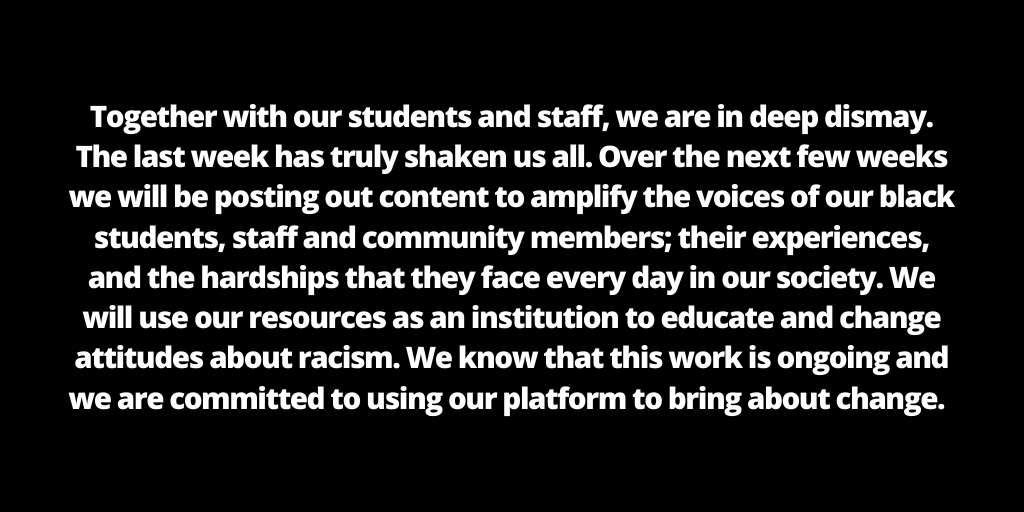
Out of this, I am deeply concerned over the future of race equality at the University. The statement that was released on June 4 was vague. It didn’t go into detail on really anything and it felt performative. Honestly, I’m quite perturbed by the their reaction to Black Lives Matter and the protests; this is not the time to be apolitical when massive portions of the University community are experiencing racial trauma (including the genetic trauma that comes with being descendants of the Transatlantic Slave Trade), and the Black members of staff having to maintain professionalism!
And the fact it so long to release a statement (11 days after George Floyd’s murder), makes me uncomfortable. Notwithstanding, it took a tweet from me to get things moving. Racism is not a comfortable subject, nor should it be; it is nasty and the University needs to understand that.
From Wednesday, I will no longer be your Vice President BME at the SU and there is no intention to replace me. Already, the next sabbaticals have arrived. Are they as interested in equalities as the last team? Well, we won’t know until they acculturate to their roles. Whether that is on decolonising the curriculum or the state of race in higher education, I really couldn’t say. However, I have plenty of thoughts and even recommendations that the University can implement. Yet, I am worried the institution is not willing to have this conversation, nor hear the unpleasantness that comes with discourse and discussions on the state of race relations in this country.
I have lots of ideas about curriculum and disciplinaries, also policing and security (yes anti-racist work is more than posts on social media, and yes I agree social media is useful).
From an outsider’s perspective, the University response to Black Lives Matter looks nothing more than virtue signalling. At the moment, I do not think it takes these issues seriously at all. Now leaving altogether, I am still going to be in the area. And, I am still willing have this conversation in my role as an incredibly concerned member of the local community, a place that has been my home for nearly 20 years of my short but active nearly 25 years fighting and experiencing racism in this country and county.
Nothing about Black Lives Matter is comfortable, and issues with policing in the US are also happening here. Students that currently study with the University can relate to the plight of George Floyd’s family, and the other victims of police violence. And the University needs to understand that Black Lives Matter goes beyond policing. Black Lives Matter goes to awarding gaps, accommodation, curriculum, disciplinaries and more. Black Lives Matter is every institution’s problem, particularly in higher education.
I am willing to start this conversation now, as a preemptive strategy to help the University long-term. This institution sees an awful lot of bad press from local media and also from the community, but it really doesn’t have to be that way. I so want to see this place succeed, as I know it can (if it takes these issues seriously, and takes the help of concerned community members, including myself, and others who I know who are also concerned about the University’s approach towards issues of race). In the sense, its approach to these subjects is nonspecific. “BAME” doesn’t help anyone.
What HEIs more generally should be doing is looking at the subtleties of race and identity, since BAME doesn’t take look at nuance or cultural heritage, locking culture, history and identity into a draw never to be seen again.
What the University is currently doing is not good enough. Advertising the diversity of students whilst simulataneously not investigating issues that hurt students, including racism. Diversity is a con, as it:
“often creates a happy impression; it is how an organisation appears
(Ahmed, 2018: 334).
welcoming to those who appear different by drawing on those who appear different. Diversity can appear as an invitation, an open door, translated into a minorities welcome! Come in, come in”
There is a scab over a tumour throughout the sector. That tumour is institutional racism. Sir William Macpherson spoke about this in the Macpherson Report, investigating the flawed police investigation into the murder of Stephen Lawrence. Wendy Williams doesn’t mention it by name, but she doesn’t need to, in Windrush Lessons Learned. Neither did Baroness McGregor-Smith in her review into race at work. Whilst these are not HE-specific, they all have correlations with universities. Institutional violence is pervasive in all institutions. Look at the relevant recommendations.
Now more than ever, in this historical moment, with Black Lives Matter and Coronavirus; as an institution, it should be studying institutional racism and structural inequalities, but more importantly and specifically, institutional violence. Black Lives Matter and COVID-19 are linked. Health and race have a history that go back to the days of the Windrush Generation when the women of that generation were called to fill labour shortages that still exist today. Especially, in healthcare, pertinent when we are currently in the worst public health crisis since the Spanish Flu in 1918.
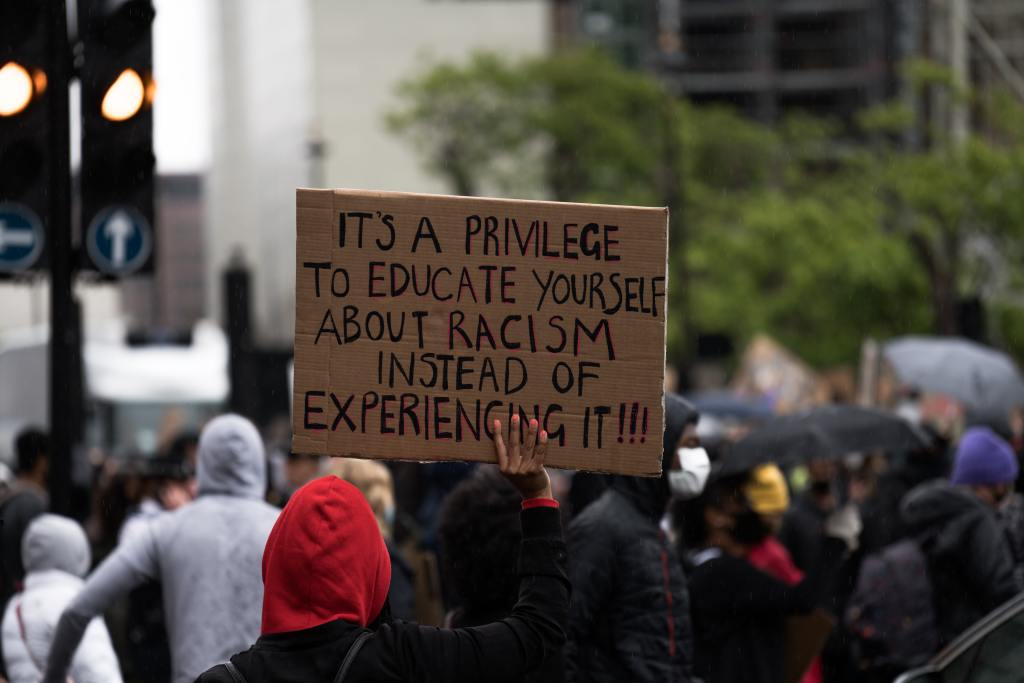
To understand race, we must study racism, how it came to be and why. Which would mean interrogating higher education’s ties to histories of slavery, empire and colonialism. Race doesn’t exist, it’s a construct. It was created. We must stumble around in the dark and come face-to-face with the architects of colonial racial thinking. The people that allowed British colonialism to be so successful. That’s one way we help students.
We know who constructed Nazism and that ideology because how Britain defeated Hitler is embedded into the national consciousness. So, why should we treat Britain’s colonial history any different? We need to find the Joseph Goebells characters of the British Empire and study them.
Penultimately, I will end in asking why the University made the FBL BAME Project Lead redundant in July 2019?* A person whose job it was to do research into the ethnicity award gap. Someone who wrote reports and made recommendations. In the axing of this role, I’m inclined to believe the University did not like their recommendations, and thus did not act upon them. The signals it sends that they discontinued this role while the award gap is seemingly important to all universities baffles me.
In addition, does the University intend to replace the Diversity and Inclusion Lead in HR, whose contract ended.* The D&I Lead did some sterling work this last academic year, both in setting up staff networks as well as her work for LGBT History Month and Women’s History Month, all while on fixed-term part-time contract (at two days a week). If the University is going to take equality seriously, it needs to put resources behind it and recruit people that are specialists in that area.
Passionate people that will do the work and two days a week part-time fixed-term is not good enough. Only one staff member with little support? It very much looks like the University is cutting back on equalities. You can do better.
I will end in saying, when we do not look at the roots of a problem, they fester and that hurts everyone. Case in point: racism and policing. And the recommendations in The Macpherson Report have simply remained recommendations. When we want to solve problems, we don’t look to the leaves, we look to the roots so we can stop them happening again. From Wednesday, I will no longer be at the Students’ Union but I will still be a worried, concerned local resident. How the University has responded to Black Lives matter is simply not good enough and if they continue on this path, it risks damaging its reputation beyond belief. You. Can. Do. Better.
However, this needn’t be goodbye, but hello and the start of something. There is a community on your doorstep that want to help. Let us.
Yours,
Tré Ventour (Vice President BME) – 2019/2020
PS: To anyone, including students that want to discuss issues of race further in this time of uncertainty (as we should all be discussing them always) or simply want to keep in contact, you can message me via the blog or you can get me via social media (Twitter / FB / IG), which is simply my name

*Note from the editors – the Criminology Team has been contacted by a representative of the University’s Human Resources department to clarify that the Equality and Diversity Lead left at the end of the fixed term contract period. In addition there was no redundancy in relation to a post in the Faculty of Business and Law (FBL).
Referencing
Ahmed, S. (2018). Rocking the Boat: Women of Colour as Diversity Workers. In: Arday, J., Mirza, S. (eds). Dismantling Race in Higher Education: Racism, Whiteness and Decolonising the Academy. London: Palgrave Macmillan, pp. 331 –348.
Other Sources of Interest
Department for Business, Energy and Industrial Strategry (2017). Race in the Workplace: The McGregor-Smith Review. (Chairperson: Ruby McGregor-Smith). London: TSO
Home Office. (1999). The Stephen Lawrence Inquiry. (Chair: William Macpherson). London: TSO.
Home Office (2017). Report of the Independent Review of Deaths and Serious Incidents in Police Custody. (Chairperson: Elish Angiolini). London: TSO.
Home Office (2020). Windrush Lessons Learned Review. (Chairperson: Wendy Williams). London: TSO.
Ministry of Justice (2017). The Lammy Review. (Chairperson: David Lammy MP). London: TSO.
Northamptonshire Rights and Equality Council. (2020). ‘Our Nine-Point Plan to Advance Racial Equality in Northamptonshire: June 2020,’ https://northantsrec.org, [online]. Available from: https://northantsrec2013.files.wordpress.com/2020/06/9-point-plan-to-advance-racial-equality-in-northamptonshire-final.pdf
Public Health England. (2020). Disparities in the risk and outcomes of COVID-19, (Chairperson: Public Health England). London: TSO.
Share this:


Volunteering Matters

Some people volunteer because they have to, I volunteer because I want to. From a personal perspective I knew that the foodbank was the place that I wanted to be at.
I started volunteering in 2016, doing just 1 day a week and as the years have gone by it has meant more hours spread over a couple of days, especially during the Christmas holidays which are incredibly busy. Proving that many volunteers are necessary and needed to help keep it going.
It is a place that suits me because its local and fits around my studies. I am able to learn new skills and gain insightful knowledge. The volunteers are very welcoming and warm people. However, over the years I’ve noticed a dramatic increase in the use of the foodbank and its diversity. In theory, its usage should be on the decrease.
Within the foodbank, we deal with some very complex individuals who require different approaches. It sounds cliché, but I volunteer to make a difference and eradicate the myth that the foodbank is used for those in society that are labelled as people who can’t budget properly.
I have found that service users are predominantly people living on low incomes. People who are working on zero hours contracts; or have reduced hours and having their wages topped up with benefits like Universal Credit. As a result, they just don’t have enough money coming in; leaving hardly anything for essentials such as food and heat. I found during my research that many families have been without electricity, that means no cooking facilities or warmth! Pushing them further into poverty. In this day and age people should not be without the basics.
In my time as a volunteer I have met some lovely people who have been affected by different adverse life events and it is heartbreaking to witness, but equally by giving something back I can see their eyes light up when they are given their food parcels. I feel I am learning to be more compassionate. However, if the person has no access to electricity how are they supposed to cook or provide a meal for their children without electricity?
On a weekly basis we see many different people from so many backgrounds; from civil servants, to social workers and the homeless. Service users can often be emotional and sometimes defensive, who feel they don’t deserve to be given food because they are working. The foodbank does not discriminate, it sees everyone as equal.
What does that say about the world we live in? That being food poor or food insecure is something that must stay hidden and not be talked about…people living with food insecurity would rather go without, than ask for help. The basic income does not cover the essentials such as food after paying bills.
It makes me mad that poverty is an accepted part of society and service users state they feel undervalued and unaccepted. The question that must be asked ‘Is poverty violence? The answer is a resounding YES, due to the structures within society that prevent people living with food insecurity from accessing food. Therefore, locking them into poverty, preventing them from moving out of the cycle of deprivation.
It is left to charitable organisations to do whatever they can to help that person to be able to eat and survive. But how long can these charities go on for? The Trussell Trust began in 2000 in the UK….
Children and families should not be going without food, as it is a fundamental right that everyone should have access to the basics. Food insecurity is more prominent now than ever with The Trussell Trust (2020) reporting an increase of 81% in emergency food parcels.
The foodbank is available to help people to access a 3 day food parcel to ‘see them through” a difficult period in their lives. During my time spent conducting my dissertation within the foodbank, food poverty was a combination of a variety of reasons such as low income, often together with a contributory factor such as an adverse life event. For example, the loss of employment or breakdown of a relationship which will only add more shame and stigma. The foodbank is not just about giving away free food, it’s about offering a safe place to sit and get warm and service users can relax, tell their stories and feel free for as long as they can, before they have to face more challenges from the world.
Furthermore, some in society see the foodbank as the sticking plaster that holds the poor in society together. I would say that without the foodbank many people would be committing crimes or be starving. Some politicians have stated that food banks are the heart of community cohesion. The only time I have seen the local MP at our foodbank is for a photo opportunity. The poor in society are forgotten and its about time they weren’t!
The service users are people who are neglected by society and the government, who by definition, make them feel they are to blame for their situation. By visiting the foodbank we show them respect and compassion.
Share this:


“Things you need to know about criminology”: A student perspective: ej213

We are all living in very strange times, not sure when life will return to normal...but if you're thinking about studying criminology, here is some advice from those best placed to know!

The most important module to my understanding of criminology is: True Crime - this module highlights the fact that cases you have seen in the media and in films may not be accurate due to the true crime genre exaggerating facts for entertainment. Whilst, this module does not cover quite as much theory as others, it gives the chance to explore cases and discover the truth underneath the exaggeration. Love this module.

The academic criminology book you must read:
The Oxford Handbook of Criminology (sixth edition) - I was recommended this book at an open day and there was rarely an assessment I couldn't find some background knowledge for in this book. It is a great tool.

The academic journal article you must read:
Testosterone and masculinity

The criminology documentary you must watch:
FBI: Cold Cases - it is a Netflix original I think but it shows how crimes committed 20 or 30 years ago can be solved due to modern technology. Really interesting especially if you have an interest in forensics.

The most important criminologist you must read:
Either Lombroso or Marx.

Something criminological that fascinates me:
The fact that crime is defined by the wealthy meaning that the prisons are mostly filled with the lower classes due to the upper classes' crimes being seen as victimless

The most surprising thing I know about criminology is:
That criminology is a relatively recent study

The most important thing I've learnt from studying criminology is:
There is rarely one answer so long as you can support your argument

The most pressing criminological problem facing society is:
This could be an essay in itself. I guess I would have to say poverty because 14 million people (2019/20) still live in poverty and these people are not going to have the same advantages or prospects in education or the workplace meaning they are more likely to commit crime in order to survive

When family and friends ask, I tell them criminology is:
Amazing and the most interesting course I have chosen to study because it never had a definite answer which I guess can make it complex however, the debates within the course are great to participate in because it is interesting to hear another's perspective but also voice my own. It is also very inclusive in its module content which is great

Share this:


The victimisation of one

One of the many virtues of criminology is to talk about many different crimes, many different criminal situations, many different deviant conditions. Criminology offers the opportunity to consider the world outside the personal individual experience; it allows us to explore what is bigger than the self, the reality of one.
Therefore, human experience is viewed through a collective, social lens; which perhaps makes it fascinating to see these actions from an individual experience. It is when people try to personalise criminological experience and carry it through personal narratives. To understand the big criminological issues from one case, one face, one story.
Consider this: According to the National Crime Agency over 100K children go missing in the UK each year; but we all remember the case of little Madeleine McCann that happened over 13 years ago in Portugal. Each year approximately 65 children are murdered in the UK (based on estimates from the NSPCC, but collectively we remember them as James Bulger, Holly Wells and Jessica Chapman. Over 100 people lost their lives to racially motivated attacks, in recent years but only one name we seem to remember that of Stephen Lawrence (Institute of Race Relations).
Criminologists in the past have questioned why some people are remembered whilst others are forgotten. Why some victims remain immortalised in a collective consciousness, whilst others become nothing more than a figure. In absolute numbers, the people’s case recollection is incredibly small considering the volume of the incidents. Some of the cases are over 30 years old, whilst others that happened much more recently are dead and buried.
Nils Christie has called this situation “the ideal victim” where some of those numerous victims are regarded “deserving victims” and given legitimacy to their claim of being wronged. The process of achieving the ideal victim status is not straightforward or ever clear cut. In the previous examples, Stephen Lawrence’s memory remained alive after his family fought hard for it and despite the adverse circumstances they faced. Likewise, the McGann family did the same. Those families and many victims face a reality that criminology sometimes ignores; that in order to be a victim you must be recognised as one. Otherwise, the only thing that you can hope for it that you are recorded in the statistics; so that the victimisation becomes measured but not experienced. This part is incredibly important because people read crime stories and become fascinated with criminals, but this fascination does not extend to the victims their crimes leave behind.
Then there are those voices that are muted, silenced, excluded and discounted. People who are forced to live in the margins of society not out of choice, people who lack the legitimacy of claim for their victimisation. Then there are those whose experience was not even counted. In view of recent events, consider those millions of people who lived in slavery. In the UK, the Slavery Abolition Act of 1833 and in the US the Emancipation Proclamation Act of 1863 ostensibly ended slavery.
Legally, those who were under the ownership of others became a victim of crime and their suffering a criminal offence. Still over 150 years have passed, but many Black and ethnic minorities identify that many issues, including systemic racism, emanate from that era, because they have never been dealt with. These acts ended slavery, but compensated the owners and not the slaves. Reparations have never been discussed and for the UK it took 180 years to apologise for slavery. At that pace, compensation may take many more decades to be discussed. In the meantime, do we have any collective images of those enslaved? Have we heard their voices? Do we know what they experience? Some years ago, whilst in the American Criminology Conference, I came across some work done by the Library of Congress on slave narratives. It was part of the Federal Writers’ Project during the great depression, that transcribed volumes of interviews of past slaves. The outcome is outstanding, but it is very hard to read.
In the spirit of the one victim, the ideal victim, I am citing verbatim extracts from two ex-slaves Hannah Allen, and Mary Bell, both slaves from Missouri. Unfortunately, no images, no great explanation. These are only two of the narratives of a crime that the world tries to forget.
“I was born in 1830 on Castor River bout fourteen miles east of Fredericktown, Mo. My birthday is December 24. […] My father come from Perry County. He wus named Abernathy. My father’s father was a white man. My white people come from Castor and dey owned my mother and I was two years old when my mother was sold. De white people kept two of us and sold mother and three children in New Orleans. Me and my brother was kept by de Bollingers. This was 1832. De white people kept us in de house and I took care of de babies most of de time but worked in de field a little bit. Dey had six boys. […] I ve been living here since de Civil War. Dis is de third house that I built on dis spot. What I think ‘bout slavery? Well we is getting long purty well now and I believe its best to not agitate”.
Hannah Allen
“I was born in Missouri, May 1 1852 and owned by an old maid named Miss Kitty Diggs. I had two sisters and three brothers. One of my brothers was killed in de Civil War, and one died here in St. Louis in 1919. His name was Spot. My other brother, four years younger than I, died in October, 1925 in Colorado Springs. Slavery was a mighty hard life. Kitty Diggs hired me out to a Presbyterian minister when I was seven years old, to take care of three children. I nursed in da family one year. Den Miss Diggs hired me out to a baker named Henry Tillman to nurse three children. I nurse there two years. Neither family was nice to me.”
Mary Bell
When people said “I don’t understand”, my job as an educator is to ask how can I help you understand? In education, as in life, we have to have the thirst of knowledge, the curiosity to learn. Then when we read the story of one, we know, that this is not a sole event, a bad coincidence, a sad incident, but the reality for people around us; and their voices must be heard.
References
Nils Christie (1986) The Ideal Victim, in Fattah Ezzat A (eds) From Crime Policy to Victim Policy, Palgrave Macmillan, London
Missouri Slave Narratives, A folk History of Slavery in Missouri from Interviews with Former Slaves, Library of Congress, Applewood Books, Bedford
Share this:


Deniable racism: ‘I’m alright Jack’

Photograph: Bill Orchard/Rex/Shutterstock
I heard on the news a week or so ago that an investigation by ITV news had found that the majority of NHS Trusts have not completed full risk assessments on BAME staff. Considering that BAME groups are impacted disproportionately by COVID-19 I have to ask why? And, probably more importantly, now that the issue has been raised, what are the government doing to make sure that the risk assessments are carried out? Since I heard about it I’ve seen no response, so I guess I can answer my own question ‘nothing’.
But then maybe I shouldn’t be surprised, I read an article on Racism and the Rule of Law and you can’t but be appalled by the number of recommendations from various inquiries and reviews that have failed to be acted upon. The problem is that the action requires more than just the eloquently spoken or written word; to put it very bluntly and maybe crudely, ‘put your money where your mouth is’. It is easy to state that this is wrong or that is wrong in our institutions, the term ‘institutional racism’ trots off the tongue, seized upon by the wronged and more worryingly banded about by the societal racists of the elite who are only too willing to blame someone else. In thinking about this I wonder whether when we use the term racism, we are all talking the same language. The ‘deniable’ racism is easy to identify, ‘we don’t use that sort of language anymore’, ‘we no longer put those signs in our windows’, we have laws that say you can’t act in that way. ‘Actually, I’m not a racist’. But the statistics don’t lie, they can be bent, manipulated to some extent to favour one argument or another but there are some very basic inescapable facts, BAME groups are over represented in the wrong areas of our society and under represented in the right areas. And most of this I dare say does not owe itself to ‘deniable’ racism, it’s more than that, it’s embedded in our society, it’s not institutional racism, it’s societal racism and it’s hidden. The problem with societal racism is that we only see the positive attributes of people that are like us and we promote those that excel in showing those attributes. Hence, we have the elite in business and government that are not ‘deniable’ racists but nonetheless are the epitome of, and lead a racist society.
I want to return to the idea of ‘putting your money where your mouth is’ mantra. They say money makes the world go around, I’m not sure that is entirely true, but it certainly goes a long way to getting things done and conversely the lack of it ensures that nothing happens or in some cases that good things come to an end. A prime example is the austerity measures put in place in 2010 that saw budgets to government agencies and funding to councils cut significantly. Those that suffered were the most deprived. Even worse, was the fact that funding for youth projects in inner cities suffered and those initiatives that were aimed at reducing violent crime amongst young people ground to a halt. Policing saw huge cuts and with it the withdrawal of neighbourhood policing. This link to communities was severed and any good work that was going on was quickly undone. That doesn’t explain all that is wrong with policing, but it certainly doesn’t help in building bridges. Who in their right mind would embark upon fiscal policies with no regard to such outcomes, our elected government did. If we think now about the so-called return to normality post the Covid-19 pandemic, which caring company or institution would suggest that the most impacted by the virus should continue or return to work, or study, or any other activity, without considering their specific risks and needs? Probably those that have more concern for the bottom line than peoples’ lives. ‘I’m alright Jack’ comes to mind or at least I want to make sure I am.
In thinking about policies, procedures, risk assessments or recommendations, managers have an eye to finance. In the NHS, the day to day business still has to happen, in policing, incidents still need to be attended to, so where is the money to do the extra? Everything comes at a cost and every recommendation in every review will cost something. The NHS risk assessments will cost money. The question is whether government and all of us in society really believe that ‘black lives matter’. If we do, then then it’s time to acknowledge the type of society we live in and who we really are and for government to ‘put the money where its mouth is’ so that the recommendations can be acted on. Or of course, we could just have another review and ‘Jack’ will do very nicely out of that as well thank you.
Share this:


Watching while Black. #BlackAsiaWithLove
One of the most surprising conversations to have emerged from the BLM protests is representation. On the news outlets I follow in my liberal bubble, items around the protestors’ demands led to implicit bias, and the media cited as a primary arena for such instruction. Chomsky, as we all know from his Propaganda model, contends that it’s media’s “function to amuse, entertain, and inform, and to inculcate individuals with the values, beliefs, and codes of behavior that will integrate them into the institutional structures of the larger society.” Consent to white supremacy is what’s being manufactured here. Whether the nightly news or the entertainment, deconstructionists have long since called out the white supremacist propaganda. We know that the propaganda is a comprehensive representation of the dominant hegemony, what bell hooks describes as the white supremacist, capitalist, patriarchy.
Ain’t your momma on the pancake box?
 Aunt Jemima, gone! Uncle Ben! Gone with the Wind, swept away! Representation matters. These iconic images survived an era when white supremacy was on parade – literally- the height the K.K. Klan marches and minstrelsy. We know NOW that these images were based on racist stereotypes. And thankfully that analysis has extended into the modern day: They canceled Cops, and are going after entire franchises of cop dramas that have busily perpetuated racist propaganda.
These TV shows are all chock full of Black criminality, Black Best Friends and white saviors! And they’re lovely. Consider the Law and Order franchise, which is comprised of over half a dozen different shows, including the longest-running cop drama ever, L&O Special Victims Unit – sex crimes! Activists writers and cultural critics are popping up everywhere discussing this mess. Jim and Jane Crow must be shaking in their boots.
What’s interesting, and feels unique about this particular moment is the earnest effort with which emotions are confronted. This includes terror and rage. The grief with which Black people watch reels of Black bodies falling is horrendous. We’re over a decade into massive social media saturation, so it’s safe to say, you can see a nigger die daily – looped if you like. As Evelyn From the Internets said, we need a day off from this trauma: I’m calling in ‘black’.
Then there’s rage. Of course, it’s enraging to see no justice sought or found in the majority of these cases. What’s worse, we’re not talking about actual criminals that the law already outlaws- no one has forgotten about gang violence, like that 15-year-old Chicago girl in who caught a stray bullet in her back just days after returning from the White House where she’d performed at Obama’s second inauguration. Yes, we wept as we watched that tragic story of Hadiya Pendleton.

Yet, there’s a particular sting around “justified homicide,” by law enforcement officers. Who can we turn to for lawn enforcement? Who secures our justice? Not the United States! We’ve watched that for decades throughout many evolutions of media technology. We have Black and white photos of ET’s brutalized young body in 55. We see Rosa Parks sitting in a segregated bus that December. We have newsreels of over a decade long of different acts of civil disobedience that culminated in what we call the Civil Rights Movement. We watched Bloody Sunday in Selma, live, in Black and White TV.
We watched Rodney King get beat down by a mob of LAPD! We watched the trial and the slurs and the acquittal of his killers. So, we watched the riots a year after the police beating, and we watched as justice yet again slipped away – from Black people.
Now, in the age of social media, we can watch a live-streamed murder – such as that of Philando Castile who was shot by a cop within seven seconds of informing the cop he was legally carrying a gun! Thanks to many citizen-journalists, we see all of it, every excruciating second – each second where a sense of humanity might have intervened.
Have you taken the Implicit Bias test yet?
We’re now talking about the implications of implicit bias. In health, Ms. Corona showed us all the biases not only in treatment, but also in systemic differences in housing that impact wealth, education and, sadly health. Red Lining is real. And Corona has shown that those biases lead to our morbidity.
In corporate America, if you have a Black sounding name on your resume, you’re 50% less likely to get a callback – fact! And if you get the job, you have to deal with micro-aggressions.
From Spectacle to Spectacular
Social media has made the most mundane spectacles of public life spectacular through the lens of racism. There’s a whole hashtag, #LivingWhileBlack- that will show white people calling the police on Black people just for being ‘suspicious’ and making them ‘uncomfortable’. We know that white discomfort has led to many deaths at the hands of the police because we’ve heard the 9-11 calls, too. But, now, we can also see BBQBecky, PoolPatrolPaul, PermitPatty, HotelEarl call the police. We see a white woman in a bodega charge a 14-year old Black boy with sexual assault because his backpack swiped against her. We see that white woman calling the police on a little black girl selling bottled water in front of their apartment complex on a hot sunny day. There are loads, loads more of such incidents, now caught on camera by citizen-journalists. Under these conditions, Black sanity is a spectacular feat!
Recently, we watched that white woman in Central Park threaten to call the police and tell them a “Black man in threatening her,” and moments later, because the brother stayed calm enough to record the spectacle on his phone, we see her feign terror on the phone to the emergency services. She nearly strangles her newly adopted dog with the leash the birdwatcher had asked her to use in the first place. She was readily prepared to weaponize her white tears in a situation that she knew could end in this Black man’s death! She knew she existed in a system that would support her, yet the wider/whiter masses either refused to believe that any of this was happening, despite our consistent, collective protestations. So, here we are, locked in a battle of wills: Will the world finally affirm that BLM?
Share this:


To defeat fascism, Education must #decolonise
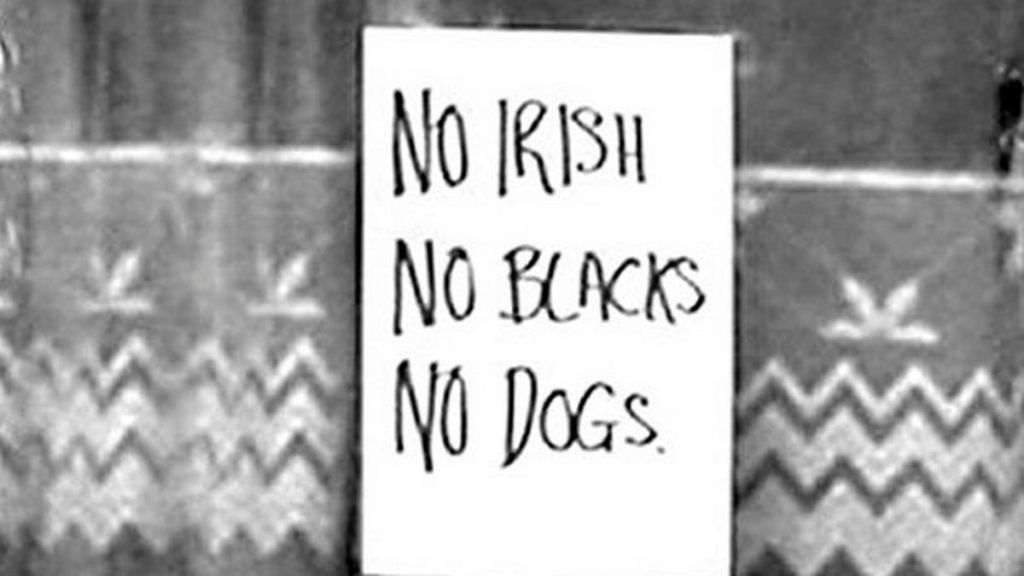
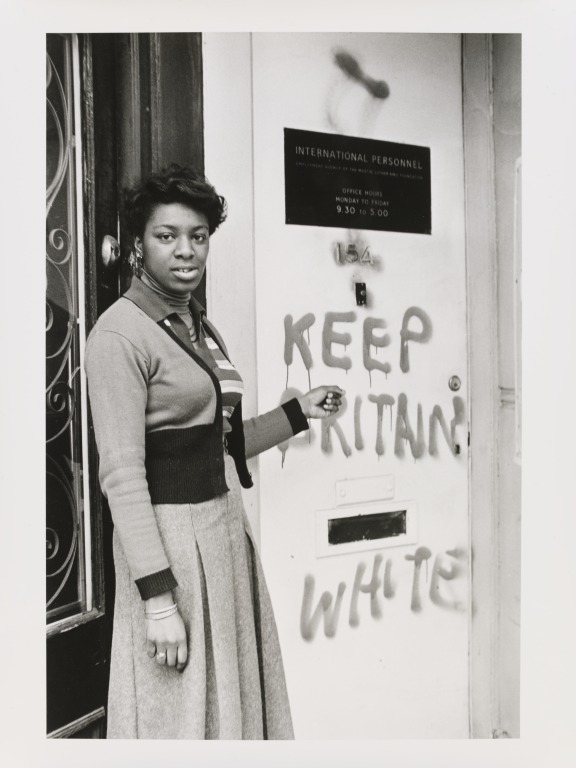
When I was a boy, growing up in Northamptonshire in the middle of England, I learned a lot of history from my own family. It was at home I learned about the cruel tenure of colonialism and the British Empire, not at school. My parents and grandparents told me of the 1960s, 1970s and 1980s and times where there was insignia to No Irish, No Black, No Dogs on shopfronts. They told me of “Keep Britain white” and Neil Kenlock’s iconic photograph. How Britain made the Windrush and their children, (both children of the British Empire unwelcome). Recently I saw This is England for the first time, and couldn’t help but feel we be might going back to an imitation of Powell, the NF, and his rivers of blood. I’m afraid. However, the difference between now and then is that today it’s everyone versus racism.
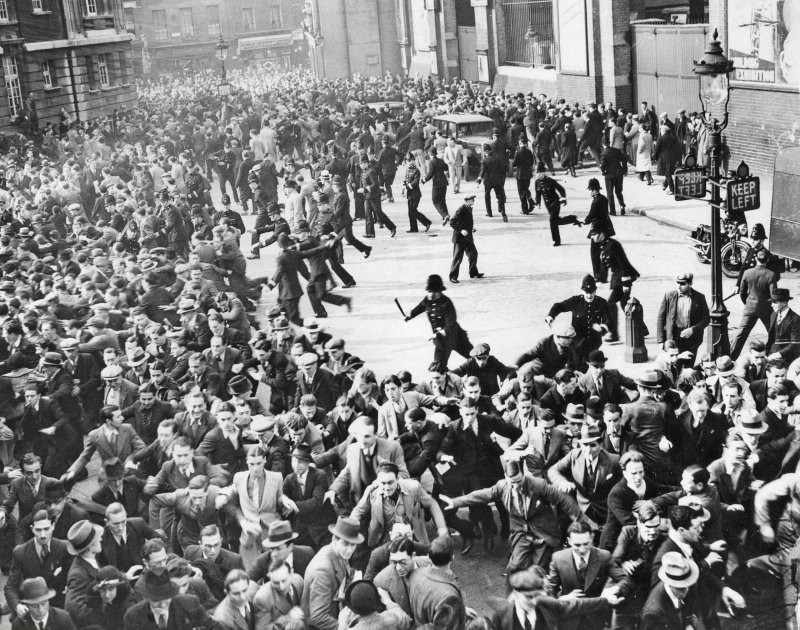
Like many of my Black and brown colleagues, we are never more fearful than when we are in a room full of white men. That stench of white male privilege is foul. Now, that’s some funk! I was made to relive my public school days when I saw the scenes of fascists fighting the police. When I saw these men defending another fascist, Winston Churchill, I was made to relive the trauma of school, where I was monkeychanted and called wog. Told to “eff off, you Black bastard” and that’s putting it kindly. These Neo-Nazis reminded me of people I went to school with. And since Black Lives Matter have come out once again, I have been called all kinds of things.
“Go back to your own country”… “ape” … “nigger lips” – this is what happens when you fight racists online, most of my racial trauma as an adult comes from the worldwide web
In my heart of hearts, I hope we do not go back to that time where Stephen Graham’s Combo is a commonality. London’s scenes showed me the zeitgeist of Britain’s swaggering xenophobia. That Britain is more Bill Sykes than Liz Bennett. The fact this country has a history of racism and you can go through the education system and not be taught about race once just shows you the level of brainwashing. And more importantly, the denial of our past and present. That aspiring teachers can go through initial teacher education [ITE] and not do anything on race equality, including the differences between teaching white and Black children (equity > equality). That when I am called those horrific names, I know they come from racism embedded in the unconscious, historically popularised by men like Edward Long, slave trader-historian, but he was also a devotee to pseudoscientific racism.
The Windrush Scandal: they were colonised, enslaved and then repatriated; so will we implement this history onto curricula in the years to come? I won’t hold my breath.
For me, those images of white men fighting police cast my mind to The Battle of Cable Street in 1936, but also that whole era of anti-fascism and Black shirts that lead up to the beginning of the Second World War. That in our pursuit to impliment Black history on the curriculum, this can’t detract from the fact we have histories of working-class narratives that need to be told as well. From Stonewall (1969) to Thatcherism and the Miners’ Strikes in the 1980s to the Irish and the Jews brining an end to Oswald Mosely in 1936, to the Bristol Bus Boycott (1963) and the Notting Hill Riots in 1958.
The late Peter Fryer wrote “nowhere within the British Empire were black people passive victims. On the contrary, they were everywhere active resisters” and I would push that quote on to working class people in general. From the role of Black teachers in white schools of thought to the women of Grunwick in South Africa, passivity in times of oppression does not come natural to the human spirit. Now, when we push back against the status quo, a small minority of white men think we’re curtailing their rights. We are not taking away Englishness, simply putting back what was taken.
We have a history of radical political thought in this country, on both sides of the political spectrum. And the rise of the far-right in both parliament and the population shows a Britain in conflict. Yet, seeing how Britain’s diversity is pushing back against the Boris Johnsons and the Britain Firsts of this world does make me proud to be a born-and-bred Briton. That Tommy Robinson’s hooligans causing trouble do not speak for my white friends and this new wave of thought is in the tint of C. L. R James and George Padmore. That Black Lives Matter follows in the footsteps of Garvey, King and X.
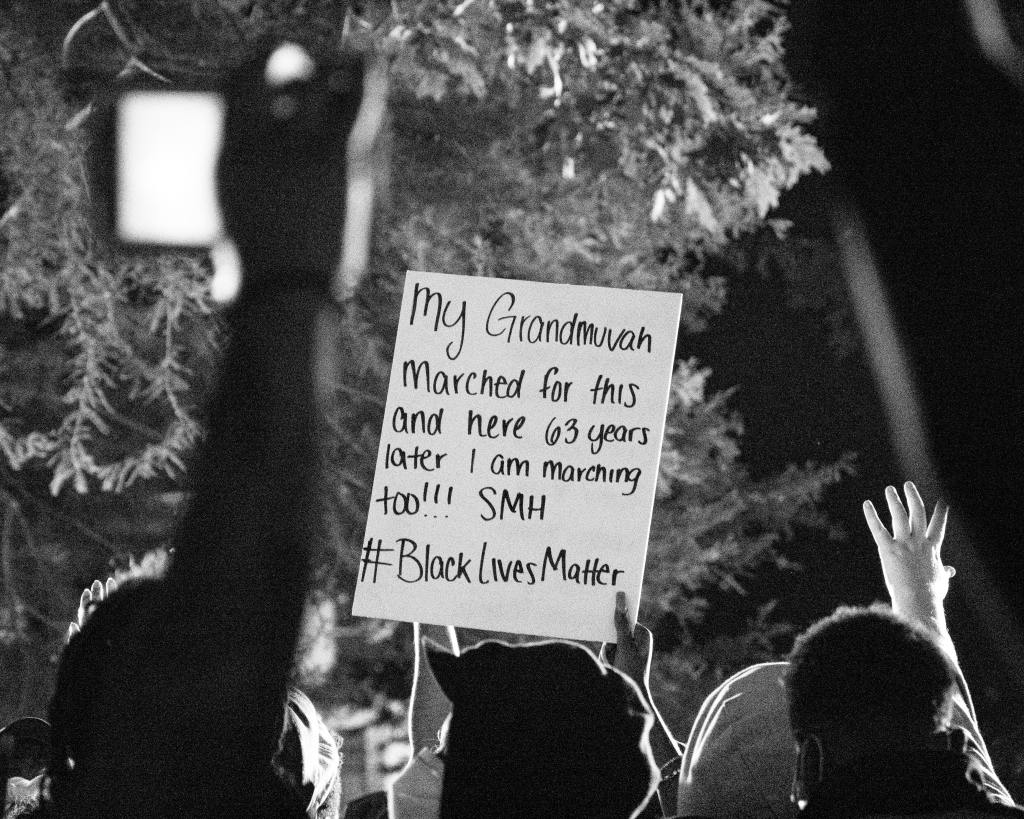
It is chilling to say the least, that our ancestors fought facism before, winning with far fewer resources than what we have now – and “we know that history records the achievements of empires and imperial civilization more than it does the humanizing and civilizing contributions of emancipation movements” (Gopal, 2019: 27). What makes history interesting to me is the diversity of characters, pertinent to the story of this country. Whether we’re talking Indians during Votes for Women, Afro-Romans on Hadrians Wall or the life and times of role models like WW2
codebreaker Alan Turing, part of our national story and his sexuality is honestly the least interesting thing about him.
To fight police without thought of consequence is reserved to privileged straight white men. When the Suffragetes did it, there were consequences. When people of colour have done it there have been consequences (esp. Black people). Breonna Taylor was killed whilst she slept. Emmett Till was considered a threat a fourteen years old. 184 Black and minority ethnic people have died in police custody since 1990 (Inquest). The only people in society who have the gall to take on police without thought of consequence is able-bodied, white, cisgendered, straight men. Why? You only have to look at the British history books and how they are written, in their image.
When the worst war criminals in human history are white men glorified as heroes (i.e Churchill), is it any surprise white male privilege ran riot when those fascists violently retaliated against the Black Lives Matter movement?
Works of Note
Fryer, P. (1988). Black People in the British Empire. London: Pluto.
Gopal, P. (2019) Insurgent Empire: Anticolonial Resistance and British Dissent. London: Verso.
Share this:


“Things you need to know about criminology”: A student perspective – Bonnie Middleton (2017-2020)
We are all living in very strange times, not sure when life will return to normal...but if you're thinking about studying criminology, here is some advice from those best placed to know!

The most important module to my understanding of criminology is: All of them! Every module contributes to your understanding of Criminology and all are different and enjoyable. Personally, my favourite module was Violence: From Domestic to Institutional in Year 3; this module ties together everything you know about Criminology; the reasons why we are subjective as criminologists and our ability to look beyond the scope of what we know.

The academic criminology book you must read:
Outsiders: Studies in the sociology of deviance (1963) by Howard Becker. Albeit a dated book, its ideas are relevant and relate to many criminological such as; how and why criminals are labelled and stigmatised; why are the youth demonised; why people reject the norms and values of society and become criminals in doing so.

The academic journal article you must read:
This is a hard one. Articles are great for discovering new ideas and methodologically testing theories. I would recommend reading: Arrigo, J. (2004). A Utilitarian Argument Against Torture, Interrogation of Terrorists. Science and Engineering Ethics. 10(3), pp. 543-572. This article poses many questions for a criminologist which enlightens you to think subjectively and challenge your own views; which is what Criminology is all about. From reading this article you will learn to think critically when faced with a challenging dilemma; the rights of a terrorist and how can the law can be tailored to fit the crime.

The criminology documentary you must watch:
Where do I begin? Louis Theroux and Stacey Dooley are both great journalists and documentary makers. If I had to pick one, I would recommend watching the BBC’s documentary on Grenfell If you watch this documentary you must consider; the government’s response; who is accountable; why are the residents of Grenfell still in temporary accommodation. These are the sorts of questions you should be asking as someone studying Criminology.

The most important criminologist you must read:
Familiarise yourself with the ideas of Lombroso, this will aid your understanding on how criminological theory and ideas have developed overtime through biological, psychological and sociological standpoints.

Something criminological that fascinates me:
Domestic abuse. I had done my dissertation on this as I have a great interest in male dominance and power over women, especially in intimate relationships. Gender plays a key role in this which when examined in depth, will change your view on gender paradigms.

The most surprising thing I know about criminology is: Criminality was believed by Lombroso to be inherited and that criminals possessed physical defects, criminality would be measured by the size and shape of particular body parts; this was later discredited. I can remember learning this in first year and it fascinated me.

The most important thing I've learnt from studying criminology is:
To not judge a book by its cover and to not take everything at face value. Do not be afraid to challenge other’s standpoints and beliefs. Thinking critically is the most important skill to have, search deeper into issues and apply your own thoughts and experiences.

The most pressing criminological problem facing society is:
Mass incarceration and reoffending rates. The UK is yet to move away from the ‘tough on crime’ approach favouring law and order and punishment. The penal system needs to be reformed to ensure offenders are rehabilitated to break the cycle of criminality; definitely educate yourself on political party’s manifesto’s and what they say about crime and justice before voting.

When family and friends ask, I tell them criminology is: I tell family and friends that criminology is such a broad field of study; we look at law, psychology, science, sociology, politics, penal systems, criminal justice organisations, media and much more. From this, you attain the ability to think critically and reflect, it can help you in many situations not just criminological issues. It is an incredibly insightful and enlightening field to study; it opens up many opportunities.
Share this:


Time to hear from our students

As part of their commitment to provide an inclusive space to explore a diversity of subjects, from a diverse range of standpoints, the Thoughts from the Criminology team have decided to introduce a new initiative.
From tomorrow (Sunday 21 June) all weekend posts will come from our students. We know that all of our students have plenty to say, they are smart, articulate and have both academic and experiential knowledge on which to draw. We know our readers will be as impressed as we are, by their passion and their criminological imagination.
Over to you, Criminology Students!

 Thoughts from the criminology team