
Home » Criminology (Page 34)
Category Archives: Criminology

Walter Tull has become a token for the Black history of sports, we can do more
After the murder of George Floyd in May 2020, Sky Sports did a segment on racism, using testimony from veteran West Indies cricketer Michael Holding and former-England women’s cricketer Ebony Rainford-Brent. Whilst the story of racism and West Indies cricket is known to me through films like Fire in Babylon, the inclusion of Brent, showed me how little media attention women’s sports receives, particularly cricket. This is still a man’s world, even when men and women have been victims of the same pandemic of racism.
When I look at the history of sports in England, the inclusion of women is presented as a new phenomenon, despite a 1921 ban on women’s football by the FA in England that lasted decades. A ban on women’s football matches taking places on pitches owned by the Football Association. Institutional violence in sports in the 1920s. Furthermore, is there a Black women’s history here too? I have heard whisperings of an Emma Clarke of the 1890s who may be the first Black woman footballer. Interesting indeed.
Men’s football (and sports), also however, go back over a hundred years. Football has been the go-to for stories of racism in sports and the story of Walter Tull has almost become folk tale and a token symbol of racism in football for Black History Month campaigns up and down the country. Walter was born in Folkestone, Kent, in 1888 and went on to have a glowing career playing for both Tottenham Hotspurs and Northampton Town (Cobblers). Additionally, he was the first mixed-race officer of African heritage in the British Army. At Northampton in 1911, he would have
started under Herbert Chapman – “a manager sympathetic to the additional pressures faced by the few players of colour in the professional game” (Vasili, 2010: 102).
Whilst Walter Tull has been the token for examples of men of colour in team sports, historically, he by far wasn’t the only the Black or Brown player, in late Victorian early Edwardian Britain. Unknown to many, looking at how his story is told in popular consciousness, he was also an avid cricketer and was one of many men of colour that played during this time. One of the big fish of Victorian cricket was K. S Ranjitsinhji, “a thin-built Indian prince who used his willow bat and body to produce fleeting moments of wonder and lasting memories of beauty” (Vasili, 2010: 127).
Vasili also writes of English-speaking Caribbeans playing cricket in England. We must remember this contradicts populist memory of Caribbeans first coming to England in 1948. In early Edwardian Britain, there was a thriving population of Black middle-class doctors:
“Dr John Akindor played for an amateur club in London, as did Dr James Jackson Brown, for the London Hospital. The pioneer professional cricketer was St Vincent-born Charles Augustus Ollivierre, who arrived in England with the West Indies cricket team in 1900. […] According to Jeffrey Green in Black Edwardians, he holds the distinction of being the first African-Caribbean West Indies international to play county cricket”
(Vasili, 2010: 127)
With the existence of other Black and Brown sports players, with their accomplishments, I would argue the constant parading of Walter Tull is problematic. His story is an achievement in the face of adversity but it offends me that our schools do not all look past his story at other Black/Brown sports players in late Victorian/Edwardian Britain. We also know of a Manchurian James Peters, playing rugby for the England team in 1907 and 1908. This narrative in Britain goes as far as there was enough for them to make an argument, the constant focus on Tull is without merit:
“African-American racing cyclist Marshall Taylor beat British and continental opponents in 1902; South African boxer Andrew Jeptha won a world title in 1907; and ex-slave Bobby Dobbs fought in Britain 1898, returned in 1902 […]” (Vasili, 2010: 129).
While today we have Black boxing champions like Anthony Joshua, the legacy of Black pugilists goes back to the 18th century in Georgian Britain, where men like Bill Richmond would be enticed by Britain’s boxing culture, not before “he began his independent life in Britain serving as an apprenticed cabinet maker” (Olusoga, 2017: 98). It was later in life he starts his rivalry with Tom Cribb. In a sport that made the careers of Black activists such as Muhammad Ali, “not only did early pugilists fight without gloves, but practices outlawed in modern boxing, such as shoulder-charging […] were all regarded as legitimate tactics” (Williams, 2015: 63).
Now, in this time where many celebrate Black excellence, the common argument is there are not enough positive Black male role models in history for young Black boys today because Black British history is one enveloped by slavery and immigration. But the existence of Black sports players – those that came here and those that were born here – tell stories of free Blacks, ex-slaves and their descendants that are part of British history and succeeded, from football and rugby to athletics, cricket and cycling.

Positive Black role models for Black men today are there in British history books. Simply, they are needles in haystacks, on the outside of the frame as something “other” or “different – not seen as worthy of academic scholarship or interrogation. However, those interested only need to make the effort and look for it. We cannot be what we cannot see and my references also speak to a profession (History) that is dominated by (white) men and in its lack of diversity is an indictment on the industry at large.
Black men’s (hi)stories in sports go back 150 years. Yet, what about the Emma Clarke and Rainford-Brent characters of today, for young Black girls that want to see themselves? History is written by the conquerors, not the conquered, and the conquerors, even in sports, are almost always men.
Referencing
Olusoga, D (2017). Black and British. London: Pan Books.
Vasili, P (2010). Walter Tull, 1888 – 1918: Officer, Footballer. London: Raw Press.
Williams, L (2015). Richmond Unchained. London: Amberley.
Share this:


It’s Autumn, and my hometown is on fire. #BlackenAsiaWithLove
It’s Autumn, and my hometown is on fire. [Theme song: When You Gonna Learn, by Jamiroquai]
Jay Kay sang: “Yeah, yeah, have you heard the news today?”
Me: Yeah, yeah, my hometown is on fire.
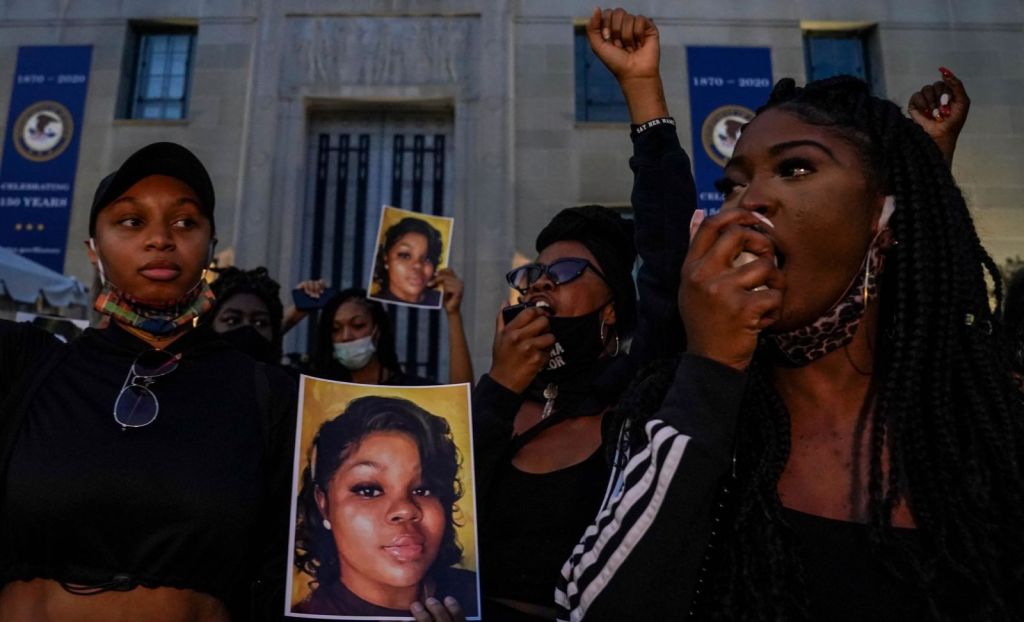
My hometown is on fire. In March, SWAT-armed officers served a warrant, and an EMS worker ended up dead. The deceased was Black and poor, and lived in the poor Black part of town. The officers adhered to the codes of the ruling caste. The media covered the death matter-of-factly. The tag line is: “Breonna Taylor was an innocent person in her own home.” So, by extension, all the other victims were not innocent, and therefore deserved to die. Only Jesus’ death warrants defense…and outrage – according to the actions of the folks who James Baldwin called those who believe themselves to be white. So, Breonna, George Floyd, all of them…these were justifiable killings? Yeah, yeah, casualties of the race war where white supremacy has always had the whip.
My hometown is on fire. The mayor put the city on lockdown days ahead of the grand jury’s announcement, not Corona. Trucks block traffic now; windows were boarded up days ago. All to announce that (only) one of the shooters would be indicted, and on the lower end of charges. The officer was initially denounced and fired, and (only) now charged with “wanton, reckless endangerment.” None of the charges relate to Breonna’s death, so that’s exactly what the courts won’t be able to address.
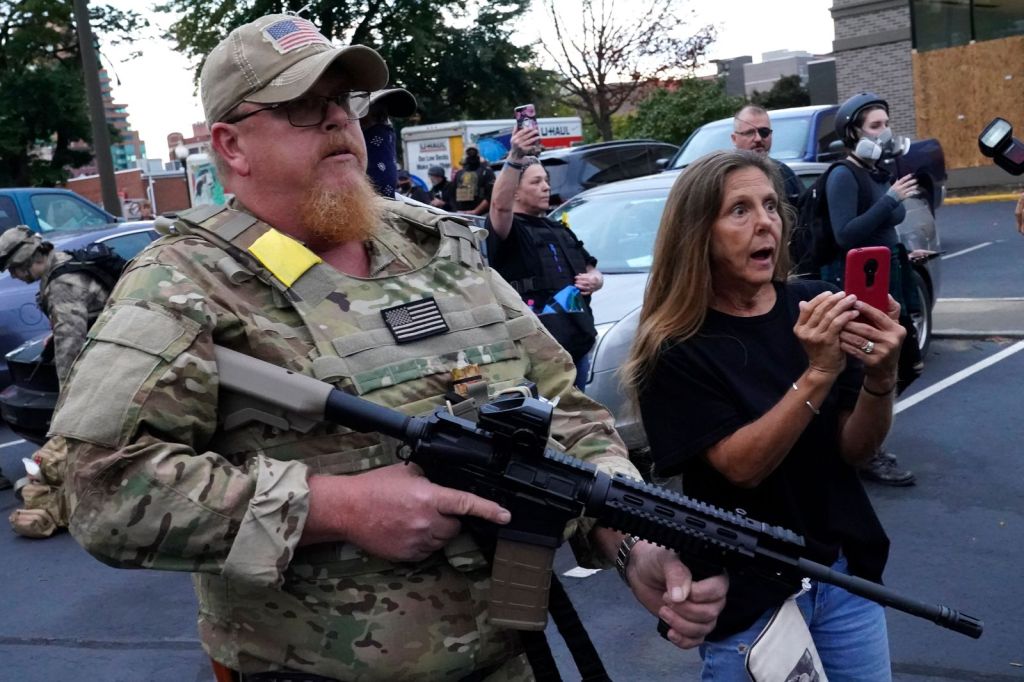
My hometown is on fire. Locals who believe themselves to be white char the memory of the victim, each victim, individually. For Breonna was not perfect, nor was Trayvon, nor George Floyd, nor Sandra Bland, nor countless others … all just human. Not even Amadou Diallo was a perfect-enough-victim for ‘those who believe themselves to be white’. Each family of each victim has had to fight the system individually, as if in a vacuum. Little attention to this incident was paid until the bodies mounted around the country. Everything changed when people of all races marched together, looters rioted and property was lost. Only then did “voters” take notice.
My hometown is on fire. The police have never been held accountable for such deaths. Apparently, the deceased liked bad boys, and was a victim of circumstance. White citizens – the so-called “voters” – resist seeing the systemic causes to these deaths. Just a few weeks ago, after MONTHS of national outrage and protest, the police reached a 12-million-dollar settlement with Breonna Taylor’s family. Every Kentucky tax payer will pay for our collective neglect. My hometown held it down, made the world say her name.
My hometown is on fire. Say her name. “Say her name,” is now a moniker for another fallen Black body. Where whites see no systemic problem, there can be no systemic solutions. Please, “stop it going on.”

Share this:


There is a Black history of thought and innovation that shows Afr-I-Can
I found as a fresher that ‘when life gives you lemons, make lemonade.’
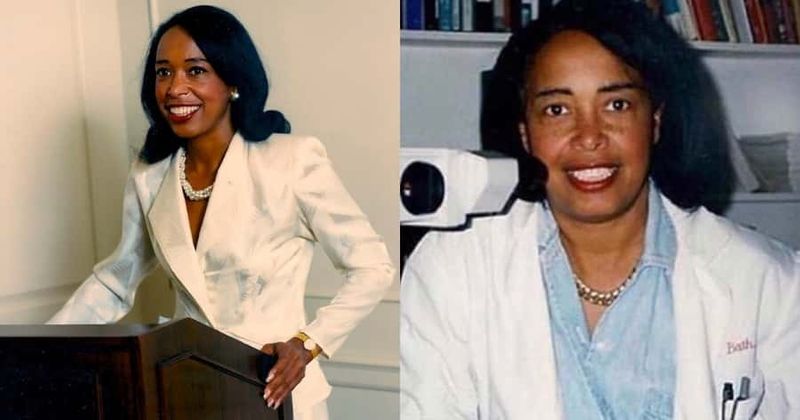
These same individuals, women that are smart and innovative are told by authority figures, including academics, that they are lazy and don’t apply themselves – are running businesses out of their halls. Black women sent white male astronauts into space in 1969; Black women also invented CCTV and laser cataract treatment. Knowing this, in the face of a double-figure Black awarding gap at UK universities (Barradale, 2020), I was not surprised to see they were running businesses out of their halls, with online shops – cake businesses, clothing alterations, and the big one – wigs and weave, and hair products.
Currently, I know a good many Black women turning lemons into lemonade. Through the Coronavirus pandemic there are Black entrepreneurs, like their white counterparts, trying to make a living, make money and get ahead. Yet, their white colleagues won’t be judged for it. However, the “motivation to create a business can spring from the most interesting of places, and for a variety of reasons” (Uviebinené, 2019: 157).

For the women I met when I was an undergraduate student and then as a member of university staff, it was a way to escape the colonising imperatives of whiteness within the institutional frameworks of Britain. Moreover, that despite historic stereotypes of laziness still being on the ascent for Black people, Black women “are achieving additional qualifications and gaining work experience” (ibid). The students I knew were driven and inspiring, graduating and then going on to run businesses, using Instagram and social media as a tool for economic prosperity.
Seeing many Black women in business it looks incredibly strenusous, as systemic misogynoir permeates all of society – a form of discrimination specific to Black women where race and gender both play roles of bias (Bailey, 2010).
The concept of Black successes of both women and men in a society that is institutionally racist is an achievement of monumental proportions, as neoliberalism runs rampant. Bhopal (2019) argues that “within a neoliberal context, policy making has failed in its attempts to champion inclusion and social justice, and in doing so has further marginalised the positions of black and minority ethnic groups.” She discusses that policy making in its current form affirms the position of white people at the expense of those from various Black and Brown backgrounds, in a society where individuals are privileged for being white over those who are not.
White privilege exists and the fact there are successful Black female businesspeople shows the system designed to subjugate the Black race’s success and humanity has failed. In these still very white spaces, do the Black entrepreneurs that break the glass ceiling allow people up behind them, or do they rescind the ladder?
Do they put their money where their mouth is to help their people? Stormzy heads publishing house #MerkyBooks, priding itself on platforming Black authors. Additionally, he funds Black students to go to Cambridge every year. Do those “allowed” to enter Buckingham Palace to be named Member of the British Empire [MBE] see themselves as Black, or does the “acceptance” of the establishment allow them to forget where they came from? I wonder if money and fortune give some Black business-owners a blinkered mindset to concepts like community and togetherness.

Modern questions of success and business aside, let’s take a step back and reflect on the past. Black success in business or any other industry is not a new concept. Simply, it is treated as a new phenomenon within the colonial gaze of the white western world:
“When early European – let’s be generous (always stay gracious) – ‘adventurers’ arrived in West Africa they were astounded by the wealth, abundance and beauty of the land and the people. We know by 1300 AD the Yoruba people had built walled cities surrounded with farms. They had developed extensive trade and exchange networks … They bartered cloth and kola nuts for the goods they needed and desired. There was a lively exchange of ideas, arts and technology, with institutions such as the Islamic University in Timbuktu. By the fifteenth century, the Yoruba people had established the Oyo Empire, located in what is today western and north-central Nigeria.”
(Dabiri, 2019: 65)
Whilst the students I met as an undergrad and then as a staff member were anomalies in accordance to Eurocentric stereotypes of Africans, when you look into the depths of African history one will find that people of the continent are smart and hardworking and innovative and gracious and protective, and so much more, and always have been. In this history, we will begin to understand how Black British people today relate to themselves. This first begins with gaining “a clearer understanding” of other cultures “that is not warped through the biases of colonial documentation” (Dabiri, 2019: 36).
As seemingly corporations want to diversify their workforce and more Black and Brown people seek to go into business, this means having conversations of race and culture away from the proximity of whiteness. When businesses take an anti-racist approach to their everyday, including culture and history, they will see their income increased tenfold.
Referencing
Bailey, M. (2010). They aren’t talking about me… — the crunk feminist collection. Available from: http://www.crunkfeministcollective.com/2010/03/14/they-arent-talking-about-me/
Barradale, G. (2020). Revealed: New stats show how wide the black attainment gap is at your uni. Available from: https://thetab.com/uk/2020/06/17/revealed-new-stats-show-how-wide-the-black-attainment-gap-is-at-your-uni-162142
Bhopal, K. (2018) White Privilege: The Myth of a Post-Racial Society. Bristol: Policy Press.
Dabiri, E (2019). Don’t Touch My Hair. London: Allen Lane.
Uviebinené, E and Adegoke, Y (2019). Slay in Your Lane. London: 4th Estate
Share this:


Is fake news a crime?

Perhaps this entry needs to start with a declaration; there is no novelty in the term fake news. In fact, fake news is not a term but a description. Odd to start with something as obvious as this but given the boastful claims for those inventing the (non) terms is only logical to start with that. It is true that in news, the term that usually relates to deliberate dissemination of information, is propaganda. It aims at misinformation and as it is reproduced over and over it can even become part of indoctrination.
The 20th century introduced the world to speed. Mass consumption, marketing and two world wars that devastated countries and populations. In the century of speed, mass media and the availability of information became a reality. The world heard, on the radio first and on the television later, world leaders making statements in what seemed to be the spectacle of politics. Interestingly some countries, political parties and professionals realised the value of controlling news, managing information. The representation of positions became an integral part of modern politics. Information became a commodity and the management of the news became big business with social implications.
When we talk deliberate misinformation, we are probably reminded of the Third Reich and the “ministry of public enlightenment and propaganda”. Even now media analysts consider the Nuremberg Rally a clear example of media manipulation and deliberate misinformation. This however was only one of many ministries around the world set up for that purpose. In some countries even censorship laws and restrictions emanate from a relevant ministry or department. The protection of the public was the main justification even when the stories promoted were wrong or even fictitious.
The need to set up some standards on journalism became apparent and awards like the Pulitzer Prize became ways of awarding those who hold journalistic values high. National broadcasting corporations became the voice of their nation and many adopted the voice of neutrality. Post war the crimes of the Nazi regime became apparent and the work of the propaganda machine in contract demonstrated how easy it was to misinform whilst committing atrocities. The United Nations even took a resolution on the issue “Condemns all forms of propaganda, in whatsoever country conducted, which is either designed or likely to provoke or encourage any threat to the peace, breach of the peace, or act of aggression” General Assembly, November 3 1947.
Unfortunately, this resolution remains mostly a paper exercise as the ideological split of the founding members led to a war of attrition of who tells the truth and who is using propaganda. Since then mass media became part of everyday life and an inseparable part of modern living. News became evidence and programmes presented decisive information in the court of public opinion. Documentaries claimed honest realism and news programmes set the tone of political and social dialogue.
In 1988 Chomsky and Herman in Manufacturing Consent: the political economy of mass media, proclaim that propaganda is not the reserve of a totalitarian state but of all states in their attempt to maintain order imposed by the establishment. Under this guise misinformation is part of the mass media’s raison d’etre. It can partly explain why the UN resolutions were not followed up further. So far, we are considering the sociological dimensions of news and information. Nothing thus far is clearly criminological or making the case for criminalising the deliberate misinformation in the news. (interestingly, the deliberate misinformation of a consumer is a criminal offence, well established).
One can ask rhetorically if it is so bad to misinform, spread fake news and manipulate the news through a systematic propaganda process. We presume that most citizens can find a variety of forums to be informed and the internet has democratised media even further. The reality however is quite different. People rely on specific sources even when they go online, finding voices that speak to them. In some ways this kind of behaviour is expected. Nothing wrong with that, is there? Back in the 1990s a radio station in Rwanda was talking about cockroaches and snakes; this led into a modern-day genocide, a crime that the UN aimed to extinguish. In the early 2000s the western world went into war on reports and news about weapons of mass destruction that did not exist, leaving thousands dead and millions displaced. In the mid-2010s a series of populist politicians got into office making claims on news, fake news, utilising their propaganda machine against anyone who tried to take them to account. More recently people, having felt deceived by mainstream media, do not believe anything, even the pandemic. The difficulty in critically evaluating information is obvious but it is also obvious how destructive it can be. In short, yes fake news should be a crime, because they cause lives in so many ways. Question is: Can we differentiate the truth from the fake or is it too late?
Share this:


Standing under the stars with you. #BlackenAsiaWithLove
This is the moment I’ve waited for for so long.
For so long I’ve longed to be with YOU.
To be with you, to just be here, standing underneath the stars is like heaven and earth in one.
It feels like heaven on earth, so softly touching your skin.
Touching your skin, feeling your breath against my face, there is nobody like you.
I LIKE you… a lot.
This is the moment I’ve waited for for so long.
You and I underneath the stars.
Our lives must be as big as the universe for us to have crossed paths.
I can’t believe that I crossed paths with the YOU.
I want to cross your path every single day from now on.
From now on, I want to be with you.
This is the moment I’ve waited for for so long.
I have waited an eternity to see the stars with you.
To see the stars with you feels like the Earth, the Sun, the moon AND all the planets aligning.
The planets must be aligned to night as good as I’m feeling.
I’m feeling good, with every twinkle our lives become more crisscrossed and intertwined.
Crisscrossed and intertwined so much a mobile phone can’t capture this moment.
Please, be here now, I beg you.

Share this:

A grand day out
Have you noticed how the news is reported these days in respect of Covid-19? Gone are the individualised and personalised stories of the casualties of this awful virus. Gone are the stories of individual and collective heroism of ordinary, actually extraordinary, people. Gone is the mention of the R rate and the discussion around it. Gone are those pictures of the people that died. No longer the headline, Covid- 19 is reduced to the middle order and consists predominately of the number of cases and the number of deaths. We watch these figures rise on a daily basis and we hear discussion about local lockdowns and areas with high incidents. We hear confusing stories about lockdown and then no lock down and then lockdown or is it partial lockdown and where exactly does it apply? We hear about areas that have high incidents where no action is being taken, well not yet anyway. And companies that remain open despite outbreaks only to be forced to close, let’s be honest, because of media scrutiny. We hear more from Nicola Sturgeon the first minister of Scotland than we do from our own prime minister.
We are sucked into a world of tourism, safe corridors and safe countries, lists and the plight of the aviation industry. We hear tourists moaning about self-isolation (I constantly scream at the tv you made that choice you ****). We are sucked into the debacle around schools and qualifications and returning to school. And we are told by Boris that we should all go back to work, back to the office. We hear of tourists returning on flights having contracted Covid-19 and passengers not wearing masks on flights. At the same time, we are told by bosses in the aviation industry that the industry is doomed unless something is done about it, this self-isolation malarkey really isn’t good for business. Once again, I shout at the tv (I don’t suppose you’ll be getting on one of those cattle trucks in a hurry you ***). Do I sound angry, I guess I am?
When the virus first struck, whenever that was, we all probably didn’t take it that seriously, serious but you know, not that serious. Then there was the lockdown, now that was serious, and it hit home how serious it was. Then we watched the tv and that reinforced how serious it was and if you weren’t a little concerned for yourself, your friends and your loved ones then you really weren’t in touch with reality. And then the economic costs started to rack up and that became really serious. And then, the government decided that since the NHS hadn’t been overwhelmed it was now permissible to open things up. And then, the government decided that it would pass the responsibility for the management of Covid to local authorities. And somewhere along the line, the responsibility for ensuring my safety, and yours became that of business. As long as businesses could assure us that they were Covid safe then we could go back to work and go shopping and eat out. In fact, you could eat out for 50% less in some places aided by a government scheme. A scheme to get businesses back on their feet which of course involved packing people in. Just how Covid secure are these places, well you take your chance, but you can feel assured.
I decided to venture out with my wife to get ourselves a new mattress. The old one has had its day, we meet in the middle of the bed every night, whether we want to or not, the only solution, to try to sleep as close to the edge as you can and if possible somehow cling on. Time for a new mattress. I’m not sure about these new-fangled mattresses (you know, the ones that come in a box and then pop out never to be returned to the box) and so rather than shopping on line we went to a store. We entered the store, masked up as is required, to be greeted by an assistant who pointed to the hand sanitiser. “oh, that bottle doesn’t work”, she says, “try the other but you’ll have to hit it quite hard”. Oh well, at least she’s wearing a face shield and I notice the other assistants are doing the same, except that theirs are up, a bit like a visor really, as they hang about talking to each other. One saunters over to us and after a brief conversation leaves us to look at and try the mattresses. Now that sounds alright doesn’t it, except that not only was his face shield not down, he’d taken it off altogether and thrown it onto the bed. We kept our distance. So, the markings on the floor suggesting 2 metre distance and the hand sanitiser at the entrance and the issue of face shields to staff are all Covid compliant but in operation, not really. Still we had a grand day out and felt quite assured.
As we hear the clamour to get schools back up and running, we hear about the plight of the school children and as a consequence, the voices and concerns of the teachers are drowned out. As we hear the concerns of lecturers from their union, the lecturers themselves and even the medical profession, their voices are drowned out. The only thing that seems to matter now is the economy and business. Those that run it are not on the coal face and will not be putting themselves at risk, but they tell us how we must all do our bit and return to work. If you wonder how getting children back to school fits in, well parents caring for children at home are not in the office working.
I selected some passages from the government guidelines regarding Covid 19.
“The more people you have interactions with, the more chance the virus has to spread. Therefore, try to limit the number of people you see – especially over short periods of time”
“limit the number of different activities which you partake in succession to reduce the potential chain of transmission”
“group size should be limited to the minimum which allows the activity to take place”
Now isn’t that confusing. We must all get back to work and back to the offices and, yet the government’s own guidelines seem to suggest this should not happen unless absolutely necessary. How exactly does this fit with teaching and class sizes and the number of students that teachers interact with? The same applies to lecturers at university, of course they have the added problem that the students will have come from all over the country and then come together in a Covid -19 cauldron. Pack them all in but you can feel assured that schools and campuses are Covid safe (a bit like those planes returning from foreign climes).
I feel like I am in a socio-economic experiment. An experiment where I see the disadvantaged and weak in our society put at risk for the sake of business. Where the older generation are made to feel dispensable and unimportant. Where figures are manipulated to downplay the seriousness of the problem. Die on day 29 after infection and you won’t be included in the Covid statistics. I see an experiment where facts are bent, ignored, and a narrative that subjugates the truth to management and business ideals. It looks like I’m going to be shouting at the tv for a very long time and I must be honest I really don’t feel very assured.

Share this:


Is justice fair?

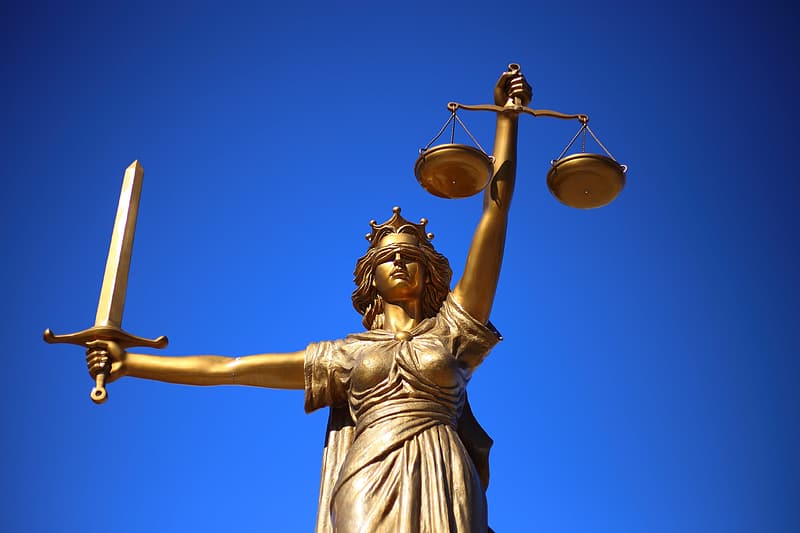
There is a representation of justice. A woman (lady justice) blindfolded holding the scales of justice in one hard and a sword in the other. This representation demonstrates a visualisation of the core principles of justice: blindfold for impartiality, the scales for weighting the evidence and the sword, the authority. The need for this representation is making the point that justice is fair. To all people justice is an equaliser that brings the balance back to everyday life. Those who break the natural order are faced with the consequences of the arbitration made by the system that assumes equality for all against the law.
The representation of justice must be convincing in order to be accepted by the public. The impartiality has to be demonstrable and the system forms a bond across all social strata. Well, at least in principle. There is a difference between representation and reality. This is something we learn from early on. As a kid, I remember a special ice-cream in a cup that had a little toy in the bottom of the cup. It looked so appealing, but the reality never met my expectations. Still, I continued to buy it, in anticipation that maybe the representation and the reality will meet. Like the ice cream, the justice system, has a beautiful packaging that makes it incredibly appealing.
Forged in the flames of the renaissance and the enlightenment, justice transformed from a convenient divinity to a philosophical ideal and a social need. It became a concept that reflected social changes and economic growth. Many of the principles of justice, like equality and fairness, carried forward from the classical era. Only at this time these concepts were enriched with philosophical arguments influenced by humanism. The age of exploration and knowledge added to the scientific rigour of forensic investigation and the procedures became standardised. Great minds conceptualised some of theoretical aspects and transferred them in everyday practice. Cesare Beccaria’s treatise On Crimes and Punishments demonstrated how humanist principles can affect procedure and sentencing.
This justice system was/is our social “ice cream”. Desirable and available to all citizens. A system beyond people and social status, able to call individuals to account. Unfortunately like my childhood “ice cream” equally disappointing, primarily because the reality is not even close to the representation. The principles of justice are all noble and inspiring. There is however something behind the systems that needs to be explored in order to understand why reality and representation are so far apart. The guiding principle of any justice system from inception to this day is not to restore the balance (as so beautifully demonstrated with the scales) but to maintain the established order or the social status quo.
On the occasions where societies broke down because of war or revolution, significant changes happened. Those allowed some reforms in different parts of the system allowing changes, sometimes even radical. Even at those situations the reforms were never too radical or too extensive. Regardless of the political system, tyrannical, dictatorial or democratic, the establishment is keen to maintain its authority over the people. For this to happen, the system must be biased in its inception about what we mean about justice. If the expectations of law and order are given a direction, then the entire system follows that direction and all changes are more cosmetic than fundamental. Quite possibly this explains what we recognise as miscarriages of justice as simply the inability of the system to be more tactful about its choices and arbitrations.
Therefore, tax avoidance and drug use take a different level of priority in the system. It is the same reason that people from different socioeconomic groups are seem differently, regardless of the system’s reassurance on equality and fairness. Maybe the biggest irony of all is that the representation of justice is a woman, in one of the most male dominated systems. From the senior judiciary to the heads of police and the prison systems, women are still highly underrepresented. Whilst the representation of ethnic minorities is even lower. Of course, even if it was to change in composition, that would be arguably a cosmetic change. Perhaps it is time as society to use consumer law and demand that our justice system is like it’s been advertised…fair.
Share this:

They RNC didn’t address me.
On the 2020 Republican National Convention (RNC)
They talked at length about their “God-given rights to bear arms,” yet were silent about what guns do to people like me. They have little to say about religious diversity, and are silent about the bountifully plenty o’ white-American churches rooted – deeply – in racism. Equally, and clearly by the very same measure, they’ve never stood for the legal rights of Blacks to defend ourselves from tyranny. The second amendment, they suggest by their consistent omissions, is for them – only! This is how they addressed me. Give them liberty or give them (my) death…as it were. They ignore the data confirming that their own kids are more likely to shoot them than any dangers posed by my kids.
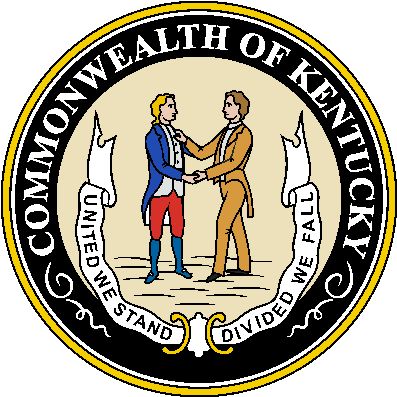
At the 2020 RNC, they talked at length about protecting their suburbs from thugs and rioters, yet fell well short of acknowledging the terror people like me have learned to live with. They talk like nobody that looks like me lives in the suburbs, and I know all too well that eerie ‘Get Out’ feeling when cruising through virtually any suburb in America. Do I belong here? Their glares and stares, and random checks let me know, #Karen and her klan don’t believe we belong together. The RNC didn’t address people like me who believe in my own state’s motto inscribed right there on both our seal and flag – “United we stand. Divided we fall.”* All I could hear from the RNC were warnings towards people like me: STFU, we got guns. Their gun cult was the only sort of solidarity served up, and so all the speakers touted that singular party line.
My party’s lines are numerous, as we’ve been casting a wider and wider net of those disenfranchised by the conservatives. Dems are ‘the others’. This year’s DNC motto seems to be this oft repeated moniker, ‘strength in diversity, unity in solidarity’. Both in rhetoric and actions they are more open to accountability for and by these so-called others. We can think, talk, walk and chew gum at the same time. The RNC didn’t address these Others, but they certainly portrayed ‘us others as a clear and present threat to their (suburban) way of life. For them, I am pariah.
Urban life.
As for cities, this year’s RNC speakers talked about rioters, but never ever spoke about what the riots were about. They touted a very uncomplicated view of rioting, and even had the nerve to claim the oppressed are crying victimhood (you know that, ‘shut up while I press my hoof on your neck’ sort of way). These conservative folks need a reading from both Sigmund Freud and the House of Labeija. Despite knowing what I know, I am still shocked at their void of empathy and disinterest in empathetic communication. They never addressed the peaceful protests, not least of which the #TakeAKnee campaign for which their leaders black-balled those peaceful protestors. You saw how the monster of that party responded to several prominent sports figures’ form of non-violent protest. I walked away from watching the RNC feeling shame for them, for I know their hearts couldn’t possibly be that cold. What comes around goes around.
*Yes, I know my state seal shows two white men shaking hands over the destinies of entire populations of Black and brown people, which we’ll save for another discussion. Rest assured, the RNC klan would say I’m using political correctness to silence them.
Share this:


Covid-Universities and what if
Over the past week or so there have been some mutterings about whether it is safe to open up universities. There is the advice from the scientific advisors (Universities get some Indie SAGE advice on reopening campuses in September) and some thoughts from academics ‘Why universities must move all teaching online this autumn’.
As we move closer to the start of term, so my dread of what is ahead comes into sharper focus. I try to imagine what it would be like and try to reassure myself that the risk assessments have been done and the reassurances that the universities are Covid safe are true rather than simply fantasy and wishful thinking.
In this safe environment I imagine that the number of students and staff on campuses will be carefully managed as it is with many large stores.
I imagine that all staff and students will be wearing face coverings. This is not for protection of themselves, as the use of coverings is a somewhat altruistic venture, I cover my face and protect you and you cover yours and protect me.
I imagine that all thoroughfares will be marked and monitored. Social distancing is important, and we need to be at least a metre apart.
I imagine that the classrooms will be laid out in such a way that social distancing can be maintained and that the classrooms will be well ventilated, even in the middle of winter. I imagine all the chairs and desks and any other equipment will be wiped down after each session.
I imagine that face to face teaching will be limited and interactions with multiple groups of students will be severely curtailed to ensure lecturers are not put at unnecessary risk. I imagine each class will comprise only a few students to minimise risk.
I imagine that anyone who is symptomatic will not attend a university and will after being tested self-isolate. I imagine that all the people they have been in contact with will do the same for a whole, boring, 14 days.
I imagine that the universities’ management will be at each university, leading from the front. They will be checking to ensure the safety of students and staff. They will be mixing with staff and students, receiving feedback and continuously monitoring. I imagine the safety of the students and staff is paramount.
And then I think, what if…
What if campuses are a free for all. Students can come and go as they please, there is no monitoring of volumes. Or what if there is, but it is impossible to enforce with limited staff to do so. And those staff tasked with this endeavour are at greater risk due to the proximity with large volumes of students.
What if people decide not to wear face coverings or having got into the building decide to take them off or several people are exempt for some reason or another. Altruism has gone out of the window. I’m a criminologist and I know that people break the rules for all sorts of reasons and the only certainty is that some people will break the rules.
What if social distancing becomes all too difficult. Many of us have experienced it in stores. A one-way system works for most, but a significant number just don’t abide by it, for whatever reason. People break rules.
What if the social distancing in classes is impossible, there just isn’t enough classes to maintain it with the volume of students on the course. What if ventilation is impossible, other than air conditioning, some classes are in the middle of buildings. Who will clean the chairs and equipment after each class? Go to a restaurant and tables and chairs are wiped down after each use so who will do it at a university?
What if lecturers have to teach multiple groups face to face as there are not enough staff to spread the load. Teaching in a classroom for two hours multiple times in a day with different groups each time must surely expose lecturers to much greater risk.
What if students are of the age group where they are more likely to be asymptomatic? How many that are infected might be at a university, spreading the virus around campus and around the locality. Even if they are symptomatic, how likely are they to self-isolate? Judging by the street parties and illegal raves reported on the news, there is a good chance that some will break the rules. Let’s be realistic, if you are only likely to suffer affects akin to a cold, why would you be that bothered about social distancing or self-isolation?
And finally, what if all managers avail themselves of the much-vaunted government advice, work from home if you can. Leadership from the rear, the bottom line is more important than the safety of others. We can of course dress this up in management psychobabble about what the students need.
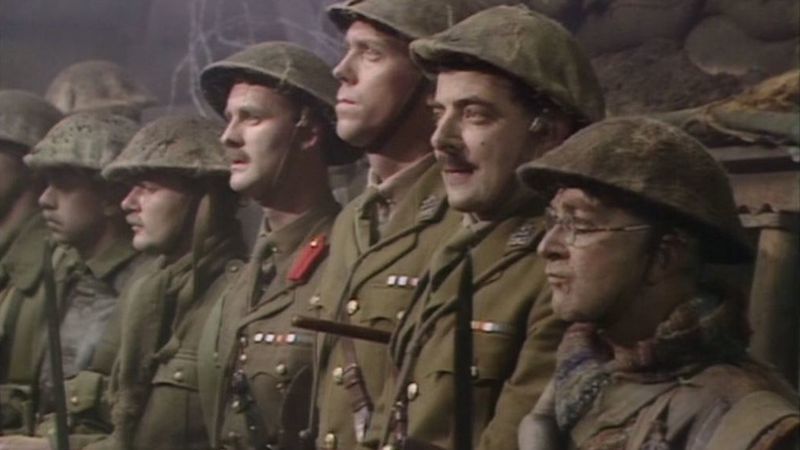
Never mind, ‘Tally ho and all of that sort of thing and over the top we go’*.
* For those of you that are lost at this point it might be worth a visit to the last episode of Blackadder Goes Forth.
Share this:


Imagine and what if…

‘Imagine’, a simple word and one that evokes memories of a song written by John Lennon and released in 1971. In that song we are asked to think about ideas that would perhaps lead us into notions of utopia, if only the ideas were true. Though, often what we see as a simple solution proves to be far from simple and in each solution, lies a paradox that gives lie to the fact that our solution was a solution at all. If we imagine a solution or a scenario we should also ask ourselves ‘what if’. ‘What if’ that were true, what would it look like and what would the consequences be? I like the idea of ‘what if’. ‘What if’ allows me to jump ahead, ‘what if’ allows me to see whether a solution would work, ‘what if’ allows me to play out various scenarios in my mind and ‘what if’ causes me more trouble than imagine. In imagine I can dream, in ‘what if’, I tear those dreams apart, dissecting each bit into practical reality. A reality that has its basis in science and my limited knowledge of human nature. And so, I’d like to begin my journey of ‘imagine’ and ‘what if’.
I suppose my thinking behind this short piece was to set the scene for a number of other pieces without trying to explain the background and rationale of each piece. ‘Imagine’ and ‘What if’ are the rationale. Perhaps the idea might provide a spark for other bloggers, I hope so. And so, I begin….
Imagine a chain of nice restaurants (not the greasy spoon type but perhaps not the Michelin star type either), each restaurant with its own chef. Imagine the work that goes into running a restaurant*, for those of you that watch MasterChef, ‘it isn’t hard to do’. Let’s start with the basics.
Well of course there is the food. Decent food, requires decent ingredients. So, sourcing the ingredients is important, a fair amount of research required to do this and then of course there is the logistics of purchasing the food at the right time in the right quantities and ensuring the quality at the same time.
Then there is the menu, what is put onto the menu is carefully planned around what ingredients are available, what the chef wants to produce and what the customer might want. If the theme of the restaurant is Vegetarian cuisine, there is little point in putting a chicken Balti on the menu. The actual menu needs to be produced, not some scrap of paper, it needs to be carefully planned, printed and delivered. The food then needs to be cooked and served. There is a lot of planning and careful consideration that goes into this. Dishes are tried and tried again until they are right and are aesthetically pleasing on the plate. The customers need to be looked after in the restaurant, shown to their tables, their orders taken, and drinks served.
Imagine how the restaurant is advertised, perhaps on Facebook, maybe its own website and imagine what the advertising would promise. Perhaps a congenial atmosphere, good food and fine service. Imagine you can book online. Imagine the amount of work that goes into building that website or Facebook page. Imagine the work that goes into servicing the bookings. Imagine the organisation of running a restaurant. So, what if…
The chef was responsible for:
- The design and implementation of the website or Facebook page
- The planning, sourcing and cooking of the food
- The design and printing of the menu
- The taking of the orders and the delivery of the food to the customers
- In fact, the chef was responsible for delivering just about everything.
What if…
The customers that came to the restaurant decided they don’t like Vegetarian cuisine and are more at home with burgers and chips, but somebody told them it was a good idea to try the restaurant, or maybe they didn’t have anything better to do on the day.
The restaurant chain managers decided that more customers were better for business and they crammed in as many as they could each day, whilst berating the chef for not servicing the website bookings in line with published timelines.
The restaurant managers decided that the chef could run it all on their own as it is better for the bottom line.
What if…
The feedback from customers is filled with complaints about the untimely service, the crammed conditions and the fact they don’t like Vegetarian food and couldn’t understand why burgers and chips weren’t on the menu as well.
The management scrutinise the restaurant Facebook page or website looking for inaccuracies or areas that don’t fit the restaurant chain’s USP and appear to have little interest in the food produced or the service given to customers.
The management introduce new policies to ‘ensure better customer service and a better customer experience’. The policies increase the workload for the chef.
Just imagine you are that chef ….
NB I apologise to all chefs out there. As with anything in life we have little idea of the amount of work something involves until we have to do it ourselves.

 Thoughts from the criminology team
