
Home » Criminology (Page 28)
Category Archives: Criminology

It’s different now… it happened to me
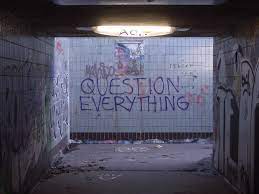
A few weeks ago, @paulaabowles shared an article on the Criminology Facebook page which posed the question of whether graffiti is art or crime. My response was art. And like all art, not all variations, interpretations or styles are for everyone. I know I can look at some graffiti and be quite taken aback at the brightness, boldness and creativity which shines through. I can also look at some and go ‘eugh’. However I have the same reactions to various classical and well-known pieces. My unrefined self does not get all the hype about a number of Picasso’s works (possibly all the ones I have seen). Nevertheless this is the beauty of art: it is down to individual taste.
So for me, I was fairly certain on my opinions and convictions towards graffiti as an art form, and as an example of the CJS further stigmatising and criminalisation young people’s behaviours: something I am certain we are all quite familiar with at this stage in our criminological journey. However those beliefs and informed views were put to the test over the Bank Holiday (BH) Weekend, and in all honesty I think I am still trying to get to grips with them. It is different now…. It happened to me.
Some context: as those of you who have read various blog posts from myself will no doubt remember, my partner runs a small kiosk near one of the Royal Parks in London. Often during the weekends and summer months, I provide an extra pair of hands to help clean and serve during the busier periods. And as a result of the pandemic, my partner finds themselves going from a team of 4 down to just them, and me when I am able to support: this was the case for the BH Weekend. Off we popped, down to London for a day of serving hotdogs, drinks and ice creams. However our day was thrown off course by some ‘ugly’ graffiti all over the front of the kiosk.
My partner was angry, and felt personally attacked (not really sure by who- but guess that’s besides the point). It is not the first time the kiosk has had graffiti on it, but it is the first time I have seen it in person and witnessed my partner’s response. Rather than starting our working day and opening up, we had to clean the graffiti off. My partner set to this: just over 3 hours later some of it has been removed, but so has some of the kiosk’s paint. It looks a mess. We are now at midday and we cannot afford to remain closed and keep cleaning. We have lost 3 hours of trading time to try and remove it, only to remove some of it and some of the kiosk’s paint. I am informed that we shall need to go to B&Q to try and find some graffiti remover: Capitalism wins again! But seeing my partner cleaning for 3 hours, losing the trading hours and for this end result: I can’t help but feel angry, frustrated and in want of some kind of justice. It’s different now… it happened to me.
But what realistically would justice be in the scenario? What do I actually want as a result? I have no idea. I asked my partner who said they just wanted them ‘not to do it’. It is private property, will my partner call the police? Nope: just nuisance annoying behaviour, but not much anyone can do about it. I feel less inclined to call it art. I like my partner’s use of ‘nuisance’ behaviour: it feels very accurate. I do not think my partner was targeted, I think it was available as a surface to be used for that individual or individuals to express themselves. But I am shaken in my previously held convictions. Shouldn’t something be done. We lost 3 hours of trading, the kiosk now needs to be repainted and we shall need to purchase some graffiti remover. All for some expression of ‘art’? Shouldn’t there be some kind of repercussion?
I am not too sure. I also know when this has happened before, and I have not been present to witness the impact it has on my partner and the kiosk I have been very nonchalant about it. ‘Oh dear, that’s frustrating’, ‘ah well, never mind’. But being there and seeing it: I view it differently. And this is something many of us come to grips with when considering hypothetical moral situations and larger ethical questions. We think we will act one way, but if it happened to us: it is quite possible our opinions, informed views and beliefs would change. I still think graffiti is art, but I am not so convinced in my previous assertation that it is not a crime…

Share this:


I smell flowers. #BlackenAsiaWithLove
There’s a pile of garbage I pass every day on the way to work. It stinks, and often I see folks hurling a bag of crap into the overflowing dumpster. Which usually rolls off and spills onto the walkway. It sucks! It’s one of the reasons we were wearing masks here long before Covit. Yet, I see this scene, and also see, the old women who make their rounds on bicycles throughout the day, going from dumpster to dumpster, separating and gathering the recyclables, re-usables, up-cyclables, and genuinely turning this trash into an income stream. To protect from the sun and elements, they wear coverings from head-to-toe: masks, gloves and those cone-shaped, bamboo/palm-leaf hats traditionally worn on farms.
Tucked in the corner about six meters away, I pass a woman who has a tea stand under a large umbrella, under a giant tree. Hanoi is full of such vibrant trees; at least three people can comfortably sit across the diameter. I am in awe each time I pass. Like the other ladies dotted around our lake, she sells snacks, cigarettes, and small glass cups of ice-cold green ice tea. You can see piles of used tea leaves on her end of the dumpster. I’ve noticed that mostly motorcycle taxi drivers take refuge there, monitoring the App for a nearby ping.
Later that night, I can hear and see a garbage truck come by and hoist the dumpster up and empty it into its bowels. Hanoi has many narrow streets and alleyways – narrower than these trucks – so luckily collection is often done at night. This certainly helps keep the traffic flow during busier times. Worse still, if not for these dumpsters folks would burn even more rubbish along the streets than is already customarily tolerated. In addition to these toxic fumes, consider the ritual imitation money that many local families burn twice monthly as an offering to their ancestors. Toxic fumes are another reason many ‘stay’ wearing a mask in Hanoi. I look at all the plastic dumped in the dumpster, and am relieved that it won’t be burned here. I see all this, too, as I walk by each day.
What’s more, I’ve been out late nights and seen plenty of these trucks totally teamed by women. This overflowing heap of hot, disgusting mess reminds me that I am in a society where women participate in everyday ways I hadn’t even ever dreamed. This heap will be gone soon, and replenished for all these women and their work. This makes me smile as I pass the heap. Using mindfulness, I can no longer smell the stench, it smells like flowers. Today, roses.

Late-night rubbish collection in Hanoi. All female team.
Share this:


The ‘Dangers’ of Travelling

This month, during the brief lull between the teaching and marking season, I had allocated myself a bit more free-time than usual. I have not been able to indulge in my hobby of travelling for a while, so instead of this, I have been watching travel related-television programmes with the hope that these will provide me with some kind of joy.
This attempt has been a partial success; an influx of comedy travel shows have worked wonders to uplift my spirits whilst simultaneously reminding me about the beauty of nature; animals, plants, sea, land…(and even humans).
Covid has taken over travel related news at the moment, but in ‘usual’ times it does not require much effort to come across travel documentaries or news reports that seem to encourage prejudice by depicting other countries and travelling as being strange or dangerous. I do worry that this type of coverage might discourage people from wanting to explore the world.
It is difficult to assess the extent to which the television influences our opinions, but when I was a bit younger and discussing my travel plans with others, sometimes I would be met with the following comments:
Response: I would love to travel but I can’t
Me: Why can’t you?
Response: It is dangerous!
Me: How do you know this?
Response: …It said so on the television
There are many genuine reasons that prevent people from travelling, such as, money, responsibilities, health, conflict, misogyny and racism etc. But I find the above reason to be such a shame.
I have encountered many myths over the years which seem to have been gained from watching the television. Here are some of my favorites:
Myth 1: If you see a [insert wild animal here], it will eat you alive
My experience: Take crocodiles for example, these are not as bad as they seem. Yes, arguably crocodiles are death machines but I have seen many in the wild and I am still alive.
Myth 2: The local ‘criminals’ are dangerous
My experience: On very rare occasions I have witnessed crime being committed whilst abroad. I once sat on a coach full of people who were attempting to smuggle cocaine to Brazil. I have also stumbled upon situations which the media described as ‘riots’ and I have also witnessed a few thefts. In these situations, the locals were not a danger to myself, but crime seemed to be a way of being able to afford to live or the result of the occasional angry outburst amongst crowds of protesters, motivated by frustrations with the state.
Myth 3: If you accept the hospitality of strangers you will be murdered in your sleep
My experience: The chances of this happening are very slim. Travelling tends to restore my faith in humanity, the people that I meet whilst travelling can be incredibly kind and helpful.
I found that whilst I was a student, I was able to travel to many places on relatively limited over-draft funds. I hope that the students that I teach are able to do the same, as travel really can broaden the mind. Although, maybe I am wrong for encouraging others to travel, as travelling also makes you very aware of the damage that has been caused to the world, and my own part with in it.
Share this:


Alex park: a space of criminological interest?
Almost every day I walk my puppy in the local park. Most days I go around 6-7am when there’s barely anyone around. He’s made a couple of dog friends and we often stop for a chat. It’s tranquil and calm. I’ll listen to an audio book or the birds. The dog mother of Hazel the Italian greyhound tells me which birds are calling.
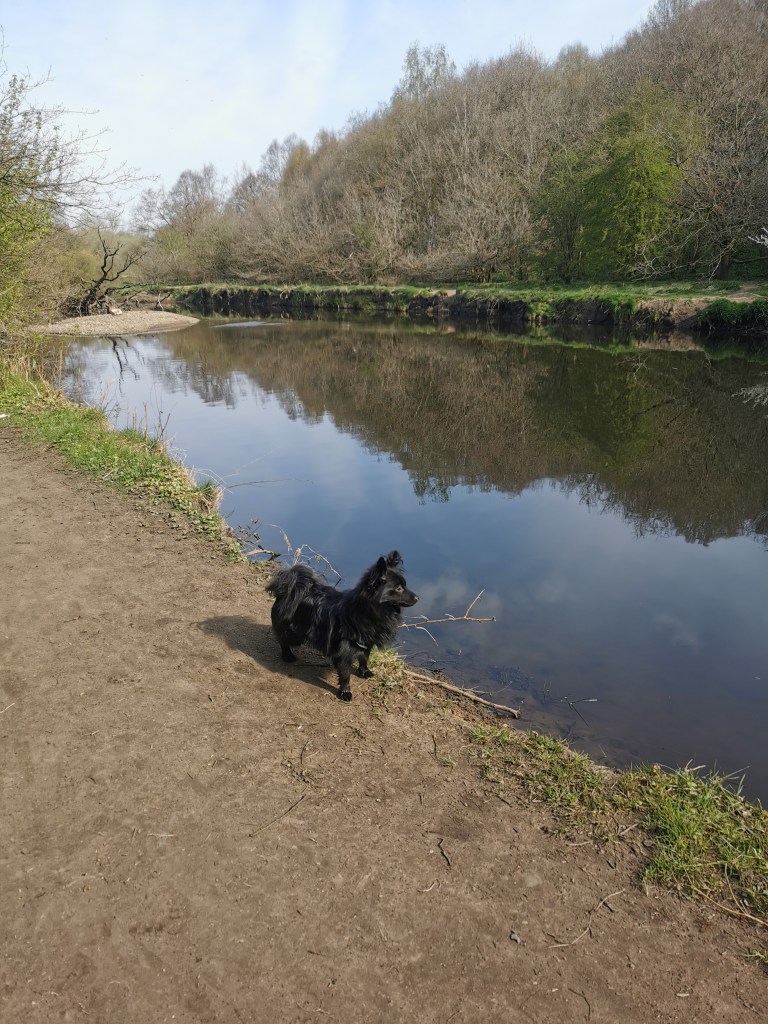
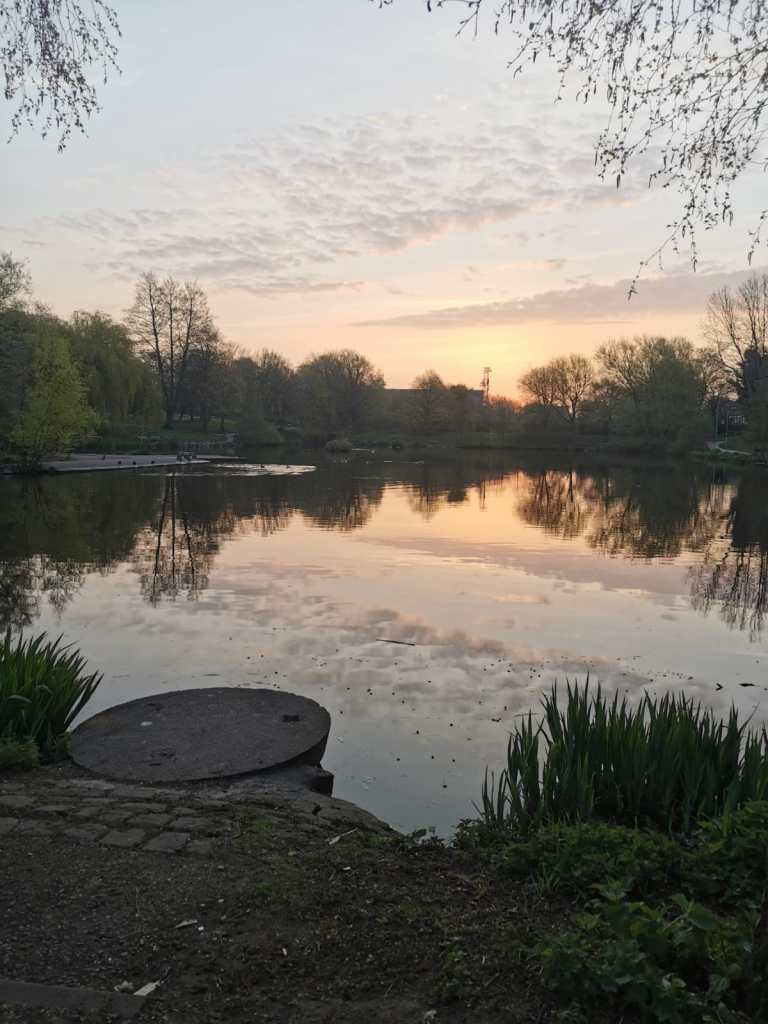
Usually in the evening we go to a huge field so he can quite literally run rings around me. A few weeks ago, we broke tradition and went to the local park in the late afternoon. I had spent the entire day in front of a screen and needed a break. We got to the park and it was different – it looked different, sounded different, and felt different. The sun was out so of course it was busier, and as you’d expect after school there were children playing on the skate park and the playground. There were about a dozen dogs in the dog park (it’s not as fancy as it sounds – just a patch of grass where the dogs dig holes and fetch sticks). Prince was a bit overwhelmed and so was I – at this point I hadn’t seen so many people in one place since pre-covid!
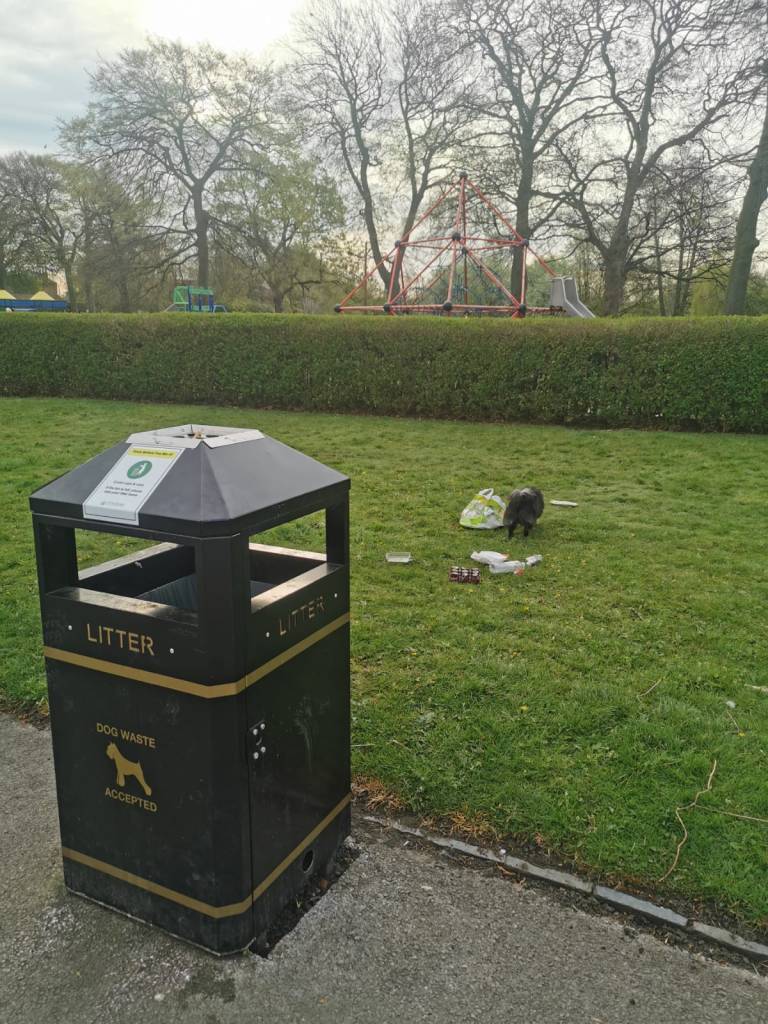
I soon learned that I couldn’t let Prince off his lead on a Monday because the mess from the weekend (even before the outdoor rule of six) would not yet be cleaned and he would eat everything. One Monday he walked an entire lap of the park with a croissant in his mouth that was bigger than his head. Another day he picked up half a joint of cooked meat. I noticed the signs of people having good (and not so good) times, particularly after sunny weekends. Sometimes when it’s warm there’s groups of men fishing, pulling all-nighters, smoking cannabis and drinking. Once, we followed a trail of blood around the path and although it could just as easily come from a child after a fall, the empty, broken alcohol bottles led me to imagine scenarios of violence.
During my visits to the park over the last few months I have seen evidence of alcohol and drug use, and possible violence. In May last year, there were reports of gunshots fired, leading to a man being arrested on suspicion of possessing a firearm. Quite worrying considering I live only a couple of hundred metres away. There have also been incidents involving youths wielding baseball bats and setting fires before attacking firefighters. I had a look at the crime data for the area but Greater Manchester Police have had some IT issues affecting data from 2019 onwards (that’s another story…), however older data showed a pattern of anti-social behavior, arson and a few violent offences as well. This is all very different to the place of tranquility I visit daily with the puppy.

The next day we returned for our early morning walk and I reflected upon the changes in the character of the park and the actors and events that create this. I started thinking about criminology and the environment around us, about how places can change so much throughout the day and across the seasons. I thought about situational crime prevention. My work brain truly switched on and I stopped hearing the birds and started seeing the CCTV and the lighting. I thought to myself that I would not go to the park when it gets dark but if I did, I would stay in the lit areas where the cameras could see me. I would stay away from the groups of fishermen because they were sure to be drunk and stoned by nightfall. I haven’t seen them behave in a threatening manner although I have overheard verbal threats. They are usually asleep when I walk by but as a single woman I’d think twice about walking past a group of lively, drunk men at night.
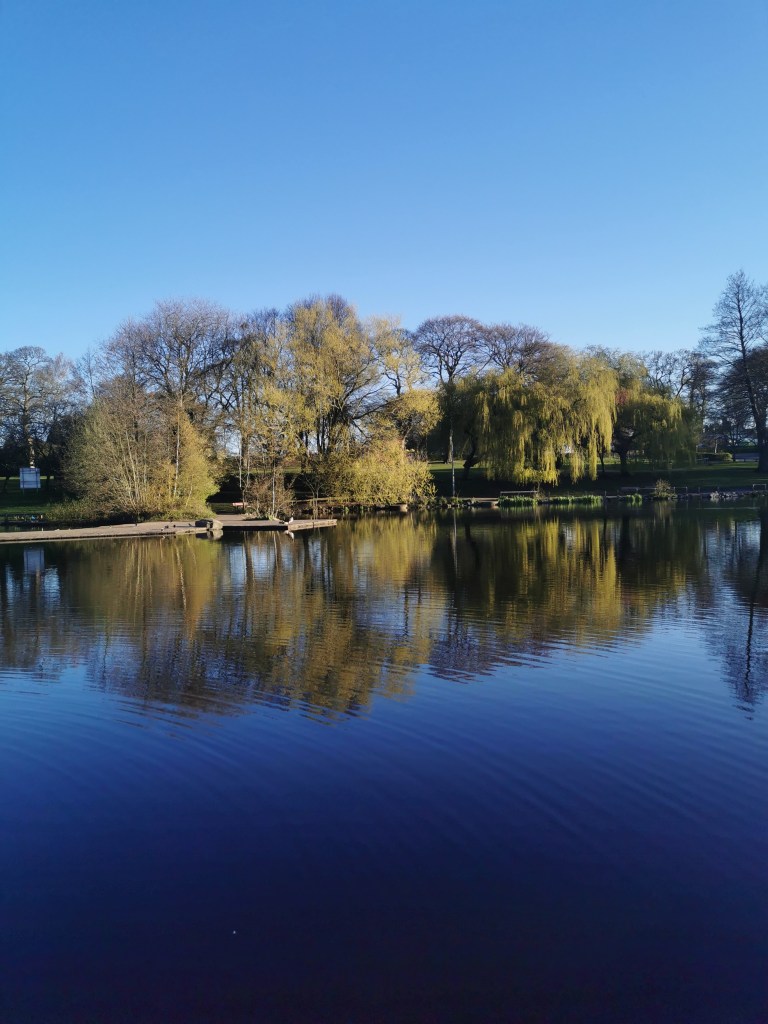
This local park is just one example based on my observations, but the question is, is it a criminogenic space? Or am I criminologist who sees things of criminological interest in everything, everywhere? Or a woman who constantly assesses personal safety? Luckily I haven’t had enough thinking time and space to ponder these questions otherwise this would have been a long read.
Share this:

The Chauvin verdict may not be the victory we think it is
At times like this I often hate to be the person to take what little hope people may have had away from them, however, I do not believe the Chauvin verdict is the victory many people think it is. I say people, but I really mean White people, who since the Murder of George Floyd are quite new to this. Seeing the outcry on social media from many of my White colleagues that want to be useful and be supportive, sometimes the best thing to do in times like these is to give us time to process. Black communities across the world are still collectively mourning. Now is the time, I would tell these institutions and people to give Black educators, employees and practitioners their time, in our collective grief and mourning. After the Murder of George Floyd last year, many of us Black educators and practitioners took that oppurtunity to start conversations about (anti)racism and even Whiteness. However, for those of us that do not want to be involved because of the trauma, Black people recieving messages from their White friends on this, even well-meaning messages, dredges up that trauma. That though Derek Chauvin recieved a guilty verdict, this is not about individuals and he is still to recieve his sentence, albeit being the first White police officer in the city of Minneapolis to be convicted of killing a Black person.
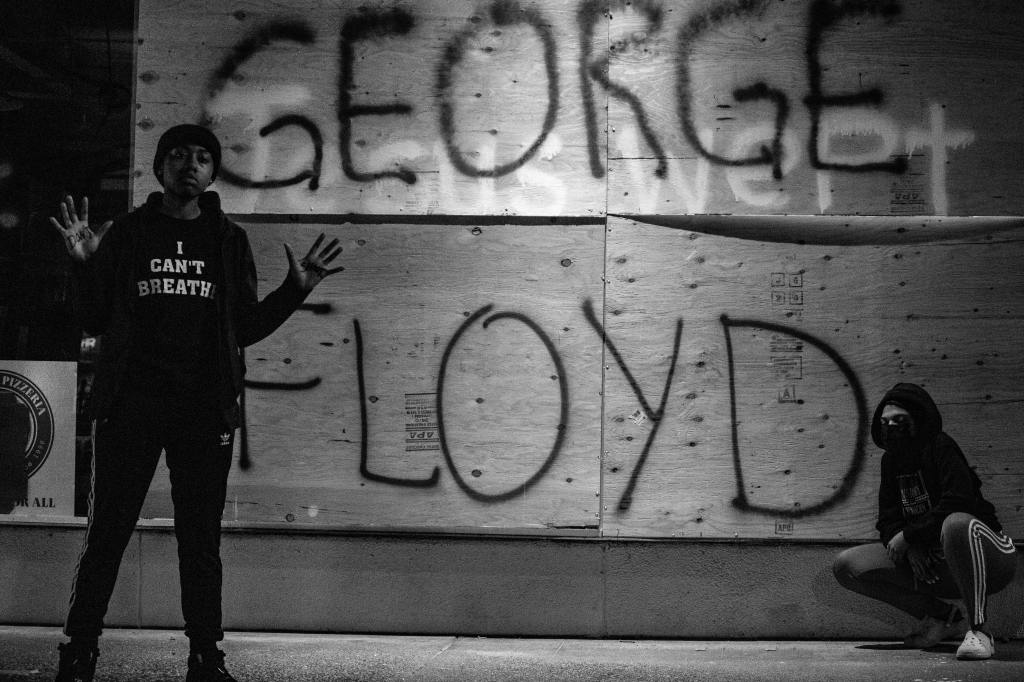
Under the rallying cry “I can’t breathe” following the 2020 Murder of George Floyd, many of us went to march in unison with our American colleagues. Northamptonshire Rights and Equality Council [NREC] organised a successful protest last summer where nearly a thousand people turned up. And similar demonstrations took place across the world, going on to be the largest anti-racist demonstration in history. However, nearly a year later, institutional commitments to anti-racism have withered in the wind, showing us how performative institutions are when it comes to pledges to social justice issues, very much so in the context race. I worry that the outcome of the Chauvin verdict might become a “contradiction-closing case”, reiterating a Facebook post by my NREC colleague Paul Crofts.
For me, a sentence that results in anything less than life behind bars is a failure of the United States’ criminal justice system. This might be the biggest American trial since OJ and “while landmark cases may appear to advance the cause of justice, opponents re-double their efforts and overall little or nothing changes; except … that the landmark case becomes a rhetorical weapon to be used against further claims in the future” (Gillborn, 2008). Here, critical race theorist David Gillborn is discussing “the idea of the contradiction-closing case” originally iterated by American critical race theorist Derrick Bell. When we see success enacted in landmark cases or even movements, it allows the state to show an image of a system that is fair and just, one that allows ‘business as usual’ to continue. Less than thirty minutes before the verdict, a sixteen-year-old Black girl called Makiyah Bryant was shot dead by police in Columbus, Ohio. She primarily called the police for help as she was reportedly being abused. In her murder, it pushes me to constantly revisit the violence against Black women and girls at the hands of police, as Kimberlé Crenshaw states:
“They have been killed in their living rooms, in their bedrooms, in their cars, they’ve been killed on the street, they’ve been killed in front of their parents and they’ve been killed in front of their children. They have been shot to death. They have been stomped to death. They have been suffocated to death. They have been manhandled to death. They have been tasered to death. They have been killed when they have called for help. They have been killed while they have been alone and they have been killed while they have been with others. They have been killed shopping while Black, driving while Black, having a mental disability while Black, having a domestic disturbance while Black. They have even been killed whilst being homeless while Black. They have been killed talking on the cellphone, laughing with friends, and making a U-Turn in front of the White House with an infant in the back seat of the car.”
Professor Kimberlé Crenshaw (TED, 2018)
Whilst Chauvin was found guilty, a vulnerable Black girl was murdered by the very people she called for help in a nearby state. Richard Delgado (1998) argues “contradiction-closing cases … allow business as usual to go on even more smoothly than before, because now we can point to the exceptional case and say, ‘See, our system is really fair and just. See what we just did for minorities or the poor’.” The Civil Rights Movement in its quest for Black liberation sits juxtaposed to what followed with the War on Drugs from the 1970s onwards. And whilst the Stephen Lawrence Inquiry was seemingly one of the high points of British race relations followed with the 2001 Race Relations Act, it is a constant fallback position in a Britain where racial inequalities have exasperated since. That despite Macpherson’s landmark report, nothing really has changed in British policing, where up until recently London Metropolitan Police Service had a chief that said it wasn’t helpful to label police as institutionally racist.
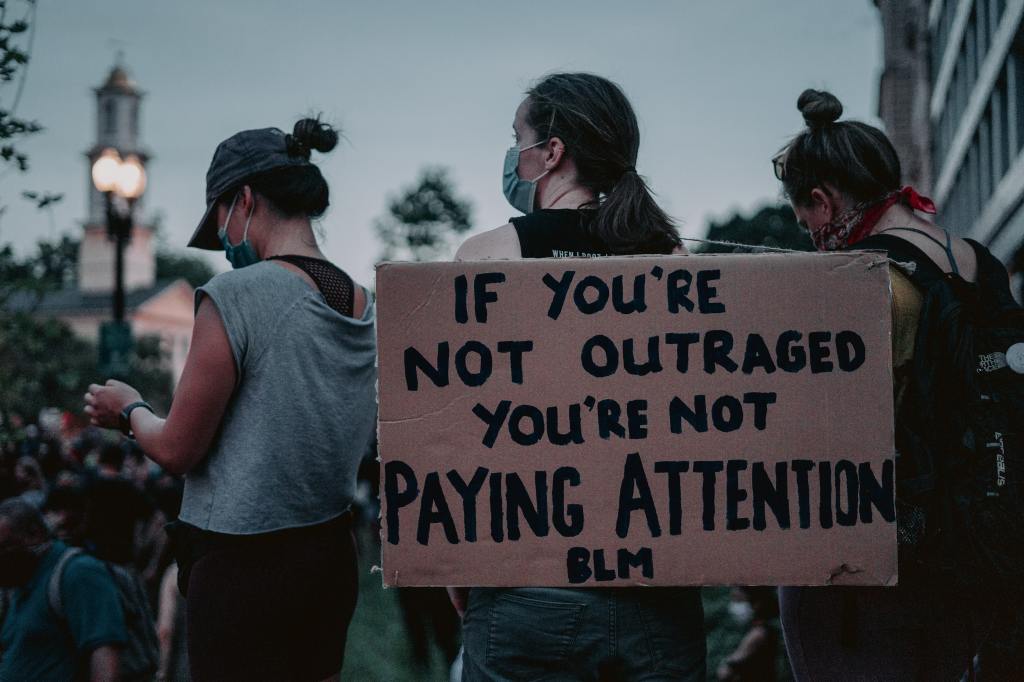
Scrolling the interweb after the ruling, it was telling to see the difference of opinion between my White friends and colleagues in comparison to my Black friends and colleagues. White people wrote and tweeted with more optimism, claiming to hope that this may be the beginning of something upward and forward-thinking. Black people on the other hand were more critical and did not believe for a second that this guilty verdict meant justice. Simply, this ruling meant accountability. Since the Murder of George Floyd, there have been numbers of conversations and discourses opened up on racism, but less so on White supremacy as a sociopolitical system (Mills, 2004). My White colleagues still thinking about individuals rather than systems/institutions simply shows where many of us still are, where this trial became about a “bad apple”, without any forethought to look at the system that continues enable others like him.
Even if Derek Chauvin gets life, I am struggling to be positive since it took the biggest anti-racist demonstration in the history of the human story to get a dead Black man the opportunity at police accountability. Call me cynical but forgive me for my inability to see the light in this story, where Derek Chauvin is the sacrificial lamb for White supremacy to continue unabted. Just as many claimed America was post-racial in 2008 with the inaugaration of Barack Obama into the highest office in the United States, the looming incarceration (I hope) of Derek Chauvin does not mean policing suddenly has become equal. Seeing the strew of posts on Facebook from White colleagues and friends on the trial, continues to show how White people are still centering their own emotions and really is indicative of the institutional Whitenesses in our institutions (White Spaces), where the centreing of White emotions in workspaces is still violence.
Derek Chauvin is one person amongst many that used their power to mercilessly execute a Black a person. In our critiques of institutional racism, we must go further and build our knowledge on institutional Whiteness, looking at White supremacy in all our structures as a sociopolitical system – from policing and prisons, to education and the third sector. If Derek Chauvin is “one bad apple”, why are we not looking at the poisoned tree that bore him?
Referencing
Delgado, Richard. (1998). Rodrigo’s Committee assignment: A sceptical look at judicial independence. Southern California Law Review, 72, 425-454.
Gillborn, David. (2008). Racism and education: Coincidence or conspiracy? London: Routledge.
Mills, Charles (2004) Racial Exploitation and the Wages of Whiteness. In: Yancy, George (ed). What White Looks Like: African American Philosophers on the Whiteness Question. London: Routledge.
TED (2018). The urgency of intersectionality | Kimberlé Crenshaw. YouTube [online]. Available.
White Spaces. Institutional Witnesses. White Spaces. Available.
Share this:

Chauvin’s Guilty Charges #BlackAsiaWithLove
Charge 1: Killing unintentionally while committing a felony.
Charge 2: Perpetrating an imminently dangerous act with no regard for human life.
Charge 3: Negligent and culpable of creating an unreasonable risk.
Guilty on all three charges.
Today, there’s some hope to speak of. If we go by the book, all the prosecution’s witnesses were correct. Former police officer Chauvin’s actions killed George Floyd. By extension, the other two officers/overseers are guilty, too, of negligence and gross disregard for life. They taunted and threatened onlookers when they weren’t helping Chauvin kneel on Floyd. Kneeling on a person’s neck and shoulders until they die is nowhere written in any police training manual. The jury agreed, and swiftly took Chauvin into custody . Yet, contrary to the testimonials of the police trainers who testified against Chauvin’s actions, this is exactly what policing has been and continues to be for Black people in America.
They approached Floyd as guilty and acted as if they were there to deliver justice. No officer rendered aid. Although several prosecution witnesses detailed how they are all trained in such due diligence, yet witnesses and videos confirm not a bit of aid was rendered. In fact, the overseers hindered a few passing-by off-duty professionals from intervening to save Floyd’s life, despite their persistent pleas. They acted as arbiters of death, like a cult. The officers all acted in character.
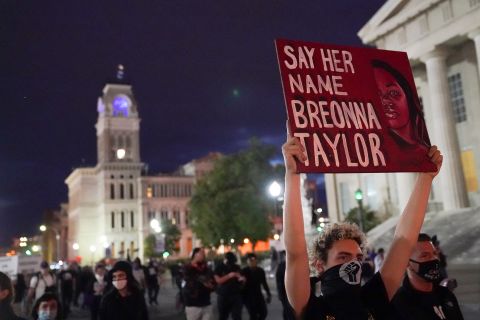
Teenager Darnella Frazier wept on the witness stand as she explained how she was drowning in guilt sinceshe’d recorded the video of Chauvin murdering Mr. Floyd. She couldn’t sleep because she deeply regrated not having done more to save him, and further worried for the lives many of her relatives – Black men like George Floyd, whom she felt were just as vulnerable. When recording the video, Ms. Frazier had her nine-year-old niece with her. “The ambulance had to push him off of him,” the child recounts on the witness stand. No one can un-see this incident.
History shows that her video is the most vital piece of evidence. We know there would not have even been a trial given the official blue line (lie). There would not have been such global outcry if Corona hadn’t given the world the time to watch. Plus, the pandemic itself is a dramatic reminder that “what was over there, is over here.” Indeed, we are all interconnected.
Nine minutes and twenty seconds of praying for time.
Since her video went viral last May, we’d seen footage of 8 minutes and 46 seconds of Chauvin shoving himself on top of ‘the suspect’. Now: During the trial, we got to see additional footage from police body-cameras and nearby surveillance, showing Chauvin on top of Mr. Floyd for nine minutes and twenty seconds. Through this, Dr. Martin Tobin, a pulmonary critical care physician, was able to walk the jury through each exact moment that Floyd uttered his last words, took his last breath, and pumped his last heartbeat. Using freeze-frames from Chauvin’s own body cam, Dr. Tobin showed when Mr. Floyd was “literally trying to breathe with his fingers and knuckles.” This was Mr. Floyd’s only way to try to free his remaining, functioning lung, he explained.
Nine minutes and twenty seconds. Could you breathe with three big, angry grown men kneeling on top of you, wrangling to restrain you, shouting and demeaning you, pressing all of their weight down against you?
Even after Mr. Floyd begged for his momma, even after the man was unresponsive, and even still minutes after Floyd had lost a pulse, officer Chauvin knelt on his neck and shoulders. Chauvin knelt on the man’s neck even after paramedics had arrived and requested he make way. They had to pull the officer off of Floyd’s neck. The police initially called Mr. Floyd’s death “a medical incident during police interaction.” Yes, dear George, “it’s hard to love, there’s so much to hate.” Today, at least, there’s some hope to speak of.

Share this:


#CriminologyBookClub: The Reluctant Fundamentalist

As you know from our regular #CriminologyBookClub entries a small group of us decided the best way to thrive in lockdown was to seek solace in reading and talking about books. Building on on what has quickly become standard practice, we’ve decided to continue with all eight bloggers contributing! Our tenth book was chosen by @amycortvriend As can be seen from below, this text gave us plenty to think and talk about.
This was an interesting choice. Having lived through 2001, it was interesting to reflect on events almost two decades ago. I’ve read quite a lot of material around the area, so the content of The Reluctant Fundamentalist didn’t really have any surprises. The use of just one voice to tell the story was interesting and left you wondering what (if anything) the other person in the conversation was saying. I found the sex scenes with Erica rather disturbing, primarily recognising that this was a vulnerable women, regardless of Changez’ motivations. Overall an interesting read, with many unanswered questions left hanging. I know I’ve filled in the blanks, but equally I recognise that other members of the criminology book club may have very different answers….
@paulaabowles
Set in a Lahore café it is easy to imagine the scene and the changing scenery as day turns to night and a one-sided conversation takes place between the narrator and a stranger. In a story of the clash of two cultures and ideologies, the protagonist explains how he at first embraces the ‘American Dream’, soaking up the capitalist vision and the pathway to riches and success only to turn against these ideas as a result of some inner turmoil that he cannot fully explain. For the reader the explanation may become somewhat clearer as each page is turned but still you are left with the question, what is the purpose of this conversation? All becomes clear at the end or does it? A cleverly written plot that captivates from the start. The storyline takes the reader on a journey that is carefully narrated and beautifully descriptive. I really enjoyed the book and it took me back to some of the academic work around terrorism and fundamentalism. A good read that certainly makes you ponder some western values.
@5teveh
When I think back to The Reluctant Fundamentalist, I remember being swept up in the unique style of writing, the timely and thought-provoking themes and the somewhat questionable characters. I struggled to put it down and I think it navigates some themes well (I’ll be careful of spoilers). However, once I had finished the book I was left with a crucial question: ‘What is the ending?’. I struggled with the ‘love’ relationship depicted, even more so upon reflection. And was rooting for a love interest between the protagonist and his boss, Jim, but that was not to be. All in all, I could not put the book down and thoroughly enjoyed it, however as always when I take time for critical reflection: things become a little unstuck. However, excellent choice @amycortvriend!
@jesjames50
The book mostly consists of a person telling his life-story in a restaurant. For me, the storyteller’s life experiences were at times very sad, and when reflecting on scenes involving the women who he loved…maybe even a little strange. The book includes plenty of themes that are relevant to the field of criminology so I think it’s a book that criminology students would find interesting. I was intrigued by this book as I wanted to know more about the main character’s story, I also wanted to know why he was bothering to tell his story to a stranger in such detail in the first place. Overall, I thought the book was good, despite ambiguous ending!
@haleysread
I did not enjoy this book. I really struggled to get past the style in which it was written which I found at times irritating and at others uncomfortable. The descriptions of the narrator’s ‘relationship’ with Erica were particularly difficult to read. There were too many things left unknown to the reader which made it difficult to feel sympathetic to any of the characters involved and the ambiguous ending was more frustrating than intriguing.
@saffrongarside
The Reluctant Fundamentalist, is a novel that we as a society should read. This novel will not give you a manual on how to treat people, but it will hopefully get you to reflect on the implicit ignorance of society and the violence that is legitimised in the name of politics.
Although the backdrop of the novel is set during the 9/11 terror attacks, Mohsin Hamid, does not address the clichés of terrorism, or the morals of individuals. The focus of the novel rests on the problematic treatment and labels that society pushes onto ‘suspect’ communities, and the power that Western society holds over the rest of the world.
The main character of the story Changez, is not necessarily a likeable or loveable character, he is human, he is flawed he holds the qualities that all humans possess. But being a Pakistani national that is living in the U.S at such a volatile time, creates an atmosphere of angst that is exclusive to him and people that look like him. Throughout the novel I constantly wanted him to comply with the ideals of Western society so that he could fit in to win and be Othered less.
As an individual that is deemed different than the ‘norm’ and part of a suspect community, it is difficult to ignore how hard it is to be completely accepted and given access into a society that only gives you part membership. The blurred boundaries between fiction and nonfiction of this novel, allows for uncomfortable reflection of my own tireless navigation through society and the problematic narratives that has been thrust upon others.
This book will not solve the problems of the world, but it will allow us to reflect on who we are, how we treat each other and how we can do better as humans.
@svr2727
The Reluctant Fundamentalist was definitely a fascinating read. It leaves an impression to you. There is something unsettling about the way the story progresses, and you are always on edge about what is likely to happen next. The story is a constant narration as a one-way conversation. At first the novelty of the conversation is interesting and engaging, but in parts it is stretching it, feeling a bit exaggerated. The protagonist is unclear if they are a hero or a villain, friend or foe and this sustains that suspense even further. We are left wondering as we trace different parts of his story through a seemingly random recollection of events. The writing is good and engaging leaving you wanting to know more, but for those who like the certainty of what happens this may not be for you. After I finished the book, I wasn’t sure if I liked it or not, mainly because I wasn’t sure of how I felt about the characters. One thing is for sure the subject matter and the pace of writing will leave you guessing.
@manosdaskalou
Having read another of the author’s novels, I was looking forward to The Reluctant Fundamentalist and it did not disappoint. It took me a chapter or two to get used to the writing style which was almost a one-sided conversation which made you constantly wonder who the other person is, why they are there and what they are saying. Spoiler alert: we never find out. I like that the ending is open, leaving the reader to draw their own conclusions. I also enjoyed the journey of the protagonist from his desperation of wanting to succeed in his pursuit of the American dream to the realisation, triggered by 9/11, that he never truly would fit in, nor does he want to anymore.
@amycortvriend
Share this:


April Showers: so many tears

What does April mean to you? April showers as the title would suggest, April Fools which I detest, or the beginning of winter’s rest? Today I am going to argue that April is the most criminogenic month of the year. No doubt, my colleagues and readers will disagree, but here goes….
What follows is discussion on three events which apart from their occurrence in the month of April are ostensibly unrelated. Nevertheless, scratch beneath the surface and you will see why they are so important to the development of my criminological understanding, forging the importance I place on social justice.
On 15 April 1912, RMS Titanic sank to the bottom of the sea, with more than 1,500 lost lives. We know the story reasonably well, even if just through film. Fewer people are aware that this tragedy led to inquiries on both sides of the Atlantic, as well, as Limitation of Liability Hearings. These acknowledged profound failings on the part of White Star and made recommendations primarily relating to lifeboats, staffing and structures of ships. Each of these were to be enshrined in law. Like many institutional inquiries these reports, thankfully digitised so anyone can read them, are very dry, neutral, inhumane documents. There is very little evidence of the human tragedy, instead there are questions and answers which focus on procedural and engineering matters. However, if you look carefully, there are glimpses of life at that time and criminological questions to be raised.
The table below is taken from the British Wreck Commissioners Inquiry Report and details both passengers and staff onboard RMS Titanic. This table allows us to do the maths, to see how many survived this ordeal. Here we can see the violence of social class, where the minority take precedence over the majority. For those on that ship and many others of that time, your experiences could only be mediated through a class based system. Yet when that ship went down, tragedy becomes the great equaliser.

On 15th April, 1989 fans did as they do (pandemics aside) every Saturday during the football season, they went to the game. On that sunny spring day, Liverpool Football Club were playing Nottingham Forest, both away from home and over 50,000 fans had travelled some distance to watch their team with family and friends. Tragically 96 of those fans died that day or shortly after. @anfieldbhoy has written a far more extensive piece on the Hillsborough Disaster and I don’t plan to revisit the details here. Nevertheless, as with RMS Titanic, questions were asked in relation to the loss of life and institutional or corporate failings which led to this tragedy. Currently it is not possible to access the Taylor Report due to ongoing investigation, but it makes for equally dry, neutral and inhuman, reading. It is hard to catch sight of 96 lives in pages dense with text, focused on answering questions that never quite focus on what survivors and families need. The Hillsborough Independent Panel [HIP] is far more focused on people as are the Inquests (also currently unavailable) which followed. Criminologically, HIP’s very independence takes it outside of powerful institutions. So whilst it can “speak truth to power” it has no ability to coerce answers from power or enforce change. For the survivors and family it brings some respite, some acknowledgement that what happened that day should have never have happened. However, for those individuals and wider society, there appears to be no semblance of justice, despite the passing of 32 years.

On 22 April 1993, Stephen Lawrence was murdered. He was the victim of a horrific, racially motivated, violent assault by a group of young white man. This much was known, immediately to his friend Duwayne Brooks, but was apparently not clear to the attending police officers. Instead, as became clear during the Stephen Lawrence Inquiry the police investigation was riddled with institutional racism from the outset. The Macpherson report (1999) tries extremely hard to keep focus on Stephen Lawrence as a human being, try to read the evidence given by Duwayne Brooks and Stephen’s parents without shedding a tear. However, much of the text is taken is taken up with procedural detail, arguments and denial. In 2012 two of the men who murdered Stephen Lawrence were found guilty and sentenced to be detained under Her Majesty’s pleasure (both were juveniles in 1993). Since 1999, when the report was published we’ve learnt even more about the police’s institutional racism and their continual attacks on Stephen’s family and friends designed to undermine and harm. So whilst institutions can be compelled to reflect upon their behaviour and coerced into recognising the need for change, for evolution, in reality this appears to be a surface activity. Criminologically, we recognise that Stephen was the victim of a brutal crime, some, but not all, of those that carried out the attack have been held accountable. Justice for Stephen Lawrence, albeit a long time coming, has been served to some degree. But what about his family? Traumatised by the loss of one of their own, a child who had been nurtured to adulthood, loved and respected, this is a family deserving of care and support. What about the institutions, the police, the government? It seems very much business as usual, despite the publication of Lammy (2017) and Williams (2018) which provide detailed accounts of the continual institutional racism within our society. Instead, we have the highly criticised Sewell Report (2021) which completely dismisses the very idea of institutional racism. I have not linked to this document, it is beneath contempt, but if you desperately want to read it, a simple google search will locate it.

In each of the cases above and many others, we know instinctively that something is fundamentally wrong. That what has happened has caused such great harm to individuals, families, communities, that it must surely be a crime. But a crime as we commonly understand it involves victim(s) and perpetrator(s). If the Classical School of Criminology is to be believed, it involves somebody making a deliberate choice to do harm to others to benefit ourselves. If there is a crime, somebody has to pay the price, whatever that may be in terms of punishment. We look to the institutions within our society; policing, the courts, the government for answers, but instead receive official inquiries that appear to explore everything but the important questions. As a society we do not seem keen to grapple with complexity, maybe it’s because we are frightened that our institutions will also turn against us?
The current government assures us that there will be an inquiry into their handling of the pandemic, that there will be some answers for the families of the 126,000 plus who have died due to Covid-19. They say this inquiry will come when the time is right, but right for who?
Maybe you can think of other reasons why April is a criminologically important month, or maybe you think there are other contenders? Either way, why not get in touch?
Share this:


Finding focus in office exile

I have now passed a year of being exiled from my office, separated from people for most of the time. A couple of weeks before the first lockdown I was working in another university and we had just a day or two notice to switch to online teaching. As a doctoral candidate I valued the flexibility of being able to work from home, in the office, and in overpriced coffee shops in Manchester’s Northern Quarter. The weather helped with the first lockdown. I would have virtual office working sessions with my colleagues in the criminology department in my garden. I thought I was coping but the reality was I was masking any fear, sadness and the effects of having no human contact. I was training two or three times per day, counting every calorie I ate. I lost a few pounds, got stronger, fitter and felt physically amazing.
We got some respite in the summer when lockdown restrictions were lessened. However, I lost a family member to Covid-19 and still felt unsure and anxious about going out so I didn’t make the most of it. I did have a couple of work sessions in my local library which was a welcome change of scenery. This was short lived as I currently live in Manchester and we have been in either lockdown or tier 3 restrictions for most of the last year. My saving grace was my gym. We had outdoor sessions, new members joined, and I got to see real people, albeit in socially distanced marked off squares of territory on the gym floor. Life was much better then. I left the house most days.
By December’s lockdown I was starting to struggle. With dark mornings and nights there would be days when I wouldn’t leave the front door. I went from training daily to training once or twice per week and some days I wouldn’t get any more than 2,000 steps in. For my, training is my anti-depressant. It keeps me sane, it keeps be focussed and it keeps me connected to a community of people who value it too. For me, this was a worrying sign.
Fast-forward to today, a year on from lockdown 1. I sit here in front of my laptop day in, day out, trying to concentrate, trying to find the perfect playlist to make me concentrate, taking nootropic supplements (legal, not the drugs), brain vitamins and high caffeine supplements to make me concentrate. I sit here researching symptoms and self-diagnosing ADHD. But really, I just need my office. I need an over-priced lemon and ginger tea, I need a commute, I need people, I need to get out of my living room. But I don’t need it at a cost of losing more lives to Covid-19 so I’ll sit in my living room and wait.
For now, as difficult as it is to focus, I manage. I just have to work harder than ever at it. So for all of our students who are also struggling, I will finish with some of my top tips but bear in mind we all learn differently so find what works for you.

Amy’s top study from home tips:
- Host virtual study sessions with colleagues. I have at least 2 sessions per week with a colleague. We start the session by saying hi and having some human interaction before stating our goals. We keep each other accountable by asking if our goals are achievable within the 2 hour frame and suggesting more specific goals. We then mute and work, coming back at the end of the 2 hours to hold one another accountable and share how we have done. I cannot emphasise enough how much this has helped me!
- Write a to do list each day and week with SMART goals. You’re better off having smaller goals that are achievable than bigger goals that are not
- Use the Pomodoro technique. Ordinarily this is 25 mins work followed by a 5 or 10 minute break. There are online tools and apps or you can set a timer. One of my supervisors recently suggested to me to reduce the working session to 15 minutes to account for my reduced concentration span. This is helping!
- Don’t have the same expectations on yourself as you ordinarily would. These are not ordinary times
- Work with your own mind. My brain works well early in the morning so sometimes I have my laptop open at 5.30am. I have friends that work late in the night. I also know I read well in the afternoon and I do my best thinking when I am on a solitary walk in nature
- Set yourself little goals with rewards. Currently, if I finish editing 5 pages I get an episode of Grey’s Anatomy or a cookie (bad idea) or a 10 minute browse on Instagram
- Lean on the resources available to you. At UoN our students are lucky to have a tonne of informative resources on Skills Hub (see the section on ‘How to Study’), our Learning Development team to help with academic skills, a mental health team who can help support mental wellbeing, and a whole host of other services. Ask for help and accept it when it is offered (this I need to work on)
- Listen to a focus playlist. My go to Spotify playlists are here and here
Share this:


Let it be Light

You may have probably heard of the title before and you may or may not be able to place it. It is a quote from the bible! It is profoundly creationist proclaiming the world created in days; from the 1st for the light and the 6th for the people and animals. A seemingly busy week for an almighty being who needed a day of rest afterwards. The contribution of organised religion to everyday life, the realisation that people need rest and recuperation from the labours of work. This however is not the reason I chose this dive into scriptures. I am not a theologian so I will not examine the religious content.
Instead there are two different reasons I have chosen to start with this quote; the first is the positive affirming message it conveys, the second is its immediacy. What we have here is light and brightness that is instant gratification. This message feels like a piece of chocolate melting in your mouth, releasing sweet sensations, as a flooding of smooth cocoa disintegrates, releasing its sensual solids. Therefore, the command on creating light resonates; we rejoice because unlike reality we find pleasure in immediate gratification.
Would we care that light was not created but emerged after the Big Bang and took billions of years to form in the way we now recognise it as our sun? Does it matter that progress is long and arduous and not immediate as the command suggests? Our sense of time dwarfs in the time required for events to happen. It is astonishing that we still try to comprehend the vastness of time through human lifetime. The command is also palatable because it happens without virtually any real effort. It does not represent the labours, pains of creation and development. In short, evolution is painful, long but here is presented as something immediate and effortless. In that a series of commands completing complex processes seems preferable to the reality of evolution. Maybe it is pertinent to point out that the command reveals the “majestic totalitarianism” of the divine against the great equalizer of nature and progression.
In life however, big creations cannot happen by command. “Let it be Baby!” I wonder how many mothers would favour this one, or in our line of work “let it be knowledge” how many will choose this option. This is when we realise that this pleasant message is shielding us from the reality of the process and the nature of reality itself. We may want things to happen immediately, but this is not necessarily the best option. In parenting, if you could more forward into having a baby, why not move further past the terrible twos or even further into the dreadful adolescent years of having your authority challenged. Essentially have a child created fully functioning and obedient to parental will. Maybe because this is not parenting. The stories that remain are those of growing pains; without growth there is no parenting. Let’s explore it in knowledge; can we find shortcuts in the way we learn a trade, an education, a professional identity? Maybe skipping the first parts on getting to know how to write in the appropriate conventions; perhaps we can skip on the tedious referencing process that only anally retentive individuals apparently enjoy. What if instead of books and hours of reading different texts we got laminated sheets with terms and conditions and whenever we embark on writing we are told step by step what we write. Because this will not be knowledge. The slow and arduous process has an exceptional trait within it; insight! After reading my books, making notes on my articles, going over my notes and trying to make sense of what it the point I am trying to make; in a moment after hours and hours of studying, suddenly and unexpectedly, the “penny drops”! This moment of insight is like a lightbulb moment…and that is light! A light, not by magic or immediate gratification, but the sustained understanding that comes from knowledge. It has been a difficult year for all of us but please remember that light comes from inside and to quote a great teacher Goethe, “more light”.

 Thoughts from the criminology team