
Home » Criminology (Page 2)
Category Archives: Criminology

25 years is but a drop in time!

If I was a Roman, I would be sitting in my comfortable triclinium eating sweet grapes and dictating my thoughts to a scribe. It was the Roman custom of celebrating a double-faced god that started European celebrations for a new year. It was meant to be a time of reflection, contemplation and future resolutions. It is under these sentiments that I shall be looking back over the year to make my final calculations. Luckily, I am not Roman, but I am mindful that over 2025 years have passed and many people, have tried to look back. Since I am not any of these people, I am going to look into the future instead.
In 25 years from now we shall be heading to the middle of the 21st century. A century that comes with great challenges. Since the start of the century there has been talk of economic bust. The banking crisis slowed down the economy and decreased real income for people. Then the expectation was that crime will rise as it did before; whilst the juries may still be out. the consensus is that this crime spree did not come…at least not as expected. People became angry and their anger was translated in changes on the political map, as many countries moved to the right.
Prediction 1: This political shift to the right in the next 25 years will intensify and increase the polarisation. As politics thrives in opposition, a new left will emerge to challenge the populist right. Their perspective will bring another focus on previous divisions such as class. Only on this occasion class could take a different perspective. The importance of this clash will define the second half of the 21st century when people will try to recalibrate human rights across the planet. Globalisation has brought unspeakable wealth to few people. The globalisation of citizenship will challenge this wealth and make demands on future gains.
As I write these notes my laptop is trying to predict what I will say and put a couple of words ahead of me. Unfortunately, most times I do not go with its suggestions. As I humanise my device, I feel sorry for its inability to offer me the right words and sometimes I use the word as to acknowledge its help but afterwards I delete it. My relationship with technology is arguably limited but I do wonder what will happen in 25 years from now. We have been talking about using AI for medical research, vaccines, space industry and even the environment. However currently the biggest concern is not AI research, but AI generated indecent images!
Prediction 2: Ai is becoming a platform that we hope will expand human knowledge at levels that we could have not previously anticipated. One of its limitations comes from us. Our biology cannot receive the volume of information created and there is no current interface that can sustain it. This ultimately will lead to a divide between people. Those who will be in favour of incorporating more technology into their lives and those who will ultimately reject it. The polarisation of politics could contribute to this divide as well. As AI will become more personal and intrusive the more the calls will be made to regulate. Under the current framework to fully regulate it seems rather impossible so it will lead to an outright rejection or a complete embrace. We have seen similar divides in the past during modernity; so, this is not a novel divide. What will make it more challenging now is the control it can hold into everyday life. It is difficult to predict what will be the long-term effects of this.
During the late 20th and early 21st centuries drug abuse and trafficking seemed to continue to scandalise the public and maintain attention as much as it did back in the 1970s and 80s. Drugs have been demonised and became the topic of media representation of countless moral panics. Its reach in the public is wide and its emotional effect rivals only that of child abuse. Is drugs abuse an issue we shall be considering in 25 years from now?
Prediction 3: People used substances as far back as we can record history. Therefore, there will be drugs in the future to the joy of all these people who like to get high! It is most likely that the focus will be on synthetic drugs that will be more focused on their effects and how they impact people. The production is likely to change with printers being able to develop new substances on a massive scale. These will create a new supply line among those who own technology to develop new synthetic forms and those who own the networks of supply. In previous times a takeover did happen so it is likely to happen again, unless these new drugs emerge under formal monopolies, like drug companies who will legalise their recreative use.
One of the biggest tensions in recent years is the possibility of another war. Several European politicians have already raised it pretending to be making predictions. Their statements however are clear signs of war preparation. The language is reminiscent of previous eras and the way society is responding to these seems that there is some fertile ground. Nationalism is the shelter of every failed politician who promises the world and delivers nothing. Whether a citizen in Europe (EU/UK) the US or elsewhere, they have likely to have been subjected to promises of gaining things, better days coming, making things great…. only to discover all these were empty vacant words. Nothing has been offered and, in most cases, working people have found that their real incomes have shrunk. This is when a charlatan will use nationalism to push people into hating other people as the solution to their problems.
Prediction 4: Unfortunately, wars seem to happen regularly in human history despite their destructive nature. We also forget that war has never stopped and elusive peace happens only in parts of the world when different interests converge. There is a combination of patriotism, national pride and rhetoric that makes people overlook how damaging war is. It is awfully blindsided not to recognise the harm war can do to them and to their own families. War is awful and destroys working people the most. In the 20th century nuclear armament led to peace hanging by a thread. This fear stupidly is being played down by fraudsters pretending to be politicians. Currently the talk about hybrid war or proxy war are used to sanitise current conflicts. The use of drones seems to have altered the methodology of war, and the big question for the next 25 years is, will there be someone who will press THAT button? I am not sure if that will be necessary because irrespective of the method, war leaves deep wounds behind.
In recent years the discussion about the weather have brought a more prevailing question. What about the environment? There is a recognised crisis that globally we seem unable to tackle, and many make already quite bleak predictions about it. Decades ago, Habermas was exploring the idea of “colonization of the lifeworld” purporting that systemic industrial agriculture will lead to environmental degradation. Now it seems that this form of farming, the greenhouse gasses and deforestation are becoming the contributing factors of global warming. The inaction or the lack of international coordination has led calls for immediate action. Groups that have been formed to pressure political indecision have been met with resistance and suspicion, but ultimately the problem remains.
Prediction 5: The world acts when confronted with something eminent. In the future some catastrophic events are likely to shape views and change attitudes. Unfortunately, the planet runs on celestial and not human time. When a prospective major event happens, no one can predict its extent or its impact. The approach by some super-rich to travel to another planet or develop something in space is merely laughable but it is also a clear demonstration why wealth cannot be in the hands of few oligarchs. Life existed before them and hopefully it will continue well beyond them. On the environment I am hopeful that people’s views will change so by the end of this century we will look at the practices of people like me and despair.
These are mere predictions of someone who sits in a chair having read the news of the day. They carry no weight and hold no substantive strength. There is a recognition that things will change at some level and we shall be asked to adapt to whatever new conditions we are faced with. In 25 years from now we will still be asking similar questions people asked 100 years ago. Whatever happens, however it happens, life always finds a way to continue.
Share this:


25 years has gone too fast…

When we began, criminology was a single programme, a bold idea with big ambitions. Over the years, that idea grew into a department, and today, into a vibrant academic community offering a diverse range of courses that reflect the complexity of justice and society.
Our commitment to innovation has shaped this journey. We introduced research placements, immersive trips, and fieldwork experiences, from the Museum of Justice in the early days to visits to the Supreme Court more recently. These experiences have given our students not just knowledge, but perspective connecting theory with practice in powerful ways.
We’ve developed a wide range of modules and resources for those who wish to study criminology, equipping them with the skills and knowledge to join the wider criminology family. Our aim has always been to prepare students for both professional careers and academic study, ensuring they can explore every facet of this dynamic discipline.
None of this would have been possible without colleagues who share a passion for teaching and learning. Together, we’ve engaged students with new ways of thinking and approaches—turning them into the colleagues of tomorrow. This is the heart of what we do: inspiring, challenging, and empowering future generations.
As we celebrate this milestone, we also look forward. Criminology is ever evolving, and so are we. Our commitment to innovation, inclusivity, and excellence remains as strong as ever. The next 25 years will bring new challenges and opportunities and I know we will meet them with the same passion and purpose that brought us here today.
Thank you to everyone colleagues, students, partners who has been part of this incredible journey. Here’s to the next chapter in advancing criminology education and research. Together, we will continue to make a difference.
Share this:

Festive Frights

The festive season is almost upon us, and for many of us this means a well-deserved break! As the calendar wraps up and the holidays beckon, why not give your criminological mind a holiday, too? It’s the perfect opportunity to let your imagination soar and dive headfirst into the thrilling world of paranormal fiction.
Taking a temporary step away from cold, hard facts allows us to explore narratives that defy easy explanation, using different parts of our investigative minds. This shift from reality to the realm of the supernatural can be a refreshing break and a wonderful way to recharge before heading into a new year.
This year, something spooky happened! The core mission of the Kids’ Criminology Club, which focuses on expanding knowledge, logic, deduction, and evidence, was temporarily suspended. For a one-off Halloween-esque special, the club transformed into the Kids Paranormal Club.
I am a senior lecturer in Law with a keen interest in the paranormal, and I took our young investigators on a journey into the inexplicable. Together, we explored theories such as the Stone Tape Theory and shared accounts of supernatural phenomena. Following our fascinating session, I challenged the kids to channel their inner storytellers and enter a paranormal story writing competition, with a strict limit of no more than 500 words. The results were chilling, creative, and certainly a departure from Criminology and the Law! All entries, including the winning entry, can be found below.
As you settle in for your holiday break, we hope you’ll find inspiration in these young authors’ terrifying tales. Whether you’re investigating a fictional haunting or simply enjoying a peaceful evening, remember to let your mind wander beyond the police tape and evidence markers. Enjoy the comfort and quiet, and maybe keep an ear out for any strange sounds in your own home…
And finally, while you’re enjoying the comfort and safety of the season and your well-earned break from reality, spare a thought for those who may be facing their own real-life terrors, or simply without the security, warmth, company and peace we often take for granted at Christmas time.
🏆 The Winning Stories
Here are those standout entries that captured our imaginations and sent shivers down our spines.
🥇 Winner: The Radio in Number 13 by Paisley G., age 10
9th October 1967 11:00 pm I have been prompted to start this journal because of an experience I have had in which I don’t feel safe, so I am creating this just in case. My first experience was at night. I was listening to the radio like I always do before bed, there was some show on, I wasn’t really listening; I never really listen, it was just something to do, I suppose. I’m sitting at my desk when I hear footsteps. I live alone and don’t have any pets, that’s when I realised the voices had stopped with a shocking realisation. I knew that the footsteps were coming from the radio. It sounded like heavy boots on stone. I live in a large house with a stone road leading up to the front door. There was a static noise and then the voices were back. I was unsettled but didn’t think much about it. My wife had died only a couple of weeks ago, and I had an odd feeling that they were connected somehow. She was a lovely woman,n and she used to always wear a pair of big black boots.
10th October 1967 11:00 pm Slept uneasy last night – I had a nagging feeling of not being alone. I went about my usual business as normal and had the same experience again: same time, same show, same footsteps.
11th October 1967 11:00 pm Uneasy sleeping again. In the morning, when I left my house, I saw my neighbour Lucy. She is usually a lovely old lady, but when I walked past he house, she ran outside and grabbed me by the hands, looked right into my eyes and said ‘Don’t do it! Don’t open the door! They’re coming!’ Then she ran back inside. It was unsettling, but again didn’t think much of it. The noises were different tonight, footsteps and again they stopped, and I thought the talking would start again, but no, not yet there was the sound of knocking on a door, then it cut back to the show.
12th October 1967 11:00 pm Decided to test it tonight I don’t know what made me do it, but I left the front door open, brought the radio down and sat on a chair by the door. The old lady’s words were ringing in my head, but I had a weird feeling of wanting to prove her wrong. I turned on the radio there was more knocking th-
3:41 am I woke up in my bed, confused about what happened. I ran downstairs to check the door, but it was closed, the chair back in its place, the radio on my desk, as if it had never happened.
13th October 1967 I just turned on the radio the footsteps were going upstairs. They stopped, then the sound of a door rattling my my my door is being shaken help help please pleas ple-
Note from the doctor: The subject had no apparent injuries; they just… died.
Note from the builder: The walls have a trace of a type of mould that could lead to possible madness.
Ghost Mary by Riddhi P., age 11
Fourteen-year-old Isabel Smith and her best friend Anna Hazel live in Riverbend town. Isabel’s twin sister Mary had died two years ago from mysterious reasons, but when Isabel and Anna begin getting chilling messages from her, they find out, she had been taken by wicked blood ghosts that can only take souls on the Day of the Dead! The girls discover a book that says they may be able to bring Mary back by going to the ghost underworld. Desperate, the girls decide to do a ritual that can teleport them to the ghost world! They lit one hundred candles in a perfect circle,e and they both sat in the middle and whispered the forbidden words. When Isabel opened her eyes, she wasn’t in her room anymore; she was in a dark, gloomy place that looked like a graveyard. Fog pressed her skin, whispering, never lifting. Isabel and Anna looked around when Isabel froze. Her heart stopped! Mary was standing just a couple of feet away from them! Mary’s face looked white, her eyes were a pit of black, her clothes were torn and filthy, a black mist surrounded her body. Mary opened her mouth to say something, but before she could, the girls grabbed her hand and pulled her in the circle of candles. “We have to chant the forbidden words backwards fifteen times,” they told her. They began chanting the words once, twice, three times…. “Wait! We have to get the book and burn it, or the blood ghosts will be able to take me and many others again,” cried Mary. Anna dashed to grab the book, but in the shadows, she saw something terrifying – the blood ghosts! Their hollow eyes oozing blood staring at her, their skeleton hands reaching out trying to catch her. Anna grabbed the book and ran towards the circle where Isabel’s voice trembled as she started to chant the words for the tenth time. “Quick, burn the book!” yelled Mary. Just then, the blood ghosts lunged at them and grabbed Mary’s arm. Mary screamed; they were pulling her away from them! Isabel quickly grabbed Mary and dragged her back into the circle. As soon as she did, Anna threw the book in the flames. There was a gust of wind, a ball of energy cloaked the circle of candles like a shield, and the blood ghosts screamed in agony, fading to dust. Isabel finished chanting, the world flippe,d and they were back in Isabel’s room. “What just happened?” Whispered Mary. “It’s over. We’re home!” answered Isabel. They hugged. No more blood ghosts, underworlds or magic words. They were safe. Or were they?.
The Towers of Terror by Quinn G., age 12
Welcome to the Towers of Terror annual story release. Ok, I’m hoping you know what the stone tape theory is. If not, here is a quick rundown: basically, it is the theory that buildings or places have a memory and can replay it, hence ghosts. But what happens at sea? Well, I can tell you that they go to the nearest lighthouse house which then replays them through its beam, and it’s my job to tell the world the stories of wrecked ships, crashed planes and fallen sailors.
Southwold Lighthouse, Norfolk 31/10/2020 Keeper John 12:30 am I’m in for a night tonight with it being Halloween and all. 6:00 pm, just some light activity, a couple of fishing boats, S.S.Mary, an unnamed skipper, a rowboat and a cliff jumper who didn’t want to come to the surface. 7:00 pm, it’s weird that the projections have just stopped. 7:30 pm still nothing. Wait! It is back. No. It’s me, I’m on shore – wait – I’m crumpling to the ground, there is a figure behi-
That’s where his lighthouse log ends, when his colleague went up to take over and found him dead with his pen still clutched in his hand. It is not unusual for things to creep out of the projections. That is why he was there in the first place, to monitor the lighthouse. Even though it is not in operation for ships, you can’t have all those stories building up in such a small space because they will find a way out. But what happened that night was different. Never before has one of the projections interacted with the world outside the projections. There are several other accounts that all go the same way: projections stop, they start again, you see yourself crumble to the floor, and … dead, so we can’t just have people dropping like flies, someone will notice! But if we leave them unattended, they will cause more destruction. So, what would you do? Well, I will tell you what I did/am doing. Finding what came out and how to stop it from coming out again.
That was 5 years ago, and now I can bring you up to date: The entity that was coming out of the projections is now known as the Siren Reaper of the drowned and lost and cannot be explained away. Believe me, I’ve tried, but to no avail. Now to get on to the solution: the one thing that connects the deaths of those keepers was that they had all had a connection with the se, old captains, anglers, sea goers and other jobs that are to do with the sea. After years of contemplation, I have a theory. I think that the Reaper has killed these people because it thinks that they have escaped from it. The solution is to make the keepers not connected with the sea, because then the Reaper will have no business with them. But this does not explain why the projections just stop beforehand, or why the Reaper shows them their death….
Share this:


Is the UK a good place to live? VI

As part of preparing for University, new students were encouraged to engage in a number of different activities. For CRI1009 Imagining Crime, students were invited to contribute a blog on the above topic. These blog entries mark the first piece of degree level writing that students engaged with as they started reading for their BA (Hons) Criminology. With the students’ agreement these thought provoking blogs have been brought together in a series which we will release over the next few weeks.
My opinion on whether the UK is a good place to live or not is based on who you are, where you live, your values and your main source of income.
While our country offers free health care and financial support to those in need, it also faces serious issues including crime, protests against the government and housing shortages. These problems raise public concern and impact various groups across society. Addressing these concerns is easier said than done.
From my perspective, some main factors that make a country “good” are free health care and education, equality, economic opportunities and fair wages, freedom of speech, human rights and low crime rates. These are qualities that exist in many countries, but rarely all in one.
So, is the UK a good place to live?
I feel that it depends on what part of the UK you live in. I believe that the north of the UK has a lot of good qualities, that I mentioned previously, that are lacking in the south. One of the best places in the UK to live is Northern Ireland which, prioritises human rights, economic opportunities, free health care and education as well as equality. Despite these positives, there is still significantly unfair wages found as well as high hardcore drug use.
In recent months, there have been many protests in the southern region of the UK, focused on issues like immigration, housing shortages and Keir Starmer not recognising the Palestine state. These protests have caused significant disruption for both the police force and political parties, as these protests have shown they will not stop until something is done about these issues. Not only does this waste police time and cause friction in parliament, but it affects everyday people from getting to work to accessing basic essentials.
Crime is another key factor that makes the UK a difficult place to live. Crimes such as gang violence, knife crime, sexual assault, drug use and theft are some of the top crimes committed in the UK, making many women feel unsafe whilst walking alone at night and causing a lot of young men to become victims of violence or are drawn into crime themselves.
Overall, where you live in the UK plays a huge role in shaping your quality of life. As someone who lives in the south of the UK and has visited the north, I can honestly say that the north is far more appealing, to the point where I would like to move to Northern Ireland in the future. The UK can also be a difficult place for immigrants to live, due frequent protests against them. Not only is it difficult for immigrants, but it is also getting increasingly hard for young people as work is getting challenging to find in our country. Many of us are left unemployed and unable to save for a car, a hour or even general daily expenses, something that I have experienced personally.
Despite all of this, I think that being able to understand crime, inequality and justice for all will help shape better societies. In the end, whether the UK is a good place to live depends on your situation, but there’s definitely room for change.
Share this:


What price justice?

It was reported in the news a couple of days ago that a super complaint has been lodged against the police in England and Wales in respect of their handling of sexual offence cases (The Guardian 15.12). Not long before that article was published, another gave us the news that prisoners have erroneously been released from prison (BBC 5.11). These stories sandwiched another, that concerning the abolition of trial by jury for offences attracting anything less than three years imprisonment (BBC 02.12). The rationale behind these proposals is the reduction of the appalling backlog of court cases awaiting trial.
These stories beg the very simple question what an earth is going on with the criminal justice system? To say it is in crises would be an understatement. The system is broken, and it is hard to see how it can be fixed but perhaps it isn’t difficult to see how it got into its present state.
The justice process is complex and above all else, for it to work effectively, it is costly and by its very nature, it is inefficient. And this has presented problems for successive governments over decades. The conundrum, how to deliver a cost effective, efficient criminal justice system. Put simply the mantra seems to have been how do you achieve cheap justice?
The various components of the criminal justice system are interdependent, when one part fails, it has a knock-on effect to the others. Each part of the criminal justice system has seen so called efficiency and economy drives over the decades, and the consequence has been a cut in service across the board.
How many times do we hear complaints that the police just don’t turn up when a crime is reported or that they are disinterested? But have a look at the sustained cuts in budgets, the burgeoning costs of policing as the social and technological worlds change around us and the constant reprioritising of policing efforts and, it is little wonder that there is no one to turn up or that the crime you are reporting just isn’t important enough. Or maybe the people that do the policing are simply just worn out, disenchanted and frustrated by a system that fails their efforts at every turn. They even conspire to fail themselves.
And what of the Crown Prosecution Service (CPS)? Understaffed and under crude directions to enforce tests and codes to minimise court cases as best they can. With a little bit of research, you can find complaints against the CPS relating to the changing of the threshold in relation to sexual offences. To some extent CPS lawyers act as judge and jury before a defendant is even charged. Economic perhaps, effective, no. This has a knock-on effect to the police who then pre-empt that decision making. No point in sending a file to the CPS just to see it knocked back. The CPS must of course also have a mind to the backlog in the courts, no point sending a case there if it won’t be heard for months, if not years on end. And then the courts. The consistent closure of courts, both magistrates and crown over the years beggars belief. There is no local justice now, if you are defendant, witness or victim, you will be travelling miles to get to the allotted court. And if you do make it, the chance of your case being heard on that day is a lottery. As for legal aid, a pipe dream. Defendants in court trying to defend themselves and having to be assisted by the court clerk because quite frankly, they do not have a clue. But then who would? All of this presupposes the case gets to court in a timely fashion. You try remembering what happened 3 years ago when cross examined by a solicitor or barrister.
And prisons, well, overcrowded, understaffed and failing to provide anything but the basics, if that. Many a report suggests a crumbling prison estate and inhumane conditions within prisons. There has to be something fundamentally wrong with a system that allows prisoners to walk out the gates and then sees vast sums of money and resource poured into trying to find them. Efficient, or effective, not really. As for rehabilitation, don’t even bother thinking about it.
And what of you and I, the public? What faith do you have in the criminal justice system? Is it little wonder that victims will not report crimes, and if they do, they quickly lose interest in supporting a prosecution. If the police rely on the public to help them investigate cases, what hope have they got if the public have no faith in them or the rest of the system?
The problem with successive governments is that they have been too keen to cut costs without understanding or caring about the impact. And they are too quick to judge when things go wrong, pointing the finger anywhere but at themselves. They fail to see the system as a whole; they just seem to fail to see.
Justice costs money. Cutting cases that can go to trial by jury simply displays a lack of interest in justice or incompetence in governing or perhaps both. A government that fails to deliver justice for its citizens is failing in its fundamental duty as a government. The problem is, it’s not only this government that has failed us; the failures go a long way back and any attempt to fix the issues requires a fundamental shift in policy and a significant injection of public money that is just not available. Well, that’s what they will have us believe anyway.
Share this:

Is the UK a good place to live? V
As part of preparing for University, new students were encouraged to engage in a number of different activities. For CRI1009 Imagining Crime, students were invited to contribute a blog on the above topic. These blog entries mark the first piece of degree level writing that students engaged with as they started reading for their BA (Hons) Criminology. With the students’ agreement these thought provoking blogs have been brought together in a series which we will release over the next few weeks.
When asked whether or not the UK is a good country to live in, the answer will almost certainly
depend on what we think makes a country “good” in the first place. All countries have negatives
and positives, but there are some aspects that stand out above the rest as requirements for a fair
and functioning society which makes a country better to live in. These include the protection of
human rights, the presence of democracy, the rule of law, and access to essential services like free
healthcare. Considering the UK through these points can help us decide whether it can be
classified as a good place to live.
Human Rights
One of the most important measures of a country is whether its citizens have basic human rights
and freedoms. In the UK, the most fundamental piece of legislation protecting human rights is the
Human Rights Act 1998. It protects freedoms such as freedom of speech, freedom of assembly,
and the right to a fair trial. These rights give citizens the freedom to express their own opinions
freely and protest against government ideology without fear of repercussions and with the
knowledge that their voices will be heard. Of course, there are debates regarding the balance
between national security and freedom, but the fact that the rights are codified in UK primary
legislation makes it easier for citizens to invoke those rights in the UK courts.
Democracy
Another key aspect of a good country is democracy. In the UK, the citizens are eligible to vote for
parliamentarians, who in turn make decisions and pass legislations on their behalf. This is very
different from living under a dictatorship, where there is a single person or elite group with no one
else participating in the decision making process. The theory of parliamentary sovereignty holds
that the laws that the elected parliament enacts are paramount and no other body can question the
validity of the same. While others may resent that their own vote counts for nothing, the fact that
citizens collectively determine who governs them is fundamental to fairness and representation.
This ensures that individual citizens views are upheld by those representing them in parliament.
Rule of Law
The UK also upholds the rule of law. This concept means that no one is above the law, neither a
commoner nor a top politician. Everyone is answerable to the same rules, and this provides a
sense of justice and equality through society. A sound legal system guarantees the protection of
people from a misuse of authority and enables disputes to be resolved in a just way. This is one
principle that makes well-performing democracies distinguish from corrupt or autocratic
governments. The rule of law makes the UK a good place to live in because it ensures equality
amongst all individuals no matter their status or profession and ensures a compliant society.
The NHS
Lastly, another unique aspect that makes the UK stand out as an excellent place to reside is the
National Health Service (NHS). The NHS provides free healthcare at the point of need for UK
citizens and people can access medical care regardless of their earnings and socio-economic
background. This ensures that medical assistance is available in emergencies and day to day
without citizens worrying about how they can afford the fees. Access to medical care in most
countries is often very expensive and out of reach for people with modest earnings. The NHS,
although strained and tested, is still a symbol of compassion and equity and a service that people
in the UK have very strong affection for.
To conclude, it is clear when considering the UK in light of human rights, democracy, rule of law,
and the NHS, there are strong grounds which support the proposition that the UK is a good place
to live. There is no perfect country, but the aspects of the UK described above ensure that
individuals are protected, represented, treated equally, and cared for. These are the qualities of a
good society, and they suggest that, though it may not be perfect, the UK is a good nation to live in
overall.
Share this:


Same shit, different day

I’ve thought long and hard about whether or not to write this blog, it contains nothing new, it adds nothing to the discussion and it is borne of frustration, not just mine. Nevertheless, if the same thing keeps happening, then why not keep shouting about it, even if no-one appears to be listening.
Recently I attended an event supposedly focused on Violence Against Women & Girls [VAWG], the organisers, the venue, the speakers remain anonymous, because this is not about specific individuals or organisations. Instead, as the title indicates, the issues raised below are repeated again and again, across different times and place, involving different people, with different claims to knowledge. Nevertheless, they have far more in common than they would care to acknowledge.
In September 2024, the government announced a commitment to halving VAWG over the next decade. The announcement itself was rather confused, seemingly conflating the term VAWG with Domestic Abuse [DA] whilst simultaneously promising to ‘take back our streets’. The latter horribly reminiscent of the far right’s racists diatribe around taking back our country. But I digress, in the government statement there is no mention of sexual violence, despite Rape Crisis England and Wales’ assertion that 1 in 4 women and girls over 16 have been subjected to sexual assault or rape. Similarly, Refuge suggest that 1 in 4 women will be subjected to forms of domestic abuse across their lifetimes. The statistical data is shaky, the problems with reporting are well documented, but ask any woman, and they will tell you about their own experiences and those of friends and families. A brief glance at the Everyday Sexism Project or Everyone’s Invited will give you some idea of the scale of the violences facing women and girls.
But to return to the latest VAWG event, there have been very many of these, all following the same pattern. Crowds of women in the audience, all experts, some professional, some academic, some through victimisation, some through vicarious victimisation and of course, some of those women encapsulate more than one of those categories, they are not mutually exclusive. So how do we harness and utilise this great body of knowledge, experience and expertise? The sad answer for events like this, is 99% of the time, we don’t. They’re there to sit quietly and listen to the same old narrative from police leaders and officers, saying that the institution has got it wrong in the past, but has learnt lessons and is now doing much better. Noticeably, there are few men in the audience, only those compelled to attend by their employment, after all VAWG explicitly mentions women and girls so it must be a female problem, despite the fact that the violences are predominately carried out by men.
To really drive the message home, we have speakers who can’t be bothered to prepare an accessible presentation for their audience. Relying instead on their white privilege, their charisma and charm (think a poor parody of a 1990’s Hugh Grant in a Richard Curtis film), with their funny little anecdotes of how they met a woman who changed their view on VAWG. Or how primary school teachers are usually women, and that’s where the problems begin, they just don’t do enough to support our little boys and young men on their journeys. Similarly, mothers who don’t pay enough attention which mean their sons go onto to become these violent men. We have white women too, ones that want the audience to focus on women who have been killed by men, but who cannot actually be bothered to find out how to say their names, stumbling over any name that is not anglicised.
In the audience it is notable that there are few Black and Brown women present. Even when they are invited as speakers, they are cut short, talked over, their names forgotten or mispronounced. They are the add-ons, a pathetic attempt at inclusivity, but don’t worry they’re never the main attraction. That spotlight is always reserved for men. No wonder Black and Brown women can’t face attending, or leave part way through, they’re sick and tired of being patronised while they pick up the broken pieces of men’s violences.
So what do women actually learn from these events? They learn to keep quiet, to pretend they’re learning something, but in the breaks they get together and talk about their frustrations, their ongoing exclusion from discussions. They learn that the problem belongs to them. That not only have they got to mop up women’s blood, sweat and tears, using plenty of their own in the process, to support and rebuild women after trauma, they are also responsible for the boys and men.
It really does not have to be this way! In every community there are women of all colours, all religions, all sexualities, all nations, doing the hard work. Building each other up against a maelstrom of never ending male violence, not to mention the additional violences of racism, microaggressions and exclusion. These are the experts, these are the people with whom the solutions lie. The police have had almost 200 years to get it right, they are nowhere near, time for them to move over and let the real experts do the talking, whilst they listen and start to hear and learn!
Share this:

Is the UK a good place to live?: IV
As part of preparing for University, new students were encouraged to engage in a number of different activities. For CRI1009 Imagining Crime, students were invited to contribute a blog on the above topic. These blog entries mark the first piece of degree level writing that students engaged with as they started reading for their BA (Hons) Criminology. With the students’ agreement these thought provoking blogs have been brought together in a series which we will release over the next few weeks.
I believe that for a country to be a good place to live it would need to have 3 categories: good healthcare, a stable/reliable police force and a fairly good education. I think that the UK meets each of these categories to a certain extent due to the factors that would impact it.
The UK has great healthcare because due to the NHS. The NHS provides universal healthcare which would ensure that residents wouldn’t have to worry about the financial burden of medical treatment. This makes the UK a good place to live because it means that people are comforted by the fact that they are protected by NHS in regards to health. For instance, the healthcare system within America doesn’t provide free service to the citizens and is mostly used by those that have the insurance to pay for it. This would result in many people being unable to get the health service they need due to not having the money to pay for it, thus making America not a good place to live in. Therefore, in regards to healthcare the UK could be regarded as a good place to live.
The UK’s police force has been criticised for their inability to maintain justice within the past. This is because of moments of injustice that have existed in the police for quite some time. An example of this would be the Stephen Lawerence murder case where police have been accused of racism in the handling of the case. Furthermore, the CPS was criticised for not allowing the prosecution of certain cases and the handling of witnesses that have led to miscarriages of justice. An example of this would be the case of Damilola Taylor where the witness was proven to be lying which the CPS failed to check before the trial. This would suggest that the UK isn’t a good place to live as there are examples of police incompetence that causes failures in justice. However, in comparison to other countries the police in the UK can be seen to be useful in prevention of crime. For instance, the crime rate in America is 363.8 incidents per 100,000 people whereas in the UK the crime rate is 72 crimes per 1000 people. This would suggest that whilst the police may not be as effective in solving and preventing most crime, the crime is lower than other countries, suggesting that the UK would be a good place to live.
The UK’s education system is also a testament to whether it is a good place to live in. The UK is known for some of the world’s leading universities such as Oxford that cause young adults to thrive as well as mandatory primary/secondary education that gives most children access to schooling regardless of background. However, there is apparent inequalities that causes some pupils to underperform such as school preference to elaborated speech codes. The emphasis on education still makes me think of the UK as a good place to live in.
Share this:

Is the UK a good place to live?: III
As part of preparing for University, new students were encouraged to engage in a number of different activities. For CRI1009 Imagining Crime, students were invited to contribute a blog on the above topic. These blog entries mark the first piece of degree level writing that students engaged with as they started reading for their BA (Hons) Criminology. With the students’ agreement these thought provoking blogs have been brought together in a series which we will release over the next few weeks.
People have different views on whether the UK is a good place to live. Many people base their views on certain factors such as government, healthcare, housing, social benefits, work opportunities and a good environment to raise families.
Why is the United Kingdom a good place to live?
The United Kingdom is seen as good place because of many reasons, the main reason being that they provide services to those who need it, such as victims of war travelling to the UK. They receive free healthcare, housing, benefits to help live, by receiving these, it can help people build a new life and raise their families. Another reason is the healthcare, it is free meaning you do not have to pay insurance or hospital fees compared to if you were in countries like America. By being free, people move here so they have more access to the healthcare without paying for the services. Another reason is the cultural diversity, there are so many different things that embrace the different cultures such as restaurants, festivals etc. This encourages people to move to the United Kingdom to embrace and be educated on the different cultures and communities. There is also History and Culture which consists of a large variety of rich historical sites, museums, theatres, and architecture. There is also vibrant arts and music scenes. Another reason is the United Kingdom is a relatively safe and stable place to live in as the crime rates are quite low and decreasing, which encourages people to move here compared to other countries with higher crime rates. Additionally, there is a vast amount of Nature and Travel to explore, there is beautiful countrysides (e.g. Lake District, Scottish Highlands, Cornwall) and different public transport to use to get you to the many places.
Why is the United Kingdom a bad place to live?
- However, the United Kingdom can be seen as a bad place for many reasons, one of which is the weather, the weather is always dark, rainy, gloomy which can discourage those who prefer warmer weather. There is also Cost of Living, with prices increasing, cities like London are extremely expensive and there are rising housing costs, especially for renters. Prices in food shopping have also increased meaning that people living here may struggle to survive with the increased costs, especially those who don’t have a job or have travelled over for a safer place to live. Another reason is the NHS Strain, while it’s free, waiting times can be long and can be exhausting this is due to the underfunding and staff shortages have caused issues. Additionally, another reason is the Housing Crisis this is especially in big cities, a lack of affordable housing, long waiting lists for social housing which can cause an increase in homelessness.
Conclusion
Overall, I believe that the United Kingdom is a good place to live but could be improved to be a better place than it is now.
Share this:

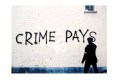
A Criminal Called Bob

It was years ago that Bob was born in St. Mary’s Hospital. His mum delivered a relatively healthy baby that she called Robert, after her father despite kicking her out when he found out that she was pregnant from a casual encounter. Bob’s early memory was of a pain in the arm in a busy place he could not remember what it was. His mother was grabbing his arm an early sign that he was unwanted. He would remember many of these events becoming part of everyday life. He remembers one day a stern looking woman came to the place he was living with his mother and take him away. This was the last time he would ever see his mother; he was 5 or 6. A few years afterwards his mother will die from a bad heart. Later, he would find out it was drugs related.
The stern looking lady will take him to another place to live with a family. One of many that he would be placed in. At first, he tried to get to know the hosts but soon it became difficult to keep track. He also lost track of how many times he moved around. There were too many to count but the main memory was of fear going into a place he did not know to stay with people who treated him as an inconvenience. He owned nothing but a bin bag with a few clothes and people will always comment on how scruffy he looked. He remembers discovering some liquorice allsorts in a drawer with the kid he was sharing the room with. He cannot forget the beating he got for eating some of them. The host was very harsh, and they used the belt on him.
School was hell for Bob. As he moved from place to place the schools also changed. The introduction to the class was almost standard. Bob is joining us from so and so and although he lives in foster care, I hope you will be making him feel welcomed…and welcomed he was. The bullying was relentless so was the name calling and the attacks. On occasion he would meet an aloof man who was his “designated tutor”. His questions were abrupt and focused only if he was behaving, if he was making any trouble, if he did as was told. It was hardly ever about education or any of his needs. He remembers going to see him once with a bruised eye to be asked “what did you do?”
And he did a lot! Early on he learned that in order not to go hungry he must hide food away. If he was to meet a new person, he had to show them that he is cannot be taken for granted, he needed to show them he can handle himself. Sometime during his early teenage years his greeting gesture was a headbutt. Violence was a clear vehicle for communication. One person is down the other is up. This became a language he became prolific in. He could read a room quickly and in later years be able to assess the person opposite. If he can take him or not!
The truth that others kept talking about around him became a luxury and an unnecessary situation. Lying about things got him to avoid punishment and any consequences to any of his actions. The only problem was when he was get caught lying. The consequences were dire. So, what he needed to do was to become very good at it. He did. He could lie looking people straight in the eye and not even blink about it.
Later in life he discovered this was an amazing talent to possess. It was useful when he was stealing from shops, it was good when people asking him for the truth, it was profitable when his lies covered other people’s crimes. Before he turned 18, he was an experienced thief and a creative liar. His physique allowed him to take to violence should anyone was to question his “honesty”. When he was 15, he discovered that a combination of cider and acid gives him such a buzz. To mute his brain and to relax his body even for little was so welcomed. This habit became one of his most loyal relationships in his life.
In prison he didn’t go until he was 22 but he went to a young offender’s institution at the age of 17 for GBH. The “victim” was a former friend who stole some of his gear. That really angered him; even days after the event in court he was still outraged with the theft. He was still making threats that he will find him and kill him, in some very graphic descriptions! The court sought no other way but to send him away. From the age of 22 he would become a “frequent flyer” of the prison estate! A long list of different sentences ranging from everything on offer. Usually repeated in pattern; fine, community sentence, prison….and back again! By the time he was 35 he had been in prison for more than 8 years collectively. He did plenty of offender management courses and met a variety of probation and prison officers, well-meaning and not so good. Some tried to help, and others couldn’t care but all of them fade in the background.
Now at the ripe age of 45 he is out of the prison, and he is sofa surfing and claiming universal credit. He gets nothing because he has unpaid fines, so he is struggling financially. In prison he did a barista apprenticeship, but he cannot find any work. As it stands, he is very likely to be recalled back to prison, if the cold weather doesn’t claim him first.
In context, there are some lives that are never celebrated or commemorated. There are people who exist but virtually no one recognises their existence. Their lives are someone else’s inconvenience and in a society that prioritises individual achievement and progression they have none. Bob is a fictional character. His name and circumstances are made up but form part of a general criminological narrative that identifies criminality through the complexity of social circumstance.

 Thoughts from the criminology team