
Home » Criminology toolbox (Page 12)
Category Archives: Criminology toolbox

“I can’t breathe”: Criminology, Science and Society

Sometimes the mind wanders; the associations it produces are random and odd, but somehow, they connect. In the book of Genesis, there is reference to the first murder. Cain murdered Abel with a stone making it the original murder weapon. After some questioning from God, who acted as an investigating officer, and following a kind-of admission, God then assumed the role of the judge and jury, sentencing him to wander the earth. This biblical tale is recounted by all three main monotheistic religions, a what to do in the case of murder. The murderer is morally fallen and criminally dealt by with a swift punishment.
There is no reason to explore the accuracy of the tale because that is not the point. Religion, in the absence of science, acted as a moral arbitrator, sentencing council and overall the conscience of society. In a society without science, the lack of reason allows morality to encroach on personal choices, using superstition as an investigative tool. As scientific discovery grew, the relevance of religion in investigation was reduced. The complexity of society required complex institutions that cared for people and their issues.
When the Normans landed in England, they brought with them a new way of dealing with disputes and conflict. Their system of arbitration, using the King as a divine representative, was following Roman tradition and theology but it soon became apparent that a roaming court may not be as efficient. The creation of the magistrates and the statutes on legal representation introduced the idea of bringing professionals into justice. The creation of new institutions fostered the age of the scholar, who uses evidence-based practice.
This new approach removed more religious practices, instead favouring the examination of facts, the investigation of testimony and the study of law. It was a long way away from the system we know now as the witch trials can attest to; a number of whom took place in East Anglia (including Northampton). In the end the only thing that has been left from the early religious trials is the oath witness take when they submit their testimony.*
The more we learn the better we become in understanding the world around us. The conviction that science can resolve our problems and alleviate social issues was growing and by the 19th century was firm. The age of discovery, industrialisation and new scientific reasoning introduced a new criminal justice system and new institutions (including the police). Scientific reasoning proposed changes in the penal code and social systems. Newly trained professionals, impervious to corruption and nepotism, were created to utilise a new know-how to investigate people and their crimes.
Training became part of skilling new mandarins in a system that reflected social stratification and professionalism. The training based on secular principles became focused on processes and procedures. The philosophy on the training was to provide a baseline of the skills required for any of the jobs in the system. Their focus on neutrality and impartiality, seemed to reflect the need for wider social participation, making systems more democratic. At least in principle that was the main idea. Over centuries of public conflict and social unrest the criminal justice system was moving onto what people considered as inclusive.
Since then the training was incorporated into education, with the new curriculum including some BTECs, diplomas, foundation studies and academic degrees that take on a variety of professions from investigative fields to law enforcement and beyond. This academic skilling, for some was evidence that the system was becoming fairer and their professionals more educated. Police officers with knowledge of the system, akin to lawyers to the probation service and so on. So far so good…but then how do we explain the killing of George Floyd? Four officers trained, skilled, educated and two of them experienced in the job.
If this was a one, two three, four, -offs then the “bad apple” defence seems to be the most logical extrapolation on what went wrong. If, however this is not the case, if entire communities are frightened of those who allegedly serve and protect them, then there is “something rotten in the state of Denmark”. Whilst this case is American, it was interesting to read on social media how much it resonated, in communities across the globe of those who felt that this was nothing more than their own everyday experience with law enforcement. For them, police is merely a mechanism of repression.
Since the murder I have read a number of analyses on the matter and maybe it worth going a bit further than them. In one of them the author questioned the validity of education, given than two of the officers in the Floyd case hold a criminal justice and a sociology degree respectively. There is a vein of truth there; educators have some responsibility to forge and promote professional conduct and ethical practice among their alumnus. There are however some other issues that have not been considered and it is time for these to be brought to the surface.
Education or training alone is not adequate to address the complexities of our society. Social awareness, cultural acceptance and the opportunity to reflect on the rules using problem solving and insight are equally important. Foucault has long argued that the justice system is inherently unfair because it preserves privileges and blocks anyone outside from challenging it. Reflecting on that, all major constitutional changes took place after a revolution or a war, indicating the truism in his observation.
If we are to continue to train people on procedures and processes the “bad apples” are likely to strike again. The complexity of social situations requires an education that ought to be more rounded, critical and evaluative. If a doctor takes an oath to do no harm, then so should every other professional who works in their community. If the title of the office is more appealing than the servitude, then the officer is not fulfilling their role. If we do not recognise equality among all people, then no training will allow us to be fair. Suddenly it becomes quite clear; we need more education than less, we need knowledge instead of information and we need more criminology for those who wish to serve the system.
*Even that can now be given as an affirmation

Share this:

Domestic Abuse Misinterpreted: Beyond the Scope of Violence
Background
The framework behind my dissertation arose from a lifelong unanswered question in my mind: “why is psychological and emotional abuse often overlooked in domestic abuse scenarios?” This question had formed in my precocious mind as a child, this was due to experiencing domestic abuse in the family home for many years and in many forms.
Early Stages of the Dissertation
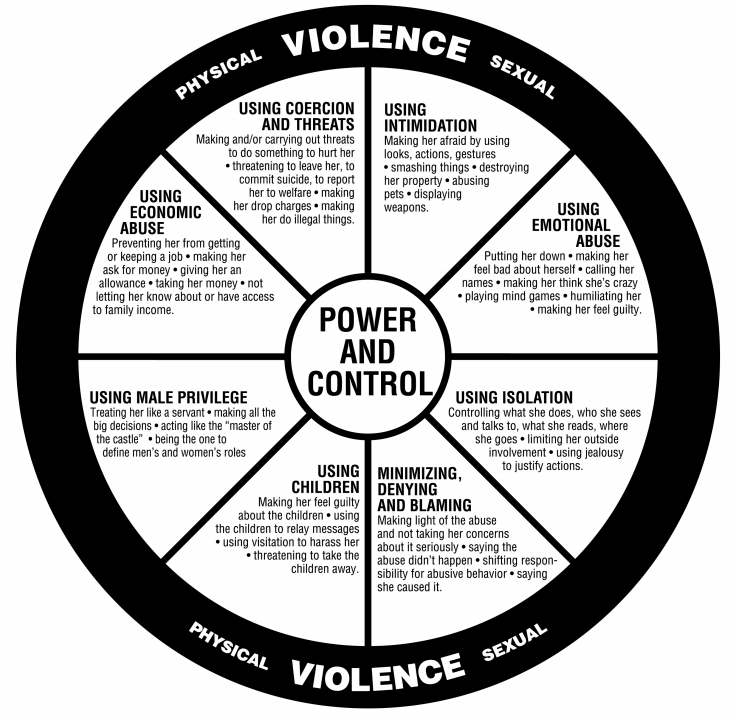
It was only when I began studying criminology at university that I unearthed many underlying questions relating to the abuse I suffered as a child and from watching my mother be psychically and mentally abused. I was understanding my experiences from an academic standpoint, as well as my peers’ experience of domestic abuse too. As a child, I had recognised that the verbal and psychological abuse was increasingly more detrimental on the victim’s mental wellbeing than the physical violence; the physical violence is a tactic used by abusers to install fear in the victim. In the early stages of my dissertation, I was gathering literature to aid my understanding on domestic abuse. I came across two essential books, one book was recommended by @paulaabowles, my dissertation supervisor: Scream Quietly or the Neighbours Will Hear (1979) by Erin Pizzey. This book provided great insight to the many aspects of domestic abuse from the memoires of Erin Pizzey who founded the first domestic abuse refugee in London 1971 known as, Chiswick Women’s Aid. The second book was: Education Groups for Men Who Batter: The Duluth Model (1993) by Pence and Paymar. This book aided my knowledge on the management of male abusers and how their abusive behaviour is explained by the using the visual theoretical framework known as, the Duluth Model; the Power and Control Wheel. I gathered more literature on domestic abuse and formed the backbone for my dissertation, it was time to self-reflect and establish my standpoint so that I could conduct my research as effectively and ethically.
The Research
This was the most important aspect of the dissertation; the most influential too. In my second-year studies, we were required to conduct research in a criminal justice agency to form a placement report; I chose a charitable organisation based in Northampton that provided support to female victims and offenders in the criminal justice system. For my dissertation, I chose to go back to the facility to conduct further research, this time my focus was on the detrimental effects experienced by female victims of domestic abuse.
Using a feminist standpoint alongside an autoethnographic method/ methodology, I was able to conduct primary research together with the participants of the study. I chose feminism as my standpoint due to the fundamental theoretical question centred in the social phenomenon of domestic abuse: gender inequality. I believe the feminist perspective was the most compatible and reliable standpoint to tackle my research with, it allowed room for self-reflection to identify my own biases and to recognise societal influences on how I interpret experiences and emotions. The standpoint’s counterpart – autoethnography – was employed so that I could actively insert myself into the research; this was supported by my research tool of observation participation and by recording qualitative data in a research diary. Over the course of nine weeks, I had formed trustworthy and respectful relationships with the participants, I had also encountered epiphanies and clarities regarding my own experiences of domestic abuse. Through using the research method observation participation, I was able to observe the body language and facial expressions of the participants alongside witnessing their emotions and participating in conversation. Collectively, my research methods enabled me to gather in-depth, first-hand accounts of the women’s experiences of domestic abuse. When writing the conclusion for my dissertation, I was able to establish that psychological and emotional abuse can be more detrimental to the victim than the physical violence itself. Interestingly, I had identified patterns and trends in the abuser’s behaviour and how it impacts the victim’s response; the victims tend to mimic their abusive partners traits e.g. anger and guilt.
I was able to conclude my dissertation with supporting evidence to credit my original question, through using personal experience and the experience of the wonderful women that participated in my research. Many of the women’s experiences highlighted in my dissertation research corresponded with the Duluth Model thesis embedded in my literature review. I was able to demonstrate how the elements of power and control in the abusive partner behaviour can adversely affect the victim; consequences of mental health issues, substance misuse and changes in victim’s lifestyle and behaviour. Overall, the experience was incredibly insightful and provided me with transferable interpersonal and analytical skills.
Share this:


#CriminologyBookClub: The Perplexing Theft of the Jewel in the Crown

As you know from our last #CriminologyBookClub entry a small group of us decided the best way to thrive in lockdown was to seek solace in reading and talking about books. Building on on what has quickly become standard practice, we’ve decided to continue with all seven bloggers contributing! Our fourth book was chosen by all of us (unanimously) after we fell in love with the first instalment. Without more ado, let’s see why we all adore Inspector Chopra (retired) et al.:
Another great edition to the Baby Ganesh agency series. After thoroughly enjoying the first book, I was slightly sceptical that book 2 would bring me the same level of excitement as the former. I was pleasantly surprised! The Perplexing Theft of the Jewel in the Crown, will take you on a picturesque journey across Mumbai. The story definitely pumps up the pace giving the reader more mystery and excitement. We now get more of an insight into characters such as inspector Chopra (retired) and his devoted wife Poppy. We also get to meet some new characters such as the loveable young boy Irfan, and of course the star of the show Ganesh, Chopra’s mysterious elephant. This novel has mystery within mystery, humour, suspense and some history, which is a great combination for anyone who wants to have an enjoyable read.
@svr2727

In the second instalment of detective Chopra’s detective (retired) adventures he is investigating the disappearance of the infamous Koh-i-noor diamond. The mythical gem disappears from a well-guarded place putting a strain on Anglo-Indian relations. In the midst of an international incident, the retired inspector is trying to make sense of the case with his usual crew and some new additions. In this instalment of the genre, the cultural clash becomes more obvious, with the main character trying to make sense of the colonial past and his feelings about the imprint it left behind. The sidekick elephant remains youthful, impulsive and at times petulant advancing him from a human child to a moody teenager. The case comes with some twists and turns, but the most interesting part is the way the main characters develop, especially in the face of some interesting sub-plots
@manosdaskalou
I am usually, very critical, of everything I read, even more so of books I love. However, with Inspector Chopra et al., I am completely missing my critical faculties. This book, like the first, is warm, colourful and welcoming. It has moments of delightful humour (unicycles and giant birthday cake), pathos (burns and a comforting trunk) to high drama (a missing child and pachyderm). Throughout, I didn’t want to read too much at any sitting, but that was only because I didn’t want to say goodbye to Vaseem Khan’s wonderful characters, even if only for a short while…
@paulaabowles
It was a pleasure to read the second book of the Inspector Chopra series. Yes, sometimes the characters go through some difficult times, the extreme inequalities between the rich and poor are made clear and Britain’s infamous colonial past (and present) plays a significant part of the plot, yet the book remains a heart-warming and up-beat read. The current character developments and introduction of new character Irfan is wonderfully done. Cannot wait to read the next book in the series!
@haleysread
One of the reasons for critiquing a book is to provide a balanced view for would be readers. An almost impossible task in the case of Vaseem Khan’s second Baby Ganesh Agency Investigation. Lost in a colourful world, and swept along with the intrigue of the plot and multiple sub plots involving both delightful and dark characters, the will to find a crumb of negativity is quickly broken. You know this is not real and, yet it could be, you know that some of the things that are portrayed are awful, but they just add to the narrative and you know and really hope that when the baby elephant Ganesha is in trouble, it will all work out fine, as it should. Knowing these things, rather than detracting from the need to quickly get to the end, just add to the need to turn page after page. Willpower is needed to avoid finishing the book in one hit. Rarely can I say that once again I finished a book and sat back with a feeling of inner warmth and a smile on my face. If there is anything negative to say about the book, well it was all over far too quickly.
@5teveh
The second Inspector Chopra book is even more thrilling than the first! As I read it I felt as though I genuinely knew the characters and I found myself worrying about them and hoping things would resolve for them. The book deals with some serious themes alongside some laugh out loud funny moments and I couldn’t put it down. Can’t wait to read the third instalment!
@saffrongarside
I have always found that the rule for sequels in film is: they are never a good as the original/first. Now, there are exceptions to the rule, however these for me are few and far between. However, when it comes to literature I have found that the sequels are as good if not better than the original- this is the rule. And my favourite writers are ones who have created a literature series (or multiple): with each book getting better and better. The Perplexing Theft of the Jewel in the Crown (Chopra 2.0) by Vaseem Khan has maintained my rule for literature and sequels! Hurray! After the explosive first instalment where we are introduced to Inspector Chopra, Poppy and Baby Ganesha, the pressure was well and truly on for the second book to deliver. And By Joe! Deliver it did! Fast paced, with multiple side-stories (which in all fairness are more important that the theft of the crown), reinforce all the emotion you felt for the characters in the first book and makes you open your heart to little Irfan! Excellent read, beautiful characters, humorous plots! Roll on book number 3!
@jesjames50

Share this:


What’s in the future for criminology?

This year marks 20 years that we have been offering criminology at the University of Northampton and understandably it has made us reflect and consider the direction of the discipline. In general, criminology has always been a broad theoretical discipline that allows people to engage in various ways to talk about crime. Since the early days when Garofalo coined the term criminology (still open to debate!) there have been 106 years of different interpretations of the term.
Originally criminology focused on philosophical ideas around personal responsibility and free will. Western societies at the time were rapidly evolving into something new that unsettled its citizens. Urbanisation meant that people felt out of place in a society where industrialisation had made the pace of life fast and the demands even greater. These societies engaged in a relentless global competition that in the 20th century led into two wars. The biggest regret for criminology at the time, was/is that most criminologists did not identify the inherent criminality in war and the destruction they imbued, including genocide.
In the ashes of war in the 20th century, criminology became more aware that criminality goes beyond individual responsibility. Social movements identified that not all citizens are equal with half the population seeking suffrage and social rights. It was at the time the influence of sociology that challenged the legitimacy of justice and the importance of human rights. In pure criminological terms, a woman who throws a brick at a window for the sake of rights is a crime, but one that is arguably provoked by a society that legitimises inequality and exclusion. Under that gaze what can be regarded as the highest crime?
Criminologists do not always agree on the parameters of their discipline and there is not always consensus about the nature of the discipline itself. There are those who see criminology as a social science, looking at the bigger picture of crime and those who see it as a humanity, a looser collective of areas that explore crime in different guises. Neither of these perspectives are more important than the other, but they demonstrate the interesting position criminology rests in. The lack of rigidity allows for new areas of exploration to become part of it, like victimology did in the 1960s onwards, to the more scientific forensic and cyber types of criminology that emerged in the new millennium.
In the last 20 years at Northampton we have managed to take onboard these big, small, individual and collective responses to crime into the curriculum. Our reflections on the nature of criminology as balancing different perspectives providing a multi-disciplinary approach to answering (or attempting to, at least) what crime is and what criminology is all about. One thing for certain, criminology can reflect and expand on issues in a multiplicity of ways. For example, at the beginning of 21st terrorism emerged as a global crime following 9/11. This event prompted some of the current criminological debates.
So, what is the future of criminology? Current discourses are moving the discipline in new ways. The environment and the need for its protection has emerge as a new criminological direction. The movement of people and the criminalisation of refugees and other migrants is another. Trans rights is another civil rights issue to consider. There are also more and more calls for moving the debates more globally, away from a purely Westernised perspective. Deconstructing what is crime, by accommodating transnational ideas and including more colleagues from non-westernised criminological traditions, seem likely to be burning issues that we shall be discussing in the next decade. Whatever the future hold there is never a dull moment with criminology.
Share this:


“TW3” in Criminology

In the 1960s, or so I am told, there was a very popular weekly television programme called That Was The Week That Was, informally known as TW3. This satirical programme reflected on events of the week that had just gone, through commentary, comedy and music. Although the programme ended before I was born, it’s always struck me as a nice way to end the week and I plan to (very loosely) follow that idea here.
This week was particularly hectic in Criminology, here are just some of the highlights. On Monday, I was interviewed by a college student for their journalism project, a rather surreal experience, after all, ‘Who cares what I think?’
On Tuesday, @manosdaskalou and I, together with a group of enthusiastic third years, visited the Supreme Court in London. This trip enabled a discussion which sought to unpack the issue of diversity (or rather the lack of) within justice. Students and staff discussed a variety of ideas to work out why so many white men are at the heart of justice decisions. A difficult challenge at the best of times but given a new and urgent impetus when sat in a courtroom. It is difficult, if not impossible, to remain objective and impartial when confronted with the evidence of 12 Supreme Judges, only two of which are women, and all are white. Arguments around the supposed representativeness of justice, falter when the evidence is so very stark. Furthermore, with the educational information provided by our tour guide, it becomes obvious that there are many barriers for those who are neither white nor male to make their way through the legal ranks.

Wednesday saw the culmination of Beyond Justice, a module focused on social justice and taught entirely in prison. As in previous years, we have a small ceremony with certificate presentation for all students. This involves quite a cast, including various dignitaries, as well as all the students and their friends and family. This is always a bittersweet event, part celebration, part goodbye. Over the months, the prison classroom leaves its oppressive carceral environment behind, instead providing an intense and profound tight-knit learning community. No doubt @manosdaskalou and I will return to the prison, but that tight-knit community has now dissipated in time and space.

On Thursday, a similarly bitter-sweet experience was my last focused session this year on CRI3003 Violence: From Domestic to Institutional. Since October, the class has discussed many different topics relating to institutional violence focused on different cases including the deaths of Victoria Climbié, Blair Peach, Jean Charles de Menezes, as well as the horror of Grenfell. We have welcomed guest speakers from social work, policing and the fire service. Discussions have been mature, informed and extremely sensitive and again a real sense of a learning community has ensued. It’s also been my first experience of teaching an all-female cohort which has informed the discussion in a variety of meaningful ways. Although I haven’t abandoned the class, colleagues @manosdaskalou and @jesjames50 will take the reins for a while and focus on exploring interpersonal violence. I’ll be back before the end of the academic year so we can reflect together on our understanding of the complexity of violence.
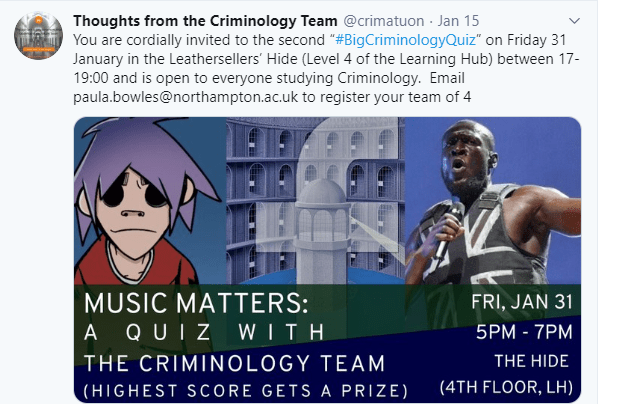
Finally, Friday saw the second ever #BigCriminologyQuiz and the first of the new decade. At the end of the first one, the participants requested that the next one be based on criminology and music. Challenge completed with help from @manosdaskalou, @treventoursu, @svr2727, @5teveh and @jesjames50. This week’s teams have requested a film/tv theme for the next quiz so we’ll definitely have our work cut out! But it’s amazing to see how much criminological knowledge can be shared, even when you’re eating snacks and laughing. [i]
So, what can I take from my criminological week:
- Some of the best criminological discussions happen when people are relaxed
- Getting out of the classroom enables and empowers different voices to be heard
- Getting out of the classroom allows people to focus on each and share their knowledge, recognising that
- A classroom is not four walls within a university, but can be anywhere (a coach, a courtroom a prison, or even the pub!)
- A new environment and a new experience opens the way for discord and dissent, always a necessity for profound discussion within Criminology
- When you open your eyes and your mind you start to see the world very differently
- It is possible (if you try very hard) to ignore the reality of Friday 31 January 23:00 ☹
- It is possible to be an academic, tour guide, mistress of ceremonies and quiz mistress, all in the same week!
Here’s looking forward to next week….not least Thursday’s Changemaker Awards where I seem to have scored a nomination with my #PartnerinCriminology @manosdaskalou.
[i] The first quiz was won by a team made up of 1st and 2nd years. This week’s quiz was won by a group of third years. The next promises to be a battle royale 😊 These quizzes have exposed, just how competitive criminologists can be….
Share this:

Your Name Is Not BAME
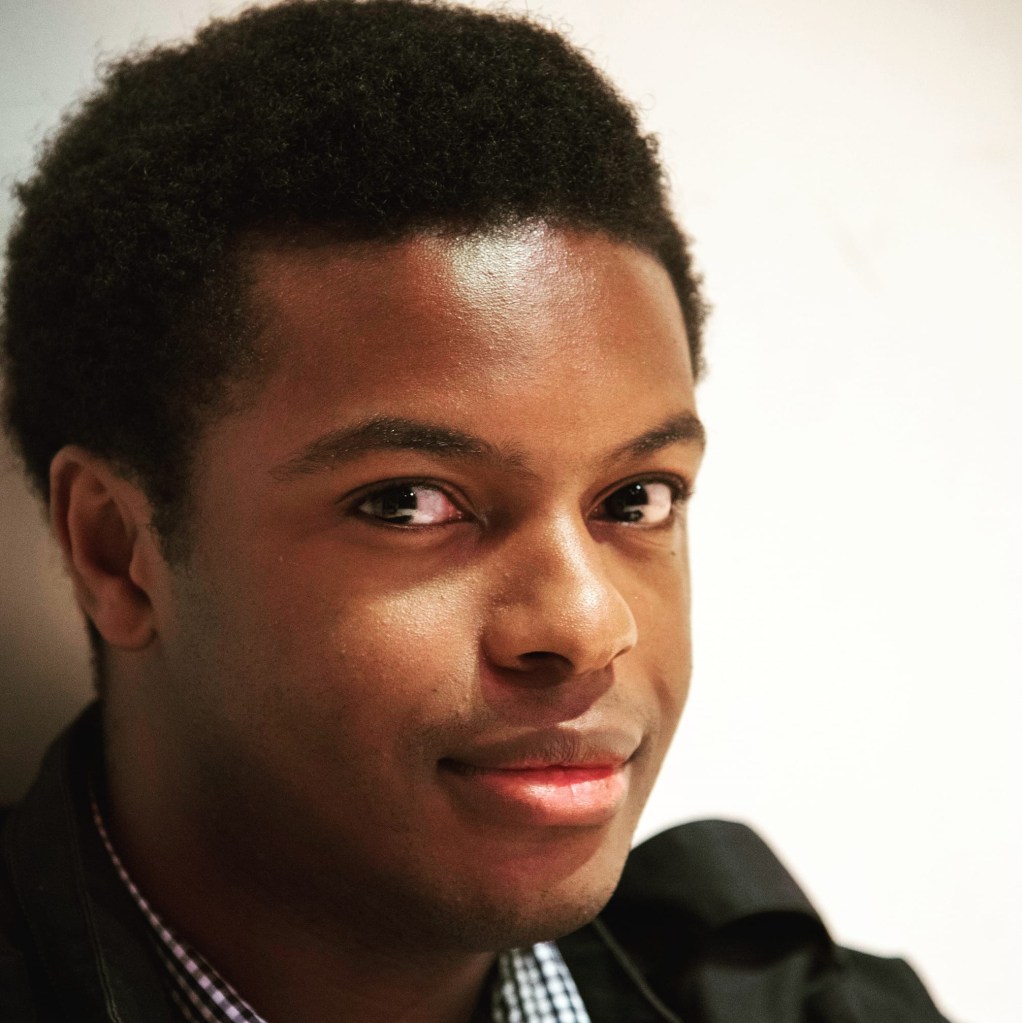
My name is Tré Ventour and I am the Students’ Union’s Vice President BME Sabbatical Officer. When I’ve asked students what BME stands for, most have been clueless – Black Minority Ethnic. The same could be said for BAME – Black Asian Minority Ethnic. I was elected to represent ethnic minority students. But I’ve been asking myself how much longer will this 47% be an ethnic minority? At Northampton, they will soon be the majority. This 14,000-student university in which nearly 7000 fit into this BME box.

Pigeon-holed. To be put into a box. I don’t like to think in boxes. I try not to think in labels but in this world, it’s naive to be colourblind. In the education sector, in this day and age, especially at Northampton, to not see race is to ignore the experiences of nearly 7,000 students – nearly 7,000 stories about potential hate crimes, and what about BAME members of staff? We must see race. We must see sex, class, and gender (all genders).
To be colourblind is to live life high on privilege – to exist without the consequences of hate crime. Some people live with racism, sexism and / or homophobia all their lives.
Many say “there’s one race, the human race.” That may be true but how comfortable must you be in your existence to come to that notion? And then push that notion on those who experience racism on a daily basis.
When I’ve spoken to students about BAME or ethnic minority, they say “Just call me by my name.” Students are flesh and bone, more than acronyms. And I do what they tell me to do (in a manner of speaking / within reason). I’m not Vice President, I’m not Mr Ventour; I am Tré and I am here to help students, to represent students (of colour) – more so Black students that look at White authority and see invader. Who I have heard compare university to apartheid South Africa – one in, one out – to a Zimbabwe under British rule – De Beers, Rhodes and racism. Fear and exclusion.
Call them minorities, call them BME, call them BAME. Yet, this acronym just seems like coded language for Black. And at Northampton, when people say BME or BAME, they mean Black students, so just say what you mean, “Black.”
And if these labels, if these pigeon-hole terms help Higher Education solve issues like attainment perhaps it’s worth it. But what I can say is that not all Black experiences are the same. To be a Black British student is not the same as to be a Black international from Africa, the EU or elsewhere.

But to be a person of colour in this country is to be immigrant, British or otherwise. To be overly polite. To be overly grateful or gracious. To be a good immigrant.
Share this:


How to prepare for a year in University

In our society consumerism seems to rain supreme. We can buy stuff to make us feel better and we can buy more stuff to express our feeling to others and mark almost most events around us. Retail and especially all the shops have long been aware of this and so they have developed their seasonal material. These seasonal promotions may have become consumer events now although they do signify something incredibly important to culture and our collective consciousness. There is time for Christmas decorations and festive foods, Easter time and chocolate eggs, mother’s day and nauseating cards father’s day for equally grinchworthy cards. There is valentine’s day to say I love you in full fat chocolates, Halloween to give little kids rotten teeth and a red poppy to remember some of our dead. To those add the summer season with the disposable BBQs and of course the back to school season!
The back to school is one of the interesting ones. Geared to prepare pupils and parents for going back to school and plan ahead. From ordering the uniforms to getting all the stationery and books required. I remember this time of the year with some rather mixed emotions. It was the end of my summer holidays, but it was also the time to get back to school. Until one day I finished school and I went to university. Education is seen as part of a continuous process that we are actively involved from the first day at school to the last day in high school and more recently for more people also involve the first day of going to university. Every year is more challenging than the next, but we move up and continue. For those of us who enjoy education we continue the journey further to further or high education.
There is something to said about the preparation process coming to University; it is interesting seeing advertisements on education this time of the year on the tv and social media promoting stuff for this transition; from the got to have smartphone to the best laptop, the fastest printer scanner all in one thingy to the greatest sound system and many more stuff that would get you ready for the year ahead. Do they really help us out and if not, what do we got to do to prepare for coming to university?
Unfortunately, there is no standard formula here but there is a reason for that. Higher education is adult education. This is the first time in our educational journey that we are sitting firmly on the driving seat. We choose to study (or ought to) what we wish to study. It is an incredibly liberating process to have choice. This however is only the beginning. We make plans of our time. In higher education the bulk of the time required is independent study, and as such we got to negotiate how we will plan our time. We got to decide which reading we are going to do first which notes to read what seminar we shall prepare and what assignment we will make a draft of.
There will be days spent in the library looking for a book, days in a coffee shop talking to fellow students about the seminar reading, days in the learning hub working on an assignment. There are highs, lows and everything in between. But regardless of the emotion at every stage thee will be a sense of ownership of knowledge.
In the first couple of sessions, the bulk of the students keep quiet expecting the correct answer to be given. One interpretation or one truth that describes all. It takes a few times before the realisation emerges that the way we analyse, and project knowledge can be different provided we go through the same processes of scrutiny and analysis. Then conversation emerges and the more reading the better the quality of the ideas that shall emerge.
The first year at University is definitely a declaration of independence and the realisation that we all have a voice. Getting on to the road on empowerment. This is a long journey, and on occasions arduous but incredibly rewarding because it leads to an insight greater than before that removes ignorance and lifts the veil of the unfamiliar.
To our newest students – Welcome to the University and to our returning 2 and 3 years – Welcome back!
Share this:

As a Member Pioneer supporting the Police
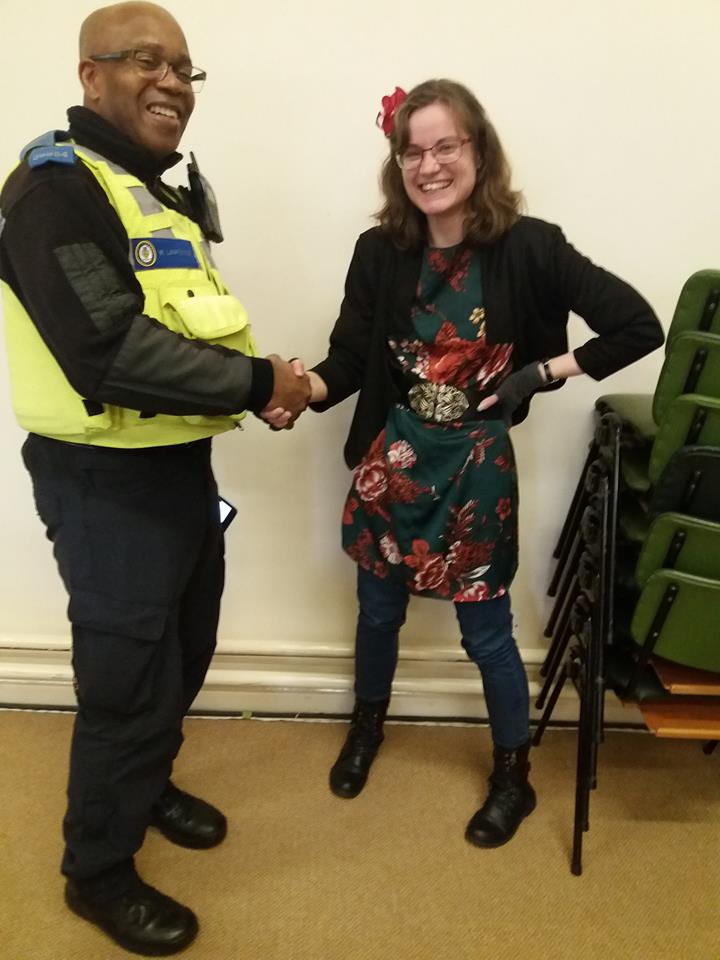

Stephanie graduated in 2015 having read BA (Hons) Criminology (with Education Studies
Since January 2018, I have worked part time as a Co-op Member Pioneer, for the area of Yardley Wood in Birmingham. In my role, I do charity work, support the local causes, aid the community and local people, run a litter pickers’ forum, build and establish local networks, do work with the council and the police. Throughout my time doing this role, I have loved every challenge thrown at me, and have increasingly done more work supporting the police.
When I first met with some of the PCSOs [Police Community Support Officers] last year, I began doing more work supporting them, and helping the community with crime-related issues. I had been informed by one of the PCSOs that the Billseley Police (whom cover Yardley Wood) are the smallest police team in the country, made up of 7 staff (the Sergeant, 4 PCSOs and 2 police officers, soon to become 3 as one of the PCSOs is training to be a full officer).
In June 2018 and 2019, during the Co-op Fortnight, I hosted a ‘Meet your Member Pioneer’ event in store, where the local community could anonymously write down something to make the local community better. I received a huge number of crime related issues, such as people knowing where drug dealers and addicts were, issues of people speeding and parking dangerously outside schools, issues of knife crime, anti-social behaviour, and people wanting there to be more police on the streets for safety and protection.
On both occasions, after getting all the crime-related notes out, I emailed the police department everything that had been written down, helping the police get more information from the public on different issues that were all dealt with. Being a community pioneer in non-police uniform, it made it easier for the public to privately disclose and offload their crime-related concerns, knowing that it would be taken seriously, and forwarded on. In an effort to further support the police with extending the reach to the local community, I advertise their events on my social media sites, saving them time and resources, and encourage people to attend, or message me any concerns they would like me to take forward.
After being introduced to staff, from Livingstone House (an organisation that helps recovering addicts), SIFA Fireside (that deals with homelessness and social exclusion), the Moseley Exchange (a business enterprise group that runs various community projects), I’m helping build community networks that the police can rely on to help people from different demographics, as well as aid them in their understanding of how to help addicts, beggars, the homeless, and many others. This has enabled the police to have access to a range of resources and information and contacts whom they can rely on and get advice from.
More recently, after getting in touch with David Jamieson, the Police and Crime Commissioner, I am helping the police set up a knife bank near the station. I’ve also gotten in touch with and organisation called Activating Creative Talent that does knife crime awareness training in schools, and am working with one of the PCSOs on delivering knife awareness education in schools and in the community. It’ll be a big, ongoing community project that is soon to take off!
In the role, I love all that I do supporting the police. I never imagined that as a community pioneer, I would aid and support the police in the capacity that I have.
Share this:


Terrorised into compliance

Learning and teaching is a complex business, difficult to describe even by those in the process of either/or both. Pedagogy, as defined by Lexico is ‘[t]he method and practice of teaching, especially as an academic subject or theoretical concept’. It underpins all teaching activity and despite the seemingly straightforward definition, is a complex business. At university, there are a variety of pedagogies both across and within disciplines. How to teach, is as much of a hot topic, as what to teach and the methods and practices are varied.
So how would you feel if I said I wanted Criminology students to quake in their boots at the prospect of missing classes? Or “literally feel terror” at the thought of failing to do their reading or not submitting an assessment? Would you see this as a positive attempt to motivate an eager learner? A reaction to getting the best out of lazy or recalcitrant students? A way of instilling discipline, keeping them on the straight and narrow on the road to achieving success? After all, if the grades are good then everything must be okay? Furthermore, given many Criminology graduate go on to careers within Foucault’s ‘disciplinary society’ maybe it would be useful to give them a taste of what’s to come for the people they deal with (1977: 209).
Hopefully, you are aghast that I would even consider such an approach (I promise, I’m definitely not) and you’ve already thought of strong, considered arguments as to why this would be a very bad idea Yet, last week the new Home Secretary, Pritti Patel stated that she wanted people to “literally feel terror” at the prospect of becoming involved in crime. Although presented as a novel policy, many will recognise this approach as firmly rooted in ideas from the Classical School of Criminology. Based on the concepts of certainty, celerity and severity, these ideas sought to move away from barbaric notions and practices to a more sophisticated understanding of crime and punishment.
Deterrence (at the heart of Classical School thought) can be general or specific; focused on society or individuals. Patel appears to be directing her focus on the latter, suggesting that feelings of “terror” will deter individuals from committing crime. Certainly, one of the classical school’s primary texts, On Crime and Punishment addresses this issue:
‘What is the political intention of punishments? To terrify, and to be an example to others. Is this intention answered, by thus privately torturing the guilty and the innocent?’
(Beccaria, 1778: 64)
So, let’s think through this idea of terrorising people away from crime, could it work? As I’ve argued before if your crime is a matter of conscience it is highly unlikely to work (think Conscientious Objectors, Suffragettes, some terrorists). If it is a crime of necessity, stealing to feed yourself or your family, it is also unlikely to succeed, certainly the choice between starvation and crime is terrifying already. What about children testing boundaries with peers, can they really think through all the consequences of actions, research suggests that may not be case (Rutherford, 1986/2002). Other scenarios could include those under the influence of alcohol/drugs and mental health illnesses, both of which may have an impact on individual ability to think through problems and solutions. All in all, it seems not everyone can be deterred and furthermore, not all crimes are deterrable (Jacobs, 2010). So much for the Home Secretary’s grand solution to crime.
As Drillminister demonstrates to powerful effect, violent language is contextual (see @sineqd‘s discussion here). Whilst threats to kill are perceived as violence when uttered by young, black men in hoods, in the mouths of politicians they apparently lose their viciousness. What should we then make of Pritti Patel’s threats to make citizens “literally feel terror”?
Selected bibliography
Beccaria, Cesare, (1778), An Essay on Crimes and Punishments, (Edinburgh: Alexander Donaldson), [online]. Available from: https://archive.org/details/essayoncrimespu00Becc/page/n3
Foucault, Michel, (1977), Discipline and Punish: The Birth of the Prison, tr. from the French by Alan Sheridan, (London: Penguin Books)
Jacobs, Bruce A., (2010), ‘Deterrence and Deterrability’, Criminology, 48, 2: 417-441
Rutherford, Andrew, (1986/2002), Growing Out of Crime: The New Era, (Winchester: Waterside Press)
Share this:


Thinking “outside the box”
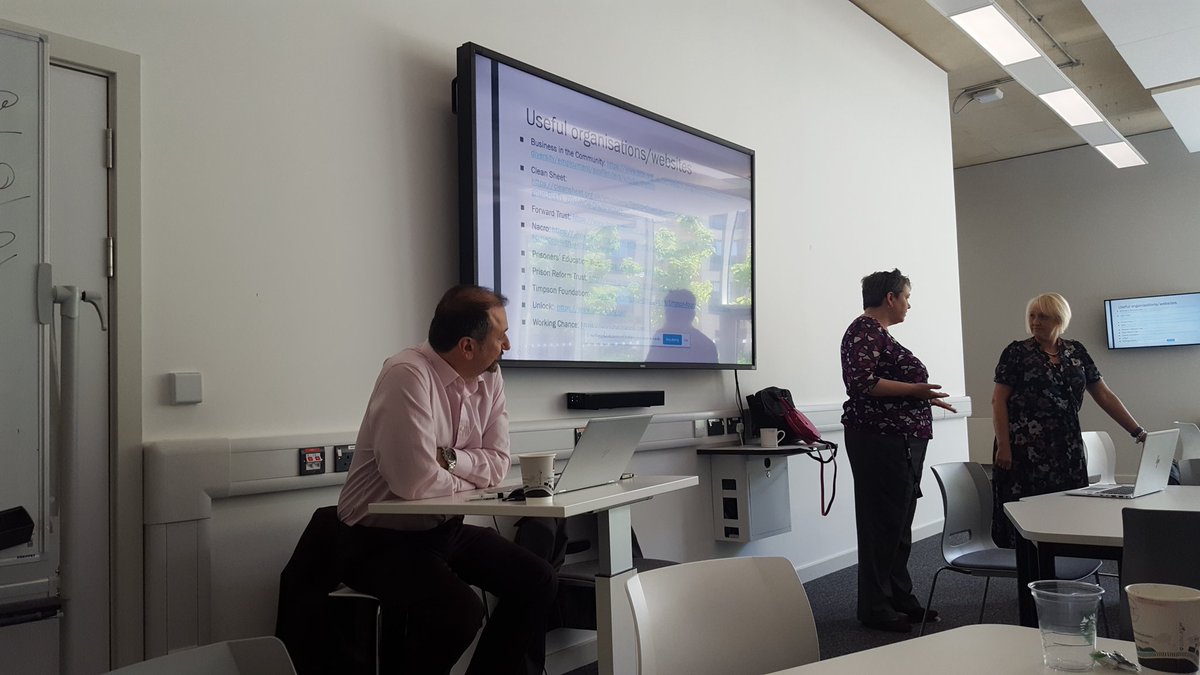
Having recently done a session on criminal records with @paulaabowles to a group of voluntary, 3rd sector and other practitioners I started thinking of the wider implications of taking knowledge out of the traditional classroom and introducing it to an audience, that is not necessarily academic. When we prepare for class the usual concern is the levelness of the material used and the way we pitch the information. In anything we do as part of consultancy or outside of the standard educational framework we have a different challenge. That of presenting information that corresponds to expertise in a language and tone that is neither exclusive nor condescending to the participants.
In the designing stages we considered the information we had to include, and the session started by introducing criminology. Audience participation was encouraged, and group discussion became a tool to promote the flow of information. Once that process started and people became more able to exchange information then we started moving from information to knowledge exchange. This is a more profound interaction that allows the audience to engage with information that they may not be familiar with and it is designed to achieve one of the prime quests of any social science, to challenge established views.
The process itself indicates the level of skill involved in academic reasoning and the complexity associated with presenting people with new knowledge in an understandable form. It is that apparent simplicity that allows participants to scaffold their understanding, taking different elements from the same content. It is easy to say to any audience for example that “every person has an opinion on crime” however to be able to accept this statement indicates a level of proficiency on receiving views of the other and then accommodating it to your own understanding. This is the basis of the philosophy of knowledge, and it happens to all engaged in academia whatever level, albeit consciously or unconsciously.
As per usual the session overran, testament that people do have opinions on crime and how society should respond to them. The intriguing part of this session was the ability of participants to negotiate different roles and identities, whilst offering an explanation or interpretation of a situation. When this was pointed out they were surprised by the level of knowledge they possessed and its complexity. The role of the academic is not simply to advance knowledge, which is clearly expected, but also to take subjects and contextualise them. In recent weeks, colleagues from our University, were able to discuss issues relating to health, psychology, work, human rights and consumer rights to national and local media, informing the public on the issues concerned.
This is what got me thinking about our role in society more generally. We are not merely providing education for adults who wish to acquire knowledge and become part of the professional classes, but we are also engaging in a continuous dialogue with our local community, sharing knowledge beyond the classroom and expanding education beyond the campus. These are reasons which make a University, as an institution, an invaluable link to society that governments need to nurture and support. The success of the University is not in the students within but also on the reach it has to the people around.
At the end of the session we talked about a number of campaigns to help ex-offenders to get forward with work and education by “banning the box”. This was a fitting end to a session where we all thought “outside the box”.


