
Home » Criminological imagination (Page 8)
Category Archives: Criminological imagination

Covid-Universities and what if
Over the past week or so there have been some mutterings about whether it is safe to open up universities. There is the advice from the scientific advisors (Universities get some Indie SAGE advice on reopening campuses in September) and some thoughts from academics ‘Why universities must move all teaching online this autumn’.
As we move closer to the start of term, so my dread of what is ahead comes into sharper focus. I try to imagine what it would be like and try to reassure myself that the risk assessments have been done and the reassurances that the universities are Covid safe are true rather than simply fantasy and wishful thinking.
In this safe environment I imagine that the number of students and staff on campuses will be carefully managed as it is with many large stores.
I imagine that all staff and students will be wearing face coverings. This is not for protection of themselves, as the use of coverings is a somewhat altruistic venture, I cover my face and protect you and you cover yours and protect me.
I imagine that all thoroughfares will be marked and monitored. Social distancing is important, and we need to be at least a metre apart.
I imagine that the classrooms will be laid out in such a way that social distancing can be maintained and that the classrooms will be well ventilated, even in the middle of winter. I imagine all the chairs and desks and any other equipment will be wiped down after each session.
I imagine that face to face teaching will be limited and interactions with multiple groups of students will be severely curtailed to ensure lecturers are not put at unnecessary risk. I imagine each class will comprise only a few students to minimise risk.
I imagine that anyone who is symptomatic will not attend a university and will after being tested self-isolate. I imagine that all the people they have been in contact with will do the same for a whole, boring, 14 days.
I imagine that the universities’ management will be at each university, leading from the front. They will be checking to ensure the safety of students and staff. They will be mixing with staff and students, receiving feedback and continuously monitoring. I imagine the safety of the students and staff is paramount.
And then I think, what if…
What if campuses are a free for all. Students can come and go as they please, there is no monitoring of volumes. Or what if there is, but it is impossible to enforce with limited staff to do so. And those staff tasked with this endeavour are at greater risk due to the proximity with large volumes of students.
What if people decide not to wear face coverings or having got into the building decide to take them off or several people are exempt for some reason or another. Altruism has gone out of the window. I’m a criminologist and I know that people break the rules for all sorts of reasons and the only certainty is that some people will break the rules.
What if social distancing becomes all too difficult. Many of us have experienced it in stores. A one-way system works for most, but a significant number just don’t abide by it, for whatever reason. People break rules.
What if the social distancing in classes is impossible, there just isn’t enough classes to maintain it with the volume of students on the course. What if ventilation is impossible, other than air conditioning, some classes are in the middle of buildings. Who will clean the chairs and equipment after each class? Go to a restaurant and tables and chairs are wiped down after each use so who will do it at a university?
What if lecturers have to teach multiple groups face to face as there are not enough staff to spread the load. Teaching in a classroom for two hours multiple times in a day with different groups each time must surely expose lecturers to much greater risk.
What if students are of the age group where they are more likely to be asymptomatic? How many that are infected might be at a university, spreading the virus around campus and around the locality. Even if they are symptomatic, how likely are they to self-isolate? Judging by the street parties and illegal raves reported on the news, there is a good chance that some will break the rules. Let’s be realistic, if you are only likely to suffer affects akin to a cold, why would you be that bothered about social distancing or self-isolation?
And finally, what if all managers avail themselves of the much-vaunted government advice, work from home if you can. Leadership from the rear, the bottom line is more important than the safety of others. We can of course dress this up in management psychobabble about what the students need.
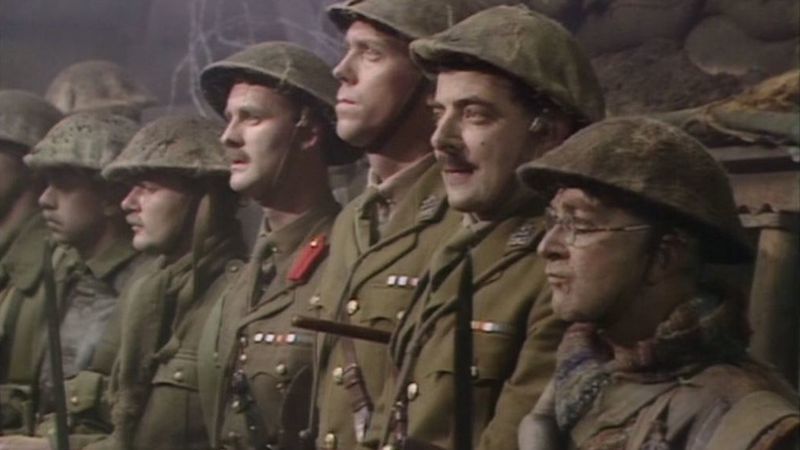
Never mind, ‘Tally ho and all of that sort of thing and over the top we go’*.
* For those of you that are lost at this point it might be worth a visit to the last episode of Blackadder Goes Forth.
Share this:


Imagine and what if…

‘Imagine’, a simple word and one that evokes memories of a song written by John Lennon and released in 1971. In that song we are asked to think about ideas that would perhaps lead us into notions of utopia, if only the ideas were true. Though, often what we see as a simple solution proves to be far from simple and in each solution, lies a paradox that gives lie to the fact that our solution was a solution at all. If we imagine a solution or a scenario we should also ask ourselves ‘what if’. ‘What if’ that were true, what would it look like and what would the consequences be? I like the idea of ‘what if’. ‘What if’ allows me to jump ahead, ‘what if’ allows me to see whether a solution would work, ‘what if’ allows me to play out various scenarios in my mind and ‘what if’ causes me more trouble than imagine. In imagine I can dream, in ‘what if’, I tear those dreams apart, dissecting each bit into practical reality. A reality that has its basis in science and my limited knowledge of human nature. And so, I’d like to begin my journey of ‘imagine’ and ‘what if’.
I suppose my thinking behind this short piece was to set the scene for a number of other pieces without trying to explain the background and rationale of each piece. ‘Imagine’ and ‘What if’ are the rationale. Perhaps the idea might provide a spark for other bloggers, I hope so. And so, I begin….
Imagine a chain of nice restaurants (not the greasy spoon type but perhaps not the Michelin star type either), each restaurant with its own chef. Imagine the work that goes into running a restaurant*, for those of you that watch MasterChef, ‘it isn’t hard to do’. Let’s start with the basics.
Well of course there is the food. Decent food, requires decent ingredients. So, sourcing the ingredients is important, a fair amount of research required to do this and then of course there is the logistics of purchasing the food at the right time in the right quantities and ensuring the quality at the same time.
Then there is the menu, what is put onto the menu is carefully planned around what ingredients are available, what the chef wants to produce and what the customer might want. If the theme of the restaurant is Vegetarian cuisine, there is little point in putting a chicken Balti on the menu. The actual menu needs to be produced, not some scrap of paper, it needs to be carefully planned, printed and delivered. The food then needs to be cooked and served. There is a lot of planning and careful consideration that goes into this. Dishes are tried and tried again until they are right and are aesthetically pleasing on the plate. The customers need to be looked after in the restaurant, shown to their tables, their orders taken, and drinks served.
Imagine how the restaurant is advertised, perhaps on Facebook, maybe its own website and imagine what the advertising would promise. Perhaps a congenial atmosphere, good food and fine service. Imagine you can book online. Imagine the amount of work that goes into building that website or Facebook page. Imagine the work that goes into servicing the bookings. Imagine the organisation of running a restaurant. So, what if…
The chef was responsible for:
- The design and implementation of the website or Facebook page
- The planning, sourcing and cooking of the food
- The design and printing of the menu
- The taking of the orders and the delivery of the food to the customers
- In fact, the chef was responsible for delivering just about everything.
What if…
The customers that came to the restaurant decided they don’t like Vegetarian cuisine and are more at home with burgers and chips, but somebody told them it was a good idea to try the restaurant, or maybe they didn’t have anything better to do on the day.
The restaurant chain managers decided that more customers were better for business and they crammed in as many as they could each day, whilst berating the chef for not servicing the website bookings in line with published timelines.
The restaurant managers decided that the chef could run it all on their own as it is better for the bottom line.
What if…
The feedback from customers is filled with complaints about the untimely service, the crammed conditions and the fact they don’t like Vegetarian food and couldn’t understand why burgers and chips weren’t on the menu as well.
The management scrutinise the restaurant Facebook page or website looking for inaccuracies or areas that don’t fit the restaurant chain’s USP and appear to have little interest in the food produced or the service given to customers.
The management introduce new policies to ‘ensure better customer service and a better customer experience’. The policies increase the workload for the chef.
Just imagine you are that chef ….
NB I apologise to all chefs out there. As with anything in life we have little idea of the amount of work something involves until we have to do it ourselves.
Share this:


How I became an evil man
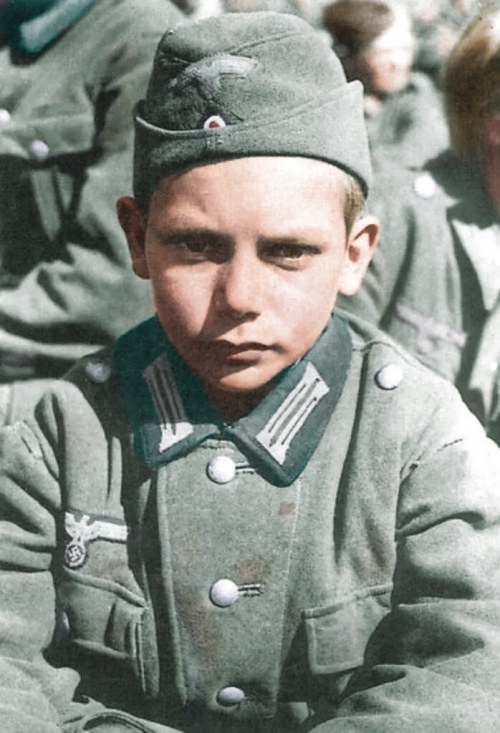
My love of poetry came in my sleep like a dream, a fever I could not escape and in little hours of the day I would read some poetry from different people who voice the volume of their emotions with words. In one of those poems by Elleni Vakalo How he became a bad man, she introduced me to a new understanding of criminological thinking. The idea of consequences, that lead a seemingly good person to become bad, without the usual motivational factors, other than fear. This was the main catalyst that became the source of this man’s turn to the bad.
This almost surrealistic description of criminal motivation has since fascinated me. It is incredibly focused, devoid of social motivations and personal blame. In fact, it demonstrates a social cognition that once activated is powerful enough to lead a seemingly decent person to behave in uncharacteristic moves of violence. This interesting perspective was forged during the war and the post war turmoil experienced. Like Camus, the act of evil is presented as a matter of fact and the product of thoughts that are originally innocent and even non-threatening.
The realisation in this way of thinking, is not the normalisation of violence, but the simplicity that violence in innate to everyone. The person who commits it, is not born for it, does not carry an elaborate personal story or trauma and has no personal compulsion to do it. In some ways, this violence is more terrifying, as criminality can be the product of any person without any significant predispositions, an everyday occurrence that can happen any time.
The couple that will meet, fall in love, cohabit, and get married, starting a family, follow all the normal everyday stages that millions of people follow or feel socially obliged to follow. In no part of this process do they discuss how he will control her, demean her, call her names, slap her, hit her or kick her. There is no plan or discussion of how terrified she will become, socially isolated and humiliated. At no point in the planning, will she be thinking of ways to exit their home, access helplines or spend a day in court. It happens, as a product of small thoughts and expressed emotions, that convert into micro aggressions, that become overt hostility, that leads to violence. No significant changes, just a series of events that lead to a prolonged suffering.
In some way, this matter of fact violence explains the confusion the victims feel, trapped in a relationship that they cannot recognise as abusive, because all other parts fall under the normality of everyday life. Of course, in these situations, emotion plays a key role and in a way that rearranges logic and reason. We are driven by emotion and if we are to leave criminological theory for a minute a series of decisions, we will make daily take a journey from logic to emotions and back.
This emotional change, the manifestation of thoughts is not always criminal nor destructive. The parents who are willing to fight an entire medical profession so that their newborn has a fighting chance are armed with emotion. Many stories come to mind of those who owe their lives to their determination of their parents who fought logic and against the odds, fought to keep them alive. Friends and partners of people who have been written off by the criminal justice system that assessed them as high risk for society and stuck with them, holding on to emotion as logic departs.
In Criminology, we talk about facts and figures, we consider theories and situations, but above all as a social science we recognise that we deal with people; people without emotions do not exist. So how do you/how do I become a bad man? Simple…the same way you are/I am a good man.
This is the poem by Eleni Vakalo, with my painful translation:
How He Became A Bad Man

I will tell you how it happened
In that order
A good little man met on his way
a battered man
the man was so close from him laying
he felt sad for him
He was so sad
That he became frightened
Before approaching him to bend down to
help him, he thought better
“What do you want, what are you looking for”
Someone else will be found by so many around here,
to assist this poor soul
And actually
I have never seen him
And because he was scared
So he thought
Would he not be guilty, after all no one is hit without being guilty?
And they did him good since he wanted to play with the nobles
So he started as well
To hit him
Beginning of the fairy tale
Good morning
Share this:


“Things you need to know about criminology”: A student perspective – Natalie Humphrey, 1st Year student

We are all living in very strange times, not sure when life will return to normal...but if you're thinking about studying criminology, here is some advice from those best placed to know!

The most important module to my understanding of criminology is: At the beginning of the year I believed the True Crime module to be the most important in understanding why crimes are caused. However, I quickly learned that these are not always the best source of information! The Science module is the basis of Criminology in the first year, laying down where it emerged, with Lombroso and Bertillon. I believe these figures are important to understand to grasp criminology.


The academic criminology book you must read:
The SAGE dictionary of Criminology has helped me with the basics of the subject. If there was something I became stuck on, this book would usually have an explanation for it. It also has examples which make it much easier to apply

The academic journal article you must read:
Attitudes towards the use of Racial/Ethical Profiling to Prevent Crime and Terrorism, by Johnson, D et al.(2011)
I came across this article when researching my Independant Project on racial stereotyping. It goes into the systematic racism that black people face and how disproportionate racism truly is. With more recently, the George Floyd case, this is still a very prominent article that is true to date

The criminology documentary you must watch:
I am a lover of many true crime documentaries and am always first to watch the new one that has been added to Netflix! The famous ones, such as Ted Bundy’s confession tapes, are fascinating to me, Bundy especially. However, there are many injustices that need to be addressed, not just the notorious serial killers. Jeffrey Epstein’s new documentary is very important in understanding sexual abuse that happened to over 200 underage girls. Athlete A also shows the sexual abuse of underage girls who were part of USA gymnastics.

The most important criminologist you must read:
Becker stood out to me this year as a very important figure. Understanding how young people are so heavily influenced by the labels people and society give, so much so it can shape their lives. Even older people can be easily labelled. This was quite surprising to me at the beginning of my studies.

Something criminological that fascinates me:
DNA and fingerprinting are fascinating to me. I find the science behind the discovery of what occurred at a crime scene and how they unpick it very interesting. This is definitely something I would like to study further.

The most surprising thing I know about criminology is:
It is a much wider subject than I first thought, it involves so much more than you could imagine. It questions everything in society.

The most important thing I've learnt from studying criminology is:
I have learned how unjust our criminal justice system is and how much, we as individuals, stereotype every person we meet. I’ve become more aware of this and have a better understanding of what needs to change.

The most pressing criminological problem facing society is:
Racism is a massive problem today. The racism black people face, especially in the US, is hard to understand as a white woman, but difficult to even contemplate people are treated in such ways. George Floyd, as I mentioned before, was killed because of his race. Problems like this would not happen to a white male, especially when his alleged crime was not violent. Young black men are labelled by the media to be seen as a thug and dangerous, causing many to be assumed of acts they just would not commit. Jane Elliott’s experiment on racism and eye colour from the 1970s is still a lesson that needs to be learned today!

When family and friends ask, I tell them criminology is:
Its more than it seems. Most just think it's about crime, which yes it is, but there is so much more to it. It is not one subject, it is so many put together. Science, psychology, sociology for example.

Share this:

Zombie Apocalypse

In post-war cinema, movies became part of political propaganda, especially when the creators did not want to tackle directly on a particular issue.* The use of metaphors and euphemisms became part of the story telling especially when the creators tried to avoid strong opposition from censors and political groups. This allowed social commentary to be made under the nose of “puritan” critics! Visual semiotics in modern cinema revealed a new reality in social symbolism.
One of those symbolisms was the living dead, later known as zombies! Zombies appear on the screens in the late 40s and 50s but predominately appear with the name in the 70s. The critics show in their representation of apathetic citizens who are not alert to the dangers of communism. Originally the zombie and the alien body-snatcher became metaphors of the red danger in the US at the time of McCarthyism. The fear of communist expansion was fertile ground to play with public fears. It became evident that a good citizen in order to avoid zombification has to take up arms and resist the menace. Inaction is accessory to the crime of overthrowing the social order.
As the paranoia leading to the red danger subsided, the zombie metaphor began to lose it potency and it become a cult population for those who love watching “B-movies.” In the 80s and 90s, zombie movies became aligned with the impeding doom of the millennium and technological bug that allegedly was coming to wipe out civilisation as we know it.
In the new century, zombie became a representation of those who succumb to technology and become its blind users. Generations Y and Z were accused of spending more time than before on game consoles, surfing the web and becoming “couch potatoes.” The gamers who binge on games for days, losing all other engagements with life until the game is completed. The motionless body of the gamer sitting in the same spot, non-engaging in conversation, was likened to the brainless zombie who slowly moves in space with no volition and conscience.
More recently, the zombie movie genre promoted the idea of a global medical pandemic, mostly caused by a virus that mutates people and turn them into flesh eating abominations! The virus breakout of the zombie disease became so convincing that a concerned member of the public back in 2011 asked Leicester City Council about their preparation in case of an invasion. Of course, at the time, cultural sociologists argued how zombies are a representation of “the other” in terms of race, nationality, and of course gender. Whilst others saw them as a representation of end of days, an eschatological message that bring an end to life as we know it.
Therefore, in the situation of Covid-19 the contagion of the potent virus that can kill some whilst others carry it without even realising it, brings to the surface the zombie fears Hollywood warn us about. In a recent survey a third of US believe that the virus was created in a lab, and whilst most people according to WHO acknowledge the seriousness of the pandemic there are those who question its existence. With opinions divided about the causes of covid19, life in 2020 appears to be a prequel to a post-apocalyptic reality.
Back in zombie movies and we are coming out of a lockdown when cities and towns feel deserted like 28 Days Later, people came out with protective masks like in Resident Evil and became frightened of the invisible threat like in every movie in the genre. Back in 2011, we laughed at the question “how ready are we for a zombie apocalypse?” Maybe if we asked is there a likelihood for a pandemic we could have planned and prepared for now, slightly better. There are great lessons to be learned here and possibly we can establish that when we are looking at healthcare and services, we cannot do more with less! Just whatever what you do, do not take lessons from Hollywood!
Until the next time!
*At this stage, I would like to apologise to my younger colleague and blog comrade @treventoursu who is far more knowledgeable than myself on movies!
Share this:

Domestic Abuse Misinterpreted: Beyond the Scope of Violence
Background
The framework behind my dissertation arose from a lifelong unanswered question in my mind: “why is psychological and emotional abuse often overlooked in domestic abuse scenarios?” This question had formed in my precocious mind as a child, this was due to experiencing domestic abuse in the family home for many years and in many forms.
Early Stages of the Dissertation
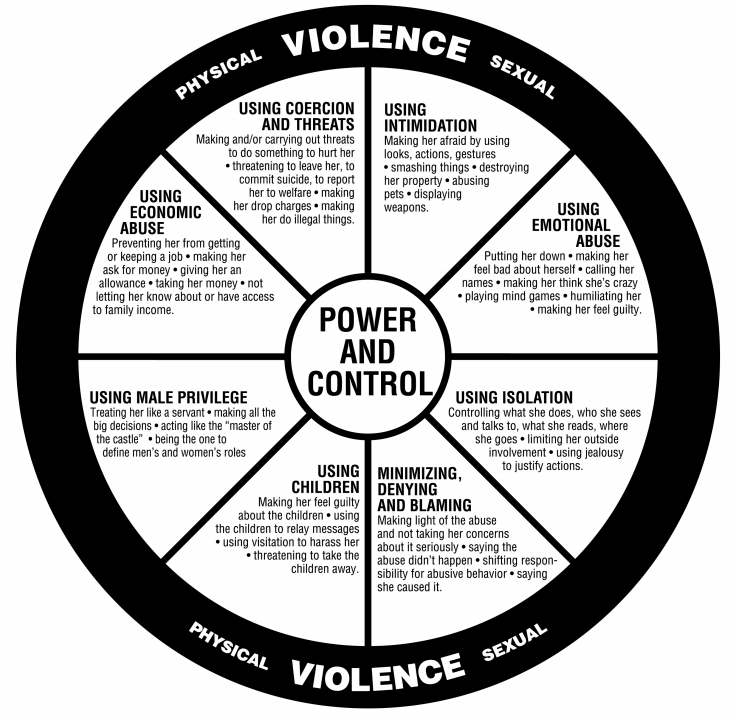
It was only when I began studying criminology at university that I unearthed many underlying questions relating to the abuse I suffered as a child and from watching my mother be psychically and mentally abused. I was understanding my experiences from an academic standpoint, as well as my peers’ experience of domestic abuse too. As a child, I had recognised that the verbal and psychological abuse was increasingly more detrimental on the victim’s mental wellbeing than the physical violence; the physical violence is a tactic used by abusers to install fear in the victim. In the early stages of my dissertation, I was gathering literature to aid my understanding on domestic abuse. I came across two essential books, one book was recommended by @paulaabowles, my dissertation supervisor: Scream Quietly or the Neighbours Will Hear (1979) by Erin Pizzey. This book provided great insight to the many aspects of domestic abuse from the memoires of Erin Pizzey who founded the first domestic abuse refugee in London 1971 known as, Chiswick Women’s Aid. The second book was: Education Groups for Men Who Batter: The Duluth Model (1993) by Pence and Paymar. This book aided my knowledge on the management of male abusers and how their abusive behaviour is explained by the using the visual theoretical framework known as, the Duluth Model; the Power and Control Wheel. I gathered more literature on domestic abuse and formed the backbone for my dissertation, it was time to self-reflect and establish my standpoint so that I could conduct my research as effectively and ethically.
The Research
This was the most important aspect of the dissertation; the most influential too. In my second-year studies, we were required to conduct research in a criminal justice agency to form a placement report; I chose a charitable organisation based in Northampton that provided support to female victims and offenders in the criminal justice system. For my dissertation, I chose to go back to the facility to conduct further research, this time my focus was on the detrimental effects experienced by female victims of domestic abuse.
Using a feminist standpoint alongside an autoethnographic method/ methodology, I was able to conduct primary research together with the participants of the study. I chose feminism as my standpoint due to the fundamental theoretical question centred in the social phenomenon of domestic abuse: gender inequality. I believe the feminist perspective was the most compatible and reliable standpoint to tackle my research with, it allowed room for self-reflection to identify my own biases and to recognise societal influences on how I interpret experiences and emotions. The standpoint’s counterpart – autoethnography – was employed so that I could actively insert myself into the research; this was supported by my research tool of observation participation and by recording qualitative data in a research diary. Over the course of nine weeks, I had formed trustworthy and respectful relationships with the participants, I had also encountered epiphanies and clarities regarding my own experiences of domestic abuse. Through using the research method observation participation, I was able to observe the body language and facial expressions of the participants alongside witnessing their emotions and participating in conversation. Collectively, my research methods enabled me to gather in-depth, first-hand accounts of the women’s experiences of domestic abuse. When writing the conclusion for my dissertation, I was able to establish that psychological and emotional abuse can be more detrimental to the victim than the physical violence itself. Interestingly, I had identified patterns and trends in the abuser’s behaviour and how it impacts the victim’s response; the victims tend to mimic their abusive partners traits e.g. anger and guilt.
I was able to conclude my dissertation with supporting evidence to credit my original question, through using personal experience and the experience of the wonderful women that participated in my research. Many of the women’s experiences highlighted in my dissertation research corresponded with the Duluth Model thesis embedded in my literature review. I was able to demonstrate how the elements of power and control in the abusive partner behaviour can adversely affect the victim; consequences of mental health issues, substance misuse and changes in victim’s lifestyle and behaviour. Overall, the experience was incredibly insightful and provided me with transferable interpersonal and analytical skills.
Share this:


Take a leap…it might just be worth it!
When I was asked to write a blog about doing research for my dissertation, I immediately went to https://thoughtsfromthecriminologyteam.blog/category/first-class-dissertation/ to read what others had written before me. Previous entries covered race and discrimination, homelessness, hate crime, and working with sex offenders, among other things; all good meaty stuff that is highly relevant to the study of criminology, and to society.
I knew I was taking a risk when I decided to mix it up and write a criminology dissertation that was based on historical crime and punishment, as there was the chance that it fell into neither camp. From a historian’s perspective, I wasn’t researching a primary source, per se, and from a criminologist’s perspective, would it have enough relevant criminological theory?
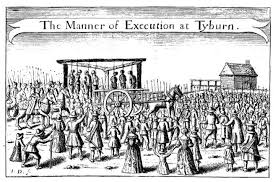
I just knew I wanted to do something to do with historical crime and punishment, but I didn’t know where to start. Eventually I came across two quotes that I thought were relevant to my subject area: ‘the rulers of eighteenth-century England cherished the death sentence’ (Hay, 1975:17), and; ‘a quasi-judicial role such as [the royal pardon] is not a suitable function for the executive’ (Travis, 2009:9). From these, my idea was firstly to examine who received the death penalty and why, and why some were pardoned while others were not. Secondly, when it came to pardoning, who had the power to pardon and what were the criteria used? I was also particularly interested in the political aspect of this.
What soon became obvious was that even 200 plus years ago, it was the same people committing crime as it is today: the working-class poor, the marginalised and the desperate. And just as today, when those with money, power and connections commit crime, it was not considered crime in the same way, and therefore, the punishment was not the same. I could see then, that I would be able to apply relevant criminological theory. I also needed to incorporate a fair bit of law and constitutional changes to the criminal justice system. As we were always being reminded that criminology is a ‘rendezvous’ subject that encompasses many other disciplines, this gave me the confidence to forge ahead!
I actually really enjoyed researching my dissertation, especially the case studies. After doing lots of research on the Old Bailey Online, I found 3 cases from 1789 which highlighted 3 different outcomes for the same crime, as a way of showing the criteria used for deciding who was pardoned and who was left to hang. I also examined several more recent death penalty cases from the 20th and 21st centuries, to show that the royal pardon is still an essential part of the criminal justice system, despite modernisations designed to replace it, like the introduction of the Criminal Cases Review Commission.
My advice to students in year 2 is: start thinking about your dissertation early! It took me a long, long time to decide what I wanted to research, and I researched a lot of stuff that I didn’t end up using. At one point I was so worried that I even talked to @paulaabowles about deferring my dissertation until next year! But I’m so glad I didn’t do that. I won’t lie to you, it is hard work and requires a lot of time and dedication, which is why it’s so important to pick something that interests you. In the end, though I still worried that it would be too ‘in the middle’ to please either camp, I thoroughly enjoyed doing this piece of work, and was quite sad when it was finished. To be rewarded with a First was beyond anything I could have hoped for, and I’d like to think that was due not only to my hard work, but also to the passion I had for the subject matter.
References:
Hay, D. (1975). Property, Authority and the Criminal Law. In: Hay, D., Linebaugh, J., Rule, J., Thompson, E. and Winslow, C. (Eds). Albion’s Fatal Tree: Crime and Society in Eighteenth-Century England. London: Verso. Pp. 17-63.
Travis, A. (2009). National: Royal Pardon: Legal Reform: I shouldn’t be able to make these decisions, says Straw (Guardian Homepages). The Guardian (London, England). P.9.
Share this:


#CriminologyBookClub: The Perplexing Theft of the Jewel in the Crown

As you know from our last #CriminologyBookClub entry a small group of us decided the best way to thrive in lockdown was to seek solace in reading and talking about books. Building on on what has quickly become standard practice, we’ve decided to continue with all seven bloggers contributing! Our fourth book was chosen by all of us (unanimously) after we fell in love with the first instalment. Without more ado, let’s see why we all adore Inspector Chopra (retired) et al.:
Another great edition to the Baby Ganesh agency series. After thoroughly enjoying the first book, I was slightly sceptical that book 2 would bring me the same level of excitement as the former. I was pleasantly surprised! The Perplexing Theft of the Jewel in the Crown, will take you on a picturesque journey across Mumbai. The story definitely pumps up the pace giving the reader more mystery and excitement. We now get more of an insight into characters such as inspector Chopra (retired) and his devoted wife Poppy. We also get to meet some new characters such as the loveable young boy Irfan, and of course the star of the show Ganesh, Chopra’s mysterious elephant. This novel has mystery within mystery, humour, suspense and some history, which is a great combination for anyone who wants to have an enjoyable read.
@svr2727

In the second instalment of detective Chopra’s detective (retired) adventures he is investigating the disappearance of the infamous Koh-i-noor diamond. The mythical gem disappears from a well-guarded place putting a strain on Anglo-Indian relations. In the midst of an international incident, the retired inspector is trying to make sense of the case with his usual crew and some new additions. In this instalment of the genre, the cultural clash becomes more obvious, with the main character trying to make sense of the colonial past and his feelings about the imprint it left behind. The sidekick elephant remains youthful, impulsive and at times petulant advancing him from a human child to a moody teenager. The case comes with some twists and turns, but the most interesting part is the way the main characters develop, especially in the face of some interesting sub-plots
@manosdaskalou
I am usually, very critical, of everything I read, even more so of books I love. However, with Inspector Chopra et al., I am completely missing my critical faculties. This book, like the first, is warm, colourful and welcoming. It has moments of delightful humour (unicycles and giant birthday cake), pathos (burns and a comforting trunk) to high drama (a missing child and pachyderm). Throughout, I didn’t want to read too much at any sitting, but that was only because I didn’t want to say goodbye to Vaseem Khan’s wonderful characters, even if only for a short while…
@paulaabowles
It was a pleasure to read the second book of the Inspector Chopra series. Yes, sometimes the characters go through some difficult times, the extreme inequalities between the rich and poor are made clear and Britain’s infamous colonial past (and present) plays a significant part of the plot, yet the book remains a heart-warming and up-beat read. The current character developments and introduction of new character Irfan is wonderfully done. Cannot wait to read the next book in the series!
@haleysread
One of the reasons for critiquing a book is to provide a balanced view for would be readers. An almost impossible task in the case of Vaseem Khan’s second Baby Ganesh Agency Investigation. Lost in a colourful world, and swept along with the intrigue of the plot and multiple sub plots involving both delightful and dark characters, the will to find a crumb of negativity is quickly broken. You know this is not real and, yet it could be, you know that some of the things that are portrayed are awful, but they just add to the narrative and you know and really hope that when the baby elephant Ganesha is in trouble, it will all work out fine, as it should. Knowing these things, rather than detracting from the need to quickly get to the end, just add to the need to turn page after page. Willpower is needed to avoid finishing the book in one hit. Rarely can I say that once again I finished a book and sat back with a feeling of inner warmth and a smile on my face. If there is anything negative to say about the book, well it was all over far too quickly.
@5teveh
The second Inspector Chopra book is even more thrilling than the first! As I read it I felt as though I genuinely knew the characters and I found myself worrying about them and hoping things would resolve for them. The book deals with some serious themes alongside some laugh out loud funny moments and I couldn’t put it down. Can’t wait to read the third instalment!
@saffrongarside
I have always found that the rule for sequels in film is: they are never a good as the original/first. Now, there are exceptions to the rule, however these for me are few and far between. However, when it comes to literature I have found that the sequels are as good if not better than the original- this is the rule. And my favourite writers are ones who have created a literature series (or multiple): with each book getting better and better. The Perplexing Theft of the Jewel in the Crown (Chopra 2.0) by Vaseem Khan has maintained my rule for literature and sequels! Hurray! After the explosive first instalment where we are introduced to Inspector Chopra, Poppy and Baby Ganesha, the pressure was well and truly on for the second book to deliver. And By Joe! Deliver it did! Fast paced, with multiple side-stories (which in all fairness are more important that the theft of the crown), reinforce all the emotion you felt for the characters in the first book and makes you open your heart to little Irfan! Excellent read, beautiful characters, humorous plots! Roll on book number 3!
@jesjames50

Share this:


“Things you need to know about criminology”: A student perspective – Mary Adams, recent Graduate and mature student.
We are all living in very strange times, not sure when life will return to normal...but if you're thinking about studying criminology, here is some advice from those best placed to know!

The most important module to my understanding of criminology is: I would have to say they are all equally important for understanding different aspects of Criminology. In first year I loved The Science of Crime which showed how things have evolved over time, and that what we now see as funny was actually cutting edge in its day. True Crime also makes you look beyond the sensational headlines and separate fact from fiction. In second year Crime & Justice gave a brilliant grounding in the inner workings, and failings, of the criminal justice system. And in third year, the Violence module explores personal and institutional violence, which is especially relevant in current times

The academic criminology book you must read: Becker’s Outsiders and Cohen’s Folk Devils and Moral Panics are a must. I also found Hopkins-Burke’s An Introduction to Criminological Theory and Newburn’s Criminology essential reading for first year as well as Finch & Fafinski’s Criminological Skills. For second year I recommend Davies, Croall & Tyrer’s Criminal Justice. If you choose the Violence module in third year you will be grateful for Curtin & Litke’s Institutional Violence. And don’t forget Foucault’s Discipline & Punish!

The academic journal article you must read:
There are so many excellent journal articles out there, it’s difficult to choose! Some of my favourites have been:
'Alphonse Bertillon & the measure of man' by Farebrother & Champkin;
'Bad Boys, Good Mothers & the ‘’Miracle’’ of Ritalin by Ilina Singh';
'Detainee Abuse & the Ethics of Psychology' by Kathryn French;
'Attachment, Masculinity & Self-control' by Hayslett-McCall & Bernard;
'Grenfell, Austerity & Institutional Violence' by Cooper & Whyte;
'The Phenomenology of Paid Killing' by Laurie Calhoun;
'A Utilitarian Argument Against Torture Interrogation of Terrorists' by J. Arrigo.

The criminology documentary you must watch:
Without a doubt, a must-see is the Panorama documentary London Tower Fire: Britain’s Shame. I would also highly recommend the movie The Stanford Prison Experiment

The most important criminologist you must read:
Of course you must read Lombroso, Beccaria & Bentham. I also enjoyed reading work by feminist criminologists like Pat Carlen, Carol Smart & Sandra Walklate. And of course, Angela Davis is a must!

Something criminological that fascinates me:
What fascinates me is how the powers that be, and a good proportion of the public, cannot seem to realise that social injustice is one of the major factors behind why people commit crime. And the fact that putting more & more people in prison is seen as a ‘good’ thing is mind-boggling!

The most surprising thing I know about criminology is:
The fact that it is such a diverse subject & incorporates so many other disciplines

The most important thing I've learnt from studying criminology is:
Question everything! Don’t take anything at face-value. Try to look beyond the attention grabbing headlines to find out the real story. Read, read, read!

The most pressing criminological problem facing society is:
Unfortunately I think there are many pressing problems facing society today, the main ones being social injustice & inequality, systemic racism, institutional violence, and mass incarceration


When family and friends ask, I tell them criminology is:
Some people joke that I’m learning how to be a criminal! Others think it’s all about locking people up! I tell them it’s all about looking at the mechanisms in-built in our society that disadvantage & discriminate against whole groups of people, and that, unless we are part of the rich & powerful elite, any one of us could find ourselves in the ‘out’ group at any time. I also tell them to stop reading The Daily Mail, vote Labour, and question everything!!
Share this:


Volunteering Matters

Some people volunteer because they have to, I volunteer because I want to. From a personal perspective I knew that the foodbank was the place that I wanted to be at.
I started volunteering in 2016, doing just 1 day a week and as the years have gone by it has meant more hours spread over a couple of days, especially during the Christmas holidays which are incredibly busy. Proving that many volunteers are necessary and needed to help keep it going.
It is a place that suits me because its local and fits around my studies. I am able to learn new skills and gain insightful knowledge. The volunteers are very welcoming and warm people. However, over the years I’ve noticed a dramatic increase in the use of the foodbank and its diversity. In theory, its usage should be on the decrease.
Within the foodbank, we deal with some very complex individuals who require different approaches. It sounds cliché, but I volunteer to make a difference and eradicate the myth that the foodbank is used for those in society that are labelled as people who can’t budget properly.
I have found that service users are predominantly people living on low incomes. People who are working on zero hours contracts; or have reduced hours and having their wages topped up with benefits like Universal Credit. As a result, they just don’t have enough money coming in; leaving hardly anything for essentials such as food and heat. I found during my research that many families have been without electricity, that means no cooking facilities or warmth! Pushing them further into poverty. In this day and age people should not be without the basics.
In my time as a volunteer I have met some lovely people who have been affected by different adverse life events and it is heartbreaking to witness, but equally by giving something back I can see their eyes light up when they are given their food parcels. I feel I am learning to be more compassionate. However, if the person has no access to electricity how are they supposed to cook or provide a meal for their children without electricity?
On a weekly basis we see many different people from so many backgrounds; from civil servants, to social workers and the homeless. Service users can often be emotional and sometimes defensive, who feel they don’t deserve to be given food because they are working. The foodbank does not discriminate, it sees everyone as equal.
What does that say about the world we live in? That being food poor or food insecure is something that must stay hidden and not be talked about…people living with food insecurity would rather go without, than ask for help. The basic income does not cover the essentials such as food after paying bills.
It makes me mad that poverty is an accepted part of society and service users state they feel undervalued and unaccepted. The question that must be asked ‘Is poverty violence? The answer is a resounding YES, due to the structures within society that prevent people living with food insecurity from accessing food. Therefore, locking them into poverty, preventing them from moving out of the cycle of deprivation.
It is left to charitable organisations to do whatever they can to help that person to be able to eat and survive. But how long can these charities go on for? The Trussell Trust began in 2000 in the UK….
Children and families should not be going without food, as it is a fundamental right that everyone should have access to the basics. Food insecurity is more prominent now than ever with The Trussell Trust (2020) reporting an increase of 81% in emergency food parcels.
The foodbank is available to help people to access a 3 day food parcel to ‘see them through” a difficult period in their lives. During my time spent conducting my dissertation within the foodbank, food poverty was a combination of a variety of reasons such as low income, often together with a contributory factor such as an adverse life event. For example, the loss of employment or breakdown of a relationship which will only add more shame and stigma. The foodbank is not just about giving away free food, it’s about offering a safe place to sit and get warm and service users can relax, tell their stories and feel free for as long as they can, before they have to face more challenges from the world.
Furthermore, some in society see the foodbank as the sticking plaster that holds the poor in society together. I would say that without the foodbank many people would be committing crimes or be starving. Some politicians have stated that food banks are the heart of community cohesion. The only time I have seen the local MP at our foodbank is for a photo opportunity. The poor in society are forgotten and its about time they weren’t!
The service users are people who are neglected by society and the government, who by definition, make them feel they are to blame for their situation. By visiting the foodbank we show them respect and compassion.

 Thoughts from the criminology team
