
Home » Criminal Justice System (Page 7)
Category Archives: Criminal Justice System

“What do you want to do?”

I was twenty-five when I first applied for university, studying BA Criminology. When I first told my family and friends, they were unsure. They did not understand why I wanted to change my career and study a subject without having a ‘plan’. I had accomplished many things since leaving school, such as buying a house with my partner, buying a dog and at the time I was a supervisor in a nursery. However, I was not satisfied, I wanted to be challenged and wanted to try something new. In all honesty when family and friends asked me what I wanted to do, I did not know.
Growing up, I was told I was not smart enough for university, as a young person you begin to believe it. It wasn’t until I began looking after children when I realised that children should be encouraged and if I was going to reinforce my belief – that you can do whatever you set your mind to – I should believe it in myself.
Choosing criminology was easy for me, crime was something I was sheltered from as a child, I did not experience crime. I only began my fascination, after watching documentaries on Netflix and even then, I was curious about the concept and naively wondered, ‘what makes a criminal?’ After studying for one year, it is now easy to see that it is not an easy question to answer – but don’t take my word for it, study criminology and see for yourself!
Reflecting on my first year, it was a lot of trial and error. Like many students, I was learning how to write essays again and abide by deadlines, work a part time job, balance study, volunteering and home life and try not to consume too much alcohol in the meantime.
As summer comes to an end, I am excited to begin again, the stresses of university become worth it, when you build friendships and have the realisation that you are one step closer to graduating. I will continue to be determined and optimistic in my future, because I believe I can finally be satisfied. The next time someone asks me what I want to do, I can be confident and say, ‘I haven’t decided yet, but you can do anything you set your mind to, and no-one can tell me I am not smart enough for university’.

Share this:


How literature failed me as a black student

My name is Francine Bitalo, I am 21 years old and a Criminology undergraduate at the University of Northampton. Coming from a black African background I have always had a strong interest in the Criminal Justice System and its treatment towards different groups in society.
My dissertation was based on the impact of police practices such as stop and search on young black men and their families. Whilst statistics present the alarming racial disproportionately which exist in many areas in the criminal justice system, it fails to portray the long-lasting effects it has had on Black families. For example, the daily harassment and differential treatment subjected to young Black men has forced black families to reinvent themselves to conform to institutional racism. Coming from a Black family myself and having male family member, the findings in my dissertation quickly became personal to me, as I could constantly relate them to the structuring of my own family. For example, the fact that it would take my father longer to find a job due to institutional racism, making my mother the breadwinner, or when my mother is preparing my brothers for police harassment and discrimination, but not me and sisters.
While conducting my research I was quick to learn that what literature may describe as a phenomenon, for many of us is a reality. If I am honest the writing stage of my dissertation was difficult for me because it was a passionate topic. I experienced a lot of self-doubt regarding my positionality for example, being a Black woman and facing my own forms of discrimination and now having to talk about the experiences of young Black men. I think my dissertation tutor would agree with me on this as I remember emailing her after I submitted my work expressing how I felt like I didn’t effectively capture the effects and the voices of the young Black men I interviewed, despite that being my main goal. I mean who would blame me, as a student, if I am honest I felt like literature really let me down for instance, when writing my literature review I found that literature neglected the subject of racism solely from the perspectives of young Black men, despite statistics showing them to being the largest group to experience institutional racism. At this point I had to laugh at the criminal justice system and its propositions to improving police relations as well as re offending.
With that being said the information I did come across I couldn’t help but sense the notion of white privilege lingering in the perspective of some scholars. I understand this is a strong claim to make however I say this because not only did literature provide little of the work of Black scholars regarding the topic, yet it was evident that most white scholars did not see the issue with stop and search and its discriminate use. Arguments for this were discussed in my dissertation for example, some argued that the process of racial socialisation in Black households were ineffective to police relations and the functioning of their services, which creates the notion that the Black community should submit to discrimination and harassment in favour of procedures and compliance during police encounter. Some tried to justify the disproportionality in stop and search by claiming that young Black men should be harassed because they tend to be out more especially in certain urban areas or the disproportionate targeting of Black minors is due to parental criminality. I felt there was a lack of accountability from white scholar thus, little understanding in the issue of race which is natural because their experiences do not allow them to understand. Yet this led me to ask questions such as why shouldn’t Black mothers have the right to prepare their sons for police discrimination, does it matter what time and area should a person of colour be around for them to be targeted at?
After completing my dissertation and getting a First Class I felt extremely proud of myself, the fact that I did not shy away from the research topic despite it being limited in literature. As a result, it was satisfying to know that I was able to articulate the experiences of others to a First Class standard. I hope this can encourage others to trust in their abilities and put aside any doubts especially when choosing a research topic. As a student writing a dissertation or even an assignment, I believe we should explore the unexplored, open the unopened and always be willing to discover and learn. Do not be afraid of researching something that is limited or has never been done. Lastly as my dissertation was extremely passionate to me I have decided to turn it into a personal project and continue researching the topic
Share this:


Teaching Criminology….Cui Bono?

Following several conversations with students and reflecting on another year of studying it got me thinking, what is or can be the quintessentially criminological issue that we can impart onto them? It is always interesting to hear from others how your ideas are transferred into their notes, phrases and general understanding. I think that there are a few things that are becoming clear early on, like the usual amazement of those outside the discipline who hear one studying criminology; a reverence as if the person reading the subject is on a par with those committing the deed. There is a natural curiosity to crime in all walks of life and those seen closer to the topic, attract part of that curiosity.
There are however some more profound issues relating to criminology that are neither clear nor so straightforward. The discipline is an amalgamation of thoughts and theories making it incredibly difficult to pinpoint a generic appreciation for the discipline. Some of us like the social discourses relating to social injustice, a matter traditionally closer to sociology or social work, while others ponder the conceptual dynamics of human behaviour, mostly addressed in philosophical debates, then there are those who find the individual characteristics and personality socio-dynamic dimensions intriguing. These distinct impressions will not only inform our understanding but will also provide each of us with a perspective, a way of understanding criminology at a granular level.
In criminological discourses, informed by law, I used to pose the old Latin question: Cui bono (who benefits)? A question posed by the old legal experts to trace liability and responsibility of the act committed. Obviously in their view crime is a choice committed freely by a deviant mind. But then I was never a legal expert, so my take on the old question was rather subversive. The question of who benefits can potentially lay the question of responsibility wide open, if it is to be looked from a social harm perspective. The original question was incredibly precise to identify a person for the benefit of a trial. That’s the old criminal evidence track.
Taking this question outside the forensic setting and suddenly this becomes quite a loaded query that can unpack different responses. Cui bono? Why are we talking about drug abuse as a crime and not about tax avoidance? Why is the first regarded a crime, whilst the second is simply frowned upon? Cui bono? When we criminalise the movement of people whose undocumented by we have very little information for those who have procured numerous properties in the country? If our objection is on transparency of movement then there is clearly a difference of how this is addressed. Cui bono? When we identify violence at interpersonal level and we have the mechanisms to suppress it, but we can engage in state violence against another state without applying the same mechanisms? If our objection is the use of violence, this is something that needs to be addressed regardless of the situation, but it is not. Ironically some of the state violence, may contribute to the movement of people, may contribute to the exploitation of population and to the use of substances of those who returned home broken from a violence they embraced.
Our criminology is merely informed from our perspective and it is my perspective that led me to those thoughts. I am very sure that another colleague would have been making a series of different connections when asked “Cui Bono?”
Share this:


The roots of criminology; the past in the service of the future;

In a number of blog posts colleagues and myself (New Beginnings, Modern University or New University? Waterside: What an exciting time to be a student, Park Life, The ever rolling stream rolls on), we talked about the move to a new campus and the pedagogies it will develop for staff and students. Despite being in one of the newest campuses in the country, we also deliver some of our course content in the Sessions House. This is one of the oldest and most historic buildings in town. Sometimes with students we leave the modern to take a plunge in history in a matter of hours. Traditionally the court has been used in education primarily for mooting in the study of law or for reenactment for humanities. On this occasion, criminology occupies the space for learning enhancement that shall go beyond these roles.
The Sessions House is the old court in the centre of Northampton, built 1676 following the great fire of Northampton in 1675. The building was the seat of justice for the town, where the public heard unspeakable crimes from matricide to witchcraft. Justice in the 17th century appear as a drama to be played in public, where all could hear the details of those wicked people, to be judged. Once condemned, their execution at the gallows at the back of the court completed the spectacle of justice. In criminology discourse, at the time this building was founded, Locke was writing about toleration and the constrains of earthy judges. The building for the town became the embodiment of justice and the representation of fairness. How can criminology not be part of this legacy?
There were some of the reasons why we have made this connection with the past but sometimes these connections may not be so apparent or clear. It was in one of those sessions that I began to think of the importance of what we do. This is not just a space; it is a connection to the past that contains part of the history of what we now recognise as criminology. The witch trials of Northampton, among other lessons they can demonstrate, show a society suspicious of those women who are visible. Something that four centuries after we still struggle with, if we were to observe for example the #metoo movement. Furthermore, from the historic trials on those who murdered their partners we can now gain a new understanding, in a room full of students, instead of judges debating the merits of punishment and the boundaries of sentencing.
These are some of the reasons that will take this historic building forward and project it forward reclaiming it for what it was intended to be. A courthouse is a place of arbitration and debate. In the world of pedagogy knowledge is constant and ever evolving but knowing one’s roots allows the exploration of the subject to be anchored in a way that one can identify how debates and issues evolve in the discipline. Academic work can be solitary work, long hours of reading and assignment preparation, but it can also be demonstrative. In this case we a group (or maybe a gang) of criminologists explore how justice and penal policy changes so sitting at the green leather seats of courtroom, whilst tapping notes on a tablet. We are delighted to reclaim this space so that the criminologists of the future to figure out many ethical dilemmas some of whom once may have occupied the mind of the bench and formed legal precedent. History has a lot to teach us and we can project this into the future as new theoretical conventions are to emerge.
Locke J, (1689), A letter Concerning Toleration, assessed 01/11/18 https://en.wikisource.org/wiki/A_Letter_Concerning_Toleration
Share this:


The Criminology Toolbox

Whilst sitting at my desk at work recently I realised just how much I took away with me in my toolbox from my time studying Criminology. I wanted this blog to be about exactly how this discipline has helped me in my personal and working life and the transferable skills I acquired without even realising I was using them.
In 2011 I came to University an 18 year old with a very closed and one sided mind set and this is something I will openly admit to! A memory that I feel will stick with me forever is from a Crime and Society seminar in the first year with @manosdaskalou. I remember openly saying to him that I felt prisoners should not be allowed to have televisions whilst in prison and that they were there to do their sentence and not watch this week’s Hollyoaks (@manosdaskalou you may remember that sour faced girl sat in front of you, although the sour face is still very much there!). I am sure those of you reading will be cursing BUT my self-righteous opinions did change and the more I attended various lectures and seminars, the more I became open to listening to and respecting the opinions of my peers and became further educated about the impact rehabilitation and second chances have on lives.
In my second year I volunteered for an organisation focusing primarily on helping individuals who had been in the Criminal Justice System with gaining employment and education. As soon as I walked through those doors I saw first-hand the positive impact this organisation had on the lives of those using the service.
I had an opportunity to assist on a healthy living course for individuals recovering from drug and alcohol addictions. Some of those attending the course had never taken an exam before or even been in an educational setting and others struggled with reading. I quickly realised the privileged position I was in to be able to even be at University and do things I feel we all take for granted sometimes such as reading. I also provided some advice to a young female who completely freaked out at the idea of taking a multiple choice test. I gave her some tips before that I had acquired from my own experiences. She was so very thankful to me and I will always remember her.
In terms of the other skills I now have in my toolbox, the thought of standing up and presenting in front of my peers at University terrified me, however in doing that I can now confidently stand up in front of my colleagues and bosses to present information and contribute in meetings. I can also provide evidence in court thanks to learning about the criminal process.
Having the opportunity to debate certain issues within the criminological world and society has taught me to have a voice and provide my point in a professional manner whilst listening to others. From the assignments set, to working within a timetable, it has all enabled me to build upon my time management and organisational skills. Working to tight deadlines also does not daunt me especially when I now have work to them daily.
I think we can all be truthful here and say we did groan a little bit when we were given extra reading to do at home and to critically analyse various pieces of text for the next seminar (heaven forbid!). However, being able to analyse a piece of text is a skill I use every day in my job with Northamptonshire Police especially when building court files and reading the fibs and fairy tales that some of our customers can provide. Criminology taught me to be critical of everything around me, take on board criticism and ask questions. I now ensure I stick my head above the parapet and often put the police officers in their place, as they do need it sometimes!
On the whole, I am thankful for the transferable skills I acquired from studying Criminology despite using them daily and not realising until my desk epiphany! I graduated in 2014 with a toolbox of skills ready for the big wide world and I will cherish them always. Who knows, it may even help me with becoming a parent in November!
Share this:

An Officer’s Perspective

Northampton University…. In 2011, I first moved up to Northampton to study criminology and sociology. At the time I had never moved away from home before and it was a somewhat daunting experience. However, now looking back at this, it was one of the best decisions I have made.
Before I set out to go to university I had always said to my family I wanted to join the police force. I chose to study criminology as I believed this was going to help me with joining the police and also provide me with an insight as to what I was potentially going to be letting myself in for.
From studying criminology for three years I learnt about various ideas surrounding police and their interactions with communities, portrayal within the media and about the history of the police and how it has developed into the service we have today.
I remember, in particular, being interested in the way in which the media portrayed the police and the impact this had on how young people, and whether this influenced their opinions on police, so much to the point I completed a dissertation on this topic. This interest came about from a module called YOUTH CRIME AND MEDIA. Ultimately, I found that young people, in particular those aged between 18-25, were influenced by the media and this helped them form their opinions of the police.
Whilst I was at Northampton University, I was a Special Constable for the Metropolitan Police having joined them in 2013, my third year at uni. This began to give me some experience into what the police dealt with on a day to day basis. Although I was only doing this for 16 hours per month, I would recommend this to anybody who is considering joining the police.
Since graduating from Northampton University, I joined the Metropolitan Police as a PC and I have been with the Met now for 2 years. I can honestly say that, when people say this is a job like no other, they are all correct. I go to work not knowing what I am going to encounter from one call to the next. The one thing which has really stood out for me since joining as a PC, and having graduated from university, is how misunderstood the role of police appears to have become. When I was growing up I remember thinking that the role of police was to chase criminals and drive fast cars. However, this nowadays is a small proportion of the work we do and the role of police officers is a lot more diverse and changing daily. We have a lot of interactions with people who are suffering a mental health crisis who may need our assistance because they are feeling suicidal, investigate the disappearance of missing people and even attend calls where someone is suffering a cardiac arrest and a defibrillator is required, as police officers now carry these in their vehicles.
However. I feel the biggest thing that my criminology degree has assisted me with in relation to my job is how I analyse situations. Criminology was largely centred around different theories and analysing these perspectives. On a day to day basis I regularly find myself analysing information provided to me and trying to understand different accounts people provide me with and trying to use these accounts to decide what action needs to be taken. Overall criminology has allowed me to take a step back from somewhat stressful situations and analyse what has happened. This has given me the confidence to present different viewpoints to people and also challenge people at times on controversial topics or viewpoints they may have.
I do think that I took the right path to becoming a police officer; criminology did equip me with various different skills that I utilise in my day-to-day role. I wouldn’t change the path I took. I enjoyed every bit of my degree, and the lecturers were always supportive.
Share this:

Autism: Police discretion and decision making in an uncertain environment

A question that always strikes when discussing my dissertation topic is why did I chose that particular area to research – is it a topic that I was passionate about, or was it my personal life experience that lead me into that field? The answer to these questions is quite simply, no. In fact, it was a topic I accidentally fell into after reading existing research on the area for one of my other modules in second year. Intellectual disabilities within the Criminal Justice System are quite often misunderstood, and as with all academics, the more I read the more questions I had. Taking this topic at face value, the field is extremely vast, therefore after taking some time to digest many angles of research I narrowed my topic down into two areas. Firstly, an institution that I have always been interested in, policing, and one intellectual disability in particular, autism (ASD).
To give you a brief background; the examination of the relationship between criminal offending and intellectual impairments is proved as complex and problematic. This is due to the issues associated with the definition of intellectual disability, as well as the contribution of unreported crime which means researchers can only examine individuals who are currently involved in the criminal justice process (Talbot, 2007). From a policing perspective, these complexities and concerns increase in terms of conflicting procedures and relevant training which can later impact levels of service and effective results (Mercier, 2011). Amongst academic literature, it is evident that contemporary policing institutions are subject to increasing budget cuts which means that police staff must exercise discretion in processing large amounts of work with inadequate resources, in which shortcuts and simplifications are made (Lipsky 2010; Loftus 2012). This is highly problematic as policies have a tendency to occupy a one size fits all approach. In effect, this becomes increasingly difficult when dealing with individuals with autism, as increased support and time is needed to sufficiently deal with vulnerable groups.
In terms of Autistic Spectrum Disorder (ASD), this is a common form of learning impairment which can affect patterns of behaviour within a social setting. Autism is characterised by a triad of impairments, which includes difficulties in social interactions, communication and repetitiveness in daily activities (Roth, 2010, p.6). The varying expression and severity of these characteristics means that autism is recognised into sub-types, and therefore, is also considered as a spectrum disorder (King and Murphy, 2014).
On the occasions that an individual with ASD comes into contact with the police and wider criminal justice services, it is normally a result of their social and communication skills being misunderstood which means that they are not given the appropriate support (Cockram, 2005; Tucker et al, 2008). Research suggests that autistic individuals are likely to become extremely distressed in unfamiliar, confusing and loud situations whereby their actions and behaviour can be easily misinterpreted and subsequent actions could escalate the situation (Hayes, 2007). Complimented by the current implications previously discussed that are faced by the police and wider services, it is no surprise that there are issues and concerns surrounding police responses and decision-making processes towards the ASD community. After personally interviewing police constables and custody officers from Northamptonshire Police to investigate the initial responses when dealing with such individuals; the realities of such dilemmas were highlighted.
After now completing my studies with First Class Honours, I am now fortunate enough to work for The Appropriate Adult Service (TAAS) where such theoretical standpoints are often presented to me in a practical environment. From a personal judgement, Appropriate Adults can be easily dismissed, but just being a friendly face who can help and support a vulnerable person within a custody setting is far more rewarding than meets the eye. In fact, it is my dissertation itself that has lead me into this career and has now also given me a thirst for further study in my chosen research area.
References
Lipsky, M. (2010) Street- Level Bureaucracy: Dilemmas of the Individual in Public Services. New York: Russell Sage Foundation.
Loftus, B. (2012) Police culture in a changing world. Oxford: Oxford University Press.
Mercier, C. (2011) The first critical steps through the criminal justice system for persons with intellectual disabilities. British Journal of Learning Disabilities. 39(2), pp.130-138.
Roth, L. (2010) Autism: an evolving concept. In: Roth, L. (ed.) The Autism Spectrum in the 21st Century: Exploring Psychology, Biology and Practice. 1st ed. London: Jessica Kingsley Publishers, pp.1-29.
Share this:

White and Male: the diversity of the judiciary
My name is Anita and I graduated with a Criminology degree in 2016. I did have a great time at the University of Northampton. The course was challenging and intense however this meant that it provided me with the opportunity to overcome my barriers and develop myself both academically and personally. I miss going to lectures and seminars, revising for exams and even writing the dissertation. If you are reading this and you are in your third year, you are probably thinking that I am mad but I do miss it. I can’t help it! I can honestly say that going to University was the best decision I ever made and I would love to go back and do a postgraduate course. My advice to all students is enjoy it because time goes by so fast.
Before we start, please stop and think…… What percentage of court judges would you guess are women? How many members of the judiciary are from ethnic minorities?
If your guess is that we have a substancial amount of women and members from ethnic minorities in the judiciary, then this blog post might dissapoint you.
Let’s define the judiciary before we progress any further. The judiciary can be defined as ‘the judges of a country or a state, when they are considered as a group’ (Hornby, 2000, p.700).
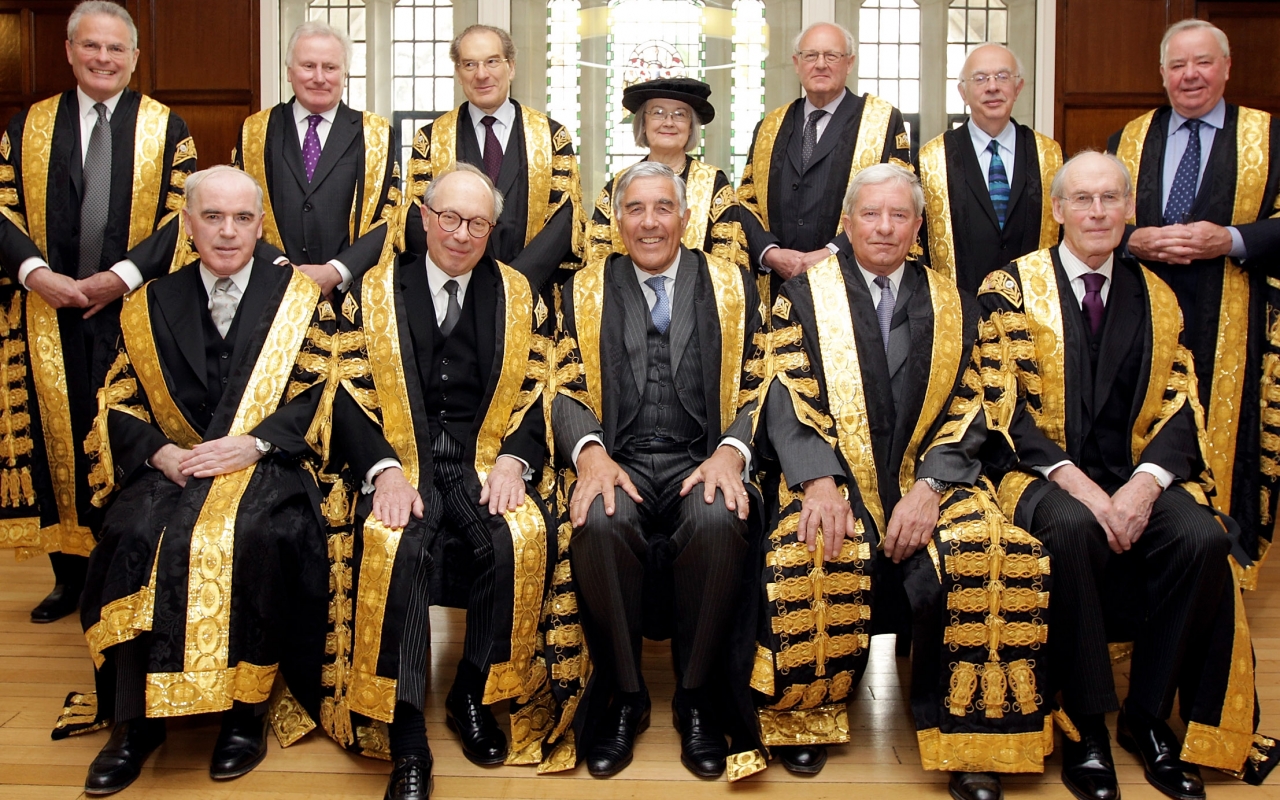
The judiciary in the UK is dominated by Oxbridge educated white middle-class men. It is estimated that three quarters of all judges in England and Wales are male and 95% are white (Lieven, 2017). The gender imbalance can be well illustrated by looking at the Supreme Court. There is only one woman among the 12 Justices on the Supreme Court. Lady Hale is the only woman ever to serve on the Court and all of the judges are and have always been white. Only Armenia and Azerbaijan have lower proportions of women in their judiciary than the UK (Lieven, 2017). This is unacceptable in 2018, changes must be made to address this gender imbalance.
In terms of race, as at 1 April 2017, only 7% of court judges were Black, Asian or Minority Ethnic (BAME). Of these Asian and Asian British accounted for 3% and the remaining three groups, Black and Black British, Mixed Ethnicity and Other Ethnic Group at around 1% each (Ministry of Justice, 2017).
This shows that judges are not reflective of wider society. This is a significant problem because the public should be confident that the judiciary delivers justice fairly. The lack of diversity means that concerns about the legitimacy and objectivity of judgements may be raised.
There are three main explanations for the continuing lack of diversity. The first explanation is that there are not enough women, BAME people and people from less privileged backgrounds who would be suitable for appointment. However, I would question the validity of this argument. This explanation seems to suggest that women or BAME people might be lacking lacking adequate knowledge or experience. There is no evidence to support this argument.
The second explanation given is that women and BAME candidates do not apply for appointment. However, it could be argued that the issue is more complicated than simply failing to apply. For example, Allen (2009) found that when BAME candidates and solicitors do apply for appointment they are significantly less likely to be successful than white candidates or barristers. This shows that the issue is not the lack of applications received from women or BAME candidates but perhaps the discriminatory recruitment process.
The third explanation is that the key principle governing our appointments to judicial office is merit. Unfortunately, the term ‘merit’ is not defined, but the implication is that achieving merit and diversity are at odds.
In conclusion, the lack of diversity in the judicial system is very concerning and should be addressed as soon as possible. This needs to be done to ensure that our justice system is fair, accessible and efficient. It is in our interest to produce a judiciary of the highest quality that reflects the make-up of our nation. Difference should be valued and not feared.
References
Allen, A (2009) Barriers to Application for Judicial Appointment Research. London: Judicial Appointments Commission.
Hornby, A.S (2000) Oxford Advanced Learner’s Dictionary. 6th ed. Oxford: Oxford University Press.
Lieven, N (2017) Increasing judicial diversity. London: Justice.
The Ministry of Justice (2017) Judicial Diversity Statistics 2017. London: MOJ.
Share this:


CRCs: Did we really expect them to work?

For those of you who follow changes in the Criminal Justice System (CJS) or have studied Crime and Justice, you will be aware that current probation arrangements are based on the notion of contestability, made possible by the Offender Management Act 2007 and fully enacted under the Offender Rehabilitation Act 2014. What this meant in practice was the auctioning off of probation work to newly formed Community Rehabilitation Companies (CRCs) in 2015 (Davies et al, 2015). This move was highly controversial and was strongly opposed by practitioners and academics alike who were concerned that such arrangements would undermine the CJS, result in a deskilled probation service, and create a postcode lottery of provision (Raynor et al., 2014; Robinson et al., 2016). The government’s decision to ignore those who may be considered experts in the field has had perilous consequences for those receiving the services as well as the service providers themselves.
Picking up on @manosdaskalou’s theme of justice from his June blog and considering the questions overhanging the future sustainability of the CRC arrangements it is timely to consider these provisions in a little more detail. In recent weeks I have found myself sitting on a number of probation or non-CPS courts where I have witnessed first-hand the inadequacies of the CRC arrangements and potential injustices faced by offenders under their supervision. For instance, I have observed a steady increase in applications from probation, or more specifically CRCs, to have community orders adjusted. While such requests are not in themselves unusual, the type of adjustment or more specifically the reason behind the request, are. For example, I have witnessed an increase in requests for the Building Better Relationships (BBR) programme to be removed because there is insufficient time left on the order to complete it, or that the order itself is increased in length to allow the programme to be completed[1]. Such a request raises several questions, firstly why has an offender who is engaged with the Community Order not been able to complete the BBR within a 12-month, or even 24-month timeframe? Secondly, as such programmes are designed to reduce the risk of future domestic abuse, how is rehabilitation going to be achieved if the programme is removed? Thirdly, is it in the interests of justice or fairness to increase the length of the community order by 3 to 6 month to allow the programme to be complete? These are complex questions and have no easy answer, especially if the reason for failing to complete (or start) the programme is not the offenders fault but rather the CRCs lack of management or organisation. Where an application to increase the order is granted by the court the offender faces an injustice in as much as their sentencing is being increased, not based on the severity of the crime or their failure to comply, but because the provider has failed to manage the order efficiently. Equally, where the removal of the BBR programme is granted it is the offender who suffers because the rehabilitative element is removed, making punishment the sole purpose of the order and thus undermining the very reason for the reform in the first place.
Whilst it may appear that I am blaming the CRCs for these failings, that is not my intent. The problems are with the reform itself, not necessarily the CRCs given the contracts. Many of the CRCs awarded contracts were not fully aware of the extent of the workload or pressure that would come with such provisions, which in turn has had a knock-on effect on resources, funding, training, staff morale and so forth. As many of these problems were also those plaguing probation post-reform, it should come as little surprise that the CRCs were in no better a position than probation, to manage the number of offenders involved, or the financial and resource burden that came with it.
My observations are further supported by the growing number of news reports criticising the arrangements, with headlines like ‘Private probation firms criticised for supervising offenders by phone’ (Travis, 2017a), ‘Private probation firms fail to cut rates of reoffending’ (Savage, 2018), ‘Private probation firms face huge losses despite £342m ‘bailout’’ (Travis, 2018), and ‘Private companies could pull out of probation contracts over costs’ (Travis, 2017b). Such reports come as little surprise if you consider the strength of opposition to the reform in the first place and their justifications for it. Reading such reports leaves me rolling my eyes and saying ‘well, what did you expect if you ignore the advice of experts!’, such an outcome was inevitable.
In response to these concerns, the Justice Committee has launched an inquiry into the Government’s Transforming Rehabilitation Programme to look at CRC contracts, amongst other things. Whatever the outcome, the cost of additional reform to the tax payer is likely to be significant, not to mention the impact this will have on the CJS, the NPS, and offenders. All of this begs the question of what the real intention of the Transforming Rehabilitation reform was, that is who was it designed for? If it’s aim was to reduce reoffending rates by providing support to offenders who previously were not eligible for probation support, then the success of this is highly questionable. While it could be argued that more offenders now received support, the nature and quality of the support is debatable. Alternatively, if the aim was to reduce spending on the CJS, the problems encountered by the CRCs and the need for an MoJ ‘bail out’ suggests that this too has been unsuccessful. In short, all that we can say about this reform is that Chris Grayling (the then Home Secretary), and the Conservative Government more generally have left their mark on the CJS.
[1] Community Orders typically lasts for 12 months but can run for 24 months. The BBR programme runs over a number of weeks and is often used for cases involving domestic abuse.
References:
Davies, M. (2015) Davies, Croall and Tyrer’s Criminal Justice. Harlow: Pearson.
Raynor, P., Ugwudike, P. and Vanstone, M. (2014) The impact of skills in probation work: A reconviction study. Criminology and Criminal Justice, 14(2), pp.235–249.
Robinson, G., Burke, L., and Millings, M. (2016) Criminal Justice Identities in Transition: The Case of Devolved Probation Services in England and Wales. British Journal of Criminology, 56(1), pp.161-178.
Savage, M. (2018) Private probation firms fail to cut rates of reoffending. Guardian [online]. Available from: https://www.theguardian.com/society/2018/feb/03/private-firms-fail-cut-rates-reoffending-low-medium-risk-offenders [Accessed 6 July 2018].
Travis, A. (2017a) Private probation firms criticised for supervising offenders by phone. Guardian [online]. Available from: https://www.theguardian.com/society/2017/dec/14/private-probation-firms-criticised-supervising-offenders-phone [Accessed 6 July 2018].
Travis, A. (2017b) Private companies could pull out of probation contracts over costs. Guardian [online]. Available from: https://www.theguardian.com/society/2017/mar/21/private-companies-could-pull-out-of-probation-contracts-over-costs [Accessed 6 July 2018].
Travis, A. (2018) Private probation firms face huge losses despite £342m ‘bailout’. Guardian [online]. Available from: https://www.theguardian.com/society/2018/jan/17/private-probation-companies-face-huge-losses-despite-342m-bailout [Accessed 6 July 2018].
Share this:


The never-changing face of justice

There are occasions that I consider more fundamental questions beyond criminology, such as the nature of justice. Usually whilst reading some new sentencing guidelines or new procedures but on occasions major events such as the fire at Grenfell and the ensuing calls from former residents for accountability and of course justice! There are good reasons why contemplating the nature of justice is so important in any society especially one that has recently embarked on a constitutional discussion following the Brexit referendum.
Justice is perhaps one of the most interesting concepts in criminology; both intangible and tangible at the same time. In every day discourses we talk about the Criminal Justice System as a very precise order of organisations recognising its systemic nature or as a clear journey of events acknowledging its procedural progression. Both usually are summed up on the question I pose to students; is justice a system or a process? Of course, those who have considered this question know only too well that justice is both at different times. As a system, justice provides all those elements that make it tangible to us; a great bureaucracy that serves the delivery of justice, a network of professions (many of which are staffed by our graduates) and a structure that (seemingly) provides us all with a firm sense of equity. As a process, we identify each stage of justice as an autonomous entity, unmolested by bias, thus ensuring that all citizens are judged on the same scales. After all, lady justice is blind but fair!
This is our justice system since 1066 when the Normans brought the system we recognise today and even when, despite uprisings and revolutions such as the one that led to the 1215 signing of the Magna Carta, many facets of the system have remained quite the same. An obvious deduction from this is that the nature of justice requires stability and precedent in order to function. Tradition seems to captivate people; we only need a short journey to the local magistrates’ court to see centuries old traditions unfold. I imagine that for any time traveler, the court is probably the safest place to be, as little will seem to them to be out of place.
So far, we have been talking about justice as a tangible entity as used by professionals daily. What about the other side of justice? The intangible concept on fairness, equal opportunity and impartiality? This part is rather contentious and problematic. This is the part that people call upon when they say justice for Grenfell, justice for Stephen Lawrence, justice for Hillsborough. The people do not simply want a mechanism nor a process, but they want the reassurance that justice is not a privilege but a cornerstone of civic life. The irony here; is that the call for justice, among the people who formed popular campaigns that either led or will lead to inquiries often expose the inadequacies, failings and injustices that exist(ed) in our archaic system.
These campaigns, have made obvious something incredibly important, that justice should not simply appear to be fair, but it must be fair and most importantly, has to learn and coincide with the times. So lady justice may be blind, but she may need to come down and converse with the people that she seeks to serve, because without them she will become a fata morgana,a vision that will not satisfy its ideals nor its implementation. Then justice becomes another word devoid of meaning and substance. Thirty years to wait for an justice is an incredibly long time and this is perhaps this may be the lesson we all need to carry forward.

 Thoughts from the criminology team