
Home » Crime and Punishment (Page 14)
Category Archives: Crime and Punishment

Plagiarism on trial
For many students, I suspect it is difficult to imagine what an academic does aside from lectures, seminars and marking. The answer can range across several different activities including module or programme development, research, reading, university/faculty committee meetings, working groups and so on. Alongside my responsibilities within Criminology, I am also an Academic Integrity and Misconduct Officer (or AIMO for short). I have undertaken this role for the past few years and thought it might be interesting to share some of my thoughts.
The process involved in suspected academic misconduct is relatively straightforward. The marking tutor spots an issue, either through their subject knowledge, or increasingly with the help of originality reports such as those provided by Turnitin. They then make a referral, complete with the evidence they have compiled and hand it over to be dealt with by an AIMO. The AIMO reviews the evidence and decides whether to interview the student. After this they write a report and the student is informed as to the outcome. All of the above sounds extremely procedural but plagiarism and academic misconduct more generally are far more complex than this would suggest.
As a criminologist, I am used to studying theories around offending, rehabilitation, punishment, recidivism and so on. Perhaps that is why it seems obvious to me to conceptualise academic misconduct along the same lines. For instance; the referral process is undertaken by the university police (that is the referring tutor) who gathers together the evidence for submission to the CPS. In the case of suspected academic misconduct this referral comes to an AIMO who makes the decision as to whether or not there is a case worth answering. If the evidence appears compelling, the AIMO will explore the issue further, in essence, taking the place of the Magistrates’ Court in the CJS. If the offence is deemed to be relatively minor or a first time offence, sentence can be passed by the AIMO. Alternatively, the case can be passed to the Crown Court an Academic Misconduct Panel where the evidence will be heard by three AIMOs. These panels have far greater sanctions available to them (including termination of studies) and they can also hear appeals.
So far the analogy works, but what about the other, more human, aspects. When considering criminal motivation, it is clear the reasons for committing academic misconduct are as wide-ranging as those detailed in court. As with crime, some admit to their wrongdoings at the first opportunity whilst others do not accept that they have done anything wrong. Likewise, in terms of mitigation both types of “suspect” cite family problems, mental health issues, financial problems, as well as, ignorance of the rules and regulations.
But in the case of academic misconduct; who is the victim? Arguably, the answer to that is academia as a whole. If there is an absence of integrity in any, or all of our studies, academia is impoverished and ultimately the academy and its pursuit of knowledge could fall. As with crime, the impact on individuals is immeasurable and hugely detrimental to wider society.
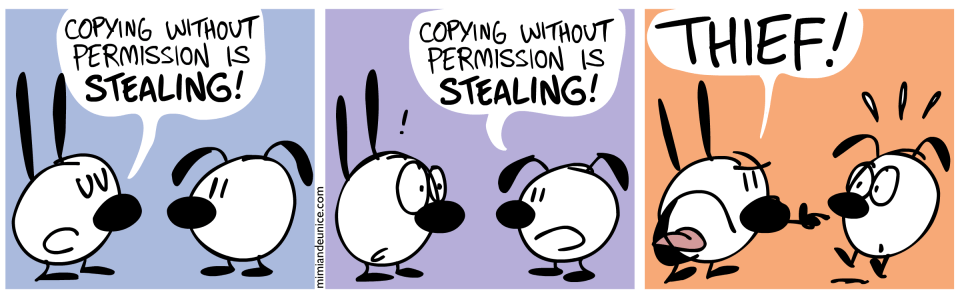
As would be expected in an entry about academic misconduct, the image used is copyright free. It is available for use and modification from wikimedia
Share this:


A licence to kill?
The recent news around “Marine A’s” (Alexander Blackman) successful appeal to have his conviction changed from murder to manslaughter made headlines. The act which led to Blackman’s conviction took place in Helmand Province, Afghanistan in 2011. On the day in question, Blackman was filmed shooting dead an injured man on the ground. During the killing, Blackman can be heard clearly citing Shakespeare, followed by an acknowledgement that ‘I just broke the Geneva Convention’. Furthermore, he announced, after the killing, that ‘It’s nothing you wouldn’t do to us’. All of which seemed to suggest that this was an open and shut case, but such a conclusion would ignore both the military context and apparent public feeling.
For many, this appeal judgement appeared to vindicate Blackman and excuse his behaviour on the grounds of mental health. The media circus, which surrounded both the original conviction and the later appeals (the first reduced the tariff on his life sentence from 10 to 8 years), almost seemed to imply that he had been acquitted rather than his conviction amended. Indeed, for those who supported Blackman, many of which were military personnel, the fact that he had even been charged was seen as an affront to the dignity of both the soldier and the Marines.
It is interesting to consider why the case has caused so much furor. Blackman was the first British soldier to be convicted of murder, the crime itself was recorded (inadvertently) for posterity but the case raises much wider questions. For a criminal justice system which is based primarily on Classicism’s understanding of crime and punishment there seemed to be very little focus on Blackman as an individual responsible for his own behaviour. After all, Blackman made clear his rationale for the killing, even going so far as to cite the Geneva Convention and remind his colleagues that they could never talk about these events. However, the continual focus appears to have been on his chosen occupation as a military man, representative of all those soldiers who went before and those who would follow the same career path. Rather than individual agency and motivation, it would appear that the focus has been on conditions of war and the nature of soldiering as well as, his supposed mental state on the day.
Outside the Royal Courts of Justice, on verdict day, Blackman’s wife claimed that the downgrading of her husband’s offence was a better reflection of “the circumstances that [he] found himself in during that terrible tour of Afghanistan”. Whilst civilian courts have long paid heed to evidence of mental health conditions, it is worth considering whether they would go to such lengths for a civilian, regardless of past trauma or the circumstances of their crime. Likewise, we need to acknowledge that the modern servicemen (unlike his conscripted WWI/WWII/National Service forefathers) does not find himself on the battleground but has chosen to enlist in the military with all that such a career entails, in the twenty first century.
Share this:


Reflections from a Pilot
Firstly, I would like to apologise for the use of the first person. I have made an entire career of telling my students to use the third person. However, writing a blog is generally informal and a bit more personal.
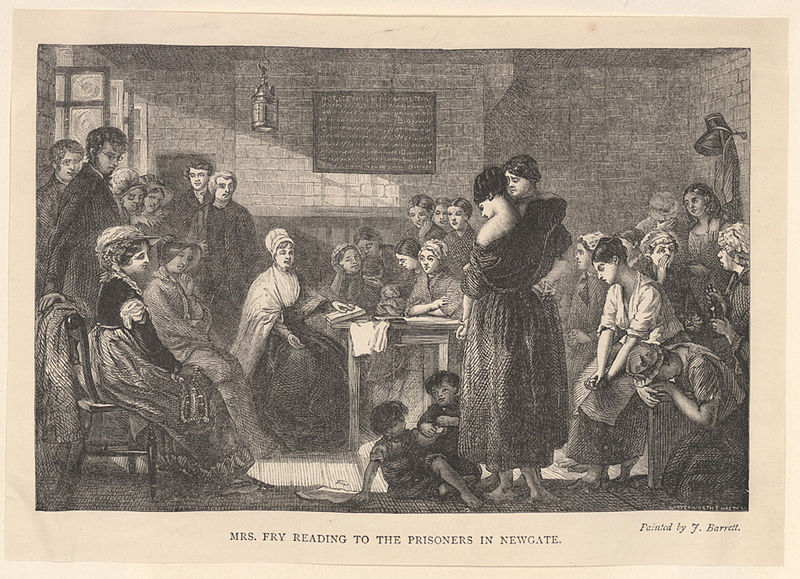
Throughout my years in academia there are a number of things I continue to find incredibly edifying; transferring research interests into teaching is one of them, even better when that is done outside of the traditional educational environment. The idea of education in prison is definitely not new, with roots in the old reformers (notably in the UK; Elizabeth Fry), with a clear focus on combating illiteracy. This was a product of penal policy that reflected a different social reality. In the 21st century, we have to re-imagine penal policy, alongside education, which can cater for the changed nature of our world.
Our recent pilot, was designed to explore some new approaches to education in both the prison and the university* . The idea was to bring university students and prisoners together and teach them the same topics encouraging them to engage with each other in discussions. This was envisaged as a process whereby all participants would be equal learners; leaving all other identities behind. The main thinking behind the approach taken was predicated on universal notions; the respect for humanity and the opportunity to express oneself uninhibited among equals. With this in mind, teaching in prisons should not be any different to teaching at University, provided that all learners feel safe and they are ready to engage. In the planning stages, my concerns were primarily on the way equality could be maintained. In addition, the levels of engagement and the material covered were also issues that created some trepidation. The knowledge that this pilot would be the blueprint for the design of a new level 6 module made the undertaking even more exciting.
The pilot involved 9 hours of teaching in prison with additional sessions before and after in order to familiarise all learners with each other, the environment and the learning process. Through the three teaching sessions, we all observed the transformative effect of education. From early suspicion and reluctance among learners to the confident elaboration of complex arguments. It took one simple statement to get the learning process going. This is when the pilot became a new lens through which I saw education, in prison with all my students, as a thriving learning environment.

 Thoughts from the criminology team
