
Home » Crime and Punishment (Page 11)
Category Archives: Crime and Punishment

The roots of criminology; the past in the service of the future;

In a number of blog posts colleagues and myself (New Beginnings, Modern University or New University? Waterside: What an exciting time to be a student, Park Life, The ever rolling stream rolls on), we talked about the move to a new campus and the pedagogies it will develop for staff and students. Despite being in one of the newest campuses in the country, we also deliver some of our course content in the Sessions House. This is one of the oldest and most historic buildings in town. Sometimes with students we leave the modern to take a plunge in history in a matter of hours. Traditionally the court has been used in education primarily for mooting in the study of law or for reenactment for humanities. On this occasion, criminology occupies the space for learning enhancement that shall go beyond these roles.
The Sessions House is the old court in the centre of Northampton, built 1676 following the great fire of Northampton in 1675. The building was the seat of justice for the town, where the public heard unspeakable crimes from matricide to witchcraft. Justice in the 17th century appear as a drama to be played in public, where all could hear the details of those wicked people, to be judged. Once condemned, their execution at the gallows at the back of the court completed the spectacle of justice. In criminology discourse, at the time this building was founded, Locke was writing about toleration and the constrains of earthy judges. The building for the town became the embodiment of justice and the representation of fairness. How can criminology not be part of this legacy?
There were some of the reasons why we have made this connection with the past but sometimes these connections may not be so apparent or clear. It was in one of those sessions that I began to think of the importance of what we do. This is not just a space; it is a connection to the past that contains part of the history of what we now recognise as criminology. The witch trials of Northampton, among other lessons they can demonstrate, show a society suspicious of those women who are visible. Something that four centuries after we still struggle with, if we were to observe for example the #metoo movement. Furthermore, from the historic trials on those who murdered their partners we can now gain a new understanding, in a room full of students, instead of judges debating the merits of punishment and the boundaries of sentencing.
These are some of the reasons that will take this historic building forward and project it forward reclaiming it for what it was intended to be. A courthouse is a place of arbitration and debate. In the world of pedagogy knowledge is constant and ever evolving but knowing one’s roots allows the exploration of the subject to be anchored in a way that one can identify how debates and issues evolve in the discipline. Academic work can be solitary work, long hours of reading and assignment preparation, but it can also be demonstrative. In this case we a group (or maybe a gang) of criminologists explore how justice and penal policy changes so sitting at the green leather seats of courtroom, whilst tapping notes on a tablet. We are delighted to reclaim this space so that the criminologists of the future to figure out many ethical dilemmas some of whom once may have occupied the mind of the bench and formed legal precedent. History has a lot to teach us and we can project this into the future as new theoretical conventions are to emerge.
Locke J, (1689), A letter Concerning Toleration, assessed 01/11/18 https://en.wikisource.org/wiki/A_Letter_Concerning_Toleration
Share this:


Halloween Prison Tourism

Haley Read is an Associate Lecturer teaching modules in the first and third years.
Yes, that spooky time of the year is upon us! Excited at the prospect of being free to do something at Halloween but deterred by the considerable amount of effort required to create an average-looking carved pumpkin face, I Google, ‘Things to do for Halloween in the Midlands’.
I find that ‘prison (and cell) ghost tours’ are being advertised for tourists who can spend the night where (in)famous offenders once resided and the ‘condemned souls’ of unusual and dangerous inmates still ‘haunt’ the prison walls today. I do a bit more searching and find that more reputable prison museums are also advertising similar events, which promise a ‘fun’ and ‘action packed’ family days out where gift shops and restaurants are available for all to enjoy.
Of course, the lives of inmates who suffered from harsh and brutal prison regimes are commodified in all prison museums, and not just at Halloween related events. What appears concerning is that these commercial and profit-based events seem to attract visitors through promotional techniques which promise to entertain, reinforce common sensical, and at times fabricated (see Barton and Brown, 2015 for examples) understandings of history, crime and punishment. These also present sensationalistic a-political accounts of the past in order to appeal to popular fascinations with prison-related gore and horror; all of which aim to attract customers.
The fascination with attending places of punishment is nothing new. Barton and Brown (2015) illustrates this with historical accounts of visitors engaging in the theatrics of public executions and of others who would visit punishment-based institutions out of curiosity or to amuse themselves. And I suppose modern commercial prison tourism could be viewed as an updated way to satisfy morbid curiosities surrounding punishment and the prison.
The reason that this concerns me is that despite having the potential to educate others and challenge prison stereotypes that are reinforced through the media and True Crime books, commercialised prison events aim to entertain as well as inform. This then has the danger of cementing popular and at times fictional views on the prison that could be seen as being historically inaccurate. Barton and Brown (2015) exemplify this idea by noting that prison museums present inmates as being unusual, harsh historical punishments as being necessary and the contemporary prison system as being progressive and less punitive. However, opposing views suggest that offenders are more ordinary than unusual, that historical punishments are brutal rather than necessary and that many contemporary prisons are viewed as being newer versions of punitive discipline rather than progressive.
Perhaps it could be that presenting a simplified, uncritical and stereotyped version of the past as entertainment prevents prison tourists from understanding the true pains experienced by those who have been incarcerated within the prison (see Barton and Brown, 2015, Sim, 2009). Truer prison museum promotions could inform visitors of staff corruption, the detrimental social and psychological effects of the prison, and that inmates (throughout history) are more likely to be those who are poor, disempowered, previously victimised and at risk of violence and self-harm upon entering prison. But perhaps this would attract less visitors/profit…And so for another year I will stick to carving pumpkins.
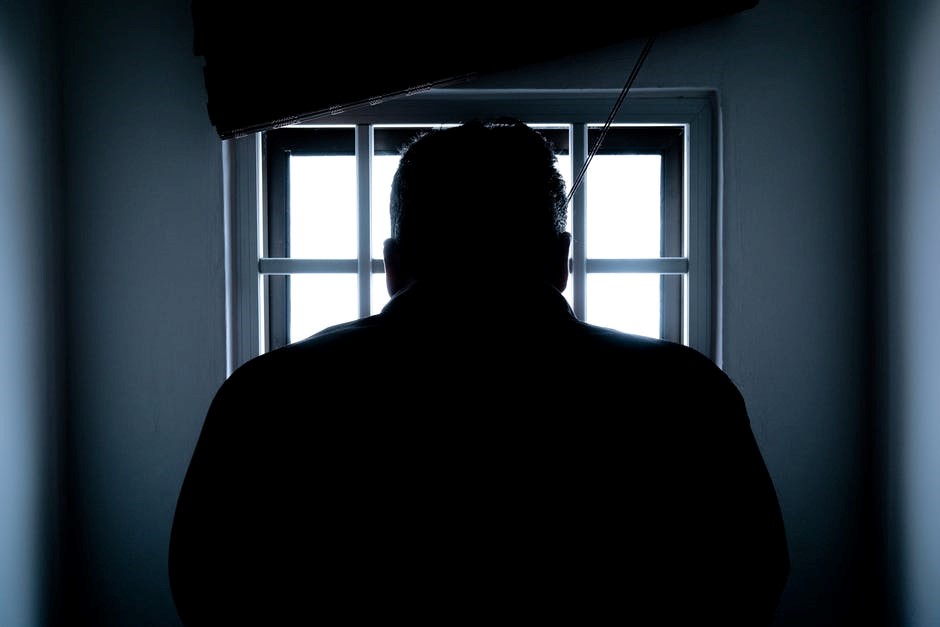
Photo by Markus Spiske temporausch.com on Pexels.com
Barton, A and Brown, A. (2015) Show me the Prison! The Development of Prison Tourism in the UK. Crime Media and Culture. 11(3), pp.237-258. Doi: 10.1177/1741659015592455.
Sim, J. (2009) Punishment and Prisons: Power and the Carceral State. London: Sage.
Share this:


Interview with a sex offender
Bethany Davies is an Associate Lecturer teaching modules in the first year.
“Was this your first arrest?”
“Yes I’ve been in trouble with the police before, but just like cautions, like some old man called the police because we played football on the grass near his house. That was literally only about a couple months before i got arrested… for rape.”
I had just turned 20 years old when I conducted my first interview with a sex offender. I was prepping for my dissertation in the summer before my final year, conducting research in a probation office I volunteered at. I was allowed to observe, teach and in the final week I would be able to interview 3 males I had been observing. I interviewed the first two males who both I had taught some very basic numeracy skills to, they were both as they were in my observations, very calm and just trying to get through each day without breaching their probation orders. My final interview was with a young male who I had been helping prepare to apply for a construction worker card, which would allow him to apply for building work. In my months of observing and teaching him I felt like he was no different to males I went to school with or anyone you would pass on the street. I did not want to know what his crime was, as a probation mentor that was never my focus, nor my business to know.
Ethically speaking, I was challenged by the idea that I was conducting an interview and research with the consent of an individual who in my eyes did not understand the concept of consent. That may seem like a harmful way to view this man and the outlook of his time in probation as ultimately it was about reform and reintegration after his time in prison. I have progressed a lot since this day and I no longer view this person so hopelessly in my memory, then again, I am unsure of what he is doing now.
Each time I remember the interview and my experience there, I have different thoughts and different feelings, which I suppose is human nature. I also get annoyed at myself that I cannot seem to understand or rather pinpoint my own thoughts on it, I go between thinking what I did (teaching) was a good thing and it may have helped him, to thinking what I did was waste my time on someone who probably didn’t deserve it in many people’s eyes.
I had always felt I was very understanding of those labelled ‘ex-offenders’ and the cycle they can become trapped in. But before this experience, I had always worked with those whose crimes seemed relatively minor comparatively. Sexual violence is not something to me that is as simple to categorise or try to understand. I remember getting home a few hours later and sobbing for a victim I knew nothing about other than her perpetrator.
The experience has always stuck with me and made me appreciate the complexity of not only sexual offences but also the role of reform with sexual offences. It has led me to explore research around sexual violence and I have recently been exploring the work of Elizabeth Stanko and also revisiting my books by Susan Brownmiller. Both examine the role of the victim of sexual violence and raise questions about how historically sexual violence has been viewed.
This is a personal experience and not something I think everyone will relate to, but from experiences shared, there are lessons to be learnt.
Share this:


Congratulations, but no Celebrations

A few weeks ago, Sir Cliff Richard won his high court case against the BBC over the coverage of a police raid on his home, the raid relating to an investigation into historical sex abuse. I remember watching the coverage on the BBC and thinking at the time that somehow it wasn’t right. It wasn’t necessarily that his house had been raided that pricked my conscience but the fact that the raid was being filmed for a live audience and sensationalised as the cameras in the overhead helicopter zoomed into various rooms. A few days later in the sauna at my gym I overheard a conversation that went along the lines of ‘I’m not surprised, I always thought he was odd; paedo just like Rolf Harris’. And so, the damage is done, let’s not let the facts get in the way of a good gossip and I dare say a narrative that was repeated up and down the country. But Sir Cliff was never charged nor even arrested, he is innocent.
The case reminded me of something similar in 2003 where another celebrity Matthew Kelly was accused of child sex abuse. He was arrested but never charged, his career effectively took a nose dive and never recovered. He too is innocent and yet is listed amongst many others on a website called the Creep Sheet. The name synonymous with being guilty of something unsavoury and sinister, despite a lack of evidence. The way some of the papers reported that no charges were to be brought, suggested he had ‘got away with it’.
The BBC unsuccessfully sought leave to appeal in the case of Sir Cliff Richard and is considering whether to take the matter to the appeal court. Their concern is the freedom of the press and the rights of the public, citing public interest. Commentary regarding the case suggested that the court judgement impacted victims coming forward in historical abuse cases. Allegations therefore need to be publicised to encourage victims to come forward. This of course helps the prosecution case as evidence of similar fact can be used or in the view of some, abused (Webster R 2002). But what of the accused, are they to be thrown to the wolves?
Balancing individual freedoms and the rights of others including the press is an almost impossible task. The focus within the criminal justice system has shifted and some would say not far enough in favour of victims. What has been forgotten though, is the accused is innocent until proven guilty and despite whatever despicable crimes they are accused of, this is a maxim that criminal justice has stood by for centuries. Whilst the maxim appears to be generally true in court processes, it does not appear to be so outside of court. Instead there has been a dramatic shift from the general acceptance of the maxim ‘innocent until proven guilty’ to a dangerous precedent, which suggests through the press, ‘there’s no smoke without fire’. It is easy to make allegations, not easy to prove them and even more difficult to disprove them. And so, a new maxim, ‘guilty by accusation’. The press cannot complain about their freedoms being curtailed, when they stomp all over everyone else’s.
Share this:


Criminology: in the business of creating misery?

I’ve been thinking about Criminology a great deal this summer! Nothing new you might say, given that my career revolves around the discipline. However, my thoughts and reading have focused on the term ‘criminology’ rather than individual studies around crime, criminals, criminal justice and victims. The history of the word itself, is complex, with attempts to identify etymology and attribute ownership, contested (cf. Wilson, 2015). This challenge, however, pales into insignificance, once you wander into the debates about what Criminology is and, by default, what criminology isn’t (cf. Cohen, 1988, Bosworth and Hoyle, 2011, Carlen, 2011, Daly, 2011).
Foucault (1977) infamously described criminology as the embodiment of utilitarianism, suggesting that the discipline both enabled and perpetuated discipline and punishment. That, rather than critical and empathetic, criminology was only ever concerned with finding increasingly sophisticated ways of recording transgression and creating more efficient mechanisms for punishment and control. For a long time, I have resisted and tried to dismiss this description, from my understanding of criminology, perpetually searching for alternative and disruptive narratives, showing that the discipline can be far greater in its search for knowledge, than Foucault (1977) claimed.
However, it is becoming increasingly evident that Foucault (1977) was right; which begs the question how do we move away from this fixation with discipline and punishment? As a consequence, we could then focus on what criminology could be? From my perspective, criminology should be outspoken around what appears to be a culture of misery and suspicion. Instead of focusing on improving fraud detection for peddlers of misery (see the recent collapse of Wonga), or creating ever increasing bureaucracy to enable border control to jostle British citizens from the UK (see the recent Windrush scandal), or ways in which to excuse barbaric and violent processes against passive resistance (see case of Assistant Professor Duff), criminology should demand and inspire something far more profound. A discipline with social justice, civil liberties and human rights at its heart, would see these injustices for what they are, the creation of misery. It would identify, the increasing disproportionality of wealth in the UK and elsewhere and would see food banks, period poverty and homelessness as clearly criminal in intent and symptomatic of an unjust society.
Unless we can move past these law and order narratives and seek a criminology that is focused on making the world a better place, Foucault’s (1977) criticism must stand.
References
Bosworth, May and Hoyle, Carolyn, (2010), ‘What is Criminology? An Introduction’ in Mary Bosworth and Carolyn Hoyle, (2011), (eds), What is Criminology?, (Oxford: Oxford University Press): 1-12
Carlen, Pat, (2011), ‘Against Evangelism in Academic Criminology: For Criminology as a Scientific Art’ in Mary Bosworth and Carolyn Hoyle, (eds), What is Criminology?, (Oxford: Oxford University Press): 95-110
Cohen, Stanley, (1988), Against Criminology, (Oxford: Transaction Books)
Daly, Kathleen, (2011), ‘Shake It Up Baby: Practising Rock ‘n’ Roll Criminology’ in Mary Bosworth and Carolyn Hoyle, (eds), What is Criminology?, (Oxford: Oxford University Press): 111-24
Foucault, Michel, (1977), Discipline and Punish: The Birth of the Prison, tr. from the French by Alan Sheridan, (London: Penguin Books)
Wilson, Jeffrey R., (2015), ‘The Word Criminology: A Philology and a Definition,’ Criminology, Criminal Justice Law, & Society, 16, 3: 61-82
Share this:


The Power of Education

“Education is the most powerful weapon which we can use to change the world” (Nelson Mandela)
My name is Stephanie, and I was a Criminology (with Education Studies) student at Northampton from 2012-2015. After graduating, I proceeded with my masters in International Criminal Law and Security at Northampton still. I graduated with my Masters in February 2018. This blog post is a dedication to how one lecture and one seminar, from 2 different modules at different points in my university ignited a fire in me, which is still in me today.
Education opens our minds to new things; we see things differently and can use it as a force to make the world a better place and we can better understand the world around us. It can empower us to make change, teach and impart our knowledge to others.
During the 1st year of my undergrad, in a lecture in Crime and Society focussing on sexual crime, my heart sank. I thought back to when I was 13 years old, I was sexually assaulted at school. I didn’t realise it at that time, until that session on sexual crime.
I reminisced of the horrible occasion, telling the boy who assaulted me to stop and pushed his hands away. Despite any efforts to stop him, he still invaded my personal space and touched me without my consent, leaving deep emotional scars, my body feeling utterly violated, physically sick and was uncomfortable in my own skin (of which hung with me for a number of years after).
In the session on sexual crime, anger and distress bubbled in my stomach, as I tried to ignore the memories that were resurfacing. It was not until my final year in a Crime and Punishment seminar, where a role play of a rape victim reporting to the police demonstrated in class was done that a fire of inspiration was ignited. A fierce passion burned inside me, and I deeply felt that I had to do something.
This was inspiration behind my petition on making it compulsory to teach consent in schools: https://www.change.org/p/rt-hon-justine-greening-mp-to-make-it-compulsory-to-teach-consent-within-secondary-school-pshe-sex-education-classes
That seminar left me feeling a mixture of things; firstly, I was (and still am) appalled by the rape myths that are riddled in our society and justice system, and the lack of compassion shown to rape victims. I felt angry and somewhat distressed, because of my own experience of sexual assault.
It most importantly, started a fire of wanting to make change to better inform people in society of these rape myths, and to understand consent. To all who have read this, please sign, share and encourage others to do the same for this petition.
On another note, you are also more than welcome to follow my personal blog here at: https://wordpress.com/stats/day/flowervioletblog.wordpress.com
Share this:

My Calling in Life

I used to think waking up for lectures was the hardest thing in life. Little did I know that the 9am until 5pm isn’t a joke!
I graduated nearly 3 years ago now. Since then I have been trying to find my ‘calling’ in life. The world showed me it is not always easy finding this calling. If you want something you have to go and get it. Having a degree does not mean you will be successful. I had to start from the bottom and through trial and error; I can say I am starting to get there. Initially I was applying for any and every job possible. My first job was for an IT and Business training company and I was made redundant. That was difficult. Here I was thinking redundancy is for old people. Life had just started teaching its lessons.
After that I realised my passion was Criminology and I was determined in finding a job within this sector. So I started working for my County Court as clerk. I realised that I was definitely not cut out for the public sector. The frustration from the public because the court system is so slow (which I completely understood I would have been annoyed too). Don’t even get me started on the fact that I had to use dial up internet and buy my own teabags and milk! From that moment on I knew I had to get back into the private sector but still have a job in Criminology
I applied for a job as a Financial Crime Analyst for a bank and I was given the job without an interview! I knew I had found my ‘calling’. It is more Compliance based. I have had to start from the bottom. My senior managers appreciate the fact that I have a Criminology degree. But my colleagues make remarks like “Oh, you went to uni and we are still at the same level”. It is a slap in the face. But I am grateful for my degree. It has made me humble and look at people in a different light. When my colleagues are laughing at the crimes people commit such as an 80 year old man being involved in the drug trade or an 18 year old running a brothel. As a Criminologist I can ask questions such as “I wonder if this person is being coerced into this” or “I wonder if they have an drug problem or they did not grow up in a happy home”. I can empathise with these people and see beyond the information that is presented in front of me. I have been told I am too soft. But that is the life of a Criminologist and I would not change it for the world!
Share this:


A Failing Cultural or Criminal Justice System?

Sallek is a graduate from the MSc Criminology. He is currently undertaking doctoral studies at Stellenbosch University, South Africa.
In this piece, I reflect on the criminal justice system in Nigeria showing how a cultural practice evoked a social problematique, one that has exposed the state of the criminal justice system of the country. While I dissociate myself from the sect, I assume the place of the first person in contextualizing this discourse.
In line with the norm, our mothers were married to them. Having paid the bride wealth, even though they have no means, no investment and had little for their upkeep, they married as many as they could satisfy. In our number, they birth as many as their strength could allow, but, little did we know the intention is to give us out to tutelage from religious teachers once we could speak. So, we grew with little or no parental care, had little or no contact, and the street was to become our home where we learnt to be tough and strong. There we learnt we are the Almajiri (homeless children), learning and following the way and teaching of a teacher while we survived on alms and the goodwill of the rich and the sympathetic public.
As we grew older, some learnt trades, others grew stronger in the streets that became our home, a place which toughened and strengthened us into becoming readily available handymen, although our speciality was undefined. We became a political tool servicing the needs of desperate politicians, but, when our greed and their greed became insatiable, they lost their grip on us. We became swayed by extremist teachings, the ideologies were appealing and to us, a worthy course, so, we joined the sect and began a movement that would later become globally infamous. We grew in strength and might, then they coerced us into violence when in cold blood, their police murdered our leader with impunity. No one was held responsible; the court did nothing, and no form of judicial remedy was provided. So, we promised full scale war and to achieve this, we withdrew, strategized, and trained to be surgical and deadly.
The havoc we created was unimaginable, so they labelled us terrorists and we lived the name, overwhelmed their police, seized control of their territories, and continued to execute full war of terror. We caused a great humanitarian crisis, displaced many, and forced a refugee crisis, but, their predicament is better than our childhood experience. So, when they sheltered these displaced people in camps promising them protection, we defiled this fortress and have continued to kill many before their eyes. The war they waged on us using their potent monster, the military continuous to be futile. They lied to their populace that they have overpowered us, but, not only did we dare them, we also gave the military a great blow that no one could have imagined we could. The politicians promised change, but we proved that it was a mere propaganda when they had to negotiate the release of their daughters for a ransom which included releasing our friends in their custody. After this, we abducted even more girls at Dapchi. Now I wonder, these monsters we have become, is it our making, the fault of our parents, a failure of the criminal justice system, or a product of society?
Share this:


Out early on good behaviour
Dr Stephen O’Brien is the Dean for the Faculty of Health and Society at the University of Northampton
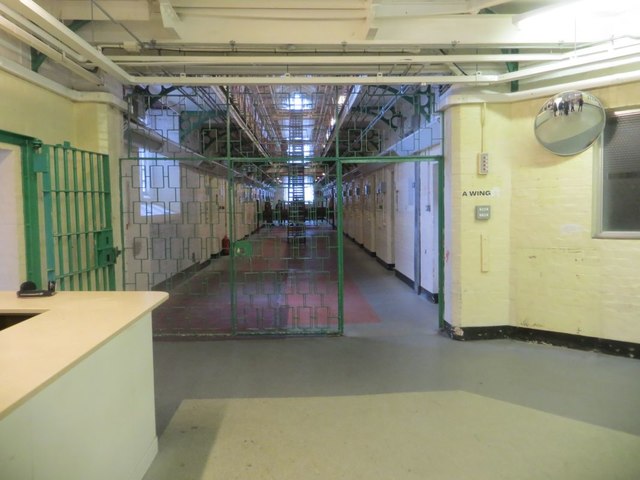
The other week I had the opportunity to visit one of our local prisons with academic colleagues from our Criminology team within the Faculty of Health and Society at the University of Northampton. The prison in question is a category C closed facility and it was my very first visit to such an institution. The context for my visit was to follow up and review the work completed by students, prisoners and staff in the joint delivery of an academic module which forms part of our undergraduate Criminology course. The module entitled “Beyond Justice” explores key philosophical, social and political issues associated with the concept of justice and the journeys that individuals travel within the criminal justice system in the UK. This innovative approach to collaborative education involving the delivery of the module to students of the university and prisoners was long in its gestation. The module itself had been delivered over several weeks in the Autumn term of 2017. What was very apparent from the start of this planned visit was how successful the venture had been; ground-breaking in many respects with clear impact for all involved. Indeed, it has been way more successful than anyone could have imagined when the staff embarked on the planning process. The project is an excellent example of the University’s Changemaker agenda with its emphasis upon mobilising University assets to address real life social challenges.
My particular visit was more than a simple review and celebration of good Changemaker work well done. It was to advance the working relationship with the Prison in the signing of a memorandum of understanding which outlined further work that would be developed on the back of this successful project. This will include; future classes for university/prison students, academic advancement of prison staff, the use of prison staff expertise in the university, research and consultancy. My visit was therefore a fruitful one. In the run up to the visit I had to endure all the usual jokes one would expect. Would they let me in? More importantly would they let me out? Clearly there was an absolute need to be on my best behaviour, keep my nose clean and certainly mind my Ps and Qs especially if I was to be “released”. Despite this ribbing I approached the visit with anticipation and an open mind. To be honest I was unsure what to expect. My only previous conceptual experience of this aspect of the criminal justice system was many years ago when I was working as a mental health nurse in a traditional NHS psychiatric hospital. This was in the early 1980s with its throwback to a period of mental health care based on primarily protecting the public from the mad in society. Whilst there had been some shifts in thinking there was still a strong element of the “custodial” in the treatment and care regimen adopted. Public safety was paramount and many patients had been in the hospital for tens of years with an ensuing sense of incarceration and institutionalisation. These concepts are well described in the seminal work of Barton (1976) who described the consequences of long term incarceration as a form of neurosis; a psychiatric disorder in which a person confined for a long period in a hospital, mental hospital, or prison assumes a dependent role, passively accepts the paternalist approach of those in charge, and develops symptoms and signs associated with restricted horizons, such as increasing passivity and lack of motivation. To be fair mental health services had been transitioning slowly since the 1960s with a move from the custodial to the therapeutic. The associated strategy of rehabilitation and the decant of patients from what was an old asylum to a more community based services were well underway. In many respects the speed of this change was proving problematic with community support struggling to catch up and cope with the numbers moving out of the institutions.
My only other personal experience was when I spent a night in the cells of my local police station following an “incident” in the town centre. This was a case of being in the wrong place at the wrong time. (I know everyone says that, but in this case it is a genuine explanation). However, this did give me a sense of what being locked up felt like albeit for a few hours one night. When being shown one of the single occupancy cells at the prison those feelings came flooding back. However, the thought of being there for several months or years would have considerably more impact. The accommodation was in fact worse than I had imagined. I reflected on this afterwards in light of what can sometimes be the prevailing narrative that prison is in some way a cushy number. The roof over your head, access to a TV and a warm bed along with three square meals a day is often dressed up as a comfortable daily life. The reality of incarceration is far from this view. A few days later I watched Trevor MacDonald report from Indiana State Prison in the USA as part of ITV’s crime and punishment season. In comparison to that you could argue the UK version is comfortable but I have no doubt either experience would be, for me, an extreme challenge.
There were further echoes of my mental health experiences as I was shown the rehabilitation facilities with opportunities for prisoners to experience real world work as part of their transition back into society. I was impressed with the community engagement and the foresight of some big high street companies to get involved in retraining and education. This aspect of the visit was much better than I imagined and there is evidence that this is working. It is a strict rehabilitation regime where any poor behaviour or departure from the planned activity results in failure and loss of the opportunity. This did make me reflect on our own project and its contribution to prisoner rehabilitation. In education, success and failure are norms and the process engenders much more tolerance of what we see as mistakes along the way. The great thing about this project is the achievement of all in terms of both the learning process and outcome. Those outcomes will be celebrated later this month when we return to the prison for a special celebration event. That will be the moment not only to celebrate success but to look to the future and the further work the University and the Prison can do together. On that occasion as on this I do expect to be released early for good behaviour.
Reference
Barton, R., (1976) Institutional Neurosis: 3rd edition, Butterworth-Heinemann, London.
Share this:


Justice on Trial
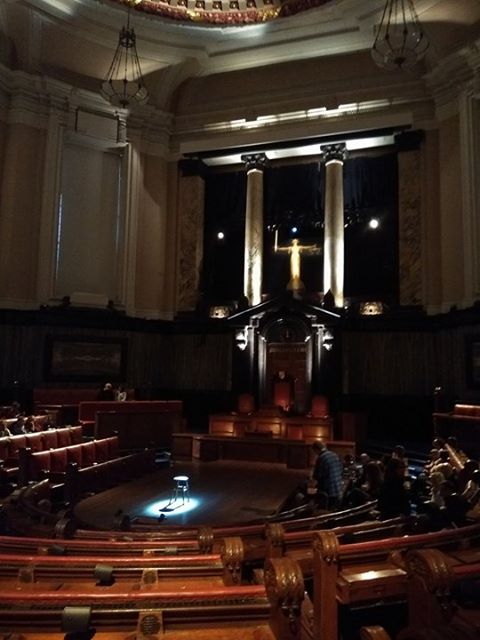
Last weekend I was fortunate enough to be treated to theatre tickets for Agatha Christie’s Witness for the Prosecution. The setting – London’s County Hall – was exquisite, the play sublime and the actors fabulous. An afternoon of sheer escapism, even for a die hard Christie fan like myself. Having read the short story/play many times is no replacement for seeing this on the stage. The theatre offers the opportunity to see the action from all perspectives; you can put yourself in the shoes of the defendant, the court actors and of course, the witnesses. Such a perspective vividly demonstrates the immense power of the State, not only through physical violence (although this is also evident) but through verbal dexterity. To see the defendant – Leonard Vole – on trial; so small and defenceless against the majesty of the courtroom, is thought provoking. Furthermore, this environment is staffed by legal professionals, who unlike him, understand the world in which they operate. The cut and thrust of legalistic argument performed in the play (and in modern day courts daily) conceals the sheer ferocity of authority’s attack on the individual. Remember at the time the play was written, the death penalty was still in force, and Leonard Vole is on trial for the capital crime of murder. In essence, he is openly fighting for his very life, but subjected to the machinations and mediation of professionals who openly profess to be seeking justice. When he tries to speak, to argue, to cajole, he is silenced. There is no place for the defendant’s perspective unless it is expressed via the mandated professional who speaks on his (or her) behalf.
In the twenty-first century (and indeed, for the latter part of the twentieth century), capital punishment in the UK has not been a sentencing option. Whilst defendants may not be faced with a possible date with the hangman, the finality of sentencing and punishment is no laughing matter. Whilst there is no doubt that dramatic denouements have their place in the theatre, in the serious business of the criminal courts such antics seem out of place. If we look at the criminal court as a theatrical scene, we start to observe all manner of incongruity (cf. Carlen, 1976). For starters; the language used and the costumes worn. For anyone that has ever grappled to understand the works of Shakespeare or the Brontë’s, such reading requires patience and perseverance to understand the beauty of such writing. In 2018, we would not request that our surgeons operate on us without the benefit of anaesthesia, neither would we want to be treated with procedures such as bloodletting or trepanning. Similarly, we don’t expect soldiers to carry muskets or form into schiltrons just because that’s how it used to be. Yet we accept and arguably, expect our courts to run as if they were stuck in time. What chance does the individual defendant have in this archaic, theatrical setting? After all, they are the star of the show, yet they have neither costume, nor the opportunity to learn their lines. It is hard to argue, that such practices are conducive to the pursuit of justice.
On the surface, going to the theatre appears to offer a pleasurable break from academia, yet the reality is it offers the opportunity to consider criminology from a novel perspective. Reading (and you all know how keen I am on reading!!) is only part of Criminology; talking, listening, thinking and exploring away from the classroom are equally important. My advice; get out, explore – the arts; theatre, cinema, literature, museums – and add this experiential knowledge to your academic studies. See things from a different perspective and unleash your Criminological Imagination (Young, 2011).
References:
Carlen, Pat, (1976), ‘The Staging of Magistrates’ Justice,’ The British Journal of Criminology, 16, 1: 48–55
Christie, Agatha, (2018), Witness for the Prosecution, Directed by Lucy Bailey. London County Hall, [11 February 2018]
Young, Jock, (2011), The Criminological Imagination, (London: Polity)

 Thoughts from the criminology team