
Home » Coronavirus (COVID-19) (Page 8)
Category Archives: Coronavirus (COVID-19)

“Things you need to know about criminology”: A student perspective – Mary Adams, recent Graduate and mature student.

We are all living in very strange times, not sure when life will return to normal...but if you're thinking about studying criminology, here is some advice from those best placed to know!

The most important module to my understanding of criminology is: I would have to say they are all equally important for understanding different aspects of Criminology. In first year I loved The Science of Crime which showed how things have evolved over time, and that what we now see as funny was actually cutting edge in its day. True Crime also makes you look beyond the sensational headlines and separate fact from fiction. In second year Crime & Justice gave a brilliant grounding in the inner workings, and failings, of the criminal justice system. And in third year, the Violence module explores personal and institutional violence, which is especially relevant in current times

The academic criminology book you must read: Becker’s Outsiders and Cohen’s Folk Devils and Moral Panics are a must. I also found Hopkins-Burke’s An Introduction to Criminological Theory and Newburn’s Criminology essential reading for first year as well as Finch & Fafinski’s Criminological Skills. For second year I recommend Davies, Croall & Tyrer’s Criminal Justice. If you choose the Violence module in third year you will be grateful for Curtin & Litke’s Institutional Violence. And don’t forget Foucault’s Discipline & Punish!

The academic journal article you must read:
There are so many excellent journal articles out there, it’s difficult to choose! Some of my favourites have been:
'Alphonse Bertillon & the measure of man' by Farebrother & Champkin;
'Bad Boys, Good Mothers & the ‘’Miracle’’ of Ritalin by Ilina Singh';
'Detainee Abuse & the Ethics of Psychology' by Kathryn French;
'Attachment, Masculinity & Self-control' by Hayslett-McCall & Bernard;
'Grenfell, Austerity & Institutional Violence' by Cooper & Whyte;
'The Phenomenology of Paid Killing' by Laurie Calhoun;
'A Utilitarian Argument Against Torture Interrogation of Terrorists' by J. Arrigo.

The criminology documentary you must watch:
Without a doubt, a must-see is the Panorama documentary London Tower Fire: Britain’s Shame. I would also highly recommend the movie The Stanford Prison Experiment

The most important criminologist you must read:
Of course you must read Lombroso, Beccaria & Bentham. I also enjoyed reading work by feminist criminologists like Pat Carlen, Carol Smart & Sandra Walklate. And of course, Angela Davis is a must!

Something criminological that fascinates me:
What fascinates me is how the powers that be, and a good proportion of the public, cannot seem to realise that social injustice is one of the major factors behind why people commit crime. And the fact that putting more & more people in prison is seen as a ‘good’ thing is mind-boggling!

The most surprising thing I know about criminology is:
The fact that it is such a diverse subject & incorporates so many other disciplines

The most important thing I've learnt from studying criminology is:
Question everything! Don’t take anything at face-value. Try to look beyond the attention grabbing headlines to find out the real story. Read, read, read!

The most pressing criminological problem facing society is:
Unfortunately I think there are many pressing problems facing society today, the main ones being social injustice & inequality, systemic racism, institutional violence, and mass incarceration


When family and friends ask, I tell them criminology is:
Some people joke that I’m learning how to be a criminal! Others think it’s all about locking people up! I tell them it’s all about looking at the mechanisms in-built in our society that disadvantage & discriminate against whole groups of people, and that, unless we are part of the rich & powerful elite, any one of us could find ourselves in the ‘out’ group at any time. I also tell them to stop reading The Daily Mail, vote Labour, and question everything!!
Share this:


“Things you need to know about criminology”: A student perspective: ej213
We are all living in very strange times, not sure when life will return to normal...but if you're thinking about studying criminology, here is some advice from those best placed to know!

The most important module to my understanding of criminology is: True Crime - this module highlights the fact that cases you have seen in the media and in films may not be accurate due to the true crime genre exaggerating facts for entertainment. Whilst, this module does not cover quite as much theory as others, it gives the chance to explore cases and discover the truth underneath the exaggeration. Love this module.

The academic criminology book you must read:
The Oxford Handbook of Criminology (sixth edition) - I was recommended this book at an open day and there was rarely an assessment I couldn't find some background knowledge for in this book. It is a great tool.

The academic journal article you must read:
Testosterone and masculinity

The criminology documentary you must watch:
FBI: Cold Cases - it is a Netflix original I think but it shows how crimes committed 20 or 30 years ago can be solved due to modern technology. Really interesting especially if you have an interest in forensics.

The most important criminologist you must read:
Either Lombroso or Marx.

Something criminological that fascinates me:
The fact that crime is defined by the wealthy meaning that the prisons are mostly filled with the lower classes due to the upper classes' crimes being seen as victimless

The most surprising thing I know about criminology is:
That criminology is a relatively recent study

The most important thing I've learnt from studying criminology is:
There is rarely one answer so long as you can support your argument

The most pressing criminological problem facing society is:
This could be an essay in itself. I guess I would have to say poverty because 14 million people (2019/20) still live in poverty and these people are not going to have the same advantages or prospects in education or the workplace meaning they are more likely to commit crime in order to survive

When family and friends ask, I tell them criminology is:
Amazing and the most interesting course I have chosen to study because it never had a definite answer which I guess can make it complex however, the debates within the course are great to participate in because it is interesting to hear another's perspective but also voice my own. It is also very inclusive in its module content which is great

Share this:

Deniable racism: ‘I’m alright Jack’

Photograph: Bill Orchard/Rex/Shutterstock
I heard on the news a week or so ago that an investigation by ITV news had found that the majority of NHS Trusts have not completed full risk assessments on BAME staff. Considering that BAME groups are impacted disproportionately by COVID-19 I have to ask why? And, probably more importantly, now that the issue has been raised, what are the government doing to make sure that the risk assessments are carried out? Since I heard about it I’ve seen no response, so I guess I can answer my own question ‘nothing’.
But then maybe I shouldn’t be surprised, I read an article on Racism and the Rule of Law and you can’t but be appalled by the number of recommendations from various inquiries and reviews that have failed to be acted upon. The problem is that the action requires more than just the eloquently spoken or written word; to put it very bluntly and maybe crudely, ‘put your money where your mouth is’. It is easy to state that this is wrong or that is wrong in our institutions, the term ‘institutional racism’ trots off the tongue, seized upon by the wronged and more worryingly banded about by the societal racists of the elite who are only too willing to blame someone else. In thinking about this I wonder whether when we use the term racism, we are all talking the same language. The ‘deniable’ racism is easy to identify, ‘we don’t use that sort of language anymore’, ‘we no longer put those signs in our windows’, we have laws that say you can’t act in that way. ‘Actually, I’m not a racist’. But the statistics don’t lie, they can be bent, manipulated to some extent to favour one argument or another but there are some very basic inescapable facts, BAME groups are over represented in the wrong areas of our society and under represented in the right areas. And most of this I dare say does not owe itself to ‘deniable’ racism, it’s more than that, it’s embedded in our society, it’s not institutional racism, it’s societal racism and it’s hidden. The problem with societal racism is that we only see the positive attributes of people that are like us and we promote those that excel in showing those attributes. Hence, we have the elite in business and government that are not ‘deniable’ racists but nonetheless are the epitome of, and lead a racist society.
I want to return to the idea of ‘putting your money where your mouth is’ mantra. They say money makes the world go around, I’m not sure that is entirely true, but it certainly goes a long way to getting things done and conversely the lack of it ensures that nothing happens or in some cases that good things come to an end. A prime example is the austerity measures put in place in 2010 that saw budgets to government agencies and funding to councils cut significantly. Those that suffered were the most deprived. Even worse, was the fact that funding for youth projects in inner cities suffered and those initiatives that were aimed at reducing violent crime amongst young people ground to a halt. Policing saw huge cuts and with it the withdrawal of neighbourhood policing. This link to communities was severed and any good work that was going on was quickly undone. That doesn’t explain all that is wrong with policing, but it certainly doesn’t help in building bridges. Who in their right mind would embark upon fiscal policies with no regard to such outcomes, our elected government did. If we think now about the so-called return to normality post the Covid-19 pandemic, which caring company or institution would suggest that the most impacted by the virus should continue or return to work, or study, or any other activity, without considering their specific risks and needs? Probably those that have more concern for the bottom line than peoples’ lives. ‘I’m alright Jack’ comes to mind or at least I want to make sure I am.
In thinking about policies, procedures, risk assessments or recommendations, managers have an eye to finance. In the NHS, the day to day business still has to happen, in policing, incidents still need to be attended to, so where is the money to do the extra? Everything comes at a cost and every recommendation in every review will cost something. The NHS risk assessments will cost money. The question is whether government and all of us in society really believe that ‘black lives matter’. If we do, then then it’s time to acknowledge the type of society we live in and who we really are and for government to ‘put the money where its mouth is’ so that the recommendations can be acted on. Or of course, we could just have another review and ‘Jack’ will do very nicely out of that as well thank you.
Share this:


“Things you need to know about criminology”: A student perspective – Bonnie Middleton (2017-2020)
We are all living in very strange times, not sure when life will return to normal...but if you're thinking about studying criminology, here is some advice from those best placed to know!

The most important module to my understanding of criminology is: All of them! Every module contributes to your understanding of Criminology and all are different and enjoyable. Personally, my favourite module was Violence: From Domestic to Institutional in Year 3; this module ties together everything you know about Criminology; the reasons why we are subjective as criminologists and our ability to look beyond the scope of what we know.

The academic criminology book you must read:
Outsiders: Studies in the sociology of deviance (1963) by Howard Becker. Albeit a dated book, its ideas are relevant and relate to many criminological such as; how and why criminals are labelled and stigmatised; why are the youth demonised; why people reject the norms and values of society and become criminals in doing so.

The academic journal article you must read:
This is a hard one. Articles are great for discovering new ideas and methodologically testing theories. I would recommend reading: Arrigo, J. (2004). A Utilitarian Argument Against Torture, Interrogation of Terrorists. Science and Engineering Ethics. 10(3), pp. 543-572. This article poses many questions for a criminologist which enlightens you to think subjectively and challenge your own views; which is what Criminology is all about. From reading this article you will learn to think critically when faced with a challenging dilemma; the rights of a terrorist and how can the law can be tailored to fit the crime.

The criminology documentary you must watch:
Where do I begin? Louis Theroux and Stacey Dooley are both great journalists and documentary makers. If I had to pick one, I would recommend watching the BBC’s documentary on Grenfell If you watch this documentary you must consider; the government’s response; who is accountable; why are the residents of Grenfell still in temporary accommodation. These are the sorts of questions you should be asking as someone studying Criminology.

The most important criminologist you must read:
Familiarise yourself with the ideas of Lombroso, this will aid your understanding on how criminological theory and ideas have developed overtime through biological, psychological and sociological standpoints.

Something criminological that fascinates me:
Domestic abuse. I had done my dissertation on this as I have a great interest in male dominance and power over women, especially in intimate relationships. Gender plays a key role in this which when examined in depth, will change your view on gender paradigms.

The most surprising thing I know about criminology is: Criminality was believed by Lombroso to be inherited and that criminals possessed physical defects, criminality would be measured by the size and shape of particular body parts; this was later discredited. I can remember learning this in first year and it fascinated me.

The most important thing I've learnt from studying criminology is:
To not judge a book by its cover and to not take everything at face value. Do not be afraid to challenge other’s standpoints and beliefs. Thinking critically is the most important skill to have, search deeper into issues and apply your own thoughts and experiences.

The most pressing criminological problem facing society is:
Mass incarceration and reoffending rates. The UK is yet to move away from the ‘tough on crime’ approach favouring law and order and punishment. The penal system needs to be reformed to ensure offenders are rehabilitated to break the cycle of criminality; definitely educate yourself on political party’s manifesto’s and what they say about crime and justice before voting.

When family and friends ask, I tell them criminology is: I tell family and friends that criminology is such a broad field of study; we look at law, psychology, science, sociology, politics, penal systems, criminal justice organisations, media and much more. From this, you attain the ability to think critically and reflect, it can help you in many situations not just criminological issues. It is an incredibly insightful and enlightening field to study; it opens up many opportunities.
Share this:


The pandemic and me – Paula
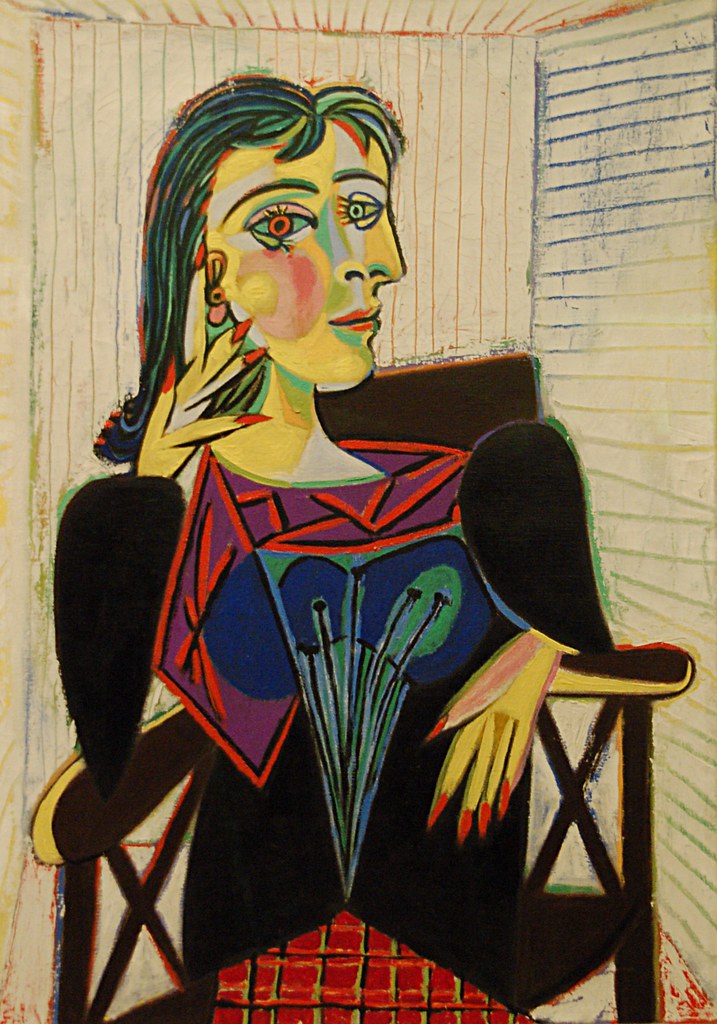
Portrait de Dora Maar, Pablo Picasso, 1937
The last time I physically went to work was Thursday 19 March, over 12 weeks ago. Within days, I blogged about the panic and fear that risked overwhelming us all in the light of a pandemic. Some of that entry was based on observation and the media, other parts, my own feelings and emotions.
Prior to the pandemic, I had been the kind of person that felt the need to be at work, often for 10-12 hours a day This was partly to kid myself that there was a clear delineation between the personal and the professional (something, I’ve never managed to achieve since joining academia). Part of it was due to my previous career in retail; when there are customers there must be staff, so there is a necessity to presence. Part of it was tied up with notions of work ethic and fear of missing out, dropping out, losing connection. The regularity of the Monday to Friday (and sometimes, Saturdays for events) commute there and back, the same familiar route, the same familiar timetable, the same familiar faces. Even prosaic matters, like my wardrobe, is primarily designed for my professional life, however, #lockdown life requires something different than formal suit, dresses and court shoes. Similarly, make-up seems out of place, why paint your face or nails, without the rest of the professional apparatus, deemed so necessary to what Goffman (1969/1990) identified as The Presentation of Self in Everyday Life.
In his play Huis Clos (No Exit) Jean-Paul Sarte famously claimed that ‘Hell is—other people’ (1947/1989: 45). This is often interpreted as if the company of others is hellish, but that is a misreading. Sartre, like Mead (1934) before him recognised the role of the other, in our own understanding of ourselves. In essence, we can only ever see ourselves through the lens of others. In lockdown that lens dissipates or even disappears entirely, even with technology, which although we appreciate as an enabler of communication, I’ve yet to hear anyone say it is a complete replacement for human interaction.
Nevertheless, lockdown has forced us to look again and not only at our wardrobes. Once the panic and the novelty of not going to work, socialising and all the other activities, that are part and parcel of our lived experience passed, a new normality replaced this. Introspection is often missing in twenty-first century life, even among those of us that spend considerable amounts of time, professionally, if not personally, reflecting on what we’ve said, what we’ve done and how we can change, amend and ultimately improve as human beings. It’s also provided space to consider what we can’t wait to get back to, what we’re glad to have a break from and what we are looking for ways to avoid in the future.
For me, part of that introspection has focused on my need to be present at work. After all, in academia there is less pressure to be on campus, particularly on one which has been designed with the future in mind. There is no office, where I need to water plants, (most of) my academic books are here and I also have a work laptop, as well as my own pc. At home, I can have silence, or music while I work. If I am hungry or thirsty I can satisfy those needs. If I am overwhelmed, I can simply walk away for a little while, without explanation. If I am lonely, confused or need advice, I can pick up the phone, message, video call and everything else that technology can offer. My professional life can pretty much continue without too much interruption.
So what happens when things return to normal, should I throw myself back into the same patterns as before? I am hoping the answer is no, that I will do things differently, not least for my own wellbeing. Although I love the look and feel of the campus, I have always struggled with what, criminologists will understand as the panoptic gaze (Foucault, 1977). The sense that wherever you are, the threat of observation is ever present. The panoptic gaze does not differentiate between deviant or pro-social activity, it simply retains its disciplinary function designed to constrain and control For many, it is an open welcoming space, however, as a person who thrives on quietness, on privacy, on spending time away from human contact, it can have the opposite effect. Not all of the time, but at least some of it, I wouldn’t want to abandon campus life completely. The lockdown has shown me that it is possible to have the best of both worlds
References
Foucault, Michel, (1977), Discipline and Punish: The Birth of the Prison, tr. from the French by Alan Sheridan, (London: Penguin Books)
Goffman, Erving, (1959/1990), The Presentation of Self in Everyday Life, (London: Penguin)
Mead, George Herbert. (1934). Mind, Self and Society: From the Standpoint of a Social Behaviorist. (Ed. Charles W. Morris). (Chicago: Chicago University Press)
Sartre, Jean-Paul, (1947/1989), No Exit and Three Other Plays, (New York: Vintage International)
Share this:


A weekend in London…. It’s not what you think

The weekend just gone has mirrored many weekends we have experienced in lockdown: glorious sunshine, hot temperatures, and longing to spend time with family and friends! However this weekend marked the beginning of an attempt at normalcy for our household, as we spent the weekend in London serving hotdogs, burgers, ice creams and cold drinks to park visitors. Something we have done year on year, summer after summer, weekend after weekend: yet this weekend was remarkably different. Therefore the notion that we can return to normalcy soon, doesn’t seem to be ringing true.
For some context: my partner works in/runs a takeaway kiosk by a park in London. It has been closed during lockdown, but re-opened this weekend. This time last year, there were 3, sometimes 4 members of staff (including myself in the summer and on weekends when an extra pair of hands are required), serving customers and giving directions to residents, visitors and tourists of London. This year, there is my partner and I: in a 4metre kiosk it is not possible to safely maintain a 2metre distance so the other members of staff are left waiting until it is safe and viable for them to come to work. They know this, and are happy with the decision as in times like these, safety should be at the forefront of all decisions.
And the added safety precautions are what makes this weekend so unrecognisable at the little kiosk in London (albeit rightly so). It is and has always been a cash business: cash is quicker to process, easier to return should it be required and safer with regards to checking for counterfeit (no issues of hacking machines or someone using stolen cards). In line with the current climate, the decision was made to try and move to contactless payments in order to help reduce the spread of COVID-19. This in itself was hassle and problematic, but I shall not bore you with those details. Alas the machine is here, and off we go. But it requires a steady 4G signal, which by a park is hit and miss, it also disconnects when it has not been used for periods of 30minutes, which happened frequently over the weekend, and there is a minimum spend in order to make the interest rate/payment of the machine justifiable. It is also slow when customer’s contactless does not work, in which case they have to hold and touch the machine, which then results in us having to clean down the machine after this has happened before we can move on to the next transaction, which is certainly not quicker than cash. And whilst most customers I must say have been patient and understanding, this has resulted in several getting quite verbal at the time it is taking to serve them (we are talking a matter of minutes instead of what used to be seconds with cash).
The differences are not just with the use of card, but also how the hot food is done (my area of expertise). Usually customers could apply their own sauces, but now in order to prevent lots of people touching the various sauces on offer and potentially spreading anything, it is left to me to apply. This has resulted in a whole host of comments relating to being stingy with sauces: ‘I know times are hard but come on’, or ‘I actually want to be able to taste the mustard’. I, personally, like to drown food in sauce, no actually mayo, not that fussed about other sauces. However my partner is the complete opposite, the smallest most pathetic amount of sauce you could imagine: that is what he applies to his food! But it is safer and easier to apply too little and add more than the other way, so I am justified in using a little amount of sauce! It has nothing to do with what the sauce costs! Grrrrrr! Cold drinks used to be placed on the top counter, which customers could take themselves, and then once all their selected items have been placed on top, we would charge them and handle the money. Now at the risk of people touching and then returning the item (which results in us having to clean down the bottle or can, slowing everything down), we are asking for money first: which people apparently are not pleased about. They want to feel how cold the drink is: it has come out of the fridge, which it has been in overnight and business is so slow the drinks are not being re-stocked: so trust me it is cold! (Face hitting emoji!)
All in all, it was a stressful weekend, when the amount of customers we served should not have meant it was stressful. I do not mind change and I appreciate that the changes in place are needed to keep everyone safer, which is fine. But things will be slower, things will be different. The media has pushed at the 15th June to resemble something we recognise as ‘normal’: but I do not think this is the case. ‘Normal’ whatever that really means, will not return and maybe this is not such a bad thing. But I will be grateful when it is safe again for customers to apply their own blooming sauces!
Share this:


The pandemic and me – Lessons I’ve learnt from the #lockdown

This lockdown has certainly given us time to think and perhaps reflect on a variety of topics and situations. I’ve shared a few thoughts below and I wonder just how many are universal in some way.
I need to ensure I have a structure to my day and week. I think we all need some sort of structure to our lives and that structure is often given to us by work and perhaps other sociable events such as going to the gym or going to a coffee shop. It may be that the weekly shopping provides us with an anchor, Saturday may be a shopping day or religion might dictate a visit to a place of worship on a particular day. At times I’ve found myself getting confused about what day it is, Groundhog Day, I think. However, for the most part, I think I’ve got it sorted out. My wife and I discuss our schedule every morning over a cup of coffee. We have sorted out a routine of work, daily chores, fun bits and exercise.
My willpower is tested but I can be determined. I have never been a heavy drinker, the occasional binge, yes but then who hasn’t? It is however, quite easy to slip into the habit of having a glass or two of wine in the evening, every evening and perhaps a gin and tonic or two. I can’t go anywhere so thinking about having to drive the next day is not an issue. It’s not until you start totting up the consumption that you realise maybe you might have to reign this in. ‘School nights’ are back again, no drinking in the week. I make up for it at the weekend though.
I’m not risk adverse, I just like to think I’m logical. I don’t think it takes a rocket scientist or in fact any scientist to work out that the government (particularly a Conservative government) would not enforce the cessation of most business in the country without a very, very, very good reason. Stay in has been the mantra and of course we all know how difficult it is and we all know that as usual, the most vulnerable in society have been hit the hardest by this pandemic. Logic dictates, well at least to me, that going out to any store anywhere carries a risk. Some risks are necessary, for instance a trip to the chemist to pick up a prescription, but a trip to a DIY store, really? I’m sorry but given the risks, I think it’s a no brainer. Not only do I not want to catch the virus, but I would be distraught if I thought that through my own selfishness I had passed it onto someone else.
I never really thought about all those people that are truly special. We clap every week for the carers and the NHS and all those involved who are truly remarkable. I do ask myself though, would I want to turn up to work in a supermarket? Would I want to be out delivering parcels or the post? Would I be a NHS volunteer? Would I be happy working on public transport or emptying dust bins? There are so many people doing ordinary, even mundane jobs and volunteering roles that I now appreciate more than ever. And I would go far as to say I am humbled by what they do and continue to do despite the risks.
I appreciate the world around me. Not being able to go out and socialise in some way, be that work, or friends or family has provided more time for other activities. Our walks to the next village and back on roads devoid of most traffic has revealed an astonishing array of wildlife to be gazed upon and appreciated. That is of course if you’re not gasping for breath following a walk up a steep hill (well I call it steep but in a car its barely noticeable).
Some things don’t change. I’ve also noticed the gate to the footpath across the fields near our house has gone. A heavy wooden gate which, apparently has been stolen. On our walks we have noticed the increased number of cyclists whizzing along the road. Most give a wide birth, but some don’t seem to have a care for others, one nearly colliding with us as he flew around the corner. It seems with the reduction of cars; the idiotic driver has now given way to the idiotic cyclist.
What will a ‘new normal’ look like. At some stage we will get back to normal but its difficult to contemplate when that will be and what it will look like. Maybe getting back to the old normal is not what is needed. I’m trying to envisage how I will make changes in consideration of what I have learnt during this lockdown. What changes will you make?
Share this:


2020 Vision
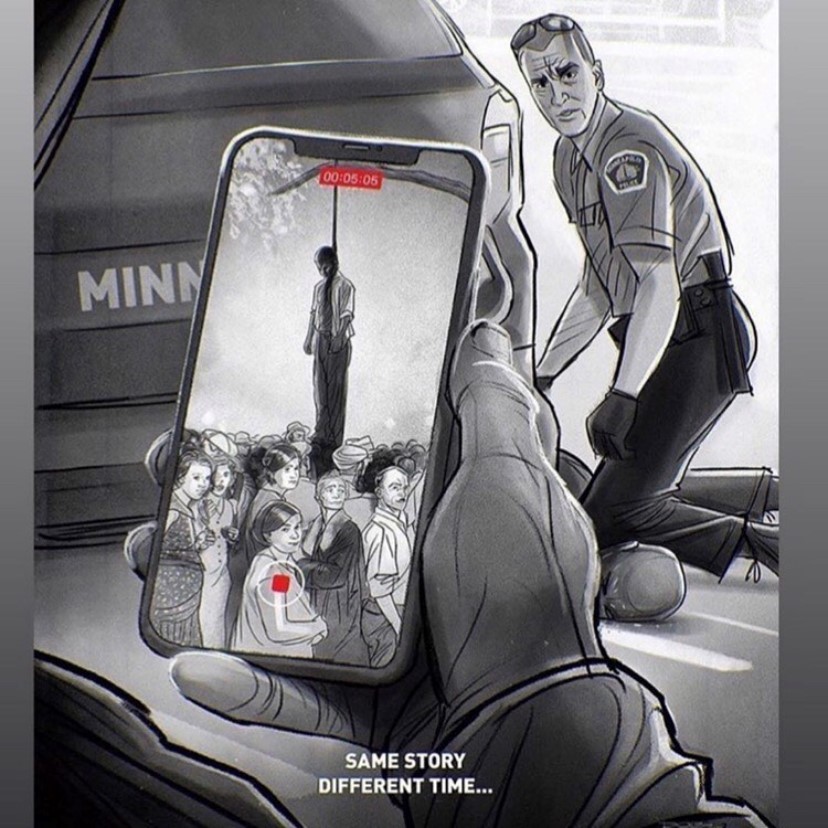
From a young age the Golden Rule is instilled in us, treat others the way you want to be treated. We follow the rule staying home to protect the NHS in these difficult times, we are all humans we want to be safe; we want to protect our loved ones and cover them with a blanket of safety. We supported captain Tom on his quest to raise money for the NHS, we have complimented his humanitarianism.
It has been a hard time for us all. But in a time of uncertainty we have come together as a community to support each other. We have all had a sense of worry, if we leave the house to buy the necessities, the fear of the invisible killer plagues us. We have all helped play the part in flattening the curve. We have felt sadness for the families that have become victims to this killer. But we have not lost hope, we are still hoping for a vaccination to be ready to protect us. Its great that we have the NHS to help us if we are attacked by this enemy. The police were given extra powers to prevent us from breaking the rules and whatever the opinion is of the police we have to acknowledge that these powers that they have been given symbolises law and order and the order being the contribution to stopping the spread of this horrific virus which in essence will help to protect us.
I am contemplating on this because although there have been bumps in the road throughout this lockdown, we all have the same goal……… to live. If we didn’t want to live we would leave our houses unmasked, ignoring all government advice. If we didn’t want to protect our loved ones and our community we wouldn’t support the NHS.
I am going into deep thought……….
Imagine a world where you are not protected, imagine being at war every time you leave your house, imagine a world where you are not safe in your house……..
Picture this an intruder walks into your house, is outraged by the colour of your skin BANG she shoots you in cold blood. The offender uses the excuse she thought she was being robbed, she thought you were the intruder. However, she was the one who let herself into your house. The media and the police sympathise with this woman, as she is a police officer. In their eyes she does not look dangerous, the victim of this crime is seen as a danger to society based only on the colour of his skin. She is not arrested straight away because she has a thing that is more powerful than anything in America, she has White privilege. Imagine a loved one is killed in this way and during the sentencing of the murderer, the judge hugs the offender as if she has done nothing wrong and disregards the feelings of your loved ones. How would you feel?
This did not happen during the civil rights movement, this happened in 2019.
Imagine going for a for some much needed exercise, you are jogging, listening to your music, taking in the fresh air. You are thinking about getting your physique ready for the summer. Two men hunt you down like cattle where they shoot you in broad daylight and they are not arrested straight away. instead your innocence is debated because you are a BLACK man that has left your neighbourhood and entered theirs…..
Imagine it is not a secret that your race can and is used as a weapon against you.
I have seen people gossip about the activities of others during lockdown. I have witnessed the police being called on youths that are skateboarding in a skate park. I have seen the outrage of the people who have been reported by the police for leaving their houses and seemingly not following the rules. Imagine going to the park, having a picnic, going for a walk and being told by a stranger they are going to call the police on you and they can use your race as a weapon, they know by telling the police the colour of your skin it will have an automatic punishment. After all, All Black people are criminals right?
Imagine the police are called on your father as he is suspected of committing a non-violent crime. He is handcuffed and pinned to the floor by a police officer. The officer is leaning on your father’s neck. He can’t breathe, he is begging for mercy, he is calling out for your grandmother, his mother…… he’s an EX con, a criminal, he took drugs, he robbed somebody, he went to prison. But I ask this should he have been executed?
Imagine the people who can see this crime being committed, imagine your 17 year old sister, daughter, friend recorded the execution of George Floyd and she could only record the crime because she fears that the other officers will turn their guns on her if she speaks out.…..After all we must protect the police from these ANGRY BLACK WOMEN they are a big problem with society……
Imagine being BLACK in America.
In recent months I have struggled to go on Facebook. The reason why is because, while many people enjoy the platform discussing current issues and sharing pictures, more and more I have seen subtle tokens of racism becoming more and more prevalent. I refuse to argue with morons who seemed to have lost all sense of humanity. It is gut wrenching when you have Facebook friends who think it’s acceptable to be outright racist. I understand we do not all hold the same values, I understand we do not all advocate for the the hurt and pain of others. But I do not stand with people who do not want to try and understand that their actions destroy communities. No, I’m not talking about the ones who use the sentiment #All Lives Matter, I agree all lives do matter. But there is a deeper message to the Black Lives Matter movement. And so many people of different colours have been understanding of this notion and want to get an understanding of the disproportionate treatment of the Black community and for that I appreciate your support.
I’m talking about the ones that use George Floyd’s reputation to try and denounce the feelings of the Black community. I’m talking about the ones who act surprised that police brutality against the BLACK community is not a new phenomena. I’m talking about the ones who have a problem with #Blackout Tuesday, #Black Lives Matter and the ones who have jumped on the band wagon to make their businesses and institutions look like they are progressive when they have done nothing but use oppressive practices keep BLACK people in their place. I SEE YOU!
It is very hard to understand how people have been so sheltered by this phenomena, even though social media has been covered with news footage of the Breonna Taylor’, Oscar Grant’, Ahmaud Arbery’, Jordan Davis’ the Tamir Rice’ murder I could go on……..
So, I’m going to round this post off by saying a few small words. For the ones who I have a problem with. I am not your bredrin, don’t use me as the Black friend when you run your mouth and show your true racism and need a token Black friend to save you from your mess. It’s cool when you want to dance to our music, eat our food, wear our fashion, appropriate our hairstyles and when you have a fifth cousin twice removed that has mixed race kids or you decide you want to experiment by dating someone that is Black I SEE YOU! don’t try and hide behind the smoke and mirrors and don’t use your relationships as a platform to validate your racism. You have no right to talk negatively about our oppression, you have no right to invalidate our pain. Don’t pretend you see us as your equal, don’t pretend we are accepted into your circle. Stay silent while we are being brutalised, stay silent while we are disproportionately dying of Covid! continue to stay in your bubble I hope you never need to call on the Black community to speak up for YOU! A lot of people have said 2020 is a year they will cancel, as it’s been a year of devastation, but I say 2020 has given me the 2020 vision to see people for exactly who they are.
Share this:


Ask the expert, if you can find one

It was around four years ago I discovered the title of ‘Doctor’ extended beyond medical staff. I’m not sure many people outside of the academic world fully understand or have any reason to know the order in which post nominal letters are awarded or titles are given. Gaining the title of ‘doctor’ at the very beginning of any academic journey, seems so distantly part of any future plan, its barely imaginable. Some career paths seem wildly ambitious. Wanting to be an ‘expert’ in your field for the humble student, feels much like aspiring to become an astronaut midway through a physics degree.
Once you enter the world of academia, the titles people hold seem to determine an awful lot of their credibility. It’s rare to find a university lecturer who isn’t working towards doctoral qualification, most already have one. The papers, books and research journals are filled with the knowledge of individuals who once were nothing more than students. I often wonder though, at what point someone becomes an expert? At what point, (if ever) do the most academically qualified individuals refer to themselves as experts within a narrow area of their field.
The government often talks about relying on ‘expert’ evidence. Watching the experts stand beside the PM discussing the current pandemic, they appear uneasy, particularly when questions are raised about a different expert having a contradicting opinion. One thing I feel quite sure of is that experts seem to rarely agree. As Bertrand Russell (1927/42) states, “even when all the experts agree, they may well be mistaken” . Maybe that’s because it’s questionable if anyone can ever truly know everything on a given subject area.
The scientific committee seems to be buzzing with accusations that the experts are not quite what they seem. The ‘data scientists’ advising government and sitting on SAGE are not all from a background which comfortably implies they are qualified to discuss virology or immunology. In the background lingers the fact with such a new virus, with so little known about it, expert knowledge in a narrow sense, is undoubtedly in its infancy and will probably require some degree of hindsight later on.
In the past week one of the UK’s leading experts has resigned from his job after breaking his own guidance. Meanwhile the public watched Matt Hancock ‘snap’ at an opposition MP in parliament. A woman who despite being no more of an ‘expert’ than himself, at least has experience as a qualified A&E doctor to base her opinions and views on. It seems last week’s experts and heroes are this week’s victims in the ongoing witch-hunt for someone to blame.
I’ve started to wonder if labelling someone an ‘expert’ is something other people do to install confidence that a piece of research being relied upon is credible, rather than the experts referring to themselves that way. There’s almost an assumption of arrogance for anyone who dares to protest that their knowledge should be recognised with a title, outside of the academic world anyway. Maybe people simply don’t understand what it took to reach that level of knowledge in the first place.
I’ve looked a lot at ‘labelling’ within the criminological context and it seems to me the labels that are attached to us, almost always seem to come from someone else. In an age of self-proclaimed ‘internet experts’ the real experts, it seems are hard to find.
Reference
Russell, Bertrand (1927/1942) cited in The Collected Papers of Bertrand Russell: A Fresh Look at Empiricism, 1927-42, edited by by John Slater and Assisted by Peter Köllner, (London: Routledge)
Share this:


“My Favourite Things”: Manos

My favourite TV show - Those who know me, probably will understand why I find this one difficult to answer but considering the situation I shall go with Years and Years from the BBC

My favourite place to go - I am reluctant to say because it is my fortress of solitude, but it is an island somewhere in the Ionian sea

My favourite city - Thessaloniki, the second largest city in Greece and a place that is in my heart and in my memories

My favourite thing to do in my free time - I like to read, usually fiction with a drink and some music on the background; classical music ideally but jazz is also good.

My favourite athlete/sports personality - who came up with these questions? I had to think long and hard on this and I am going with Greg Louganis.  An inspiration to many

My favourite actor - Charlie Chaplin in The Great Dictator his speech at the end remains one of the most potent antifascist speeches.  Ironic considering that he made his career in silent movies!

My favourite author - Milan Kundera the author of several of my favourite books, The Unbearable Lightness of Being, Immortality and Life is Elsewhere.  Thoughtful novels full of very complex ideas.

My favourite drink - Lemon juice, ideally harvested springtime from an Ionian island; a couple of spoonfuls of sugar and some iced water and plenty of freshly squeezed lemon juice.

My favourite food - Spinach and cheese filo pie

My favourite place to eat - A little taverna by the sea; there is a little place, that my mind wonders to; the food may not gourmet but its honest, homemade food.

I like people who - speak their mind, are honest and have a positive outlook in life

I don’t like it when people - lie, gossip and pretend to know everything

My favourite book - Eichmann in Jerusalem an excellent study on the "banality of evil" a very interesting criminological idea

My favourite book character - elementary, Sherlock Holmes

My favourite film - The Life of Brian this is the movie that evokes old blasphemy laws because of its content.  A good demonstration of how art can reflect on life and call institutions to heel

My favourite poem - Ithaca by Kavafis, a wonderful journey through the eyes of the cosmopolitan Greek

My favourite artist/band- David Bowie, I cannot choose a particular era; definitely a incredibly creative mind.

My favourite song - Bitter Sweet Symphony

My favourite art - The Creation of Adam by Michelangelo

My favourite person from history - Marie Curie so much more than a woman, a scientist, a wife.  An enduring example to scientific reasoning


 Thoughts from the criminology team