
Home » Coronavirus (COVID-19) (Page 7)
Category Archives: Coronavirus (COVID-19)
What is the value of your ‘yes’ when you never say ‘no’?

A good few years ago a senior colleague asked me that very question. It was more of a statement, than a question and it was designed to make me think about how I approached work and perhaps more importantly how others saw me in the workplace. It fits very nicely with another saying, ‘if you want the job done, give it to a busy person’. It seems there are those in the workplace that get the job done and those that don’t. There are those that always say ‘yes’ and others that often say ‘no’. There are those that solve problems and those that don’t. Another saying from a senior manager, ‘don’t bring me problems, just bring me solutions’ sums up the majority of relationships in organisations.
My experience of managers (both middle and upper) has been varied, but unfortunately most have fallen into the category of poor, bordering on awful. Perhaps that colours my judgement, but I do know that I’ve also had some very good managers. The good managers always made me feel like I was working in partnership with them and, yet I knew who was the boss. I always tried to find a solution to a problem but if I couldn’t then the boss knew that it was a problem he or she needed to deal with, they trusted my judgement. Often what appears to be the most trivial of problems can be a show stopper, a good boss knows this. If I said ‘no’ to a piece of work, then the boss negotiated which other piece of work would be set to one side for now. Sometimes everything is a priority, and everything is important, it is for those at the most senior level to make the decisions about what will or will not get done. Making no choice is an abrogation of responsibility, suggesting it is another person’s problem is just as bad if not worse.
Good managers understand how much work people are doing and trust their workers to get on with the job in hand. A good manager knows that even the most menial of tasks takes more time than might be imagined and that things rarely go exactly to plan. There is always an element of redundancy. When someone says ‘no’ to a piece of work they understand that there is a reason for that ‘no’ and rather than simply seeing that person as being difficult or lazy, they listen and seek solutions. More importantly, they take responsibility for the problem, ‘bring me the problem and I’ll help you find the solution’.
As we move into a summer of uncertainty where the ‘new normal’ is an anxious time for most, where the ‘yes’ people are needed more than ever, and the managers need to lead from the front, if you are a manager, what will you response be when your undervalued ‘yes’ person says ‘no’?
Share this:


We are Spartacus: the publishing industry and race
As one of only a handful of non-white authors on the British crime fiction map, I thought it might be worthwhile spending a moment reflecting on the worldwide rebalancing touched off by the George Floyd killing in America. Fear not. There’s no need to put on your tin hats and dive for the trenches. My purpose isn’t to haul anyone over the coals. But there’s little doubt that some of what I say might make for uncomfortable reading. More importantly, I will ask you to reflect, at a personal level, on what we mean by systemic inequality, particularly as it applies to the publishing industry.

First, some background. My parents are from the subcontinent. They came to the UK in the early seventies, lured by the immigrant dream. The streets of London may not have been paved with gold, but they were paved with opportunity. My father, who was not literate, spent his life in honest labour, in an industrial bakery, while my mother raised children, demonstrating the much-lauded immigrant work ethic by slaving away at her sewing machine every hour she wasn’t feeding us or stopping us from poking each other’s eyes out with eraser-tipped pencils. She instilled in us the need, above all else, to study, to educate ourselves, to progress.
So far, so good.
But what if I were to tell you that my parents were, in a broad sense, xenophobes, too? Not overtly. They didn’t oppress anyone; or traffic slaves across the oceans; or pillage defenceless communities for profit. But their attitude towards black people – cultivated by the insular world they had grown up in – was, at best, indifferent, or, at worst, mistrustful.
Here’s a simple, unpalatable truth. Racism, in its most basic form, is a feature of most societies. It shouldn’t be. But it is. A simple example illustrates my point.
The outpouring of angst and handwringing currently gripping the world has seen celebrities across the globe express their views on racism (rightly so), only for some to discover that a seat on this particular bandwagon can be an uncomfortable one. In India, numerous Bollywood stars were called out for the disparity between their #blacklivesmatter tweets and the fact that they had fronted campaigns for skin-lightening creams. Across the subcontinent, lighter skin has traditionally been valued (usually alluded to in matrimonial ads by the rainbow-bending adjective “wheatish”), so much so that white foreigners, especially Brits, are treated with overt deference, while black people are routinely afforded a lesser welcome. An odd perversity, given that it was the whites that pillaged the subcontinent for three centuries while, with those of Afro-Caribbean descent, one might assume Indians would evince a colonial-era solidarity.
Let me be clear: this idea of a sort of universal xenophobic instinct does not in any way excuse or mitigate the horrors of the slave trade, or the enormous, long-term damage done to black people because of that terrible practice. Nor does it justify the entrenched, systemic prejudice that continues to colour western societies, prejudice that culminates in overt racism of the kind that permits white American policemen to routinely kill black men with little fear of reprisal, and prejudice of the less obvious kind that serves to keep black people ‘in their place’. My point was merely to demonstrate that, in the wider, global race equality agenda now under discussion, we all have a part to play.
Part of the issue is that many well-meaning efforts to redress the balance are hampered by a profound lack of insight into how unconscious bias can affect the lives of people of colour, in a million different, small, but, ultimately, debilitating ways. The problem is further hampered by an education system that often fails to properly tackle the ‘race issue’.
Yet, the problem must be addressed. Because the world has become a smaller place. The goldfish bowl has shrunk and we are now all swimming in the same seas. It behoves us to make the effort, not just because it is the right thing to do, but because it is also the most effective means of progressing humanity towards a more equitable, more meritocratic, global society. If the Covid-19 pandemic has proven anything, it is how interdependent we are.
Coming, now, to the publishing industry. Cards on the table. Since my first book was published six years ago, I have received tremendous support from my agent, publisher, critics, bloggers, readers, event organisers, and crime writers. My experience is not typical. A simple look at the statistics tells us what we already know. Any way you slice it and dice it – diversity of publishing staff, published writers of colour, books featuring characters of colour – the industry is dominated by white thought and enterprise. Some of this can be ascribed to the fact that, in terms of population, BAME communities, by definition, are a minority. You wouldn’t expect there to be a 50:50 split along these dimensions. That isn’t the issue. The problem is the entrenched attitudes that make it so damned difficult for writers of colour to break into the industry and then to enjoy the same rewards and freedom of expression that is accorded to their white counterparts.
The world’s most successful crime writer, James Patterson, became famous with a series about a streetwise black detective, Alex Cross. James Patterson is not black. Nothing wrong with that scenario, in my opinion. Authors should not be constrained by artificial constructions of propriety. But, if the industry is being honest with itself, it will acknowledge that a writer of colour attempting to do something similar – trying, as it were, to write outside of their cultural straightjacket – is rarely accorded the same privilege. Questions of ‘authenticity’, ‘voice’ and ‘cultural appropriation’ suddenly come racing to the fore, like Cinderella’s ugly sisters questioning our right to go to the ball. Asian writers, for instance, are often expected to pen literary tomes about colonialism or exposes of the immigrant experience. Again, nothing wrong with that, and, indeed, brilliant writing is regularly published exploring those themes. But there are so many other stories that we would like to tell. White writers can be published writing about matters far outside their experience – wizards, serial killers, aliens. But for non-white writers, the same consideration is much harder to find. A lot of this is not the result of overt racism, but rather the mindset that accepts as perceived wisdom the idea that profitability comes almost entirely from white authors writing white stories, or writers of colour writing stories suited to their ethnic background. This thought is so prevalent in the industry that it may as well be an eleventh commandment.
A terrific article by Laura B. McGrath, associate director of the Stanford University Literary Lab, in a Jan 2019 issue of the Los Angeles Review of Books, entitled “Comping White” identifies the true nature of the problem. Paraphrasing her research, it goes like this: publishers buy new books by comparing them to books that have been successful. Is this the new Harry Potter? Is this the next Gone Girl? Given that the majority of books are white, the process becomes a closed loop, a vicious cycle. The industry buys and promotes white books because they sell. White books sell because they’re the only books the industry buys and promotes. Do you see the problem?
Making the gatekeepers more diverse, McGrath argues, will have only a marginal impact. It’s the system that’s at fault. The same applies to practically any walk of life that you might care to name – hence the reason so few people of colour in boardrooms, or lecturing at top universities, or opening Michelin-starred restaurants. White people have done all those things successfully before, so why take a chance on the unproven?
Until we change this structural, often unconscious, bias, all the current furore around race will do little to improve the prospects of the average BAME person.
Can readers help? Of course! By voting with their feet. By buying books written by authors of colour, readers signal to publishers that they won’t be put off by a ‘funny-sounding’ name on the cover, or a protagonist who doesn’t share their own cultural background. The only bar should be quality.
In an ideal world, a good story, well told, should stand on its own merits.
What else can we do? In my opinion, people shape people. If we want better, more thoughtful attitudes in the industry, we must all stand up and be counted. Solidarity is the name of the game. A solidarity of thought that acknowledges that a genuine change of perspective is needed. From agent to reader, all along the chain. What we need, in other words, is for all of us to stand up and say: ‘We are Spartacus.’
Vaseem Khan, author, Midnight at Malabar House and Baby Ganesh series
London, June 2020
Share this:


Parole in Lockdown

It’s a sad fact of life in and after lockdown that everything is a bit rubbish. We have called groups of friends a few times to chat via Zoom. It’s nice to see everyone but the conversation doesn’t flow. You can’t pick up the cues to detect who wants to speak next and if everyone talks at once you can’t hear anything. Zoom quizzes are fun, but, for the same reasons, they lack the banter of a real pub quiz and are therefore focussed and functional. A couple of times we have sat down as a family to watch streamed theatre performances. They were very good but it’s not the same as a night at the theatre and, without the atmosphere of a live performance, you might as well watch a TV drama which has been written for the medium through which it is presented. Things which were once simple are now complicated – you need an appointment to go to the tip for heaven’s sake! And while Peter Crouch: Save Our Summer is quite amusing, it is no substitute for the live international football that the Euros were promising.
On 23rd March 2020, the Parole Board made the decision to postpone all face to face hearings with immediate effect. The decision was inevitable – prisons had closed their gates to visitors and it was no longer possible for members and witnesses to travel the country for hearings. A couple of weeks of frenzied activity followed as cases were reviewed. Some were deferred, some were decided on the papers, others were converted to telephone or video hearings. Since then, I have participated in 20 remote Parole hearings, all conducted by Skype / telephone. So, has the Parole process, like so many other things, become a bit rubbish?
The simple answer to that is, surprisingly, no. Remote technology has been available to the Parole Board since I was appointed ten years ago. A new “Parole Hub” had just been established and its virtues were extolled at my initial training. The idea was that the panel would convene in a suite in London while the prisoner and witnesses would join via video link. It was to be the future. In reality, hub hearings never took off in the way that was hoped. While the Parole Hub has been running continuously, only a few prisons have the necessary technology. Most cases were considered too complex to risk making a decision without seeing the prisoner. Any suggestions of learning difficulties, mental health problems, serious or unusual offending meant that cases were deemed unsuitable to be heard remotely. Despite expressing a willingness to conduct hub hearings, I have only done two in ten years.
All that changed on 23rd March. If we had deferred every “complex” case, we would have a massive backlog by now. Instead, after the initial confusion of the first couple of weeks, the Parole system has adjusted. We are now hearing just as many cases as we would have expected in normal times and the backlog is reducing rather than increasing. Telephone hearings are by no means perfect. Sometimes the line crackles and you have to ask people to repeat themselves. Sometimes participants disappear altogether. In one of my hearings, the chair vanished for 10 minutes but after a few frantic e-mails he was able to re-join. Sometimes witnesses don’t pick up the non-verbal cues that they have answered the question and ramble on for longer than they may otherwise. As a result, remote hearings tend to take slightly longer than face to face hearings.
But there are advantages too. In my experience, telephone hearings start on time – everyone logs on when they are supposed to, no one gets stuck in traffic. From a personal point of view, I can wear what I like, I can get up and stretch, I can drink coffee and eat snacks during the hearing, all without looking unprofessional. Hearings may take a little longer but I don’t have a long drive home afterwards, so they are less tiring. If one of my hearings is cancelled, it is relatively easy to find another one to take its place because I’m no longer restricted by geography – I can pick up a vacancy anywhere in the country. And remote hearings cost the tax payer a lot less in travel expenses and hotel costs. As long as solicitors are able to consult with their clients by telephone prior to hearings, they are able to represent their interests effectively. Several of my remote hearings have involved vulnerable prisoners, with learning difficulties, mental health problems, physical health problems and dementia. Prior to 23rd March, none of these would have been considered for remote hearings but in most cases, despite these challenges, the prisoners were able to participate just as effectively as they would have been in face to face hearings.
The crucial issue, however, is whether the quality of our decisions is affected by our new way of working. That remains to be seen. We will have to wait for the statistics to see whether we are more risk averse and reluctant to release from remote hearings. Time will tell whether serious further offences by prisoners on Parole increase. In theory, the fact that we don’t know what the prisoners we are dealing with look like, may help to reduce unconscious bias and make our decisions fairer. It is very difficult to tell whether someone is lying to you, whether you can see them or not. Not being able to see the “whites of their eyes” is unlikely to make much difference to whether or not we are fooled by prisoners who present themselves well but have made little genuine change to the risk they present.
So remote Parole hearings are probably here to stay. While face to face hearings will return for the most complex and vulnerable prisoners, the majority will continue on the telephone or video link. COVID-19 has forced technological change on the Board in a way that the Parole Hub did not. This may be a good thing or it may not – we will have to wait and see.
Share this:


“Things you need to know about criminology”: A student perspective – Natalie Humphrey, 1st Year student

We are all living in very strange times, not sure when life will return to normal...but if you're thinking about studying criminology, here is some advice from those best placed to know!

The most important module to my understanding of criminology is: At the beginning of the year I believed the True Crime module to be the most important in understanding why crimes are caused. However, I quickly learned that these are not always the best source of information! The Science module is the basis of Criminology in the first year, laying down where it emerged, with Lombroso and Bertillon. I believe these figures are important to understand to grasp criminology.


The academic criminology book you must read:
The SAGE dictionary of Criminology has helped me with the basics of the subject. If there was something I became stuck on, this book would usually have an explanation for it. It also has examples which make it much easier to apply

The academic journal article you must read:
Attitudes towards the use of Racial/Ethical Profiling to Prevent Crime and Terrorism, by Johnson, D et al.(2011)
I came across this article when researching my Independant Project on racial stereotyping. It goes into the systematic racism that black people face and how disproportionate racism truly is. With more recently, the George Floyd case, this is still a very prominent article that is true to date

The criminology documentary you must watch:
I am a lover of many true crime documentaries and am always first to watch the new one that has been added to Netflix! The famous ones, such as Ted Bundy’s confession tapes, are fascinating to me, Bundy especially. However, there are many injustices that need to be addressed, not just the notorious serial killers. Jeffrey Epstein’s new documentary is very important in understanding sexual abuse that happened to over 200 underage girls. Athlete A also shows the sexual abuse of underage girls who were part of USA gymnastics.

The most important criminologist you must read:
Becker stood out to me this year as a very important figure. Understanding how young people are so heavily influenced by the labels people and society give, so much so it can shape their lives. Even older people can be easily labelled. This was quite surprising to me at the beginning of my studies.

Something criminological that fascinates me:
DNA and fingerprinting are fascinating to me. I find the science behind the discovery of what occurred at a crime scene and how they unpick it very interesting. This is definitely something I would like to study further.

The most surprising thing I know about criminology is:
It is a much wider subject than I first thought, it involves so much more than you could imagine. It questions everything in society.

The most important thing I've learnt from studying criminology is:
I have learned how unjust our criminal justice system is and how much, we as individuals, stereotype every person we meet. I’ve become more aware of this and have a better understanding of what needs to change.

The most pressing criminological problem facing society is:
Racism is a massive problem today. The racism black people face, especially in the US, is hard to understand as a white woman, but difficult to even contemplate people are treated in such ways. George Floyd, as I mentioned before, was killed because of his race. Problems like this would not happen to a white male, especially when his alleged crime was not violent. Young black men are labelled by the media to be seen as a thug and dangerous, causing many to be assumed of acts they just would not commit. Jane Elliott’s experiment on racism and eye colour from the 1970s is still a lesson that needs to be learned today!

When family and friends ask, I tell them criminology is:
Its more than it seems. Most just think it's about crime, which yes it is, but there is so much more to it. It is not one subject, it is so many put together. Science, psychology, sociology for example.

Share this:

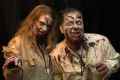
Zombie Apocalypse

In post-war cinema, movies became part of political propaganda, especially when the creators did not want to tackle directly on a particular issue.* The use of metaphors and euphemisms became part of the story telling especially when the creators tried to avoid strong opposition from censors and political groups. This allowed social commentary to be made under the nose of “puritan” critics! Visual semiotics in modern cinema revealed a new reality in social symbolism.
One of those symbolisms was the living dead, later known as zombies! Zombies appear on the screens in the late 40s and 50s but predominately appear with the name in the 70s. The critics show in their representation of apathetic citizens who are not alert to the dangers of communism. Originally the zombie and the alien body-snatcher became metaphors of the red danger in the US at the time of McCarthyism. The fear of communist expansion was fertile ground to play with public fears. It became evident that a good citizen in order to avoid zombification has to take up arms and resist the menace. Inaction is accessory to the crime of overthrowing the social order.
As the paranoia leading to the red danger subsided, the zombie metaphor began to lose it potency and it become a cult population for those who love watching “B-movies.” In the 80s and 90s, zombie movies became aligned with the impeding doom of the millennium and technological bug that allegedly was coming to wipe out civilisation as we know it.
In the new century, zombie became a representation of those who succumb to technology and become its blind users. Generations Y and Z were accused of spending more time than before on game consoles, surfing the web and becoming “couch potatoes.” The gamers who binge on games for days, losing all other engagements with life until the game is completed. The motionless body of the gamer sitting in the same spot, non-engaging in conversation, was likened to the brainless zombie who slowly moves in space with no volition and conscience.
More recently, the zombie movie genre promoted the idea of a global medical pandemic, mostly caused by a virus that mutates people and turn them into flesh eating abominations! The virus breakout of the zombie disease became so convincing that a concerned member of the public back in 2011 asked Leicester City Council about their preparation in case of an invasion. Of course, at the time, cultural sociologists argued how zombies are a representation of “the other” in terms of race, nationality, and of course gender. Whilst others saw them as a representation of end of days, an eschatological message that bring an end to life as we know it.
Therefore, in the situation of Covid-19 the contagion of the potent virus that can kill some whilst others carry it without even realising it, brings to the surface the zombie fears Hollywood warn us about. In a recent survey a third of US believe that the virus was created in a lab, and whilst most people according to WHO acknowledge the seriousness of the pandemic there are those who question its existence. With opinions divided about the causes of covid19, life in 2020 appears to be a prequel to a post-apocalyptic reality.
Back in zombie movies and we are coming out of a lockdown when cities and towns feel deserted like 28 Days Later, people came out with protective masks like in Resident Evil and became frightened of the invisible threat like in every movie in the genre. Back in 2011, we laughed at the question “how ready are we for a zombie apocalypse?” Maybe if we asked is there a likelihood for a pandemic we could have planned and prepared for now, slightly better. There are great lessons to be learned here and possibly we can establish that when we are looking at healthcare and services, we cannot do more with less! Just whatever what you do, do not take lessons from Hollywood!
Until the next time!
*At this stage, I would like to apologise to my younger colleague and blog comrade @treventoursu who is far more knowledgeable than myself on movies!
Share this:


Ignorance is bliss: the problem with education

I woke up this morning with a feeling of the weight of the world on my shoulders. My problems are insignificant compared to many others, but I did think, wouldn’t it be nice to get off this merry-go-round. Wouldn’t it be nice if I could stop thinking about the injustices in the world and the part I play in them, how the problems might be solved, how best I can do my job online and give all of my students what they need, how best I can deal with tricky relationships at work and do my best for all concerned How I might ensure that my family are looked after and take on significant responsibilities in looking after the interests of an elderly relative whilst ensuring fairness all round. How can I do the right thing and not send myself into bouts of depression?
And as I thought of all of these things I came to an interesting question. Is it better to be ignorant, inept and irresponsible?
If I was ignorant, if I didn’t bother to watch the news, to critique, to engage in discussion, to think about the social world and my place in it. If I was to carry on in blissful ignorance of what is going on around me would I not be happier? If I am not aware of social injustices, then it would be easy to take a stance that what matters is simple, law and order for instance. I could become a Sun reader, more interested in the pictures than the content. The headlines would capture my imagine for a nano second and I could simply agree about how terrible this or that issue is before blissfully moving on to something else. I don’t know what everyone else is complaining about, I’m alright Jack, or should that be Jill, I must stop thinking.
If I was inept, I make a bit of an assumption here that I’m not, I guess others will judge, then that ineptitude would ensure that I wasn’t given any responsibilities, well none that really mattered. Cock things up a few times and suddenly you find that nobody wants to give you the work and nobody really wants to do any work to deal with your ineptitude, and nobody thanks them if they do. In other words, you are ‘quids in’, minimal work and nobody on your back. Couple this with blissful ignorance and life is so much easier.
If I was irresponsible, or at least seen as that, then I wouldn’t be asked to take on responsibility and all of the ramifications that go with it. No longer asked to do something that is important and has significant ramifications if you cock it up. That takes us back to ineptitude, being inept leads to no responsibility, being irresponsible gives the appearance of being inept. If I am blissfully ignorant of what people might think of me or what I might have cocked up, then no need to worry.
The only fly in the ointment here, is that in being educated, I am able to write this blog. I am able to place myself in society and sadly acknowledge my part in it. I pride myself in doing a good job and I don’t shy away from responsibility although I might get there kicking and screaming at myself for the angst and inner turmoil it sometimes creates. Knowledge is powerful, education gives you knowledge and self-awareness. The greater the knowledge the greater the self-awareness, the greater the self-awareness, the greater the thirst for knowledge. Unfortunately, there is nothing blissful to be found there though.
Share this:


Some lessons from the lockdown
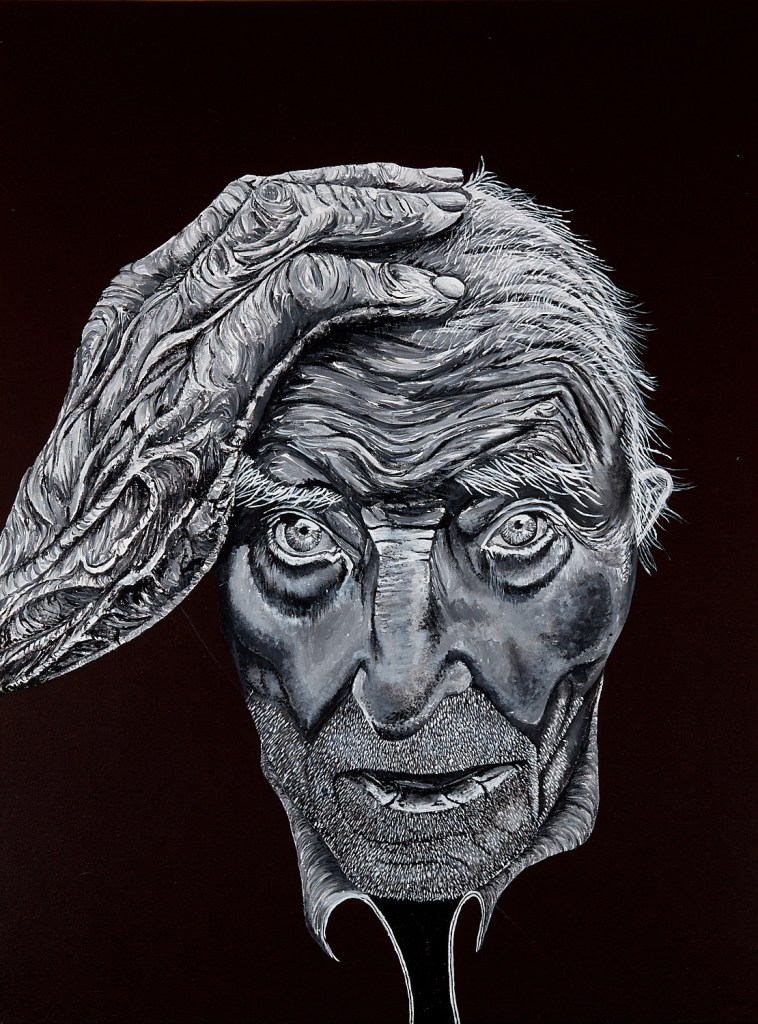
Koestler Arts (2019), Another Me: The Redwoods Centre (secure mental health unit), James Wood QC Silver Award for Portrait, 2019
In March 23, 2020, the UK went into lockdown. The advice given, albeit conflicting in parts, was clear. Do not leave your home unless absolutely necessary, banning all travel and social interactions. This unprecedented move forced people to isolate at home for a period, that for some people will come to an end, when the WHO announces the end of the pandemic. For the rest of us, the use of a face mask, sanitiser and even plastic gloves have become modern day accessories. The way the lockdown was imposed and the threat of a fine, police arrest if found outside one’s home sparked some people to liken the experience with that of detention and even imprisonment.
There was definite social isolation during the pandemic and there is some future work there to be done to uncover the impact it has had on mental health. Social distancing was a term added to our social lexicon and we discovered online meetings and working from home. Schools closed and parents/guardians became de facto teachers. In a previous blog entry, we talked about the issues with home schooling but suffice to say many of our friends and colleagues discovered the joys of teaching! On top of that a number of jobs that in the past were seeing as menial. Suddenly some of these jobs emerge as “key professions”
The first lesson therefore is:
Our renewed appreciation for those professions, that we assumed just did a job, that was easy or straightforward. As we shall be coming back eventually to a new normality, it is worth noting how easy it will be to assign any job as trivial or casual.
As online meetings became a new reality and working from home, the office space and the use of massive buildings with large communal areas seemed to remain closed. This is likely to have a future impact on the way business conduct themselves in the future.
Second lesson:
Given how many things had to be done now, does this mean that the multi occupancy office space will become redundant, pushing more work to be done from home. This will alter the way we divide space and work time.
During the early stages of the lockdown, some people asked for some reflection of the situation in relation to people’s experiences in prisons. The lockdown revealed the inequality of space. The reality is that for some families, space indicated how easy is to absorb the new social condition, whilst other families struggled. There is anecdotal information about an increase on mental health and stress caused from the intensive cohabitation. Several organisations raised the alarm that since the start of the lockdown there has been a surge in incidents of domestic violence and child abuse. The actual picture will become clearer of the impact the lockdown had on domestic violence in future years when comparisons can be drawn. None the less it reveals an important issue.
Third lesson:
The home is not always the safest place when dealing with a global pandemic. The inequality of space and the inequality in relationships revealed what need to be done in the future in order to safeguard. It also exposed the challenges working from home for those that have no space or infostructure to support it.
In the leading up to the lockdown many households of vulnerable people struggled to cope with family members shielding from the virus. These families revealed weaknesses in the welfare system and the support they needed in order to remain in lockdown. Originally the lack of support was the main issue, but as the lockdown continued more complex issues emerged, including the financial difficulties and the poverty as real factors putting families at risk.
Fourth lesson:
Risk is a wider concern that goes beyond personal and family issues. The lockdown exposed social inequality, poverty, housing as factors that increase the vulnerability of people. The current data on Covid-19 fatalities reveal a racial dimension which cannot longer be ignored.
During the lockdown, the world celebrated Easter and commemorated Mayday, with very little interaction whilst observing social distancing. At the end of May the world watched a man gasping for breath that died in police custody. This was one of the many times the term police brutality has related to the dead of another black life. People took to the streets, protested and toppled a couple of statues of racists and opened a conversation about race relations.
Fifth lesson:
People may be in lockdown, but they can still express how they feel.
So, whilst the lockdown restrictions are easing and despite having some measures for the time being, we are stepping into a new social reality. On the positive side, a community spirit came to the surface, with many showing solidarity to those next to them, taking social issues to heart and more people talked of being allies to their fellow man. It seems that the state was successful to impose measures that forced people indoors that borderline in totalitarianism, but people did accept them, only as a gesture of goodwill. This is the greatest lesson of them all in lockdown; maybe people are out of sight, appear to be compliant in general but they are still watching, taking note and think of what is happening. What will happen next is everyone’s guess.
Share this:


HMP Science Competition 2020: “Thank God”
The last few months have been challenging for all of us, in one form or another, regardless of personal circumstances. Many of us have faced loneliness, illness, bereavement, as well as a range of other challenges. Prisoners have particularly been hit hard, with the cessation of family visits as well as, an extremely restrictive regime. As a response to the Covid-19 lockdown, the Criminology team have created a range of different activities which can be undertaken in cell and which have hopefully helped to pass the long hours. Similarly, colleagues within Geography have created a number of different quizzes which have tested both staff and prisoners. As part of this initiative, Professor Nick Petford, Vice Chancellor of UoN kindly offered to run a writing competition focused on science. Along with the winning entry which can be read here, the following entry was highly commended by the judges as an imaginative response to the questions posed:
Thank God: Everything is not always as it seems when you are only three. A short story written by M. C. using subjects 4 and 5*
September the 22nd 1959, my third birthday. The day the Spirit of the universe, Divine Power greater than myself, Supreme Being, God made his presents [sic] known in my life.
I had just climbed to the top of a Wicksteed Park slide it was 33 feet high made of steel and iron set in a concrete base. It was in Castlefields Park at the bottom of Brook Street, Wellingborough.
My lovely mother was standing at the bottom, a beautiful 22yr old young woman. I fell from the top landing directly on my head onto the concrete base. My mother was horrified, she thought I was dead!! But I just stood up and shook my head without a tear. So that was my first experience of the power that does not live on this earth stepped in and saved me Thank God!!!
That when Dad came home from work. I remember him saying one of God’s favourites boy!!
I know that I am made in the image of God and God as [sic] manifested many miracles throughout my life, and blessed me with so many gifts. The gift of tongues which I can also translate, the gift of using the blood of Jesus for healing, I can look into the future through meditation allowing me to open my third eye. The holy spirit that is not in the form of man. It’s more of a magical being of the universe. I can call on the holy spirit any time that I want instantly and straight away achieve the spirits peace and happiness in my life. Plus in deep meditation the spirit great powers can transform me to heaven. I have been a few times and believe me it’s not a place on earth. Most of this can be proved, and is written down in the Chronicles of the Kingdom Life Church.
The universe can be measured by holy string. Which comes in three sizes Large Medium and Small. So the exact size of the universe is a large piece of holy string by a small and medium piece!! Not forgetting Heaven is 41.000 miles cubed in one corner of it.
M.C. (2020)
*Question 4: How big is the universe and how is it measured? Question 5: Will humans ever met space aliens?
Share this:


#CriminologyBookClub: The Perplexing Theft of the Jewel in the Crown

As you know from our last #CriminologyBookClub entry a small group of us decided the best way to thrive in lockdown was to seek solace in reading and talking about books. Building on on what has quickly become standard practice, we’ve decided to continue with all seven bloggers contributing! Our fourth book was chosen by all of us (unanimously) after we fell in love with the first instalment. Without more ado, let’s see why we all adore Inspector Chopra (retired) et al.:
Another great edition to the Baby Ganesh agency series. After thoroughly enjoying the first book, I was slightly sceptical that book 2 would bring me the same level of excitement as the former. I was pleasantly surprised! The Perplexing Theft of the Jewel in the Crown, will take you on a picturesque journey across Mumbai. The story definitely pumps up the pace giving the reader more mystery and excitement. We now get more of an insight into characters such as inspector Chopra (retired) and his devoted wife Poppy. We also get to meet some new characters such as the loveable young boy Irfan, and of course the star of the show Ganesh, Chopra’s mysterious elephant. This novel has mystery within mystery, humour, suspense and some history, which is a great combination for anyone who wants to have an enjoyable read.
@svr2727
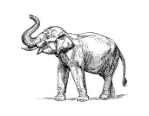
In the second instalment of detective Chopra’s detective (retired) adventures he is investigating the disappearance of the infamous Koh-i-noor diamond. The mythical gem disappears from a well-guarded place putting a strain on Anglo-Indian relations. In the midst of an international incident, the retired inspector is trying to make sense of the case with his usual crew and some new additions. In this instalment of the genre, the cultural clash becomes more obvious, with the main character trying to make sense of the colonial past and his feelings about the imprint it left behind. The sidekick elephant remains youthful, impulsive and at times petulant advancing him from a human child to a moody teenager. The case comes with some twists and turns, but the most interesting part is the way the main characters develop, especially in the face of some interesting sub-plots
@manosdaskalou
I am usually, very critical, of everything I read, even more so of books I love. However, with Inspector Chopra et al., I am completely missing my critical faculties. This book, like the first, is warm, colourful and welcoming. It has moments of delightful humour (unicycles and giant birthday cake), pathos (burns and a comforting trunk) to high drama (a missing child and pachyderm). Throughout, I didn’t want to read too much at any sitting, but that was only because I didn’t want to say goodbye to Vaseem Khan’s wonderful characters, even if only for a short while…
@paulaabowles
It was a pleasure to read the second book of the Inspector Chopra series. Yes, sometimes the characters go through some difficult times, the extreme inequalities between the rich and poor are made clear and Britain’s infamous colonial past (and present) plays a significant part of the plot, yet the book remains a heart-warming and up-beat read. The current character developments and introduction of new character Irfan is wonderfully done. Cannot wait to read the next book in the series!
@haleysread
One of the reasons for critiquing a book is to provide a balanced view for would be readers. An almost impossible task in the case of Vaseem Khan’s second Baby Ganesh Agency Investigation. Lost in a colourful world, and swept along with the intrigue of the plot and multiple sub plots involving both delightful and dark characters, the will to find a crumb of negativity is quickly broken. You know this is not real and, yet it could be, you know that some of the things that are portrayed are awful, but they just add to the narrative and you know and really hope that when the baby elephant Ganesha is in trouble, it will all work out fine, as it should. Knowing these things, rather than detracting from the need to quickly get to the end, just add to the need to turn page after page. Willpower is needed to avoid finishing the book in one hit. Rarely can I say that once again I finished a book and sat back with a feeling of inner warmth and a smile on my face. If there is anything negative to say about the book, well it was all over far too quickly.
@5teveh
The second Inspector Chopra book is even more thrilling than the first! As I read it I felt as though I genuinely knew the characters and I found myself worrying about them and hoping things would resolve for them. The book deals with some serious themes alongside some laugh out loud funny moments and I couldn’t put it down. Can’t wait to read the third instalment!
@saffrongarside
I have always found that the rule for sequels in film is: they are never a good as the original/first. Now, there are exceptions to the rule, however these for me are few and far between. However, when it comes to literature I have found that the sequels are as good if not better than the original- this is the rule. And my favourite writers are ones who have created a literature series (or multiple): with each book getting better and better. The Perplexing Theft of the Jewel in the Crown (Chopra 2.0) by Vaseem Khan has maintained my rule for literature and sequels! Hurray! After the explosive first instalment where we are introduced to Inspector Chopra, Poppy and Baby Ganesha, the pressure was well and truly on for the second book to deliver. And By Joe! Deliver it did! Fast paced, with multiple side-stories (which in all fairness are more important that the theft of the crown), reinforce all the emotion you felt for the characters in the first book and makes you open your heart to little Irfan! Excellent read, beautiful characters, humorous plots! Roll on book number 3!
@jesjames50

Share this:


HMP Science Competition 2020: “Will humans ever meet space aliens?”
The last few months have been challenging for all of us, in one form or another, regardless of personal circumstances. Many of us have faced loneliness, illness, bereavement, as well as a range of other challenges. Prisoners have particularly been hit hard, with the cessation of family visits as well as, an extremely restrictive regime. As a response to the Covid-19 lockdown, the Criminology team have created a range of different activities which can be undertaken in cell and which have hopefully helped to pass the long hours. Similarly, colleagues within Geography have created a number of different quizzes which have tested both staff and prisoners. As part of this initiative, Professor Nick Petford, Vice Chancellor of UoN kindly offered to run a writing competition focused on science. The winning entry can be read below
There is a near 100% certainty that humans will indeed meet space aliens – and if not within our generation, then most likely within the lives of our children or grandchildren.
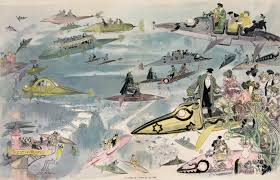
However, whilst generations built up on visions of Star Wars and Star Trek might envisage us clasping hands with humanesque visitors from outer space, Babel fish in their ears, the first and perhaps only encounter ever likely to happen is that of a scientist peering at the screen of an electron microscope, to study the truly spectacular and epoch-making vision of an alien self-replicating molecule, or single-celled proto organism, retrieved from a volcanic rent on volcanic vent on Io [moon of Jupiter], Mars or another near neighbour.
The mathematician von Neumann’s concept of the ‘von Neumann probe’, or self-replicating space vehicle capable of travelling interstellar distances, to replicate itself on other planets, from where it would then head off to further star systems, populating the entire Milky Way in less than a million years, does neatly encapsulate the question: If there is intelligent alien life out there, why haven’t we seen it? The only answer to which must be, to the extent it does exist, it must be a long, long way away, in remote galaxies, perhaps too distant to ever be reached by man, as the universe expands more rapidly than we could ever travel.
Initial results from the studies of now thousands of exo-planets have also failed to give chemical indications of oxygen, or other synthesised chemicals likely to indicate life in detectable quantities on our near neighbouring planets.
However, on the smaller scale, if scientists such as Langland are correct in their view that the evolutionary adaptation of self-replicating molecules, leading to early life forms, can be explained by the laws of thermodynamics, prior to any Darwinian pressures on replication, mutation and inheritance traits, life in its most basic forms is likely to be a common phenomenon. Rather than needing a primeval chemical soup struck by lightening to foster the creation of RNA-like molecules, any simple source of energy such as volcanic spark could, over time give rise to simple life forms. Indeed, this is seen here on earth, where a bewildering variety of non-oxygen based simple life forms exist in the plumes of deepwater volcanic rents.
Such life forms may be simple, and their environmental conditions not far extensive enough or long-lived enough for complex life to form, or spread from the immediate vicinity. Even here on earth, life may have existed for two billion years or more before that fateful day when two became one, and complex cellular life came into being.
Sometimes in the near future, life will no doubt be discovered elsewhere than just on earth – with all the implications that will doubtless bring to the monotheistic religions placing God and Man at the centre of creation. But one thing is certain, our first encounter with alien life will be through a microscope, not a spaceship.
M.R. (2020)

 Thoughts from the criminology team