
Home » Coronavirus (COVID-19) (Page 11)
Category Archives: Coronavirus (COVID-19)
The day after!
“I know not with what weapons World War III will be fought, but World War IV will be fought with sticks and stones.” This quote allegedly belongs to A. Einstein who imagined a grim day in the aftermath of a world war among nations who carried nuclear arms.
It is part of human curiosity to imagine beyond the current as to let the mind to wonder on the aftermath of this unique international lockdown! Thoughts wonder on some prosaic elements of the lockdown and to wonder the side effects on our psyche. Obviously as I do not have a vast epidemiological knowledge, I can only consider what I know from previous health scares.
The previous large-scale health scare was in the 1980s. I still remember the horrible ad with the carved headstone that read AIDS. One word that scared so many people then. People were told to practice safe sex and to avoid sharing needles. People became worried and at the time an HIV diagnoses was a death sentence. Images of people suffering Kaposi’s sarcoma began to surface in what became more than a global epidemic; it became a test in our compassion. Early on, gay people reported discrimination, victimisation and eventual, vilification. It took some mobilisation from the gay community and the death of some famous people to turn the tide of misconceptions, before we turned the tide of the disease. At this stage, HIV is not a death sentence and people who are in receipt of medical attention can live full and long lives.
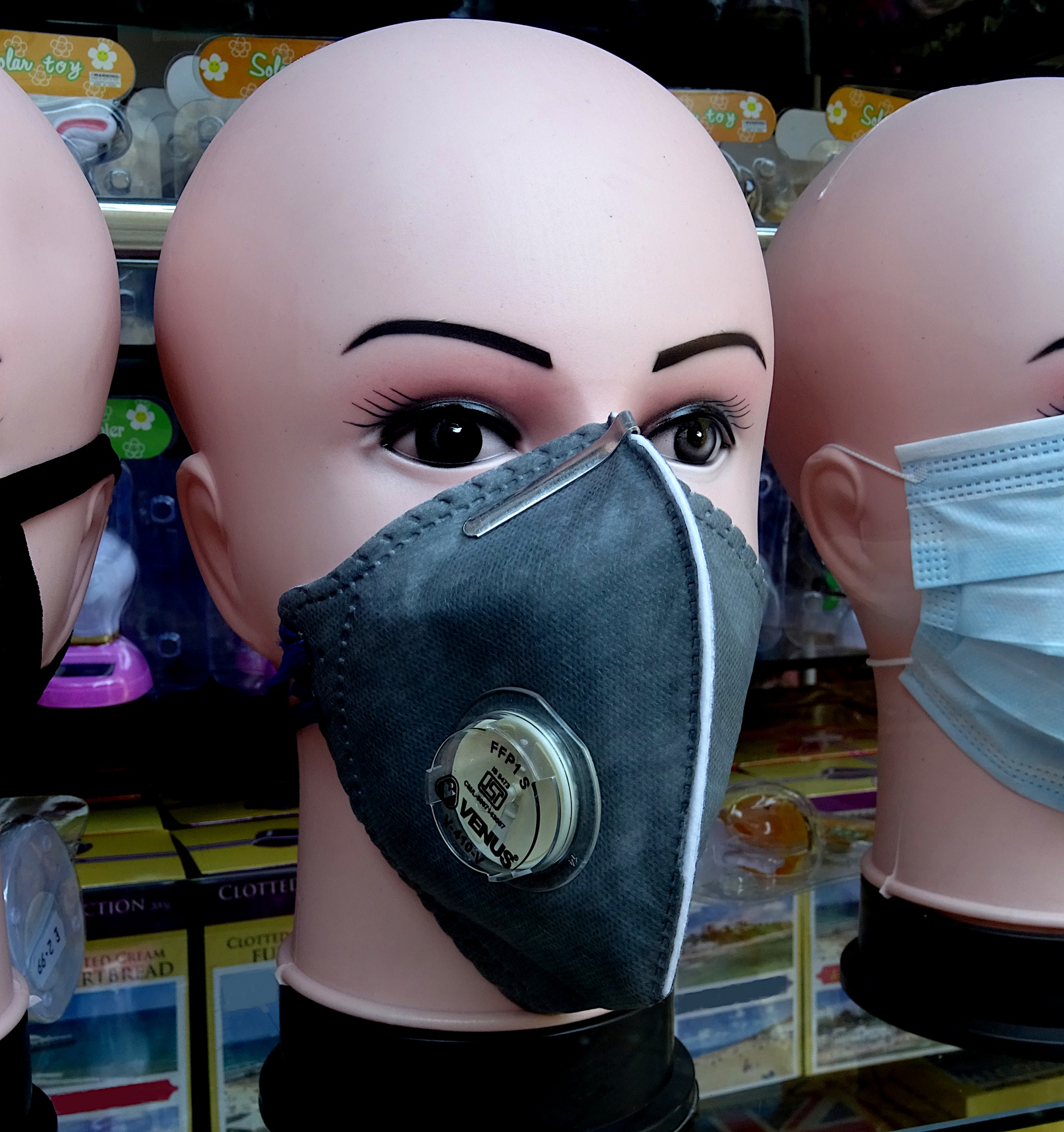
It is interesting to consider how we will react to the easing of the restrictions and the ushering on a new age. In some Asian countries, since SARS in 2003 some people wear face masks and gloves. Will that become part of our attire and will it be part of professional wear beyond the health care professions? If this becomes a condition, how many people will comply, and what will happen to those who will defy them.
We currently talk about resilience and the war spirit (a very British motif) but is this the same for all? This is not a lockdown on equal terms. There are people in isolation in mansions, whilst some others share rooms or even beds with people, they would rather they did not. At the same time, we talk about resilience, all domestic violence charities speak of a surge in calls that have reached crisis levels. “Social distancing” has entered the lexicon of our everyday, but there are people who simply cannot cope. One of the effects the day after, will be several people who will be left quite traumatised. Some may develop an aversion to people and large crowds so it will be interesting to investigate if agoraphobia will surge in years to come.
In one of my exercise walks. I was observing the following scene. Grandparents waving at their children and grandchildren from a distance. The little ones have been told not to approach the others. You could see the uneasiness of contactless interaction. It was like a rehearsal from an Ibsen play; distant and emotionally frigid. If this takes a few more months, will the little ones behave differently when these restrictions are lifted? We forget that we are social animals and although we do not consciously sniff each other like dogs, we find the scent of each other quite affirming for our interactions. Smell is one of the senses that has the longest memory and our proximity to a person is to reinforce that closeness.
People can talk on social media, use webcams and their phones to be together. This is an important lifeline for those fortunate to use technology, but no one can reach the level of intimacy that comes from a hug, the touch on the skin, the warmth of the body that reassures. This was what I missed when my grandparents died, the ability to touch them, even for the last time.
If we are to come out of social distancing, only to go into social isolation, then the disease will have managed something that previous epidemics did not; to alter the way we socialise, the way we express our humanity. If fear of the contagion makes us withdrawn and depressed, then we will suffer a different kind of death; that of what makes us human.
During the early stages of the austerity we saw the recurrence of xenophobia and nationalism across Europe. This was expected and sociologically seemed to move the general discussions about migration in rather negative terms. In the days before the lockdown people from the Asian community already reported instances of abusive behaviour. It will be very interesting to see how people will react to one another once the restrictions are lifted. Will we be prepared to accept or reject people different from ourselves?
In the meantime, whilst doctors will be reassessing the global data the pandemic will leave behind, the rest of us will be left to wonder. Ultimately for every country the strength of healthcare and social systems will inevitably be evaluated. Countries will be judged, and questions will be asked and rightfully so. Once we burry our dead, we must hold people to account. This however should not be driven by finding a scapegoat but so we can make the most of it for the future. Only if we prepare to see the disease globally, we can make good use of knowledge and advance our understanding of the medicine.
So maybe, instead of recriminations, when we come outside from our confinement, we connect with our empathy and address the social inequalities that made so many people around us, vulnerable to this and many other diseases.
Share this:


Things I miss (and things I don’t) – Haley

It’s my first days off after a set of shifts and I’m sitting here thinking that I am quite happy to spend my days off sleeping, spending time indoors and going out to exercise once per day. I am happy to rest on my days off for a few months as work is more tiring than usual.
I am relatively ‘new’ to my team of work colleagues but I still I miss them. I miss working with them rather than working with less people/alone. I miss their support, help and company. I miss dealing with familiar and usual situations at work. But I am not complaining, as the virus has thrown a spanner in the works of many organisations.
After finishing my last night shift I went to the shop to collect some essentials. Then I realised that I missed ‘normality’. Like not having to do strange distanced dances in shops with strangers whenever we find ourselves near to breaching the 2 metres of proximity rule with each other. And being able to cough in a shop without having to see the look of sheer panic plastered on the faces of those near-by.
Going to and from work has been a different experience, as the city centre is very quiet. Part of me likes this- it’s because my pace of everyday life can slow down a bit. There is less traffic, getting onto public transport is no longer an ‘every person for themselves’ situation. I have not had to watch as a train takes off without my said self being able to fit on it. And I don’t have to pretend that I am playing dodgems as I rush through hoards of people every time I reach the city centre.
I am no longer rushing around on my days off, making sure all tasks are completed, all purchases have been purchased, and that I have socialised enough before starting my next set of shifts. My once a day dogs walks are fabulous; the views are great, the flowers are beautiful, the sun is shining, there is no litter on the floors and it is quiet enough to hear the bird singing late into the afternoon.
I do miss seeing people though. I miss going to the pub/food places with friends and meeting up with my family. I miss going to my local park and seeing everyone enjoying themselves in the sun. I miss not doing the things that I had planned to do this spring and summer; like going to festivals, going abroad, and going on days out to the seaside with others.
Whilst technology has helped me to keep in contact with people I care about it just doesn’t feel the same as being in the constant presence of other humans. As it turns out, I cannot live with people, but I cannot live without them either.
Share this:


That old familiar feeling

It would seem it’s human nature to seek out similarities in times of uncertainty. An indication that someone somewhere has experience they can share. Some sort of wisdom they can provide or at the very least a recognisable element that can somehow be interpreted to give an indication, that when it happened before everything turned out ok in the end. With the current world pandemic leaving so much free time to think and observe what is going on, one has to wonder at some point if the differences should be a more prominent focus point.
Historically world pandemics are not new. The plague, small pox, Spanish flu, all form part of a collective historical account of the global devastating impacts a new disease has on mankind. I found myself re-reading The Plague (Camus, 1947/2002) and pondering the similarities. Self-isolation and whole town isolation, the socioeconomic impacts on the poor seeking employment, despite the risk to health these roles carried and the heart-breaking accounts of families unable to say goodbye to loved ones or bury the dead in a dignified, ordinary manner.
Early on politicians and media were quick to compare the pandemic with war. Provocative language became commonplace. Talk of fighting the invisible enemy in the new ‘war’, with the ‘frontline’ NHS staff our new heroes giving the country hope we could win. It came as no surprise to wake one morning and see ‘memes’ shared on social media portraying Boris Johnson as the new Churchill.
Media quickly changed. Suddenly films which dramatised pandemics grew in popularity. These fictitious accounts of how the world would respond, the mistakes which would be made and the varying outcomes individual responses towards official advice would have on their chances of survival. Even I have to admit a scene from Contagion discussing the use of hand washing and refraining from touching your face seemed to echo government advice. Fortunately, the scenes of supermarket looting were overdramatic but the empty supermarket shelves and panic buying hysteria was all the same.
There were however, some comparisons made, which haunted me. I’m sure everyone has their own reasons for finding distaste and maybe mine were unique to me. A combination of my academic knowledge and background mixed amongst my own personal views and current situation. As a mother of three, I had suddenly become a teacher with the closure of schools. My recent master’s degree in education fortunately allowed me a basic, self-researched understanding of mainstream education and home education methods.
I watched as friends and family members concerns grew about how they as parents could provide an education. Initially most looked-for similarities once again. Similar timetables to school, similar methods of teaching, trying as a parent to morph into a similar role their children’s teacher has. I think most parents felt overwhelmed quite early on. Many most likely still do, because the thing is, home education is not comparable to mainstream education in many ways at all. That’s not to say one is superior, this is certainly not my opinion. Quite simply, they’re fundamentally different approaches.
I often find myself throughout my academic journey looking for comparison with concepts and areas in which I’m familiar. My undergrad in law and criminology makes occasional appearance in most of my writing, perhaps more often than not, in fact, I used my continued interest in criminological and legal concepts to make my education MA my own. Further reinforcing the idea, familiarity provides some sort of comfort as we enter something unknown.
One comparison which deeply worried me that finds its roots in criminological concepts, is those who have compared self-isolation with prison. Having experienced a long, heated debate previously following a comment I made displaying my disgust for the re-introduction of the death penalty, it seemed futile to raise the issues with this in the only social environment I had access to currently, social media. I remain hopeful, most criminologists recognise the obvious differences between the two.
In the end when we look back at this moment in history, there will no doubt be many more comparisons made. We often look to history to learn lessons and I’m not sure we can do that without recognising some sort of parallels with the situation. Whether that be for comfort, guidance, information or to learn, entirely depends on the individual. I will leave you with a quote of something I heard a few days ago which has stuck with me and provided inspiration for this writing…
“History doesn’t repeat itself but it often rhymes”
With that in mind, I would suggest we take comfort in the familiarity of similar situations, that this pandemic won’t last forever, but the difference it may make on our lives will always be our personal experiences. When we look back and search for comparison of life during the pandemic and life afterwards, we may well appreciate the experiences we once took for granted.
Reference
Camus, A (2002). The Plague. London: Penguin classics
Share this:


“My Favourite Things”: Helen Trinder

My favourite TV show - I don’t generally like watching violence on TV – I deal with enough real-life violence that I don’t find it entertaining, but I love Killing Eve. It’s full of wit, and interesting complex personalities while being far-fetched enough to provide some escapism. In complete contrast, I also love The Great Pottery Throw Down. There’s something soothing and weirdly sensual about watching people doing pottery and I’m fascinated by how easily Keith is moved to tears by the efforts of the contestants!

My favourite place to go - There are lots of places I like to go but now that I can’t go anywhere the thing that I miss most is watching my son sail. Since he became good at it, just over a year ago, we have been to a number of sailing clubs across the country, but our home club is just down the road in Haversham. It’s a lovely tranquil spot, only a stone’s throw from Milton Keynes. In a normal summer we would be there three or four times a week, and would often camp there over the weekend

My favourite city - Of all the cities I’ve visited, my favourite is New Orleans, although I haven’t been there since it was devastated by Hurricane Katrina. I visited in 1992 and again in 1997 when it was vibrant, jazzy and very cool. I also love Oxford. I lived there for three years and still visit regularly

My favourite thing to do in my free time - I play cornet in a brass band. I enjoy making music, particularly with other people, and sharing it with an appreciative audience. No band practice at the moment, but I’m doing more personal practice than I have for a long time!

My favourite athlete/sports personality - I think Dina Asher-Smith is a great role-model, completing her degree while also training to become a world champion. I also think that Gareth Southgate is an example of a good leader. He is calm, rational and professional, he listens to his players and he puts their interests first

My favourite actor - For the ability to make me laugh and to convey so many thoughts and feelings with his face and body it has to be Rowan Atkinson. And for a huge body of very diverse work, always portrayed with sensitivity, warmth and humour, I choose Julie Walters

My favourite author - I haven’t read any of her books for a while (they can be a bit of a marathon!) but my favourite author is George Eliot. She portrays complex characters with all their qualities and flaws, and the gradual ways in which they change over time in response to their experiences

My favourite drink - Gin and tonic, preferably with some kind of fancy artisan gin

My favourite food - A bacon sandwich, obviously!

My favourite place to eat - It depends what I’m eating. If it’s the aforementioned bacon sandwich, then a warm, sunny campsite. Fish and chips taste best at the seaside, seasoned by the sea air. A Sunday roast is best at home with my family

I like people who -are enthusiastic, open-minded and willing to look at things from different perspectives

I don’t like it when people -are negative or rigid in their thinking. I’m not very tolerant of pessimists!

My favourite book - is still Winnie the Pooh by A.A. Milne. Lots of gentle humour and gems of wisdom.

My favourite book character - I have a soft spot for Adrian Mole. I first discovered him when I was about 11 or 12 and he was 13¾. We have grown up together!

My favourite film - The Pink Panther films featuring Peter Sellers as Inspector Clouseau always have my husband and I rolling round with laughter

My favourite poem - My favourite poet is John Betjeman. I like the rhythm of his writing and his use of brand names, place names and technical terms which convey a strong sense of time and place. However, I think my favourite poem is A Gift by Henry Normal. It describes someone bringing an amazing gift (a mountain) which the recipient doesn’t really understand

My favourite artist/band - I’m a big fan of 90's Britpop and I particularly like Pulp. I think their songs have clever and sophisticated lyrics

My favourite song - Following on from the above, my favourite song is Common People. It is both humorous and moving, with a strong message to people like me who come from a position of privilege and want to promote social justice. However well-meaning we may be, sometimes we just don’t get it! If I wanted some feel-good music though, I would choose Sandstorm by Darude

My favourite art - When I was 20, I went inter-railing with a friend from university. We visited the Vatican and spent a good 20 minutes simply staring at the ceiling of the Sistine Chapel. The art is exquisite – so much detail and so much movement and fluidity in the painting

My favourite person from history - As a Shropshire girl, and the daughter of an industrial archaeologist, I’m going to say Abraham Darby, who first smelted iron ore using coke instead of charcoal at Coalbrookdale. He took what he had learned from quite different contexts and applied his knowledge to provide a novel solution that kick-started the industrial revolution. And as a Quaker he also took a keen interest in social justice, in supporting his workforce and developing his community

Share this:

“My Favourite Things”: Kiera Slaven
My favourite TV show - Let’s start this off by going full nerd and saying that my all time fave tv show has to be Star Trek. Something that resonates with me is that this TV show paints the possibility of exploration of the unknown and as a global society we’ve constructed that reality. Perhaps not to the extent of beaming onto another space ship but certainly sending our own technology out to Mars…. it just fascinates me. fact check: the show started production in 67’ and we went to the moon in 69’

My favourite place to go - Easy… into nature! I’ve most definitely spent the majority of my life at Sywell Reservoir, Northamptonshire has a beautiful countryside to offer, in the spring/summer I tend to drive out into the small country villages and find a nice spot (usually a farmer's field with a public walking path) and just go for a stroll

My favourite city - Not a city person! I’ve travelled to many great cities but naturally I drift to the outskirts, the small towns, the countrysides. My favourite town would have to be Alice Springs, Australia. That dirt red town is full of so much life, vibrancy, culture, yes there is an evil side to it but there is so much beauty too

My favourite thing to do in my free time - Oh, easy one…. I love visiting second hand, vintage and charity shops. Honestly you find so many great wonders. Usually on the hunt for 60’s/70’s retro vintage furniture. Northampton has a great deal of vintage shops to offer, I would personally recommend the Vintage Retreat, lovely spot for lunch too

My favourite athlete/sports personality - certainly an oddball answer, but it would have to be Rey Mysterio. His identity eluded me when I was younger and he’s been in the business a long old time! (wrestling business that is)

My favourite actor - Jeff Bridges… what a man

My favourite author - H.P Lovecraft, an outsider in every sense of the word. He dove deep into his own mind and questioned the importance of the human race by stripping back the ego that surrounds us, and enforced the notion that actually human beings are not the most important thing in this universe. Also, he brought Cthulu to life

My favourite drink - Johnny Walker Red Label and Irn Bru (Scottish Heritage)

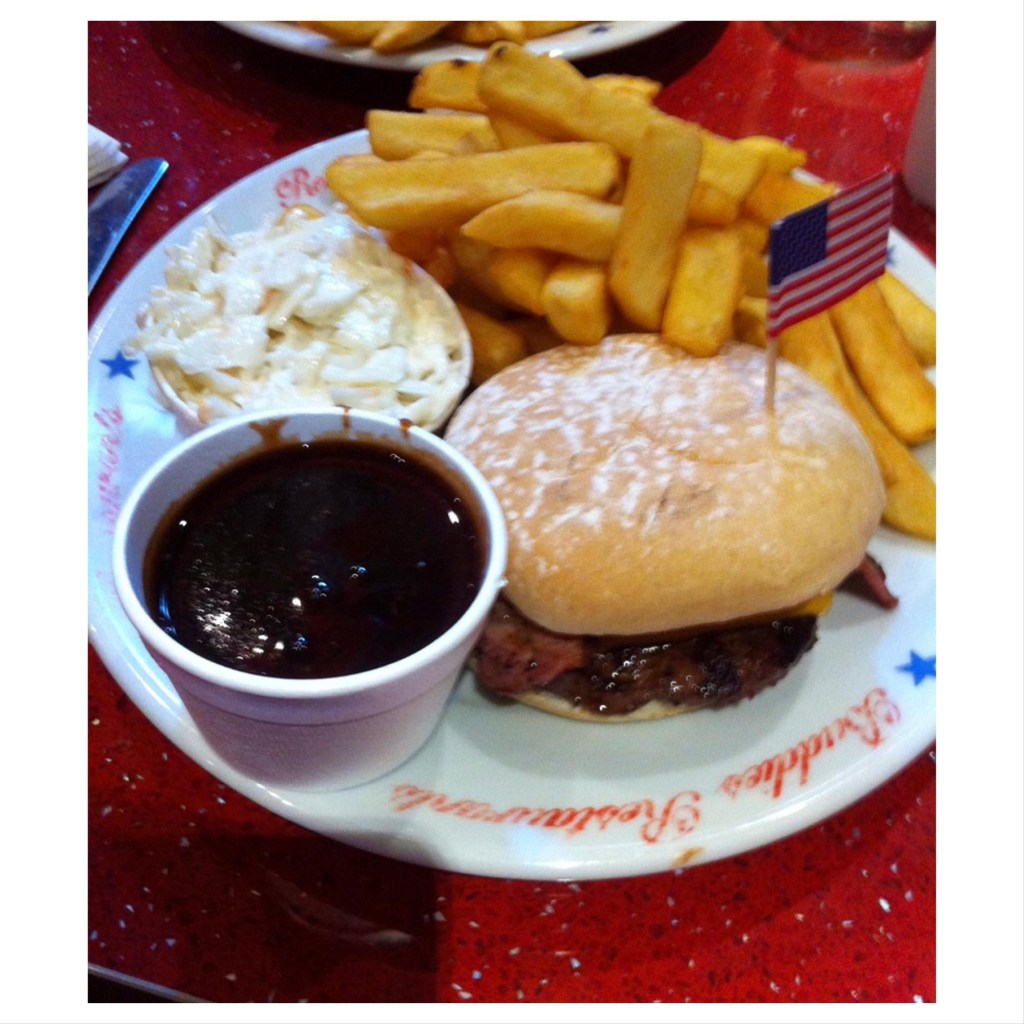
My favourite food - A sloppy Joe burger with extra rib sauce from Buddies. I'm bit rubbish at this because I can’t just pick one thing, so my other fave food would be my Granny’s home-made stovies

My favourite place to eat - Smoke Pit, in Northampton town centre, bit pricey but the food is so worth it

I like people who - are honest with themselves

I don’t like it when people - act out of fear

My favourite book - Collection of books, would have to be the graphic novel series Berserk which follows the lone mercenary Guts, for any comic book/manga fans out there, this one is a must

My favourite book character - Sorry but I have spent a few hours trying to figure my fave book character out and its just not happening. In replacement I will offer my fave TV show character and it would have to be Ragnar Lothbrok (from Vikings). Although I'm sure he exists in a historical book somewhere

My favourite film - No Country for Old Men. Need I say more

My favourite poem - I have never been one to frequent in poems, so I will insert my favourite quote here instead and you may seem to notice a reoccurring theme here (my love for H.P Lovecraft). “The oldest and strongest emotion of mankind is fear, and the oldest and strongest kind of fear is fear of the unknown.” It is certainly poetic

My favourite artist/band - Metallica!!!

My favourite song - Sam Cooke, A Change is Gonna Come and The Eagles, Hotel California

My favourite art - ANYTHING Raoul Dufy. Light hearted bursts of colour that paint the most luxurious and relaxing scenes. Artwork to get lost in

My favourite person from history - Marcus Aurelius. If you don’t know who it is get your google on, you won’t regret it. Fun fact: Aurelius’ personal ethics are informed by the philosophical concept of stoicism, a fascinating philosophical concept and one I deeply resonate with
Share this:


Things I Miss, or Introverts vs Coronavirus

The thing I hate most about self-isolation is how quickly I eased into this new pace of life. Is that the privilege of having somewhere to self-isolate to or does it come with having an introverted personality? Before quarantine, many would perceive me as a mild-mannered individual. I ask a lot of questions. I guess that’s where my affinity for journalism comes from. Yet, in a global crisis, not much has changed. For someone that suffers from anxiety, one would think I would have more emotional unrest during the worst public health crisis in a generation. But no. I’m content, staying at home.
Whilst this pandemic has been liberating for me, it has shown how much privilege I still have despite being at three disadvantages in society: the colour of my skin, my invisible disability and being an introvert in a world designed for extroverts. Yet, cabin fever does set in once in a blue moon and sometimes it does feel like Groundhog Day. Despite being at comfort in my own space, my concept of time is being challenged. Like, what is a weekend? Not even Bill Murray can save me from this paradox. Not my books, nor Disney+ subscription, films, or The Doctor, Martha and that fogwatch.
What I hate about being an introvert in the buzz term of today – “unprecedented times” – is how I’m not suffering like my extroverted friends. Perhaps this is what it means to live in society designed to accommodate you. The world outside of a health crisis – is this what it’s like? Imagine if I also happened to be an able-bodied, White, straight man as well? Just imagine. Today, extroverts are suffering. Ambiverts are suffering. When this is over will we see an increase in agoraphobia?
And in a society where extroverts are privileged over introverts, the outgoing outspoken marketing professional is valued more than the introverted, reclusive schoolteacher.
Yet, today, we are seeing the value of nurses, doctors, teachers, lecturers / academics and so forth. Many of whom will be introverts going against the grain of what feels normal to them. The person seen to be outgoing and talking and networking is regarded as a team player, in comparison to the freelance blogger or journalist writing away on their computer at home. Many of my teacher friends that talk for a living also love to recluse in their homes, as drinking your own drinks and eating your own food in your own house is great. Can you hear the silence, the world in mute? Priceless.
In my job, I recall in the training we did the Myers-Briggs test in order to get to know each other better. Safe to say I was 97% introvert, which had increased somewhat since I was a student. Coincidence, I think not. In a job where I also go to meetings for a living, and network and people (if I can make a verb out of people), it can be draining. The meetings, the networking, the small talk, the different hats and masks people wear.
As awful as Coronavirus is, I will go back to my intro in saying that this new pace of life is almost like a dream, with intermittent periods of cabin fever. I can recharge my life batteries when I want. I can be alone when I want. I can read, watch films and television series when I want. I like to engage in activities that require critical thought. Self-isolation has given ample time for that. And good things have come from my introspection. Moreover, many conversations with myself. No, I’m not Bilbo Baggins. However, to talk with oneself is freeing. It’s the first sign of intelligence, don’t ya know?
But self-isolation to me and many of my introvert colleagues, it’s our normal. Social distancing is a farce because we are still being social. “Physical distancing” is a better term. Not in this era of WhatsApp, Instagram and Zoom, we’ve never been more social. Coronavirus has shown us a social solidarity that I thought I would not see in my lifetime. To put it bluntly, Coronavirus has pretty much eliminated the quite British obsession of small talk, and given me opportune moments to think.

Whilst my extrovert colleagues want to have that picnic in the park, I’m quite happy to sit in the garden. There lies another privilege. Simultaneously, I seldom feel the need to go out. Where I miss my cinema trips, I remember Netflix, Amazon Prime, Britbox and Disney+. Sure they’re not IMAX but they’ll do. I miss the pub but there’s the supermarket with all sorts of choices of IPA to choose from. Indeed, I have found solace in having my access stripped right back. The freedom to choose afforded to me because I work and live in a “developed country” (I use this term loosely).
For those of us that live in Britain, Coronavirus has swiftly shown that we live in a first-world country with a third-world healthcare system and levels of poverty – highly-skilled medical professionals in a perilously underfunded NHS systematically cut for the last ten years by the Tories.
Unlike University, I can mute social media for a couple of hours, and do some reading. I hate that I am so comfortable, whilst others are not. I often think about international students shafted by visa issues, and rough sleepers who don’t have the privilege of thinking about self-isolation. What about those having to self-isolate in tower blocks like Grenfell? What if we were to have another tragedy like Grenfell during a public health crisis? I hate how Coronavirus has exposed underlying inequalities, and how after this, these systems of power will likely carry on like it’s business as usual.
I don’t feel defeated or bored but the other inequalities in society do make me worry. Having been a victim of racism ten times over, both by individuals and institutions, I know that racism is its own disease and it won’t simply go on holiday because we’re in a pandemic. I know increasing police powers will disproportionately impact people from Black backgrounds, especially in working-class communities, but as Black people (pre-Coronavirus) at a rate of nine times more likely to be stopped and searched than a White person in Northamptonshire is bad enough, isn’t it?
This solitude has pushed me creatively with my poetry and own blogs. Take Eric Arthur Blair, or George Orwell as he was known; when he was sick with TB, he wrote Nineteen Eighty-Four. The book we now lord about today is essentially a first draft. Rushed. A last bout before death. In my isolation, I’m excited for the number of dystopian texts that will come out of Coronavirus, particularly political narratives on how Britain and America reacted. I’m looking forward to artistic expression and if the British public will hold the Government to account. One could argue their thoughtlessness, and support of genocide (herd immunity) is a state crime.
Whilst it is easy to blame the Chinese government, our own government have a lot to answer for and metaphorically speaking, someone (or quite a few people) need to hang.
A good friend and confidant has implored me to write a book as a project. Being naturally inward in my personality, I could do it. Though, I have my reservations. Perhaps I could write a work of genius that goes on to define a generation. Nonetheless, I observe that during lockdowns around the world, there will be both introverts and extroverts applying their minds to art and creativity. Writing books. Painting pictures. Discovering theories, like Isaac Newton did when he was “confined” to his estate during the Plague in 1665.
One day the curve will flatten: we will see each other again at the rising of the sun, folks say we must make use of this time; however, this is unprecedented, so it is also perfectly okay to be at peace with your loved ones, cherish those moments, and do absolutely nothing of consequence at all.
Share this:


“My Favourite Things”: 5teveh
My favourite TV show - Probably Ashes to Ashes. I enjoyed Life on Mars but Ashes to Ashes was more my era

My favourite place to go - Newmarket Race course. We had our wedding reception there and we go back regularly for the races

My favourite city - Rome. Every corner turned is another surprise. The architecture and history is just amazing

My favourite thing to do in my free time - Mend clocks. Grandfather clocks can tell you so much about history

My favourite athlete/sports personality - Ian Wright. He just seems so down to earth

My favourite actor - Tom Hanks. He is an amazing actor and plays some fantastic roles. Long live Forrest Gump

My favourite author - It has to be Stephen Hawking. I read Brief Answers to the Big Questions (2018) and it just spoke to me. Having read it I thought ‘I get it’ even though Stephen Hawking points out I’m wasting my time thinking about what was in existence before the big bang

My favourite drink - Probably coffee. Surprised, well its what I drink most of the time. I do like a glass of red wine and certainly gin and tonic. In fact, the more of those I have, the more I consider gin and tonic to be my favourite tipple.

My favourite food - It has to be roast chicken dinner. My wife makes the best roast potatoes ever. Give me a roast anytime

My favourite place to eat - Funnily enough at home. I’ve been lucky enough to eat in places all over the world, South Africa, Hong Kong, Mauritius, West Indies, and Europe (too many places to name). I’ve eaten in Balti houses in Birmingham and even a Michelin starred restaurant, but you really can’t beat just being at home with family and friends

I like people who - I’m not really a people person. But if I have to choose, I like people that are genuine and have integrity. I’ve met a lot of people in my time from all walks of life and I get on with most, but there are not that many I think are genuine and have integrity.

I don’t like it when people - Are disingenuous. I don’t like people that use others to their own ends.

My favourite book - See above re: favourite author, but I have to say, The Circle runs a close second. It really resonates.

My favourite book character - Probably Paddington Bear. I get the hard stare from him.

My favourite film - Jungle Book, there's nothing like the ‘bear necessities of life’

My favourite poem - If by Rudyard Kipling. I think the poem speaks for itself, it’s worth returning to occasionally as a reminder

My favourite artist/band - Queen – Freddie Mercury. What a band and what a talent. I never managed to see them live with Freddie although I’ve seen them twice with Adam Lambert (brilliant singer). My friend introduced Queen to me in 1977, we listened to Brighton Rock on his dad’s hi-fi (that’s a music system invented long after the gramophone but before iPhone). I bought my first single shortly after,

My favourite song - Love of my Life. A Queen classic but I must admit Bridge over Troubled Water by Simon and Garfunkel runs a close second.

My favourite art - Impressionist painting is probably my favourite. Monet’s Impression Sunrise has a life about it that is difficult to describe.

My favourite person from history - Mother Theresa I think. Its difficult to tell because my only knowledge of historic people is what I’ve read or heard about in the news or history books. Mother Theresa stands out because she was from all accounts a loving caring person and had little herself.
Share this:


“My Favourite Things”: Haley
My favourite TV show - Peep Show. I recently binge watched Noughts + Crosses which I thought was brilliant

My favourite place to go -I am one of eight siblings so going to see any of my brothers and sisters (and their families) is always great

My favourite city -I prefer going to rural places rather than cities. I loved going to the Amazon Rainforest, Kruger National Park and being stalked by whales in Puerto Madryn. My favourite cities are Rio De Janiero, Cuzco, New York, San Francisco, Athens, Lisbon and London to name a few. I also live in Birmingham and love it here; I think it’s underrated as a city. I really enjoy going to music or food and drink events and being surrounded by friendly Brummies

My favourite thing to do in my free time - walk my dog, meet up with friends...have a nap. I am also obsessed with reading at the moment

My favourite athlete/sports personality - I’m not a sports person. Although, as procrastinating options were dwindling whilst I was doing my Master’s degree, I suddenly became fan of football. Apparently, the team I like the most (Liverpool) is the arch enemy team of my boyfriend's beloved Man United. I also like Wolves and Tottenham but liking three teams makes me a deviant in the footballing world

My favourite actor - Steve Carell. Especially him as Brick in Anchorman and as Michael Scott in The Office

My favourite author - still undecided with this one. Obviously, since childhood I have been eternally grateful for J.K Rowling for creating the Wizarding World of Harry Potter.

My favourite drink - Tea

My favourite food -Potatoes. Saag Paneer Balti with chips and a cheese naan bread

My favourite place to eat - anywhere as long as its with good company

I like people who - are empathetic, kind and encouraging of others

I don’t like it when people - think and act as though they are better to others

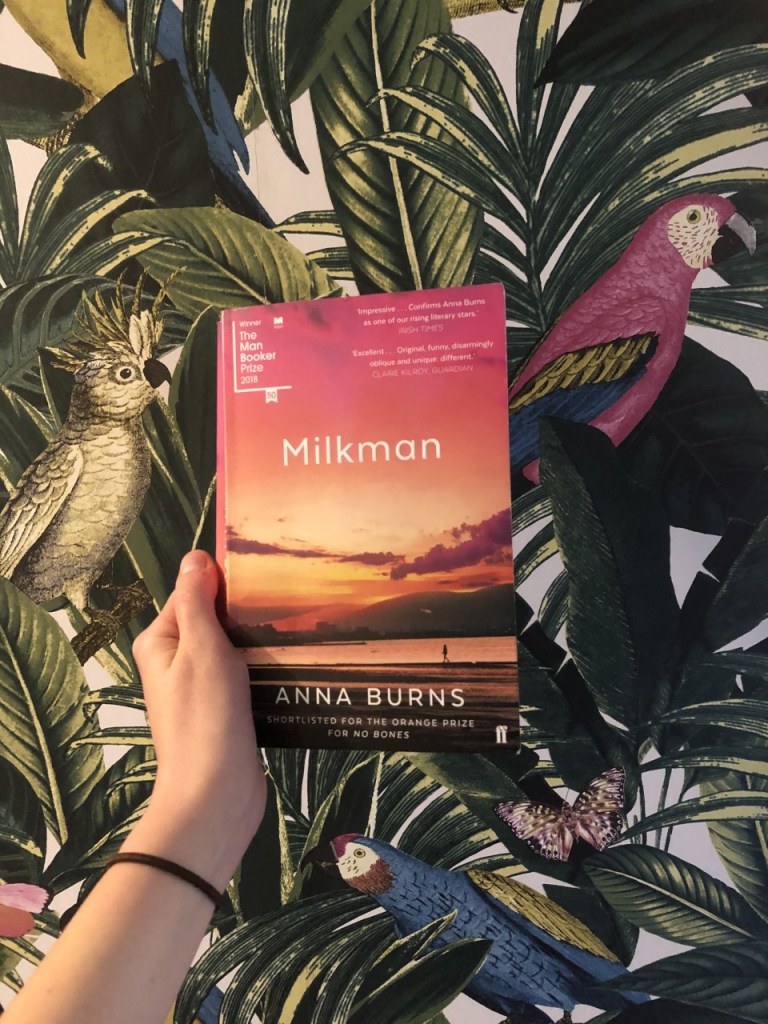
My favourite book - currently it's Milkman by Anna Burns

My favourite book character - Yossarian from Catch 22. He’s hilarious- I love his nerve and his anti-war sentiments.

My favourite film -I should be put off by the racist and misogynistic undertones within the Lord of the Rings films (and books) but I can’t help but enjoy the long adventure that Frodo and his friends embark upon. For a quick answer… Bohemian Rhapsody!

My favourite poem - I need to read more poems as I don't know of many. I do like poems by Margaret Atwood and John Cooper Clarke.

My favourite artist/band - I am sad enough to have a ‘Criminology Playlist’. It includes songs by Johnny Cash, Rage Against the Machine, Kano, Kate Bush, The Specials and Stormzy amongst others.

My favourite song - I love music that helps me to relax after a busy day at work. I love What a Wonderful World by Louis Armstrong, Pink Floyd’s live at Pompeii set, Radiohead and Hans Zimmer’s version of Bloom, Benjamin Clementine’s Nemesis and many more…

My favourite art -I was mesmerised by Picasso’s Les Meninas collection in the Picasso Museum. Banksy’s work is brilliant too

My favourite person from history - Those who contributed towards getting more rights/help for others. Only if they did this in a non-violent way, of course
Share this:

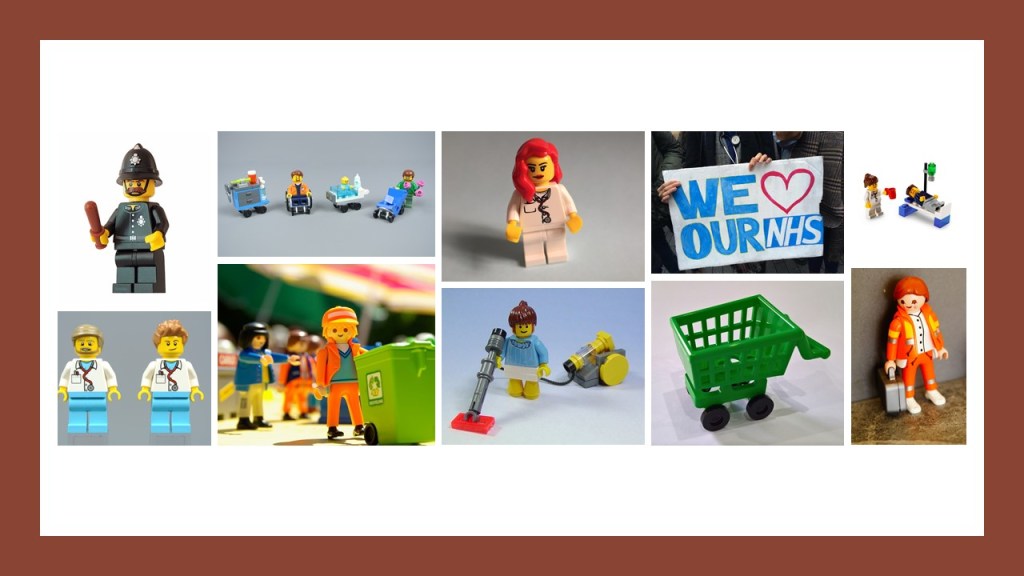
New Heroes for the Twenty-First Century? (Clue: they don’t wear khaki)
I have blogged before on the way in which society seems to choose what to remember and what to forget. Similarly, I have mused on remembrance, the poppy and the increasing militarisation inherent in paying homage to Britain’s war generation. In the current crisis, despite the despair, I sense a change in our understanding of the term heroism, which I will explore further below.
In the 20th century there was concerted focus on idolising the military man and his function within British society. This is unsurprising, it is not for nothing that Camus describes this period as ‘the century of fear’ (1946/2007: 27). This period was, and remains remarkable, for the two world wars, as well as a variety of other conflicts, within which Britain was involved (along with many other nations). The two world wars provide foundations for the way in which the twentieth-century is discussed and understood, with substantial periods of time often delineated into the short-hand of pre-war, inter-war and post-war.
Although only twenty years in, it is clear that the twenty-first century, cannot be described as peaceful. Rather it has continued with the same approach to international relations, often argued to be immoral, if not illegal, of using military violence to obtain, what Britain views as, reasonable and tangible gains. Whether we focus on Afghanistan, Iran, Iran, Libya, Sierra Leone or Syria, British military might is deemed appropriate, proportionate and necessary (as least in Britain). Certainly, a number of authors have already dubbed our current century, as being in a perpetual, ‘war without end’ (cf. McAlister, 2002, Tertrais, 2004, Schwartz, 2008).
However, in 2020 the world is facing a far more challenging enemy, one which threatens us all, Coronovirus, or as it is more scientifically known, Covid-19. More importantly this is an enemy that cannot be shot, exploded, tortured or conquered in the traditional, well-worn ways of warfare. Instead, this crisis calls for a different kind of hero, one who does not have recourse to an arsenal of increasingly, terrifying weapons.
As with the war, there are two distinctly different experiences, those on the front line and those who are not. Each group has a role to play, for some they will take their lives in their hands, on a daily basis, to tend to the sick, to deliver supplies to organisations, communities and individuals, to maintain vital services. This group will see things, again and again, that are upsetting, that will test their resolve, their empathy, their patience, good-humour and their confidence. For others, their role is to stay out of the way, to stay indoors, to ensure that the disease does not spread further. Each group will have their own tales to tell to each other, as well as to the generations which will follow.

Once this is all over, once we emerge from our enforced isolation, we will have a return to some kind of “normality”, yet this experience is unlikely to disappear from our individual and collective memories. As our forebears, had the war experience to shape their lives, and that of those who followed them (in many unexpected ways), so shall we have a similar defining moment. Whilst the hero of the twentieth century was indisputably a white, straight, able bodied, (nominally) Christian man dressed in khaki, the hero of the twenty-first century will appear in a variety of diverse guises. From the supermarket worker to the school teacher to the carer to the paramedic to the police officer to the undertakers to the cleaners to the small business owners to the scientists, to the nurses, paramedics, doctors, surgeons and all the others, each are serving on the front line of the fight against coronavirus. They are women, men, Black, Asian, white, Muslim, Buddhist, Sikh, Christian and atheist, they are young and old, they are experienced professionals and those just starting out on their working lives, they are well-renumerated, they are poorly paid, they have fears and anxieties, families, friends, and those that love and fear for their safety.
These people have little in common but their humanity and they are redefining heroism second by second, minute by minute, hour by hour, day by day.

References
Calhoun, Laurie, (2002), ‘The Phenomenology of Paid Killing,’ The International Journal of Human Rights, 6, 1: 1-18
Camus, Albert, (1946/2007), Neither Victims Nor Executioners: An Ethic Superior to Murder, tr. from the French by Dwight Macdonald, (Eugene: Wipf and Stock Publishers)
McAlister, Melani, (2002), ‘A Cultural History of the War without End,’ The Journal of American History, 89, 2: 439-455
Tertrais, Bruno, (2004), War Without End, (New York: The New Press)
Schwartz, Michael, (2008), War Without End: The Iraq Debacle in Context, (Chicago: Haymarket Books)
Share this:


Things I Miss (and don’t) – 5teveh

I was chatting with my wife the other day about household finances in the current situation. My wife has lost her two zero hours contract jobs (I’m not sure why they call it a contract when basically it’s a one-way thing; you work when we want you to and if you don’t agree then you don’t work) and adjustments have to be made. I’m not moaning about our finances, just stating a fact, things have to change. Anyway, my wife declares that whilst she enjoys visiting coffee shops it’s not something she particularly misses. A bit ironic really as we can’t go out for coffee anyway in the current countrywide shutdown. Of course, not going out for coffee saves money. The conversation got me thinking about what I miss, and conversely what I don’t in these unusual circumstances.
In a previous conversation, a friend and colleague said he missed the chats over coffee that we’d have on a weekly basis. I too miss this, but it wasn’t just the chats but also the venue, where we were able to somehow hide ourselves in our own little sanctuary, away from what at times felt like the madness of the daily machinations of campus life.
I never thought I’d say this, but I miss the classes, lectures, seminars, workshops, call them what you will. I miss the interaction with the students and that spark that sometimes occurs when you know they’ve got it, they comprehend what it is you are saying. I don’t miss the frustration felt when students for what ever reason just can’t or won’t engage. I don’t miss travelling into work in all the traffic. At least my fuel bill has gone down, and the environment is benefitting.
I miss seeing my boys, I get to speak to them or text them all the time but its not quite the same. They are grown men now but, they are still my boys. I miss being able to see my mum, she’s getting on a bit now. Sometimes I thought it a bit of a chore having to visit her, a duty to be carried out, but now… well its hard, despite speaking to her everyday on the phone.
I miss being able to pop out with my wife to various antique shops and auction rooms in pursuit of my hobby. I’m repairing an old clock now and need some parts. Ebay is useful but its not quite the same as sourcing them elsewhere.
I miss going out to meet my best mate for a beer and a Ruby (calling it a curry just isn’t cool). We’ve been friends for over forty years now and perhaps only meet up every three or four months. We text and chat but its not quite the same.
But what I miss most of all, is freedom. Freedom to see who I like and when I like. Freedom to visit where I like and to chat to whom I like, whether that be in a coffee shop with the owner or another customer or at an auction with other bidders and onlookers. It’s funny isn’t it, we take our freedom for granted until it is taken away from us. All those things that we moan about, all the problems that we see, real or imagined, pale into insignificance against a loss of freedom.

 Thoughts from the criminology team