
Home » Consumerism
Category Archives: Consumerism

What society do we want to live in?

Recently after using a service, I received an email to provide some online feedback. The questionnaire was asking about the services I received and to offer any suggestions on anything that could be done to improve services. This seems to become common practice across the board regarding all types of services and commercial interactions. This got me thinking…we are asked to provide feedback on a recent purchase, but we are not asked about issues that cut through the way we live our lives. In short, there is value in my opinion on a product that I bought, where is the value in my views of how I would want my community to be. Who’s going to ask me what society I want to live in!
Consumerism may be the reason we get asked questions about products but surely before and above being consumers, aren’t we all citizens? I can make helpful suggestions on what I would like to see in services/products but not on government. We profess democratic rule but the application of vote every now and then is not a true reflection on democracy. As we can offer online surveys for virtually everything, we have ways of measuring trends and reactions, why not use these to engage in a wider public discourse on the way to organise our communities, discuss social matters and engage in a public dialogue about our society.
Our political system is constructed to represent parties of different ideologies and practices offering realistic alternatives to governance. An alternative vision about society that people can come behind and support. This ideological diversion is essential for the existence of a “healthy political democratic process”. This ideological difference seems to be less prevalent in public dialogue with the main political parties focusing their rhetoric on matters that do not necessarily affect society.
Activism, a mechanism to bring about social change is becoming a term that sparks controversy whilst special interest groups maintain and even exert their influence on political parties. This allows private special interests to take the “ear of the government” on matters that matter to them, whilst the general public participate in social discourses that never reach the seat of power.
Asking citizens to be part of the social discussion, unlike customer service, is much more significant; it allows us to be part of the process. Those who have no other way of participating in any part of the system will be castigated to cast their vote and may participate in some party political activities. This leaves a whole heap of everyday issues unaddressed. In recent years the cost of living crisis pushed more people into poverty, food, housing and transport became issues that needed attention, not to mention health, post-covid-19.
These and many more social issues have been left either neglected only to be given the overhead title of crisis but with no action plan of how to resolve them. People affected are voiceless, having to pick up the injustices they suffer without any regard to the long term effects. Ironically the only plausible explanation given now that “Brussels’ rule” and “EU bureaucracy” are out of the picture, has become that of the immigrants. The answer to various complex problems became the people on the boats!
This is a simplification in the way social problems happen and most importantly can be resolved. Lack of social discourse has left the explanation and problem solving of said problems to an old rhetoric founded on xenophobia and discrimination. Simple explanations on social problems where the answer is a sentence tend to be very clear and precise, but very rarely can count the complexity of the problems they try to explain. There is a great disservice to our communities to oversimplify causes because the public cannot understand.
Cynically someone may point out that feedback from companies is not routed in an honest request to understand customer satisfaction but a veiled lip-service about company targets and metrics. So the customer’s response becomes a tradable figure of the company’s objectives. This is very likely the case and this is why the process has become so focused on particular parts of the consumer process. Nonetheless and here is the irony; a private company has some knowledge of a customer’s views on their recent purchase, as opposed to the government and people’s views and expectations on many social issues.
Maybe the fault lies with all of us. The presumption of democratic rule, especially in parliamentary democracies, a citizen is represented by a person they elect every four years. This representation detaches the citizen from their own responsibilities and obligations to the process. The State is happy to have citizens that engage only during elections, something that can be underscored by the way in recent years that protests on key social issues have been curtailed.
That does not sound right! I can provide an opinion over the quality of a chocolate bar or a piece of soap but I cannot express my views as a citizen over war, climate, genocide, immigration, human rights or justice? If we value opinion then as society we ought to make space for opinion to be heard, to be articulated and even expressed. In the much published “British Values” the right to protest stands high whilst comes in conflict with new measures to stop any protests. We are at a crossroads and ultimately we will have to decide what kind of society we live in. If we stop protests and we ban venues for people to express themselves, what shall we do next to curtail further the voices of dissent? It is a hackneyed phrase that we are stepping into a “slippery slope” and despite the fact that I do not like the language, there is a danger that we are indeed descending rapidly down that slope.
The social problems our society faces at any given time are real and people try to understand them and come to terms with them. Unlike before, we live in a world that is not just visual, it relies on moving images. Our communities are global and many of the problems we face are international and their impact is likely to affect us all as people, irrespective of background or national/personal identity. At times like this, it is best to increase the public discourse, engage with the voices of descent. Maybe instead of banning protests, open the community to those who are willing to discuss. The fear that certain disruptive people will lead these debates are unfounded. We have been there before and we have seen that people whose agenda is not to engage, but simply to disrupt, soon lose their relevance. We have numerous examples of people that their peers have rejected and history left them behind as a footnote of embarrassment.
Feedback on society, even if negative, is a good place to start when/if anyone wants to consider, what kind of society I want and my family to live in. Giving space to numerous people who have been vastly neglected by the political systems boosts inclusivity and gives everyone the opportunity to be part of our continuous democratic conversation. Political representation in a democracy should give a voice to all especially to those whose voice has long been ignored. Let’s not forget, representation is not a privilege but a necessity in a democracy and we ensure we are making space for others. A democracy can only thrive if we embrace otherness; so when there are loud voices that ask higher level of control and suppression, we got to rise above it and defend the weakest people in our community. Only in solidarity and support of each other is how communities thrive.
Share this:

Extortionate Concert Tickets and the Cost of Access

In the realm of live music, few things can compare to the amazing feeling of a packed venue, a beloved band, and the shared energy of thousands of fans singing in unison. But for many, especially those from lower socio-economic backgrounds, this dream remains frustratingly out of reach not due to lack of passion, but because of skyrocketing ticket prices driven by monopolized ticketing systems. Using the example of the band Oasis and their upcoming tour.
The recent announcement of Oasis’ long-awaited reunion concerts sent shockwaves through the music world; particularly for fans who have waited over a decade to hear some of their classic songs sung live again. The excitement was quickly tempered by the reality of ticket prices and the process of getting tickets. Standard Oasis tickets before any premium charges were reportedly being resold for upwards of £300, with official prices starting around £75. For a band rooted in working-class Manchester, the irony is stark: the people who Oasis originally resonated with most are now priced out of seeing them live. Oasis is just an example of this, this can be seen with many different artists globally, and it raises a question of should something be done, and if so, who needs to make the first step and what should that first step be?
At the heart of this issue are ticketing giants who dominate the live event landscape. These companies often employ dynamic pricing models similar to airline pricing where ticket prices fluctuate based on demand. In theory, this aims to reflect market value. In practice, it frequently drives up costs to exploit fan enthusiasm, creating a system that prioritizes profit over accessibility. Worse still, these companies allow and often profit from reselling schemes that further inflate prices. It is only recently where some sites have now put procedures in place for tickets to be resold at the same value to which they were purchased. Additionally, there is the issue of bots buying hundreds of tickets during presales then relisting them on other sites for extortionate prices.
Now to put it into perspective, are there more pressing issues globally that need to be addressed, the answer is yes. However, in the world of criminology where we are constantly thinking about harm, what should be a crime or criminalised, it poses an interesting question and debate. The consequences are significant, particularly for lower-income individuals. Live music, once a unifying and accessible cultural experience, has become a luxury. For a working-class fan, spending £300 on a single concert excluding travel, accommodation, and other costs is unlikely. Add to this the current economic constraints they may be facing elsewhere, and it makes it even more unlikely.
In a world where there are so many pressures, restrictions, worries and concerns, music can be a form of escape and enjoyment. So, should ticket companies be held more accountable? Should there be stronger regulations to prevent price gouging and limit resale abuses? Governments could enforce price caps, mandate transparent pricing structures, or require a certain percentage of tickets to be sold at accessible prices. Additionally, artists themselves may have a role to play; by partnering with ethical ticket vendors or pushing for more equitable ticket distribution. I managed to get tickets at face value price after trying for the third time recently, this was through a process of receiving a unique code via email as a result of being identified as one of the many who had failed on previous occasions. In this sense, I may be classed as one of the lucky ones.
Oasis, a band that once embodied the voice of working-class Britain, now symbolizes a broader issue: the commercialisation of joy. Music should transcend economic boundaries rather than reinforcing them.
Share this:


Will Santa Visit?
For me Christmas always acts as a stark reminder of inequity, both past and present. I tend to remember television and music, stories of inequity between the haves and the have nots at Christmas time being told by the privileged few. Such as the Muppets Christmas Carol’s (1992) depiction of Tiny Tim, as being poor and disabled but ever so grateful for what he had. Quite recently I was doing some food shopping when I heard the Band Aid (1984) song, Do they know it’s Christmas playing on the tannoy. Despite the criticism relating to white privileged saviorism apparently still this song is popular enough to have a revival in 2024.
Christmas things cost money. So the differences between Christmas experiences of the haves and the have nots are drastic. Whilst many children are very aware that it is Christmas they might also be very aware of the financial constraints that their parents and/or guardians may be in. On the flip side there are other children who will have presents galore and are able to enjoy the festivities that Christmas bring.
This is also a time where goods are advertised and sold that are not needed and not recommended by healthcare professionals. Such as the sale of children’s toys that are dangerous for young children. For example, I was considering purchasing Water Beads as a fun crafting gift option for some children this year, until I was made aware that a children’s hospital and local playgroup are warning parents of the dangers of these as if swallowed can drastically expand in the body which could cause serious health complications.
It seems that social media also adds to the idea that parents and/or guardians should be providing more to enhance the Christmas experience. With posts about creating North Pole breakfasts, Christmas Eve boxes, matching Christmas family Christmas pajamas and expensive Santa visits. All of which come at a financial cost.

As well as this some toys that seem to be trending this year might be seen to misappropriate working class culture. For example, if your parents can afford to take you to Selfridges you can get a ‘fish and chip’ experience when buying Jelly Cat soft toys in the forms of items traditionally purchased from a fish and chip shop (see image above). This experience plus a bundle of these fish chips and peas soft toys cost £130 according to the Jelly Cat website. The profits gained for the Jelly Cat owners are currently being quoted in the news as being £58 million. Whilst at the same time some customers of these real life fish and shops will find it difficult to afford to buy a bag of chips. And some real life fish and chip businesses seem to be at risk of closure, in part due to high cost of living climate which impacts on cost of produce and bills.
Given the above issues it is not surprising that some children are worried that Santa won’t visit them this year.
Share this:


The Problem with True Crime

There has been a huge spike in interest in true crime in recent years. The introduction to some of the most notorious crimes have been presented on Netflix and other streaming platforms, that has further reinforced the human interest in the gore of violent crimes.
Recently I went to the theatre to watch a show title the Serial Killer Next Door, which highlights some of the most notorious crimes to sweep the nation. From the Toy Box Killer (David Ray-Parker) and his most brutal violence against women to Ed Kemper and the continuous failing by the FBI to bring one of the most violent and prolific killers to justice. While I was horrified by the description both verbal and photographic of the crimes committed, by the serial killers. I was even more shocked at the reaction of the audience and how the cases were presented. The show attempted to sympathise with the victims but this fell short as the entertainment value of the audience was paramount and thus, the presenter honed in on the ‘comedic’ factor of the criminal and the crimes committed. Graphic pictures of the naked bodies of men, women and children brutalised at the hands of the most sadistic monsters were put on screens for speculation and entertainment. Audience members enjoyed popcorn and crisps while lapping up the horror displayed.
I did not stay for the full show…..
The level of distaste was too much for me but from what I did watch made me reflect deeply and led me to the age-old topic among criminologists and victimologists that question where the victims are and why do they continue to be dehumanised. Victims of these heinous crimes are rarely remembered and depicted in a way that moves them away from being viewed as human and instead commodities and after thoughts of crime.
The true crime community on YouTube has been criticized for the sensationalist approach crime. With niche story telling while applying one’s makeup and relaying the most brutal aspects of true crime cases to audiences. I ask the question when and how did we get to this point in society where entertainment trumps victims and their families. Later, this year I will be bringing this topic to a true crime panel to further explore the damage that this type of entertainment has on both the consumer and the victim’s legacy. The dehumanisation of victims and desensitisation of consumers for entertainment tells us something about the society we live in that should be addressed…..I am sure there will be other parts to this post that will explore the issues with true crime and its problematic and exploitative nature.
Share this:


Meet the Team: Liam Miles, Lecturer in Criminology

Hello!
I am Liam Miles, a lecturer in criminology and I am delighted to be joining the teaching team here at Northampton. I am nearing the end of my PhD journey that I completed at Birmingham City University that explored how young people who live in Birmingham are affected by the Cost-of-Living Crisis. I conducted an ethnographic study and spent extensive time at two Birmingham based youth centres. As such, my research interests are diverse and broad. I hold research experience and aspirations in areas of youth and youth crime, cost of living and wider political economy. This is infused with criminological and social theory and qualitative research methods. I am always happy to have a coffee and a chat with any student and colleague who wishes to discuss such topics.
Alongside my PhD, I have completed two solo publications. The first is a journal article in the Sage Journal of Consumer Culture that explored how violent crime that occurs on British University Campuses can be explained through the lens of the Deviant Leisure perspective. An emerging theoretical framework, the Deviant Leisure perspective explores how social harms are perpetuated under the logics and entrenchment of free-market globalised capitalism and neoliberalism. As such, a fundamental source of culpability towards crime, violence and social harm more broadly is located within the logics of neoliberal capitalism under which a consumer culture has arisen and re-cultivated human subjectivity towards what is commonly discussed in the literature as a narcissistic and competitive individualism. My second publication was in an edited book titled Action on Poverty in the UK: Towards Sustainable Development. My chapter is titled ‘Communities of Rupture, Insecurity, and Risk: Inevitable and Necessary for Meaningful Political Change?’. My chapter explored how socio-political and economic moments of rupture to the status quo are necessary for the summoning of political activism; lobbying and subsequent change.
It is my intention to maintain a presence in the publishing field and to work collaboratively with colleagues to address issues of criminal and social justice as they present themselves. Through this, my focus is on a lens of political economy and historical materialism through which to make sense of local and global events as they unfold. I welcome conversation and collaboration with colleagues who are interested in these areas.
Equally, I am committed to expanding my knowledge basis and learning about the vital work undertaken by colleagues across a breadth of subject areas, where it is hoped we can learn from one another.
I am thoroughly looking forward to meeting everyone and getting to learn more!
Share this:


Christmas Toys

In CRI3002 we reflected on the toxic masculine practices which are enacted in everyday life. Hegemonic masculinity promotes the ideology that the most respectable way of being ‘a man’ is to engage in masculine practices that maintain the White elite’s domination of marginalised people and nations. What is interesting is that in a world that continues to be incredibly violent, the toxicity of state-inflicted hegemonic masculinity is rarely mentioned.
The militaristic use of State violence in the form of the brutal destruction of people in the name of apparent ‘just’ conflicts is incredibly masculine. To illustrate, when it is perceived and constructed that a privileged position and nation is under threat, hegemonic masculinity would ensure that violent measures are used to combat this threat.
For some, life is so precious yet for others, life is so easily taken away. Whilst some have engaged in Christmas traditions of spending time with the family, opening presents and eating luxurious foods, some are experiencing horrors that should only ever be read in a dystopian novel.
Through privileged Christmas play-time with new toys like soldiers and weapons, masculine violence continues to be normalised. Whilst for some children, soldiers and weapons have caused them to be victims of wars with the most catastrophic consequences.
Even through children’s play-time the privileged have managed to promote everyday militarism for their own interests of power, money and domination. Those in the Global North are lead to believe that we should be proud of the army and how it protects ‘us’ by dominating ‘them’ (i.e., ‘others/lesser humans and nations’).
Still in 2023 children play with symbolically violent toys whilst not being socialised to question this. The militaristic toys are marketed to be fun and exciting – perhaps promoting apathy rather than empathy. If promoting apathy, how will the world ever change? Surely the privileged should be raising their children to be ashamed of the use of violence rather than be proud of it?
Share this:


An alternative Christmas message

Sometime in October stores start putting out Christmas decorations, in November they slowly begin to play festive music and by December people organise office parties and exchange festive cards. For the best part of the last few decades these festive conventions seem to play a pivotal role in the lead up to Christmas. There are jumpers with messages, boxes of chocolates and sweets all designed to spread some festivity around. For those working, studying, or both, their December calendar is also a reminder of the first real break for some since summer.
The lead up to Christmas with the music, stories and wishes continues all the way to the New Year when people seem to share their goodwill around. Families have all sorts of traditions, putting up the Xmas tree on this day, ordering food from the grocers on that day, sending cards to friends and family by that day. An arrangement of dates and activities. On average every person starts in early December recounting their festive schedule. Lunch at mum’s, dinner at my brother’s, nan on Boxing Day with the doilies on the plates, New Years Eve at the Smiths where Mr Smith gets hilariously drunk and starts telling inappropriate jokes and New Year’s at the in-laws with their sour-faced neighbour.
People arrange festivities to please people around them; families reunite, friends are invited, meaningful gifts are bought for significant others and of course buy we gifts for children. Oh, the children love Christmas! The lights, the festive arrangements, the delightful activities, and the gifts! The newest trends, the must have toys, all shiny and new, wrapped up in beautiful papers with ribbons and bows. In the festive season, we must not forget the kind words we exchange, the messages send by local communities, politicians and even royalty. Words full of warmth, well-meaning, perspective and reflection. Almost magical the sights and sounds wrapped around us for over a month to make us feel festive.
It is all too beautiful, so you can be forgiven to hardly notice the lumbering shadow, at the door of an abandoned shop. Homelessness is not a lifestyle as despicably declared by a Conservative councillor/newspapers decades ago. It is the human casualty of those who have been priced out in the war of life. Even since the world went into a deep freeze due to the recession over a decade ago and the world is still in the clutches of that freeze. More people read about Christmas stories in books and in movies, because an even increasing number of people do not share the experience. Homelessness is the result of years of criminal indifference and social neglect that leads more people to live and experience poverty. A spectre is haunting Europe, the spectre of homelessness. There is no goodwill at the inn whilst the sins of the “father” are now returning in the continent! Centuries of colonial oppression across the world lead to a wave of refugees fleeing exploitation, persecution, and crippling poverty. Unlike the inn-keeper and his daughter, the roads are closed, and the passages are blocked. Clearly, they don’t fit with the atmosphere… nor do the homeless. Come to think of it, neither do the old people who live alone in their cold homes. None of these fit with the festive narrative.
As I walked down a street I passed a homeless guy is curled up in a shop door. A combination of cardboard, sleeping bag and newspapers all jumbled together. Next to him a dog on the cardboard and around them fairy lights. This man I do not know, his face I have not seen, his identity I ignore; but I imagine that when he was born, there was someone who congratulated his mother for having a healthy boy. Now he is alone, fortunate to have a canine companion, as so many do not have anyone. What stands out is that this person, who our festive plans had excluded, is there with his fairy lights, maybe the most festive of all people, without a burgundy coat, I hear some people like these days.
It is so difficult to say Merry Christmas this year. In a previous entry the world cup and its aftermath left a bitter taste in those who believe in making a better world. The economic gap between whose who have and those who do not, increases; the social inequalities deepen but I feel that we can be like that man with the fairy lights, fight back, rise up and end the party for those who like to wear burgundy, or those who like to speak for world events, at a price.
Merry Christmas, my dear criminologists, the world can change, when we become the agents of change.
Share this:


I am not your “ally” (or am I?)

Today’s blog entry is a stream of consciousness rather than a finished entry with an introduction, middle and conclusion. It’s something that has been puzzling me for sometime, trying to work out why the term “ally” discomforts me and yet, not really coming to a firm conclusion. So I thought I’d explore it through a blog entry and would welcome anyone’s input to help me clarify and refine my own thinking and either embrace or reject the term.
Anyone that knows me, knows I love reading and of course, I love words. I love to play with them, say them, write them, discover new ones and trace the etymology as far as I can. Equally, I do not hide the fact that I try to understand the world through both pacifism and feminism. This makes me rather susceptible to interrogating and challenging the things that I see around me, including the written and spoken word.
The most obvious place to start when exploring words, is a dictionary, and this blog entry does similar. According to the Cambridge English Dictionary the term “ally” has three distinct definitions:
“a country that has agreed officially to give help and support to another one, especially during a war”
“someone who helps and supports someone else”
“someone who helps and supports other people who are part of a group that is treated badly or unfairly, although they are not themselves a member of this group”
Now for obvious reasons, I find the first definition problematic, put simply for me, war is a crime. The act of waging war includes multiple violences, some individual, some institutional, some structural and all incredibly harmful decades, or even centuries later. Definitions which have roots in the military and warfare leave me cold and I hate the way in which they infiltrate civilian discourse. For example “the war on drugs”, “the war on poverty”, “officer to the meeting” and the reshaping of the term “ally” for the twenty-first century” I definitely don’t want to be the “ally” described in that definition.
Definition two is also problematic, albeit for different reasons. This definition seems far too broad, if I hold the door open for you, is that me being an ally? If I help you carry your heavy bags, can I say I’m your ally? This seems a nonsensical way to talk about everyday actions which would be better described as common civility, helping each other along the way.Should I say “thank you kind ally” every time, someone moves out of my way, or offers their seat on the bus? It seems evident that this definition does not help me explore my reservations.
The third definition appears to come closest to modern usage of the term “ally”. This term can be applied to many different groups (as can be seen from the badges below and these are just some of the many examples). “whilst I identify as cisgender, I’m a trans ally”, whilst currently heterosexual, I’m a LGBTQ+ ally”, despite being white, I’m a BLM ally” and so on. On the surface this is very positive, moving society away from the nonsense of people describing themselves as “colour-blind”, “gender-blind” or such trite phrases as “we all bleed the same”, ignoring the lack of equity in society and pretending that everyone has the same lived experience, the same opportunities, the same health, wealth and happiness. Buying into the hackneyed idea that if only you work hard enough, you will succeed, that we live in a classless society and the only thing holding anyone back is their own inertia.

However, maybe my problem isn’t with the word “ally” but the word “I”, and the fact that the two words seem inseparable, After all who decides who is an ally or who is not, is there a organisation somewhere that checks your eligibility to be an ally? I’m pretty sure there’s not which means that that “ally” is a description you apply to yourself. After all you can buy the badge, the t-shirt, the mug etc etc, capitalism is on your side, provided the tills are ringing, there’s every reason to sign up. Maybe a tiny percentage of your purchases goes to financially benefit the people you aim to support, for example the heavily criticised Skittles Pride campaign which donated only 2p to LGBTQ+ charities (and stands accused of white supremacy and racism). Of course, once you have bought the paraphernalia, there is no need to do anything else, beyond carrying/wearing/eating your “ally” goods with pride.
All of the above seems to marketise and weaponise behaviour that should be standard practice, good manners if you like, in a society. Do we need a special word for this kind of behaviour or should we strive to make sure we make space for everyone in our society? If individuals or groups gain civil rights, I don’t lose anything, I gain a growing confidence that the society in which I live is improving, that there is some movement (however small) toward equity for all. Societies should not make life more difficult for the people who live in them, regardless of religious or spiritual belief, we have one opportunity to make a good life for ourselves and others and that’s right now, so why seek to dehumanise and disadvantage other humans who are on the same journey as we are.
Ultimately, my main concern with the use of term of “ally” is that it obscures incredibly challenging social harms, with colour and symbols hiding inaction and apathy. Accept the label of “ally”, wear the badge, if you think it has meaning, but if you do nothing else, this is meaningless. if you see inequality and you do not call it out, take action to remedy the situation, the word “ally” means nothing other than an opportunity to make yourself central to the discussion, taking up, rather than making, room for those focused on making a more just society.
I still remain uncomfortable with the term “ally” and I doubt it will ever appear in my lexicon, but it’s worth remembering that an antonym of ally is enemy and nobody needs those.
Share this:


Regulation and the Internet

*Trigger warning: article contains mentions of suicide, mental illness and self harm in regard to a recent news article*
It seems that internet usage, regulation and monitoring can be a divisive topic for some. The internet can be a fantastic tool for learning, communicating and employment, among other things. However, as with everything, there is a dark side to it. I once watched a video about the internet and regulation, the narrator likened internet usage to when people drove cars with no seatbelts. The world now has this wonderful tool, with little to no effective safety mechanisms, and with many young people, and vulnerable people being able to view harmful content without regulation, we are seeing extreme and negative repercussions.
I think one of the main appeals of the internet is the inherent freedom that it gives the user, the key word here is freedom. It seems that some people believe that unregulated usage of the internet is now an inherent part of their freedoms. This is perhaps why attempting to further regulate usage could result in disagreement and objection. The topic of internet regulation is a very nuanced topic; it toes the line of freedom and restriction and profit and protection. Algorithms are one way that social media companies can prolong the amount of time a person is scrolling through their newsfeed, for example: If you ‘liked’ a picture of a cat, it is more likely that related content would then be shown to you. For social media companies, more engagement equals more money. The algorithmic style of newsfeeds seems great in theory but they can become harmful. If we replace viewing cat content on Instagram with viewing suicide related content, we can see how this can become very problematic very quickly.
Questions concerning the ‘wild west’ type environment that is the internet are becoming more common. With the recent inquest concerning the suicide of Molly Russel, these questions are even more relevant. Molly Russel saved thousands of images related to self harm and suicide months before her death, posts also included some promoting depressive content and encouragement to not seek the help from a mental health professional. Tech giant Meta’s response in the inquest was that the majority of these posts did not breach their social media posting guidelines (they conceded a few did breach the rules). Their response totally contradicts the reactions of those present at the court, with Molly Russel’s father stating that these images were graphic, dark and harmful. With mental health resources already being stretched beyond capacity, this unregulated environment that is legally accessible to children will surely exacerbate these problems. Molly Russel’s experience will not be the only one, thousands of vulnerable and impressionable people, young and old experience similar things and view similar medias. Whether it be accessing pro-anorexia content, content which promotes weapons and violence or content which advocates for avoiding professional mental health support.
The repercussions of an ineffectively regulated internet are unmeasured and the continuation of this deregulation is for the pursuit of profit fuelled by misguided ideas about what freedom of action and freedom of expression mean.
Share this:


I wanna be like Mike #BlackenAsiaWithLove
Originally written: 26 November 2001
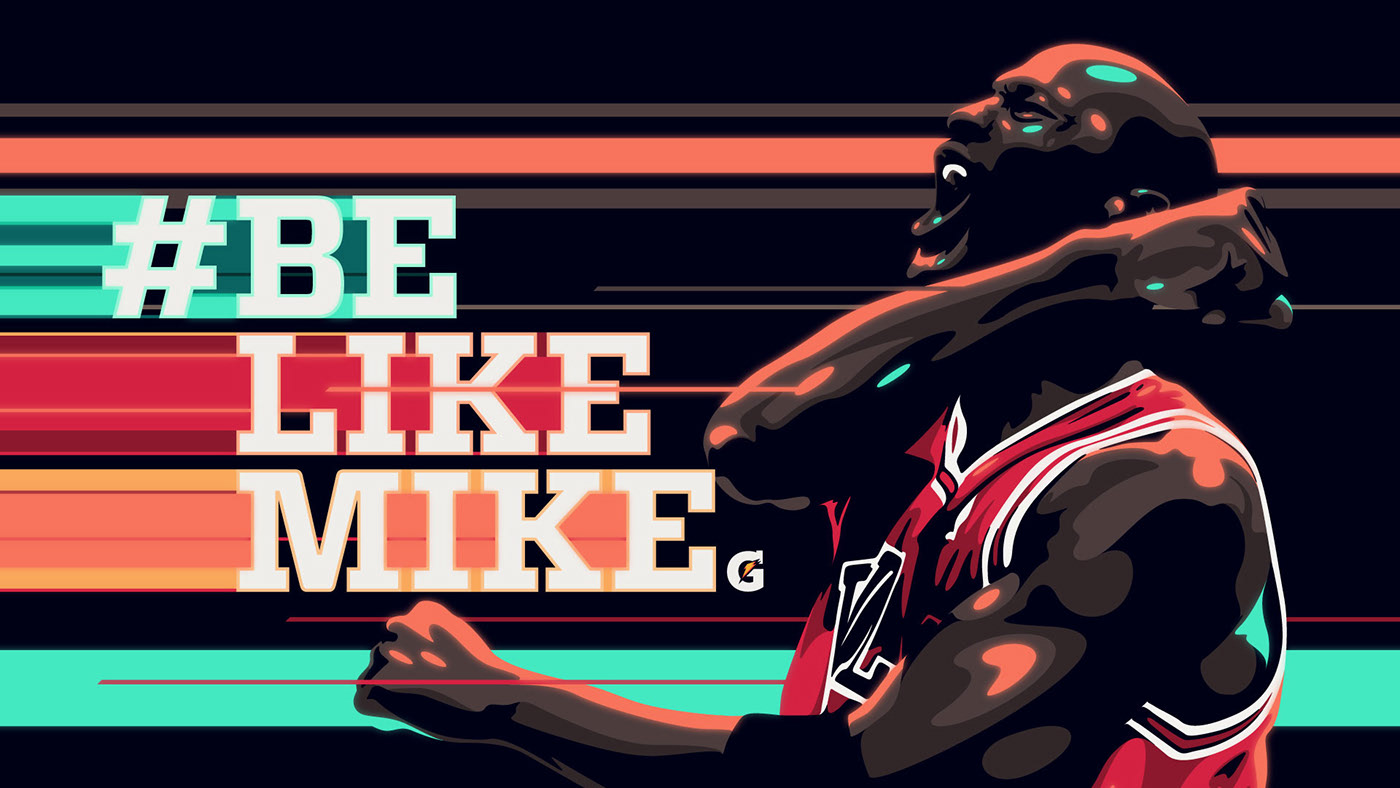
I wanna be like Mike. Mike is filthy rich, in great physical condition, is well perceived by not only his fans, but also the wider public, and he’s even faithful to his monogamous relationship. Mike is generally agreeable, and you almost never see him expressing aggression towards others outside of the game. Mike has never been ‘exposed’ as gun-totting, neither bashing women nor gays, and he’s even pretty articulate. Rumors spread about his philanthropic efforts the same low-income communities where he grew up in a hard-working family. His best friend and biggest fan is his dad, and Mike is so sensitive and secure with his manhood that he wept before the nation upon his dad’s death. Mike’s at the very top of his craft yet never brags and never rests on his laurels. Mike’s humble and certainly a team player. “Nothin’ but net.” Mike works hard.

This is what America tells the world, and outside of this country (which is neither the center of the universe nor even this tiny planet) many believe that Mike is wholly representative of the American dream. For sleuths of Americans, he’s likely representative of the ideal American. I mean, I am not a sports gladiator nor was I born with a trust fund. Hence, in order to be like Mike, I am in school. I work hard. Thus far I’ve earned a degree from an elite university and am currently enrolled in another. I estimate that so far, my education itself has indebted me over one hundred twenty thousand; and I am nowhere near done. There’s little guarantee that I’ll be wealthy, or even employed. There’s absolutely no guarantee, and in fact, factors are working against me finding a lifelong stable monogamous relationship.
 And I am quite privileged. Imagine if you will, most of the world. Most of us have received that chain e-mail which looks at the world population scaled down to one hundred folks. Imagine if this entire Earth’s population were composed of just one hundred people, there would be less than one person with the opportunities I’ve had. So then, how many would have those opportunities like Mike?
Don’t e’rybody wanna be like Mike?
Imagine now, that you have a happy, humble life. You work hard. You live in the south of France and you attend to the vineyard, just as generations upon generations of your ancestors have done before. What are your chances of ever being like Mike? Imagine that you’re a social worker in Kazakhstan with few resources to offer those who present themselves before you, regardless of their destitute. You work hard. Imagine you’re a child soldier in Sierra Leon who was forced to burn his village to the ground after being forced to massacre several relatives. You cling to the drugs your captors make you take numb you when they rape your mother and sister. You work hard. Imagine that you’re sitting with a doctor in Botswana as she tells you that you are HIV+. You join a quarter of Botswana’s population who live with HIV/AIDS. You work hard, but the monthly medical costs of a person living with AIDS is much more than a year’s salary for you and your husband, who is also positive. Now imagine you are their kids. You like basketball, too. And you practice every day with the plastic carton nailed to the tree out back. You work hard. Imagine you’re the same kid, with the same circumstances, only you’re in the ghettos of America, just like Mike. If you work hard, wouldn’t you become an Olympiad? Wouldn’t Obama present you the Presidential Medal of Freedom in the White House with the Gates? Couldn’t your image become a logo?

Be Like Mike in the coupons section of your local Sunday paper!
What are your chances of ever being like Mike? You work hard. Would it anger you that these images bombard your life? This world is big, but Mike’s dream persists…and penetrates every market on Earth. We’re all sold that version of that dream – that anyone, even a kid as regular as Mike, could be like Mike. If he can do it, anyone can (and you can with this can of cola, sports drink, burger, apparel, underwear, or other consumable… be like Mike) Don’t it inspire you? No rim! Don’t you want to be like Mike?

 Thoughts from the criminology team