
Home » Classical School
Category Archives: Classical School

A Love Letter: in praise of board games
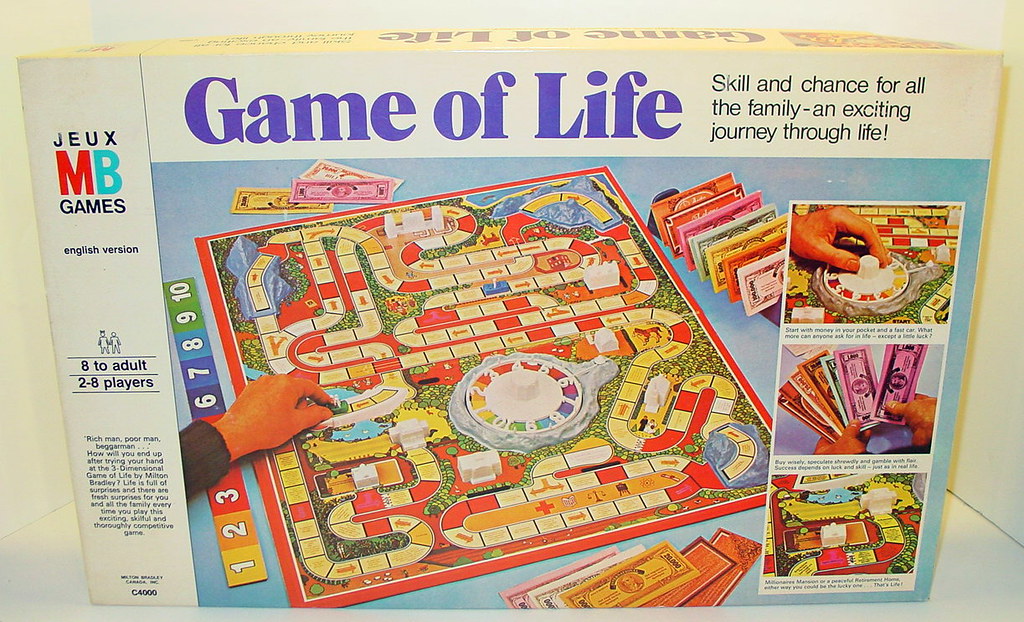
This my fifth love letter, previously I have written in praise of poetry, art, Agatha Christie and the Thoughts from the Criminology Team blog. Since early childhood, I have loved playing games and today’s entry is dedicated to this form of media. In the early years, the focus on fun is paramount, after all who wants to play a dull game? Equally important, the educational aim of games is sometimes explicit, other times less so. Nevertheless, they help us learn to match and sort colours and shapes, to develop our counting skills in an applied setting and improve our memory recall, as well as spelling. Games likes Snap, Happy Families, Hungry Hippos, Snakes and Ladders, Guess Who, Junior Scrabble offer a variety of different ways for children to learn important skills whilst playing. These games enable even very small children to share space, develop important interpersonal skills like taking turns and learn to deal with winning, and of course, losing. Often the latter is a very slow and painful lesson to learn….and one that isn’t always remembered into adulthood!
Of course, one of the most explicit part of playing games is learning the rules of the game, and of course, what happens when we deviate from those rules. It might lead to the loss of a turn or even forfeiture of the entire game. People interpret rules in different ways and families often develop their own “house” rules, but nevertheless there is always an agreed upon set of rules and a way of policing and punishing those who break them.
But once these lessons have been learned, what do games have to teach us as adults? I would say plenty! On a surface level, they offer an opportunity to relax and do something outside of our humdrum lives. Once the games have been purchased, they generally cost nothing to play unlike other forms of leisure time.1 Some can be played alone, others require competitors or even teams. They can aid our thinking, concentration and develop skills of strategy and tactics. They also have the general benefit of not being all consuming (unless at competition level), allowing for conversation to flow. The latter, conversing whilst doing something else, can often be useful for difficult emotional conversations, allowing people to open up without pressure (known colloquially as “health by stealth”).
But do board games have anything to offer to Criminology? Again, I would argue yes! Most games involve chance or luck, will you get the numbers you need, will you have the right pieces/cards in your hand, will the other person play their game in a way that benefits you? It is easy to recognise the role that luck or chance plays in games, but are we equally aware of their role in our lives. More importantly, as criminologists do we fully understand and acknowledge the role played by both in relation to criminality and victimisation?
We have no choice about whether we are born or not, when and where we arrive on the earth, who our parents are. These are all down to forces outside our individual and collective control. Our upbringing, our education, our employment opportunities are largely constrained by geography, money and influence. Compare the opportunities available to a baby born today in Sudan, with one born in the UK, another born in Palestine, and another born in Finland. Compare again, thinking about race, sex, class, disability, sexuality and so on. Very quickly you begin to understand the role played by chance and luck.
So if all of the above are imponderables, how much of a role does luck play in relation to criminality and victimisation? The regular publication of data relating to crime in postcodes, towns/cities and globally show huge diversity in the chance of victimisation. Lucky you, if you were born and live in the ‘Nordic countries of Europe (Norway, Sweden, Denmark, Iceland, and Finland) who rank among the 25 safest globally, most of them also being among the top 10 happiest nations worldwide’. Less fortunate, if you were born in Haiti, Ukraine, Palestine, Sudan or Iraq identified as some of the most dangerous places on earth currently. It is not very difficult to imagine the difference in opportunities in fundamental human rights; food, shelter, healthcare, education and so on. In war ridden nations it is incredibly difficult to separate different typologies of victimisation and for the individuals living under these conditions, it makes no meaningful difference who is/are the perpetrators.
Even if you are living in a “peaceful” state2 such as the UK, there are vast differences in the opportunities available. If you have money you can buy a car to get to work in your evening/night job, if you don’t, maybe you can take a bus, failing that you can walk. Each of those journeys carries its own risks. Your sex, your race, your ethnicity, your sexuality, your abilities/disabilities, your age add the aggravating/mitigating factors and see your risk increase/decrease. All a matter of chance and luck
What about criminality, is this, as the Classical School of Criminology would have us accept, a matter of free will, weighing up the pros and cons and making a deliberate and calculating choice to commit crime? Or can we also identify the same issues of luck and chance as shown above? If your family is loving, everyone has good health, housing is secure, food is plentiful and there are plenty of educational and employment opportunities in your area, would you still choose a life of crime? If there is violence at home, poverty impacts health, housing and regular meals, making it challenging to study or work, would you perceive crime to be a choice?
And what of those board game rules and consequences, real life has its own rules, some written in the forms of laws, others engrained via family, friends, institutions; the norms of our society. In the board game, these rules apply equally (aside from luck and chance) but in real life, not so much. Consider racial and ethnic disproportionality and the treatment of vulnerable women in the CJS, as just two examples. We may all be playing in the same “Game of Life”, but luck, chance and the rules we are subjected to are very different when it comes to criminality and victimisation.
- I appreciate that there are some very expensive board games out there, as well as expansion packs to enhance play. ↩︎
- There are lots of academic arguments around what constitutes a peaceful state, most agree that it more than just the absence of war. Whilst the UK has not seen active warfare on its shores for decades, its military has been involved in conflict throughout the world for more than a century. ↩︎
Share this:


Is Easter relevant?

What if I was to ask you what images will you conjure regarding Easter? For many pictures of yellow chicks, ducklings, bunnies, and colourful eggs! This sounds like a celebration of the rebirth of nature, nothing too religious. As for the hot cross buns, these come to our local stores across the year. The calendar marks it as a spring break without any significant reference to the religion that underpins the origin of the holiday. Easter is a moving celebration that observers the lunar calendar like other religious festivals dictated by the equinox of spring and the first full moon. It replaces previous Greco-Roman holidays, and it takes its influence for the Hebrew Passover. For those who regard themselves as Christians, the message Easter encapsulates is part of their pillars of faith. The main message is that Jesus, the son of God, was arrested for sedition and blasphemy, went through two types of trials representing two different forms of justice; a secular and a religious court which found him guilty. He was convicted of all charges, sentenced to death, and executed the day after sentencing. This was exceptional speed for a justice system that many countries will envy. By all accounts, this man who claimed to be king and divine became a convicted felon put to death for his crimes. The Christian message focuses primarily on what happened next. Allegedly the body of the dead man is placed in a sealed grave only to be resurrected (return from the death, body and spirit) roamed the earth for about 40 days until he ascended into heavens with the promise to be back in the second coming. Christian scholars have been spending time and hours discussing the representation of this miracle. The central core of Christianity is the victory of life over death. The official line is quite remarkable and provided Christians with an opportunity to admire their head of their church.
What if this was not really the most important message in the story? What if the focus was not on the resurrection but on human suffering. The night before his arrest Jesus, according to the New Testament will ask “Father, if thou be willing, remove this cup from me” in a last attempt to avoid the humiliation and torture that was to come. In Criminology, we recognise in people’s actions free will, and as such, in a momentary lapse of judgment, this man will seek to avoid what is to come. The forthcoming arrest after being identified with a kiss (most unique line-up in history) will be followed by torture. This form of judicial torture is described in grim detail in the scriptures and provides a contrast to the triumph of the end with the resurrection. Theologically, this makes good sense, but it does not relate to the collective human experience. Legal systems across time have been used to judge and to punish people according to their deeds. Human suffering in punishment seems to be centred on bringing back balance to the harm incurred by the crime committed. Then there are those who serve as an example of those who take the punishment, not because they accept their actions are wrong, but because their convictions are those that rise above the legal frameworks of their time. When Socrates was condemned to death, his students came to rescue him, but he insisted on ingesting the poison. His action was not of the crime but of the nature of the society he envisaged. When Jesus is met with the guard in the garden of Gethsemane, he could have left in the dark of the night, but he stays on. These criminals challenge the orthodoxy of legal rights and, most importantly, our perception that all crimes are bad, and criminals deserve punishment.
Bunnies are nice and for some even cuddly creatures, eggs can be colourful and delicious, especially if made of chocolate, but they do not contain that most important criminological message of the day. Convictions and principles for those who have them, may bring them to clash with authorities, they may even be regarded as criminals but every now and then they set some new standards of where we wish to travel in our human journey. So, to answer my own question, religiosity and different faiths come and go, but values remain to remind us that we have more in common than in opposition.
Share this:


Ode to ‘radical openness’ at school. #BlackenAsiaWithLove
“The classroom remains the most radical space of possibility in the academy”
bell hooks, Teaching to Transgress: Education as the Practice of Freedom.
Many of my students have never felt safe at school. I know because I ask. Early in my career, this thread of inquiry was prompted by students’ guardedness and/or surprise that I encourage dialogue, including debate and dissent. I insist that we all listen and endeavor to appreciate our distinct voices. I demonstrate that personal experience is as valuable as ‘book knowledge’ when both are subjected to criticality. This is distinct from the conventional objectiveness and alleged neutrality that we now know as universalising whiteness, maleness, bourgeois values (e.g. hooks, 1994: 16). If they hadn’t known, my students quickly learn what it means to bring the whole self into the classroom.
Many fellow educators have never known a classroom where teachers build a community of “mutual engagement,” through what bell hooks calls “radical openness” (1994: 205). I am frustrated that rather than transform, they opt to re-instantiate the dominance/subordination of conventional pedagogy. This dynamic “often creates a context where the student is present in the classroom to serve the will of the professor, meeting his or her needs, whether it be the need for an audience… or the need to assert dominance over subordinated students” (hooks, 2003: 91). This is intellectual sadomasochism (hooks, 2000: 165).
Unsurprisingly, that conventional banking’ model “where students are regarded merely as passive consumers” still receives credence in bureaucratic institutions worldwide (hooks, 1994: 40). Like abused children, many are eager to uphold that status quo due to “their cathected feelings for those adults” who were otherwise meant to care (hooks, 2000: 49).
Safe(r) in school
I have always liked school. From the memories I (now) select to represent the institution to me, it has always been a safe space of ‘radical openness’. The irony, of course, is that to love a place with integrity, one must know its opposite: I have experienced both love and terror within the classroom. I knew both by the time I was 6.
I continue to teach because I earnestly believe the classroom is the most radical space on the planet. It is the one space where there seems universal agreement that humans must grow. There is universal agreement that classrooms SHOULD be safe, though clearly there is no agreement on how that safety should be met. For example, I first realised I was gay inside a classroom, accepted it in another, and understood both its potential destructive and transformative implications in yet others.
In first grade, I had a crush on a guy named Freddie and a girl named Renée. In retrospect, I realised I wanted Freddie to like me the way that all the boys seemed to like Renée – the lightest-skinned black girl with the longest, bone-straight hair. Gay, right?
In 7th grade, when I was 12, I had two clear epiphanies during two separate chorus classes. First, an older classmate mocked my speech pattern as ‘gay’ to which I retorted: “Just because I talk proper doesn’t mean I’m gay.” He was one of the star basketballers on our school’s team; everyone looked up to him and laughed at his jokes. At that moment, it was hurtful and confusing. Crucially, however, that same classmate seamlessly continued to treat me like a little brother, and we grew even closer over the years. Teasing was his only means of discussing alternate masculinities. Typical jock, right?
Shortly thereafter, when our beloved chorus teacher went on maternity leave, her replacement was an effeminate Black man – what Brits call ‘camp’. Unlike our other teachers, he never said anything about his life outside the classroom – this was the Bible Belt in the 80’s. Yet, there was an immediate cathartic sense of identification that still warms me. I distinctly recall working out in my 12-year-old head that not only my school, but my state’s school system had to have approved of this individual. I was for the first time seeing someone like me ‘in the world’. Years later when I bumped into him at ‘the club’ I thanked him for his service. Representation matters!
That summer I participated in an enrichment program on the university campus where my parents and godparents all met one another. During one class, the guest speaker concluded his motivational talk by mocking an effeminate man who’d come to meet him after another talk. It was unclear why campiness had suddenly become the topic, so I asked a question to quickly change the subject. As the speaker began his response, another student muttered loudly “you’re talking to one right now”. No one came to my defense, including me. I couldn’t believe that a room full of kids and adults had allowed such a hateful slur. I felt terrified, yet held my tears for the bus ride home.
 Such incidents at 12 years old convinced me of two things: 1) The classroom is the safest space for radical openness, and 2) I had to leave Kentucky, as George Michael sang in Flawless: “You know you’re wasted here, wasted here/And there ain’t no miracles happening any time soon.”
I am an exile, yet at home everywhere else in the world where there is a classroom. Students generally appreciate my honesty and willing openness about my life’s journey. As educators, we tend to forget that unless challenged, students somehow believe that we were born like this – as fully formed teachers. Share your journey; it allows them to map their own.
For more inFormation
hooks, bell.
– (1994) Teaching to Transgress: Education as the Practice of Freedom. New York: Routledge.
– (2000) All About Love: New Visions. New York: William Marrow and Co.
– (2003) Teaching Community: A Pedagogy of Hope. New York: Routledge.
Share this:


You can’t tell me what to do….

It seems that much criminological discussion centres on motivation. This ranges from focusing on the motivation to commit crime, the motivation to report victimisation, the motivation to work within the criminal justice system, all the way though to the motivation for punishment. In each of these circumstances, much is taken for granted, assumed and reacted to as if there were a consensus.
However, how much do we really know about motivation? To be sure, there are plenty of criminological theories focusing on individual explanations for criminality and deviance, particularly around psychopathy, personality and biology. Others, such as Classical theory assume that we are all the same, rational creatures motivated by the same factors. But take a moment and consider what motivates you? Are those factors positive or negative?
Let’s take the prison for example. According to some politicians, the media and other commentators, incarceration can punish and rehabilitate, frighten people out of crime whilst also empowering them to move away from crime. It offers an opportunity to desist from drug taking, whilst simultaneously enabling prisoners to develop a drug habit. Prison can offer a haven from social problems on the outside, whilst also creating a dangerous environment on the inside and these are just a few of the many pronouncements on the prison. Although oppositional, these differing narratives all indicate the prison as a place of change; transformation, the only difference is whether this is positive or negative, in essence does prison make people better or worse?
Considering much of the blog’s readership is focused on education, it might be useful to apply the prison experience to our own personal motivations. Would it be helpful to have someone constantly telling you what to do? Escorting you to and from the toilet, the classroom, the workplace? Controlling your every move? Deciding when and what you eat? Determining if you can access a shower, the library, the gym and so on? Passing judgement on who can visit you and when they can come? Would these “motivational” factors inspire you to study more? What if you were locked in a very small room (think student accommodation) for hour upon end, would your essays be any better?
For me personally, all of the above, would not motivate; they might frighten or even terrify me. They would allow me to feel resentful, bitter, alienated, perhaps even aggressive. Maybe I would become depressed, self-harm, or turn to drugs for consolation. Maybe, I could retreat into studying as release from an oppressive regime, but is that motivation? or escapism? or even institutionalisation?
I wonder, surely there must be far better, less harmful ways of tapping into motivation? By looking at our own experiences and considering what has motivated us in a positive way previously, we can begin to consider how we might motivate ourselves and others. Some of the motivational factors I can identify from my own life include, people who are prepared to listen to my ideas (good and bad) without interrupting, to guide (but not tell, never tell!) me to finding solutions to problems and to treat me with dignity and respect. Other examples, include introducing me to important literature, but not batting an eyelid when I excitedly tell them all about the content. Being there for me as a fellow human regardless of status (perceived or otherwise), when everything is a challenge, and I just want to vent and celebrating all successes (however tiny). These are just a few, personal reflections, but what they have in common, is the focus on another human who matters to you, who is cheering you on from the side-lines and is able to empathise and encourage. The other commonality, of course, is that these factors are not entrenched within the prison or the wider criminal justice system.[1]
Have a think for yourself and see if you can find anything currently within the prison or CJS that would motivate you! If it doesn’t, you need to question what it is the prison is actually trying to achieve.
[1] This does not preclude individual positive interpersonal relationships within the prison or CJS, but it is not a primary function of either.
Share this:


Terrorised into compliance

Learning and teaching is a complex business, difficult to describe even by those in the process of either/or both. Pedagogy, as defined by Lexico is ‘[t]he method and practice of teaching, especially as an academic subject or theoretical concept’. It underpins all teaching activity and despite the seemingly straightforward definition, is a complex business. At university, there are a variety of pedagogies both across and within disciplines. How to teach, is as much of a hot topic, as what to teach and the methods and practices are varied.
So how would you feel if I said I wanted Criminology students to quake in their boots at the prospect of missing classes? Or “literally feel terror” at the thought of failing to do their reading or not submitting an assessment? Would you see this as a positive attempt to motivate an eager learner? A reaction to getting the best out of lazy or recalcitrant students? A way of instilling discipline, keeping them on the straight and narrow on the road to achieving success? After all, if the grades are good then everything must be okay? Furthermore, given many Criminology graduate go on to careers within Foucault’s ‘disciplinary society’ maybe it would be useful to give them a taste of what’s to come for the people they deal with (1977: 209).
Hopefully, you are aghast that I would even consider such an approach (I promise, I’m definitely not) and you’ve already thought of strong, considered arguments as to why this would be a very bad idea Yet, last week the new Home Secretary, Pritti Patel stated that she wanted people to “literally feel terror” at the prospect of becoming involved in crime. Although presented as a novel policy, many will recognise this approach as firmly rooted in ideas from the Classical School of Criminology. Based on the concepts of certainty, celerity and severity, these ideas sought to move away from barbaric notions and practices to a more sophisticated understanding of crime and punishment.
Deterrence (at the heart of Classical School thought) can be general or specific; focused on society or individuals. Patel appears to be directing her focus on the latter, suggesting that feelings of “terror” will deter individuals from committing crime. Certainly, one of the classical school’s primary texts, On Crime and Punishment addresses this issue:
‘What is the political intention of punishments? To terrify, and to be an example to others. Is this intention answered, by thus privately torturing the guilty and the innocent?’
(Beccaria, 1778: 64)
So, let’s think through this idea of terrorising people away from crime, could it work? As I’ve argued before if your crime is a matter of conscience it is highly unlikely to work (think Conscientious Objectors, Suffragettes, some terrorists). If it is a crime of necessity, stealing to feed yourself or your family, it is also unlikely to succeed, certainly the choice between starvation and crime is terrifying already. What about children testing boundaries with peers, can they really think through all the consequences of actions, research suggests that may not be case (Rutherford, 1986/2002). Other scenarios could include those under the influence of alcohol/drugs and mental health illnesses, both of which may have an impact on individual ability to think through problems and solutions. All in all, it seems not everyone can be deterred and furthermore, not all crimes are deterrable (Jacobs, 2010). So much for the Home Secretary’s grand solution to crime.
As Drillminister demonstrates to powerful effect, violent language is contextual (see @sineqd‘s discussion here). Whilst threats to kill are perceived as violence when uttered by young, black men in hoods, in the mouths of politicians they apparently lose their viciousness. What should we then make of Pritti Patel’s threats to make citizens “literally feel terror”?
Selected bibliography
Beccaria, Cesare, (1778), An Essay on Crimes and Punishments, (Edinburgh: Alexander Donaldson), [online]. Available from: https://archive.org/details/essayoncrimespu00Becc/page/n3
Foucault, Michel, (1977), Discipline and Punish: The Birth of the Prison, tr. from the French by Alan Sheridan, (London: Penguin Books)
Jacobs, Bruce A., (2010), ‘Deterrence and Deterrability’, Criminology, 48, 2: 417-441
Rutherford, Andrew, (1986/2002), Growing Out of Crime: The New Era, (Winchester: Waterside Press)

 Thoughts from the criminology team