
Home » Civil Liberty (Page 3)
Category Archives: Civil Liberty

It’s never too late

‘It’s not too late to save Brexit’, Boris Johnson proclaimed in his resignation speech on Wednesday 18th July 2018. But what sort of Brexit are we really talking about? Well if you are confused, join the queue. There’s hard Brexit and soft Brexit and one might suggest every type of Brexit imaginable if it scores political points. There are calls for another referendum and a referendum on the final deal and probably a referendum on a referendum. With all the furore around Brexit it’s easy to forget what it was the British people were voting for in the first place.
As I recall, and I stand to be corrected, it was control of immigration foremost, they didn’t want any of those nasty little foreigners coming in here, taking our jobs and scrounging off the state whilst abusing the NHS. Then they didn’t want to be told what to do by Brussels and they didn’t want to be paying Brussels billions that could go into the NHS. We only had to look at increased waiting times for doctors’ appointments or the fact that we couldn’t find an NHS dentist to prove beyond doubt that immigration was out of control. Scattered in amongst this was the opportunity to be great again, masters of our own destiny and to shatter the manacles that have held us back for so long.
The rhetoric smacked of xenophobia but above all else, it aligned with historical parallels where the others are to blame for the state of a nation. The instant response of people facing difficulties is to find a scapegoat. Net migration has been a political hot potato for decades, duly made so by politicians and the media. The papers report it as if every person that comes into the country is of little value and yet people fail to look around. Who’s going to pick the crop this summer, who’s going to look after old people in nursing homes, who’s going to clean the hotel room, who’s going to do your dentistry or save your life in the operating theatre? Don’t make the mistake in thinking its British people because there aren’t enough of them that are prepared to be paid peanuts for doing menial work and not enough of them highly skilled enough to enter into medical practice.
The problem is that the ideas that so many people had about Brexit have been nurtured by politicians and newspapers alike. I rarely agree with Alister Campbell, but his comment about Paul Dacre the outgoing editor of the Daily Mail as a ‘truth-twisting, hypocritical, malign force on our culture and politics’ certainly has ring of truth to it. But its not just the papers, it wasn’t that long ago that Theresa May as Home Secretary was lambasting Europe about Human Rights legislation and the fact that she couldn’t deport Abu Hamza, a hate preacher. Anyone with a bit of savvy might have worked out that you can’t pick and choose human rights according to political whim and votes. There’s a suggestion that we could have a British Bill of Rights, a bit like Human Rights but maybe with a proviso that the government and its agencies don’t have to abide by it if they don’t fancy. A bit like Pick ‘n’ Mix, only not as sweet or tasty. Theresa May as Home Secretary promised to bring immigration down but as so much of the media hastily reported, failed to do so. Then there’s that Brexit bus proclaiming we would save billions that could go back into the NHS. What a wonderful idea except that nobody mentioned there were debts to be paid first and as every good householder and economists know, the books have to be balanced. Fanciful notions filled people’s heads, Boris and Nigel Farage are very persuasive, and president Trump thinks Boris will make a good leader. A real vote of confidence. So, what we ended up with was not so much a narrative about the benefits of staying in Europe and there are many, but a narrative about how Europe was to blame for the state of the country. Government did their job well helped along by right wing lobbyists and pseudo politicians.
And I wonder, just a little bit, whether the country would have voted as it did armed with all the facts and cognisant of all the ramifications. Boris is right, its not too late, its not too late for the government to ask the nation what it really wants, its not too late to put their hands up and say we were wrong.
Share this:


Oh, just f*** off.

A strange title to give to a blog but, one that expresses my feelings every time I turn the television and watch politicians procrastinating about a major issue. How else do I try and express my utter contempt for the leaders of this country that cause chaos and misery and yet take no responsibility for what they have done.
I watch Donald Trump on television and I’m simply given to thinking ‘You’re an idiot’, I appreciate that others may have stronger words, particularly some immigrants, legal or illegal, in the United States. I will draw parallels with his approach later, how could I not, given the Empire Windrush disgrace.
A week or so ago a significant topic on the news was the gender pay gap. The Prime Minister Theresa May was all over this one, after all it is the fault of corporations and businesses the pay gap exists. No responsibility there then but votes to be had.
Within the same news bulletin, there was an interview with a teacher who explained how teachers were regularly taking children’s clothes home to wash them as the family couldn’t afford to do so. Children were appearing at school and the only meal they might have for the day was the school meal. Now that might seem terrible in a third world country but he wasn’t talking about a third world country he was talking about England. Surprisingly, the prime minister was not all over that one, no votes to be had.
Within the same time frame there were more deaths in London due to gang crime. The Prime Minister and the Home Secretary Amber Rudd were all over that one, well of sorts, but then it is a political hot potato. The police and the community need to do more, an action plan is produced.
Then we have the Windrush debacle, tragedy and disgrace. The Home Secretary eventually said she was sorry and blamed the civil servants in the Home Office. They had become inhuman, clearly not her fault. The Prime Minister said sorry, it was under her watch at the Home Office that the first seeds of this disaster were plotted and then hatched, clearly though not her fault either. Got the right wing votes but seem to have lost a few others along the way.
What ties all of these things together; class structure, inequality and poverty and an unwillingness in government to address these, not really a vote winner. The gender pay gap is someone else’s fault and even if addressed, won’t deal with the inequalities at the bottom of the pay structure. Those women on zero hour contracts and minimum wages won’t see the benefit, only those in middle or higher ranking jobs. Votes from some but not from others, a gain rather than any loss.
The fact that children exist in such poverty in this country that teachers have to intervene and take on welfare responsibilities is conveniently ignored. As is the fact that much of the violence that plagues the inner city streets happens to occur in poor neighbourhoods where social and economic deprivation is rife. The Windrush issue is just another example of right wing rhetoric leading to right wing action that impacts most on the vulnerable.
When the gender pay gap hit the news there was a senior figure from a company that appeared in the news. He said that addressing the gender pay gap by having more women in higher positions in his company was good for the company, good for the country, and good for the economy.
Judging from the example given by the country’s senior management, I have to say I am far from convinced. And yes as far as I’m concerned, when they open their mouths and pontificate, they can just f*** off.
Share this:


“Letters from America”: I

This weekend @manosdaskalou and I flew from London to the USA and thus had the opportunity of experiencing two different airports. Travelling is always an insightful – if sometimes physically draining – experience and even more so when crossing continents. It is striking that one of the very first things that you confront upon arriving at your destination (no matter whether home or abroad) is generally a very long queue. There are queues to check in, queues to drop bags, queues for security, queues to get on the plane and to get off the other end. These are followed by yet more queues to enter the country and a wait to collect your bags. All of this is par for the course and perhaps to be expected given the volume of people travelling. What is perhaps more unexpected is the overall patience demonstrated by those in the seemingly endless queues.
I find the airport an interesting no-man’s land where individuals appear to become simply part of a giant machine. Once inside the airport you become subject to the whims and vagaries of the machinery. “Take off your shoes”, “take off your coats, jackets, scarves”, “laptops here”, “bags there’ ,”show your clear plastic bag containing approved liquids”, the list goes on and that’s before you’ve even let the country. If we want to fly we accept these rituals as a price worth paying. However, it is worth considering if many would tolerate such rituals away from this setting?
All of these processes are predicated on an ethos of security and the protection of life and limb. However, we do not insist on such protocols when we use other forms of transport; buses, trains, trams or the tube where similar conditions prevail (i.e.lots of people, baggage etc. moving from place to place. The tactics used in the airport are far more reminiscent of the police station or the prison than they are of travel yet we simply grit our teeth and bear the incongruity and indignity of the situation.
Whilst not suggesting that security is unimportant, it is worth considering that we focus far greater attention on flying than we do on other modes of transport. Of course, for those who fly infrequently this can be absorbed as a part of their travelling experience as predictable as a trip to the duty free shop. On a daily basis, as part of the 9-5 commute, such tactics would bring the world to a grinding halt…
Share this:


Do you consent to read on?

The more eagle-eyed amongst you may have spotted that @manosdaskalou and I are due to present during ‘I Heart Consent’ Week (still plenty of time to book a space!). The topic – ‘Consent in the Classroom’ is one that is close to our hearts and something we have discussed in different environments with different people. In this week’s entry I want to consider why the subject of consent is particularly important for criminologists.
An obvious area to start is research; ethics are fundamental to all of the projects we do from undergraduate all the way through to seasoned academic. Discussions around ensuring participants are able to fully engage in the process of gaining informed consent are imperative. At times this may be viewed as procedural; simply going through the motions but given the sensitivity of much criminological research it has a primacy and an urgency necessary to avoid harm.
The last few weeks have seen a flurry of accusations directed at Hollywood’s “finest” (cf. Harvey Weinstein, Kevin Spacey, Ed Westwick et al.) and government ministers and MPs (cf. Michael Fallon, Stephen Crabb, Kelvin Hopkins et al.). These often, light on factual evidence and heavy on prurient judgement, throw the spotlight once more on the issue of sexual consent. These cases are concerning on many levels and it is apparent from much of the discussion which often ensues whether on television, radio, in the newspapers or on social media, that many people are confused around the very nature of consent. Attempts have been made to counteract these lack of knowledge, often in creative ways; for example ‘Consent: It’s as simple as tea’ but looking at many of the comments, there is still a great deal of work to do. There are also wider issues in relation to consent; the absence of the victims’ consent to have their information paraded to feed the public’s desire for detail Likewise, the nature of summary justice being dispensed (e.g. expulsion from organisations, cancellation of contracts and resignations) deprives suspects of their right to defend themselves in court; there is no option for those suspected to opt for a trial by media.
Notwithstanding, the imperative to understand sexual consent, for Criminology, there is a further complication. When much, if not all crime, criminality and criminal justice, is predicated on the absence of consent, the issue becomes even more tenacious. If we consider that victims don’t consent, offenders may not consent to what ensues; certainly the criminal justice system’s [CJS] apparatus deliberately and meticulously removes consent throughout the process. Even when it comes to the professionals who work within the CJS, they may not consent, rather they are obeying guidance/policy/instructions/orders (delete as appropriate). After all, it cannot be consent if derived at the barrel of a gun, or in a police interview suite or a prison cell or when the economic situation is so bleak you are terrified of losing your job. When there is no room for manoeuvre, there can be no consent. Institutions and individuals may decide that this is a necessary price to pay in respect of crime and punishment, but that decision should never be taken without reflection.
All of the above shows the importance of consent, not only between the sheets, but in all aspects of criminology. Whatever side of criminal justice you might find yourself on, an understanding of consent is essential.
Share this:


Leave my country

One image, one word, one report can generate so much emotion and discussion. The image of the naked girl running away from a napalm bombed village, the word “paedo” used in tabloids to signal particular cases and reports such as the Hillsborough or the Lamy reports which brought centre stage major social issues that we dare not talk about.*
Regardless of the source, it is those media that make a cultural statement making an impact that in some cases transcends their time and forms our collective consciousness. There are numerous images, words and reports, and we choose to make some of these symbols that explain our theory of the world around us.
It was in the news that I saw a picture of a broken window, a stone and a sign next to it: “Leave my country”. The sign was held by an 11 year old refugee with big brown eyes asking why. This is not the only image that made it to the news this week; some days ago following the fatal car crash in New York the image of a 29 year old suspect from Uzbekistan appeared everywhere. These two images are of course unconnected across continents and time but there is some semiology worth noting.
We make sense of the world around us by observing. It is the media that are our eyes helping us to explore this wider world and witness relationships, events and situations that we may never considered possible. It must have been a very different world when over a century ago news of the sinking of the Titanic came through. We store images and words that help us define the way our world functions. In criminology, words are always attached to emotion and prejudice.
I deliberately chose two images: a victimised child and an adult suspect of an act of terror. They have nothing in common other than both appear foreign in the way I understand those who are not like me. Of course neither of these images is personally relatable to me but their story is compelling for different reasons. Then of course as I explore both stories and images, I wonder what is that remains of my understanding of the foreigner?
Last year, the satirical magazine Charlie Hebdo produced a caricature of what would little Aylan would have done if he was to grow up, presented as a sex pest. The caricature caused public outcry but at the time, like this week, I started considering the images and their meanings. Do we put stories together based on the images we see around us? If that is a way of defining and explaining our social world then the imagery of good and bad foreigners, young and old, victims and villains may merge in a deconstruction of social reality that defines the foreigner. In that case and at that point the sign next to the 11 year old may not be voiced but it can become an implicit collective objective.
*At this stage I would like to mention that I was considering to write about the media’s “surprise” over the abuse allegations following revelations for a Hollywood producer but decide not to, due to the media’s attempt to saturate one of the most significant social issues of our times with other studies with varying levels of credibility. We observed a similar situation after the Jimmy Saville case.
Share this:


A Troubling Ambiguous Order?
Sallek is a graduate from the MSc Criminology. He is currently undertaking doctoral studies at Stellenbosch University, South Africa.
Having spent the early years of my life in Nigeria, one of the first culture shock I experienced in the UK was seeing that its regular police do not wield arms. Unsurprising, in my lecture on the nature and causes of war in Africa, a young British student studying in Stellenbosch University also shared a similar but reverse sentiment – the South African police and private security forces wield arms openly. To her, this was troubling, but, even more distressing is the everyday use of most African militaries in society for internal security enforcement duties. This is either in direct conflict to the conventional understanding on the institutions involved in the criminal justice system, or African States have developed a unique and unconventional system. Thus, this raises a lot of questions needing answers and this entry is an attempt to stimulate further, thoughts and debate on this issue.
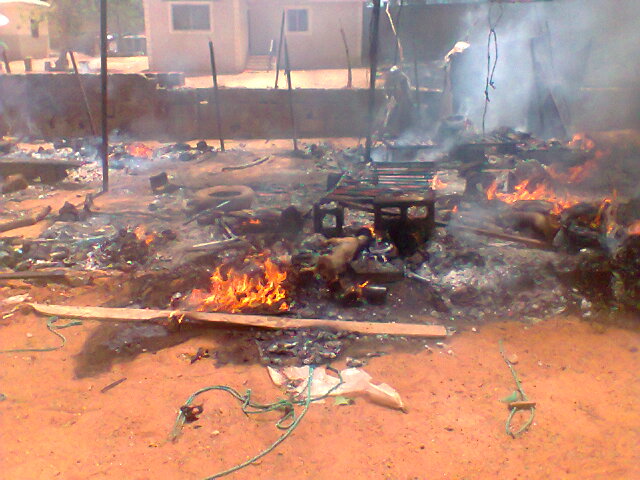
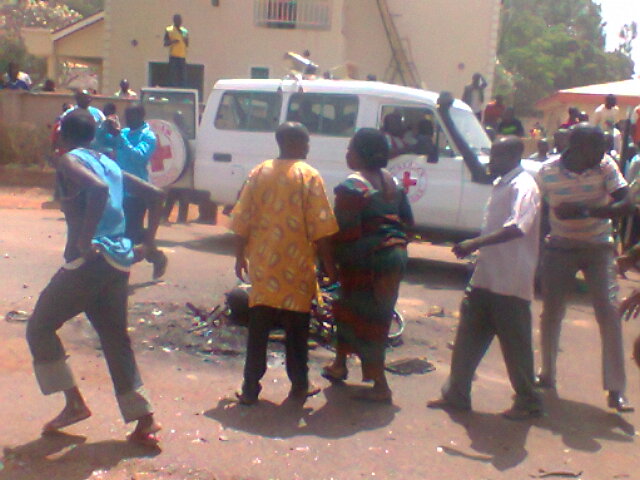
Conventionally, two spheres make up state security, the internal sphere of policing and law enforcement and the external sphere of defence and war-fighting. However, since the end of the Cold War, distinguishing between the two has become particularly difficult because of the internal involvement of the military in society. Several explanations explain why the military has become an active player in the internal sphere doing security enforcement duties in support of the police or as an independent player. Key among this is the general weakness and lack of legitimacy of the police, thus, the use of the military which has the capacity to suppress violence and ‘insurgence.’ Also, a lack of public trust, confidence, and legitimacy of the government is another key reason States resort to authoritarian practices, particularly using the military to clamp down civil society. The recent protests in Togo which turned ‘bloody’ following violent State repression presents a case in point. The recent carnage in Plateau State, Nigeria where herdsmen of similar ethnic origin as the President ‘allegedly’ killed over fifty civilians in cold blood also presents another instance. The President neither condemned the attacks nor declared a national mourning despite public outcry over the complicity of the military in the massacre.
Certainly, using the military for internal security enforcement otherwise known as military aid to civil authority in society comes with attendant challenges. One reason for this is the discrepancy of this role with its training particularly because military training and indoctrination focuses extensively on lethality and the application of force. This often results to several incidences of human rights abuses, the restriction of civil liberty and in extreme cases, summary extrajudicial killings. This situation worsens in societies affected by sectarian violence where the military assumes the leading role of law enforcement to force the return to peace as is the case in Plateau State, Nigeria. The problem with this is, in many of these States, the criminal justice system is also weak and thereby unable to guarantee judicial remedy to victims of State repression.
Consequently, citizens faced by the security dilemma of State repression and violence from armed groups may be compelled to join or seek protection from opposition groups thereby creating further security quandary. In turn, this affects the interaction of the citizenry with the military thereby straining civil-military relations in the State with the end result been the spinning of violence cycle. It also places huge economic burden with lasting impact on State resources, individuals, and corporate bodies and where the military is predatory, insecurity could worsen. The sectarian violence in Plateau State and the Niger Delta region in Nigeria where such military heavy-handedness remains the source of (in)security shows the weakness of this approach, and unless reconsidered, peace could remain elusive. Thus, now more than ever, this ambiguous (dis)order requires reconsideration for a civil approach to security in Africa.

 Thoughts from the criminology team