
Home » #BlackExcellence
Category Archives: #BlackExcellence

Zemiological Perspective: Educational Experiences of Black Students at the University of Northampton

As a young Black female who has faced many challenges within the education system, particularly related to behavioral issues, I noticed how the system can unintentionally harm black students. I observed that Black children’s experiences in the education system are not always viewed from a deviant perspective, because they are not inherently deviant. The institutional harm faced by Black students is not always a ‘crime’ nor is it illegal, yet it is profoundly damaging.
This realisation prompted me to adopt a zemiological perspective, drawing upon the work of Hillyard et al. (2004) to highlight the subtle yet impactful harms faced by Black students in the educational system. My primary objective was to uncover the challenges these students face, as outlined in my initial research question: ‘To what extent can the experiences of Black students in higher education be understood as a form of social harm?’ To achieve this, I analysed the educational experiences of Black students at the University of Northampton. This involved reviewing the university’s access and participation plans, which detail the performance, access, and progression of various demographics within the institution, with a particular focus on BAME students.
Critical race theory (CRT) was the guiding theoretical framework for this research study. CRT recognises the multifaceted nature of racism, encompassing both blatant acts of racial discrimination and subtler, systemic forms of oppression that negatively impact minority ethnic groups (Gillborn, 2006). This theoretical approach is directly correlated to my research and was strongly relevant. This allowed me to gain insight into the underlying reasons behind the disparities faced by Black students in higher education. As well as enabling me to unpack the complexities of racism and discrimination, providing a comprehensive understanding of how these issues manifest and persist within the educational landscape.
Through conducting content analysis on the UON Access and Participation Plan document and comparing it to sector averages in higher education, four major findings came to light:

Access and Recruitment: The University of Northampton has made impressive progress in improving access and recruitment for BAME students, fostering diversity and inclusivity in higher education, and surpassing sector standards. Yet, while advancements are apparent, there remains a need for more comprehensive approaches to tackle systemic barriers and facilitate academic success across the broader sector.
Non-Continuation: Alarmingly, non-continuation rates among BAME students at the University of Northampton have surpassed the sector average, indicating persistent systemic obstacles within the education system. High non-continuation rates perpetuate cycles of disadvantage and limit opportunities for personal and professional growth.
Attainment Gap: Disparities in academic attainment between White and BAME students have persisted and continue to persist, reflecting systemic inequalities and biases within the academic landscape. UON is significantly behind the sector average when it comes to attainment gaps between BAME students and their white counterparts. Addressing the attainment gap requires comprehensive approaches that tackle systemic difficulties and provide targeted support to BAME students.
Progression to Employment or Further Study: UON is also behind the sector average in BAME students progression in education or further study. BAME students face substantial disparities in progression to employment or further study, highlighting the need for collaborative efforts to promote diversity and inclusivity within industries and professions. Addressing entrenched biases in recruitment processes is essential to fostering equitable opportunities for BAME students.
Contributions to Research: This research deepens understanding of obstacles within the educational system, highlighting the effectiveness of a zemiological perspective in studying social inequalities in education. By applying Critical Race Theory, the study offers insights that can inform policies aimed at fostering equity and inclusion for Black students.
The findings hold practical implications for policy and practice, informing the development of interventions to address disparities and create a more supportive educational environment. This research significantly contributes to our understanding of the experiences of Black students in higher education and provides valuable guidance for future research and practice in the field.
Aside from other limitations in my dissertation, the main limitation was the frequent use of the term ‘BAME.’ This term is problematic as it fails to recognise the distinct experiences, challenges, and identities of individual ethnic communities, leading to generalisation and overlooking specific issues faced by Black students (Milner and Jumbe, 2020). While ‘BAME’ is used for its wide recognition in delineating systemic marginalisation (UUK 2016 cited in McDuff et al., 2018), it may conceal the unique challenges Black students face when grouped with other minority ethnic groups. The term was only used throughout this dissertation as the document being analysed also used the term ‘BAME’.
This dissertation was a very challenging but interesting experience for me, engaging with literature was honestly challenging but the content in said literature did keep me intrigued. Moving forward, i would love Black students experiences to continue to be brought to light and i would love necessary policies, institutional practises and research to allow change for these students. I do wish i was more critical of the education system as the harm does more so stem from institutional practices. I also wish i used necessary literature to highlight how covid-19 has impacted the experiences of black students, which was also feedback highlighted by my supervisor Dr Paula Bowles.
I am proud of myself and my work, and i do hope it can also be used to pave the way for action to be taken by universities and across the education system. Drawing upon the works of scholars like Coard, Gillborn, Arday and many others i am happy to have contributed to this field of research pertaining to black students experiences in academia. Collective efforts can pave the way for a more promising and fairer future for Black students in education.
References
Gillborn, D. (2006). Critical Race Theory and Education: Racism and anti-racism in educational theory and praxis. Discourse: Studies in the Cultural Politics of Education, 27 (1), 11–32. [Accessed 21 April 2024]
Hillyard, P., Pantazis, C., Tombs, S. and Gordon, D., (Eds), (2004). Beyond Criminology: Taking Harm Seriously, London: Pluto Press.
Milner, A. and Jumbe, S., (2020). Using the right words to address racial disparities in COVID-19. The Lancet Public Health, 5(8), pp. e419-e420
Mcduff, N., Tatam, J., Beacock, O. and Ross, F., (2018). Closing the attainment gap for students from Black and minority ethnic backgrounds through institutional change. Widening Participation and Lifelong Learning, 20(1), pp.79-101.
Share this:

A Generation w/o real dialogue & ATT!
Share this:

My First Foreign Friend #ShortStory #BlackAsiaWithLove
I love school.
In the third grade, we had a foreign student named Graham. His parents had come over to our hometown from England with a job, and his family was to stay in our town for a year or two.
Other than Graham’s accent, at first he didn’t in anyway appear, or feel different.
The only time that Graham’s difference mattered , or that I knew Graham’s difference mattered, was on the spelling test. We had moved far away from three letter words, to larger words and sentences, and by fourth grade we were writing our own books.
But in the third grade, there was Graham on our first spelling test, and our teacher drilling words like color.
The teacher made it fun by using word association to aid in memory. Then, he paused to explain that Graham would be excused if he misspelled certain words because where he’s from, they spelt (spelled) things differently. Spell “color” differently, we all wondered?
Our teacher explained that there are many words where they add the letter U, that are pronounced in the same way. Anyway we have different accents in our own country. Heck, we had different ways of saying the word “colour” in our own city. Where does the extra-U go? Then of course, the teacher spelled out the word. He could not write it on the chalkboard because we were sitting in a circle on the area rug, on the library side of the classroom. It is then that I also realized that I had a visual memory, even visualizing words audible words, both the letters and images representing the meaning. I wanted to know why people in England spelled things differently than in America. Despite Graham’s interesting accent, and easy nature which got him along fine with everyone, he was going to have to answer some questions.
Though our teacher did not write the letters, in hearing them I could see them in my mind moving around. I started imagining how moving the different letters shifted – or did not shift – differences in sound, across distances, borders, and cultures. I started imagining how the sounds moved with the people. Irish? Scottish? People in our city claimed these origins, and they talk funny on TV. Britain has many accents, our teacher explained. “I’m English,” blurted Graham.
We didn’t know much, but we knew that except for our Jewish classmates, everyone in that room had a last name from the British Isles, which we took a few moments to discuss. Most our last names were English, like my maternal side. A few kids had heard family tales of Scottish or Irish backgrounds, German, too. One girl had relatives in Ireland. And wherever the McConnell’s are from, please come get Mitch. Hurry up!
How did we Blacks get our Anglicized names? Ask Kunta Kinte! And how did this shape Black thought/conscience, or the way we talk? I wanted to know MORE. I thought Jewish people were lucky: At least they knew who they were, and they were spoken of with respect. Since my dad is Nigerian, (and my name identifiably African) I had a slight glimpse of this. I knew I had a history, tied to people and places beyond the plantation, and outside of any textbook I’ve ever had (until now where I get to pick the texts and select the books).
My family is full of migrants, both geographically and socially, so homelife was riddled with a variety of accents. Despite migrating north, my grandparents’ generation carried their melodic Alabama accents with them their whole lives. Their kids exceeded them in education, further distancing our kin from cotton farming, both in tone and texture. This meant that my generation was the first raised by city-folk, and all the more distant from our roots since we came of age in the early days of Hip-Hop. At home, there were so many different kinds of sounds, music, talk and accents. Fascinating we can understand done another.
Our teacher also told us that Americans also used some of the same words differently. Now, I’ve lived here in the UK for a decade and I can’t be bothered to call my own car’s trunk a boot. Toilet or loo? Everybody here gets it. Unfortunately, Graham explained that he knew the British term for what we call ‘eraser’, which the teacher couldn’t gloss over because we each had one stashed in our desks, and he knew we’d have the giggles each time the word was mentioned.
I was still struck by the fact that in spite of all these differences and changes, meanings of words could shift or be retained, both in written and spoken forms. I wanted to know more about these words – which words had an extra U – and where had the British got their languages and accents. For me, Graham represented the right to know and experience different people, that this was what was meant by different cultures coming together.
“Here I am just drownin’ in the rain/With a ticket for a runaway train…” – Soul Asylum, 1992, senior year.
In retrospect it’s weird that Graham’s my first foreign friend. Both my father and godmother immigrated to America – initially to attend my hometown university. They’d come from Nigeria and China, respectively, and I’d always assumed that I’d eventually visit both places, which I have. Perhaps this particular friendship sticks with me because Graham’s the first foreign kid I got to know.
Through knowing Graham, I could for the first time imagine myself, in my own shoes, living in another part of the world, not as a young adult like my folks, but in my 8-year-old body. What interested me more was that I could also see Graham was not invested in the macho culture into which we were slowly being indoctrinated (bludgeoned). For example, Graham had no interest in basketball, which is big as sh*t in Kentucky. Nor did I. “Soccer is more popular over there,” our teacher explained, deflecting from Graham’s oddness. “But they call it football.” Who cares! I’d also seen Graham sit with his legs crossed, which was fully emasculating as far as I knew back then. The teacher defended him, saying that this also was different where Graham came from. I definitely knew I wanted to go there, and sit anyway I wanted to sit.
Share this:


Black History Month: A Final Thought

As we come to the end of Black History Month it is important to shine a light on the Black Lives Matters Movement and highlight the historical significance to the problematic discourse of racialisation.
Black history month is an opportunity for people from the various pockets of the Black community to learn about our own history and educate those who are not from the Black community, in order to decolonise our institutions and our society. As Black people we have our own history formed by systemic oppressions and great triumphs. While it is easy (and lazy) for institutions to use terms such as BAME and People of Colour (POC) these problematic uses of language oppress blackness. We are not a monolith of coloured people. Different racialised groups have and will experience, and uphold difference, harms and achievements within society. Furthermore, it would be naïve to ignore the narrative of anti-blackness that people from racialised groups uphold. Therefore, it is important for us and people that look like us, to continue to have the space to talk about our history and our experiences.
For many people in the UK and indeed around the world BLM became a mainstream topic for discussion and debate following the murder of George Floyd. While the term BLACK LIVES MATTER is provocative and creates a need for debate, it signifies the historical ideology that black lives haven’t mattered in historical and in many ways, contemporary terms.
While it is easy to fall into the trap of describing the Black experience as an experience of victimhood, Black history months allows us to look deep at all our history and understand why and where we are as a society.
The UK is one of the most diverse places in the world, yet we continue to fall prey to the Eurocentric ideology of history. And while it is important to always remember our history, the negativity of only understanding black history from the perspective of enslavement needs to be questioned. Furthermore, the history of enslavement is not just about the history of Black people, we need to acknowledge that this was the history of the most affluent within our society. Of course, to glaze over the triangle trade is problematic as it allows us to understand how and why our institutions are problematic, but it is redundant to only look at Black history from a place of oppression. There are many great Black historical figures that have contributed to the rich history of Britain, we should be introducing our youth to John Edmonstone, Stuart Hall, Mary Prince and Olive Morris (to name a few). We should also be celebrating prominent Black figures that still grace this earth to encourage the youth of today to embrace positive Black role models.
Black history for us, is not just about the 1st-31st of October. We are all here because of history we need to start integrating all our history into our institutions, to empower, educate and to essentially make sense of our society.
Share this:


The Chauvin verdict may not be the victory we think it is
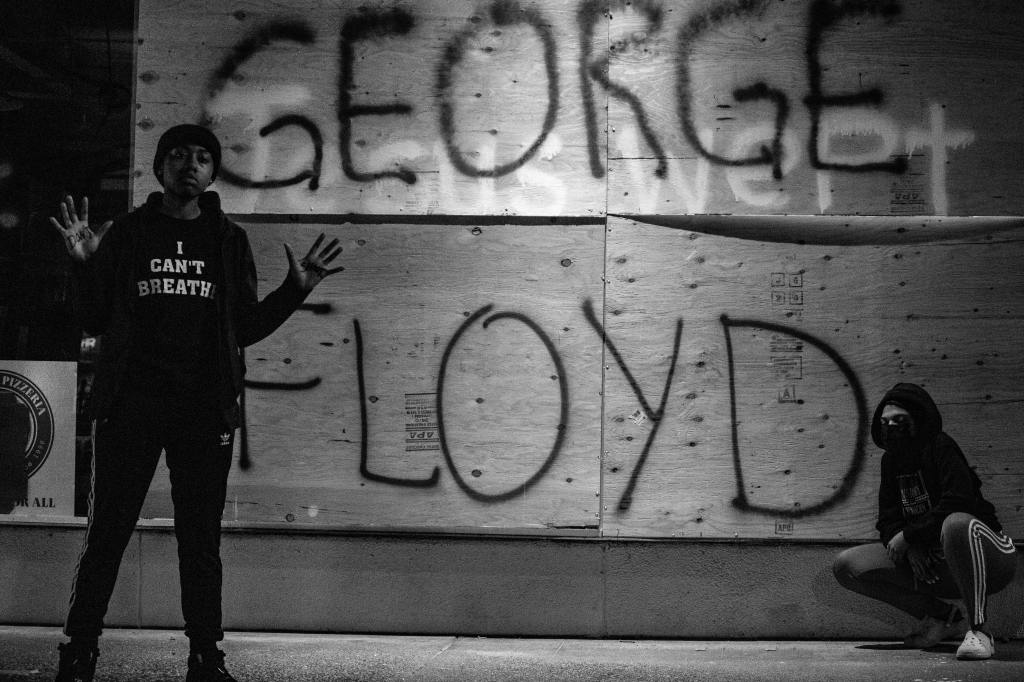
At times like this I often hate to be the person to take what little hope people may have had away from them, however, I do not believe the Chauvin verdict is the victory many people think it is. I say people, but I really mean White people, who since the Murder of George Floyd are quite new to this. Seeing the outcry on social media from many of my White colleagues that want to be useful and be supportive, sometimes the best thing to do in times like these is to give us time to process. Black communities across the world are still collectively mourning. Now is the time, I would tell these institutions and people to give Black educators, employees and practitioners their time, in our collective grief and mourning. After the Murder of George Floyd last year, many of us Black educators and practitioners took that oppurtunity to start conversations about (anti)racism and even Whiteness. However, for those of us that do not want to be involved because of the trauma, Black people recieving messages from their White friends on this, even well-meaning messages, dredges up that trauma. That though Derek Chauvin recieved a guilty verdict, this is not about individuals and he is still to recieve his sentence, albeit being the first White police officer in the city of Minneapolis to be convicted of killing a Black person.
Under the rallying cry “I can’t breathe” following the 2020 Murder of George Floyd, many of us went to march in unison with our American colleagues. Northamptonshire Rights and Equality Council [NREC] organised a successful protest last summer where nearly a thousand people turned up. And similar demonstrations took place across the world, going on to be the largest anti-racist demonstration in history. However, nearly a year later, institutional commitments to anti-racism have withered in the wind, showing us how performative institutions are when it comes to pledges to social justice issues, very much so in the context race. I worry that the outcome of the Chauvin verdict might become a “contradiction-closing case”, reiterating a Facebook post by my NREC colleague Paul Crofts.
For me, a sentence that results in anything less than life behind bars is a failure of the United States’ criminal justice system. This might be the biggest American trial since OJ and “while landmark cases may appear to advance the cause of justice, opponents re-double their efforts and overall little or nothing changes; except … that the landmark case becomes a rhetorical weapon to be used against further claims in the future” (Gillborn, 2008). Here, critical race theorist David Gillborn is discussing “the idea of the contradiction-closing case” originally iterated by American critical race theorist Derrick Bell. When we see success enacted in landmark cases or even movements, it allows the state to show an image of a system that is fair and just, one that allows ‘business as usual’ to continue. Less than thirty minutes before the verdict, a sixteen-year-old Black girl called Makiyah Bryant was shot dead by police in Columbus, Ohio. She primarily called the police for help as she was reportedly being abused. In her murder, it pushes me to constantly revisit the violence against Black women and girls at the hands of police, as Kimberlé Crenshaw states:
“They have been killed in their living rooms, in their bedrooms, in their cars, they’ve been killed on the street, they’ve been killed in front of their parents and they’ve been killed in front of their children. They have been shot to death. They have been stomped to death. They have been suffocated to death. They have been manhandled to death. They have been tasered to death. They have been killed when they have called for help. They have been killed while they have been alone and they have been killed while they have been with others. They have been killed shopping while Black, driving while Black, having a mental disability while Black, having a domestic disturbance while Black. They have even been killed whilst being homeless while Black. They have been killed talking on the cellphone, laughing with friends, and making a U-Turn in front of the White House with an infant in the back seat of the car.”
Professor Kimberlé Crenshaw (TED, 2018)
Whilst Chauvin was found guilty, a vulnerable Black girl was murdered by the very people she called for help in a nearby state. Richard Delgado (1998) argues “contradiction-closing cases … allow business as usual to go on even more smoothly than before, because now we can point to the exceptional case and say, ‘See, our system is really fair and just. See what we just did for minorities or the poor’.” The Civil Rights Movement in its quest for Black liberation sits juxtaposed to what followed with the War on Drugs from the 1970s onwards. And whilst the Stephen Lawrence Inquiry was seemingly one of the high points of British race relations followed with the 2001 Race Relations Act, it is a constant fallback position in a Britain where racial inequalities have exasperated since. That despite Macpherson’s landmark report, nothing really has changed in British policing, where up until recently London Metropolitan Police Service had a chief that said it wasn’t helpful to label police as institutionally racist.
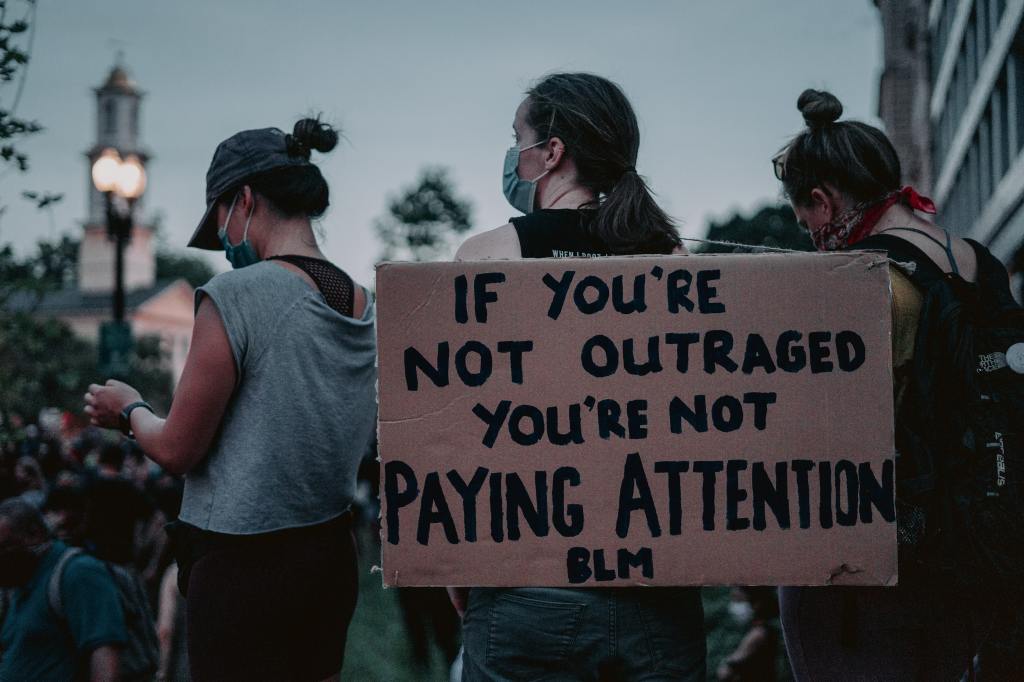
Scrolling the interweb after the ruling, it was telling to see the difference of opinion between my White friends and colleagues in comparison to my Black friends and colleagues. White people wrote and tweeted with more optimism, claiming to hope that this may be the beginning of something upward and forward-thinking. Black people on the other hand were more critical and did not believe for a second that this guilty verdict meant justice. Simply, this ruling meant accountability. Since the Murder of George Floyd, there have been numbers of conversations and discourses opened up on racism, but less so on White supremacy as a sociopolitical system (Mills, 2004). My White colleagues still thinking about individuals rather than systems/institutions simply shows where many of us still are, where this trial became about a “bad apple”, without any forethought to look at the system that continues enable others like him.
Even if Derek Chauvin gets life, I am struggling to be positive since it took the biggest anti-racist demonstration in the history of the human story to get a dead Black man the opportunity at police accountability. Call me cynical but forgive me for my inability to see the light in this story, where Derek Chauvin is the sacrificial lamb for White supremacy to continue unabted. Just as many claimed America was post-racial in 2008 with the inaugaration of Barack Obama into the highest office in the United States, the looming incarceration (I hope) of Derek Chauvin does not mean policing suddenly has become equal. Seeing the strew of posts on Facebook from White colleagues and friends on the trial, continues to show how White people are still centering their own emotions and really is indicative of the institutional Whitenesses in our institutions (White Spaces), where the centreing of White emotions in workspaces is still violence.
Derek Chauvin is one person amongst many that used their power to mercilessly execute a Black a person. In our critiques of institutional racism, we must go further and build our knowledge on institutional Whiteness, looking at White supremacy in all our structures as a sociopolitical system – from policing and prisons, to education and the third sector. If Derek Chauvin is “one bad apple”, why are we not looking at the poisoned tree that bore him?
Referencing
Delgado, Richard. (1998). Rodrigo’s Committee assignment: A sceptical look at judicial independence. Southern California Law Review, 72, 425-454.
Gillborn, David. (2008). Racism and education: Coincidence or conspiracy? London: Routledge.
Mills, Charles (2004) Racial Exploitation and the Wages of Whiteness. In: Yancy, George (ed). What White Looks Like: African American Philosophers on the Whiteness Question. London: Routledge.
TED (2018). The urgency of intersectionality | Kimberlé Crenshaw. YouTube [online]. Available.
White Spaces. Institutional Witnesses. White Spaces. Available.
Share this:


Sundays on the plantation. (Soundtrack: Sunday in Savannah by Nina Simone)
On Sundays, the slaves played music, sang, and folks danced.
Ev’rybody could see their spirits were lifted.
Human spirits need to be lifted in order for folks to live.
HUMAN ENSLAVERS must constantly stamp out the spirits in order to maintain slavery.
All spirits.
The masters’ arsenal included weapons for splitting their hearts from their righteous minds.
Slavery is a godless institution, so
They made a holy art from preaching and practicing duplicity – like Capoeira, only deadly.
So, slaves dancing and singing was restricted to Sundays.
All other days were reserved for the masters to sharpen their hooves.
White pastors reserved Sundays to forgive white sins.
Such sweet Sundays on plantations was all depicted in the 2016 remake of Roots.
The Sunday after the birth of Kunta Kinte’s first child,
The Fiddler and Kunta were out at night to perform the naming ceremony –
A tradition repeated across every generation in the series,
Which opened with Kunta’s own ceremony in Africa, presumably near modern-day Banjul.
3 slave catchers caught them out in a storm.
Fiddler gave his life so that the 3 slave catchers wouldn’t take Kunta’s “tar baby” as
“Nigger tax” for being caught out at night, without papers,
Not as if they’d asked. An escape was quickly plotted.
Fiddler caused a distraction,
Kunta started running, cuddling his newborn,
His gait hindered by the limp he got when catchers cut off his foot the 2nd time he’d escaped.
During this altercation,
Fiddler knocked one of the catchers off his horse, then
Wrangled the sword away from another, and
Stabbed him to death, only to be killed moments later by the 3rd catcher’s blade.
Meanwhile, Kunta had stashed the baby beneath a tree.
He waited for the third catcher to chase him down on his horse.
Kunta knocked him down, grabbed the catcher’s axe and swiftly cut his throat wide open.
He picked up his first-born child, and
Stumbled back to check on Fiddler’s corpse before making his way safely home.
That Sunday, Kunta resolved to train his daughter to resist slavery.
He did.
She did.
As did their descendants – resist.
Share this:


Affirm Urself
I love you.
You are beautiful.
I know you can do anything.**
- Record this on your phone.
- Listen regularly especially when in doubt, love or trouble.
- Encourage others.
This is just one of the ways we can build the “strength to love,” as Dr Martin Luther King urges in his eponymously titled book. I use this affirmation with my students in order to encourage them to build confidence, self-esteem and become aware of any self-loathing they many carry. It takes confidence to listen to others before speaking one’s own mind and embrace change. It’s easy to be toxic, especially online. It takes guts, however, to resist insulting others who have differing perspectives. It takes tenacity to think twice and NOT respond with greed, anger or stupidity (i.e. to lead a life freer of GAS).
Certainly, those who labour in the classroom have often come to realize that in addition to teaching our subject matter, we’re often teaching people how to become more confident. Nowhere is this more visible than in urban Asia, filled with youth, sandwiched between cultures online, wedged between generations that have steep distinctions. Youth in Asia are regularly assaulted with all the wonders of the world right in their pockets, but confronted with the reality of ‘development’. They’re often to young/inexperienced to recognize that no nation is ‘there’ yet, so they falsely hold up the west as a beacon of hope. I say hold up a mirror to one’s self, with the fierce determination to see nothing but love and acceptance. THAT, my friends, is development.
**Adapted from Lizzo, live at Glastonbury 2019. See here move the crowd here: https://www.youtube.com/watch?v=QnIbJi_jWII
Then she has the crowd say: “I love you Lizzo. You are beautiful, girl. And you can do anything, b*tch. Do it on your good days, but especially do it on your bad days ’cause that sh*t is like medicine, man!”
Share this:


“I can’t breathe”

George Floyd’s words: “I can’t breathe”, have awaken almost every race and creed in relevance to the injustice of systematic racism faced by black people across the world. His brutal murder has echoed and been shared virtually on every social media platform – Floyd’s death has changed the world and showed that Black people are no longer standing alone in the fight against racism and racial profiling. The death of George Floyd has sparked action within both the white and black communities to demand comprehensive police reforms in regards to police brutality and the use of unjust force towards ethnic minorities.
There have been many cases of racism and racial profiling against black people in the United Kingdom, and even more so in the United State. Research has suggested that there have been issues with police officers stereotyping ethnic minorities, especially black people, which has resulted in a vicious cycle of the stopping and searching of those that display certain physical features. Other researchers have expounded that the conflict between the police and black people has no correlation with crime, rather it is about racism and racial profiling. Several videos circulating on social media platforms depict that the police force does harbour officers who hold prejudice views towards black people within its ranks.
Historically, black people have been deprived, excluded, oppressed, demonised and brutally killed because of the colour of their skin. As ex-military personnel in Her Majesty’s Armed Forces and currently working as a custody officer, I can say from experience that the use of force used during the physical restraint on George Floyd was neither necessary nor proportionate to the circumstances. In the video recorded by bystanders, George Floyd was choked in the neck whilst fighting for his life repeating the words “I can’t breathe”. Perhaps the world has now noticed how black people have not been able to breathe for centuries.
The world came to halt because of Covid-19; many patients have died because of breathing difficulties. Across the world we now know what it means if a loved one has breathing issues in connection with Covid-19 or other health challenges. But nothing was done by the other police officers to advise their colleague to place Floyd in the recovery position, in order to examine his breathing difficulties as outlined in many restraint guidelines.
Yet that police officer did not act professional, neither did he show any sign of empathy. Breath is not passive, but active, breathing is to be alive. Racial profiling is a human problem, systematic racism has destroyed the world and further caused psychological harm to its victims. Black people need racial justice. Perhaps the world will now listen and help black people breathe. George Floyd’s only crime was because he was born black. Black people have been brutally killed and have suffered in the hands of law enforcement, especially in the United States.
Many blacks have suffered institutional racism within the criminal justice system, education, housing, health care and employment. Black people like my own wife could not breathe at their workplaces due to unfair treatment and systematic subtle racial discrimination. Black people are facing unjust treatment in the workplace, specifically black Africans who are not given fair promotional opportunities, because of their deep African accent. It is so naïve to assume that the accent is a tool to measure one’s intelligence. It is not overt racism that is killing black people, rather the subtle racism in our society, schools, sports and workplace which is making it hard for many blacks to breathe.
We have a duty and responsibility to fight against racism and become role models to future generations. Maybe the brutal death of George Floyd has finally brought change against racism worldwide, just as the unprovoked racist killing of black teenager Stephen Lawrence had come to embody racial violence in the United Kingdom and led to changes in the law. I pray that the massive international protest by both black and other ethnicities’ will not be in vain. Rather than “I can’t breathe” reverberating worldwide, it should turn the wheel of police reforms and end systematic racism.
“Restricting someone’s breath to the point of suffocation is a violation of their Human Rights”.
Share this:

#amplifymelanatedvoices 2020
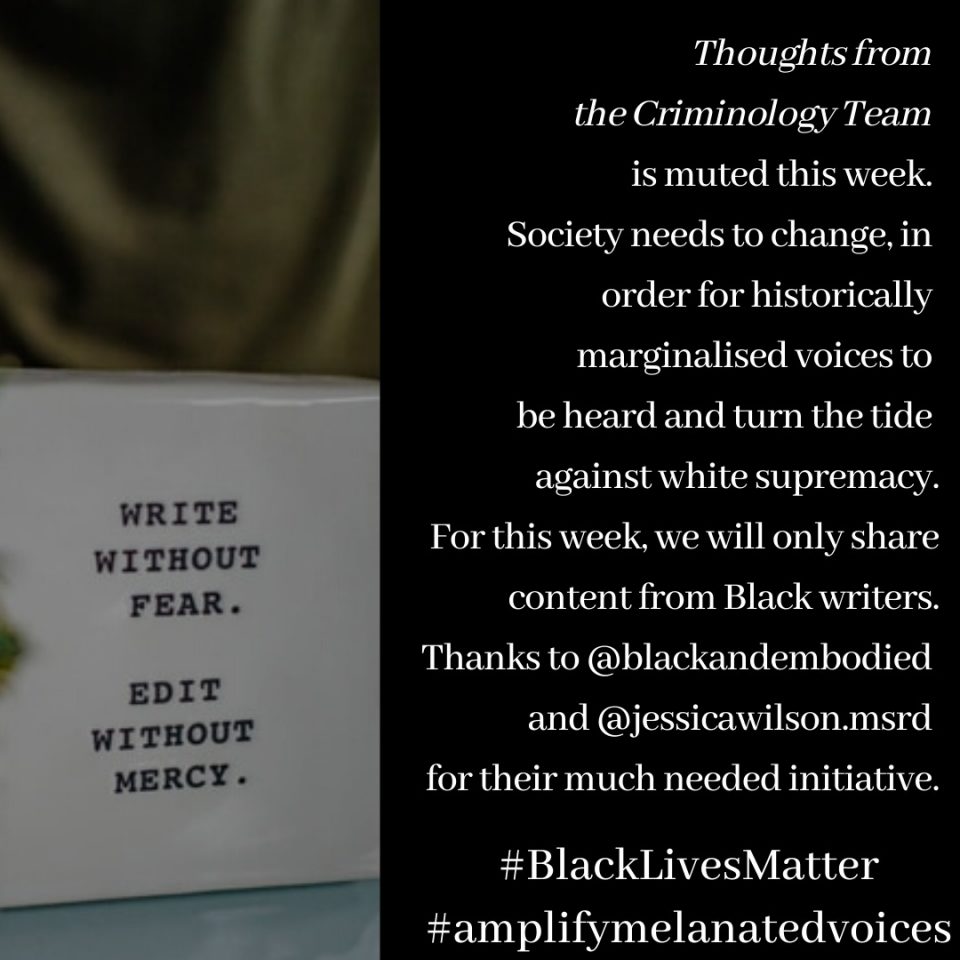
Over the past week or so, the Thoughts From the Criminology Team has taken part in the #amplifymelanatedvoices initiative started by @blackandembodied and @jessicawilson.msrd over on Instagram. During that time we have re-shared entries from our regular bloggers @treventoursu and @drkukustr8talk as well as entries from our graduates @franbitalo, @wadzanain7, @sineqd, @sallekmusa, @tgomesx, @jazzie9, @chris13418861 and @ifedamilola. In addition, we have new entries from @treventoursu, @drkukustr8talk and @svr2727. Each of these entries has offered a different perspective and each has provided the starting point for further dialogue.
We recognise that taking part in the #amplifymelanatedvoices is a tiny gesture, and that everyone can and should do better in the fight against white supremacy, racist ideology and individual and institutional violences.
Although this particular initiative has come to an end, the Thoughts from the Criminology Team retains its ethos, which is ‘to provide an inclusive space to explore a diversity of subjects, from a diverse range of standpoints’. We hope all of our bloggers continue to write for us for many years, but there is plenty of room for new voices.

 Thoughts from the criminology team