
Home » Anxiety (Page 2)
Category Archives: Anxiety

Come Together

For much of the year, the campus is busy. Full of people, movement and voice. But now, it is quiet… the term is over, the marking almost complete and students and staff are taking much needed breaks. After next week’s graduations, it will be even quieter. For those still working and/or studying, the campus is a very different place.
This time of year is traditionally a time of reflection. Weighing up what went well, what could have gone better and what was a disaster. This year is no different, although the move to a new campus understandably features heavily. Some of the reflection is personal, some professional, some academic and in many ways, it is difficult to differentiate between the three. After all, each aspect is an intrinsic part of my identity.
Over the year I have met lots of new people, both inside and outside the university. I have spent many hours in classrooms discussing all sorts of different criminological ideas, social problems and potential solutions, trying always to keep an open mind, to encourage academic discourse and avoid closing down conversation. I have spent hour upon hour reading student submissions, thinking how best to write feedback in a way that makes sense to the reader, that is critical, constructive and encouraging, but couched in such a way that the recipient is not left crushed. I listened to individuals talking about their personal and academic worries, concerns and challenges. In addition, I have spent days dealing with suspected academic misconduct and disciplinary hearings.
In all of these different activities I constantly attempt to allow space for everyone’s view to be heard, always with a focus on the individual, their dignity, human rights and social justice. After more than a decade in academia (and even more decades on earth!) it is clear to me that as humans we don’t make life easy for ourselves or others. The intense individual and societal challenges many of us face on an ongoing basis are too often brushed aside as unimportant or irrelevant. In this way, profound issues such as mental and/or physical ill health, social deprivation, racism, misogyny, disablism, homophobia, ageism and many others, are simply swept aside, as inconsequential, to the matters at hand.
Despite long standing attempts by politicians, the media and other commentators to present these serious and damaging challenges as individual failings, it is evident that structural and institutional forces are at play. When social problems are continually presented as poor management and failure on the part of individuals, blame soon follows and people turn on each other. Here’s some examples:
Q. “You can’t get a job?”
A “You must be lazy?”
Q. “You’ve got a job but can’t afford to feed your family?
A. “You must be a poor parent who wastes money”
Q. “You’ve been excluded from school?”
A. “You need to learn how to behave?”
Q. “You can’t find a job or housing since you came out of prison?”
A. “You should have thought of that before you did the crime”
Each of these questions and answers sees individuals as the problem. There is no acknowledgement that in twenty-first century Britain, there is clear evidence that even those with jobs may struggle to pay their rent and feed their families. That those who are looking for work may struggle with the forces of racism, sexism, disablism and so on. That the reasons for criminality are complex and multi-faceted, but it is much easier to parrot the line “you’ve done the crime, now do the time” than try and resolve them.
This entry has been rather rambling, but my concluding thought is, if we want to make better society for all, then we have to work together on these immense social problems. Rather than focus on blame, time to focus on collective solutions.
Share this:


The Lure of Anxiety

Helen is an Associate Lecturer teaching on modules in years 1 and 3.
I wear several hats in life, but I write this blog in the role of a lecturer and a psychologist, with experience in the theory and practice of working with people with psychological disorders.
In recent years, there has been an increase in awareness of mental health problems. This is very welcome. Celebrities have talked openly about their own difficulties and high profile campaigns encourage us to bring mental health problems out of the shadows. This is hugely beneficial. When people with mental health problems suffer in silence their suffering is invariably increased, and simply talking and being listened to is often the most important part of the solution.
But with such increased awareness, there can also be well-intentioned but misguided responses which make things worse. I want to talk particularly about anxiety (which is sometimes lumped together with depression to give a diagnosis of “anxiety and depression” – they can and do often occur together but they are different emotions which require different responses). Anxiety is a normal emotion which we all experience. It is essential for survival. It keeps us safe. If children did not experience anxiety, they would wander away from their parents, put their hands in fires, fall off high surfaces or get run over by cars. Low levels of anxiety are associated with dangerous behaviour and psychopathy. High levels of anxiety can, of course, be extremely distressing and debilitating. People with anxiety disorders avoid the things they fear to the point where their lives become smaller and smaller and their experience severely restricted.
Of course we should show compassion and understanding to people who suffer from anxiety disorders and some campaigners have suggested that mental health problems should receive the same sort of response as physical health problems. However, psychological disorders, including anxiety disorders, do not behave like physical illnesses. It is not a case of diagnosing a particular “bug” and then prescribing the appropriate medication or therapy to make it go away (in reality, many physical conditions do not behave like this either). Anxiety thrives when you feed it. The temptation when you suffer high levels of anxiety is to avoid the thing that makes you anxious. But anyone who has sat through my lecture on learning theory should remember that doing something that relieves or avoids a negative consequence leads to negative reinforcement. If you avoid something that makes you highly anxious (or do something that temporarily relieves the anxiety, such as repeatedly washing your hands, or engaging in a ritual) the avoidance behaviour will be strongly reinforced. And you never experience the target of your fears, so you never learn that nothing catastrophic is actually going to happen – in other words you prevent the “extinction” that would otherwise occur. So the anxiety just gets worse and worse and worse. And your life becomes more and more restricted.
So, while we should, of course be compassionate and supportive towards people with anxiety disorders, we should be careful not to feed their fears. I remember once becoming frustrated with a member of prison staff who proudly told me how she was supporting a prisoner with obsessive-compulsive disorder by allowing him to have extra cleaning materials. No! In doing so, she was facilitating his disorder. What he needed was support to tolerate a less than spotless cell, so that he could learn through experience that a small amount of dirt does not lead to disaster. Increasingly, we find ourselves teaching students with anxiety difficulties. We need to support and encourage them, to allow them to talk about their problems, and to ensure that their university experience is positive. But we do them no favours by removing challenges or allowing them to avoid the aspects of university life that they fear (such as giving presentations or working in groups). In doing so, we make life easier in the short-term, but in the long-term we feed their disorders and make things worse. As I said earlier, we all experience anxiety and the best way to prevent it from controlling us is to stare it in the face and get on with whatever life throws at us.
Share this:

What are Universities for?

As we go through another welcome week it becomes quite apparent in conversations with new students that their motivation for coming to University and joining a course is not singular. Of course there are some very clear objectives that are shared across like the interest for the subject and the employability afterwards for underlying those there are so many different personal motivations and aspirations attached.
In the eyes of our new cohort, I can see a variety of responses, the eagerness to learn the joy of studying, the expectation of belonging and the anticipation of ordering their lives across the University life, just to name but a few.
In conversation, I see these attributes in a different light. “I want to belong but I am shy”, “I wish to learn but I am worried about learning” “I want to engage but I am concern with my writing”. This is the soft underbelly of becoming a student; because in education our own insecurities are playing up. These little devils, who rest on the back of the head of many people who doubt themselves and worry them.
One of the greatest fears I hear and see been rehearsed before me is that of intellectual ability. This is one of those issues that becomes a significant barrier to many people’s fear when joining a University course. Of course the intellectual level of study is high. There are expectations of the degree of knowledge a student will build on and the way they will be able to utilise that level of knowledge. After all a University is an institution of High Learning. The place where disciplines are explored in totality and subjects are taught holistically. Nevertheless the University is not the end of one’s education but rather the door to a new dimension of learning.
For myself and many of my colleagues what makes this process incredibly exciting is to see those eyes of the new students across the years brighten up, as they “get it” as the penny drops and they connect different parts of knowledge together. Once people reach that part of their educational journey realise that coming to University was not simply an means to an end but something beyond that; the joy of lifelong learning.
As this is a early session, I shall address the intellectual fear. The greatest skills that any student need to bring with them in class is patience and passion. Passion for the subject; this is so important because it will sustain during the long cold winter days when not feeling 100%. Patience is equally important; to complete the course, needs plenty of hours out of class and a level of concentration that allows the mind to focus. Any successful student can testify to the long hours required to be in the library or at home going over the material and making sense of some challenging material. This ultimately unravels the last of the requirements, that of perseverance. It is through trial and error, rising up to a challenge that each student thrives.
So for those who joined us this year, welcome. The door to an exciting new world is here, to those returning, we shall pick up from where we left off and those who completed, hopefully University has now opened your eyes to a new world.
Share this:


Student support

I recently read Melanie Reynolds’s article in The Guardian ‘Working-class lecturers should come out of the closet,’ and it resonated with me. I was the first generation in my family to go to university and it was difficult. I grew up in a poor socio-economic position, received government allowances, there was a stigma to this, and unspoken expectation that you kept this hidden. When I turned 18 I moved out of home and went to university, from the start I was supporting myself. I worked in a pizza shop, a convenience store, a sandwich shop, and a call centre. I lived pay day to pay day. Starting university felt like learning a new language to me, it was a shock.
I remember one of my first assignments I handed in. I had to print it on lined foolscap paper because I didn’t have any printer paper and I couldn’t afford to buy any. It is all well and good to tell a student to be prepared – trust me I would’ve been if I had the money. This meant I couldn’t afford to print at university either (before the days of online submission!). But I also didn’t know how to print at the university at that stage and I didn’t want to let on to anyone that I didn’t know how, I already felt like I stood out. It seemed that everyone around me had this innate understanding of how everything worked. It seemed like a simple thing, but it was hard to ask for help.
Another time I lost my student card on the train and when I got on the bus to go to university the bus driver asked for it. He stayed at the stop while I literally went through every compartment in my bag looking for it, with everyone watching it just brought feelings of shame. I had to pay an adult fare in addition to the three-zone student fare I had already paid, and those couple of dollars extra made a big difference to me, considering I knew I would also need to replace my student card.
I didn’t feel like I belonged, I didn’t know anyone at university, I didn’t know what services were available, even if I did I would have felt like I was wasting their time – taking away time for ‘real’ students. It was difficult to watch other students be involved in activities and wonder how they found the time and the money. Being in law school made me feel like I didn’t dress right, didn’t talk properly, that I was not connected to the legal profession because no one in my family was a lawyer or judge, I was an impostor. It was very isolating.
What can I say to help – it will get better? That you’ll get over the feelings of impostor syndrome? It does get a little better, for me it took time, realising that I was not alone in these feelings, that many students had the same questions, and to build the confidence to speak up. There was a lot of pressure to succeed and this is something you need to manage.
I try to be open about my experiences with my students so that they may feel more comfortable approaching me with their issues. To me there are no stupid questions. One of my most disliked words is ‘just’ – ‘well you just do this’ the expectation that you’ll ‘just’ know. I don’t expect my students to ‘just’ know. When I ask students to tell me when they are having difficulties I truly mean it. This is my job and it is the university’s job to support you. Starting university can be overwhelming. So, remember students ALWAYS ask me for help, email, phone or in-person.
What can we do as educators? Universities and their staff need to be pro-active in connecting with students and providing assistance – not ‘do you need help?’ but ‘what can I do to help?’ We need to seek to bridge the gap and bring equity to our students, not just equality.
For all students there are support services available to you at the University of Northampton, please take advantage of them.
Share this:


Hello, I am over here! But did you already know that?

Jessica is an Associate Lecturer teaching modules in the first year.
If memory serves me right, fingerprint technology was first introduced to me in secondary school, where rather than paying with cash in the school dinner hall, you placed money on to your fingerprint and used this to purchase your food. To 15 year old me, I was very indifferent to this method of paying for school lunches as it wasn’t something I had to use: pack-lunches all the way! And at 15, my focus and interests here not on wider issues of human rights and the ‘all seeing eye’ but more on GSCE results, A-levels and badminton. How times have changed… or have they?
Recently I ventured to Tenerife for a holiday experiencing the usual ‘joys’ of going abroad: early flights, fears about missing flights or transfers, panic about forgetting something essential and that passport control will not let me in as I look nothing like my passport photo: just the average anxieties to cement the beginning of a holiday. But what I had not prepared myself for, and what ultimately caught me by surprise was the requirement for my fingerprints when we landed in Tenerife as part of passport control.
I looked around stunned: everyone seemed quite happy to go through the electronic system which required finger prints, a scan of your face and then the match to your passport photo. I was not so eager or happy to consent: but ultimately what choice did I have? Why do they need my fingerprints? Is it not enough that they have my electronic passport scanned? What happens to my scanned fingerprints? Are they deleted or stored? If so when, how and where? So many unanswered questions but ultimately I ‘consent’: I am not sure my travel insurance would reimburse my holiday cost and unscheduled return flight (that is if I was able to get one) simply because I didn’t want my fingerprints taken.
Bitter and weird start to the holiday; I know what to expect if I go abroad again, but the ‘madness’, because to me the reliance and over use of fingerprints as a form of casual identification is best described this way, did not stop there. I purchased tickets to a Zoo and a Water park whilst there (would highly recommend to anyone visiting Tenerife), but as this ticket was a ‘twin ticket’ I had to hand the ticket in on the first visit (the Zoo) and in order to receive the second ticket (Water Park) I had to give my right forefinger print over! WHY?! I have clearly purchased the twin ticket, as that is what it says on the ticket, so can’t I just hand over the new ticket without fingerprint confirmation to enter the next attraction? Apparently not.
Surveillance is not something I usually think about, however Foucault’s writing around discipline and power within the prison and our current over-reliance and use of fingerprints makes me shudder at what power is out there with this type of surveillance. Who has access to it and why do they need it? And what choice do we really have with regards to consent: I could have not given them at the airport: but would I been allowed in? I could have not given them over at the Zoo; but would I have lost the money I had paid? Maybe I am over-reacting, maybe I am not: but this casual usage of fingerprinting is not something I am comfortable with, and I don’t think we should be!
Share this:


Painting by numbers: The problem with HE.

Tillovision, http://www.Tillovision.com
I read a report the other week about concern over the number of 1st degrees that are being achieved within higher education in the UK (Richmond, 2018) and the fact that the volume of such achievements is devaluing university degrees. I juxtapose this with another report that states that 32% of students do not think they get value for money (Neves and Hillman, 2018) and the result is some soul searching about what it is I’m trying to achieve as a lecturer, aside from survival, and what higher education (HE) is about. A conversation with a friend who works in Information Technology muddies the water even more. He’s a high flyer, jetting backwards and forwards to the USA, solving problems, advising on, and implementing major change projects within large corporations and generally making a lot of money along the way. For him a degree is not as important as the ability to ‘think outside the box’, find solutions to problems and show leadership that enables change or fixes. If you have a degree then you ought to be able to do all these things to some extent, experience will then build on it. He lets on that his company will not touch graduates from certain universities, simply because they do not have the requisite skills or abilities, their degrees are effectively meaningless. A sad generalisation but one that is becoming increasingly prominent amongst employers. One other thing that he was quick to point out is that the ‘real world’ is highly competitive and his company are looking for the best potential.
So, what is higher education all about, higher than what? What is the benchmark and what is the end goal? I have always believed that higher education is about taking students beyond what can be read in books or can be followed in manuals. It is about enhancing the understanding of the world in which we operate, either professionally or socially and being able to redesign or reimagine that world. It is about leadership in its many guises, problem solving and the ability to use initiative and autonomy. It is about moving a student from being able to paint by numbers under supervision to a student that can paint free hand, understanding light and colours, understanding how to capture moods or how to be evocative, a student who uses materials that they want to use, and they are not frightened to do so. It stands to reason that not every student can achieve excellence. If the starting point is the ability to paint by numbers, then some will move only slightly beyond this and some will excel, but only a few will warrant a 1st degree. What is clear though is that the students really ought to be able to paint by numbers before they enter HE otherwise they will need to be taught that skill before they can move on. That then is no longer higher education but further education (FE) and more importantly, it sets students up to fail, if they are being measured against HE standards. An alternative to avoid this potential failure requires HE standards to be lowered to those of FE. In which case what is the point of HE?
So why would I be confused about HE? Well, when students are seen as cash cows, each being worth £9250 a year to an institution, being able to paint by numbers becomes a barrier to recruitment in a highly competitive market. Institutions can help students that do not have the requisite skills, but this requires either extra time before joining the HE course, this has funding implications, or a lot of extra work by the student during the HE course, and this means that students with limited academic ability struggle. A need to retain students over the three-year period of a degree, to ensure institutional financial stability or even viability, becomes problematic. Struggling students have a double whammy, they have to catch up to the starting point for each year, whilst also progressing through the year. The choices are stark for HE institutions, progress students by lowering standards or lose them.
HE institutions are measured on the number of good degrees and it makes for good advertising. There is enough literature around to suggest that such unsophisticated quantitative measures are never a good thing. The complexity of higher education, where there is a heavy reliance on students engaging in their studies (there is something to be said about reading for a degree), puts much of the achievement of grades beyond the control of lecturers or even institutions. The resultant solution appears to be the lowering of assessment standards and teaching to assessments. In effect, HE is falling in line with FE and teaching students to paint by numbers. It is easy to see why there is disquiet then about an increase in 1st degrees and more importantly, in a competitive world, why employers are becoming increasingly concerned about the value of a degree. As for value for money for students, for many, it’s a bit like being charged a fortune to race a Maserati round a track for a day but not being able to drive.
Neves, J. and Hillman, N. (2018) Student Academic Experience Survey report 2018 [online] available at https://www.heacademy.ac.uk/knowledge-hub/student-academic-experience-survey-report-2018 [accessed 20 June 2018]
Richmond, T. (2018) A degree of uncertainty: An investigation into grade inflation in universities. [online] available at, http://www.reform.uk/publication/a-degree-of-uncertainty-an-investigation-into-grade-inflation-in-universities/ [accessed 20 June 2018].
Share this:


‘I read the news today, oh boy’
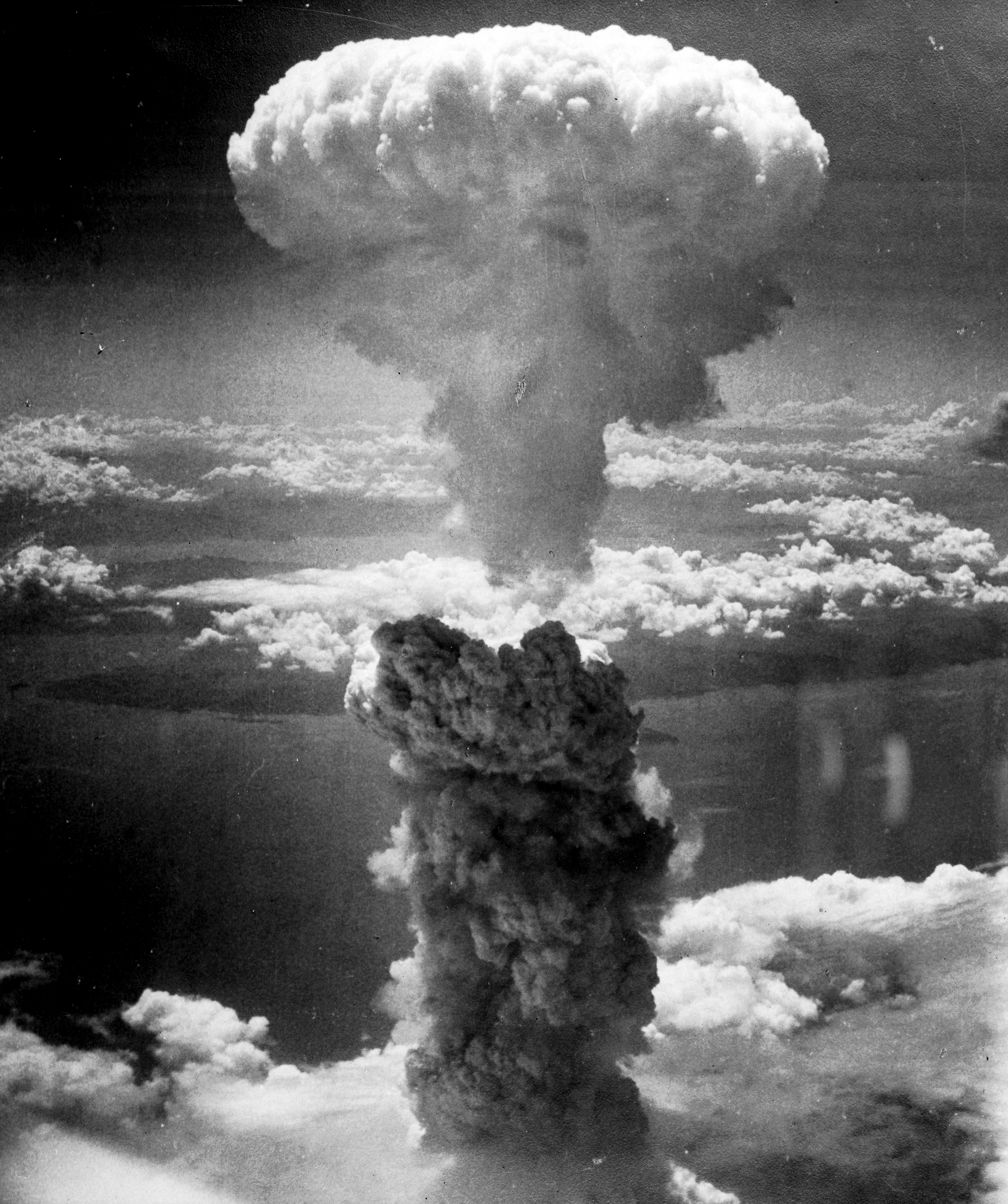 The English army had just won the war
A crowd of people turned away
But I just had to look
Having read the book
(Lennon and McCartney, 1967),
The news these days, without fail, is terrible. Wherever you look you are confronted by misery, death, destruction and terror. Regular news channels and social media bombard us with increasingly horrific tales of people living and dying under tremendous pressure, both here in the UK and elsewhere in the world. Below are just a couple of examples drawn from the mainstream media over the space of a few days, each one an example of individual or collective misery. None of them are unique and they all made the headlines in the UK.
‘Deaths of UK homeless people more than double in five years’
‘Syria: 500 Douma patients had chemical attack symptoms, reports say’
‘London 2018 BLOODBATH: Capital on a knife edge as killings SOAR to 56 in three months’
So how do we make sense of these tumultuous times? Do we turn our backs and pretend it has nothing to do with us? Can we, as Criminologists, ignore such events and say they are for other people to think about, discuss and resolve?
At the beginning of the twenty-first century, Stanley Cohen, posed a similar question; ‘How will we react to the atrocities and suffering that lie ahead?’ (2001: 287). Certainly his text States Of Denial: Knowing about Atrocities and Suffering makes clear that each of us has a part to play, firstly by ‘knowing’ that these things happen; in essence, bearing witness and acknowledging the harm inherent in such atrocities. But is this enough?
Cohen, persuasively argues, that our understanding has fundamentally changed:
The political changes of the last decade have radically altered how these issues are framed. The cold-war is over, ordinary “war” does not mean what it used to mean, nor do the terms “nationalism”, “socialism”, “welfare state”, “public order”, “security”, “victim”, “peace-keeping” and “intervention” (2001: 287).
With this in mind, shouldn’t our responses as a society, also have changed, adapted to these new discourses? I would argue, that there is very little evidence to show that this has happened; whilst problems are seemingly framed in different ways, society’s response continues to be overtly punitive. Certainly, the following responses are well rehearsed;
- “move the homeless on”
- “bomb Syria into submission”
- “increase stop and search”
- “longer/harsher prison sentences”
- “it’s your own fault for not having the correct papers?”
Of course, none of the above are new “solutions”. It is well documented throughout much of history, that moving social problems (or as we should acknowledge, people) along, just ensures that the situation continues, after all everyone needs somewhere just to be. Likewise, we have the recent experiences of invading Iraq and Afghanistan to show us (if we didn’t already know from Britain’s experiences during WWII) that you cannot bomb either people or states into submission. As criminologists, we know, only too well, the horrific impact of stop and search, incarceration and banishment and exile, on individuals, families and communities, but it seems, as a society, we do not learn from these experiences.
Yet if we were to imagine, those particular social problems in our own relationships, friendship groups, neighbourhoods and communities, would our responses be the same? Wouldn’t responses be more conciliatory, more empathetic, more helpful, more hopeful and more focused on solving problems, rather than exacerbating the situation?
Next time you read one of these news stories, ask yourself, if it was me or someone important to me that this was happening to, what would I do, how would I resolve the situation, would I be quite so punitive? Until then….
Whoever fights monsters should see to it that in the process he does not become a monster. And when you look long into an abyss, the abyss also looks into you (Nietzsche, 1886/2003: 146)
References:
Cohen, Stanley, (2001), States Of Denial: Knowing about Atrocities and Suffering, (Cambridge: Polity Press)
Lennon, John and McCartney, Paul, (1967), A Day in the Life, [LP]. Recorded by The Beatles in Sgt Pepper’s Lonely Hearts Club Band, EMI Studios: Parlaphone
Nietzsche, Friedrich, (1886/2003), Beyond Good and Evil: Prelude to a Philosophy of the Future, tr. from the German by R. J. Hollingdale, (London: Penguin Books)
Share this:


You know what really grinds my gears…

Jessica is an Associate Lecturer teaching modules in the first year.
Unlike the episode from Family Guy, which sees the main character Peter Griffin present a segment on the Quahog news regarding perhaps ‘trivial’ issues which really grind his gears, I would hope that what grinds my gears is also irritating and frustrating for others.
What really grinds my gears is the portrayal of women without children being pitied in the media. Take a recent example of Jennifer Aniston who has (relatively recently) split from her partner. The coverage appears to be (and this is just my interpretation) very pitiful around how Jennifer does not have any children; and this is a shame. Is it? Has anyone bothered to ask Jennifer if she feels this is a shame? Is this something Jennifer feels is missing from her life? Who knows: It might be the case. But the issue that I have, and ultimately what really grinds my gears, is this assumption that as a woman you are expected to want and to eventually have children.
There are lots of arguments around how society is making progress (I’ll leave it amongst yourselves to argue if this is accurate or not, and if so to what extent), however is it in this context? If women are still pressured by the media, family and friends to conform to the gendered stereotype of women as mothers, has society made progress? I am not for one minute saying that women shouldn’t be mothers, or that all women should be mothers; what I am annoyed about is this apparent assumption that all women want to be mothers and more harmful, the ignorant assumption that all women can be mothers.
It really grinds my gears that it still appears to be the case that women are not ‘doing gender’ correctly if they are not mothers, or if they do not want to be mothers. Families and friends seem to assume that having a family is what everyone wants and strives to achieve, therefore not doing this results in some form of failure. How is this fair? The human body is complex (not that I have any real knowledge in this area), imagine the impact you are having on women assuming they want and will have a family, if biologically, and potentially financially, having one is difficult for them to do? Is it not rude that you are assuming that women want children because their biology allows them the potential to have them?
In answer to the last question: Yes! I think it is rude, wrong and ultimately irritating that it is assumed that all women want children and them not having them somehow means their life has missed something. As with all lifestyle choices and decisions, not every lifestyle is for everyone. Therefore I would greatly appreciate it if society acknowledged that women not wanting or having children does not mean that they have accomplished less in life in comparison to those who have children, it just means they have made different choices and walked different paths.
For me, this just highlights how far we still have to go to eradicate gender stereotypes; that is, if we even can?
Share this:


Anxious about being anxious

The fact that the digital readout on my car tells me that it is a due a service and that it needs to be looked at because something is very wrong does not provide comfort, just a nagging concern that it might break down soon, but how soon? On my way to work I left a message on my wife’s mobile phone, ‘it’s only me, just calling to say on my way to work’. She didn’t answer the phone, she’s out riding the horse, has something happened? Mid conversation with a work colleague, my phone’s just pinged, I must check it, it’s only my mate asking me out for a drink… ‘Nice one, next Thursday?’… What was that you were saying Susie? It’s not that the conversation is unimportant it’s just that I might miss something important on the phone. Checking emails, that email I sent an hour ago still hasn’t been responded to… back to Susie.
An hour later… must check my emails. What’s on Facebook, another notification has come through… must respond … ‘like’, there done. Better check I haven’t missed anything. Ebay… I’m still the highest bidder… should I increase my bid… just in case, Ebay says it would be a good idea. Google the item… what’s it worth… back to Ebay… Increase bid. Must check it again soon. Text from wife, all is good. Check emails… check phone … check Ebay… Check Facebook… all quiet, are they working..? Is it a network problem? Thank goodness I haven’t got a Twitter account to worry about. Now I have to write a blog entry… what to write about, will anyone read it let alone like it? Off to my seminar, I wonder if the laptop will work, will it connect to that new screen and stay connected, last week it kept disconnecting… will the technology work… busy, worry…
Before the days of connectivity and the great digital advancement, I didn’t worry about such things. But then I wouldn’t have phoned my wife on the way to work, in fact I wouldn’t have spoken to or heard from her for the whole day until I got home. I wouldn’t be worrying about the car because it would either be working or have broken down. Any correspondence I received would be in my in tray on a desk and would be dealt with and put into an out tray, the pending tray, or the bin. The pending tray was usually just waiting for the bin. Nothing to ping and rudely distract me from my conversation with a colleague. No need to worry about whether I was the highest bidder, I would be at the auction bidding, it would be happening there and then. I wouldn’t have been connected to a world of ‘friends’ producing meaningless drivel about where they were having their cup of coffee or the fact they liked some article in a paper about mass rape or murder. As for the laptop and the screen, paper never let me down.
We live in a digital age and everything is at your fingertips and it’s available right now. But what does that do? It may give you an edge in some respects but it also makes you edgy. I look around and see and hear about so many people suffering from anxiety, old and young alike. Perhaps the cause is not technology alone but it certainly doesn’t help. Maybe I worry too much, maybe I’m just becoming anxious about being anxious.
Share this:


Why you should trust your work

Bethany Davies is an Associate Lecturer teaching modules in the first year.
It is only human to doubt yourself in certain situations; however, academia can be a problematic situation to doubt your ideas and abilities. It can lead you to change your standpoint unnecessarily and also create so much stress that you give up on an idea or project entirely.
I deal with this less so now since my university experience but still regularly and I felt it may provide comfort to those currently studying or recently graduated, these examples are personal and are only two of many. In particular I want to address doubting your own ideas and work and how important it is to keep challenging those thoughts.
Upon starting university, my first ‘big essay’ (I describe this with humour as it was 3000 words, but as a first year that can seem like quite the ask) was a biographical assignment. This assignment required an interview with a family member or anyone who would be willing to talk to you and to apply that to research by highlighting some key events/accomplishments. I feared writing that essay as I had many friends with parents who were lawyers or grandparents who had been in the war or immigrants. These stories surely would be so interesting and my essay on my dad who worked in a warehouse would be seen as boring, perhaps. This was my first experience with fear and doubt over my work, but then I did the interview, wrote the essay, took a deep breath and submitted. Turns out it was one of my favourite pieces of work and the programme leaders liked it. It was an honest essay and while not glamorous, it was personal to me and that made the approval and grade that more rewarding.
In my second year, I conducted my placement at a probation office and based my research around a case study of one male who was doing an English class and aimed to discuss the success of that class. After around 8 weeks of observations and an interview with the male. I went to my seminar leader at the time (@paulaabowles) in a complete panic and almost teary-eyed. I told her how I felt my research was not good enough because the male was lying to me, in fact he was almost lying to the whole probation experience as he was more or less just turning up to tick the boxes he needed but then conducting his behaviour differently to me in certain situations and the interview. I felt I had failed as a researcher and also as a teacher almost, as I was assisting in the teaching of the class he was in. I was then told some of the great truths of research and also why I had not failed and actually I had done very well. My research was good research and I just had not realised it. The research didn’t find what I wanted it to, in fact it found the opposite, which was still good research. My research which I had titled ‘Playing the system’ had actually proved to not be a failure and my doubts were unnecessary but not anything to be ashamed of. As in my quest at the time to find answers of why was I such a ‘bad researcher’ and interviewer, I found a plethora of other people online and among peers with the same doubts over some great work they had produced.
Whether it be doubts or fear of speaking up in fear of failure or sounding stupid, I hope others may be able to see not only are they not alone, but actually you are normal because of these doubts. We should just maybe work on believing in our work more and not waiting to get the approval of others for those ideas. With this I feel it is fitting to use one of my favourite quotes from Bertrand Russell:
“The whole problem with the world is that fools and fanatics are always so certain of themselves, and wiser people so full of doubts.”

 Thoughts from the criminology team