
Home » Anxiety
Category Archives: Anxiety

Highlights and Hindsight: Reflections from a Final Year Student
Whilst I hope to continue writing beyond graduation, for my last blog post as a UON student, I’d like to share, for those at the beginning or early stages of their degree, some of the things I’m glad I did, and the things I wish I had done, maybe something will resonate with you.
I’m glad I…
Found opportunities to prove myself: Although I worked before doing my degree, being course representative, student voice as well as a research assistant have helped me build confidence and skills and given me so much more to talk about when I’m selling myself in both professional and academic applications.
Maintained my routine: I’ve never pulled an all-nighter or found myself regularly submitting at 11:58pm (just one exception!) I knew I couldn’t give my best when stressfully counting down the minutes to midnight and being sleep deprived. I tried different ways and routines of studying and found something that was sustainable. As far as possible I maintained boundaries so as not to put myself in a position where sacrificing sleep was a necessity.
Didn’t compare myself (often!): It’s easy to see other people getting higher grades, doing more things, doing ‘harder’ topics, and to feel inferior. We’re all on our own journeys, have our own interests, our own barriers and limitations and that’s ok. I never have been and probably never will be a ‘straight A’ student, but I’ve worked incredibly hard for the grades I have got. And truly, in all the interviews I’ve done in the last 4 months (lots), they’ve been more interested my grit and compassion than everything else!
I wish I had…
Connected more: I wish I’d pushed a little harder to make some friends or some more familiar faces. University can be really lonely, for so many reasons, and I think lots of students feel this way! Perhaps pushing through that fear of the unknown, and the social anxiety to talk to people on my course, having joined a society or attended more events might have alleviated some of this.
Taken what I needed: I spent years one and two determined not to use extensions, mitigating circumstances or office hours, anything that I perceived to be a setback or a silly question. This resulted in me running out of an exam before finishing, and completing a timed assignment the day after discharge from psychiatric hospital. I turned this around in year three and used what I needed, used extensions, booked in to office hours even if it was just for reassurance and actually felt like I had given my work my best (and this reflected in higher grades!)
Last Nuggets of Advice
Pay attention to what you enjoy: It’s easy to see it all as just hard work, rush to get it done and then feel lost in the end. I’ve now started on a masters degree towards a career path I never thought I’d pursue, focussing on something that isn’t even my strongest skill, but I’ve decided its worth the challenge for something I’m going to enjoy.
Reflect, reflect, reflect: I’ve learned so much by taking the time to reflect on what I’m experiencing or learning, how it makes me feel and why, why I do or don’t want to do it, where my thoughts are coming from. I wholeheartedly recommend regularly thinking about these things (or writing about them!) The ability to be reflective is assessed more than you might think, and you never know what it might reveal to you.
You are more than this: No matter what grades you get, how you handle uni life, if you make friends or not, do ‘extra’ stuff or not, do a masters, or not. You’re still… you, with so many good qualities, values and goals that are not tied to your achievements, it may or may not always be the life changing experience you hoped it would be. This is an important time, sure, but it’s not more important than your health, your values, your sense of self.
Remember, you can only do what you can, with what you have at the time. Take care.
Share this:


Mental Health Awareness Week…Should Be Every Week

When I began my A-Levels, I was an overly confident, happy female, looking forward to studying my chosen topics. By the end, I was holding on by a thread after many chats of dropping out, praying to pass, and wanted to stay inside and never go out again. I went from loving my friends, to finding it a chore to be with them. I would come home, lock myself in my room, and not come out unless I had to. Why was I feeling like this? I always felt I had been fortunate with a privileged upbringing, my family are financially stable, we live in a nice area, I have great friends, so what reason did I have to feel so bad about life?
This is mental health. It does not matter who you are or where you come from; it can affect anyone. After months of brushing it off, it was a shock to the system when I was told that I suffered from Depression and a GAD. But once you acknowledge that there is a problem, you are already one step ahead of the game. However, it is also important to talk to those around you too. Not one of my friends or family knew what I was going through, how could the confident happy girl, be anxious and depressed? It did not match. I could not tell them I was struggling; I would look like a failure. Why did I think like this?
Mental health, although getting better, has become a taboo subject, due to stereotypes being attached to those who suffer. You become dangerous, socially unacceptable, shameful, embarrassing. However, mental health does not come with a label attached; it does not look the same. Your favourite lecturer who is always happy may have PTSD, that chatty boy in class who you envy may be depressed, and that quiet ‘weird’ girl may suffer from social anxiety; we are all too quick to conclude these assumptions about people.
What is not spoken about, is how much studying in university can affect your mental health. The stress about assessments and exams, the anxiety about being behind or waiting for a grade to be released, or the worry about speaking up in class in case someone disagrees with your point. It can all get too much. This is something which is hidden from potential university students.
After coming off of anti-depressants, gaining a love for exercise, and meeting the most supportive friends, I can finally say, I am good. I have my wobbles, like we all do, but I am so proud of the progress I have made. If you are suffering from mental health, you are not alone. The World Health Organization recognises that 1 in every 8 people in the world live with a mental disorder. Let’s start talking about our experiences, normalise mental health chats and empower those who feel hesitant to speak out. From experience, I can promise you it will be worth it.
Share this:


Rise of the machines: fall of humankind

May is a pretty important month for me: Birthdays, graduations, what feels like a thousand Bank Holidays, marking deadlines, end of Semester 2 and potentially some annual leave (if I haven’t crashed and crumbled beforehand). And all of the above is impacted by, or reliant on the use of machines. Their programming, technology, assistance, and even hindrance will all have a large impact on my month of May and what I am finding, increasingly so, is that the reliance on the machines for pretty much everything in relation to my list above is making my quite anxious for the days to come…
Employment, education, shopping, leisure activities are all reliant on trusty ol’ machines and technology (which fuels the machines). The CRI1003 cohort can vouch, when I claim that machines and technology, in relation to higher education, can be quite frustrating. Systems not working, or going slow, connecting and disconnecting, machines which need updates to process the technology. They are also fabulous: online submissions, lecture slides shown across the entirety of the room not just one teeny tiny screen, remote working, access to hundreds of online sources, videos, typing, all sorts! I think the convoluted point I am trying to get too is that the rise of the reliance on machines and technology has taken humankind by storm, and it has come with some frustrations and some moments of bliss and appreciation. But unfortunately the moments of frustration have become somewhat etched onto the souls of humankind… will my laptop connect? Will my phone connect to the internet? Will my e-tickets download properly? Will my banking app load?
Why am I pondering about this now?
I am quite ‘old school’ in relation to somethings. I am holding on strong to paper books (despite the glowing recommendations from friends on Kindles and E-readers), I use cash pretty much all the time (unless it is not accepted in which case it is a VERY RARE occasion that the business will receive my custom), and I refuse to purchase a new phone or update the current coal fuelled device I use (not literally but trying to be creative). Why am I so committed to refusing to be swept along in the rise of the machines? Simple: I don’t trust them.
I have raised views about using card/contactless to purchase goods elsewhere and I fully appreciate I am in a minority when it comes to the reliance on cash. However, what happens when the card reader fails? What happens when the machine needs an update which will take 40mins and the back up machine also requires an update? Do traders and businesses just stop? What happens when the connection is weak, or the connection fails? What happens when my e-tickets don’t load or my reservation which went through on my end, didn’t actually go through on their end? See, if I had spoken to someone and got their name and confirmed the reservation, or had the physical tickets, or the cash: then I would be ok. The reliance on machines removes the human touch. And often adds an element of confusion when things go wrong: human error we can explain, but machine error? Harder to explain unless you’re in the know.
May should be a month of celebrations and joy: Birthdays, graduations, end of the Semester, for some students the end of their studies. But all of this hinders of machines. Yes, it requires humans to organise and use the technology but very little of it is actually reliant on humans themselves. I am oversimplifying. But I am also anxious. Anxious that a number of things we enjoy, rely on and require for daily life is becoming more and more machine-like by the day. I have an issue, can I talk to a human- nope! Talk to a bot first then see if a human is needed. So much of our lives are becoming reliant on machines and I’m concerned it means more will go wrong…
Share this:


Regulation and the Internet
*Trigger warning: article contains mentions of suicide, mental illness and self harm in regard to a recent news article*
It seems that internet usage, regulation and monitoring can be a divisive topic for some. The internet can be a fantastic tool for learning, communicating and employment, among other things. However, as with everything, there is a dark side to it. I once watched a video about the internet and regulation, the narrator likened internet usage to when people drove cars with no seatbelts. The world now has this wonderful tool, with little to no effective safety mechanisms, and with many young people, and vulnerable people being able to view harmful content without regulation, we are seeing extreme and negative repercussions.
I think one of the main appeals of the internet is the inherent freedom that it gives the user, the key word here is freedom. It seems that some people believe that unregulated usage of the internet is now an inherent part of their freedoms. This is perhaps why attempting to further regulate usage could result in disagreement and objection. The topic of internet regulation is a very nuanced topic; it toes the line of freedom and restriction and profit and protection. Algorithms are one way that social media companies can prolong the amount of time a person is scrolling through their newsfeed, for example: If you ‘liked’ a picture of a cat, it is more likely that related content would then be shown to you. For social media companies, more engagement equals more money. The algorithmic style of newsfeeds seems great in theory but they can become harmful. If we replace viewing cat content on Instagram with viewing suicide related content, we can see how this can become very problematic very quickly.
Questions concerning the ‘wild west’ type environment that is the internet are becoming more common. With the recent inquest concerning the suicide of Molly Russel, these questions are even more relevant. Molly Russel saved thousands of images related to self harm and suicide months before her death, posts also included some promoting depressive content and encouragement to not seek the help from a mental health professional. Tech giant Meta’s response in the inquest was that the majority of these posts did not breach their social media posting guidelines (they conceded a few did breach the rules). Their response totally contradicts the reactions of those present at the court, with Molly Russel’s father stating that these images were graphic, dark and harmful. With mental health resources already being stretched beyond capacity, this unregulated environment that is legally accessible to children will surely exacerbate these problems. Molly Russel’s experience will not be the only one, thousands of vulnerable and impressionable people, young and old experience similar things and view similar medias. Whether it be accessing pro-anorexia content, content which promotes weapons and violence or content which advocates for avoiding professional mental health support.
The repercussions of an ineffectively regulated internet are unmeasured and the continuation of this deregulation is for the pursuit of profit fuelled by misguided ideas about what freedom of action and freedom of expression mean.
Share this:

World Mental Health Day 2022

Monday marked World Mental Health day, that one day of the year when corporations and establishments which act like corporations tell us how much mental health matters to them, how their worker’s wellbeing matters to them. Given many sectors are affected by industrial action, or balloting for industrial action, this seems like a contradiction. Could it be possible that these industries and government are causing mental ill health, while paying lip service as a PR tool? Could it be that capitalism and inequalities associated with it are both the cause of mental health conditions and the very thing that prevents recovery from it?
Capitalism, I argue, is the root of a lot of society’s problems. The climate crisis is largely caused by consumerism and our innate need for stuff. The cost of living crisis is more like a greed crisis, since the rich are getting richer and the corporations are making phenomenal profits while small business struggle to make ends meet and what used to be the middle class are relying on food banks, getting second jobs and wondering whether they can afford to put the heating on. No wonder swathes of us are suffering with anxiety, depression and other mental health conditions. Of course, I cannot argue that capitalism is to blame for all manner of mental health conditions as that is simply not the case. There are many causes of mental health conditions which simply cannot be blamed on the environment. The mental health conditions I discuss here are the depression and anxiety that so many of us suffer as a result of environmental stressors, namely capitalist embedded society.
The mental health epidemic did not start with the current ‘crises’[1] though. Yes, the COVID-19 pandemic contributes and exacerbates already existing inequalities and the UK saw an increase in adults reporting psychological distress during the first two years of the pandemic, yet fewer were being diagnosed, perhaps due to inaccessibility of GPs during this time. Even before all these things which have exacerbated mental health conditions, prevalence of common mental disorders has been increasing since the 1990s. At the same time, we have seen in the UK, neoliberal ideology and austerity politics privatise parts of the NHS and decimate funding to services which support those with needs relating to their mental health.
I am not a psychologist but I know a problem when I see or experience one. Several months ago, I was feeling a bit low and anxious so I sought help from the local NHS talking therapies service. The service was still in restrictions and I was offered a series of six DBT-based telephone appointments. After the first appointment, I realised that this was not going to help. It was suggested to have a structure in my life. I have a job, doctoral studies, dog, home educated teenager, and I go to the gym. Scheduling and structure was already an essential part of my life. Next, I was taught coping skills. ‘Get some exercise’, ‘go for a walk’. Ditto previous session – I’m gym obsessed, with a dog I walk every day, mostly in green spaces. My coping skills were not the problem either. What I realised was that I didn’t need psychological help, I needed my environment to change. I needed my workload to be reduced, my PhD to finally end, my teenage daughter not to have any teenage problems, my dog to behave, for someone to pay my mortgage off, and a DIY fairy to fix the house I don’t have time to fix. No amount of therapy could ever change these things. I realised that it wasn’t me that was the problem – it was the world around me.
I am not alone. The Mental Health Foundation have published some disturbing statistics:
- In the past year, 74% of people (in a YouGov survey of 4,619) have felt so stressed they have been overwhelmed or unable to cope.
- Of those who reported feeling stressed in the past year, 22% cited debt as a stressor.
- Housing worries are a key source of stress for younger people (32% of 18-24-year-olds cited it as a source of stress in the past year). This is less so for older people (22% for 45-54-year-olds and just 7% for over 55s).
The data show not only the magnitude of the problem, but they also indicate some of the prevalent stressors in these respondents’ lives. Over 1 in 5 people cited debt as a stressor, and this survey was undertaken long before the cost of greed crisis. It is deeply concerning, particularly considering the anticipated increase in interest rates and the cost of energy bills at the moment.
The survey also showed that young people are concerned about housing, and this will have a disproportionate impact on care leavers who may not have family to support them and working class young people who cannot afford housing.
The causes of both these issues are predominantly fat cat employers who can afford to pay sufficient and fair wages, fat cat landlords buying up property in droves to rent them out at a huge profit, not to mention the fat cat energy suppliers making billions when half the country is now in fuel poverty. All the while, our capitalism loving government plays the game, shorting the pound to raise profits for their pals while the rest of us struggle to pay our mortgages after the Bank of England raised interest rates. No wonder we’re so stressed!
For work-related stress, anxiety and depression, the Labour Force Survey finds levels at the highest in this century, with 822,000 suffering from such mental health conditions. The Health and Safety Executive show that education and human, health and social work are the industries with the highest prevalence of stress, anxiety and depression. It is yet another symptom of neoliberalism which applies corporate values to education and public services, where students are the cash cow, and workers are exploited; and health and social work being under funded for years. Is it any wonder then that both nurses and lecturers are balloting for industrial action right now?
Despite all this, when World Mental Health Day arrives, it becomes the perfect PR exercise to pay lip service to staff wellbeing. The rail industry are in a period of industrial action, yet I have seen posts on rail companies’ social media promoting World Mental Health Day. Does the promotion of mental health initiatives include fair pay and conditions for staff? I think not.
Something needs to give, but what?
As a union member and representative, I argue for the need for employers to pay staff appropriately for the work they do, and to treat them fairly. This would at least address work and finance related stressors. Sanah Ahsan argues for a universal basic income, for safe and affordable housing and for radical change in the structural inequalities in the UK. Perhaps we could start with addressing structural inequalities. Gender, race and class all impact on mental health, with women more likely to be diagnosed with depression, Black women at an increased risk of common mental health disorders and the poor all more likely to suffer mental health conditions yet less likely to receive adequate and culturally appropriate support. In my research with women seeking asylum, there is a high prevalence of PTSD, yet therapy is difficult to access, in part due to language difficulties but also due to cultural differences. Structural inequalities then not only contribute to harm to marginalised people’s mental health, but also form a barrier to support.
I do not have a realistic solution, but I have the feeling society needs a radical social change. We need an end to structural inequalities, and we need to ensure those most impacted by inequalities get adequate and appropriate support. When I look to see who is in charge, and who could be in charge if the tides were to turn, and I don’t see this happening anytime soon.
[1] I’m hesitant to call them crises. As Canning (2017:9) explains in relation to the refugee ‘crisis’, a crisis is unforesessable and unavoidable. The climate crisis has been foreseen for decades, and the cost of living crisis is avoidable if you compare other European countries such as France where the impact has been mitigated by the government. The mental health crisis has also been growing for a long time and the extent to which we say today could be both foreseen and avoided.
Share this:


The ‘Dangers’ of Travelling

This month, during the brief lull between the teaching and marking season, I had allocated myself a bit more free-time than usual. I have not been able to indulge in my hobby of travelling for a while, so instead of this, I have been watching travel related-television programmes with the hope that these will provide me with some kind of joy.
This attempt has been a partial success; an influx of comedy travel shows have worked wonders to uplift my spirits whilst simultaneously reminding me about the beauty of nature; animals, plants, sea, land…(and even humans).
Covid has taken over travel related news at the moment, but in ‘usual’ times it does not require much effort to come across travel documentaries or news reports that seem to encourage prejudice by depicting other countries and travelling as being strange or dangerous. I do worry that this type of coverage might discourage people from wanting to explore the world.
It is difficult to assess the extent to which the television influences our opinions, but when I was a bit younger and discussing my travel plans with others, sometimes I would be met with the following comments:
Response: I would love to travel but I can’t
Me: Why can’t you?
Response: It is dangerous!
Me: How do you know this?
Response: …It said so on the television
There are many genuine reasons that prevent people from travelling, such as, money, responsibilities, health, conflict, misogyny and racism etc. But I find the above reason to be such a shame.
I have encountered many myths over the years which seem to have been gained from watching the television. Here are some of my favorites:
Myth 1: If you see a [insert wild animal here], it will eat you alive
My experience: Take crocodiles for example, these are not as bad as they seem. Yes, arguably crocodiles are death machines but I have seen many in the wild and I am still alive.
Myth 2: The local ‘criminals’ are dangerous
My experience: On very rare occasions I have witnessed crime being committed whilst abroad. I once sat on a coach full of people who were attempting to smuggle cocaine to Brazil. I have also stumbled upon situations which the media described as ‘riots’ and I have also witnessed a few thefts. In these situations, the locals were not a danger to myself, but crime seemed to be a way of being able to afford to live or the result of the occasional angry outburst amongst crowds of protesters, motivated by frustrations with the state.
Myth 3: If you accept the hospitality of strangers you will be murdered in your sleep
My experience: The chances of this happening are very slim. Travelling tends to restore my faith in humanity, the people that I meet whilst travelling can be incredibly kind and helpful.
I found that whilst I was a student, I was able to travel to many places on relatively limited over-draft funds. I hope that the students that I teach are able to do the same, as travel really can broaden the mind. Although, maybe I am wrong for encouraging others to travel, as travelling also makes you very aware of the damage that has been caused to the world, and my own part with in it.
Share this:


Things I used to could do without a phone. #BlackenAsiaWithLove
A Spoken Word poem for young people everywhere, esp Youth in Asia, who may never know WE LIVED before smartphones…and live to tell about it.
Walk.
Walk down the street.
Find my way.
Go someplace.
Go someplace I had previously been.
Go someplace I had previously not been.
Meet.
Meet friends.
Meet friends at a specific time and place.
Meet new people.
Meet new people without suspicion.
Strike up a conversation with a stranger.
Make myself known to a previously unknown person.
Now, everything and everyone unknown is literally described as ‘weird’.
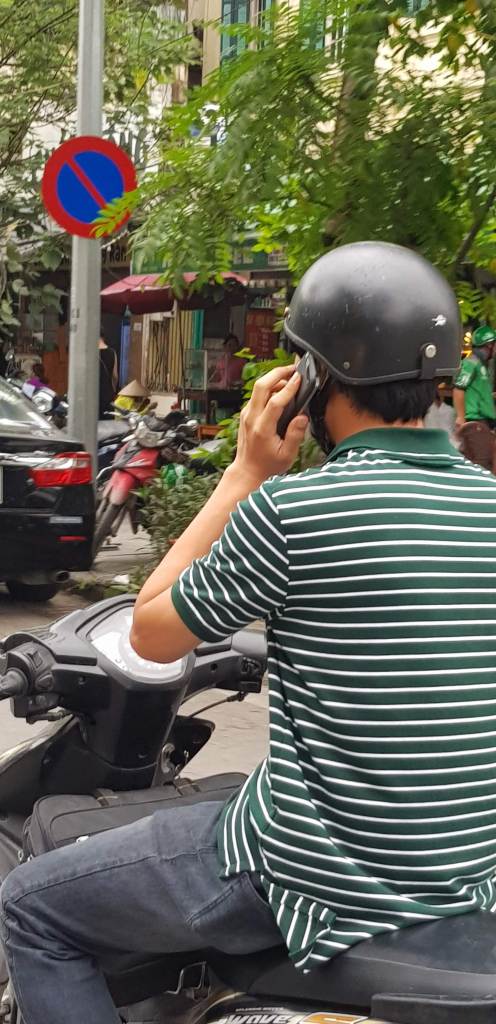
Eat.
Eat in a restaurant by myself.
Pay attention to the waiter.
Wait for my order to arrive.
Sit.
Sit alone.
Sit with others.
Listen.
Listen to the sound of silence.
Listen to music.
Listen to a whole album.
Listen to the cityscape.
Overhear others’ conversations in public.
Watch kids play.
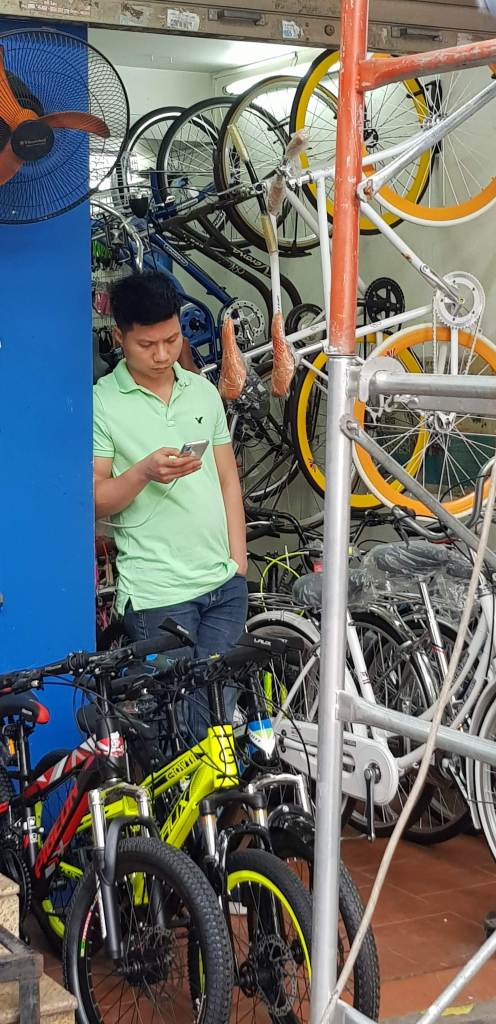
Shop.
Share.
Share pictures.
Take pictures.
Develop pictures.
Frame pictures.
See the same picture in the same spot.
Read.
Read a book.
Read a long article.
Read liner notes.
Pee.
I used to be able to stand at a urinal and focus on what I was doing,
Not feeling bored,
Not feeling the need to respond to anything that urgently.
Nothing could be so urgent that I could not, as the Brits say, ‘take a wee’.
Wait.
Wait at a traffic light.
Wait for a friend at a pre-determined place and time.
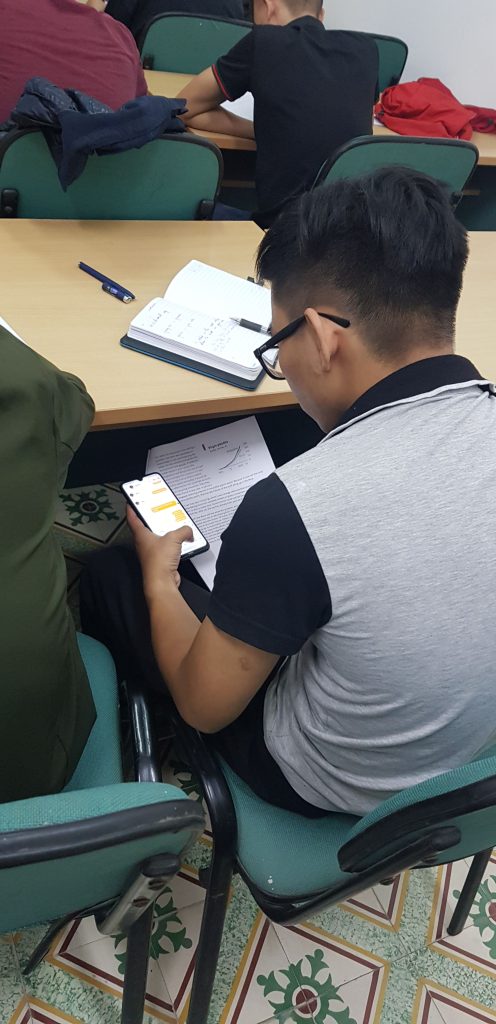
Wait for my turn.
Wait for a meal I ordered to arrive.
Wait in an office for my appointment.
Wait in line.
Wait for anything!
I used to appreciate the downtime of waiting.
Now waiting fuels FOMO.
I used to enjoy people watching…
Now I just watch people on their phones.
It’s genuine anxiety.
Walk.
Walk from point A to B.
I used to could walk between two known points without having to mark the moment with a post.
Now I can’t walk down the hall,
Or through the house or even to the toilet without checking my phone.
I avoid eye contact with strangers.
Anyone I don’t already know is strange.
I used to could muscle through this awkwardness.
Talk.
Have a conversation.
A friend and I recently lamented about how you used to could have a conversation and
Even figure out a specific thing that you couldn’t immediately recall…
Just by talking.
I also appreciate the examples we discussed.
Say you wanted to mention a world leader but couldn’t immediately remember their name. What would you do before?
Rattle off the few facts you could recall and in so doing you’d jog your memory.
Who was the 43rd US president?
If you didn’t immediately recall his name,
You might have recalled that the current one is often called “45” since
Many folks avoid calling his name.
You know Obama was before him, therefore he must’ve been number “44.”
You know Obama inherited a crap economy and several unjust wars,
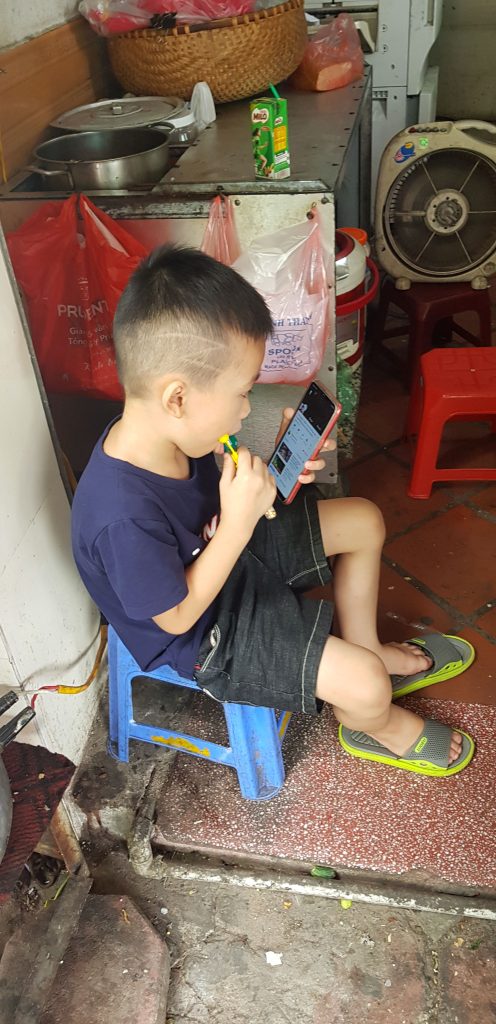
Including the cultural war against Islam. And
That this was even one of the coded racial slurs used against him: “A Muslim.”
Putting these facts together,
You’d quickly arrive at Dubya! And
His whole warmongering cabinet. And
Condi Rice. And
General Powell’s botched PowerPoint presentation at the UN. And
Big dick Cheney, Halliburton and that fool shooting his friend while hunting.
That whole process might have taken a full minute,
But so would pulling up 43’s name on the Google.
This way, however, you haven’t lost the flow of conversation nor the productive energy produced between two people when they talk.
(It’s called ‘limbic resonance’, BTW).
Yeah, I used to be able to recall things…
Many more things about the world without my mobile phone.

Wonder.
Allow my mind to wander.
Entertain myself with my own thoughts.
Think.
Think new things.
Think differently just by thinking through a topic.
I used to know things.
Know answers that weren’t presented to me as search results.
I used to trust my own knowledge.
I used to be able to be present, enjoying my own company,
Appreciating the wisdom that comes with the mental downtime.
Never the fear of missing out,
Allowing myself time to reflect.
It is in reflection that wisdom is born.
Now, most of us just spend our time simply doing:
Surfing, scrolling, liking, dissing, posting, sharing and the like.
Even on a wondrous occasion, many of us would rather be on our phones.
Not just sharing the wonderful occasion –
Watching an insanely beautiful landscape through our tiny screens,
Phubbing the people we’re actually with,
Reducing a wondrous experience to a well-crafted selfie –
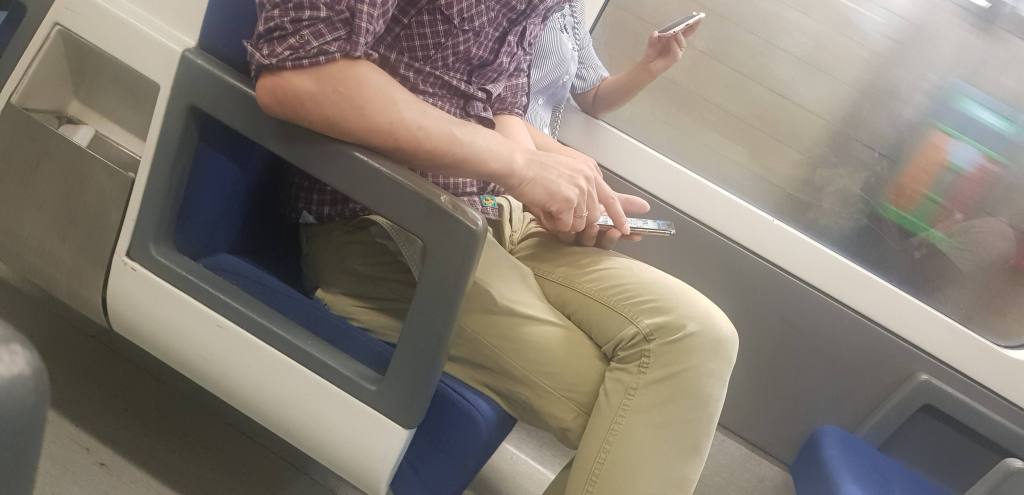
But just making sure we’re not missing out on something rather mundane happening back home.
I used to could be in the world.
Now, I’m just in cyberspace.
I used to be wiser.
Share this:

The ‘other’ BBC worldservice. #BlackenAsianWithLove
The ‘other’ BBC worldservice.
If you google “BBC+Mandingo,” please be aware that it is NSFW. Use your imagination. Now, imagine an auction block. Imagine a slave standing there. Breeding slaves underpinned the ‘white supremacist, capitalist, patriarchal’ system that placed their bodies upon that auction block. Hyper-sexualisation of Black bodies began right there. It is bell hooks’ Intersectionality lens that’s necessary for a holistic gaze upon consumer commodification.
Now, imagine that one Black boy in class, vying for attention just as any other adolescent, yet he’s got an entire multitude of hyper-sexualised images filling the heads of virtually everyone in the room. By the time they hit the locker-room, everyone is expecting to see this kid’s BBC. I’ve had many (non-Black) adults say that to me explicitly, inexplicably in any given situation where one might not otherwise imagine penis size would surface so casually in conversation. Hence, we can all imagine that with the crudeness of adolescent male vernacular: Your kid is asking my kid why his penis isn’t what all the rappers rap about. 
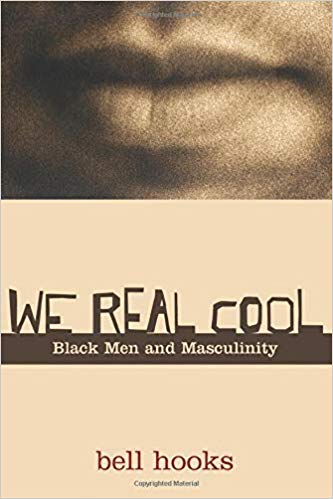
Why are so many commercially successful rappers’ fantasies reduced to “patriarchal f*cking?” Reading Michael Kimmel’s essay “Fuel for Fantasy: The Ideological Construction of Male Lust,” in her seminal book We Real Cool: Black Masculinity, bell hooks clarifies: “In the iconography of black male sexuality, compulsive-obsessive fucking is represented as a form of power when in actuality it is an indication of extreme powerlessness” (hooks: 67-8).
It’s auto-asphyxiation, a kind of nihilistic sadomasochism that says, if the world thinks of me as a beast, then a beast I shall be. Plenty of kids work this out by the time they hit the playground. “Patriarchy, as manifest in hip-hop, is where we can have our version of power within this very oppressive society,” explains writer/activist Kevin Powell (qtd. in hooks: 56). Ironically, Powell came to fame in the 90’s on MTV through the original reality show aptly entitled “The Real World.”
Plantation Politics 101
Since at least 2017, commercial rap has been the most widely sold musical genre; it’s pop. Beyond roughly 700,000 sales, Black people are not the primary purchasers of commercialised rap, as explained in the documentary Hip-Hop: Beyond Beats and Rhymes. It takes millions to earn ‘multi-platinum’ status. Yet, while created by and for Black and brown people in ghettoized communities, it has morphed into a transnational commodity having little to do with the realities of its originators, save for the S&M fantasies of wealth beyond imagination. And what do they boast of doing with that power, read as wealth? Liberating the masses from poverty? Intervening on the Prison Industrial Complex? Competing with the “nightmare” racist landlords like Donald Trump’s dad Fred? No! They mimic the very gangsters they pretend to be. Once Italian-Americans held hard that stereotype, but now it’s us. It’s always about power. Truly, ‘it’s bigger than Hip-Hop’.
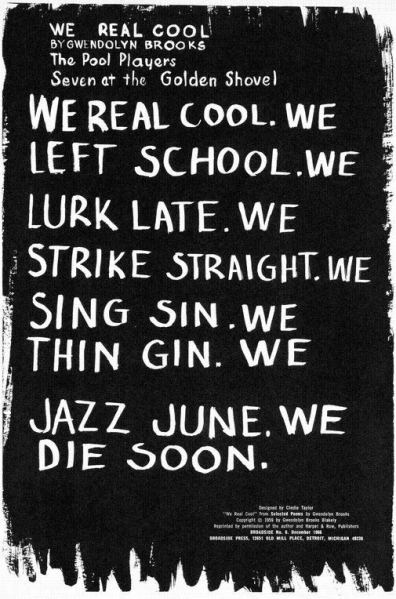 The more painful question few bother asking is why commercial rap music focuses so keenly on pimps, thugs, b*tches and whores? Like other commodities, commercial rap is tailored to the primary consumer base, which isn’t (fellow) Black people, but white youth. What is it about contemporary white youth that craves images of salacious, monstrous, licentious and violent Black people boasting about killing and maiming one another? Describing this mass commercial “Misogynistic rap music,” hooks states: “It is the plantation economy, where black males labor in the field of gender and come out ready to defend their patriarchal manhood by all manner of violence against women and men whom they perceive to be weak and like women” (hooks: 57-8). Plainly, the root of commercial rap’s global prominence is the reenactment of “sadomasochistic rituals of domination, of power and play” (hooks: 65).
Hyper-sexualisation is a form of projection onto Black people a mass white anxiety about our shared “history of their brutal torture, rape, and enslavement of black bodies” (hooks: 63). She goes on to explain: “If white men had an unusual obsession with black male genitalia it was because they had to understand the sexual primitive, the demonic beast in their midst. And if during lynchings they touched burnt flesh, exposed private parts, and cut off bits and pieces of black male bodies, white folks saw this ritualistic sacrifice as in no way a commentary on their obsession with black bodies, naked flesh, sexuality” (ibid). Hence the BBC obsession finds a consumer home safely in pop music!
“I am ashamed of my small penis,” a stranger recently mentioned to me in a grilled wing joint I happened upon here in Hanoi. The confession came from nowhere, having nothing to do with anything happening between us at the time. Is this the locker-room banter I always hear about? Are straight men really so obsessed with their penises? Given his broken English and my non-existent Vietnamese, I tried comforting him by explaining in the simplest terms the saying: “It’s not the size of the wave but the motion of the ocean.” Colloquialisms never translate easily, but I did at least deflect the subject away from ethno-sexual myths spread worldwide through contemporary consumer culture.
We’ve got to talk about ethno-sexual myths with openness, honesty and integrity. Silence is the master’s tool; silence = death! Further, echoing ‘black, lesbian, mother, warrior, poet’ Audre Lorde, ‘The master’s tools will never dismantle the master’s house”. I am Black in Asia, and there are perhaps no two groups of men at polar opposites of ethno-sexual myths. Like the hyper-sexualisation of women of colour, these myths reveal that neither Blackness nor Asianess is at the centre of these globally circulated myths. Hyper-sexual in comparison to who or what? Hegemonic heteronormative whiteness. Say it with me: Duh!
To get In-formation:
hooks, b. (2004) We Real Cool: Black Men and Masculinity. New York: Routledge.
Lorde, A. (1984) Sister Outsider: Essays and Speeches. Berkeley: Crossing Press.
Share this:


Are you faking it? : Impostor Syndrome in Academia
Bethany Davies is an Associate Lecturer teaching modules in the first year.
I really enjoyed my time at university but for me it felt almost like I’d got in by some whim of luck, I worked hard to get there but I still felt as though I had got in by chance. Which meant by I had even started; I feared others would think that too and I would become exposed. I’d picture that in class everyone would know something about a really important event in history that I was ignorant to not have heard of. I remember wishing there was a documentary I could watch or a book I could read that gave a brief summary of everything that was meant to be important so I could at least have a basic knowledge of everything and maybe I could fake the rest.
Impostor syndrome doesn’t go away, it evolves and alters and that doesn’t mean it necessarily grows or decreases in time. But rather it just seems like an annoying person sat in the back of hall that occasionally shouts loud enough that you can hear it.
I think it’s important to talk about it, I’m not even sure what it could be regarded as, I don’t believe it be a disease or a form of anxiety but rather something just in its own class that to a degree I like to think everybody has. It doesn’t have to ruin your university experience, it didn’t ruin mine, but it was certainly a part of it, almost like a step in the process; go to lectures, deal with the feeling that I’m pretending I belong there, go home, revise.
I had really only became aware of it properly further in my studies and it continues when working in academia. The labels of what degree you have or what level you are and how many certificates you have can give you the confidence you need to overcome this, but it can also feed it.
There will be students starting University in the next few weeks who already feel like this, asking questions of themselves or even dreading having to talk in lectures in case they reveal what they most fear – that they are a fake and do not actually know what they think they should know by now. There will be others submitting essays or dissertations who think they have got to where they are by pure luck and chance and that this is the time where it might be made public that they are not worthy of their previous grades. There are individuals who are considered as ‘Experts’ on a particular subject by everyone but themselves as they feel the area is so vast that even they are at the basics of the subject.
Even when I received high grades, or was given positive feedback, it didn’t silence the thoughts that I somehow didn’t earn them. From graduation to working in academia, I thought that would be it, I would prove to myself that I knew enough and that I wasn’t an impostor. To an extent, it did help, mainly because I didn’t have to prove myself in an essay or a test anymore. But I still think it’s there, because I know there is always another step when you are in academia, you can keep going forever and you’ll never truly be done.
If that sounds familiar, it is something you can take some comfort in the number of others with the same feelings. It should give you comfort because it shows the inaccuracy in those intrusive thoughts, as surely, we can’t all be faking it and impostors in our academic journeys? And if we are… then there isn’t really a problem either.
I’m not a psychologist nor would I be so impostorous to claim to be (do you like what I did there?) but I think we all know that the negative things we say about ourselves are not true, but they are a way to stop ourselves from doing something out of our comfort zone, which in itself is subjective – but that’s starting a philosophical ramble.
This blog post isn’t to make you overly aware of your fears nor do you have to address them right now. But rather, my intention is letting students know you are not alone, it doesn’t go away but it can get better if you separate how you think you feel about yourself from the reality of what you are achieving whether that be good feedback or even achieving a degree. The same way as receiving negative feedback, should not reaffirm your fears. Learn to accept that you will never know everything and that it’s okay to not know something even if everyone makes you feel like you should. Be kind to yourself in your studies, otherwise you might forget to enjoy the process of learning.
Share this:


The struggle is real

© Jonathan McHugh
Stephanie is a BA Criminology graduate of 2019 and was motivated to write this blog through the experience of her own dissertation.
Last year was a very important time for me, during my second year of studying Criminology I began doing a work placement with Race Act 40, which was an oral history project to celebrate 40 years of the Race Relations Act 1974. The interviews that were conducted during my placement allowed me to get a variety of in-depth stories about racial inequalities of Afro-Caribbean migration settlers in the UK. During my time with the Race Act 40 project it became clear to me that the people who had volunteered their stories had witnessed a long line of injustices from not only individuals within society, but also institutions that makeup the ‘moral fabric’ within society. When exploring whether they have seen changes post and pre-Race Relations they insisted that although the individual within society treated them better and accepted them post-Race relations, to an extent there is a long way to go to improve the hostile relationships that has been formed with politicians and police.
The notion of hostility between politicians and the Afro-Caribbean community was reinforced, as the UK was going through the Windrush scandal which affected the core of every Afro-Caribbean household within the UK. This was extremely important for me as both paternal and maternal grandparents were first generation Windrush settlers. During the scandal my father became extremely anxious and the ramifications of the Windrush scandal hit home when some of his friends that came to the UK in 1961, the same time as he did, were detained and deported on the grounds of them being ‘illegals’. The UK Government used their ‘Hostile Environment’ policy to reintroduce Section 3 paragraph 8 of the Immigration Act 1971, which puts burden of proof on anyone that is challenged about their legal status in the UK’.
The UK government was ‘legally’ able to deport Caribbean settlers, as many of them did not have a British passport and could not prove their legal right to be in the UK and the Home Office could not help them prove their legal rights because all archival documents had been destroyed. This was a hard pill to swallow, as the United Kingdom documents and preserves all areas of history yet, overnight, the memory of my family’s journey to the UK was removed from the National Archives, without any explanation or reasoning. The anxiety that my father felt quickly spread over my whole family and while I wanted to scream and kick down doors demanding answers, I used my family’s history and the experiences of other Black people under British colonial rule as the basis for my dissertation. The hostility that they faced stepping off the Windrush echoed similar hostility they were facing in 2018, the fact that the British government had started deporting people who were invited into the country as commonwealth workers to build a country that had been torn apart as a corollary of war was a slap in the face.
Under Winston Churchill’s government, officials were employed to research Black communities to prove they were disproportionately criminal as a strategy to legally remove them from the UK and although they did not have any evidence to prove this notion the government did not apologize for the distasteful and racist treatment they demonstrated. It is hard to convince Black people in 2019 that they are not targets of poor similar treatment when they have been criminalised again and documents have been destroyed to exonerate them from criminality.
A final thought:
I have outlined the reasons why this topic has been important to me and my advice to any Criminology student who is going to be writing a dissertation is, to find a topic that is important and relevant to you, if you are passionate about a topic it will shine through in your research.

 Thoughts from the criminology team