
Home » Analysis (Page 2)
Category Archives: Analysis

A Love Letter: in praise of art

Some time ago, I wrote ‘A Love Letter: in praise of poetry‘, making the case as to why this literary form is important to understanding the lived experience. This time, I intend to do similar in relation to visual art.
Tomorrow, I’m plan to make my annual visit to the Koestler Arts’ Exhibition on show at London’s Southbank Centre. This year’s exhibition is entitled Another Me and is curated by the musician, Soweto Kinch. Previous exhibitions have been curated by Benjamin Zephaniah, Antony Gormley and prisoners’ families. Each of the exhibitions contain a diverse range of unique pieces, displaying the sheer range of artistic endeavours from sculpture, to pastels and from music to embroidery. This annual exhibition has an obvious link to criminology, all submissions are from incarcerated people. However, art, regardless of medium, has lots of interest to criminologists and many other scholars.
I have never formally studied art, my reactions and interpretations are entirely personal. I reason that the skills inherent in criminological critique and analysis are applicable, whatever the context or medium. The picture above shows 4 of my favourite pieces of art (there are many others). Each of these, in their own unique way, allow me to explore the world in which we all live. For me, each illustrate aspects of social (in)justice, social harms, institutional violence and the fight for human rights. You may dislike my choices. arguing that graffiti (Banksy) and photography (Mona Hatoum) have no place within art proper. You may disagree with my interpretation of these pieces, dismissing them as pure ephemera, forgotten as quickly as they are seen and that is the beauty of discourse.
Nonetheless, for me they capture the quintessential essence of criminology. It is a positive discipline, focused on what “ought” to be, rather than what is. To stand small, in front of Picasso’s (1937) enormous canvas Guernica allows for consideration of the sheer scale of destruction, inherent in mechanised warfare. Likewise, Banksy’s (2005) The Kissing Coppers provides an interesting juxtaposition of the upholders of the law behaving in such a way that their predecessors would have persecuted them. Each of the art pieces I have selected show that over time and space, the behaviours remain the same, the only change, the level of approbation applied from without.
Art galleries and museums can appear terrifying places, open only to a select few. Those that understand the rules of art, those who make the right noises, those that have the language to describe what they see. This is a fallacy, art belongs to all of us. If you don’t believe me, take a trip to the Southbank Centre very soon. It’s not scary, nobody will ask you questions, everyone is just there to see the art. Who knows you might just find something that calls out to you and helps to spark your criminological imagination. You’ll have to hurry though…closes 3 November, don’t miss out!
Share this:


How to prepare for a year in University

In our society consumerism seems to rain supreme. We can buy stuff to make us feel better and we can buy more stuff to express our feeling to others and mark almost most events around us. Retail and especially all the shops have long been aware of this and so they have developed their seasonal material. These seasonal promotions may have become consumer events now although they do signify something incredibly important to culture and our collective consciousness. There is time for Christmas decorations and festive foods, Easter time and chocolate eggs, mother’s day and nauseating cards father’s day for equally grinchworthy cards. There is valentine’s day to say I love you in full fat chocolates, Halloween to give little kids rotten teeth and a red poppy to remember some of our dead. To those add the summer season with the disposable BBQs and of course the back to school season!
The back to school is one of the interesting ones. Geared to prepare pupils and parents for going back to school and plan ahead. From ordering the uniforms to getting all the stationery and books required. I remember this time of the year with some rather mixed emotions. It was the end of my summer holidays, but it was also the time to get back to school. Until one day I finished school and I went to university. Education is seen as part of a continuous process that we are actively involved from the first day at school to the last day in high school and more recently for more people also involve the first day of going to university. Every year is more challenging than the next, but we move up and continue. For those of us who enjoy education we continue the journey further to further or high education.
There is something to said about the preparation process coming to University; it is interesting seeing advertisements on education this time of the year on the tv and social media promoting stuff for this transition; from the got to have smartphone to the best laptop, the fastest printer scanner all in one thingy to the greatest sound system and many more stuff that would get you ready for the year ahead. Do they really help us out and if not, what do we got to do to prepare for coming to university?
Unfortunately, there is no standard formula here but there is a reason for that. Higher education is adult education. This is the first time in our educational journey that we are sitting firmly on the driving seat. We choose to study (or ought to) what we wish to study. It is an incredibly liberating process to have choice. This however is only the beginning. We make plans of our time. In higher education the bulk of the time required is independent study, and as such we got to negotiate how we will plan our time. We got to decide which reading we are going to do first which notes to read what seminar we shall prepare and what assignment we will make a draft of.
There will be days spent in the library looking for a book, days in a coffee shop talking to fellow students about the seminar reading, days in the learning hub working on an assignment. There are highs, lows and everything in between. But regardless of the emotion at every stage thee will be a sense of ownership of knowledge.
In the first couple of sessions, the bulk of the students keep quiet expecting the correct answer to be given. One interpretation or one truth that describes all. It takes a few times before the realisation emerges that the way we analyse, and project knowledge can be different provided we go through the same processes of scrutiny and analysis. Then conversation emerges and the more reading the better the quality of the ideas that shall emerge.
The first year at University is definitely a declaration of independence and the realisation that we all have a voice. Getting on to the road on empowerment. This is a long journey, and on occasions arduous but incredibly rewarding because it leads to an insight greater than before that removes ignorance and lifts the veil of the unfamiliar.
To our newest students – Welcome to the University and to our returning 2 and 3 years – Welcome back!
Share this:


‘Quelle surprise’: it’s all in the timing.

“Inauguration of Polish EU Presidency (011)” by Bruce MacRae is licensed under CC BY-NC-SA 2.0 edited by SH
The Office of National Statistics has admitted to some frailties in its data collection around migration. What a shock it must have been to discover that the manner in which it collected the data was somewhat flawed, so much so that they have now downgraded the data to ‘experimental’.
It might seem almost laughable that an organisation that prides itself in, and espouses data accuracy and has in the past criticised police recorded figures for being inaccurate (we know they are) has itself fallen foul of inaccuracies brought about by its own ill thought out data gathering attempts. The issue though is far greater than simple school boy errors, these figures have had a major impact on government policy for years around immigration with calls for greater control of our borders and the inevitable identification of the ‘other’.
The figures seem to be erroneous from somewhere between the mid-2000s and 2016, although it is unclear how accurate they are now. New analysis shows that European Union net migration was 16% higher in 2015-16 than first thought. Whilst the ONS admits that its estimation of net migration from non-EU countries is overestimated, it is not clear exactly by how much this might be.
Such a faux pas led to the story hitting the news; ‘EU migration to UK ‘underestimated’ by ONS’ (BBC, 2019) and ‘Office for National Statistics downgrades ‘not fully reliable’ official immigration data as experts claim figures have been ‘systematically under-estimating net migration from EU countries’ (Daily Mail, 2019).
So, there we are the ONS gets statistics wrong as well and the adjusted figures simply support what Brexiteers have been telling everyone all along. But why release the figures now? When were these errors identified? Surely if they have been inaccurate until 2016 then the mistake must have been found some short time after that. So why wait until the eleventh hour when ‘Brexit means Brexit’ is about to come to a calamitous conclusion? And why those headlines? Why not the headline ‘Big mistake: net migration from outside the EU vastly overestimated’?
I’m not one to subscribe to conspiracy theories but at times it is difficult to overlook the blindingly obvious. So called independent bodies may not be that independent, the puppet master pulls the strings and the puppets dance. Little value in headlining facts that do not support the right-wing rhetoric but great political value to be had in muddying the waters about the EU and open borders.
This discourse ignores the value of migration and simply plays on the fears of the populace, these are well rehearsed and now age-old arguments that I and many others have made*. The concern though is when ‘independent institutions’ subtly start to join in the furore and the moral compass starts to become distorted, subjugated to political ideals. I can’t help but wonder, what would Durkheim make of it?
* It is well worth watching Hollie McNish’s Mathematics on YouTube.
Share this:


How to boil an egg…A criminological issue?

Another academic year is coming close to an end. After the plans and the changes made there is always a little time for reflection to ask what is in a year? The rhetorical question implies that there is an expected answer and that is true, well sometimes! After years serving HE it is becoming clear that things change “τα πάντα ρει”, everything flows as Heraclitus once said. Education is about knowledge and as it progresses, we progress with it.
In previous posts the value of education and reading for a subject like criminology has been argued, but ultimately what does it really mean to complete one year of education in HE? Well if you are on your first year it is the recognition that you can do this! The first step in many more to follow on the road to academic understanding. If you are on your second year you demonstrate perseverance, sticking with the subject you chose, and you continue to read more of it. Finally, if you are on your third year it is the anticipation of completion of a course of study. The successful conclusion of studies that will award you with a title.
This end for some is the end of the formal part of their higher education, whilst for others it is simply the beginning of the end of a longer and more arduous journey in learning. An exam board shall mark this end when all colleagues will read name after name, grade after grade, but this is only part of that story. The other part is the memories on learning that it will launch. I still hear stories of students remembering a lecture with a slide title “Lesbian Vampire Killers” on a session on media and crime which seems to tickle our alumni, or a phrase used in a class again and again for emphasis. Using a metaphor or an example that takes you away from the prescribed values. Some of the readers may remember my question “How long to hard boil an egg?” A question that revealed some of us have limited culinary skills, but the intended purpose was to allow us to look at the question of positionality and context. It only takes a couple of pre vs post- war Italian cookbooks to realise that the question can be answered considering the social situation and the energy requirements of its time. A country famed for its culinary status, but also broken from a second world war that decimated infrastructures and harmed population. Poverty, theft, antisocial behaviour, violence but also recriminations for the incurred destruction became the other effects hidden behind a seemingly random change in a number on a cookbook. *
My personal favourite was going over a criminal profiling case with students of the wrong year who were looking at me rather confused on the content. I shall never of course forget my sex offenders lecture to accounting students (I got the place and time wrong) which according to my bemused colleague who was watching me from the corner an interesting interlude from his session! These little anecdotes do not sustain knowledge, but they remind us how we got to be in that place.
Regardless of the subject of study or its level, all “participants” who engage in higher education gain one significant attribute, that of perspective. The ability to look closely of a idea through the disciplinary lens but also to zoom out and look at the bigger picture, thus making perspective more relevant. Perspective is distance and as we gain more knowledge, the better our judgement becomes in using this lens to zoom in and out. This is what we acquire as we progress through higher education.
*I could also point out the existential symbolism of the egg as the representation of the soul and the time to boil it is a metaphor for torment in the proverbial purgatory…but I will not
Share this:


The Other Side of Intelligence

After I graduated I had a bit of tunnel vision of what I wanted to do. I wanted to either work with young offenders or work with restorative justice. Many opportunities actually came up for me to do several different things, but nothing really worked out and nothing felt right.
I carried on working in retail till February 2018; I was honestly starting to lose hope that I would find something that I would enjoy. I started working for a security company that does many things; from employment vetting to gaining intelligence of various kinds. Although the role is not focused on the criminality side entirely, the theme is very much apparent. I find myself thinking about all the different concepts of criminology and how it ties in to what I am doing.
A big part of my role is intelligence and at first, I didn’t think I would enjoy it because I remember in third year in the module, Violence: Institutional Perspectives*; we looked at the inquiry Stockwell 1; an inquiry into the metropolitan police force following the death of Jean Charles de Menezes. Jean Charles was mistaken by intelligence officers for Hussain Osman, one of the terrorists responsible for the failed bomb attacks in London. This particular inquiry frustrated me a lot, because I just felt like, how is it possible for the police to mistake an individual for an innocent person. I just couldn’t accept when we were going through this case how trained officers were able to fail to identify the correct person, regardless of all the other factors that pointed to Jean Charles being the culprit. However, now being in a similar position I understand more how difficult it actually is to identify an individual and being 100% sure. There have been times in my line of work that I have had to question myself 2, 3, even 8 times if the person I found was really who I was looking for.
I do think I question it a lot more because I know how much my job can affect a person’s life and/or future. I do think criminology has been one of the best decisions I made. I know that I view things differently from other people I work with, even my family. Just little things that people tend not to notice I see myself. Thinking, but could it be because of this, or could it be because of that. Criminology really is part of everyday life, it is everywhere, and knowing everything I know today I wouldn’t have it any other way.
*Now CRI3003 – Violence: From Domestic To Institutional
Share this:

An Officer’s Perspective
Northampton University…. In 2011, I first moved up to Northampton to study criminology and sociology. At the time I had never moved away from home before and it was a somewhat daunting experience. However, now looking back at this, it was one of the best decisions I have made.
Before I set out to go to university I had always said to my family I wanted to join the police force. I chose to study criminology as I believed this was going to help me with joining the police and also provide me with an insight as to what I was potentially going to be letting myself in for.
From studying criminology for three years I learnt about various ideas surrounding police and their interactions with communities, portrayal within the media and about the history of the police and how it has developed into the service we have today.
I remember, in particular, being interested in the way in which the media portrayed the police and the impact this had on how young people, and whether this influenced their opinions on police, so much to the point I completed a dissertation on this topic. This interest came about from a module called YOUTH CRIME AND MEDIA. Ultimately, I found that young people, in particular those aged between 18-25, were influenced by the media and this helped them form their opinions of the police.
Whilst I was at Northampton University, I was a Special Constable for the Metropolitan Police having joined them in 2013, my third year at uni. This began to give me some experience into what the police dealt with on a day to day basis. Although I was only doing this for 16 hours per month, I would recommend this to anybody who is considering joining the police.
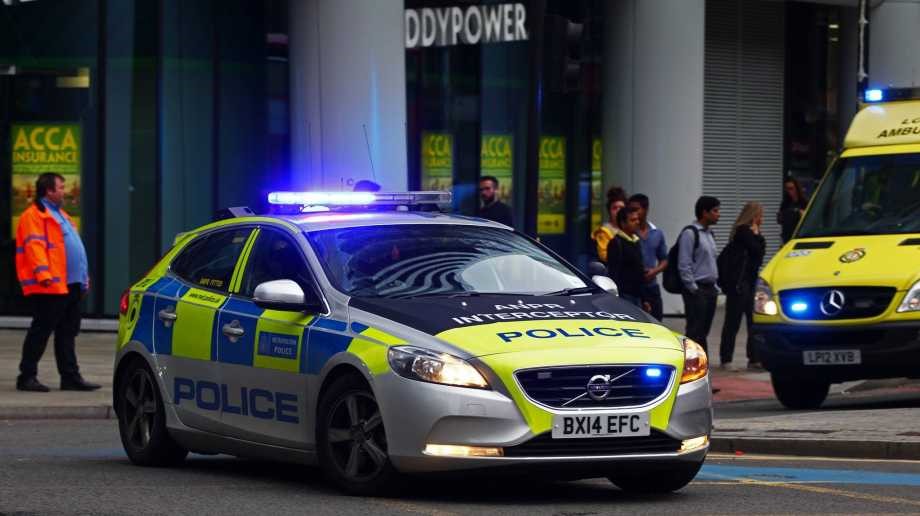
Since graduating from Northampton University, I joined the Metropolitan Police as a PC and I have been with the Met now for 2 years. I can honestly say that, when people say this is a job like no other, they are all correct. I go to work not knowing what I am going to encounter from one call to the next. The one thing which has really stood out for me since joining as a PC, and having graduated from university, is how misunderstood the role of police appears to have become. When I was growing up I remember thinking that the role of police was to chase criminals and drive fast cars. However, this nowadays is a small proportion of the work we do and the role of police officers is a lot more diverse and changing daily. We have a lot of interactions with people who are suffering a mental health crisis who may need our assistance because they are feeling suicidal, investigate the disappearance of missing people and even attend calls where someone is suffering a cardiac arrest and a defibrillator is required, as police officers now carry these in their vehicles.
However. I feel the biggest thing that my criminology degree has assisted me with in relation to my job is how I analyse situations. Criminology was largely centred around different theories and analysing these perspectives. On a day to day basis I regularly find myself analysing information provided to me and trying to understand different accounts people provide me with and trying to use these accounts to decide what action needs to be taken. Overall criminology has allowed me to take a step back from somewhat stressful situations and analyse what has happened. This has given me the confidence to present different viewpoints to people and also challenge people at times on controversial topics or viewpoints they may have.
I do think that I took the right path to becoming a police officer; criminology did equip me with various different skills that I utilise in my day-to-day role. I wouldn’t change the path I took. I enjoyed every bit of my degree, and the lecturers were always supportive.

 Thoughts from the criminology team