
Home » Articles posted by zo3conneely
Author Archives: zo3conneely

Reform: The New Opposition, or an Uncomfortable Hiccup in British Politics

British politics is particularly interesting at the moment, as no one is really sure if we are witnesses to a radical change or if Reform will fizzle out and be a distant memory within 10 years or so (here’s hoping). I’m here to bounce some ideas around, think about the current political climate and just put out some comments about what’s going on. I’m hoping to keep at least light, and possibly short.
It’s structured as starting off with some points that are to Reform’s advantage, including the national political climate. It continues to some things working against Reform, including its sustainability. Considering how Reform has managed to gain such support is kind of weaved into the middle and briefly mentioned at the end.
The Political Climate: Inside the UK
Populism is on the rise, restriction of human rights is increasing and people seem to be getting angrier and more frustrated about politics. On a national level, there is a plethora of individuals who are disillusioned with modern day politics and seeking simple answers to big issues quickly and, unfortunately, right wing populism fills this gap perfectly.
Immigration problems? Ban them and deport them.
Crime problems? Give longer and harsher sentences.
Have a problem with the elite? Let Nigel speak up for the British People and let common sense prevail.
They’re easily digestible, easily understandable solutions to big societal issues and that definitely appeals to people.

We can easily dismiss supporters of any right wing populist party as incorrect, immoral and uneducated. But it is really not as simple as that. When an attractive left wing party is not there to foster a society which is genuinely has the interests of the working class at it’s heart, we open the door for right wing populism to scoop up the working class electorate. Indeed, we can’t totally blame the current ‘Labour’ government for the increase in Reform UK voters, as we can see trends of right wing populism globally, but we can definitely think about whether these UK voters would have gone to Reform UK if Labour was offering a better solution. A solution which had working class people front and centre, providing meaningful change such as education reform, anti-poverty initiatives, workers rights focuses, renationalisation policies and council house stock rebuilding. What we are possibly seeing here are voters with no party to call home, frustrated and without answers, so they seek these things in easily digestible populist parties.
Sustainability: Party Identity and Hypocrisy
Perhaps Reform UK’s biggest stumbling block, in my opinion, is its internal contradictions and its lack of preestablished identity as a party.
The internal contradictions are simple and obvious. Reform UK prides itself on being anti- elitist and anti-establishment but the party is lead by a millionaire bankrolled by aristocrats with a private education. Right wing populist parties are simply an extension of the elite and the establishment; an obvious conclusion if you dig even slightly under the surface. Surely this hypocrisy will be called out soon and listened to?
A slightly more long winded pitfall in the Reform Party (among many others) is its lack of party identity. Labour and even the Tories can rely at least slightly on their voters who vote for them because they always have, because of nostalgia for what the party used to be, because they’re a traditional party. Reform don’t have this. And not only this, but they don’t really have any developed policies; the Conservatives have the idea of low taxes, competitive markets, low regulation. Traditional Labour have higher taxes, redistribution of wealth, working class empowerment, nationalisation. and Reform have…? Immigration freezes, law and order and ‘taking the country back’. I’m not sure if their party identity and policies will keep their momentum moving to the next general election.
However, I do think that if they are able to maintain their momentum and get to the election they may go far, and may possibly overtake the Tories. But I think it rests on two things 1) momentum going into the next election and 2) No proper left wing alternatives emerging between now and then. Unfortunately I think number two is already certain.
The title of this blog, is a sort of tongue in cheek title. I do understand how dire this could be should Reform become positioned as the official opposition. For many people around the UK the effects of pandering to right wing populist racist rhetoric has already been experienced, and it will only get worse if Reform continue to gain popularity. Remember to vote, be politically engaged and speak up, we as young people have a huge role to play as our turn out is generally so low.
Images from https://www.reformparty.uk/ and https://tribunemag.co.uk/2024/07/the-anti-elite-elites-reform-far-right
Share this:


Reflections and Perspectives from an Ex-masters Student and Current PhD Student
Back in September, I submitted my final dissertation for my Master of Science in International Social Policy and Welfare. The masters was not what I expected at all, but at the same time it was pretty much what I anticipated.
During my undergraduate degree, I never really felt that my socio-economic status effected my time at university that much. Of course, it did to a certain level, but it never felt overt. Perhaps the more diverse student population made me feel that way, as going to university and studying at undergraduate level is an opportunity that a range of people get, from a range of backgrounds. Since finishing my masters and beginning my PhD level study, I’m starting to appreciate how entering postgraduate study as a working class person can be particularly challenging. Applying for my masters, and my PhD, was extremely challenging as I didn’t know anyone else who had done it previously, being the first in my family and peers to continue so far with formal education.
In light of this, I really wanted to write this entry sharing some of the things I have learnt and realised during my postgraduate study. Hopefully this could maybe reach someone who is the first of their family or circle of friends, for whatever reason, to take the step into postgraduate education.
For context, my masters was a year at Anglia Ruskin University and entirely course work based with a fifteen thousand word dissertation carried out in the third semester. Here are some of my most prominent realisations and things to consider about postgraduate study in the social sciences.
1- A masters is not like a repeat of the third year of your undergraduate degree:
So perhaps I was slightly naïve when I started my masters thinking this would be the case. I thought I’d be writing 2,500- 3,000 word essays every so often then calling it a day, maybe 3,500 at a push. This wasn’t the case, some of my essays were 3,500 words, but the majority were 4,000 or 6,000 words typically. It felt daunting to start of with, but as you explore issues more critically, widely and with greater complexity, the word count really does get used up easily.
2- You might get to practise your presentation skills:
As someone who doesn’t typically enjoy presenting, this was difficult for me. But often your masters peer group is smaller, and your topic is really tailored to what you want to study, so its not as bad as doing it at undergraduate level, at my university, three out of the four modules I took involved some presenting.
3- The dissertation sounds scary to start off with:
I started my masters just under four months after finally finishing my undergraduate dissertation, so I had the stress and exertion still fresh in my mind. I was nervous thinking about how I was going to conduct research and write up a 15,000 word masters dissertation, especially as the dissertation module only formally started in the final semester (12 weeks before submission). But the whole point of education is learning how to do things you currently cannot do, if I attempted to do my research and masters dissertation in the first month of the course, I would have probably catastrophically failed, but that’s sort of the whole point. Writing lengthier essays, exploring ideas further and practising applying theoretical frameworks to other issues prepared me for the dissertation.
4- Make a Gantt chart:
Linked to number 3, my Gantt chart saved my life during my dissertation. You can easily make one on Excel, I also broke down my work into week chunks, and at the top I wrote any social commitments so I had a clear idea on how much work I could realistically aim to get done each week. You can see lots of examples of this time management strategy online by searching for google images of Gantt charts, below is an example of the one I’ve made for my PhD.

5- Read, read, read:
Demonstrate that you have wider understanding of a concept, that goes beyond the lectures and seminars. And read for pleasure too, reading long documents is a skill and skills need practise and rehearsal! But if there is a key document/ paper that you simply just can’t get into the groove of, copy and paste the text into a word document and use the text to speech function and listen to it like a podcast.
6- It’s really independent:
At my university, we had six hours of face to face contact per week. So this means a lot of independent study. I found trying to maintain self discipline and routine more helpful than maintaining motivation; motivation is something that can be really unstable depending on your mood, and you can’t necessarily gain motivation when you don’t have it. But sticking to routines and developing an environment of self discipline is something you have a bit more control over, but remember to carve rest periods into that routine.
7- A word on using AI:
Universities often have their own policy on using AI. Personally, I would avoid it and I haven’t used it for any of my university work across both degrees and I’m not planning on doing so for my PhD. However, that being said, if you do want to use it, check the university’s AI policy, clarify with your lecturers, double check information with additional sources and do not use it just to do your work. I know some students use it to gather preliminary sources or to time manage. For one of my Masters module, three people used AI to make their presentations, and it was painfully obvious, very embarrassing for them and it is academic misconduct.
8- Consider PhD options a few months into your masters:
Being extremely early on in my PhD journey (I started the programme in January) I can only give one piece of advice regarding it so far. Start considering things to do with your PhD a few months into your masters. I didn’t realise how extensive the application processes are, most universities will ask you to create a research proposal- universities I looked at ranged between a 1,000- 2,500 word count- and some ask for an academic and professional CV. Choosing a university isn’t as simple as undergrad or even masters study, you need to find a university that has supervisors that supervise the topic you want to research, then they sometimes like you to identify an appropriate supervisor and send the research proposal draft to them before submitting an application. Some supervisors may then want to talk to you about your research multiple times before recommending you to apply/ giving an offer to you. But don’t panic if you leave it later, or can’t cope with thinking about those things during your masters. I only started seriously applying a month after my Masters finished, and I still had just enough time to figure it all out and get it done in time.
Share this:


Liberalism, Capitalism and Broken Promises

With international conflict rife, imperialism alive and well and global and domestic inequalities broadening, where are the benefits that the international liberal order promised?
As part of my masters, I am reading through an interesting textbook named Theories of International Relations (Burchill, 2013). Soon, I’ll have a lecture speaking about liberalism within the realm of international relations (IR). The textbook mentions liberal thought concerning the achievement of peace through processes of democracy and free trade, supposedly, through these mechanisms, humankind can reach a place of ‘perpetual peace’, as suggested by Kant.
Capitalism supposedly has the power to distribute scarce resources to citizens, while liberalist free trade should break down artificial barriers between nations, uniting them towards a common goal of sharing commodities and mitigating tensions by bringing states into the free trade ‘community’. With this, in theory, should bring universal and democratic peace, bought about by the presence of shared interest.
Liberal capitalism has had a long time to prove its worth, with the ideology being adopted by the majority of the west, and often imposed on countries in the global south through coercive trade deals, political interference and the establishment of dependant economies. Evidence of the positives of liberal capitalism, in my opinion are yet to be seen. In fact, the evidence points towards a global and local environment entirely contrary to the claims of liberal capitalism.
The international institutions, constructed to mitigate against the anarchic system we live under become increasingly fragile and powerless. The guarantee of global community and peace seems further and further away. The pledge that liberalism will result in the spread of resources, resulting in the ultimate equalisation is unrealised.
Despite all of this, the global liberal order seems to still be supported by the majority of the elite and by voters alike. Because with the outlined claims comes the promise that one day, with some persistence, patience and hard work, you too could reap the rewards of capitalism just like the few in society do.
Share this:


Feminism, Security and Conflict

Content warning: this blog post mentions feminist theory in relation to issues of rape, genocide and war.
Recently I had the opportunity to do a deep dive into feminist contributions to the field of international relations, a discipline which of course has many parallels and connections to criminology. Feminism as a broad concept often is viewed from a human rights perspective, which makes sense as this is probably the area that is most visible to most people through progressions in the field of political participation, reproductive and sexual rights and working rights. A lesser known contribution is feminist theory to international relations (IR), specifically, its practical and theoretical contribution to security and conflict. This blog post will give a whistle stop tour through the exploration I conducted concerning the themes of security, conflict and feminism. Hopefully I can write this in a way everyone finds interesting as it’s a fairly heavy topic at times!
Security
Within IR, security has usually been defined on a more state-centric level. If a state can defend itself and its sovereign borders and has adequate (or more than adequate) military power, it is seen to be in a condition of security according to realist theory (think Hobbes and Machiavelli). Realism has taken centre stage in IR, suggesting that the state is the most important unit of analysis therefore meaning security has generally taken a state-centric definition.
Feminism has offered a radical rejuvenation of not only security studies, but also the ontological principles of IR itself. While the state is preoccupied with providing military security, often pooling resources towards this sector during times of international fragility, welfare sectors are usually plunged into a state of underfunding- even more so than they usually are. This means that individuals who depend on such sectors are often left in a state of financial and/or social insecurity. Feminism focuses on this issue, suggesting women are often the recipients of various welfare based services. The impact of wartime fiscal policy would not have been uncovered without feminism paying attention to the women typically side-lined and ignored in international politics. So while the state is experiencing a sense of security, its citizens (quite often women) are in a feeling of insecurity.
This individualisation of security also challenges the merit of using such a narrow, state-centric definition of security, ultimately questioning the validity of the dominant, state-focused theory of realism which in IR, is pretty ground-breaking.
Conflict
I’d say that in nearly all social science disciplines, including politics, economics, sociology, IR and criminology, conflict and war is something that is conceptualised as inherently ‘masculine’. Feminist theory was one of the first schools to document this and problematise it through scholarship which interrogated hegemonic masculinity, ‘masculine’ institutions and the manifestations of these things in war zones.
Wartime/ genocidal rape is unfortunately not a rare behaviour to come across in the global arena. The aftermath of the Yugoslav wars and the Rwandan genocide is probably some of the most reported cases in academic literature, and this is thanks to feminist theory shining a light on the phenomena. Feminism articulates wartime/ genocidal rape as constitutive of the dangerous aspects of culturally imbedded conceptions of masculinity being underscored by power and domination and being legitimised by the institutions which champion dangerous elements of masculinity.
Practically, this new perspective provided by feminism has altered the way sexual violence is viewed by the mainstream; once a firmly domestic problem, sexual violence has been brought into foreign policy and recognised as a tactic of war. This articulation by feminist theory is absolutely ground breaking in the social science world as it shifts the onto-epistemological focus that other more conventional schools have been unable to look past.
Share this:


A Snapshot of My Dissertation: Portuguese Drug Decriminalisation and Some Other Things
I submitted my dissertation back in April, and now the dust has settled I thought it would be good to share the most interesting parts of my research, think of this blog post as an abridged version of my dissertation. Towards the end I’ve also included some tips for completing a dissertation, along with some reading you might like to do if you found this interesting.
What Was my Research About?
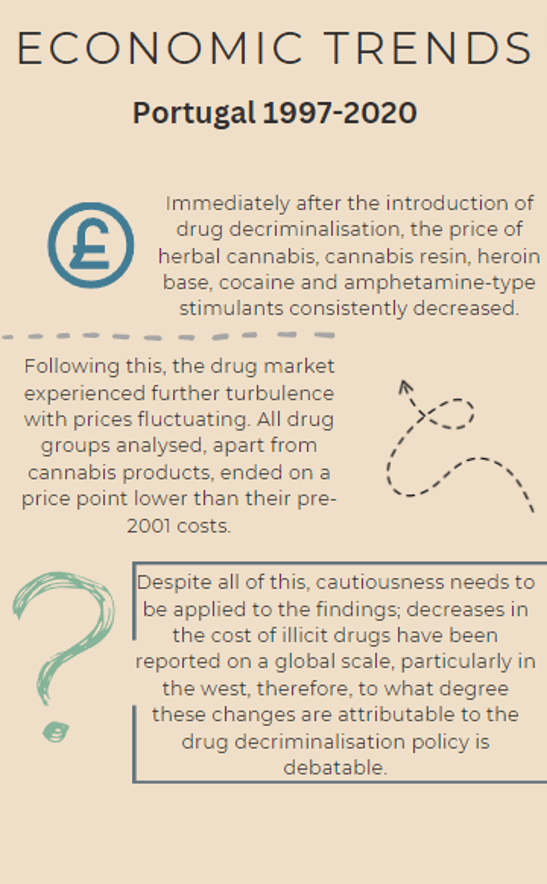
My research was about two main areas; Firstly, I wanted to assess the effects of Portugal’s 2001 drug policy whereby all illicit drugs were decriminalised, meaning drug offences relating to personal possession result in a civil punishment rather than a criminal punishment. I assessed key indicators within Portuguese society, gathering data from international, European and national databases which measured public health trends, criminal justice trends and economic trends. Some fields of data I looked at included prices of drugs at market level, drug seizure data, HIV/ AIDS rates among people who inject drugs and the Portuguese prison population.
The second part of my research involved understanding whether a drug decriminalisation policy similar to Portugal’s could currently happen in the UK. I researched this by performing a discourse analysis on drug related House of Commons debate occurring between the years 1970- 2023, selecting roughly one debate every two years. By doing this, I was able to analysis common themes across the years, understanding the political barriers which may mean drug decriminalisation is not a feasible policy idea at the moment given the political attitude and climate within the House of Commons when it comes to illicit drug policy.
What Did I Find Out?
Look through the slideshow below to view summaries of my findings.



Some Final Comments and Conclusions:
Generally, my research found that Portuguese drug decriminalisation correlated with effects that can be seen as positives. Of course, my research needs to be looked at critically, I don’t claim that all of the societal indicators are directly attributable to the drug decriminalisation policy, however, the correlations that were found are promising. Policy is always a really complex, multi-faceted topic and it would be simplistic to suggest otherwise.
So is a drug decriminalisation policy likely to happen in the UK? The short answer is probably not very likely at all. My discourse analysis pointed towards five decades of debate which was hyper focused on a law and order approach to drug use, a fixation on low level cannabis use and an insistence on the idea that deterrence measures and the war on drugs is actually working. The debates felt stagnant, with new and progressive approaches being hindered by penal populism and ‘tough on crime’ stances.
During my research I found some really interesting reads and different points of view that I hadn’t considered before. I’ve listed some of my favourite pieces below if you’d like to have a read further into this subject.
- Cebral T.S. (2017) “The 15th anniversary of the Portuguese Drug Policy: Its history, its success and its future,” Drug Science, Policy and Law, 3. https://doi.org/10.1177/2050324516683640
- Eastwood, N., Fox, E. and Rosmarin, A. (2016) “Portugal,” in A quiet revolution: Drug decriminalisation across the Globe. London, UK: Release drugs the law and human rights. https://www.release.org.uk/sites/default/files/pdf/publications/A%20Quiet%20Revolution%20-%20Decriminalisation%20Across%20the%20Globe.pdf
- Goldstein, P.J. (1985) “The drugs/violence nexus: A Tripartite Conceptual Framework,” Journal of Drug Issues, 15(4). https://doi.org/10.1177/002204268501500406
- Jacques, S. and Allen, A. (2015) “Drug market violence: Virtual anarchy, police pressure, predation, and retaliation,” Criminal Justice Review, 40(1). https://doi.org/10.1177/0734016814553266
All of the data used is available from The Hansard Archives, European Monitoring Centre for Drugs and Drug Addiction, European Centre for Disease Prevention and Control and The World Prison Brief. Also, I used Taguette to analyse my qualitative data, it’s totally free and it was so useful.

Share this:


Regulation and the Internet

*Trigger warning: article contains mentions of suicide, mental illness and self harm in regard to a recent news article*
It seems that internet usage, regulation and monitoring can be a divisive topic for some. The internet can be a fantastic tool for learning, communicating and employment, among other things. However, as with everything, there is a dark side to it. I once watched a video about the internet and regulation, the narrator likened internet usage to when people drove cars with no seatbelts. The world now has this wonderful tool, with little to no effective safety mechanisms, and with many young people, and vulnerable people being able to view harmful content without regulation, we are seeing extreme and negative repercussions.
I think one of the main appeals of the internet is the inherent freedom that it gives the user, the key word here is freedom. It seems that some people believe that unregulated usage of the internet is now an inherent part of their freedoms. This is perhaps why attempting to further regulate usage could result in disagreement and objection. The topic of internet regulation is a very nuanced topic; it toes the line of freedom and restriction and profit and protection. Algorithms are one way that social media companies can prolong the amount of time a person is scrolling through their newsfeed, for example: If you ‘liked’ a picture of a cat, it is more likely that related content would then be shown to you. For social media companies, more engagement equals more money. The algorithmic style of newsfeeds seems great in theory but they can become harmful. If we replace viewing cat content on Instagram with viewing suicide related content, we can see how this can become very problematic very quickly.
Questions concerning the ‘wild west’ type environment that is the internet are becoming more common. With the recent inquest concerning the suicide of Molly Russel, these questions are even more relevant. Molly Russel saved thousands of images related to self harm and suicide months before her death, posts also included some promoting depressive content and encouragement to not seek the help from a mental health professional. Tech giant Meta’s response in the inquest was that the majority of these posts did not breach their social media posting guidelines (they conceded a few did breach the rules). Their response totally contradicts the reactions of those present at the court, with Molly Russel’s father stating that these images were graphic, dark and harmful. With mental health resources already being stretched beyond capacity, this unregulated environment that is legally accessible to children will surely exacerbate these problems. Molly Russel’s experience will not be the only one, thousands of vulnerable and impressionable people, young and old experience similar things and view similar medias. Whether it be accessing pro-anorexia content, content which promotes weapons and violence or content which advocates for avoiding professional mental health support.
The repercussions of an ineffectively regulated internet are unmeasured and the continuation of this deregulation is for the pursuit of profit fuelled by misguided ideas about what freedom of action and freedom of expression mean.
Share this:


Fifty Pounds Per Child Per Year

Usually I consume my news through the BBC app, although occasionally I enjoy getting the run down of political affairs from the horses mouth, so to speak. Often I watch the Prime Ministers Questions, getting riled up at the majority of topics raised. However, yesterday (9/06/21), I found myself getting particularly outraged and passionate at a certain issue that has also been highly reported in the news.
Earlier last week, the Prime Minister outlined his Covid recovery package for schools, he pledged £1.4bn to enable students to catch up on the work, education and socialisation that has been missed. The controversy appears when comparing this figure to £13.5bn, originally suggested by Education Policy Institute (Education Policy Institute, 2021). To put it into perspective, £1.4bn equates to about £50 per child, per year- apparently you certainly can put a price on children’s education. Even with Johnson’s additional £1bn funding that will stretch across the next three years, the ‘recovery’ package is frankly laughable, it was a move that saw the education recovery commissioner, Kevan Collins, resign in protest.
Putting funding and economics aside, I think that this was a prime example of how the importance of education is once again, being forgotten. The potential power of the education system is not being utilised by any means. Politicians are still not realising that education reform doesn’t have to mean tougher discipline and it doesn’t have to mean more Ofsted checks and it certainly doesn’t have to mean more stressful, ‘rigorous testing’ of students, something which former education secretary Michael Gove pushed for in 2013 (Adams, 2013).
“Simply making exams harder does not guarantee higher standards nor mean that students will be prepared for a job.”
~ Brian Lightman (Adams, 2013)
Forcing misbehaved children out of school through punitive disciplinary actions, suspensions and exclusions simply puts them on the road to loosing faith in the education system and increases their likely hood of antisocial behaviour, which can lead to criminal careers later in life. The importance of creating an educational environment that students actually want to be a part of cannot be understated.
Furthermore, the importance of altering the current curriculum is completely overlooked. School has the potential to give children and teenagers the ability to have more autonomy over so many aspects of their later life; adequate lessons about political ideology, history and the voting system, done in an accessible way, has the potential to raise more politically aware, inclined individuals that feel equipped to engage and participate in the democratic process on a local and national scale.
Appropriate finance and law classes could eventually go on to raise a higher number of adults who feel able to handle their money situations in a better, healthier way; they could also begin to understand their rights and the court processes better. Finally, focusing on the decolonisation of the curriculum could allow ethnic minorities and other marginalised demographics to learn about their ancestors, history and culture in a more mainstream, impartial way. The impacts of restructuring the standard and the content of the schooling curriculum could have an abundance of benefits, not only to individuals but to society itself.
However, with no clear moves for the education secretary to explore theses benefits further and implement any changes, along with the promised £50 per pupil, per year, it is evident that the potential power of the education system has once again been understated and that, education is, indeed, not a priority for the current government.
Adams, R., 2013. GCSEs to become more demanding and rigorous, says Michael Gove. [online] The Guardian. Available at: <https://www.theguardian.com/education/2013/jun/11/gcse-demanding-rigorous-michael-gove>
Education Policy Institute. 2021. EPI responds to the government’s new education recovery package – Education Policy Institute. [online] Available at: <https://epi.org.uk/comments/epi-responds-to-the-governments-new-education-recovery-package/>
A link for the Prime Minister’s Questions episode: https://m.youtube.com/watch?v=zQkiEAZ2oh0&feature=youtu.be
A link for the Prime Minister’s Question with BSL: https://youtu.be/ZgcnQqbChZs
Share this:


#ReadingForCriminologists: The End Of Policing- Alex S.Vitale
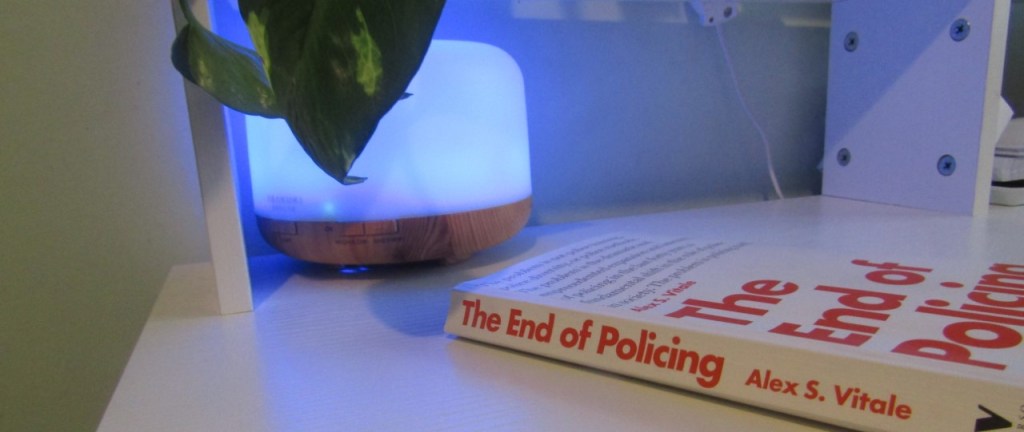
During the past year, like many, I have certainly had more time on my hands, I’ve started a plethora of hobbies (some more successful than others) but a constant past time for me has been reading. In the past I’ve sporadically read a few classic fiction books but this year that I’ve been focusing on nonfiction literature.
This book focuses mainly on the American police force in a historical and contemporary context. The book tackles some of the big topics in current policing such as the school to prison pipeline, the war on drugs, prostitution and mental health. In each chapter, the author critiques current policing strategy and gives recommendations towards effective reform.
My Thoughts
Of course, it is important to note that this book comments on American policing strategies and discusses social issues from a western, North American perspective. However, the book at times, does become relevant to UK topics. Comments about the war on drugs, the criminalisation of the homeless, immigrants and prostitutes and political policing are some examples.
“Tactical equipment with semi-automatic weapons”
Vitale, A., 2018. The end of policing. Verso Books, p.65.
There was one main part in the book that stuck out to me. In the School to Prison Pipeline chapter, the author gives a quote from an annual convention held for police officers based on school sites (known as Resource Officers). The book says it mainly consists of military contractors selling security systems to schools, a keynote speaker, specialising in anti-terrorism describes American schools as all containing ‘the next Columbine’, that every officer must be a ‘one-man fighting force’ and that police officers in schools must always wear full ‘tactical equipment with semi-automatic weapons’.
The author used this example in an extremely effective way, commenting on how the very nature of policing must change. It was written that currently, the police force is inherently a force and that the ethos of policing along with the ‘warrior mentality’ is part of the reason that policing in America is not as effective and beneficial as it could be to its citizens and communities.
With the continuation of social and racial unrest in America, the topics raised in the book could not be more relevant. The most interesting thing about this book was that it presented concepts and opinions I had never thought of before, and whether or not I was in agreement with the points raised, it became an extremely thought provoking read.
I guess that if escapism is more of your reasoning for reading this, perhaps, isn’t the book for you. The author speaks about the harsh reality that certain communities face when it comes to American policing and society.

Some Main Takeaways
Since beginning to take a greater interest in nonfiction books, I’ve realised how beneficial it is to to take note of differing opinions. The beauty in any social science is that one topic can have many opinions attached to it and often, opinions that differ from your own can be the most interesting and thought provoking ones. On the whole, the author presented quite a lot of concepts that I agree with, which made for a passionate read and the opinions I did not agree with, opened up opportunity to research and further understand.
This book has called into question some of my own opinions and thoughts around police reform. Perhaps more police training, more funding and education within the police force cannot fix an institution that was formed to essentially supress and control some of the most marginalised and disadvantaged groups of people.

 Thoughts from the criminology team