
Home » Articles posted by Paula Bowles (Page 8)
Author Archives: Paula Bowles

Come Together
For much of the year, the campus is busy. Full of people, movement and voice. But now, it is quiet… the term is over, the marking almost complete and students and staff are taking much needed breaks. After next week’s graduations, it will be even quieter. For those still working and/or studying, the campus is a very different place.
This time of year is traditionally a time of reflection. Weighing up what went well, what could have gone better and what was a disaster. This year is no different, although the move to a new campus understandably features heavily. Some of the reflection is personal, some professional, some academic and in many ways, it is difficult to differentiate between the three. After all, each aspect is an intrinsic part of my identity.
Over the year I have met lots of new people, both inside and outside the university. I have spent many hours in classrooms discussing all sorts of different criminological ideas, social problems and potential solutions, trying always to keep an open mind, to encourage academic discourse and avoid closing down conversation. I have spent hour upon hour reading student submissions, thinking how best to write feedback in a way that makes sense to the reader, that is critical, constructive and encouraging, but couched in such a way that the recipient is not left crushed. I listened to individuals talking about their personal and academic worries, concerns and challenges. In addition, I have spent days dealing with suspected academic misconduct and disciplinary hearings.
In all of these different activities I constantly attempt to allow space for everyone’s view to be heard, always with a focus on the individual, their dignity, human rights and social justice. After more than a decade in academia (and even more decades on earth!) it is clear to me that as humans we don’t make life easy for ourselves or others. The intense individual and societal challenges many of us face on an ongoing basis are too often brushed aside as unimportant or irrelevant. In this way, profound issues such as mental and/or physical ill health, social deprivation, racism, misogyny, disablism, homophobia, ageism and many others, are simply swept aside, as inconsequential, to the matters at hand.
Despite long standing attempts by politicians, the media and other commentators to present these serious and damaging challenges as individual failings, it is evident that structural and institutional forces are at play. When social problems are continually presented as poor management and failure on the part of individuals, blame soon follows and people turn on each other. Here’s some examples:
Q. “You can’t get a job?”
A “You must be lazy?”
Q. “You’ve got a job but can’t afford to feed your family?
A. “You must be a poor parent who wastes money”
Q. “You’ve been excluded from school?”
A. “You need to learn how to behave?”
Q. “You can’t find a job or housing since you came out of prison?”
A. “You should have thought of that before you did the crime”
Each of these questions and answers sees individuals as the problem. There is no acknowledgement that in twenty-first century Britain, there is clear evidence that even those with jobs may struggle to pay their rent and feed their families. That those who are looking for work may struggle with the forces of racism, sexism, disablism and so on. That the reasons for criminality are complex and multi-faceted, but it is much easier to parrot the line “you’ve done the crime, now do the time” than try and resolve them.
This entry has been rather rambling, but my concluding thought is, if we want to make better society for all, then we have to work together on these immense social problems. Rather than focus on blame, time to focus on collective solutions.
Share this:

Documenting inequality: how much evidence is needed to change things?
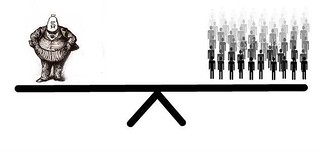
In our society, there is a focus on documenting inequality and injustice. In the discipline of criminology (as with other social sciences) we question and read and take notes and count and read and take more notes. We then come to an evidence based conclusion; yes, there is definite evidence of disproportionality and inequality within our society. Excellent, we have identified and quantified a social problem. We can talk and write, inside and outside of that social problem, exploring it from all possible angles. We can approach social problems from different viewpoints, different perspectives using a diverse range of theoretical standpoints and research methodologies. But what happens next? I would argue that in many cases, absolutely nothing! Or at least, nothing that changes these ingrained social problems and inequalities.
Even the most cursory examination reveals discrimination, inequality, injustice (often on the grounds of gender, race, disability, sexuality, belief, age, health…the list goes on), often articulated, the subject of heated debate and argument within all strata of society, but remaining resolutely insoluble. It is as if discrimination, inequality and injustice were part and parcel of living in the twenty-first century in a supposedly wealthy nation. If you don’t agree with my claims, look at some specific examples; poverty, gender inequality in the workplace, disproportionality in police stop and search and the rise of hate crime.
- Three years before the end of World War 2, Beveridge claimed that through a minor redistribution of wealth (through welfare schemes including child support) poverty ‘could have been abolished in Britain‘ prior to the war (Beveridge, 1942: 8, n. 14)
- Yet here we are in 2019 talking about children growing up in poverty with claims indicating ‘4.1 million children living in poverty in the UK’. In addition, 1.6 million parcels have been distributed by food banks to individuals and families facing hunger
- There is legal impetus for companies and organisations to publish data relating to their employees. From these reports, it appears that 8 out of 10 of these organisations pay women less than men. In addition, claims that 37% of female managers find their workplace to be sexist are noted
- Disproportionality in stop and search has long been identified and quantified, particularly in relation to young black males. As David Lammy’s (2017) Review made clear this is a problem that is not going away, instead there is plenty of evidence to indicate that this inequality is expanding rather than contracting
- Post-referendum, concerns were raised in many areas about an increase in hate crime. Most attention has focused on issues of race and religion but there are other targets of violence and intolerance
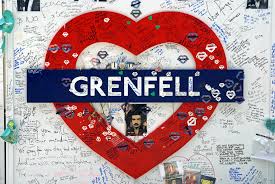
These are just some examples of inequality and injustice. Despite the ever-increasing data, where is the evidence to show that society is learning, is responding to these issues with more than just platitudes? Even when, as a society, we are faced with the horror of Grenfell Tower, exposing all manner of social inequalities and injustices no longer hidden but in plain sight, there is no meaningful response. Instead, there are arguments about who is to blame, who should pay, with the lives of those individuals and families (both living and dead) tossed around as if they were insignificant, in all of these discussions.
As the writer Pearl S. Buck made explicit
‘our society must make it right and possible for old people not to fear the young or be deserted by them, for the test of a civilization is in the way that it cares for its helpless members’ (1954: 337).
If society seriously wants to make a difference the evidence is all around us…stop counting and start doing. Start knocking down the barriers faced by so many and remove inequality and injustice from the world. Only then can we have a society which we all truly want to belong to.
Selected bibliography
Beveridge, William, (1942), Report of the Inter-Departmental Committee on Social Insurance and Allied Services, (HMSO: London)
Buck, Pearl S. (1954), My Several Worlds: A Personal Record, (London: Methuen)
Lammy, David, (2017), The Lammy Review: An Independent Review into the Treatment of, and Outcomes for, Black, Asian and Minority Ethnic Individuals in the Criminal Justice System, (London: Ministry of Justice)
Share this:


Who cares what I think?

Erzsébet Korb (1923) Girl’s Portrait (Thinker; Contemplation)
The other week, I went for a meal with a friend. The food was lovely, the staff and environment welcoming and friendly and company, fabulous. A couple of days later I was thinking about that evening and I wondered why I had not felt the need to write some positive feedback on google, or similar. The answer was because I felt that I and my dining companion, had expressed our pleasure both in word and deed (the plates were clean!). Thus, the relationship between diners and restaurant staff had been overwhelmingly positive and this had been expressed by both.
However, wherever we go nowadays, we are regularly confronted by requests for feedback; “how is my driving?”, “did you enjoy your meal?” “would you recommend our services to others”? Often these questions are accompanied by Likert scales, so we can record our opinion on almost everything. Sometimes we might take some time to consider the options, other times we might just tick random boxes, more usually (if I’m anything to go by) I just don’t engage with such requests. Despite their often-jolly appearance, these questions are not harmless, they have an impact, most usually to measure individuals’ performances.
Whether we engage with such requests or not, we do not question whether we are well-placed to judge. So, for instance, as a driver of probably one of the smallest cars on the market (that’s me!), I’m expected to be able to mark the driver of a lorry. Or someone, who has the cooking know-how of a small child (I speak for myself again!) is expected to form an opinion on a dish prepared by a trained chef, these questions are hardly fair. More importantly, my answers are meaningless; whilst I might respond “the lorry appeared to take the corner a bit wide”, I have neither knowledge or understanding of the turning circle of a 32-tonne lorry. Similarly, my thoughts about the heat of a Bangladeshi biryani or the sweetness of a mille-feuille is neither here nor there. Given I can neither drive a lorry nor cook these wonderful dishes, who am I to voice an opinion?
Of course, there are times when it is necessary to voice an opinion, the lorry driver is behaving in a dangerous manner liable to cause an accident, or the restaurant is serving rancid or rotten food; both scenarios likely to involve serious harm. However, these concerns would need to be raised immediately, either by alerting the police (in the case of the lorry) or the management of the restaurant. In the case of the latter, you may also feel it necessary to contact environmental health if you felt that your complaint had not been addressed or you had concerns about the hygiene of the restaurant in general. However, these types of problems are largely outside the feedback requested.
In many of the scenarios/environments we are asked to comment on, we are in a relationship with the other party. Take the restaurant; if I am friendly and polite to the staff, I can expect a reciprocal relationship. If I am rude and aggressive, is it any wonder staff behave in a different way. They are constrained by their professions to focus on customer service, but this should not lay them open to abuse. Whilst the old adage “the customer is always right” might be an excellent baseline, it is not possible for this always to be the case. As someone who has spent a previous lifetime working in retail, sometimes the customer can be obtuse, rude or even downright, ignorant and abusive. Adherence to such an adage, at all costs, can only open the way for abuse.
But what about those feedback forms? On a bad day, in a rash moment, or because I’m bored, I decide to complete one of these forms. The waiter kept me waiting, the food was too spicy, I didn’t like the feedback I was given on my job application, my essay was critiqued, my teeth haven’t been flossed regularly, I didn’t like the book recommended to me by the librarian or the book seller, I can’t believe my line manager has turned down my application for annual leave. I can easily demonstrate my unhappiness with the situation with a few judiciously placed ticks, circles or smiley/sad faces. Can I say the waiter, the chef, the HR professional, the lecturer, the dentist, the librarian, the book seller and my line manager are performing poorly? Can I say they are unprofessional, unprepared, untrained, lacking in knowledge or skills or just plain wrong? And if I do, is that fair or just? Furthermore, am I happy to be subject to the same judgement from people who do not share my experiences; professional or otherwise? Remember too much of this bad feedback, however flippant and lacking in evidence it may be, may lead to disciplinary action, including dismissal.
There is an oft-cited, albeit crude, truth: “Opinions are like arseholes; everyone has one”! Ultimately, whether we choose to share (either) in public is up to us! Think carefully before ticking those boxes and encourage others to do the same. Who knows, someone may well be ticking boxes about you!
Share this:


Celebrations and Commemorations: What to remember and what to forget

Today is Good Friday (in the UK at least) a day full of meaning for those of the Christian faith. For others, more secularly minded, today is the beginning of a long weekend. For Blur (1994), these special days manifest in a brief escape from work:
Bank holiday comes six times a year
Days of enjoyment to which everyone cheers
Bank holiday comes with six-pack of beer
Then it’s back to work A-G-A-I-N
(James et al., 1994).
However, you choose to spend your long weekend (that is, if you are lucky enough to have one), Easter is a time to pause and mark the occasion (however, you might choose). This occasion appears annually on the UK calendar alongside a number other dates identified as special or meaningful; Bandi Chhorh Divas, Christmas, Diwali, Eid al-Adha, Father’s Day, Guys Fawkes’ Night, Hallowe’en, Hanukkah, Hogmanay, Holi, Mothering Sunday, Navaratri, Shrove Tuesday, Ramadan, Yule and so on. Alongside these are more personal occasions; birthdays, first days at school/college/university, work, graduations, marriages and bereavements. When marked, each of these days is surrounded by ritual, some more elaborate than others. Although many of these special days have a religious connection, it is not uncommon (in the UK at least) to mark them with non-religious ritual. For example; putting a decorated tree in your house, eating chocolate eggs or going trick or treating. Nevertheless, many of these special dates have been marked for centuries and whatever meanings you apply individually, there is an acknowledgement that each of these has a place in many people’s lives.
Alongside these permanent fixtures in the year, other commemorations occur, and it is here where I want to focus my attention. Who decides what will be commemorated and who decides how it will be commemorated? For example; Armistice Day which in 2018 marked 100 years since the end of World War I. This commemoration is modern, in comparison with the celebrations I discuss above, yet it has a set of rituals which are fiercely protected (Tweedy, 2015). Prior to 11.11.18 I raised the issue of the appropriateness of displaying RBL poppies on a multi-cultural campus in the twenty-first century, but to no avail. This commemoration is marked on behalf of individuals who are no longing living. More importantly, there is no living person alive who survived the carnage of WWI, to engage with the rituals. Whilst the sheer horror of WWI, not to mention WWII, which began a mere 21 years later, makes commemoration important to many, given the long-standing impact both had (and continue to have). Likewise, last year the centenary of (some) women and men gaining suffrage in the UK was deemed worthy of commemoration. This, as with WWI and WWII, was life-changing and had profound impact on society, yet is not an annual commemoration. Nevertheless, these commemoration offer the prospect of learning from history and making sure that as a society, we do much better.
Other examples less clear-cut include the sinking of RMS Titanic on 15 April 1912 (1,503 dead). An annual commemoration was held at Belfast’s City Hall and paying guests to the Titanic Museum could watch A Night to Remember. This year’s anniversary was further marked by the announcement that plans are afoot to exhume the dead, to try and identify the unknown victims. Far less interest is paid in her sister ship; RMS Lusitania (sank 1915, 1,198 dead). It is difficult to understand the hold this event (horrific as it was) still has and why attention is still raised on an annual basis. Of course, for the families affected by both disasters, commemoration may have meaning, but that does not explain why only one ship’s sinking is worthy of comment. Certainly it is unclear what lessons are to be learnt from this disaster.
Earlier this week, @anfieldbhoy discussed the importance of commemorating the 30th anniversary of the Hillsborough Disaster. This year also marks 30 years since the publication of MacPherson (1999) and Monday marks the 26th anniversary of Stephen Lawrence’s murder. In less than two months it will two years since the horror of Grenfell Tower. All of these events and many others (the murder of James Bulger, the shootings of Jean Charles de Menezes and Mark Duggan, the Dunblane and Hungerford massacres, to name but a few) are familiar and deemed important criminologically. But what sets these cases apart? What is it we want to remember? In the cases of Hillsborough, Lawrence and Grenfell, I would argue this is unfinished business and these horrible events remind us that, until there is justice, there can be no end.
However, what about Arthur Clatworthy? This is a name unknown to many and forgotten by most. Mr Clatworthy was a 20-year-old borstal boy, who died in Wormwood Scrubs in 1945. Prior to his death he had told his mother that he had been assaulted by prison officers. In the Houses of Parliament, the MP for Shoreditch, Mr Thurtle told a tale, familiar to twenty-first century criminologists, of institutional violence. If commemoration was about just learning from the past, we would all be familiar with the death of Mr Clatworthy. His case would be held up as a shining example of how we do things differently today, how such horrific events could never happen again. Unfortunately, that is not the case and Mr Clatworthy’s death remains unremarked and unremarkable. So again, I ask the question: who decides what it is worthy of commemoration?
Selected Bibliography:
James, Alexander, Rowntree, David, Albarn, Damon and Coxon, Graham, (1994), Bank Holiday, [CD], Recorded by Blur in Parklife, Food SBK, [RAK Studios]
Share this:


A Love Letter: in praise of poetry

Avoid loud and aggressive persons,
they are vexations to the spirit.
If you compare yourself with others,
you may become vain and bitter;
for always there will be greater and lesser persons than yourself.
Enjoy your achievements as well as your plans
(Max Ehrmann, 1927)
Last week marked International Poetry Day (21 March 2019, to be precise) and it seems only right to consider this form of narrative in more detail. When I was younger (so much younger than today)[i] poetry left me rather cold. Why read short, seemingly impenetrable bursts of language when you could read whole books? To me, it seemed as if poetry was simply lyrics that no-one had got around to putting music to.[ii] Looking back, this may have been the folly of youth, alternatively, I simply was unable at that time to see the value, the beauty of poetry, both written and spoken.
Poetry isn’t meant to be consumed whole, like fast food to be gobbled in between anything and everything else, fuel to get you through the day. Neither is it like googling facts, just enough to enable you to know what you need to know at that instant. Instead, it’s meant to be savoured, to stay with you; like many good things in life, it takes time to ponder and digest. In turn, it takes on its own distinct and entirely personal meaning. It offers the opportunity for all of us, individually, to reflect, ruminate and interpret, at our own pace, according to our own place in time and space. The extract which opens this entry comes from Desiderata which carries particular resonance for me and my academic journey. It may or may not do the same for you, but it’s worth having a look at the entirety of the text, just in case.
An obvious criminological place to start to explore poetry, was always a favourite. Long before I discovered criminology, I discovered the work of Oscar Wilde (1854-1900). Starting with his novels, it wasn’t long before I stumbled upon his Ballad of Reading Gaol. With its haunting refrain; ‘each man kills the thing he loves’ it is difficult not to captured by its innate melody, as well as the story of the murderous soldier. After studying criminology and spending time in prison (albeit not serving a sentence), the verses take on a different dimension. It is difficult not to be moved by his description of the horror of the prison, even more so, given his practical experience of surviving in this hostile and unforgiving environment:
With sudden shock the prison-clock
Smote on the shivering air,
And from all the gaol rose up a wail
Of impotent despair,
Like the sound that frightened marshes hear
From a leper in his lair
(Oscar Wilde, 1898)
On the surface, poets like the Greek, civil servant C. P. Cavafy (1863-1933) have nothing to say about my life, yet his words make my heart ache. Cavafy’s tale of a mystical and mythical journey to Ithaka which seems to me to represent my educational journey in ways that I am only just beginning to appreciate. Replace the mythical Ithaka, with my all too real experience of doctoral study and you get the picture.
Keep Ithaka always in your mind.
Arriving there is what you’re destined for.
But don’t hurry the journey at all.
Better if it lasts for years,
so you’re old by the time you reach the island,
wealthy with all you’ve gained on the way,
not expecting Ithaka to make you rich
(C. P Cavafy, 1910/1911)
Furthermore, The Satrapy appears to represent ambition, desire and above all, the necessity of educating oneself in order to become something more. To truly realise your humanity and not just your mere existence, is a constant struggle. Cavafy’s words offer encouragement and a recognition that individual struggle is a necessity for independence of thought.
Your soul seeks other things, weeps for other things;
the praise of the public and the Sophists,
the hard-won and inestimable Well Done;
the Agora, the Theater, and the Laurels
(C. P. Cavafy, 1911)
Poets like Maya Angelou celebrate gender and race (among many other aspects), identifying intersectionality and the struggles fought and won, and the struggles still ongoing. Despite historical and contemporaneous injustice, to be able to shout from the rooftops Still I Rise in answer to the questions she poses, is truly inspirational:
Did you want to see me broken?
Bowed head and lowered eyes?
Shoulders falling down like teardrops,
Weakened by my soulful cries?
(Maya Angelou, 1978)
Likewise, Hollie McNish utilises her anger and frustration to powerful effect, targeting racism with the linguistic gymnastics and logic of Mathematics , demonstrating that immigration is one of the greatest things to happen in the UK. To really get the full force, you should watch the video!
Cos sometimes one that comes makes two
And sometimes one can add three more
And sometimes two times two is much much more
Than four
And most times immigrants bring more
Than minuses
(Hollie McNish, 2013).
To conclude, you have nothing to lose by immersing yourself in a bit of poetry, but everything to gain. The poets and poems above are just some of my favourites (what about Akala, Cooper Clarke, McGough, Plath, Tempest, Zephaniah, the list goes on) they may not be yours, but it doesn’t matter. Don’t rush it, read a little something and read it again. Let the words and imagery play around in your head. If it sings to you, try to remember the name and the poet, and you can return again and again. If it doesn’t sing to you, don’t lose hope, choose another poet and give their work a chance to inveigle its way into your life. I promise you, it will be worth it
Selected Bibliography
Angelou, Maya, (1978/1999), And Still I Rise, (8th ed.), (London: Virago Press)
Cavafy, C. P., (2010), Collected Poems, tr. from the Greek by Daniel Mendelsohn, (New York: Alfred A. Knopf)
Lennon, John and McCartney, Paul, (1965) Help!, [CD], Recorded by The Beatles in Help!. Parlophone, [s.l.], Apple
Wilde, Oscar, (1898), The Ballad of Reading Gaol by C. 3. 3., (London: Leonard Smithers)
[i] Lennon and McCartney, (1965).
[ii] Not always the case, as can be seen by the Arctic Monkey’s (2013) musical rendering of John Cooper Clarke’s I Wanna Be Yours
Share this:


Am I a criminologist? Are you a criminologist?
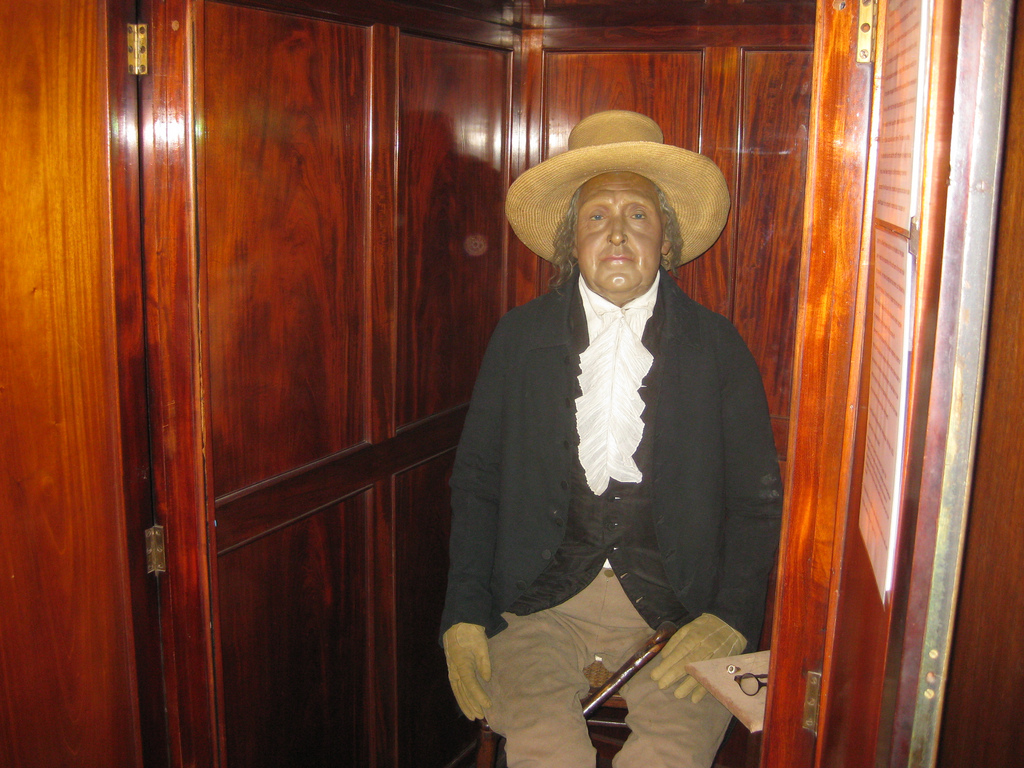
I’m regularly described as a criminologist, but more loathe to self-identify as such. My job title makes clear that I have a connection to the discipline of criminology, yet is that enough? Can any Tom, Dick or Harry (or Tabalah, Damilola or Harriet) present themselves as a criminologist, or do you need something “official” to carry the title? Is it possible, as Knepper suggests, for people to fall into criminology, to become ‘accidental criminologists’ (2007: 169). Can you be a criminologist without working in a university? Do you need to have qualifications that state criminology, and if so, how many do you need (for the record, I currently only have 1 which bears that descriptor)? Is it enough to engage in thinking about crime, or do you need practical experience? The historical antecedents of theoretical criminology indicate that it might not be necessary, whilst the existence of Convict Criminology suggests that experiential knowledge might prove advantageous….
Does it matter where you get your information about crimes, criminals and criminal justice from? For example, the news (written/electronic), magazines, novels, academic texts, lectures/seminars, government/NGO reports, true crime books, radio/podcasts, television/film, music and poetry can all focus on crime, but can we describe this diversity of media as criminology? What about personal experience; as an offender, victim or criminal justice practitioner? Furthermore, how much media (or experience) do you need to have consumed before you emerge from your chrysalis as a fully formed criminologist?
Could it be that you need to join a club or mix with other interested persons? Which brings another question; what do you call a group of criminologists? Could it be a ‘murder’ (like crows), or ‘sleuth’ (like bears), or a ‘shrewdness’ (like apes) or a ‘gang’ (like elks)? (For more interesting collective nouns, see here). Organisations such as the British, European and the American Criminology Societies indicate that there is a desire (if not, tradition) for collectivity within the discipline. A desire to meet with others to discuss crime, criminality and criminal justice forms the basis of these societies, demonstrated by (the publication of journals and) conferences; local, national and international. But what makes these gatherings different from people gathering to discuss crime at the bus stop or in the pub? Certainly, it is suggested that criminology offers a rendezvous, providing the umbrella under which all disciplines meet to discuss crime (cf. Young, 2003, Lea, 2016).
Is it how you think about crime and the views you espouse? Having been subjected to many impromptu lectures from friends, family and strangers (who became aware of my professional identity), not to mention, many heated debates with my colleagues and peers, it seems unlikely. A look at this blog and that of the BSC, not to mention academic journals and books demonstrate regular discordance amongst those deemed criminologists. Whilst there are commonalities of thought, there is also a great deal of dissonance in discussions around crime. Therefore, it seems unlikely that a group of criminologists will be able to provide any kind of consensus around crime, criminality and criminal justice.
Mannheim proposed that criminologists should engage in ‘dangerous thoughts’ (1965: 428). For Young, such thinking goes ‘beyond the immediate and the pragmatic’ (2003: 98). Instead, ‘dangerous thoughts’ enable the linking of ‘crime and penality to the deep structure of society’ (Young, 2003: 98). This concept of thinking dangerously and by default, not being afraid to think differently, offers an insight into what a criminologist might do.
I don’t have answers, only questions, but perhaps it is that uncertainty which provides the defining feature of a criminologist…
References:
Knepper Paul, (2007), Criminology and Social Policy, (London: Sage)
Lea, John, (2016), ‘Left Realism: A Radical Criminology for the Current Crisis’, International Journal for Crime, Justice and Social Democracy, 5, 3: 53-65
Mannheim, Hermann, (1965), Comparative Criminology: A Textbook: Volume 2, (London: Routledge and Kegan Paul)
Young, Jock, (2003), ‘In Praise of Dangerous Thoughts,’ Punishment and Society, 5, 1: 97-107
Share this:


We Want Equality! When do we want it?

I’ve been thinking a lot about equality recently. It is a concept bandied around all the time and after all who wouldn’t want equal life opportunities, equal status, equal justice? Whether we’re talking about gender, race, sexual orientation, disability, age, marital status. religion, sex or maternity (all protected characteristics under the Equality Act, 2010) the focus is apparently on achieving equality. But equal to what? If we’re looking for equivalence, how as a society do we decide a baseline upon which we can measure equality? Furthermore, do we all really want equality, whatever that might turn out to be?
Arguably, the creation of the ‘Welfare State’ post-WWII is one of the most concerted attempts (in the UK, at least) to lay foundations for equality.[1] The ambition of Beveridge’s (1942) Report of the Inter-Departmental Committee on Social Insurance and Allied Services was radical and expansive. Here is a clear attempt to address, what Beveridge (1942) defined as the five “Giant Evils” in society; ‘squalor, ignorance, want, idleness, and disease’. These grand plans offer the prospect of levelling the playing field, if these aims could be achieved, there would be a clear step toward ensuring equality for all. Given Beveridge’s (1942) background in economics, the focus is on numerical calculations as to the value of a pension, the cost of NHS treatment and of course, how much members of society need to contribute to maintain this. Whilst this was (and remains, even by twenty-first century standards) a radical move, Beveridge (1942) never confronts the issue of equality explicitly. Instead, he identifies a baseline, the minimum required for a human to have a reasonable quality of life. Of course, arguments continue as to what that minimum might look like in the twenty-first century. Nonetheless, this ground-breaking work means that to some degree, we have what Beveridge (1942) perceived as care ‘from cradle to grave’.
Unfortunately, this discussion does not help with my original question; equal to what? In some instances, this appears easier to answer; for example, adults over the age of 18 have suffrage, the age of sexual consent for adults in the UK is 16. But what about women’s fight for equality, how do we measure this? Equal pay legislation has not resolved the issue, government policy indicates that women disproportionately bear the negative impact of austerity. Likewise, with race equality, whether you look at education, employment or the CJS there is a continuing disproportionate negative impact on minorities. When you consider intersectionality, many of these inequalities are heaped one on top of the other. Would equality be represented by everyone’s life chances being impacted in the same way, regardless of how detrimental we know these conditions are? Would equality mean that others have to lose their privilege, or would they give it up freely?
Unfortunately, despite extensive study, I am no closer to answering these questions. If you have any ideas, let me know.
References
Beveridge, William, (1942), Report of the Inter-Departmental Committee on Social Insurance and Allied Services, (HMSO: London)
The Equality Act, 2010, (London: TSO)
[1] Similar arguments could be made in relation to Roosevelt’s “New Deal” in the USA.
Share this:


Goodbye 2018….Hello 2019

Now that the year is almost over, it’s time to reflect on what’s gone before; the personal, the academic, the national and the global. This year, much like every other, has had its peaks and its troughs. The move to a new campus has offered an opportunity to consider education and research in new ways. Certainly, it has promoted dialogue in academic endeavour and holds out the interesting prospect of cross pollination and interdisciplinarity.
On a personal level, 2018 finally saw the submission of my doctoral thesis. Entitled ‘The Anti-Thesis of Criminological Research: The case of the criminal ex-servicemen,’ I will have my chance to defend this work, so still plenty of work to do.
For the Criminology team, we have greeted a new member; Jessica Ritchie and congratulated the newly capped Dr Susie Atherton. Along the way there may have been plenty of challenges, but also many opportunities to embrace and advance individual and team work. In September 2018 we greeted a bumper crop of new apprentice criminologists and welcomed back many familiar faces. The year also saw Criminology’s 18th birthday and our first inaugural “Big Criminology Reunion”. The chance to catch up with graduates was fantastic and we look forward to making this a regular event. Likewise, the fabulous blog entries written by graduates under the banner of “Look who’s 18” reminded us all (if we ever had any doubt) of why we do what we do.
Nationally, we marked the centenaries of the end of WWI and the passing of legislation which allowed some women the right to vote. This included the unveiling of two Suffragette statues; Millicent Fawcett and Emmeline Pankhurst. The country also remembered the murder of Stephen Lawrence 25 years earlier and saw the first arrests in relation to the Hillsborough disaster, All of which offer an opportunity to reflect on the behaviour of the police, the media and the State in the debacles which followed. These events have shaped and continue to shape the world in which we live and momentarily offered a much-needed distraction from more contemporaneous news.
For the UK, 2018 saw the start of the Grenfell Tower Inquiry, the Windrush scandal, the continuing rise of the food bank, the closure of refuges, the iniquity of Universal Credit and an increase in homelessness, symptoms of the ideological programmes of “austerity” and maintaining a “hostile environment“. All this against a backdrop of the mystery (or should that be mayhem) of Brexit which continues to rumble on. It looks likely that the concept of institutional violence will continue to offer criminologists a theoretical lens to understand the twenty-first century (cf. Curtin and Litke, 1999, Cooper and Whyte, 2018).
Internationally, we have seen no let-up in global conflict, the situation in Afghanistan, Iraq, Myanmar, Syria, Yemen (to name but a few) remains fraught with violence. Concerns around the governments of many European countries, China, North Korea and USA heighten fears and the world seems an incredibly dangerous place. The awarding of the Nobel Peace Prize to Denis Mukwege and Nadia Murad offers an antidote to such fears and recognises the powerful work that can be undertaken in the name of peace. Likewise the deaths of Professor Stephen Hawking and Harry Leslie Smith, both staunch advocates for the NHS, remind us that individuals can speak out, can make a difference.
To my friends, family, colleagues and students, I raise a glass to the end of 2018 and the beginning of 2019:
‘Let’s hope it’s a good one, without any fear’ (Lennon and Ono, 1974).
References:
Cooper, Vickie and Whyte, David, (2018), ‘Grenfell, Austerity and Institutional Violence,’ Sociological Research Online, 00, 0: 1-10
Curtin, Deane and Litke, Robert, (1999) (Eds), Institutional Violence, (Amsterdam: Rodopi)
Lennon, John and Ono, Yoko, (1974) Happy Xmas (War is Over), [CD], Recorded by John and Yoko: Plastic Ono Band in Shaved Fish. PCS 7173, [s.l.], Apple
Share this:


Have you been radicalised? I have

On Tuesday 12 December 2018, I was asked in court if I had been radicalised. From the witness box I proudly answered in the affirmative. This was not the first time I had made such a public admission, but admittedly the first time in a courtroom. Sounds dramatic, but the setting was the Sessions House in Northampton and the context was a Crime and Punishment lecture. Nevertheless, such is the media and political furore around the terms radicalisation and radicalism, that to make such a statement, seems an inherently radical gesture.
So why when radicalism has such a bad press, would anyone admit to being radicalised? The answer lies in your interpretation, whether positive or negative, of what radicalisation means. The Oxford Dictionary (2018) defines radicalisation as ‘[t]he action or process of causing someone to adopt radical positions on political or social issues’. For me, such a definition is inherently positive, how else can we begin to tackle longstanding social issues, than with new and radical ways of thinking? What better place to enable radicalisation than the University? An environment where ideas can be discussed freely and openly, where there is no requirement to have “an elephant in the room”, where everything and anything can be brought to the table.
My understanding of radicalisation encompasses individuals as diverse as Edith Abbott, Margaret Atwood, Howard S. Becker, Fenner Brockway, Nils Christie, Angela Davis, Simone de Beauvoir, Paul Gilroy, Mona Hatoum, Stephen Hobhouse, Martin Luther King Jr, John Lennon, Primo Levi, Hermann Mannheim, George Orwell, Sylvia Pankhurst, Rosa Parks, Pablo Picasso, Bertrand Russell, Rebecca Solnit, Thomas Szasz, Oscar Wilde, Virginia Woolf, Benjamin Zephaniah, to name but a few. These individuals have touched my imagination because they have all challenged the status quo either through their writing, their art or their activism, thus paving the way for new ways of thinking, new ways of doing. But as I’ve argued before, in relation to civil rights leaders, these individuals are important, not because of who they are but the ideas they promulgated, the actions they took to bring to the world’s attention, injustice and inequality. Each in their own unique way has drawn attention to situations, places and people, which the vast majority have taken for granted as “normal”. But sharing their thoughts, we are all offered an opportunity to take advantage of their radical message and take it forward into our own everyday lived experience.
Without radical thought there can be no change. We just carry on, business as usual, wringing our hands whilst staring desperate social problems in the face. That’s not to suggest that all radical thoughts and actions are inherently good, instead the same rigorous critique needs to be deployed, as with every other idea. However rather than viewing radicalisation as fundamentally threatening and dangerous, each of us needs to take the time to read, listen and think about new ideas. Furthermore, we need to talk about these radical ideas with others, opening them up to scrutiny and enabling even more ideas to develop. If we want the world to change and become a fairer, more equal environment for all, we have to do things differently. If we cannot face thinking differently, we will always struggle to change the world.
For me, the philosopher Bertrand Russell sums it up best
Thought is subversive and revolutionary, destructive and terrible; thought is merciless to privilege, established institutions, and comfortable habits; thought is anarchic and lawless, indifferent to authority, careless of the well-tried wisdom of the ages. Thought looks into the pit of hell and is not afraid. It sees man, a feeble speck, surrounded by unfathomable depths of silence; yet it bears itself proudly, as unmoved as if it were lord of the universe. Thought is great and swift and free, the light of the world, and the chief glory of man (Russell, 1916, 2010: 106).
Reference List:
Russell, Bertrand, (1916a/2010), Why Men Fight, (Abingdon: Routledge)
Share this:


‘The Problem We All Live With’

The title of this blog and the picture above relate to Norman Rockwell’s (1964) painting depicting Ruby Bridges on her way to school in a newly desegregated New Orleans. In over half a century, this picture has never lost its power and remains iconic.
Attending conferences, especially such a large one as the ASC, is always food for thought. The range of subjects covered, some very small and niche, others far more longstanding and seemingly intractable, cause the little grey cells to go into overdrive. So much to talk about, so much to listen to, so many questions, so many ideas make the experience incredibly intense. However, education is neither exclusive to the conference meeting rooms nor the coffee shops in which academics gather, but is all around. Naturally, in Atlanta, as I alluded to in my previous entry this week, reminders of the civil rights movement are all around us. Furthermore, it is clear from the boarded-up shops, large numbers of confused and disturbed people wandering the streets, others sleeping rough, that many of the issues highlighted by the civil rights movement remain. Slavery and overt segregation under the Jim Crow laws may be a thing of the past, but their impact endures; the demarcation between rich and poor, Black and white is still obvious.
The message of civil rights activists is not focused on beatification; they are human beings with all their failings, but far more important and direct. To make society fairer, more just, more humane for all, we must keep moving forward, we must keep protesting and we must keep drawing attention to inequality. Although it is tempting to revere brave individuals such as Ruby Bridges, Claudette Colvin, Martin Luther King Jr, Rosa Parks, Malcolm X to name but a few, this is not an outcome any of them ascribed to. If we look at Martin Luther King Jr’s ‘“The Drum Major Instinct” Sermon Delivered at Ebenezer Baptist Church’ he makes this overt. He urges his followers not to dwell on his Nobel Peace Prize, or any of his other multitudinous awards but to remember that ‘he tried’ to end war, bring comfort to prisoners and end poverty. In his closing words, he stresses that
If I can help somebody as I pass along,
If I can cheer somebody with a word or song,
If I can show somebody he’s traveling wrong,
Then my living will not be in vain.
If I can do my duty as a Christian ought,
If I can bring salvation to a world once wrought,
If I can spread the message as the master taught,
Then my living will not be in vain.
These powerful words stress practical activism, not passive veneration. Although a staunch advocate for non-violent resistance, this was never intended as passive. The fight to improve society for all, is not over and done, but a continual fight for freedom. This point is made explicit by another civil rights activist (and academic) Professor Angela Davis in her text Freedom is a Constant Struggle. In this text she draws parallels across the USA, Palestine and other countries, both historical and contemporaneous, demonstrating that without protest, civil and human rights can be crushed.
Whilst ostensibly Black men, women and children can attend schools, travel on public transport, eat at restaurants and participate in all aspects of society, this does not mean that freedom for all has been achieved. The fight for civil rights as demonstrated by #blacklivesmatter and #metoo, campaigns to end LGBT, religious and disability discrimination, racism, sexism and to improve the lives of refugees, illustrate just some of the many dedicated to following in a long tradition of fighting for social justice, social equality and freedom.


