
Home » Articles posted by Paula Bowles (Page 2)
Author Archives: Paula Bowles

How to make a more efficient academic

Against a backdrop of successive governments’ ideology of austerity, the increasing availability of generative Artificial Intelligence [AI] has made ‘efficiency’ the top of institutional to-do-lists’. But what does efficiency and its synonym, inefficiency look like? Who decides what is efficient and inefficient? As always a dictionary is a good place to start, and google promptly advises me on the definition, along with some examples of usage.

The definition is relatively straightforward, but note it states ‘minimum wasted effort of expense’, not no waste at all. Nonetheless the dictionary does not tell us how efficiency should be measured or who should do that measuring. Neither does it tell us what full efficiency might look like, given the dictionary’s acknowledgement that there will still be time or resources wasted. Let’s explore further….
When I was a child, feeling bored, my lovely nan used to remind me of the story of James Watt and the boiling kettle and that of Robert the Bruce and the spider. The first to remind me that being bored is just a state of mind, use the time to look around and pay attention. I wouldn’t be able to design the steam engine (that invention predated me by some centuries!) but who knows what I might learn or think about. After all many millions of kettles had boiled and he was the only one (supposedly) to use that knowledge to improve the Newcomen engine. The second apocryphal tale retold by my nan, was to stress the importance of perseverance as essential for achievement. This, accompanied by the well-worn proverb, that like Bruce’s spider, if at first you don’t succeed, try, try again. But what does this nostalgic detour have to do with efficiency? I will argue, plenty!
Whilst it may be possible to make many tasks more efficient, just imagine what life would be like without the washing machine, the car, the aeroplane, these things are dependent on many factors. For instance, without the ready availability of washing powder, petrol/electricity, airports etc, none of these inventions would survive. And don’t forget the role of people who manufacture, service and maintain these machines which have made our lives much more efficient. Nevertheless, humans have a great capacity for forgetting the impact of these efficiencies, can you imagine how much labour is involved in hand-washing for a family, in walking or horse-riding to the next village or town, or how limited our views would be without access (for some) to the world. We also forget that somebody was responsible for these inventions, beyond providing us with an answer to a quiz question. But someone, or groups of people, had the capacity to first observe a problem, before moving onto solving that problem. This is not just about scientists and engineers, predominantly male, so why would they care about women’s labour at the washtub and mangle?
This raises some interesting questions around the 20th century growth and availability of household appliances, for example, washing machines, tumble driers, hoovers, electric irons and ovens, pressure cookers and crock pots, the list goes on and on. There is no doubt, with these appliances, that women’s labour has been markedly reduced, both temporally and physically and has increased efficiency in the home. But for whose benefit? Has this provided women with more leisure time or is it so that their labour can be harnessed elsewhere? Research would suggest that women are busier than ever, trying to balance paid work, with childcare, with housekeeping etc. So we can we really say that women are more efficient in the 21st century than in previous centuries, it seems not. All that has really happened is that the work they do has changed and in many ways, is less visible.
So what about the growth in technology, not least, generative AI? Am I to believe, as I was told by Tomorrow’s World when growing up, that computers would improve human lives immensely heralding the advent of the ‘leisure age’? Does the increase in generative AI such as ChatGPT, mark a point where most work is made efficient? Unfortunately, I’ve yet to see any sign of the ‘leisure age’, suggesting that technology (including AI) may add different work, rather than create space for humans to focus on something more important.
I have academic colleagues across the world, who think AI is the answer to improving their personal, as well as institutional, efficiency. “Just imagine”, they cry, “you can get it to write your emails, mark student assessment, undertake the boring parts of research that you don’t like doing etc etc”. My question to them is, “what’s the point of you or me or academia?”.
If academic life is easily reducible to a series of tasks which a machine can do, then universities and academics have been living and selling a lie. If education is simply feeding words into a machine and copying that output into essays, articles and books, we don’t need academics, probably another machine will do the trick. If we’re happy for AI to read that output to video, who needs classrooms and who needs lecturers? This efficiency could also be harnessed by students (something my colleagues are not so keen on) to write their assessments, which AI could then mark very swiftly.
All of the above sounds extremely efficient, learning/teaching can be done within seconds. Nobody need read or write anything ever again, after all what is the point of knowledge when you’ve got AI everywhere you look…Of course, that relies on a particularly narrow understanding which reduces knowledge to meaning that which is already known….It also presupposes that everyone will have access to technology at all times in all places, which we know is fundamentally untrue.
So, whatever will we do with all this free time? Will we simply sit back, relax and let technology do all the work? If so, how will humans earn money to pay the cost of simply existing, food/housing/sanitation etc? Will unemployment become a desirable state of being, rather than the subject of long-standing opprobrium? If leisure becomes the default, will this provide greater space for learning, creating, developing, discovering etc. or will technology, fueled by capitalism, condemn us all to mindless consumerism for eternity?
Share this:


#UONCriminologyClub: What should we do with an Offender? with Dr Paula Bowles
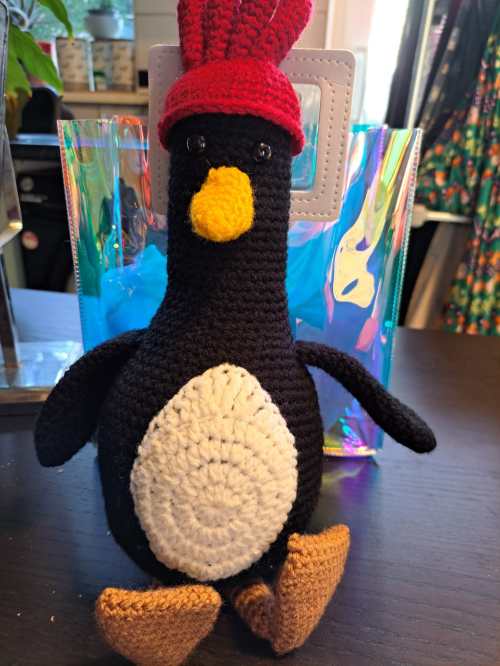
You will have seen from recent blog entries (including those from @manosdaskalou and @kayleighwillis21 that as part of Criminology 25th year at UON celebrations, the Criminology Team have been engaging with lots of different audiences. The most surprising of these is the creation of the #UONCriminologyClub for a group of home educated children aged between 10-15. The idea was first mooted by @saffrongarside (who students of CRI1009 Imagining Crime will remember as a guest speaker this year) who is a home educator. From that, #UONCriminologyClub was born.
As you know from last week’s entry @manosdaskalou provided the introductions and started our “crime busters” journey into Criminology. I picked up the next session where we started to explore offender motivations and society’s response to their criminal behaviour. To do so, we needed someone with lived experience of both crime and punishment to help focus our attention. Enter Feathers McGraw!!!
At first the “crime busters” came out with all the myths: “master criminal” and “evil mastermind” were just two of the epithets applied to our offender. Both of which fit well into populist discourse around crime, but neither is particularly helpful for criminological study, But slowly and surely, they began to consider what he had done (or rather attempted to do) and why he might be motivated to do such things (attempted theft of a precious jewel). Discussion was fast flowing, lots of ideas, lots of questions, lots of respectful disagreement, as well as some consensus. If you don’t believe me, have a look at what Atticus and had to say!
We had another excellent criminology session this week, this time with Dr Paula Bowles. I think we all had a lot of fun, I personally could have enjoyed double or triple the session time. Dr Bowles was engaging, fun and unpretentious, making Criminology accessible to us whilst still covering a lot of interesting and complex subjects. We discussed so many different aspects of serious crime and moral and ethical questions about punishment and the treatment of criminals. During the session, we went into some very deep topics and managed to cover many big ideas. It was great that everyone was involved and had a lot to say. You might not necessarily guess from what I’ve said so far, how we got talking about Criminology in this way. It was all through the new Aardman animations film Wallace and Gromit: Vengeance Most Fowl and the cheeky little penguin or is it just a chicken? Feathers McGraw. Whether he is a chicken or a penguin, he gave us a lot to discuss such as whether his trial was fair or not since he can’t talk, if the zoo could really be counted as a prison and, if so was he allowed to be sent there without a trial? Deep ethical questions around an animation. Just like last time it was a fun and engaging lesson that made me want to learn more and more and I can’t wait for next time. (Atticus, 14)
What emerged was a nuanced and empathetic understanding of some key criminological debates and questions, albeit without the jargon so beloved of social scientists: nature vs. nurture, coercion and manipulation of the vulnerable, the importance of human rights, the role of the criminal justice system, the part played by the media, the impetus to punish to name but a few. Additionally, a deep philosophical question arose as to whether or not Aardman’s portrayal of Feathers’ confinement in a zoo, meant that as a society we treat animals as though they are criminals, or criminals as though they are animals. We are all still pondering this particular question…. After deciding as group that the most important thing was for Feathers to stop his deviant behaviour, discussions inevitably moved on to deciding how this could be achieved. At this point, I will hand over to our “crime busters”!
What to do with Feathers McGraw?
At first, I thought that maybe we should make prison a better place so that he would feel the need to escape less. It wouldn’t have to be something massive but just maybe some better furniture or more entertainment. Also maybe make the security better so that it would be harder to break out. If we imagine the zoo as the prison, animals usually stay in the zoo for their life so they must have done some very bad stuff to deserve a life sentence! Is it safe to have dangerous animals so close to humans? Feathers McGraw might get influenced by the other prisoners and instead of getting better he might get more criminal ideas. I believe there should be a purpose-built prison for the more dangerous criminals, so they are kept away from the humans and the non-violent criminals. in this case is Feathers considered a violent or non-violent criminal? Even though he hasn’t killed anyone, he has abused them, tried to harm them, hacked into Wallace’s computer, vandalised gardens through the Norbots, and stole the jewel. So, I think we should get a restraining order against Feathers McGraw to stop him from seeing Wallace and Gromit. I also think we should invest in therapy for Feathers to help him realise that he doesn’t need to own the jewel to enjoy it, what would he even do with it?! Maybe socializing could also help to maybe take his mind of doing criminal things. He always seems alone and sad. I’m not sure whether he will be able to change his ways or not but I think we should do the best we can to. (Paisley, 10)
I think in order to stop Feathers McGraw’s criminal behaviour, he should go to prison but while he is there, he should have some lessons on how to be good, how to make friends, how to become a successful businessman (or penguin!), how to travel around on public transport, what the law includes and what the punishments there are for breaking it etc. I also think it’s important to make the prisons hospitable so that he feels like they do care about him because otherwise it might fuel anger and make him want to steal more diamonds. At the same time though, it should not be too nice so that he’ll think that stealing is great, because if you don’t get caught, then you keep whatever you stole and if you do get caught then it doesn’t matter because you will end up staying in a luxury cell with silky soft blankets.
After he is released from prison, I would suggest he would be held under house arrest for 2-3 months. He will live with Wallace and Gromit and he will receive a weekly allowance of £200. With this money, he will spend:
£100 – Feathers will pay Wallace and Gromit rent each week,
£15-he will pay for his own clothes,
£5-phone calls,
£10-public transport,
£35-food,
£5-education,
£15-hygiene,
£15- socialising and misc.
During this time, Feathers could also be home educated in the subjects of Maths, English etc. He should have a schedule so he will learn how to manage his time effectively and eventually should be able to manage his timewithouta schedule. The reason for this is because when Feathers was in prison, he was told what to do every day and at what time he would do it. He now needs to learn how to make those decisions by himself. This would mean when his house arrest is finished, he can go out into the real world and live happy life without breaking the law or stealing. (Linus, 13)
I think that once Feathers McGraw has been captured any money that he has on him will be taken away as well as any disguises that he has and if he still has any belongings left they will be checked to see whether he can have them. After that he should go to a proper prison and not a Zoo, then stay there for 3 months. Once a week, while he is in prison a group of ten penguins will be brought in so that he can be socialised and learn manners and good behaviour from them. However they will be supervised to make sure that they don’t come up with plans to escape. After that he will live with a police officer for 3 years and not leave the house unless a responsible and trustworthy adult accompanies him until he becomes trustworthy himself. He will be taught at the police officers house by a tutor because if he went to school he might run away. Feathers McGraw will have a weekly allowance of £460 that is funded by the government as he won’t have any money. Any money that was taken away from him will be given back in this time. Any money left over will be put into his savings account or used for something else if the money couldn’t quite cover it.
In one week he will give
£60 for fish and food
£10 for travel
£50 for clothing but it will be checked to make sure that it isn’t a disguise.
£80 for the police officer that looking after him
£15 for necessities (tooth brush, tooth paste, face cloth etc…)
£70 for his tutor
£55 for education supplies
£20 will be put in a savings account for when he lives by himself again.
And £100 for some therapy
After 1 year if the police officer looking after him thinks that he’s trustworthy enough then he can get a job and use £40 pounds a week (if he earns manages to earn that much.) as he likes and the rest of it will be put into his savings account. Feathers McGraw will only be allowed to do certain jobs for example, He couldn’t be a police officer in case he steals something that he’s guarding, He also couldn’t be a prison guard in case he helped someone escape etc… If at any point he commits another crime he will lose his freedom and his job and will be confined to the house and garden. When he lives by himself again he will have to do community service for 1 month. (Liv, 11).
Feathers McGraw has committed many crimes, some of which include attempted theft, abuse towards Wallace and Gromit, and prison break.
Here are some ideas of things that we can do to stop him from reoffending:
Immediate action:
A restraining order is to be put in place so he can’t come within 50m of Wallace and Gromit, for their protection both physical and mental. Penguins live for up to 20 years so seeing as he is portrayed as being an adult, my guess is he is around 10 years old. His sentence should be limited to 2 years in prison. Whilst serving his sentence he should be given a laptop (with settings so that he can’t use it to hack) so he can write, watch videos, play games and learn stuff.
Longer term solutions:
When Feathers gets out he will be banned from seeing the gem in museums so there will be less chance of him stelling it. He also will be given some job options to help him get started in his career. His first job won’t be front facing so Wallace and Gromit won’t have to be worried and they will get to say no to any job Feathers tries to get. If he reoffends, he will be taken to court where his sentence will be a minimum of 5 years in prison.
Rehabilitation:
I think Feathers should be given rehabilitation in several different forms, some sneakier than others! One of these forms is probation: penguins which are trained probation officers who will speak to him and try to say that crime is not cool. To him they will look like normal penguins, he won’t know that they have had training. He also should be offered job experience so he can earn a prison currency which he can use to buy upgrades for his cell (for example a better bed, bigger tv, headphones, an mp3 player and songs for said mp3 player) to give him a chance to get a job in the future. (Quinn, 12)
The “crime busters” comments above came after reflecting on our session, their input demonstrates their serious and earnest attempt to resolve an extremely complex issue, which many of the greatest minds in Criminology have battled with for the last two centuries. They may seem very young to deal with a discipline often perceived as dark, but they show us an essential truth about Criminology, it is always hopeful, always focused on what could be, instead of tolerating what we have.
Share this:


A Love Letter to Criminology at UON


In 2002, I realised I was bored, I was a full-time wife and parent with a long-standing part-time job in a supermarket. I first started the job at 15, left at 18 to take up a job at the Magistrates’ court and rejoined the supermarket shortly after my daughter was born. My world was comfortable, stable and dependable. I loved my family but it was definitely lacking challenge. My daughter was becoming increasingly more independent, I was increasing my hours and moving into retail management and I asked myself, is this it? Once my daughter had flown the nest, could I see myself working in a supermarket for the rest of my life? None of this is to knock those those that work in retail, it is probably the best training for criminology and indeed life, that anyone could ask for! I got to meet so many people, from all backgrounds, ethnicities, ages, religions and classes. It taught me that human beings are bloody awkward, including myself. But was it enough for me and if it wasn’t, what did I want?
At school, the careers adviser suggested I could work in Woolworths, or if I tried really hard at my studies and went to college, I might be able to work for the Midland Bank (neither organisation exists today, so probably good I didn’t take the advice!). In the 1980s, nobody was advocating the benefits of university education, at least not to working-class children like me. The Equal Pay Act might have been passed in 1970 but even today we’re a long way from equality in the workplace for women. In the 1980s there was still the unwritten expectation (particularly for working class children from low socio economic backgrounds) that women would get married, have children and perhaps have a part-time job but not really a career….I was a textbook example! I had no idea about universities, knew nobody that had been and assumed they were for other people, people very different from me.
That changed in 2002, I had read something in a newspaper about a Criminology course and I was fascinated. I did not know you could study something like that and I had so many questions that I wanted to answer. As regular readers of the blog will know I’m a long-standing fan of Agatha Christie whose fiction regularly touches upon criminological ideas. Having been born and raised in North London, I was very familiar with HMP Holloway’s buildings, both old and new, which raised lots of questions for a curious child, around who lived there, how did they get in and out and what did they do to the women held inside. Reading suffragette narratives had presented some very graphic images which further fed the imagination. Let’s just say I had been thinking about criminology, without even knowing such a discipline existed.
Once I was aware of the discipline, I needed to find a way to get over my prejudices around who university was for and find a way of getting in! To cut a long story short, I went to an Open Day and was told, go and get yourself an access course. At the time, it felt very blunt and reinforced my view that universities weren’t for the likes of me! Looking back it was excellent advice, without the access course, I would never have coped, let alone thrived, after years out of education.
In 2004 I started reading BA Criminology, with reading being the operant word. I had been an avid reader since early childhood (the subject of an earlier blog) and suddenly I was presented with a license to read whatever and whenever I wanted and as much as I could devour! For the first time in my life, people could no longer insist that I was wasting time with my head always in a book, I had “official” permission to read and read, I did! I got the chance to read, discuss, write and present throughout the degree. I wrote essays and reports, presented posters and talked about my criminological passions. I got the chance to undertake research, both empirical and theoretical, and lawks did I revel in all this opportunity. Of course, by looking back and reflecting, I forget all the stresses and strains, the anxieties around meeting so many new people, the terror of standing up in front of people, of submitting my first assessment, of waiting for grades….but these all pale into insignificance at the end and three years goes so very quickly….
In the summer of 2007, I had a lovely shiny degree in Criminology from the University of Northampton, but what next? By this point, I had the studying bug, and despite my anticipation that university would provide all the answers, I had a whole new set of questions! These were perhaps more nuanced and sophisticated than before but still driving me to seek answers. As I said earlier, human beings are awkward and at this point I decided, despite my earlier passion, I didn’t want to be put in a box labelled “Criminology“. I felt that I had finally cracked my fear of universities and decided to embark on a MA History of Medicine at Oxford Brookes. I wanted to know why Criminology textbooks and courses still included the racist, sexist, disablist (and plenty more) “theories” of Cesare Lombroso, a man whose ideas of the “born criminal” had been discredited soon after they were published.
But again the old fears returned….what did I know about history or medicine? What if the Criminology degree at Northampton hadn’t been very good, what if they just passed everyone, what if I was kidding myself? Everything at Brookes felt very different to Northampton, everyone on the course had studied BA History there. Their research interests were firmly centred on the past and on medicine, nursing, doctoring, hospitals and clinics and there was me, with my ideas around 20th century eugenics, a quasi-scientific attempt to rationalise prejudice and injustice. Along with studying the discipline, I learnt a lot about how different institutions work, I compared both universities on a regular basis. What did I like about each, what did I dislike. i thought about how academics operate and started to think about how I would be in that profession.
I successfully completed the MA and began to think maybe Northampton hadn’t given me good grades out of our pity or some other misplaced emotion, but that I had actually earnt them. I was very fortunate, I had maintained connection with Criminology at UON, and had the opportunity to tip my toe in the water of academia. I was appointed as an Associate Lecturer (for those not familiar with the title, it is somebody who is hourly paid and contribute as little or as much as the department requires) and had my first foray into university teaching. To put it bluntly, I was scared shitless! But, I loved every second in the classroom, I began to find my feet, slowly but surely, and university which had been so daunting began to seep into my very being.
Fast forward to 2025, I have been involved with UON for almost 22 years, first as a student, then as an academic, achieving my PhD in the process It is worth saying that the transition is not easy, but then nothing worth having ever is. I have gained so much from my studies, my relationship with two universities and the experiences I have had along the way. It is fair to say that I have shed many tears when studying, but also had some of my very highest highs, learning is painful, just watch a small child learning to read or write.
Hopefully, over the past decades I have repaid some of the debt I owe to the academics that have taught me, coached me, mentored me and supported me (special mention must go to @manosdaskalou who has been part of my journey since day 1). My life looks very different to 2002 and it is thanks to so many people, so many opportunities, the two universities that have provided me with a home from home and all of the students I have had the privilege to engage with.
I am so delighted to have been part of Criminology at UON’s 25 years of learning and teaching. To my colleagues, old and new, students, graduates and everyone I have met along the way, I raise my glass. Together we have built something very special, a community of people committed to exploring criminological ideas and making the world an equitable place.
Share this:


Criminology for all (including children and penguins)!

As a wise woman once wrote on this blog, Criminology is everywhere! a statement I wholeheartedly agree with, certainly my latest module Imagining Crime has this mantra at its heart. This Christmas, I did not watch much television, far more important things to do, including spending time with family and catching up on reading. But there was one film I could not miss! I should add a disclaimer here, I’m a huge fan of Wallace and Gromit, so it should come as no surprise, that I made sure I was sitting very comfortably for Wallace & Gromit: Vengeance Most Fowl. The timing of the broadcast, as well as it’s age rating (PG), clearly indicate that the film is designed for family viewing, and even the smallest members can find something to enjoy in the bright colours and funny looking characters. However, there is something far darker hidden in plain sight.
All of Aardman’s Wallace and Gromit animations contain criminological themes, think sheep rustling, serial (or should that be cereal) murder, and of course the original theft of the blue diamond and this latest outing was no different. As a team we talk a lot about Public Criminology, and for those who have never studied the discipline, there is no better place to start…. If you don’t believe me, let’s have a look at some of the criminological themes explored in the film:
Sentencing Practice
In 1993, Feathers McGraw (pictured above) was sent to prison (zoo) for life for his foiled attempt to steal the blue diamond (see The Wrong Trousers for more detail). If we consider murder carries a mandatory life sentence and theft a maximum of seven years incarceration, it looks like our penguin offender has been the victim of a serious miscarriage of justice. No wonder he looks so cross!
Policing Culture
In Vengeance Most Fowl we are reacquainted with Chief Inspector Mcintyre (see The Curse of the Were-Rabbit for more detail) and meet PC Mukherjee, one an experienced copper and the other a rookie, fresh from her training. Leaving aside the size of the police force and the diversity reflected in the team (certainly not a reflection of policing in England and Wales), there is plenty more to explore. For example, the dismissive behaviour of Mcintyre toward Mukherjee’s training. learning is not enough, she must focus on developing a “copper’s gut”. Mukherjee also needs to show reverence toward her boss and is regularly criticised for overstepping the mark, for instance by filling the station with Wallace’s inventions. There is also the underlying message that the Chief Inspector is convinced of Wallace’s guilt and therefore, evidence that points away from should be ignored. Despite this Mukherjee retains her enthusiasm for policing, stays true to her training and remains alert to all possibilities.
Prison Regime
The facility in which Feathers McGraw is incarcerated is bleak, like many of our Victorian prisons still in use (there are currently 32 in England and Wales). He has no bedding, no opportunities to engage in meaningful activities and appears to be subjected to solitary confinement. No wonder he has plenty of time and energy to focus on escape and vengeance! We hear the fear in the prison guards voice, as well as the disparaging comments directed toward the prisoner. All in all, what we see is a brutal regime designed to crush the offender. What is surprising is that Feathers McGraw still has capacity to plot and scheme after 31 years of captivity….
Mitigating Factors
Whilst Feathers McGraw may be the mastermind, from prison he is unable to do a great deal for himself. He gets round this by hacking into the robot gnome, Norbot. But what of Norbot’s free will, so beloved of Classical Criminology? Should he be held culpable for his role or does McGraw’s coercion and control, renders his part passive? Without, Norbot (and his clones), no crime could be committed, but do the mitigating factors excuse his/their behaviour? Questions like this occur within the criminal justice system on a regular basis, admittedly not involving robot gnomes, but the part played in criminality by mental illness, drug use, and the exploitation of children and other vulnerable people.
And finally:
Above are just some of the criminological themes I have identified, but there are many others, not least what appears to be Domestic Abuse, primarily coercive control, in Wallace and Gromit’s household. I also have not touched upon the implicit commentary around technology’s (including AI’s) tendency toward homogeneity. All of these will keep for classroom discussions when we get back to campus next week 🙂
Share this:


Season’s Greetings

The Thoughts from the Criminology Team would like to wish all our readers and writers happy holidays. We’d also like to extend our thanks to everyone for your contributions, without you there would not be a blog and they are very much appreciated.
Wherever you are in the world and whether or not you celebrate Christmas, we extend our good wishes to you and wish you and yours a peaceful end to 2024. We’ll be back in 2025 with lots more criminological content, until then stay safe and well.
Share this:


A Love Letter: in praise of board games
This my fifth love letter, previously I have written in praise of poetry, art, Agatha Christie and the Thoughts from the Criminology Team blog. Since early childhood, I have loved playing games and today’s entry is dedicated to this form of media. In the early years, the focus on fun is paramount, after all who wants to play a dull game? Equally important, the educational aim of games is sometimes explicit, other times less so. Nevertheless, they help us learn to match and sort colours and shapes, to develop our counting skills in an applied setting and improve our memory recall, as well as spelling. Games likes Snap, Happy Families, Hungry Hippos, Snakes and Ladders, Guess Who, Junior Scrabble offer a variety of different ways for children to learn important skills whilst playing. These games enable even very small children to share space, develop important interpersonal skills like taking turns and learn to deal with winning, and of course, losing. Often the latter is a very slow and painful lesson to learn….and one that isn’t always remembered into adulthood!
Of course, one of the most explicit part of playing games is learning the rules of the game, and of course, what happens when we deviate from those rules. It might lead to the loss of a turn or even forfeiture of the entire game. People interpret rules in different ways and families often develop their own “house” rules, but nevertheless there is always an agreed upon set of rules and a way of policing and punishing those who break them.
But once these lessons have been learned, what do games have to teach us as adults? I would say plenty! On a surface level, they offer an opportunity to relax and do something outside of our humdrum lives. Once the games have been purchased, they generally cost nothing to play unlike other forms of leisure time.1 Some can be played alone, others require competitors or even teams. They can aid our thinking, concentration and develop skills of strategy and tactics. They also have the general benefit of not being all consuming (unless at competition level), allowing for conversation to flow. The latter, conversing whilst doing something else, can often be useful for difficult emotional conversations, allowing people to open up without pressure (known colloquially as “health by stealth”).
But do board games have anything to offer to Criminology? Again, I would argue yes! Most games involve chance or luck, will you get the numbers you need, will you have the right pieces/cards in your hand, will the other person play their game in a way that benefits you? It is easy to recognise the role that luck or chance plays in games, but are we equally aware of their role in our lives. More importantly, as criminologists do we fully understand and acknowledge the role played by both in relation to criminality and victimisation?
We have no choice about whether we are born or not, when and where we arrive on the earth, who our parents are. These are all down to forces outside our individual and collective control. Our upbringing, our education, our employment opportunities are largely constrained by geography, money and influence. Compare the opportunities available to a baby born today in Sudan, with one born in the UK, another born in Palestine, and another born in Finland. Compare again, thinking about race, sex, class, disability, sexuality and so on. Very quickly you begin to understand the role played by chance and luck.
So if all of the above are imponderables, how much of a role does luck play in relation to criminality and victimisation? The regular publication of data relating to crime in postcodes, towns/cities and globally show huge diversity in the chance of victimisation. Lucky you, if you were born and live in the ‘Nordic countries of Europe (Norway, Sweden, Denmark, Iceland, and Finland) who rank among the 25 safest globally, most of them also being among the top 10 happiest nations worldwide’. Less fortunate, if you were born in Haiti, Ukraine, Palestine, Sudan or Iraq identified as some of the most dangerous places on earth currently. It is not very difficult to imagine the difference in opportunities in fundamental human rights; food, shelter, healthcare, education and so on. In war ridden nations it is incredibly difficult to separate different typologies of victimisation and for the individuals living under these conditions, it makes no meaningful difference who is/are the perpetrators.
Even if you are living in a “peaceful” state2 such as the UK, there are vast differences in the opportunities available. If you have money you can buy a car to get to work in your evening/night job, if you don’t, maybe you can take a bus, failing that you can walk. Each of those journeys carries its own risks. Your sex, your race, your ethnicity, your sexuality, your abilities/disabilities, your age add the aggravating/mitigating factors and see your risk increase/decrease. All a matter of chance and luck
What about criminality, is this, as the Classical School of Criminology would have us accept, a matter of free will, weighing up the pros and cons and making a deliberate and calculating choice to commit crime? Or can we also identify the same issues of luck and chance as shown above? If your family is loving, everyone has good health, housing is secure, food is plentiful and there are plenty of educational and employment opportunities in your area, would you still choose a life of crime? If there is violence at home, poverty impacts health, housing and regular meals, making it challenging to study or work, would you perceive crime to be a choice?
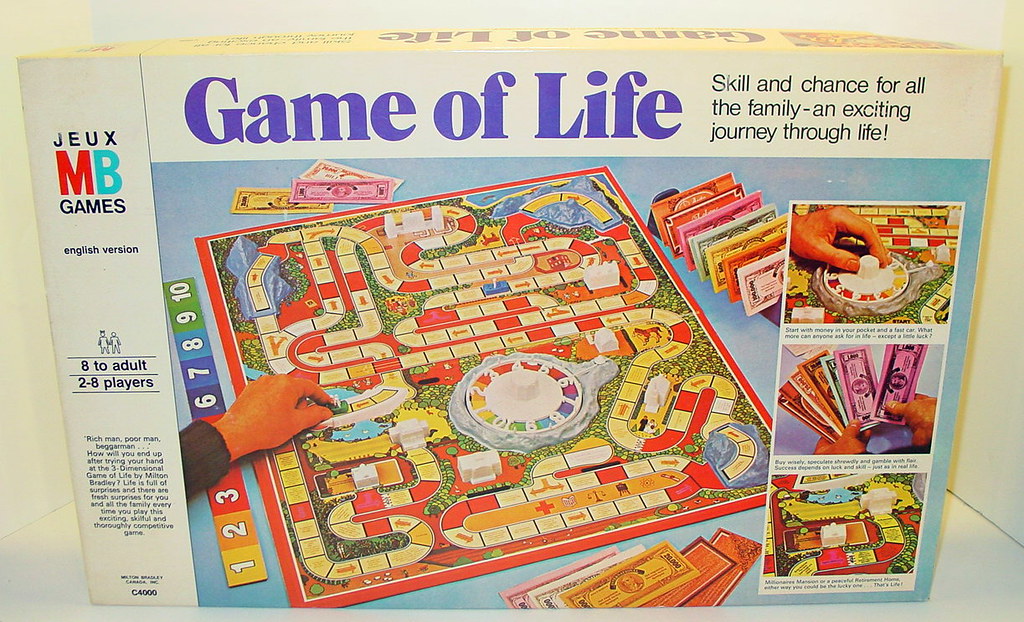
And what of those board game rules and consequences, real life has its own rules, some written in the forms of laws, others engrained via family, friends, institutions; the norms of our society. In the board game, these rules apply equally (aside from luck and chance) but in real life, not so much. Consider racial and ethnic disproportionality and the treatment of vulnerable women in the CJS, as just two examples. We may all be playing in the same “Game of Life”, but luck, chance and the rules we are subjected to are very different when it comes to criminality and victimisation.
- I appreciate that there are some very expensive board games out there, as well as expansion packs to enhance play. ↩︎
- There are lots of academic arguments around what constitutes a peaceful state, most agree that it more than just the absence of war. Whilst the UK has not seen active warfare on its shores for decades, its military has been involved in conflict throughout the world for more than a century. ↩︎
Share this:


Victims of Domestic Violence Repeatedly Failed by UK Police Forces

On the last day of August 2024 I was invited to an event focused on “Victims of Domestic Violence Repeatedly Failed by UK Police Forces” held at Fenny Compton Village Hall. The choice of venue was deliberate, it was the same venue where Alan Bates brought together for the first time, just some of the many post-masters/mistresses impacted by, what we now recognise as, Britain’s largest miscarriage of justice. This meeting demonstrated that rather than one or two isolated incidents, this was widespread impacting 100s of people. Additionally, the bringing of people together led to the creation of the Justice for Sub-Postmasters Alliance [JFSA], a collective able to campaign more effectively, showing clearly that there is both strength and purpose in numbers.
Thus the choice of venue implicitly encouraged attendees to take strength in collectivity. Organised by three women who had lost daughters and a niece who instinctively knew that they weren’t the only ones. Furthermore, each had faced barrier after barrier when trying to find out what had happened to their loved ones leading up to and during their deaths. What they experienced individually in different areas of the country, shared far more commonality than difference. By comparing their experiences, it became clear that their losses were not unique, that across the country and indeed, the world, women were being subjected to violence, dying, grieving and being subjected to organisational indifference, apathy, if not downright institutional violence.
At the event, woman after woman, spoke of different women, very much loved, some had died, some had fled their violent partners (permanently, one hopes) and others who were still trapped in a living hell. Some spoke with confidence, others with trepidation or nerves, all filled with anguish, passion and each determined to raise their voices. Again and again they detailed their heartbreaking testimony, which again showed far more commonality than difference:
- Women being told that their reporting of domestic abuse incidents may make things much worse for them
- Evidence lost or disposed of by police officers
- Corrupted or deleted body worn camera footage
- Inability or unwillingness to recognise that domestic abuse, particularly coercive behaviour escalates, these are not separate incidents and cannot be viewed in isolation
- Police often dismissing women’s reports as examples of “minor” or “borderline” domestic abuse, when as detailed above, individual incidents in isolation do not reflect the lived experience
- History of domestic abuse ignored/disregarded whether or not recorded by the police
- Victims of domestic abuse being asked for forensic levels of detail when trying to report
- Victims of domestic abuse being incorrectly refused access by the police to access to information covered by Clare’s Law (Domestic Violence Disclosure Scheme)
- The Domestic Abuse, Stalking and Honour Based Violence [DASH} forms treated as tick box exercise, often done over harried phone calls
- Victims of domestic violence, criminalised when trying to protect themselves and their children from violent partners
- When escaping from violent relationships women are placed in refuges, often far from their support networks, children move schools losing their friendship circles and breaking trusted relationships with teachers
- Suicide not investigated according to College of Policing own guidance: Assume Nothing, Believe nobody, Challenge everything!
- Police failing to inform the parents of women who have died
- Dead women’s phones and laptops handed over to the men who have subjected them to violence (under the guise of next-of-kin)
- The police overreliance on testimony of men (who have subjected them to violence previously) in relation to their deaths
- Challenges in accessing Legal Aid, particularly when the woman and children remain in the family home
- The lack of joined up support, lots of people and charities trying to help on limited resources but reacting on an ad hoc basis
- The police would rather use valuable resources to fight victims, survivors and their families’ complaints against them
The above is by no means an exhaustive list, but these issues came up again and again, showing clearly, that none of the women’s experiences are unique but are instead repeated again and again over time and place. It doesn’t matter what year, what police force, what area the victim lived in, their education, their profession, their class, marital status, or whether or not they were mothers. It is evident from the day’s testimony that women are being failed not only by the police, but also the wider Criminal Justice System.
Whilst the women have been failed, the criminologist in me, says we should consider whether the police are actually “failing” or whether they are simply doing what they were set up to do, and women are simply collateral damage. Don’t forget the police as an institution are not yet 200 years. They were set up to protect the rich and powerful and maintain control of the streets. Historically, we have seen the police used against the population, for example policing the Miners’ Strikes, particularly at Orgreave. More recently the response to those involved in violent protest/riots demonstrates explicitly that the police and the criminal justice system can act swiftly, when it suits. But consider what it is trying to protect, individuals or businesses or institutions or the State?
The police have long been faced by accusations of institutional racism, homophobia and misogyny. It predominantly remains a institution comprised of white, straight, (nominally) Christian, working class, men, despite frequent promises to encourage those who do not fit into these five classifications to enlist in the force. Until the police (and the wider CJS) are prepared to create a less hostile environment, any attempt at diversifying the workforce will fail. If it continues with its current policies and practices without input from those subjected to them, both inside and outside the institution, any attempt at diversifying the institution will fail. But again we come back to that word ‘failure’, is it failing if the institution continues to maintain the status quo, to protect the rich and powerful and maintain control of the streets?
But does the problem lie solely with the police and the wider criminal justice system, or are we continually failing as a society to support, nurture and protect women? Take for example Hearn’s astute recognition that ‘[f]or much too long men have been considered the taken-for-granted norm against which women have been judged to be different’ offers an alternative rationale (1998: 3).Many scholars have explored language in relation to women and race, identifying that in many cases the default is understood to be a white male (cf. de Beauvoir, 1949/2010, Lakoff, 1973, Spender, 1980, Eichler, 1988/1991, Penelope, 1990, Homans, 1997). As de Beauvoir evocatively writes, ‘humanity is male and man defines woman not in herself, she is not regarded as an autonomous being […] He is the Subject; he is the Absolute. She is the Other’ (de Beauvoir, 1949/2010: 26). Lakoff (1973) also notes that the way in which language is used both about them and by them, disguises and enables marginalisation and disempowerment. Furthermore, it enables the erasure of women’s experience. The image below illustrates this well, with its headline figure relating to men. Whilst not meaning to dismiss any violence, when women’s victimisation far outweighs that faced by men, this makes no logical sense.

Nevertheless, we should not forget men as Whitehead dolefully concludes:
‘to recognize the extent and range of men’s violences is to face the depressing and disturbing realization that men’s propensity for cruelty and violence is probably the biggest cause of misery in the world (2002: 36).’
Certainly numerous authors have identified the centrality of men (and by default masculinity) to any discussion of violence. These range from Hearn’s powerful assertion that it is ‘men [who] dominate the business of violence, and who specialize in violence’ (1998: 36) to Mullins (2006) suggestion that women act as both stimulation for men’s violence (e.g. protection) and as a limiter. Certainly, Solnit perceptively argues that armed with the knowledge that men are responsible for far more violence, it should be possible to ‘theorise where violence comes from and what we can do about it a lot more profoundly’ (2014: 25).
All of the challenges and barriers identified on the day and above make it incredibly difficult, even for educated well-connected women to deal with, this is compounded when English is not your first language, or you have a visa dependant on your violent partner/husband, or hold refugee status. As various speakers, including the spokeswoman for Sikh Women’s Aid made clear, heritage and culture can add further layers of complexity when it comes to domestic abuse.
Ultimately, the event showed the resilience and determination of those involved. It identified some of the main challenges, paid tribute to both victims and survivors and opened a new space for dialogue and collective action. If you would like to keep up with their campaign, they use the hashtag #policefailingsuk and can be contacted via email: policefailings.uk@yahoo.com
References
de Beauvoir, Simone, (1949/2010), The Second Sex, tr. from the French by Constance Borde and Sheila Malovany Chevalier, (New York: Vintage Books)
Eicler, Margrit, (1988/1991), Nonsexist Research Methods, (London: Routledge) (Kindle Version)
Hearn, Jeff, (1998), The Violences of Men, (London, Sage Publications Ltd)
Homans, Margaret, (1997), ‘“Racial Composition”: Metaphor and the Body in the Writing of Race’ in Elizabeth Abel, Barbara Christian and Helene Moglen, (Eds), Female Subjects in Black and White, (London: University of California Press): 77-101
Lakoff, Robin, (1973), ‘Language and Woman’s Place,’ Language in Society, 2, 1: 45-80
Mullins, Christopher W., (2006), Holding Your Square: Masculinities, Streetlife and Violence, (Cullompton: Willan Publishing)
National Centre for Domestic Violence, (2023), ‘Domestic Abuse Statistics UK,’ National Centre for Domestic Violence, [online]. Available from: https://www.ncdv.org.uk/domestic-abuse-statistics-uk/ [Last accessed 31 August 2024]
Penelope, Julia, (1990), Speaking Freely: Unlearning the Lies of the Fathers’ Tongues, (New York: Pergamon Press)
Solnit, Rebecca, (2014), Men Explain Things to Me, (London: Granta Publications)
Spender, Dale, (1980), Man Made Language, (London: Routledge and Kegan Paul)
Whitehead, Stephen M., (2002), Men and Masculinities, (Cambridge: Polity Press)
Share this:


Everyone loves a man in uniform: The Rise and Fall of Nick Adderley

Some of our local readers will be familiar with the case of former Chief Constable Nick Adderley who was recently dismissed from Northamptonshire Police. The full Regulation 43 report can be found here and it provides an interesting, and at times, comical, narrative of the life and times of the now disgraced police officer.
The Regulation 43 report describes Adderley’s creation of a “false legend” of military service, whereby this supposed naval man fought bravely to protect the Falkland Islands (despite only being 15 when the conflict ended), rescued helicopters and ships in the height of battle, commanded men, was a military negotiator during the Anti-Duvalier protest movement in Haiti. In short, an all round real-life Naval action man! It’s pity for Adderley, that the Regulation 43 panel found none of this was true, instead a ‘Walter Mitty‘ like trail of lies were revealed throughout the investigation.
Nevertheless, not content with his brave military career, our intrepid hero decided he would take his considerable (in his estimation at least) skills into policing. First applying to Greater Manchester Police [GMP] (who turned him down on the grounds that there were ‘better candidates’) and then Cheshire Police. From Cheshire Police, he went to GMP and then to Staffordshire Police, finally arriving in Northamptonshire in the summer of 2018. Despite all of these different forces, all of the different application and promotion forms that our brave hero completed, not one person bothered to check that he was telling the truth. To check that this man, responsible for upholding law and order, was a fit candidate for the role. instead, I suspect, like so many it seems, we are so in love with our military and all its trappings, that we lose any sense of criticality when it comes to uniforms. After all who would dare to question a Chief Constable, whether a police officer, civilian worker or member of the public? Easier to keep parroting the mantra of “our brave boys”, than to think critically about institutions and their members, as the cartoon below demonstrates all too well.

At this point Adderley has been dismissed from Northamptonshire Police and banned from policing. In 2024 the Angiolini Inquiry published its report, which in part focused on police vetting and there is no doubt, post-Adderley the police as an institution, will undertake more soul searching. Additionally, some commentators have begun a campaign to have Adderley’s police pension reduced/removed. These matters will continue to rumble along for some time. But, in short, Adderley has been punished and publicly outed as a liar, but that does not begin to undo the immense harm his behaviour has inflicted on the community.
During his time at Chief Constable of Northamptonshire, Adderley called upon his supposed military history and experience to support his arguments and the decisions he made. For instance, the 2019 arming of Northamptonshire’s police with tasers or the 2020 launch of eight interceptors, described by Adderley as “a new fleet of crime-busting cars” or the 2021 purchase of “eight Yamaha WR450F enduro bikes“. To me, all of these developments scream the militarisation of policing. Since the very foundation of the Metropolitan Police in 1829, serving officers and the public have continually been opposed to arming the police, yet Adderley, with his military service, seemingly knew best. But what use is a taser, fast car or motorbike in everyday community policing, how do they help when responding to domestic abuse, sexual violence, or the very many mental health crises to which officers are regularly called? How do these expensive military “toys” ensure that all members of society feel protected and not just some communities? How can we ensure that tasers don’t do lasting harm to those subjected to their violence? Instead all of these developments scream a fantasy of both military and policing, one in which the hero is always on the side of the righteous, devoting his life to taking down the “baddies” by whatever means necessary.
Ultimately for the people of Northamptonshire we have to decide, can we view Adderley’s police leadership as the best use of taxpayers’ money, a response to evidence based policing or just a military fantasy of the man who lied? More importantly, the county and its police force will struggle to untangle Adderley’s web of lies and the harm inflicted on the people of Northamptonshire, making it likely that this entirely unevidenced push to militarise the police will continue unchecked.
Share this:


Taking a short break….back soon

The academic year 23/24 will shortly come to an end with the last assessments submitted and graded. Here at the Thoughts From the Criminology Team we’re going to take a little break before we jump back into planning for the new academic year. Don’t worry, we’ll be back with lots of interesting entries from August and after all, ‘absence makes the heart grow fonder’.
In the meantime, there’s plenty on the site to explore.
Enjoy your July whatever you are up to!
Share this:


Aspiration and Independence: A tale of Lego, Learning and Universities

A couple of year’s ago to mark the completion of my PhD, my husband presented me with a Lego kit, a Lego typewriter to be precise! This was an incredibly thoughtful gift, a nod to the start of my working life where I had used a very similar typewriter daily at the Magistrates’ Court. It was also recognition of the years I had spent writing the thesis. Simultaneously, it was also rather a surprising kit, my only other foray into Lego as an adult was building a Lego Yellow Submarine some years before. That kit had taken me considerable hours to build, which I had enjoyed, in part because of my love for the Beatles. However, I digress….
I embarked upon building the typewriter, which looked rather big and scary in its box, and even more daunting when I saw the huge instruction manual and lots and lots of bags of pieces. Nevertheless, how difficult can it be to build a Lego kit? I started with confidence, working my way through the step-by-step instructions, occasionally accidentally missing a step and having to go back through the booklet. However, about halfway through, I got completely stuck, I couldn’t make sense of the diagram and turned to google. Here I found lots of articles and videos, each of which seemed to stress that this was an extremely challenging kit, one of the most complex produced to date and not for the faint hearted. Regardless, I found some information about my particular hurdle and carried on working my way through the steps.
As time went on, I found the idea that what I was doing was difficult, playing across my mind. Increasingly, as I found a part challenging, rather than working my way backwards and forwards through the instructions, trying pieces one way and another, in trial and error, I turned again and again to google. Of course, each time I did this, as well as the answer, I was confronted by the continual narrative of challenge and difficulty. As I went on, I felt as if I could not complete this kit. Then disaster struck! As I fought to put in a moving part, a part of the model collapsed, I obviously hadn’t pressed the pieces in hard enough. I found myself facing what had been almost complete model (only one bag of pieces to go) but was now a complete mess. Now, remember this is just a model, not a matter of life and death, but I felt this mistake deeply. All of the commentators, self-proclaimed Lego “experts” were right, this was not a kit for me, a mere amateur.
This anecdote, really ends there, the kit is still in pieces in its box. I haven’t been able to bring myself to dismantle what’s left and start again. The fact that I haven’t completed the kit, plays on my mind. I don’t give up on anything (my work, education and family history attest to this), but here I am defeated by a toy![i] This “failure” got me thinking about learning and teaching and the role self-belief (or the lack of it) plays in the academic journey. This chimes with recent thoughts around independence and aspiration when it comes to excelling in study.
First a proviso, this is not about my institution, but seemingly every educational establishment and more broadly society. Everywhere I look it seems that young people are being told that they are incapable, that they need support in all aspects of their lives, including studying. That university study is incredibly difficult and probably not something that can done without enormous support. Sometimes this is an implicit message absorbed on daily basis, other times more explicit, posters, advertisements advising how to defer assessments, how to get in touch with support services, where to go for financial guidance, people you can talk to and so on. Now all of these are really important, but they are not the primary purpose of a university. That purpose is to provide a space for education, for thinking, for reading, for intellectual discourse, a place full of challenging ideas, allowing individuals to develop themselves in a variety of different and sometimes, surprising ways. It is also a place to make mistakes on that learning journey. After all, if we knew everything before we started studying for a degree, there would be little point in studying.
Nevertheless, in the modern university, there is little tangible evidence that this is what a university is for. To quote Nike (1988) where is the “Just do it”. Where does it remind us, that humans are powerful, resourceful, adaptable, that we can learn anything we put our minds to, we can succeed? Where are the messages designed to build self-confidence, self-esteem, and aspiration. Yes, there is help available, don’t be afraid to ask for support! There is no stigma, you are paying for every part of your university experience. Yes, studying is challenging, but so are lots of things in life; learning to drive, holding down a job, caring responsibilities, many of which we rely upon others for support.
Obviously, there is a big difference between Lego and an academic qualification, nevertheless they both (comparatively) require a big financial outlay, levels of dedication, concentration, aspiration and a desire for successful completion. I have three degrees, each has cost me financially, temporally and emotionally. This studying has given me the lowest of lows and the highest of highs along the way, but I have grown in ways I could never have imagined at the beginning of my studies. Along the way I have utilised support from academics and university professional services, for which I am very thankful, but the hard work is mine. Even better, those three pieces of paper belong to me and me alone, they are proof of my stamina, my perseverance and my ability to bounce back again and again. Nobody, can take those away from me!
It is for all these reasons that I will complete that Lego set! But I also recognise that I may need some expert help to build up my confidence again. This time I won’t call upon academics for support, but another expert, my 11 year old grandson, who has proved time and again, that no Lego kit will defeat him! With perseverance and an expert who will gently guide and enable me, that Lego kit will be complete in no time. Watch this space for the finished article!
EDIT Sunday 18 February: Mission Accomplished

[i] Apologies to all Lego aficionados, I fully recognise that Lego is so much more than a toy.


