
Home » Articles posted by manosdaskalou (Page 6)
Author Archives: manosdaskalou

Road trip

In all fairness a road trip is a metaphor for life. We live in perpetual motion, moving forward and going from place to place. Our time is spent through journeys in our space, through the time of our lifespan. Alone or with others, planned or unplanned journeys are to happen. That is life as it is.
Sometimes of course a road trip is nothing more than an actual trip in a countryside, quickly to be forgotten replaced by the next one! On this occasion, I shall try to narrate it as it happened, as it is fresh in my mind and the images can be vividly recalled. Maybe in future it would serve as a reminder, but on this occasion, it is merely a reminder of a very odd trip! At this stage, I would like to state that no humans nor animals were hurt during this road trip.
I am driving on one of the island’s country roads, the road is narrow going through the lush pine forest, some sycamore trees on the side. The track is leading up and down the mountainous path. The scenery is scenic and probably the reason people choose it. The road alternates views from the forest, the valleys, the canyons and the sea in the distance. Hues of green, and blue everywhere; and the smell. The pines joined with thyme and other fragrant herbs, a combination that gives the air that scent I cannot describe. The light blue of the sky meet the Aegean blue in the distance.
As per usual, on a road trip I prepare my maps, and plan the route in advance, but just in case I also keep an eye on the road in case there is a change. On this occasion, the public works are working wonders; the street signs are non-existent so I opted out. Interestingly instead of traffic information there were signs but not about the road ahead. Somewhere is the midst of the journey there is the first sign about Jesus. According to the sign “He is the truth, the way and the life”. I am unsure about the destination, but at least Jesus is aware. The next couple of signs involve Jesus and his teachings whilst the last one is making me feel a bit uncomfortable. “Jesus died for your sins” it proclaims! Ok fair enough, let’s say that he did. Any chance of knowing also whereabouts I am and where I am heading. The route continues with further signs until we come to a stop.
Finally, more signs. On this occasion there are some holy sites and monasteries. One of them is of a Saint most revered that apparently most of his body rests in a nearby location, (minus an arm and a shin). Later, I discover the Saint helps sick children and those who suffer from cancer. Admirable, considering that he’s almost 300 years dead. Still no actual traffic information on the road! At least the signs got me reading of a fascinating man long gone. It is fascinating reading on beliefs and miracles. Within them they hold peoples’ most secret expectations, those that under normal circumstances, they dare not to speak about. This is a blog post for another time; back on the road trip and almost two hours on the journey.
At this point, a herd of cows who have been lunching on the side of the road, decided to take a nap on the road. To be honest, it is only one of them who is blocking the way, but the rest are near idly watching. At this stage, I come to a stop waiting for the cow to move. The cow who was napping opened her eyes and looks at me, I look back, she looks away and continues to lay motionless in the middle of the road. I briefly evoke the Saint. Nothing. I am contemplating Jesus and still nothing. After some time, around an hour of cow staring I am going for my last resort. I get out of the car and promise that unless the cow moves, I shall part with vegetarianism. Now I am openly threatening the cow to eat her. This is when nature retaliates. A flock of goats join the cow. They meander around me and the stubborn bovine. The road is now akin to a petting zoo.
I employ a trick I picked up from cowboy films. I raise my hat, luckily, I am wearing a hat, weaving my arms furiously and making sounds. The cow is despondent at first and the goats just talk back. After a few minutes I have managed to get the cow to move and the goats are now at the side of the road. That’s my opportunity to leave. As I turn back, I notice another car behind me; they are also travelers who begin to applaud my efforts at husbandry. The road is clear, and I am on my way.
The next hour is less eventful although the road is still hairpinned; now it’s heading downwards and from the mountains its heading to the sea. I arrive at the sea way over the expected time and I manage to find a spot to park. One the wall, next to the spot someone wrote “you vote for them every four years like cows”. The writing is black, so I assume an anarchist, or maybe the author had a similar driving experience to me, or it’s just an unfortunate metaphor. The sea is cool and the views of the sea and in the distance a group of islands, spectacular. There are hot springs near by but in this weather the sea is more than enough. After all that drive, a stop at a local taverna is inevitable. Speciality dish mosxaraki or beef stew! I think the Saint is testing me!
On the way back, the road is empty. The cows rest on the side of the road. I slow down, I look out…they look away. At a local coffee shop a patron asks for the Covid-special coffee. I suppose a joke about the thing that occupies everyone’s mind. He doesn’t wear a mask and doesn’t seem to believe this pandemic “nonsense”. I was wondering if he is related to the stubborn cow. The trip ended and it formed another of those planned road trips. There was nothing spectacular about it. There is however the crux of my point. Like life, most of our roadtrips are unspectacular on their own. It is what we remember of them that matters. In the last months millions of people went into lockdown. Their lives seemed to stand still; a road trip can also be a metaphor, provided we don’t forget the details.
Share this:


“I can’t breathe”: Criminology, Science and Society
Sometimes the mind wanders; the associations it produces are random and odd, but somehow, they connect. In the book of Genesis, there is reference to the first murder. Cain murdered Abel with a stone making it the original murder weapon. After some questioning from God, who acted as an investigating officer, and following a kind-of admission, God then assumed the role of the judge and jury, sentencing him to wander the earth. This biblical tale is recounted by all three main monotheistic religions, a what to do in the case of murder. The murderer is morally fallen and criminally dealt by with a swift punishment.
There is no reason to explore the accuracy of the tale because that is not the point. Religion, in the absence of science, acted as a moral arbitrator, sentencing council and overall the conscience of society. In a society without science, the lack of reason allows morality to encroach on personal choices, using superstition as an investigative tool. As scientific discovery grew, the relevance of religion in investigation was reduced. The complexity of society required complex institutions that cared for people and their issues.
When the Normans landed in England, they brought with them a new way of dealing with disputes and conflict. Their system of arbitration, using the King as a divine representative, was following Roman tradition and theology but it soon became apparent that a roaming court may not be as efficient. The creation of the magistrates and the statutes on legal representation introduced the idea of bringing professionals into justice. The creation of new institutions fostered the age of the scholar, who uses evidence-based practice.
This new approach removed more religious practices, instead favouring the examination of facts, the investigation of testimony and the study of law. It was a long way away from the system we know now as the witch trials can attest to; a number of whom took place in East Anglia (including Northampton). In the end the only thing that has been left from the early religious trials is the oath witness take when they submit their testimony.*
The more we learn the better we become in understanding the world around us. The conviction that science can resolve our problems and alleviate social issues was growing and by the 19th century was firm. The age of discovery, industrialisation and new scientific reasoning introduced a new criminal justice system and new institutions (including the police). Scientific reasoning proposed changes in the penal code and social systems. Newly trained professionals, impervious to corruption and nepotism, were created to utilise a new know-how to investigate people and their crimes.
Training became part of skilling new mandarins in a system that reflected social stratification and professionalism. The training based on secular principles became focused on processes and procedures. The philosophy on the training was to provide a baseline of the skills required for any of the jobs in the system. Their focus on neutrality and impartiality, seemed to reflect the need for wider social participation, making systems more democratic. At least in principle that was the main idea. Over centuries of public conflict and social unrest the criminal justice system was moving onto what people considered as inclusive.
Since then the training was incorporated into education, with the new curriculum including some BTECs, diplomas, foundation studies and academic degrees that take on a variety of professions from investigative fields to law enforcement and beyond. This academic skilling, for some was evidence that the system was becoming fairer and their professionals more educated. Police officers with knowledge of the system, akin to lawyers to the probation service and so on. So far so good…but then how do we explain the killing of George Floyd? Four officers trained, skilled, educated and two of them experienced in the job.
If this was a one, two three, four, -offs then the “bad apple” defence seems to be the most logical extrapolation on what went wrong. If, however this is not the case, if entire communities are frightened of those who allegedly serve and protect them, then there is “something rotten in the state of Denmark”. Whilst this case is American, it was interesting to read on social media how much it resonated, in communities across the globe of those who felt that this was nothing more than their own everyday experience with law enforcement. For them, police is merely a mechanism of repression.
Since the murder I have read a number of analyses on the matter and maybe it worth going a bit further than them. In one of them the author questioned the validity of education, given than two of the officers in the Floyd case hold a criminal justice and a sociology degree respectively. There is a vein of truth there; educators have some responsibility to forge and promote professional conduct and ethical practice among their alumnus. There are however some other issues that have not been considered and it is time for these to be brought to the surface.
Education or training alone is not adequate to address the complexities of our society. Social awareness, cultural acceptance and the opportunity to reflect on the rules using problem solving and insight are equally important. Foucault has long argued that the justice system is inherently unfair because it preserves privileges and blocks anyone outside from challenging it. Reflecting on that, all major constitutional changes took place after a revolution or a war, indicating the truism in his observation.
If we are to continue to train people on procedures and processes the “bad apples” are likely to strike again. The complexity of social situations requires an education that ought to be more rounded, critical and evaluative. If a doctor takes an oath to do no harm, then so should every other professional who works in their community. If the title of the office is more appealing than the servitude, then the officer is not fulfilling their role. If we do not recognise equality among all people, then no training will allow us to be fair. Suddenly it becomes quite clear; we need more education than less, we need knowledge instead of information and we need more criminology for those who wish to serve the system.
*Even that can now be given as an affirmation

Share this:


How I became an evil man
My love of poetry came in my sleep like a dream, a fever I could not escape and in little hours of the day I would read some poetry from different people who voice the volume of their emotions with words. In one of those poems by Elleni Vakalo How he became a bad man, she introduced me to a new understanding of criminological thinking. The idea of consequences, that lead a seemingly good person to become bad, without the usual motivational factors, other than fear. This was the main catalyst that became the source of this man’s turn to the bad.
This almost surrealistic description of criminal motivation has since fascinated me. It is incredibly focused, devoid of social motivations and personal blame. In fact, it demonstrates a social cognition that once activated is powerful enough to lead a seemingly decent person to behave in uncharacteristic moves of violence. This interesting perspective was forged during the war and the post war turmoil experienced. Like Camus, the act of evil is presented as a matter of fact and the product of thoughts that are originally innocent and even non-threatening.
The realisation in this way of thinking, is not the normalisation of violence, but the simplicity that violence in innate to everyone. The person who commits it, is not born for it, does not carry an elaborate personal story or trauma and has no personal compulsion to do it. In some ways, this violence is more terrifying, as criminality can be the product of any person without any significant predispositions, an everyday occurrence that can happen any time.
The couple that will meet, fall in love, cohabit, and get married, starting a family, follow all the normal everyday stages that millions of people follow or feel socially obliged to follow. In no part of this process do they discuss how he will control her, demean her, call her names, slap her, hit her or kick her. There is no plan or discussion of how terrified she will become, socially isolated and humiliated. At no point in the planning, will she be thinking of ways to exit their home, access helplines or spend a day in court. It happens, as a product of small thoughts and expressed emotions, that convert into micro aggressions, that become overt hostility, that leads to violence. No significant changes, just a series of events that lead to a prolonged suffering.
In some way, this matter of fact violence explains the confusion the victims feel, trapped in a relationship that they cannot recognise as abusive, because all other parts fall under the normality of everyday life. Of course, in these situations, emotion plays a key role and in a way that rearranges logic and reason. We are driven by emotion and if we are to leave criminological theory for a minute a series of decisions, we will make daily take a journey from logic to emotions and back.
This emotional change, the manifestation of thoughts is not always criminal nor destructive. The parents who are willing to fight an entire medical profession so that their newborn has a fighting chance are armed with emotion. Many stories come to mind of those who owe their lives to their determination of their parents who fought logic and against the odds, fought to keep them alive. Friends and partners of people who have been written off by the criminal justice system that assessed them as high risk for society and stuck with them, holding on to emotion as logic departs.
In Criminology, we talk about facts and figures, we consider theories and situations, but above all as a social science we recognise that we deal with people; people without emotions do not exist. So how do you/how do I become a bad man? Simple…the same way you are/I am a good man.
This is the poem by Eleni Vakalo, with my painful translation:
How He Became A Bad Man

I will tell you how it happened
In that order
A good little man met on his way
a battered man
the man was so close from him laying
he felt sad for him
He was so sad
That he became frightened
Before approaching him to bend down to
help him, he thought better
“What do you want, what are you looking for”
Someone else will be found by so many around here,
to assist this poor soul
And actually
I have never seen him
And because he was scared
So he thought
Would he not be guilty, after all no one is hit without being guilty?
And they did him good since he wanted to play with the nobles
So he started as well
To hit him
Beginning of the fairy tale
Good morning
Share this:

Zombie Apocalypse

In post-war cinema, movies became part of political propaganda, especially when the creators did not want to tackle directly on a particular issue.* The use of metaphors and euphemisms became part of the story telling especially when the creators tried to avoid strong opposition from censors and political groups. This allowed social commentary to be made under the nose of “puritan” critics! Visual semiotics in modern cinema revealed a new reality in social symbolism.
One of those symbolisms was the living dead, later known as zombies! Zombies appear on the screens in the late 40s and 50s but predominately appear with the name in the 70s. The critics show in their representation of apathetic citizens who are not alert to the dangers of communism. Originally the zombie and the alien body-snatcher became metaphors of the red danger in the US at the time of McCarthyism. The fear of communist expansion was fertile ground to play with public fears. It became evident that a good citizen in order to avoid zombification has to take up arms and resist the menace. Inaction is accessory to the crime of overthrowing the social order.
As the paranoia leading to the red danger subsided, the zombie metaphor began to lose it potency and it become a cult population for those who love watching “B-movies.” In the 80s and 90s, zombie movies became aligned with the impeding doom of the millennium and technological bug that allegedly was coming to wipe out civilisation as we know it.
In the new century, zombie became a representation of those who succumb to technology and become its blind users. Generations Y and Z were accused of spending more time than before on game consoles, surfing the web and becoming “couch potatoes.” The gamers who binge on games for days, losing all other engagements with life until the game is completed. The motionless body of the gamer sitting in the same spot, non-engaging in conversation, was likened to the brainless zombie who slowly moves in space with no volition and conscience.
More recently, the zombie movie genre promoted the idea of a global medical pandemic, mostly caused by a virus that mutates people and turn them into flesh eating abominations! The virus breakout of the zombie disease became so convincing that a concerned member of the public back in 2011 asked Leicester City Council about their preparation in case of an invasion. Of course, at the time, cultural sociologists argued how zombies are a representation of “the other” in terms of race, nationality, and of course gender. Whilst others saw them as a representation of end of days, an eschatological message that bring an end to life as we know it.
Therefore, in the situation of Covid-19 the contagion of the potent virus that can kill some whilst others carry it without even realising it, brings to the surface the zombie fears Hollywood warn us about. In a recent survey a third of US believe that the virus was created in a lab, and whilst most people according to WHO acknowledge the seriousness of the pandemic there are those who question its existence. With opinions divided about the causes of covid19, life in 2020 appears to be a prequel to a post-apocalyptic reality.
Back in zombie movies and we are coming out of a lockdown when cities and towns feel deserted like 28 Days Later, people came out with protective masks like in Resident Evil and became frightened of the invisible threat like in every movie in the genre. Back in 2011, we laughed at the question “how ready are we for a zombie apocalypse?” Maybe if we asked is there a likelihood for a pandemic we could have planned and prepared for now, slightly better. There are great lessons to be learned here and possibly we can establish that when we are looking at healthcare and services, we cannot do more with less! Just whatever what you do, do not take lessons from Hollywood!
Until the next time!
*At this stage, I would like to apologise to my younger colleague and blog comrade @treventoursu who is far more knowledgeable than myself on movies!
Share this:


Some lessons from the lockdown
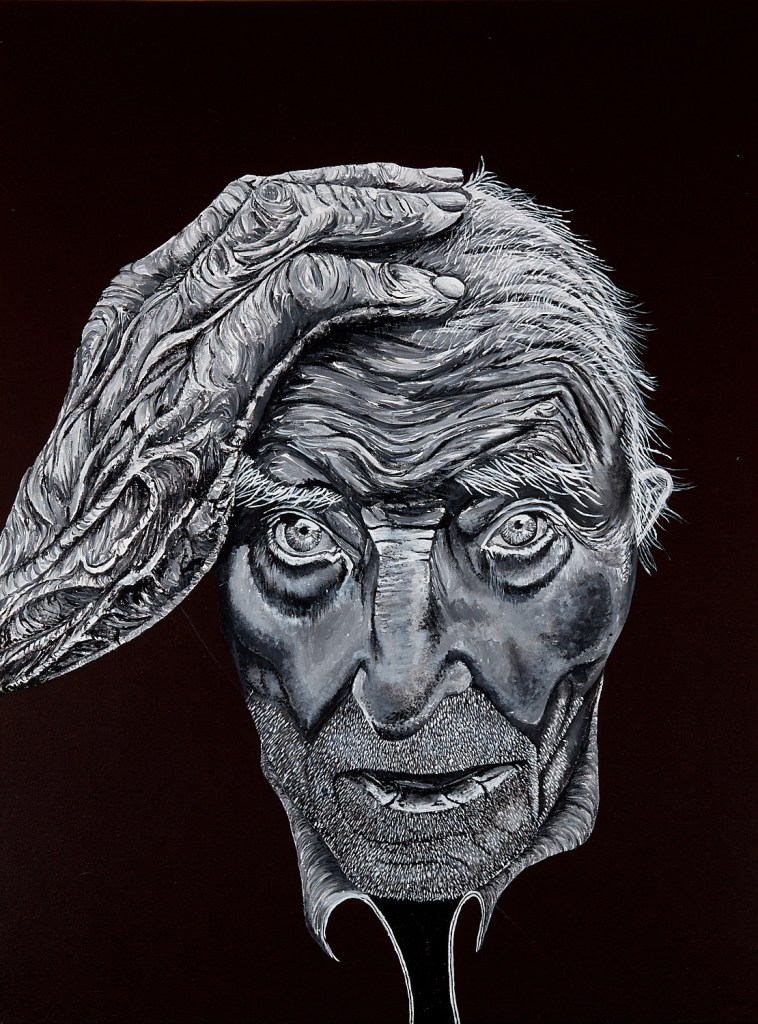
Koestler Arts (2019), Another Me: The Redwoods Centre (secure mental health unit), James Wood QC Silver Award for Portrait, 2019
In March 23, 2020, the UK went into lockdown. The advice given, albeit conflicting in parts, was clear. Do not leave your home unless absolutely necessary, banning all travel and social interactions. This unprecedented move forced people to isolate at home for a period, that for some people will come to an end, when the WHO announces the end of the pandemic. For the rest of us, the use of a face mask, sanitiser and even plastic gloves have become modern day accessories. The way the lockdown was imposed and the threat of a fine, police arrest if found outside one’s home sparked some people to liken the experience with that of detention and even imprisonment.
There was definite social isolation during the pandemic and there is some future work there to be done to uncover the impact it has had on mental health. Social distancing was a term added to our social lexicon and we discovered online meetings and working from home. Schools closed and parents/guardians became de facto teachers. In a previous blog entry, we talked about the issues with home schooling but suffice to say many of our friends and colleagues discovered the joys of teaching! On top of that a number of jobs that in the past were seeing as menial. Suddenly some of these jobs emerge as “key professions”
The first lesson therefore is:
Our renewed appreciation for those professions, that we assumed just did a job, that was easy or straightforward. As we shall be coming back eventually to a new normality, it is worth noting how easy it will be to assign any job as trivial or casual.
As online meetings became a new reality and working from home, the office space and the use of massive buildings with large communal areas seemed to remain closed. This is likely to have a future impact on the way business conduct themselves in the future.
Second lesson:
Given how many things had to be done now, does this mean that the multi occupancy office space will become redundant, pushing more work to be done from home. This will alter the way we divide space and work time.
During the early stages of the lockdown, some people asked for some reflection of the situation in relation to people’s experiences in prisons. The lockdown revealed the inequality of space. The reality is that for some families, space indicated how easy is to absorb the new social condition, whilst other families struggled. There is anecdotal information about an increase on mental health and stress caused from the intensive cohabitation. Several organisations raised the alarm that since the start of the lockdown there has been a surge in incidents of domestic violence and child abuse. The actual picture will become clearer of the impact the lockdown had on domestic violence in future years when comparisons can be drawn. None the less it reveals an important issue.
Third lesson:
The home is not always the safest place when dealing with a global pandemic. The inequality of space and the inequality in relationships revealed what need to be done in the future in order to safeguard. It also exposed the challenges working from home for those that have no space or infostructure to support it.
In the leading up to the lockdown many households of vulnerable people struggled to cope with family members shielding from the virus. These families revealed weaknesses in the welfare system and the support they needed in order to remain in lockdown. Originally the lack of support was the main issue, but as the lockdown continued more complex issues emerged, including the financial difficulties and the poverty as real factors putting families at risk.
Fourth lesson:
Risk is a wider concern that goes beyond personal and family issues. The lockdown exposed social inequality, poverty, housing as factors that increase the vulnerability of people. The current data on Covid-19 fatalities reveal a racial dimension which cannot longer be ignored.
During the lockdown, the world celebrated Easter and commemorated Mayday, with very little interaction whilst observing social distancing. At the end of May the world watched a man gasping for breath that died in police custody. This was one of the many times the term police brutality has related to the dead of another black life. People took to the streets, protested and toppled a couple of statues of racists and opened a conversation about race relations.
Fifth lesson:
People may be in lockdown, but they can still express how they feel.
So, whilst the lockdown restrictions are easing and despite having some measures for the time being, we are stepping into a new social reality. On the positive side, a community spirit came to the surface, with many showing solidarity to those next to them, taking social issues to heart and more people talked of being allies to their fellow man. It seems that the state was successful to impose measures that forced people indoors that borderline in totalitarianism, but people did accept them, only as a gesture of goodwill. This is the greatest lesson of them all in lockdown; maybe people are out of sight, appear to be compliant in general but they are still watching, taking note and think of what is happening. What will happen next is everyone’s guess.
Share this:


“A small case of injustice”

Pride as a movement in the UK but also across the world signals a history of struggles for LGBTQ+ community and their recognition of their civil rights. A long journey fraught with difficulties from decriminalisation to legalisation and the eventual acceptance of equal civil rights. The movement is generational, and in its long history revealed the way social reactions mark our relationship to morality, prejudice, criminalisation and the recognition of individual rights. In the midst of this struggle, which is ongoing, some people lost their lives, others fell compelled to end theirs whilst others suffer social humiliation, given one of the many colourful pejoratives the English language reserved for whose accused or suspected for being homosexuals.
This blog will focus on one of the elements that demonstrates the relationship between the group of people identified homosexual and the law. In sociological terms, marginalised groups, has a meaning and signals how social exclusion operates against some groups of people, in these case homosexuals but it does apply to any group. These groups face a “sharper end” of the law, that presumably is equal to all. This is the fallacy of the law; that there are no inherent unfairness or injustice in laws. The contention for marginalised groups is that there are presumptions in the law on purported normality that disallows them to engage fully with the wider community in some cases forced to live a life that leads all the way to segregation.
Take for example “entrapment”. Originally the practice was used by law enforcement officers to identify counterfeit money, later to investigate the sales of untaxed tobacco or the use of unlicensed taxis. The investigation in law allows for the protection of the public, non uniform officers to pose as customers in order to reveal criminalities that occur in the dark corners of society. The focus predominantly was to protect consumers and the treasury from unpaid tax. So, from that how did the law enforcement officers use it to arrest homosexuals? It is interesting to note we can separate the letter of the law as opposed to the spirit of the law. This distinction is an important one criminologically whilst for the law enforcement agencies evidently there is no such distinction.
The most recent celebrity case led to the arrest of George Michael in Los Angeles, US; the operation led to the outing of the artist and his conviction. As a practice across many years, entrapment played a significant part in the way numerous homosexuals found themselves arrested given a criminal record, loss of employment and in some cases ending up in prison. It is important to note that prior to the Sexual Offences Act of 1967, the biggest sexual crime in England and Wales was that of homosexuality (recorded as indecency or buggery). It took decades for that statistic to change, although historically remains still the highest category.
The practice of entrapment employed by the police demonstrates the uphill struggle the LGBTQ+ community faced. Not only they had to deal with social repulsion of the wider community that detested, both their practices and their existence, but also with public officials who used entrapment to criminalise them. This was happening whilst the professionals were divided about the origins of homosexual “anomaly” and how to deal with it, the practice of entrapment added new convictions and supplied more humiliation to those arrested. For the record, the criminological community was split along theoretical lines on this; the classicists such as Bentham argued for the decriminalisation of sodomy whilst the positivists namely Lombroso considered homosexuals to be in the class of moral criminals (one of the worst because they are undeterred) .
The issue however is neither theoretical, nor conceptual; for those who were aware of their sexuality it was real and pressing. During the post WWII civil rights movement, people started taking note of individual differences and how these should be protected by privacy laws allowing those who do not meet the prescribed “normal” lifestyles to be allowed to live. It emerged that people who were successful in their professional lives, like Alan Turing, John Forbes Nash Jr, John Gielgud etc etc, found themselves facing criminal procedures, following string operations from the police. This injustice became more and more evident raising the profile of the change in the law but also in the social attitudes.
In 2001 Lord Nicholls of Birkenhead addressed the issue of entrapment head on. In his judgement in Regina v Looseley:
“It is simply not acceptable that the state through its agents should lure its citizens into committing acts forbidden by the law and then seek to prosecute them for doing so. That would be entrapment. That would be a misuse of state power, and an abuse of the process of the courts. The unattractive consequences, frightening and sinister in extreme cases, which state conduct of this nature could have are obvious. The role of the courts is to stand between the state and its citizens and make sure this does not happen.”
This was the most damming condemnation of the practice of entrapment and a vindication for all those who faced prosecution as the unintended consequence of the practise. For the record, in 2017 under the Policing and Crime Act, included the “Alan Turing law” that pardoned men who were cautioned or convicted for historical homosexual acts. The amnesty received mixed reviews and some of those who could apply for denied doing so because that would require admission of wrongdoing. The struggle continues…
Regina v Looseley, 2001 https://publications.parliament.uk/pa/ld200102/ldjudgmt/jd011025/loose-1.htm
Share this:


The victimisation of one

One of the many virtues of criminology is to talk about many different crimes, many different criminal situations, many different deviant conditions. Criminology offers the opportunity to consider the world outside the personal individual experience; it allows us to explore what is bigger than the self, the reality of one.
Therefore, human experience is viewed through a collective, social lens; which perhaps makes it fascinating to see these actions from an individual experience. It is when people try to personalise criminological experience and carry it through personal narratives. To understand the big criminological issues from one case, one face, one story.
Consider this: According to the National Crime Agency over 100K children go missing in the UK each year; but we all remember the case of little Madeleine McCann that happened over 13 years ago in Portugal. Each year approximately 65 children are murdered in the UK (based on estimates from the NSPCC, but collectively we remember them as James Bulger, Holly Wells and Jessica Chapman. Over 100 people lost their lives to racially motivated attacks, in recent years but only one name we seem to remember that of Stephen Lawrence (Institute of Race Relations).
Criminologists in the past have questioned why some people are remembered whilst others are forgotten. Why some victims remain immortalised in a collective consciousness, whilst others become nothing more than a figure. In absolute numbers, the people’s case recollection is incredibly small considering the volume of the incidents. Some of the cases are over 30 years old, whilst others that happened much more recently are dead and buried.
Nils Christie has called this situation “the ideal victim” where some of those numerous victims are regarded “deserving victims” and given legitimacy to their claim of being wronged. The process of achieving the ideal victim status is not straightforward or ever clear cut. In the previous examples, Stephen Lawrence’s memory remained alive after his family fought hard for it and despite the adverse circumstances they faced. Likewise, the McGann family did the same. Those families and many victims face a reality that criminology sometimes ignores; that in order to be a victim you must be recognised as one. Otherwise, the only thing that you can hope for it that you are recorded in the statistics; so that the victimisation becomes measured but not experienced. This part is incredibly important because people read crime stories and become fascinated with criminals, but this fascination does not extend to the victims their crimes leave behind.
Then there are those voices that are muted, silenced, excluded and discounted. People who are forced to live in the margins of society not out of choice, people who lack the legitimacy of claim for their victimisation. Then there are those whose experience was not even counted. In view of recent events, consider those millions of people who lived in slavery. In the UK, the Slavery Abolition Act of 1833 and in the US the Emancipation Proclamation Act of 1863 ostensibly ended slavery.
Legally, those who were under the ownership of others became a victim of crime and their suffering a criminal offence. Still over 150 years have passed, but many Black and ethnic minorities identify that many issues, including systemic racism, emanate from that era, because they have never been dealt with. These acts ended slavery, but compensated the owners and not the slaves. Reparations have never been discussed and for the UK it took 180 years to apologise for slavery. At that pace, compensation may take many more decades to be discussed. In the meantime, do we have any collective images of those enslaved? Have we heard their voices? Do we know what they experience? Some years ago, whilst in the American Criminology Conference, I came across some work done by the Library of Congress on slave narratives. It was part of the Federal Writers’ Project during the great depression, that transcribed volumes of interviews of past slaves. The outcome is outstanding, but it is very hard to read.
In the spirit of the one victim, the ideal victim, I am citing verbatim extracts from two ex-slaves Hannah Allen, and Mary Bell, both slaves from Missouri. Unfortunately, no images, no great explanation. These are only two of the narratives of a crime that the world tries to forget.
“I was born in 1830 on Castor River bout fourteen miles east of Fredericktown, Mo. My birthday is December 24. […] My father come from Perry County. He wus named Abernathy. My father’s father was a white man. My white people come from Castor and dey owned my mother and I was two years old when my mother was sold. De white people kept two of us and sold mother and three children in New Orleans. Me and my brother was kept by de Bollingers. This was 1832. De white people kept us in de house and I took care of de babies most of de time but worked in de field a little bit. Dey had six boys. […] I ve been living here since de Civil War. Dis is de third house that I built on dis spot. What I think ‘bout slavery? Well we is getting long purty well now and I believe its best to not agitate”.
Hannah Allen
“I was born in Missouri, May 1 1852 and owned by an old maid named Miss Kitty Diggs. I had two sisters and three brothers. One of my brothers was killed in de Civil War, and one died here in St. Louis in 1919. His name was Spot. My other brother, four years younger than I, died in October, 1925 in Colorado Springs. Slavery was a mighty hard life. Kitty Diggs hired me out to a Presbyterian minister when I was seven years old, to take care of three children. I nursed in da family one year. Den Miss Diggs hired me out to a baker named Henry Tillman to nurse three children. I nurse there two years. Neither family was nice to me.”
Mary Bell
When people said “I don’t understand”, my job as an educator is to ask how can I help you understand? In education, as in life, we have to have the thirst of knowledge, the curiosity to learn. Then when we read the story of one, we know, that this is not a sole event, a bad coincidence, a sad incident, but the reality for people around us; and their voices must be heard.
References
Nils Christie (1986) The Ideal Victim, in Fattah Ezzat A (eds) From Crime Policy to Victim Policy, Palgrave Macmillan, London
Missouri Slave Narratives, A folk History of Slavery in Missouri from Interviews with Former Slaves, Library of Congress, Applewood Books, Bedford
Share this:


“My Favourite Things”: Manos

My favourite TV show - Those who know me, probably will understand why I find this one difficult to answer but considering the situation I shall go with Years and Years from the BBC

My favourite place to go - I am reluctant to say because it is my fortress of solitude, but it is an island somewhere in the Ionian sea

My favourite city - Thessaloniki, the second largest city in Greece and a place that is in my heart and in my memories

My favourite thing to do in my free time - I like to read, usually fiction with a drink and some music on the background; classical music ideally but jazz is also good.

My favourite athlete/sports personality - who came up with these questions? I had to think long and hard on this and I am going with Greg Louganis.  An inspiration to many

My favourite actor - Charlie Chaplin in The Great Dictator his speech at the end remains one of the most potent antifascist speeches.  Ironic considering that he made his career in silent movies!

My favourite author - Milan Kundera the author of several of my favourite books, The Unbearable Lightness of Being, Immortality and Life is Elsewhere.  Thoughtful novels full of very complex ideas.

My favourite drink - Lemon juice, ideally harvested springtime from an Ionian island; a couple of spoonfuls of sugar and some iced water and plenty of freshly squeezed lemon juice.

My favourite food - Spinach and cheese filo pie

My favourite place to eat - A little taverna by the sea; there is a little place, that my mind wonders to; the food may not gourmet but its honest, homemade food.

I like people who - speak their mind, are honest and have a positive outlook in life

I don’t like it when people - lie, gossip and pretend to know everything

My favourite book - Eichmann in Jerusalem an excellent study on the "banality of evil" a very interesting criminological idea

My favourite book character - elementary, Sherlock Holmes

My favourite film - The Life of Brian this is the movie that evokes old blasphemy laws because of its content.  A good demonstration of how art can reflect on life and call institutions to heel

My favourite poem - Ithaca by Kavafis, a wonderful journey through the eyes of the cosmopolitan Greek

My favourite artist/band- David Bowie, I cannot choose a particular era; definitely a incredibly creative mind.

My favourite song - Bitter Sweet Symphony

My favourite art - The Creation of Adam by Michelangelo

My favourite person from history - Marie Curie so much more than a woman, a scientist, a wife.  An enduring example to scientific reasoning

Share this:


Criminology 2020 AD

2020 will be a memorable year for a number of reasons. The big news of course was people across the world going into lockdown and staying home in order to stop the transmission of a coronavirus Covid-19. Suddenly we started counting; people infected, people in hospitals, people dead. The social agenda changed and our priorities altered overnight. During this time, we are trying to come to terms with a new social reality, going for walks, knitting, baking, learning something, reading or simply surviving, hoping to see the end of something so unprecedented.
People are still observing physical distancing, and everything feels so different from the days we were discussing future developments and holiday plans. During the last days before lockdown we (myself and @paulaabowles) were invited to the local radio by April Dawn to talk about, what else, but criminology. In that interview we revealed that the course started 20 years ago and for that reason we shall be having a big party inviting prospective, current and old students together to mark this little milestone. Suffice to say, that did not happen but the thought of celebrating and identifying the path of the programme is very much alive. I have written before about the need to celebrate and the contributions our graduates make to the local, regional and national market. Many of whom have become incredibly successful professionals in the Criminal Justice System.
On this entry I shall stand on something different; the contribution of criminology to professional conduct, social sciences and academia. Back in the 1990s Stan Cohen, wrote the seminal Against Criminology, a vibrant collection of essays, that identified the complexity of issues that once upon a time were identified as radical. Consider an academic in the 1960s imagining a model that addresses the issue of gender equality and exclusion; in some ways things may not have changed as much as expected, but feminism has entered the ontology of social science.
Criminology as a discipline did not speak against the atrocities of the Nazi genocide, like many other disciplines; this is a shame which consecutive generations of colleagues since tried to address and explain. It was in the 1960s that criminology entered adulthood and embraced one of its more fundamental principles. As a theoretical discipline, which people outside academia, thought was about reading criminal minds or counting crime trends only. The discipline, (if it is a discipline) evolved in a way to bring a critical dimension to law and order. This was something more than the original understanding of crime and criminal behaviour and it is deemed significant, because for the first time we recognised that crime does not happen in a social vacuum. The objectives evolved, to introduce scepticism in the order of how systems work and to challenge established views.
Since then, and through a series of events nationally and internationally, criminology is forging a way of critical reflection of social realities and professional practices. We do not have to simply expect a society with less crime, but a society with more fairness and equality for all. The responsibilities of those in position of power and authority is not to use and abuse it in order to gain against public interest. Consider the current pandemic, and the mass losses of human life. If this was preventable, even in the slightest, is there negligence? If people were left unable to defend themselves is that criminal? Surely these are questions criminology asks and this is why regardless of the time and the circumstances there will always be time for criminology to raise these, and many more questions.
Share this:

#CriminologyBookClub: The Unexpected Inheritance of Inspector Chopra
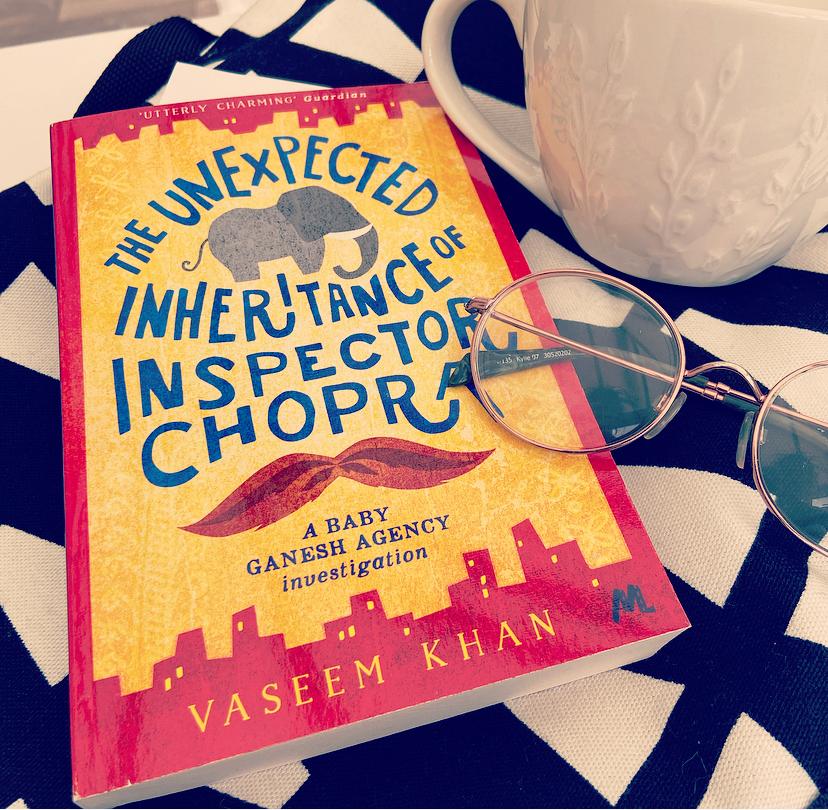
As you know from our last #CriminologyBookClub entry a small group of us decided the best way to thrive in lockdown was to seek solace in reading and talking about books. This blog entry is very different from any other we’ve published before, in that it has seven bloggers contributing! There is a very good reason why and that is because @manosdaskalou managed to choose a book that delighted all of us, and believe me, that is a challenge for a group of bibliophiles. Without more ado, let’s see what everyone thought:

“The second book of book club was a huge success- excellent choice @manosdaskalou! The Unexpected Inheritance of Inspector Chopra by Vaseem Khan was delightful! Whilst fulfilling all the ‘usual stuff’ associated with a crime novel, it also adds a layer of fantasy and wonder which is usually alien to crime fiction. As I raced through the novel, falling in love with characters- Poppy is kick ass, the complete opposite of drippy Carol (The Yellow Room) and safe to say I now want a baby Elephant; I was transformed into another world, something which crime fiction has never done for me before. It brought back feelings of nostalgia and memories of reading David Eddings and Derek Landy in the summer after GCSEs, when life was simpler and full of joy! A wonderful, intriguing and mysterious crime novel with a hint of fantasy, pulling you away to a different place. An enchanting and wonderful read which blends serious social injustices and issues with mystery, suspense and humour- I cannot wait to see what Inspector Chopra and Ganesha get up to next!”
@jesjames50

“The problem with writing a mere paragraph for a blog about a book that I really did enjoy is that I fear I won’t be able to do it justice. The story, well I’m sure others might tell you what the book is about but, if you want to know, really want to know, read it. Rarely can I say that I couldn’t wait to finish the book and yet didn’t want it to finish. The characters come to life, especially the elephant, in a way that makes it seem almost real, but not quite. The story moves on at a fast pace and yet has a steadiness to it. There are surprises along the way and, yet they are almost expected, it was always going to be that way. Within the narrative there is a demonstration of what we know to be good in humans and, yet it encompasses so much of what we know to be bad. How then can I have left the final page, sad that the book was finished, but uplifted by the narrative and almost salivating at the anticipation of reading the next in the series? The plaudits on the cover don’t do it justice, to answer my question, all I can reiterate is that you have to read it to understand.”
@5teveh
“When I first received this book, I was a bit sceptical, as I did not know how an elephant was going to be incorporated into a detective crime novel. However, I was pleasantly surprised. The first book in the series was a delight and a much-needed escape in these uncertain times. This book captured my attention very quickly and whisked me off on a colourful, picturesque adventure to Mumbai, with the amazing inspector Chopra and of course the star of the story, Ganesh the mysterious baby elephant. The book introduces you to an interesting plot. At first you are made to think that the focus of the book will be on Inspector Chopra investigating the murder of a young man. However, you are quickly introduced to the wider issues that sit at the heart of social and economic challenges present in India. Without leaving you glum, the book has a nice balance of crime and mystery, coupled with humour, great food, wonderful scenery and lovable characters. I liked this book as it was unique to any other books that I have read. I am looking forward to continuing the Baby Ganesh Detective Agency series.”
@svr2727
“Vaseem’s novel had me from to get-go. Set in bustling Mumbai this novel has more depth than the usual “whodunit” scenario. This book is a criminologist’s dream, as yes, we all find out who did it in the end, and yes the case is also solved but there are also issues of poverty and corruption to contend with. The story would not be complete without Ganesha the elephant who makes solving the case possible (and survivable). Ganesha goes through a lot in the story. From being depressed and chained up outside an apartment complex, to being mistakenly left to drown during heavy rain and fed chocolate. Despite all of this, Ganesha is often the hero of the hour, so for me the book symbolises the true greatness of animals: We do not deserve them.”
@haleysread
“I really enjoyed this book. It was great to lose myself in a different country and culture and to meet so many relatable characters there – even (especially?) the chocolate loving elephant! I can’t wait to find out what happens next…”
@saffrongarside
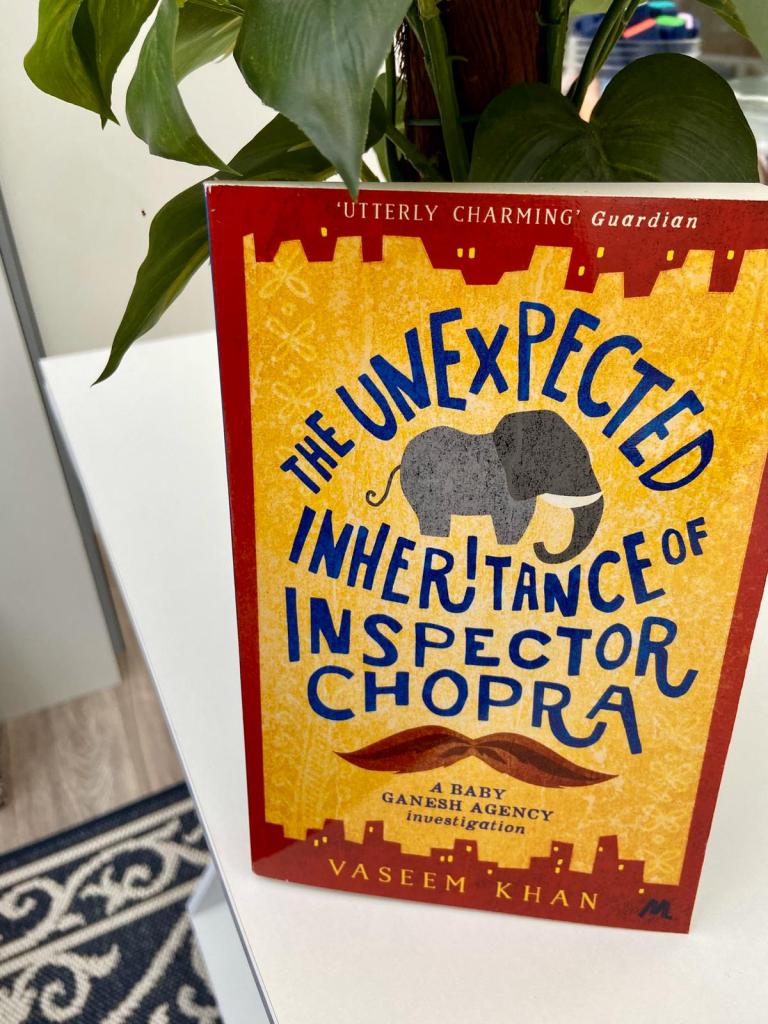
As well as having the joy of reading The Unexpected Inheritance of Inspector Chopra, we also had the very unexpected pleasure of welcoming the author Vaseem Khan to our book club meeting today. To be able to hear about Vaseem’s motivations for creating the colourful world in which Inspector Chopra and Ganesha work and play was fascinating. The opportunity to ask questions was fantastic and we’d like to say a big thank you to Vaseem for allowing us a peak inside his world of writing. It is now easy to see where Inspector Chopra gets his generosity of spirit from. And now we’ll leave the final word to @manosdaskalou….after all he did choose the book 😉
“What does a gang of criminologists do at lockdown? We read crime books and talk about them. On this occasion The Unexpected Inheritance of Inspector Chopra was a welcomed distraction from reality. The book introduces the retired inspector with a very unusual sidekick! The retired inspector is a very honourable, incorruptible professional whose investigation will bring him in conflict with the criminal underbelly of Mumbai. The retired inspector is not fazed, and he is determined to carry on regardless. The investigation takes inspector Chopra around the city; which gives the reader a unique opportunity to get to know a metropolitan megapolis.”
@manosdaskalou

 Thoughts from the criminology team