
Organisational reputation: A euphemism for institutional corruption and violence
The Independent Inquiry into Child Sexual Abuse published a damming report regarding child protection in religious organisations and settings. One of the findings was that ‘In many cases, concerns about external involvement are connected to a desire to protect the reputation of a religious organisation’. Of course, there are many other issues highlighted in the report, but I wanted to concentrate on this notion of protecting organisational reputation. When I hear the phrase ‘organisational reputation’ my blood generally runs cold because I know that behind these words lay a multitude of sins.
Companies and public sector bodies have policies that are designed, at least in part to protect organisational reputation. The rationale behind these policies often lacks transparency. It might be that the protection of the organisation’s reputation ensures it maintains its customer or client base, an enhanced reputation sees more customers or clients, a poor reputation might see this dwindle, to the detriment of the organisation and ultimately to the detriment of its employees and owners. It is difficult to recover from a poor reputation and in the case of business, this is sometimes catastrophic.
However, behind the notions of organisational reputation and policies lays a multi-layer of complex organisational and human behaviours which ultimately lead to institutional corruption and violence. Things will go wrong in organisations, whether that be as a result of human behaviour such as poor decision making or illegal activity or as a result of system failure, such as the failure of software or hardware. Any of these failures might harm the reputation of the organisation and herein lies the nub of the matter. When there are failures, because of organisational culture, which often finds its basis in finding someone to blame, there is a propensity to try to keep the issues ‘in house’, to protect the organisation. By doing so, managers and those in charge ensure that they are not scrutinised regarding the failure, be that individual failures, failures of policies or failures of systems and processes. So, the organisational reputation is not necessarily about protecting the organisation, it is more about avoiding scrutiny of those individuals in power. The mention of organisational reputation in policies and processes has another effect, it silences employees. Whistle blowing policies are subjugated to notions of organisational reputation and as a result silence is maintained for fear of some form of informal sanction. The maintenance of silence ensures organisational reputation, but this corruption also ensures continued institutional violence and corrupt practices. The longer it continues the more those in power have a vested interest in ensuring that the issues are not addressed, lest they are uncovered as offenders through their inaction. ‘We are all in this together’ takes on a new meaning. Thus, corrupt or criminal practices simply continue.
And if the wrongdoing is uncovered, becomes public, then the first reaction is to find a scapegoat thus avoiding the scrutiny of those in power. Rarely in these inquiries do we find that those put in the dock are the managing directors, the chief constables, the heads of children’s services, the archbishops or politicians. Rarely do we see those that caused the problem through inadequate or unworkable policies or strategies or working conditions are ever brought to book. Often its simply portrayed as one or two bad apples in the organisation. Thus, organisational reputation is maintained by further institutional violence perpetrated against the employee. That is not to say that in some cases, the employee should not be brought to book, but rarely should they be standing in the dock on their own.
For ‘organisational reputation, just read institutional corruption and violence.
Share this:


The pathology of performance management: obscuration, manipulation and power

My colleague @manosdaskalou’s recent blog Do we have to care prompted me to think about how data is used to inform government, its agencies and other organisations. This in turn led me back to the ideas of New Public Management (NPM), later to morph into what some authors called Administrative Management. For some of you that have read about NPM and its various iterations and for those of you that have lived through it, you will know that the success or failure of organisations was seen through a lens of objectives, targets and performance indicators or Key Performance Indicators (KPIs). In the early 1980s and for a decade or so thereafter, Vision statements, Mission statements, objectives, targets, KPI’s and league tables, both formal and informal became the new lingua franca for public sector bodies, alongside terms such as ‘thinking outside the box’ or ‘blue sky thinking’. Added to this was the media frenzy when data was released showing how organisations were somehow failing.
Policing was a little late joining the party, predominately as many an author has suggested, for political reasons which had something to do with neutering the unions; considered a threat to right wing capitalist ideologies. But policing could not avoid the evidence provided by the data. In the late 1980s and beyond, crime was inexorably on the rise and significant increases in police funding didn’t seem to stem the tide. Any self-respecting criminologist will tell you that the link between crime and policing is tenuous at best. But when politicians decide that there is a link and the police state there definitely is, demonstrated by the misleading and at best naïve mantra, give us more resources and we will control crime, then it is little wonder that the police were made to fall in line with every other public sector body, adopting NPM as the nirvana.
Since crime is so vaguely linked to policing, it was little wonder that the police managed to fail to meet targets on almost every level. At one stage there were over 400 KPIs from Her Majesty’s Inspectorate of Constabulary, let alone the rest imposed by government and the now defunct Audit Commission. This resulted in what was described as an audit explosion, a whole industry around collecting, manipulating and publishing data. Chief Constables were held to account for the poor performance and in some cases chief officers started to adopt styles of management akin to COMPSTAT, a tactic born in the New York police department, alongside the much vaunted ‘zero tolerance policing’ style. At first both were seen as progressive. Later, it became clear that COMPSTAT was just another way of bullying in the workplace and zero tolerance policing was totally out of kilter with the ethos of policing in England and Wales, but it certainly left an indelible mark.
As chief officers pushed the responsibility for meeting targets downwards through so called Performance and Development Reviews (PDRs), managers at all levels became somewhat creative with the crime figures and manipulating the rules around how crime is both recorded and detected. This working practice was pushed further down the line so that officers on the front line failed to record crime and became more interested in how to increase their own detection rates by choosing to pick what became known in academic circles as’ low hanging fruit’. Easy detections, usually associated with minor crime such as possession of cannabis, and inevitably to the detriment of young people and minority ethnic groups. How else do you produce what is required when you have so little impact on the real problem? Nobody, perhaps save for some enlightened academics, could see what the problem was. If you aren’t too sure let me spell it out, the police were never going to produce pleasing statistics because there was too much about the crime phenomenon that was outside of their control. The only way to do so was to cheat. To borrow a phrase from a recent Inquiry into policing, this was quite simply ‘institutional corruption’.
In the late 1990s the bubble began to burst to some extent. A series of inquiries and inspections showed that the police were manipulating data; queue another media frenzy. The National Crime Recording Standard came to fruition and with it another audit explosion. The auditing stopped and the manipulation increased, old habits die hard, so the auditing started again. In the meantime, the media and politicians and all those that mattered (at least that’s what they think) used crime data and criminal justice statistics as if they were somehow a spotlight on what was really happening. So, accurate when you want to show that the criminal justice system is failing but grossly inaccurate when you can show the data is being manipulated. For the media, they got their cake and were scoffing on it.
But it isn’t just about the data being accurate, it is also about it being politically acceptable at both the macro and micro level. The data at the macro level is very often somehow divorced from the micro. For example, in order for the police to record and carry out enquiries to detect a crime there needs to be sufficient resources to enable officers to attend a reported crime incident in a timely manner. In one police force, previous work around how many officers were required to respond to incidents in any given 24-hour period was carefully researched, triangulating various sources of data. This resulted in a formula that provided the optimum number of officers required, taking into account officers training, days off, sickness, briefings, paperwork and enquiries. It considered volumes and seriousness of incidents at various periods of time and the number of officers required for each incident. It also considered redundant time, that is time that officers are engaged in activities that are not directly related to attending incidents. For example, time to load up and get the patrol car ready for patrol, time to go to the toilet, time to get a drink, time to answer emails and a myriad of other necessary human activities. The end result was that the formula indicated that nearly double the number of officers were required than were available. It really couldn’t have come as any surprise to senior management as the force struggled to attend incidents in a timely fashion on a daily basis. The dilemma though was there was no funding for those additional officers, so the solution, change the formula and obscure and manipulate the data.
With data, it seems, comes power. It doesn’t matter how good the data is, all that matters is that it can be used pejoratively. Politicians can hold organisations to account through the use of data. Managers in organisations can hold their employees to account through the use of data. And those of us that are being held to account, are either told we are failing or made to feel like we are. I think a colleague of mine would call this ‘institutional violence’. How accurate the data is, or what it tells you, or more to the point doesn’t, is irrelevant, it is the power that is derived from the data that matters. The underlying issues and problems that have a significant contribution to the so called ‘poor performance’ are obscured by manipulation of data and facts. How else would managers hold you to account without that data? And whilst you may point to so many other factors that contribute to the data, it is after all just seen as an excuse. Such is the power of the data that if you are not performing badly, you still feel like you are.
The above account is predominantly about policing because that is my background. I was fortunate that I became far more informed about NPM and the unintended consequences of the performance culture and over reliance on data due to my academic endeavours in the latter part of my policing career. Academia it seemed to me, had seen through this nonsense and academics were writing about it. But it seems, somewhat disappointingly, that the very same managerialist ideals and practices pervade academia. You really would have thought they’d know better.
Share this:


Not so Priti politics: setting a clear example
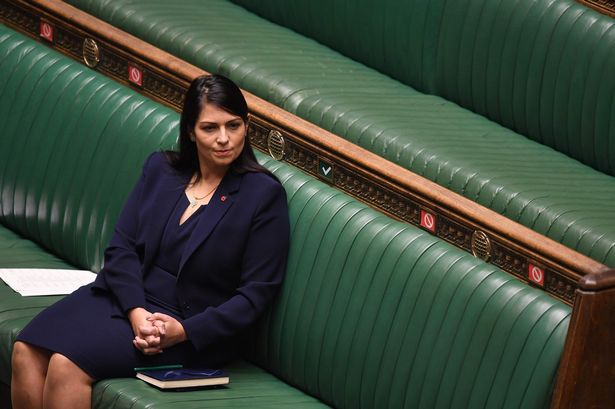
Of course Priti Patel the home secretary is correct when she declared that England fans have a right to boo England football players taking the knee before the England versus Croatia match on Sunday. Correct that is, in considering the spirit of the European Convention on Human Rights and Article 10, Freedom of Expression. This being encapsulated in our own Human Rights Act 1998. But whilst, the home secretary considers such booing, lets call it a form of protest, acceptable, she then adds that the ‘taking of the knee’ is simply ‘gesture politics’ and finds this form of protest unacceptable. The players and others through television advertising have made it clear that the statement is not political, it is simply a reminder of the need to tackle inequality and racism.
So, I’m left considering this, according to Priti Patel, it is acceptable to protest against those that oppose inequality and in particular racism, but it is not acceptable to protest against that in equality and racism. The first is a right, the second is some form of gesture politics. Ms Patel doesn’t end it there though but bemoans the Black Lives Matter protests and the ‘devastating impact they had on policing’. Somehow, I think she’s missed the point. If it is simply about the resources required to police the BLM protests, well the right of expression you say people have (you can boo if you want to) was simply being exercised and the police have a duty to facilitate those protests, devastating or not. If the devastation was about some other impact such as morale, then I think a bit of introspection wouldn’t go amiss. There is far too much evidence to show that the criminal justice system and the application of policing in particular is unequal, unfair and in need of change.
The home secretary is ultimately in charge of policing in this country. A politician, yes, but also supposedly a leader, who should be leading by example. What sort of example have her views set police forces across the country? Carry on folks, this is just gesture politics. No empathy, no understanding and a devil may care attitude, suggests that tackling inequality is not on the home secretary’s, let alone this government’s, agenda. This is not politics of the right, this smacks of politics of the far right. This is something we should all be worried about.
Share this:


A smorgasbord of thought (AKA a head full of magic)

Its been a few weeks since I’ve written a blog and whilst there are plenty of topics to pick from, I never quite got my head round writing about anything in depth. I’ve thought about a lot, I never stop thinking about a lot, some it meaningful and some of it not. I like to think that some of the stuff is quite profound but that’s just in my imagination, I think. Anyway, rather than trying to put together some deep and meaningful narrative about the state of the world I thought I’d provide a few highlights.
When I read Jes’ blog the other week about graffiti, I couldn’t help thinking that we do far too much to try to justify and somehow nullify the effects of criminality. For all our theorising and empathising as criminologists, we shouldn’t lose sight of the fact that crime results in victims and being a victim of crime is at best an unpleasant experience. So, I have to disagree with Jes on one point, grafitti is not art, its criminal damage, vandalism if you like. Very rarely have I ever gazed upon a graffiti covered bridge, wall, shop front, shutter, railway station siding or railway carriage and thought to myself, wow that’s nice. Let’s call it what it is.
I think it was the same week that I read a post on ‘LinkedIn’ about the silence surrounding the murder of Julia James, a 53-year-old Police Community Support Officer. The silence the author of the post was referring to was the contrast between the public response to Julia James’ death and that of Sarah Everard, a 33-year-old marketing executive. No vigil, no public outrage, no ‘claim the streets back’. I wondered what dictates the public response to such horrific events. Is it age, occupation, circumstance or just timing?
I watched the news this week somewhat bemused by the response of some industry chiefs and business owners. The airline industry is less than pleased with the government’s approach to relaxing of restrictions around travel and some business owners are apoplectic about the fact that the removal of restrictions might be delayed. It might be a bit simplistic to state this, but it seems that they value business more than lives.
As for those that went on holiday abroad, thinking they wouldn’t need to quarantine when they came back only to find that the rules changed, and they now have to. More fool you, maybe I’ve missed a trick here, but I don’t think the Covid virus and its mutations will wait for you to enjoy the rest of your holiday before spreading a little more. Don’t complain about quarantine nor the cost of testing, you put yourself in that position, now take some responsibility and suck it up instead of blaming someone else.
In a conversation, a friend of mine told me ‘the problem is people don’t like being told what to do’. This was said in the context of Covid and our discussion about the idiots that think any rules or guidance just doesn’t apply to them. The comment did however make me think about a paper I read some time ago by Storch (1975). When the new police were introduced into this country in 1829, there were few who looked upon them favourably. One of the main issues was simply that the populace did not like being restricted in their ‘immoral or illegal’ pastimes. We can have a debate about who makes the rules but it seems to me the most pressing point is that little has changed. Take off the rose-tinted glasses, there never was a golden era of policing, the police have never been liked and never will be. I wonder how the population would act if there were no police though?
I’m a little weary now, all of this thinking and writing has worn me out. Time for a lie down in a darkened room.
Share this:


Whose rights are they anyway?

I’m a great believer in human rights and when the topic comes up, I make it clear to my students that you either buy into human rights wholeheartedly or you don’t buy into it at all. There is no halfway house. You cannot pick and choose which bits you like, or decide that there is a time limited offer, a bit like a sale, on one month but not the next, and then on again. Nor can you decide that such rights only apply to some and not others (Home Office take note regarding refugees and asylum seekers). But the more I think about human rights the more I question how rights can work on an individual level without impacting on others’ rights.
A good example is the protests over the last year or so, particularly during ‘lockdown’. I ought to hasten to add before someone protests vociferously, that this blog is not about the validity of the subject matter being protested about. The blog is simply about how the exercise of rights that we hold so dear, can and do impact on other’s rights.
The government and its agents have a duty to ensure that human rights are facilitated as best as possible. Whilst there are some caveats, this duty extends to taking positive steps to ensure that we have a right to protest, a right to associate with whom we like, a right to express what we want to express and I would suggest above all else a right to life. I have prioritised the right to life but, in the arguments about the rights to protest, few if any question the impact that such protests have on that one fundamental right.
And I can hear the arguments now, what the people are protesting about is far bigger, too important not to be allowed to protest. The argument can even be extended to the fact that the protests are about the right to life, a valid argument. So, it is ironic that protesting about the right to life impacts on others’ right to life. If you don’t agree then please tell me what the purpose of ‘lockdown’ was if it wasn’t at least in part to save lives. The problem with protests, peaceful or not is that they do not suddenly happen in one place, people are not just beamed in. Would be protesters have to get to the venue thereby creating multiple opportunities for the spread of Covid. But even when we are not in ‘lockdown’, many protests have a detrimental impact on the rights of other members of the public through the disruption caused. In exercising fundamental rights, we trample on the rights of others. Whilst we may agree with the sentiments of the protests, it is and should not always be the case. Protests are not always about what we hold or ought to hold dear, in fact sometimes the opposite.#
I cannot say I am in favour of the new proposals to regulate protests, but I do understand the rationale, at least in part. I also understand the concern and the possible impact on our freedoms. But I find it somewhat bemusing that so many are quick to criticise and yet so few offer solutions. One day, when I am particularly annoyed about something and decide to join a protest, I wonder whether I will think about other people and the rights I am depriving them of?
Share this:


Helpfully unhelpful: The pathology of being too supportive

When I first arrived in London, I needed to find my way across the city to the now former site of the Home Office at St Anne’s Gate. I didn’t have a clue about how to get there so I asked a member of staff at St Pancras railway station. He helpfully pointed me in the direction of the London Underground. I was swept along by a torrent of people, all going about their business with a purpose, I however, didn’t have a clue where I was going. Finding sanctuary in a quiet eddy and desperately looking around I spotted a member of staff across the concourse. Fighting against the current I scrambled to where the member of staff was and implored upon them to rescue me. Thankfully the underground staff had all been briefed, not specifically about me, I should hasten to add, but about how by being super helpful they could increase customer satisfaction, reduce complaints and attract even more customers. And having explained my dilemma, I was very helpfully led through the ticket barriers, now struggling to hold back the surge, and down the escalator to the platform below. I was told to get on the next train and to get off at St James’ Park. Having arrived at my destination I became confused as to which exit to use and once again found a very helpful staff member who led me part way to the exit, where I spilled out into the sunlight a matter of yards away from my destination.
The following week I once again plunged into the torrent and confident that I knew which underground line to take I allowed myself to be swept along to the barriers and through, and then panic. Which platform and am I sure that was the right line? Once again, a beacon of hope shone across the dark morass, a member of underground staff. Once again, I was led to the platform in a super helpful way and got on the first train. But this time I didn’t arrive at my destination for some, I have to say, traumatic hours. The problem was the first train was not the train to catch, it was the second that I needed; I will most definitely have to complain about that member of staff being unhelpful.
This pattern of visits to London and assistance rendered by sometimes grumpy but always super helpful members of underground staff continued for some weeks. Often, I would stay in London for a week at a time before returning home outside of the metropolis at the weekend. During my stays I visited numerous police stations as part of my work and every time I used the underground, I sought out a helpful member of staff to assist me. Sometimes, if they rather unhelpfully simply pointed me in the right direction, I would set off and then return to them explaining that I didn’t understand their instructions. Armed with more information I would again purposefully set off and then duly return until the succumbed and rather reluctantly but helpfully led me to the correct platform.
Then in a fortnight, two things happened. Firstly, the underground staff went on strike and on arriving at the gates of St James’ Park underground station I found the gates closed. There were a couple of members of staff there, but they weren’t very helpful. ‘What should I’ do I asked, ‘Dunno’, was the reply. Now that was not very helpful, complaint forthcoming I feel. I didn’t make my appointments that day and the following day had to use taxis to get around. Much easier to use taxis you might say, yes but not really justifiable in terms of cost, my boss told me when I suggested I would forego using the underground altogether. After three days the underground opened up again but for some reason there were no staff around to ask for help. I became increasingly anxious and found myself avoiding the underground, using taxis at my own expense, and walking long distances. I was exhausted I can tell you.

The next week I ventured into the underground again, I couldn’t avoid it forever. I found a member of staff and duly asked them, in an almost ritualistic fashion, how to get across London to another underground station near yet another police station. Instead of pointing me in the right direction, which we all know by now is a rather fruitless, time wasting and unhelpful exercise, or super helpfully taking me to the correct platform, they took me to a rather large underground map on the wall. ‘This is where we are’, the very nice lady said, ‘and this is where you want to be’, she added. She then continued to explain how to use the map, how to follow the signs dotted around the stations, how to look for the signs before entering the platforms so as to work out which platform to be on and how to ensure I get on the correct train. I was nervous following her instructions as I made my way to the platform, but I got to my destination and I made my own way back, with help of the wall map of course. From that point onwards, I made my way around London on the underground with increased confidence, I wouldn’t say with consummate ease, but confidently. I made mistakes but because I knew how to read the map, I was able to rectify them and if I couldn’t I knew that I could ask. Of course, now that I drive, I use maps, I would probably have been pestering police officers and random members of the public otherwise and we know how the rare the sight of the former are on our streets. Anyway, I don’t think they’ve had the ‘super helpful’ briefing. Lately though I’ve been using my satnav, and sometimes getting into a right pickle. It seems you can’t beat good old-fashioned map reading.
What’s the point of this nonsensical tale? Well the clue is in the title. As educators we need to consider the purpose of what we are doing and how this will add value to students’ learning and knowledge. We can give students the answers to the essay questions, how to structure a particular essay, what arguments to include, what books and journal articles to read. We can supply them with reading lists that contain links to the books and journal articles, we can coach them to such an extent that their journey is in fact our journey, just as my journey to the underground platform was the staff member’s journey. We can repeat this many times over so that students are capable of completing that essay, but like me on my journey through the underground, they will need the same coaching for every piece of assessment and whilst they may complete each journey as I did, they have learnt very little and become increasingly disempowered and crippled by our helpfulness and their increasing reliance on it. Our jobs as educators is not to provide answers but to equip students with the tools to find the answers themselves. That process requires a willingness to learn, to discover and to take risks. Super helpfulness should not be an organisational strategy to ensure each part of the journey is easily manoeuvred and completed, it should be about ensuring that people can complete any journey independently and confidently. Sometimes by appearing to be super helpful we are simply being very unhelpful and disempowering people at the same time.
Share this:


Reflecting on reflection

For some years now students taking the third year Critiquing Criminalistics module on our criminology course at the university have had an assessment relating to a reflective diary. Most educators and those in other professions will be aware of and understand the advantage of reflection and reflective diaries so it is probably not necessary to revisit the well-rehearsed arguments about benefits to learning and personal development. Each year, I have found that over the course of the module, the students have come to recognise this and have intimated how they have enjoyed reflecting on what they have learnt in the class or how reflecting on personal experiences has been beneficial. And they comment on how they have sought out further information to gain additional knowledge or to put what they have learnt in some form of perspective. It is of course what we as educators would want and expect from a reflective diary assessment that after all counts towards their marks for the module.
What has surprised me though is how much reviewing these modules has benefited me. I have learnt from and continue to learn my students. We all recognise or at least should the old saying ‘the more I know, the more I realise I don’t know’ or similar. My students prove that is the case often with each round of diary entries I review. The diaries can provide an insight into students lives and thoughts. For some of them it may be a cathartic release to capture their feelings on paper, for me it is enlightening and provides a greater understanding of some of the challenges they face not only as students but also as predominately young adults in a challenging and at times hostile social and economic environment. Perhaps what is equally as enlightening is the additional knowledge that students provide about the subject area being discussed and taught. It is almost like sending out my own little army of literature reviewers with a challenge to advance their knowledge and ipso facto, mine. I am clear that part of the reflection process is about taking what you have learnt further and as this an assessment, demonstrating this additional knowledge with some academic rigor. And so, I find that in some cases what I have stated in the class (currently online) is challenged and that challenge is supported by academic reading. When I read some of these little gems, I smile but alongside this is the additional work created as I review the journal article they have referenced and then decide whether to revisit my lectures to add in the additional information. Even if I don’t, it all adds to my knowledge and, on reflection as my students are proving, there is plenty of scope to find out more.
Share this:


Education, education, education: We’ve lost the plot

Some of you might remember Tony Blair’s speech introducing the Labour party’s education manifesto in 2001. In it he proclaimed that education was at the forefront of government policy. Education is often high on government’s agenda even if it is only to berate previous administrations for failing our youngsters. I have watched with interest the current government’s farcical approach to education and in particular the attainment of qualifications during the first period of Covid lockdown and to some extent even felt sorry for them as they grappled with what were not insignificant problems. My benevolence, however, has long been drained as I watch the news more recently only to see the same farce emerging. But what really intrigues me is the conflation of the notion of qualifications and education. It seems to me the clamber to get children back into school is only right given that they are missing out on education and other social aspects. However, I cannot see how the dealing with the qualifications issue can ignore the fact that the students have not received all of their education.
In a previous blog I have used the analogy of a driving instructor giving lessons to a pupil. In that blog the point being made was that the education of the pupil was a two-way enterprise. If the pupil didn’t engage or didn’t turn up for their lessons, then the instructor could not be held responsible for the pupil’s failure in the driving test. But what of the test itself, what is that designed to achieve? It is not simply to provide a person with a driving licence, what would be the point of that? It is to ensure that the person taking the test can drive to a satisfactory standard that would help ensure the roads were safe for all users. So, the point of the driving lessons is to provide the education in ‘road craft’ and the point of the driving test is to test knowledge and ability in that ‘road craft’ to ensure it meets satisfactory standards. The driving licence is a form of certificate that states the driver has achieved the knowledge and skills required.
So, what of education? Surely GCSEs, A levels, BTec and so on are a test of the knowledge and skills acquired. A degree is the same, is it not? How then could we reasonably expect students to pass any of these tests if they have lost significant periods of tutorship or teaching? The suggestion, dumb down the tests in some way by only testing what they have been taught, or as in the case of university students suggestions, be more lenient with the marking. Now as I understand it, that would be akin to saying to a learner driver that because through no fault of their own, they could not engage in all of their lessons, they will only be tested on their ability to park and not on their ability to carry out an emergency stop as they hadn’t been taught the latter. How ridiculous would that be? Imagine then that the very same driver, who now has a driving licence, goes onto some advanced motoring course. A course that starts with the premise that they have all the skills tested in a ‘full’ driving test.
Whilst, I can understand students’ preoccupation with tests and qualifications, I somehow think that government and teaching establishments should be more concerned with education and the knowledge gap. How will they ensure that students have the requisite skills and knowledge? Tony Blair may have said ‘Education, Education, Education’ and subsequent governments might well nod in agreement, but somehow I think they’ve all lost the plot.
Share this:


My new year nightmare: finance, political imperatives and a lack of strategy

The new year is here. At its last knockings, the previous year offered hope of some sort of return to normality. The second new vaccine was on its way, far easier to store and distribute, it offered hope. Unfortunately, the joy of the new year has been somewhat muted as we have witnessed Covid-19 cases rise to new heights. Talks of stricter measures have turned into our new reality, as one minute the government insisted on schools opening then the next a partial U-turn before a forced full-scale retreat. But as we watch all of this unfold, I am reminded of a comment I heard from a radio presenter on the lead up to Christmas. Her view was that there was much to be happy about, we know more about the virus now than we ever did and scientists have developed a vaccine, several vaccines, in record time. Over the Christmas and new year period I reflected on last year and tried to think about what we have learnt.
Brexit has just proved to be a complete farce. Promises of a good deal turn out to be not so good, ‘no deal is better than a bad deal’ the politicians said. And then in desperation, realising that any deal was better than no deal and that the best deal was the one where we were in the European Union they settled on something and thanked the gods that there was far more pressing bad news to hide their incompetence. So, we are now a ‘sovereign’ nation but poorer to boot and whilst we think we have regained control over our borders, it is only limited to bureaucratic, time consuming form filling, as we beg people to come here to work in our care homes and on the farms for a pittance. Perhaps the refugees that we have reluctantly accepted might help us out here. Brexit has been delivered but at what cost? No wonder Stanley wants to take up his opportunity for a French passport.
We are all equal its just that some are far more equal than others. We saw the rise of the Black Lives Matter movement and I have a feeling that I wouldn’t be able to do that discussion justice; I’ll leave that to others that are far more capable. It did have a profound impact on me though as a former serving police officer, I would like to think it had an impact on others both retired and serving, but I’m not so sure. I think that quite often the police are simply a reflection of our society and I’m not willing to bet much on that changing rapidly. I remember Michael Holding, a former West Indian cricketer, turned commentator, talking about ‘white privilege’ and he provided what I thought at the time was a good example. Now I’m not so sure, this so called ‘white privilege’, isn’t privilege at all, it’s rights. It’s the rights that white people avail themselves of everyday in a democratic society (well that’s what we are supposed to be in anyway) without a second thought. The problem isn’t that white people have those rights, it’s that Black and ethnic minority individuals don’t, or where they do, the rights are somehow conditional. I might be wrong in my thinking, but I know one thing, without some very clear leadership from government, institutions and general societal attitudes are unlikely to change sufficiently. Although footballers and staff take a knee before every match, I fear that the momentum is likely to be lost. By the way, I’m not holding out much hope on the leadership gambit.
Sticking to the we are all equal theme; the pandemic has shone a spotlight on poverty in this country. Yes, Mr high and mighty Reece-Mogg, there really are very poor people in this country and they do need a helping hand. The fact that food banks are even required is shameful. The fact that foodbanks rely on charity is an even more shameful indictment of our government. The fact that a senior politician can stand up in the house of commons and accuse a charity of political motives when distributing aid beggar’s belief. I find it extraordinary that pre pandemic, homeless people were left to their own devices on the streets, reliant on charity and handouts and yet as soon as we went into lockdown, the government found money from somewhere to house them. What changed? My worry is that when the pandemic is over, the government are going to be more concerned about balancing the books than they are about the pervasive poverty endemic in our nation.
Children returning to school has been a huge issue for government and they rely on evidence that suggests that the best place for children is at school. A headmaster reminded us in an interview on the radio that this ‘online learning’ phrase that trips off the tongue is far easier to talk about than to achieve. What hits home is the huge disparity in opportunity for children to avail themselves of online learning. Poorer families cannot provide the technology required. Poorer families are likely to live in cramped conditions making it impossible for children to concentrate on work as siblings run around trying to keep themselves amused. And let’s not forget the plight of the parents who are more likely to be in jobs that require them to be at work, not home. Then of course there are those children that are vulnerable where school is a safe haven from abuse, whether that’s physical or mental or simply because school is where they will be fed. So, in a sense for many, school is a better place than home, but we really ought to be asking why that is. What does that say about our society? If I were to hazard an educated guess, I’d say its broken. The return of children to school had wider implications. What about the teachers and staff? It seems to me that government have different standards of risk depending on what suits. I’ll come back to this in time but I think the closure of schools owes itself more to the action of teachers in their refusal to turn up to work in an unsafe environment than it does any sensible government strategy.
Sticking to the education theme, the pandemic shone a rather harsh spotlight on higher education too. What became increasingly obvious was that the return of students to campus was purely financially driven. At least one vice chancellor put his head above the parapet and stated as much. His university would fail if he did not fill the halls of residence. So here we had a situation where scientific advisors were stating it was folly to open universities and yet universities did so with the backing of government. The reason, we can’t put education on hold and yet how many students take a gap year, before going to university? Putting education on hold doesn’t appear to be that damaging to the individual, but it is very damaging to a morally corrupt educational business model that needs halls of residence to be filled to prop up the system. To make matters worse, students flocked to university only to find that face to face teaching was patchy, the university experience was not what they were promised or envisaged it would be, and more time was spent in isolation and lock down than was healthy. If education was supposed to be good for their mental health, it had the opposite effect for many. I don’t think it required a rocket scientist to work out that online teaching was really going to be a default position, so either management and government were very naïve and reckless, or they were somewhat economical with the truth. Time to revisit higher education, I think.
Talking about government advisors, what’s the point in having them? Everything I read suggests that government advisors say one thing and government does something else or dillies and dallies its way into a dead end where it finally admits the advisors are in some way right, hence another eleventh hour lock down. The advisor’s said universities should not go back, they did and is it coincidence it coincided with a rise in Covid-19 cases? Advisors were saying schools shouldn’t go back but the government insisted they should and many did for just one day. There is a saying about tactics and strategy. Strategy is unlikely to be achieved without tactics but tactics without a strategy are useless. I have yet to understand what the government strategy is, there is however a plethora of disparate (or is that desperate?) tactics . The result though, anguish and suffering to more than is necessary. Some of the tactics seem to be based on decision regarding who is most at risk. We hear that term an awful lot. I watched the prime minister at lunch time, the man who promised us a fantastic Brexit deal, as he explained how important it was that children went back to school. Children are at very little risk going to school he said and then added, and teachers are not at very much risk or at least at no more risk than they would be normally. He bumbled and blustered over the latter part; I wonder why? A few hours later he told us schools would be closed until at least the 15th February. What happened to ‘no risk’? When we talk about risk, there are a number of ways of viewing it. There is the risk of death, easily understood and most definitely to be avoided, but what seems to be neglected is the risk of serious illness or the risk of ‘long Covid’. By ordering schools to be opened or that universities resume face to face teaching, the policy seems to have been that as long as you are not at a high risk of death then it is an acceptable risk. Time for a bit of honesty here. Does the government and do managers in these organisations really think that a group of people in a room for a number of hours with inadequate ventilation is not a serious risk to the spreading of the disease? Maybe some of the managers could reassure us by doing most of the face to face teaching when we prematurely come out of lock down again.
It seems to me that much is being made, on the news in particular, about the effect a lock down has on mental health, especially children. And I do understand the mental health issues, I can’t help but think though that whilst this is a very valid argument there is the elephant in the room that is either ignored or conveniently understated. The elephant; the fear engendered by the virus, the fear and anguish of those that have had to face the loss of a loved one. Just to put that in perspective that’s over 70,000 people whose families and friends have had to go through firstly the fear and anxiety of a loved one being ill and then the additional fear and anxiety of having lost them. Add to this the fear and anxiety of those that have caught the virus and ended up in hospital coupled with the fear and anxiety of their loved ones. Now add to this the fear and anxiety of those who have to work in conditions where they are at serious risk of catching Covid and the fear and anxiety of their loved ones. And then of course there is the fear and anxiety caused to the general population as the virus spins out of control. Somehow I think a little perspective on mental health during lock down might be needed. Is it any wonder teachers decided that what they were being asked to do was unsafe and unnecessary?
And then I think about all of those parties and gatherings despite restrictions. The shopping trips from tier 4 areas into tier two areas to snap up bargains in the sales. The Christmas and New years eve parties that defy any logic other than pure self-indulgence. Just as we see all of those selfless people that work in organisations that care for others or keep the country running in some capacity, we see a significant number of selfish people who really don’t care about the harm they are causing and seem to be driven by hedonism and a lack of social values. Unfortunately, that accusation can also be aimed at some of the very people that should be setting an example, politicians.
We should of course be happy and full of hope. We have a new vaccine (that’s providing it still works on the mutated virus) and normality is around the corner, give or take a few months and a half decent vaccination strategy (that’s us done for). A vaccine that was found in an extraordinary time period. I wonder why a vaccine for Ebola wasn’t found so quickly? I agree with my colleague @paulaabowles when she says we all must do better but more importantly I think its about time we held government to account, they really must do better. After the second world war this country saw the birth of the NHS and the welfare state. What we need now is a return to the fundamental values that prompted the birth of those provisions. There are so many pressing needs and we really mustn’t allow them to be forgotten. A strategy to tackle poverty might just ameliorate a raft of other ills in our society and the cost of tackling it might easily be mitigated by a reduction in demand in the NHS and many other public services. I can but dream, but my reality envisages a nightmare world driven by finance, political imperatives and a lack of strategy.
Share this:


Covid -19: An opportunity too good to miss

And so, vast swathes of the country have gone into a new lock down (tier 4). We all must have known in hearts that this was coming and those of us that are not in tier 4 will be wondering just when the new lock down will hit us. We can all moan about our ruined Christmas and feel bitterly disappointed about not seeing relatives and friends. We can blame Boris for this monumental cock up, but we have to face facts, Covid -19 is here and something has to be done to stop the spread of the disease.
I, like so many, am upset that I will not be able to see my family in person this Christmas but over the last few days I began to wonder just how much of a hardship that is. There was a man on the news the other day that was moaning about the Christmas restrictions, he and his wife had a 15 lb turkey that was now going to waste. My first thought was, so you’d rather catch Covid you *^&$£” **. But this morning I thought, aren’t you lucky to have a 15lb turkey and, as my wife and I discussed whether we will be having a roast on Christmas day and the Sunday after, I thought aren’t I lucky too. There are two things that strike me, I’m able to have what food I want on Christmas day and I’m saving a bloody fortune not having to have all the family round or take them out for Christmas dinner and drinks. The pandemic has some upsides.
But, this is the crux of the matter, how can I sit down to my Christmas lunch knowing that I have money I would have spent sitting in the bank when there are people out there who will be wondering right now, not about the massive turkey, or the family not coming round, or whether to have chicken on Christmas day and Sunday but, whether they can feed themselves and their family tomorrow, let alone Christmas day. We could of course blame Boris and his government (a very rational decision) but judging by Reece Mogg’s comments the other day, they have little interest. We could just ignore it, don’t think about it, pretend all is well and on Christmas day raise a glass to our nearest and dearest and those that we are missing. But as we must face facts that Covid – 19 is here, so must we face facts that people, real people, are starving in this country. It shouldn’t be like that, but it is.
So my wife and I have decided that we will work out how much extra we would have spent this Christmas, by going out, by going to parties, by catering for family and we will spend that money on food and give it to a food bank. It won’t be very much in the greater scheme of things, but it will be something. I’m not writing this blog to say how marvellous we are, far from it, but rather to challenge all of you to do the same. Even a little extra in your shopping before Christmas is going to make a huge difference. Let’s turn this Christmas into one we can remember for the right reasons and turn the Covid- 19 pandemic into an opportunity that we seized for the good.
Please see below for a list of local and national organisations helping families this Christmas and throughout the year:
AmplifiedNN Community Group
AmplifiedNN Festive Family Fundraiser
Northamptonshire Food Poverty Network

 Thoughts from the criminology team
