

Criminology in the neo-liberal milieu

I do not know whether the title is right nor whether it fits what I want to say, but it is sort of catchy, well I think so anyway even if you don’t. I could never have imagined being capable of thinking up such a title let alone using words such as ‘milieu’ before higher education. I entered higher education halfway through a policing career. I say entered; it was more of a stumble into. A career advisor had suggested I might want to do a management diploma to advance my career, but I was offered a different opportunity, a taster module at a ‘new’ university. I was fortunate, I was to renew an acquaintance with Alan Marlow previously a high-ranking officer in the police and now a senior lecturer at the university. Alan, later to become an associate professor and Professor John Pitts became my mentors and I never looked back, managing to obtain a first-class degree and later a PhD. I will be forever grateful to them for their guidance and friendship. I had found my feet in the vast criminology ocean. However, what at first was delight in my achievements was soon to be my Achilles heel.
Whilst policing likes people with knowledge and skills, some of the knowledge and skills butt up against the requirements of the role. Policing is functional, it serves the criminal justice system, such as it, and above all else it serves its political masters. Criminology however serves no master. As criminologists we are allowed to shine our spotlight on what we want, when we want. Being a police officer tends to put a bit of a dampener on that and required some difficult negotiating of choppy waters. It felt like I was free in a vast sea but restrained with a life ring stuck around my arms and torso with a line attached so as to never stray too far from the policing ideology and agenda. But when retirement came, so too came freedom.
By design or good luck, I landed myself a job at another university, the University of Northampton. I was interviewed for the job by Dr @manosdaskalou., along with Dr @paulaabowles (she wasn’t Dr then but still had a lot to say, as criminologists do), became my mentors and good friends. I had gone from one organisation to another. If I thought I knew a lot about criminology when I started, then I was wrong. I was now in the vast sea without a life ring, freedom was great but quite daunting. All the certainties I had were gone, nothing is certain. Theories are just that, theories to be proved, disproved, discarded and resurrected. As my knowledge widened and I began to explore the depths of criminology, I realised there was no discernible bottom to knowledge. There was only one certainty, I would never know enough and discussions with my colleagues in criminology kept reminding me that was the case.
Why the ‘neo-liberal milieu’ you might ask, after all this seems to be a romanticised story about a seemingly successful transition from one career to another. Well, here’s the rub of it, universities are no different to policing, both are driven, at an arm’s length, by neo liberal ideologies. The business is different but subjugation of professional ideals to managerialist ideology is the same. Budgets are the bottom line; the core business is conducted within considerable financial constraints. The front-line staff take the brunt of the work; where cuts are made and processes realigned, it is the front-line staff that soak up the overflow. Neo-Taylorism abounds, as spreadsheets to measure human endeavour spring up to aide managers both in convincing themselves, and their staff, that more work is possible in and even outside, the permitted hours. And to maintain control, there is always, the age-old trick of re-organisation. Keep staff on their toes and in their place, particularly professionals.
The beauty of being an academic, unlike a police officer, is that I can have an opinion and at least for now I’m able to voice it. But such freedoms are under constant threat in a neo-liberal setting that seems to be seeping into every walk of life. And to be frank and not very academic, it sucks!
Share this:

Corruption: A Very Noble Pastime

Only a couple of months ago there was a furore about the current prime minister Sir Keir Starmer receiving gifts from Lord Alli. He wasn’t the only one to benefit but it rather tainted the Labour Party’s victory in the election and made a mockery of promises to clean up politics. Let’s not get too hung up about political parties though, there is plenty of previous evidence of other parties dabbling in, let’s call them, immoral practices that benefit the individual.
I shouldn’t have been surprised then to hear about some research carried out by Tortoise that suggested a quarter of the members of the House of Lords do two thirds of the work in the upper chamber. They found that approximately 210 members of a total of 830 are actively involved in the business of the upper chamber and the rest well, your guess is as good as mine. So what you might ask, we have some rather lazy nobles, but they don’t get paid unless they turn up. Well true, but then if you read some other research, it becomes apparent that there are vast sums of money being paid for doing nothing. Turning up is one thing, working is quite something else.
‘Over the course of the last parliament, £400,000 has been paid to 15 peers who have claimed attendance for at least 80 per cent of days in at least one month without any discernible activity in that time. Some have made repeated claims of this kind over the parliament’ (Tortoise, 2024).
Up till now I’ve always had a begrudging respect for the upper chamber, particularly when they have knocked back poor, ill thought out or inappropriate legislation conjured up by the government. That’s not to say I haven’t questioned the manner in which the chamber is constituted but I have felt a sense of relief when government have had a hard task railroading through some of their legislation. But it doesn’t seem to matter which chamber it is in parliament, there are a significant number of individuals in both houses whose actions can only be described as corrupt. From the expenses scandal in 2009 to the latest failures to declare interests, it becomes clear that corruption is endemic.
It seems to me during an era of cuts in public services, the withholding of funds to the most vulnerable designed to help them keep warm, and job losses in sectors where past and present policies make organisations unsustainable, the disregard for proper financial management and constraint in government is immoral. I will leave the debate about whether we should have governance in its current format to others who probably know better than I do but there is clearly a need to abolish the policies and processes that allow for what can only be described as a corrupt noble gravy train.
The Nolan Principles setting out the standards that those involved in public life should adhere to are still in existence and expected to be complied with and yet I fail to see how so many members of our great institutions have even come close to adherence. In case you are unsure what those principles are, I have listed them below and I will leave you to judge whether the nobility stand up to scrutiny.
- Selflessness
- Integrity
- Objectivity
- Accountability
- Openness
- Honesty
- Leadership
References
BBC (2019) MPs’ expenses: The Legacy of a Scandal [online] Available at https://www.bbc.co.uk/news/uk-politics-48187096 Accessed: 22/11/2024.
BBC (2024) Keir Starmer received more clothes worth £16,000 [online] Available at https://www.bbc.co.uk/news/articles/cdd4z9vzdnno Accessed: 22/11/2024.
Information Commissioner’s Office (ND) MP’s expenses scandal [online] Available at https://ico.org.uk/for-the-public/ico-40/mp-expenses-scandal/ Accessed: 22/11/2024
Tortoise (2024a) Lording it: some peers claim £400,000 for little discernible work, [online] available at https://www.tortoisemedia.com/2024/11/20/lording-it-some-peers-claim-400000-for-little-discernible-work/, Accessed: 22/11/2024
Tortoise (2024b) The Lords’ work: Tortoise’s Peer Review [online] available at https://www.tortoisemedia.com/2024/11/20/the-lords-work-tortoises-peer-review/, Accessed: 22/11/2024.
UK Parliament (ND) Standards, [online] available at https://www.parliament.uk/about/mps-and-lords/members/standards/, Accessed: 22/11/2024.
Share this:


HE and the curse of generative AI

A good part of the last academic year was spent debating the use of AI in Higher Education. Well, that’s what it felt like in our department. It became clear early on that some of our students had taken to using AI to generate their essays. Whilst we, as academics, debated its use, a number of issues became apparent. First and foremost was that of detecting its use in summative work. Despite the university guidelines about using AI and the need to reference its use, indicating where and how it had been used, students were producing work and passing it off as their own. Some of my colleagues were bothered about how its use could be detected, whereas others promoted its use and advocated teaching students how to use it. The arguments abound about how it might be used, not just to generate ideas but also to help improve grammar, for example. There are arguments about how it can help provide a literature review, saving time and effort. There are arguments about how it can help with essay structure and can help with that writer’s block, so many of us suffer from.
Whilst I understand its uses and understand my own limitations in knowledge and understanding about its many uses, I cannot but help thinking that somehow those that advocate its use have been blinded by the allure of something shiny and new. They will say they are just keeping up with technology, in the meantime, the tech giants are making a fortune and leading us further and further into a toxic dependency on technology which they in turn generate to quench our insatiable appetite. For those of you that remember, what was wrong with ‘Word 6’?
My stance seems to be somewhat simplistic on the matter, that is my stance on using generative AI in Higher Education to produce summative work in our field. It seems to me that the use of generative AI to produce summative work, bypasses all that Higher Education seeks to achieve. The British Society of Criminology provides a comprehensive menu of knowledge and skills that a student studying criminology should be able to boast at the end of their degree programme. We do our best to provide the building blocks for that achievement and test, using a variety of methods, whether the students have that knowledge and skills to the requisite standard. At the end of their studies, the students receive a certificate and a classification which indicate the level of skills and knowledge.
How then can we say that a student has the requisite knowledge and skills if they are allowed to use generative AI to produce their work? If a key skill is the ability to analyse and synthesise, how does an AI generated literature review assist with that skill? How will an AI generated essay format help the student navigate the vagaries of report writing and formatting in the workplace (different formats according to audience and needs)? How does a grammar check help the student learn if the words produced by the AI tool are not understood by the student; they won’t even know if it’s the correct word or tense or grammar that has been used. Often the mistake made by those advocating the use of AI is that they forget about how we learn. Having something produced for you is not learning, nowhere near it.
Even if a student acknowledges the use of AI in their work, what does that bit of work demonstrate about the student? Would we credit a student that had simply copied a large chunk from a book, or would we say that they needed to demonstrate how they can summarise that work and combine it with other pieces of work? In other words, would we want the student to produce something that is theirs?
There are tools for detecting the use of AI, just as there are tools for detecting plagiarism, the problem is that the former are not that reliable and are likely to produce a significant number of false positives. The consequence of the worries around the use of AI by students is that some of my colleagues, both at the university and the wider community are advocating that we return to exams and the like. I think that would be a retrograde step. We need students to be able to read, explore, and write so that they can demonstrate some quite critical skills. Skills that employers want.
Whilst it seems right that we show students how to use AI, we need to be clear about its limitations. More importantly we need to be clear that its use can be debilitating as much as it is useful. Not everything that is shiny and new is what it purports to be, good honest graft has far more value. There are no shortcuts to learning. If graduates are unable to demonstrate the requisite skills for a job, then their degree holds little value. I fear that many will be cursing the day they ever discovered generative AI.
Share this:


Let us not forget
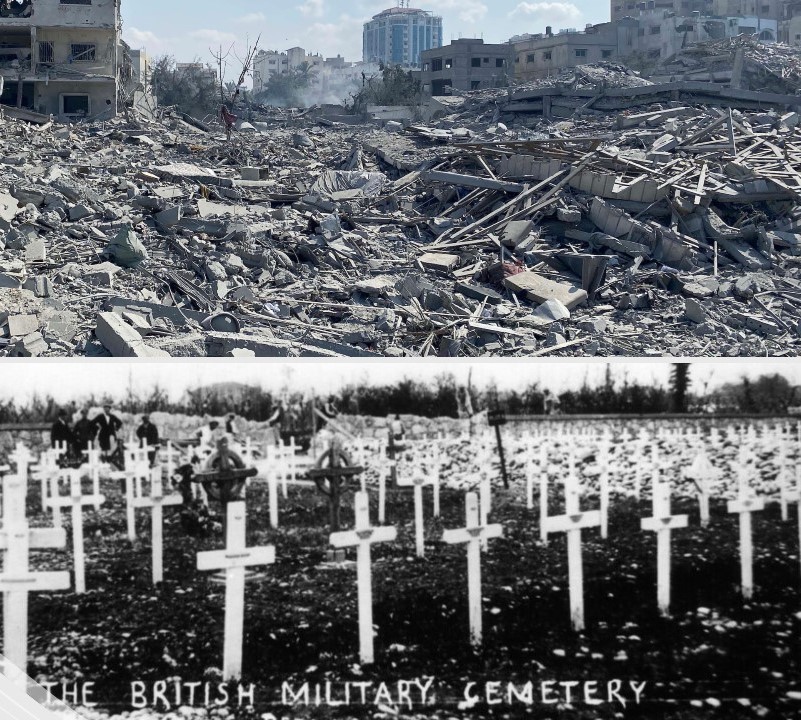
Yesterday marked the 80th anniversary of the D Day landings and it has seen significant coverage from the media as veterans, families, dignitaries, and others converge on the beaches and nearby towns in France. If you have watched the news coverage during the week, you will have seen interviews with the veterans involved in those landings. What struck me about those interviews was the humbleness of those involved, they don’t consider themselves heroes but reserve that word for those that died. For most of us, war is something that happens elsewhere, and we can only glimpse the horrors of war in our imaginations. For some though, it is only too real, and for some, it is a reality now.
I was struck by some of the conversations. Imagine being on ship, sailing across the English Channel and looking back at the white cliffs of Dover and being told by someone in charge, ‘have a good look because a lot of you will never see them again’. If knowing that you are going to war was not bad enough, that was a stark reminder that war means a high chance of death. And most of those men going over to France were young, to put it in perspective, the age of our university students. If you watched the news, you will have seen the war cemeteries with rows upon rows, upon rows of headstones, each a grave of someone whose life was cut short. Of course, that only represents a small number of the combatants that died in the war, there are too many graveyards to mention, too many people that died. Too many people both military and civilian that suffered.
The commemoration of the D Day landings and many other such commemorations serve as a reminder of the horrors of war when we have the opportunity to hear the stories of those involved. But as their numbers dwindle, so too does the narrative of the reality, only to be replaced with some romantic notion about glory and death. There is no glory in war, only death, suffering and destruction.
The repeated, ‘never again’ after the first and second world war seems to have been a utopian dream. Whilst we may have been spared the horrors of a world war to this point, we should not forget the conflicts across the world, too numerous to list here. Often, the reasons behind them are difficult to comprehend given the inevitable outcomes. As one veteran on the news pointed out though ‘war is a nonsense, but sometimes it’s necessary’.
The second part of that is a difficult sentiment to swallow but then, if your country faces invasion, your people face being driven from their homes or into slavery or worse, then choices become very stark. We should be grateful to those people that fought for our freedoms that we enjoy now. We should remember that there are people doing the same across the world for their own freedoms and perhaps vicariously ours. And perhaps, we should look to ourselves and think about our tolerance for others. Let us not forget, war is a nonsense, and there is no glory in it, only death and destruction.
Share this:


Doing the right thing
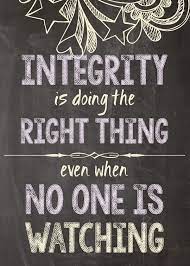
It seems that very often, the problem with politics in this country is that it gets in the way of doing the right thing. Despite the introduction of the The Seven Principles of Public Life known as the Nolan Principles, politicians (not all of them of course, but you will have seen ample examples) still seem to be hell bent on scoring political advantage, obfuscating on matters of principle and where possible avoiding real leadership when the country is crying out for it. Instead, they look to find someone, anyone, else to blame for failures that can only be described as laying clearly at the door of government and at times the wider institution of parliament.
One example you may recall was the complete farce in parliament where the speaker, Sir Lyndsay Hoyle, was berated for political interference and breaking the rules of the house prior to a debate about a ceasefire in Gaza. It became quite obvious to anyone on the outside that various political parties, Conservatives, Labour and the Scottish National Party were all in it to score points. The upshot, rather than the headlines being about a demand for a ceasefire in Gaza, the headlines were about political nonsense, even suggesting that the very core of our democracy was at stake. Somehow, they all lost sight of what was important, the crises, and it really is still a crisis, in Gaza. Doing the right thing was clearly not on their minds, morals and principles were lost along the way in the thrust for the best political posturing.
And then we come to the latest saga involving political parties, the WASPI women (Women Against State Pension Inequality) campaign. The report from the Parliamentary and Health Service Ombudsman has ruled that the Department for Work and Pensions (DWP) “failed to provide accurate, adequate and timely information” about changes to pension ages for women. The report makes interesting reading. In essence, it accuses the DWP of maladministration on several counts.
The Pensions Act 1995 changed the way in which women could draw their pensions in an effort to equalise the age with men. A timetable was drawn up raising the qualifying age for women from 60 to 65, with the change phased in between 2010 and 2020. However, under the Pensions Act 2011, the new qualifying age of 65 for women was brought forward to 2018. The report acknowledges that the DWP carried out campaigns from 1995 onwards but in 2004 received results of research that a considerable number of affected women still believed that their retiring age was 60. Unfortunately, through prevarication and for some quite inexplicable reasoning the women affected were not notified or were notified far too late. There was a calculation carried out that suggested some women were not told until 18 months before their intended retirement date. The matter was taken before the courts but the courts ruling did nothing to resolve the issue other than providing a ruling that the DWP were not required by law to notify the women.
You can read about the debacle anywhere on the Internet and the WASPI women have their own Facebook page. What seems astounding is that both the Government and the opposition have steadfastly avoided being drawn on the matter of compensation for these women. I should add that the maladministration has had serious detrimental impacts on many of them. Not even a sorry, we got it wrong. Instead we see articles written by right wing Conservatives suggesting the women had been provided with ample warning. If you read the report, it makes it clear that provisions under the Civil Service Code were not complied with. It is maladministration and it took place under a number of different governments.
Not getting it right in the first instance was compounded by not getting it right several times over later on. It seems that given the likely cost to the taxpayer, this maladministration is likely, like so many other cock ups by government and its agencies, to be kicked into the long grass. Doing the right thing is a very long, long way away in British politics. And lets not forget the Post Office scandal, the infected blood transfusion scandal and the Windrush scandal to name but a few. So little accountability, such cost to those impacted.
- The quotation in the image is often wrongly misattributed to C. S. Lewis. ↩︎
Share this:


It’s all about me: when did I become invisible?

I wander around on the pavement, earbuds neatly fitted, mobile phone conveniently held in front of me so I can see the person I’m talking to. You can all listen to my conversation whilst attempting to navigate around me, oops, someone bumped into me, a small boy left sprawling, I laugh, not at the small boy, but the joke my mate has just relayed, it’s funny right. People weave left and right but me, I don’t worry, I walk straight on, embroiled in my conversation, it’s not about them, it’s about me.
There’s my friend and his family, let’s stop here, in the middle of the pavement and let’s talk. What, people are having to walk in the road to get past, I’m discussing weighty matters here, can’t you see, it’s not about you, it’s about me.
I hop on the bus, earbuds, I’m not sure where they are. Now where’s that YouTube video my mate told me about, oh yeah, here it is. Now that’s hilarious, can’t hear it because of all the hub bub around me, turn it up and enjoy, I’m having a gas. Didn’t want to listen to that? It’s not about you, it’s about me.
And now at work, I take up the laptop and watch some TED talk video, I need to go somewhere so with laptop open, speaker on full, I wander across the office and out through the door held open for me. I don’t acknowledge your politeness, I don’t see you, it’s not about you, it’s about me.
I sit waiting for a colleague to join me in an open area, people around using laptops, having conversations, I turn the volume up, this video is good, I need to hear it, it’s not about the rest of you, it’s about me.
I go to the work restaurant with my friend, it’s a bit busy, never mind we can sit here. I push my chair back banging into another chair, catching the knuckles of someone that happens to be leaning on the chair. I don’t see it, I don’t see you, I want to sit here right, it’s not about you, it’s about me.
And when I learn to drive, I’m going to speed even if it is dangerous because I will need to get to where I am going quickly, it’s not about the rest of you, it’s about me. And I will be the one that overtakes all the cars in the queue, only to push in at the last moment. My indicator tells you to give me room, it’s not about you, it’s about me.
And when I have kids, I will park right outside the school, never mind if I obstruct the road, I need to pick up my little darlings, it’s not about you, it’s about me.
And in my real world, when I have to constantly move out of the way of people on phones, have to listen to videos and conversations I have no interest in, hold doors open without even a glance from the person that has walked through, have my knuckles scraped with the back of a chair, without even an acknowledgement that something has happened, despite my yelp from the pain, when I sit watching the idiots overtaking and have to brake to avoid a collision as they push into the queue, when I sit and wait in the road whilst someone strolls along, little one in tow and straps them in the back seat before having a quick chat with another parent, I inwardly shout to myself; WHEN WAS IT THAT I BECAME INVISIBLE? I’s not just about you, it’s also about me.
Share this:


What value life in a far-off land?

Watching the BBC news and for that matter any other news broadcast has become almost unbearable. Over the last three weeks or so the television screen has been filled with images of violence, grief, and suffering. Images of innocent men, women and children killed or maimed or kidnapped. Images of grieving relatives, images of people with little or no hope. And as I watch I am consumed by overwhelming sadness and as I write this blog, I cannot avoid the tears welling up. And I am angry, angry at those that could perpetuate such crimes against humanity. I will not take sides as I know that I understand so little about the conflict in Israel, Gaza, and the surrounding area, but I do feel the need to comment. It seems to me that there is shared blame across the countries involved, the region, and the rest of the world.
As I watch the news, I see reports of protest across many countries, and I see a worrying development of Islamophobia and Antisemitism. The conflict is only adding fuel to the actions of those driven by hatred and it provides plenty of scope for politicians in the West and other countries, to pontificate, and partake in political wrangling and manoeuvring before showing their abject disregard for morality and humanity. The fact that Hamas, as we are constantly reminded by the BBC, is a proscribed terrorist organisation, proscribed by most countries in the west, including the United Kingdom, seems to give carte blanche to western politicians to support crimes against humanity, to support murder and terrorism. How else can we describe what is going on?
The actions of Hamas should and quite rightly are to be condemned, any action that sees the killing of innocent lives is wrong. To have carried out their recent attacks in Israel in such a manner was horrendous and is a reminder of the dangers that the Israeli people face daily. But the declaration by Israel that it wants to remove Hamas from the face of the earth would, and could, only lead to one outcome, that being played out before our very eyes. The approach seems to be one of vengeance, regardless of the human cost and regardless of any rules of war or conflict or human dignity. How else can the bombing and shelling of a whole country be explained? How else can the blockading of a country to bring it to the brink of disaster be justified? How do we explain the forced migration of innocent people from one part of a country to another only to find that the edict to move led them into as dangerous a place as that they moved from? There seems to be a very sad irony in this, given the historical perspectives of the Israeli nation and its people.
We don’t know what efforts are going on behind the scenes to attempt to bring about peace but the outrageous comments and actions or omissions by some western politicians beggar belief. From Joe Biden’s declaration ‘now is not the time for a ceasefire’ to our government’s and the opposition’s policy that a pause in the conflict should occur, but not a ceasefire, only demonstrates a complete lack of empathy for the plight of Palestinian people. If not now, at what time would it be appropriate for a ceasefire to occur? It seems to me, as a colleague suggested, politicians and many others seem to be more concerned about accusations of antisemitism than they are about humanity. Operating in a moral vacuum seems to be par for the government in the UK and unfortunately that seems to extend to the other side of the house. Just as condemning the killing of innocent people is not Antisemitic nor too are the protests about those killings a hate crime. Our home secretary seems to have nailed her colours to the mast on that one but I’m not sure if its xenophobia, power lust or something else being displayed. Populism and a looming general election seems to be far more important than innocent children’s lives in a far off land.
The following quote seems so apt:
‘…. politicians must shoulder their share of the blame. And individuals too. Those ordinary citizens who allowed themselves to be incited into hatred and religious xenophobia, who set aside decades, sometimes centuries of friendship, who took up sword and flame to terrorise their neighbours and compatriots, to murder men, women, and children in a frenzy of bloodlust that even now is difficult to comprehend (Khan, 2021: 323).’[1]
If you are not angry, you should be, if you do not cry, then I ask why not? This is not the way that humanity should behave, this is humanity at its worst. Just because it is somewhere else, because it involves people of a different race, colour or creed doesn’t make it any less horrendous.

Khan, V. (2021) Midnight at Malabar House, Hodder and Stoughton: London.
[1] Vaseem Khan was discussing Partition on the Indian subcontinent, but it doesn’t seem to matter where the conflict is or what goes on, the reasons for it are so hard to comprehend.
Share this:


What cost justice? What crisis?
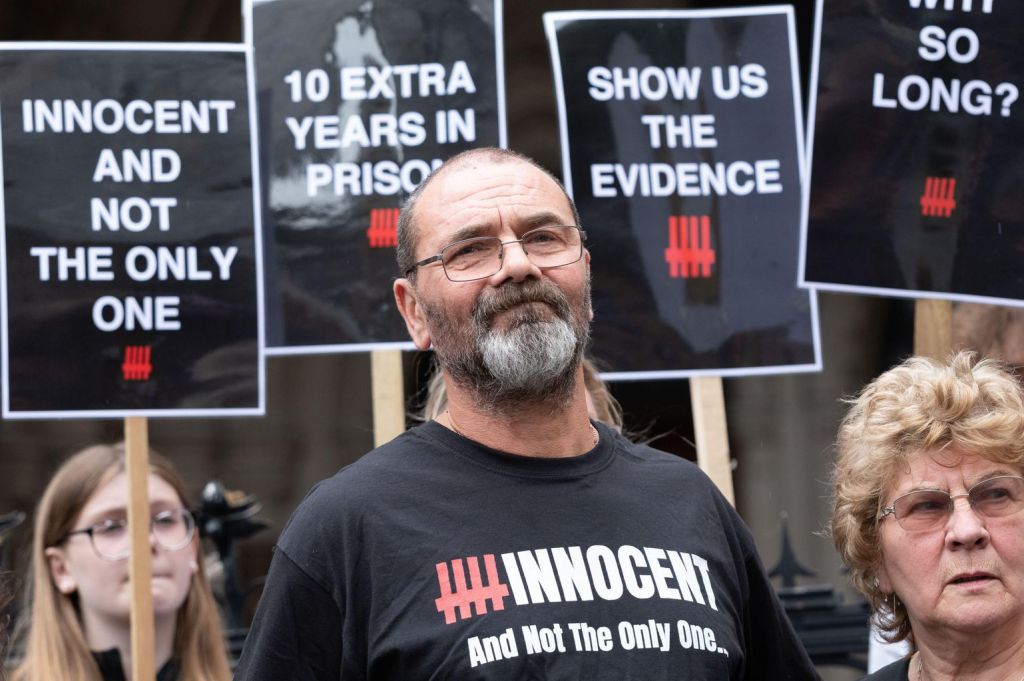
The case of Andrew Malkinson represents yet another in the long list of miscarriages of justice in the United Kingdom. Those that study criminology and those practitioners involved in the criminal justice system have a reasonable grasp of how such cases come about. More often than not it is a result of police malpractice, negligence, culture and error. Occasionally it is as a result of poor direction in court by the trial judge or failures by the CPS, the prosecution team or even the defence team. The tragic case of Stefan Kiszko is a good example of multiple failures by different bodies including the defence. Previous attempts at addressing the issues have seen the introduction of new laws such as the Police and Criminal Evidence Act 1984 and the Criminal Procedure and Investigations Act 1996. The former dealing in part with the treatment of suspects in custody and the latter with the disclosure of documents in criminal proceedings. Undoubtedly there have been significant improvements in the way suspects are dealt with and the way that cases are handled. Other interventions have been the introduction of the Crown Prosecution Service (CPS), removing in part, charging decisions from the police and the introduction of the Criminal Cases Review Commission (CCRC) to review cases where an appeal has been lost but fresh evidence or information has come to light.
And yet, despite better police training regarding interviews and the treatment of suspects, better training in investigations as a whole, new restrictive laws and procedures, the independence of the CPS, the court appeal system and oversight by a body such as the CCRC, miscarriages of justice still occur. What sets the Malkinson case aside from the others appears to be the failure of the CCRC to take action on new information. The suggestion being that the decision was a financial one, with little to do with justice. If the latter is proved to be true, we will of course have to wait for the results of the inquiry, then how can anyone have any confidence in the justice system?
Over the years we have already seen swingeing cuts in budgets in the criminal justice system such that the system is overloaded. Try to pop into the local police station to make a complaint of a crime, you won’t find a station open to the public. Should you have been unfortunate enough to have been caught for some minor misdemeanour and need to go to magistrates’ court for a hearing, you’ll be lucky if you don’t have to travel some considerable distance to get there, good luck with that if you rely on public transport. Should you be the victim of a more serious crime or indeed charged with a more serious offence, triable in crown court, then you’ll probably wait a couple of years before the trial. Unfortunate if you are the alleged offender and on remand, and if you are the victim, you could be forgiven for deciding that you’d rather put it all behind you and disengage with the system. But even to get to that stage, there has to be sufficient evidence to secure a prosecution and it has to be in the public interest to do so. Your day in court as a victim is likely to be hang on the vagaries of the CPS decision making process. A process that has one eye on the court backlog and another on performance targets. Little wonder the attrition rate in sex offences is so high. Gone are the days of letting a jury decide on occasions where the evidence hangs on little more than one person’s word against the other.
Andrew Malkinson and his legal representative have called for a judicial review, a review where witnesses can be compelled to attend to give evidence and documentary evidence can be demanded to be produced. Instead, the government has said there will be an independent inquiry. On a personal note, I have little faith in such inquiries. My experience is that they are rarely independent of government direction and wishes. Andrew Malkinson’s case is a travesty and the least that can be done is to have a proper inquiry. I suspect though that the Malkinson case might just be the tip of the iceberg. The Criminal Justice System is in crisis but budgetary restraint and political whim seem to be far more important than justice. We can look forward to more finger pointing and yet more reorganisation and regulation.
Share this:


Here to serve but not your slave

My wife and I were fortunate enough to go on holiday this year to a beautiful island in the Caribbean. Palm Island, a stone’s throw, well 10-minute boat ride (I’m not prone to exaggeration you understand) from Union Island, and some 45 minutes by plane to Barbados is a unique paradise described as the Maldives in the Caribbean.
The circumstances of the people that work on Palm Island (and history) are perhaps not too dissimilar to those that work in Cape Verde, a subject of a previous blog. Wages are poor, the staff are not exactly affluent, and work is hard to come by. Many have gravitated to Palm Island from nearby islands to find work and have subsequently stayed on Union Island, commuting every day after a long shift. Others stay on Palm Island in staff accommodation, returning home to their families every few months in St. Vincent and elsewhere. Whilst guests enjoy luxurious accommodation, great food and plentiful drinks, the workers receiving low wages, relying on a percentage of the service charge and tips, do not even have the luxury of a constant water supply on Union Island. Palm Island has its own water processing plant, Union Island does not. Hence the gardener telling me he had to pay $250 dollars to have water delivered to his home; £100 for the water and $150 for the delivery. The dry season is hard going and financially precarious.
The Island shut down during Covid and many of the workers returned home with no wages for the duration. Poverty is not an alien concept to them. Their lives and that of the visitors couldn’t be further apart and yet are intertwined by capitalism in the form of tourism. They need the tourists to sustain the jobs, the more tourists, the more in service charges and tips. Of course, the owners of the island want more tourists because it brings in more revenue. A moral dilemma for some perhaps, well for me anyway. I won’t be pretentious and state that I go to the island to support the local economy, vis-a-vie the poor people, I go there for a really good holiday. But here is the crux of the matter, and hence the title, I try my utmost to treat the staff with respect. I recognise that they are paid to serve me and other guests, and they do a brilliant job, but they are not my servants or slaves (the historical significance should be obvious). And yet I have witnessed people demanding drinks without a please or thank you, “give me a vodka”, “she wants a rum and coke”. I have seen people coming off yachts with day passes for the island, they came, they saw, they made a complete mess and they left…. You can clear up our mess! Glasses left all over the beach, beach towels left wherever, they last used them. “What did your last servant die of”, I ask, as they slope off into the rum filled sunset? “It certainly wasn’t old age” I shout after them. But it just seems lost on them.
I ask myself would they have treated me like that had I been the one behind the bar? I think not, perhaps the lighter colour of my skin may have persuaded them that I am worthy of some courtesy. But then who knows, it seems that some people that have money have a certain arrogance and disregard for anyone else.
Not all of the customers were like that, most were polite and some very friendly with the staff. But we shouldn’t forget the power dynamics, and above all else the privilege that some of us enjoy. Above all else it is a useful reminder that when people are there to serve, they are not your servant nor your slave and they and the job they do deserves respect.
Share this:


Thinking about ‘Thoughts from the Criminology Team’

This is the sixth anniversary of the blog, and I am proud to have been a contributor since its inception. Although, initially I only somewhat reluctantly agreed to contribute. I dislike social media with a passion, something to be avoided at all costs, and I saw this as yet more intrusive social media. A dinosaur, perhaps, but one that has years of experience in the art of self-preservation. Open up to the world and you risk ridicule and all sorts of backlash and yet, the blog somehow felt and feels different. It is not a university blog, it is our team;s blog, it belongs to us and the contributors. What is written are our own personal opinions and observations, it is not edited, save for the usual grammar and spelling faux pas, it is not restricted in any way save that there is an inherent intolerance within the team for anything that may cause offence or hurt. Government, management, organisations, structures, and processes are fair game for criticism or indeed ridicule, including at times our own organisation. And our own organisation deserves some credit for not attempting to censure our points of view. Attempts at bringing the blog into the university fold have been strongly resisted and for good reason, it is our blog, it does not belong to an institution.
As contributors, and there are many, students, academics and guests, we have all been able to write about topics that matter to us. The blog it seems to me serves no one purpose other than to allow people space to write and to air their views in a safe environment. For me it serves as a cathartic release. A chance to tell the world (well at least those that read the blog) my views on diverse topics, not just my views but my feelings, there is something of me that goes into most of my writing. It gives me an opportunity to have fun as well, to play with words, to poke fun without being too obvious. It has allowed us all to pursue issues around social injustices, to question the country, indeed the world in which we live. And it has allowed writers to provide us all with an insight into what goes on elsewhere in the world, a departure from a western colonial viewpoint. I think, as blogs go it is a pretty good blog or collection of blogs, I’m not sure of the terminology but it is certainly better than being a twit on Twitter.

 Thoughts from the criminology team
