

Time to hear from our students

As part of their commitment to provide an inclusive space to explore a diversity of subjects, from a diverse range of standpoints, the Thoughts from the Criminology team have decided to introduce a new initiative.
From tomorrow (Sunday 21 June) all weekend posts will come from our students. We know that all of our students have plenty to say, they are smart, articulate and have both academic and experiential knowledge on which to draw. We know our readers will be as impressed as we are, by their passion and their criminological imagination.
Over to you, Criminology Students!
Share this:


The pandemic and me – Paula
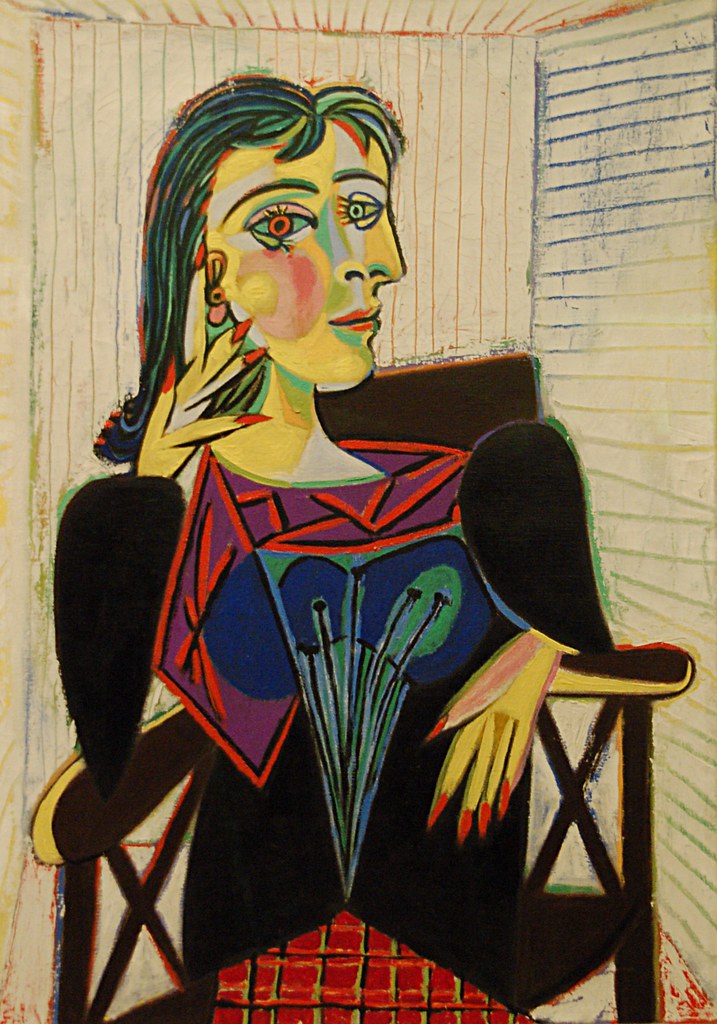
Portrait de Dora Maar, Pablo Picasso, 1937
The last time I physically went to work was Thursday 19 March, over 12 weeks ago. Within days, I blogged about the panic and fear that risked overwhelming us all in the light of a pandemic. Some of that entry was based on observation and the media, other parts, my own feelings and emotions.
Prior to the pandemic, I had been the kind of person that felt the need to be at work, often for 10-12 hours a day This was partly to kid myself that there was a clear delineation between the personal and the professional (something, I’ve never managed to achieve since joining academia). Part of it was due to my previous career in retail; when there are customers there must be staff, so there is a necessity to presence. Part of it was tied up with notions of work ethic and fear of missing out, dropping out, losing connection. The regularity of the Monday to Friday (and sometimes, Saturdays for events) commute there and back, the same familiar route, the same familiar timetable, the same familiar faces. Even prosaic matters, like my wardrobe, is primarily designed for my professional life, however, #lockdown life requires something different than formal suit, dresses and court shoes. Similarly, make-up seems out of place, why paint your face or nails, without the rest of the professional apparatus, deemed so necessary to what Goffman (1969/1990) identified as The Presentation of Self in Everyday Life.
In his play Huis Clos (No Exit) Jean-Paul Sarte famously claimed that ‘Hell is—other people’ (1947/1989: 45). This is often interpreted as if the company of others is hellish, but that is a misreading. Sartre, like Mead (1934) before him recognised the role of the other, in our own understanding of ourselves. In essence, we can only ever see ourselves through the lens of others. In lockdown that lens dissipates or even disappears entirely, even with technology, which although we appreciate as an enabler of communication, I’ve yet to hear anyone say it is a complete replacement for human interaction.
Nevertheless, lockdown has forced us to look again and not only at our wardrobes. Once the panic and the novelty of not going to work, socialising and all the other activities, that are part and parcel of our lived experience passed, a new normality replaced this. Introspection is often missing in twenty-first century life, even among those of us that spend considerable amounts of time, professionally, if not personally, reflecting on what we’ve said, what we’ve done and how we can change, amend and ultimately improve as human beings. It’s also provided space to consider what we can’t wait to get back to, what we’re glad to have a break from and what we are looking for ways to avoid in the future.
For me, part of that introspection has focused on my need to be present at work. After all, in academia there is less pressure to be on campus, particularly on one which has been designed with the future in mind. There is no office, where I need to water plants, (most of) my academic books are here and I also have a work laptop, as well as my own pc. At home, I can have silence, or music while I work. If I am hungry or thirsty I can satisfy those needs. If I am overwhelmed, I can simply walk away for a little while, without explanation. If I am lonely, confused or need advice, I can pick up the phone, message, video call and everything else that technology can offer. My professional life can pretty much continue without too much interruption.
So what happens when things return to normal, should I throw myself back into the same patterns as before? I am hoping the answer is no, that I will do things differently, not least for my own wellbeing. Although I love the look and feel of the campus, I have always struggled with what, criminologists will understand as the panoptic gaze (Foucault, 1977). The sense that wherever you are, the threat of observation is ever present. The panoptic gaze does not differentiate between deviant or pro-social activity, it simply retains its disciplinary function designed to constrain and control For many, it is an open welcoming space, however, as a person who thrives on quietness, on privacy, on spending time away from human contact, it can have the opposite effect. Not all of the time, but at least some of it, I wouldn’t want to abandon campus life completely. The lockdown has shown me that it is possible to have the best of both worlds
References
Foucault, Michel, (1977), Discipline and Punish: The Birth of the Prison, tr. from the French by Alan Sheridan, (London: Penguin Books)
Goffman, Erving, (1959/1990), The Presentation of Self in Everyday Life, (London: Penguin)
Mead, George Herbert. (1934). Mind, Self and Society: From the Standpoint of a Social Behaviorist. (Ed. Charles W. Morris). (Chicago: Chicago University Press)
Sartre, Jean-Paul, (1947/1989), No Exit and Three Other Plays, (New York: Vintage International)
Share this:

The worldwide reaction to the murder of George Floyd has shocked me, the murder of George Floyd has not. Another of our students speaks out
A cracking entry from BA History & Media Production student Amelia. Plenty for criminology scholars to think about
Share this:

Rioting coverage of Week 1: I watched Faux News for Six Full minutes. #BlackAsiaWithLove
I watched Fox News today.
For 6 full minutes.
They had a panel of 3 cops to discuss the current unrest…or so it seemed.
Of course, a token negro in uniform was amongst them.
“Defund the police” is the headline of this comical sketch.
That’s not the actual proposition; proponents promote funding “public safety” measures.
But shutting down the police is all the sly Fox heard, and
Cunningly called on these cops to comment upon THAT, only.
The first white cop went off: “We’re here for business owners and hard-working people.”
He didn’t address the threat to Black life, espcially cops’ roots and roles in terrorism.
The host nods knowingly, and they summarily reduce all this unrest to law-n-order.
No mention of the brutality of cops.
No discussion of their pattern.
Predictably, the other white cop gave a worst-case scenario about Domestic violence.
What would citizens do without cops?
He says this as if cops have some awesome reputation of domestic intervention.
Also, I’m thinking: But…
Wasn’t that black chick just killed in Texas last year,
Inside her own house,
In response to a neighbor calling the police for care one night.
The neighbor hadn’t even called 9-1-1, but rang the non-emergency number, and
They still came in blazing as they are wont to do in Black households.
“I just wanted them to check on her…
Her front door was open… it was late…
So, I was concerned,” the neighbor later says matter-of-factly on the nightly news.
Atatiana Jefferson was a law-abiding citizen,
Playing video games with her 8-year-old nephew.
She got shot dead.
Check.
Black people cannot call the police.
Check.
Not even a concerned citizen.
Check.
Check this: In my hometown, Breonna Taylor was also a so-called law-abiding citizen.
Not only was Breonna law-abiding, but she was a medical worker –
Essential during a global pandemic!
But, she was Black.
She was shot to death in her own house,
Moments after the police arrived.
Fox don’t talk about none of this.
They go on with the implicit assumption that
Either Black people are not law-abiding,
Or, Black citizens never need the police.
“Cops need to be more sensitive, sure…” the other white cop says, then adds 12 butts!
He looks like an ass.
This whole faux news channel reduces today’s protests to rioting and looting, law-n-order.
They have met every effort at Black liberation with the same hostility.
Though openly devoted to non-violence,
Those pundits called the good Reverend Dr. King a “radical,” an “outside agitator,” and
Much, much worse!
When we peacefully took a knee just a few years back for the same cause,
These same pundits were quick to diss us,
Dissed Beyoncé for taking over the Superbowl in Black Power fashion!
Dissed Nike for sighing Collin Kaepernick – posting videos of them burning their own Nike gear.
They diss every Black person killed by the police as “disobedient” and “non-compliant.”
They consistently diss our resistance as unpatriotic – the oldest race card,
Because for them, racism is a game.
As if they didn’t twist their Bible to say slaves had to be loyal to their masters.
As if our efforts to breathe life into the Constitution weren’t patriotic!
As if Crispus Attucks wasn’t the first American to die for Independence!
As if this weren’t some strange and rotten fruit!
These pundits said the same about Martin Luther King, the FBI’s “an enemy of the state.”
They said all of this, of course, until he was martyred.
Then eventually, they called him a hero.
Now, even this faux news channel quotes Dr. King regularly.
Cleverly, Martin Luther da King gets pulled out of the Fox’s hat at the sign of any racial trouble!
The token negro cop gets asked the token question:
He’s asked to speak on behalf of all Black people.
Perform for your master, [N-word]!
Luckily, this man changes the narrative from dissing these hasty solutions to
Talking about real, systemic change to a systemic problem.
It’s not even clear that the other guests command this level of vocabulary, keeping it so simple.
The other cops were set up to denounce this solution, and
They were neither asked, nor chose to address any single way of improving policing.
All responsibility is implicitly shifted to individual citizens:
‘Policing is fine, Black people just don’t act right!’
I wish they’d just gon’head and say it!
Luckily, this Black man is neither stepping nor fetching their white supremacy for them today.
Not today, Satan!
Again, the faux media pundit circles back to defunding the po-po.
At present, this is only the legislative solution presented by any lawmaker thus far.
Weeks later, that message emanating from Minneapolis had spread,
Even to Congress, although
Aunty Maxine had already reclaimed her time on this one.
Predictably, this incites the white cop to repeat his singular talking point like a quacking duck:
“We’re here for business owners and hard-working people,” again, in THAT order.
‘We’re not to be called upon as citizens’, as Toni Morrison said after 9-11.
Check
Fox then seamlessly shifts back to “Agent Orange’s” economic talking points.
Cut to commercial.
After the ads, 45 comes back railing about saving Wall Street.
The faux host asks rhetorically if this will be “the greatest economic comeback ever!”
It’s like they can only ever speak in superlatives.
Finally, the host is optimistic in otherwise dreary times.
God bless America, and F everybody else!
I really wish they’d just gon’head and say it!
They gon’ be alright.
Checkmate.
—
Share this:


A weekend in London…. It’s not what you think

The weekend just gone has mirrored many weekends we have experienced in lockdown: glorious sunshine, hot temperatures, and longing to spend time with family and friends! However this weekend marked the beginning of an attempt at normalcy for our household, as we spent the weekend in London serving hotdogs, burgers, ice creams and cold drinks to park visitors. Something we have done year on year, summer after summer, weekend after weekend: yet this weekend was remarkably different. Therefore the notion that we can return to normalcy soon, doesn’t seem to be ringing true.
For some context: my partner works in/runs a takeaway kiosk by a park in London. It has been closed during lockdown, but re-opened this weekend. This time last year, there were 3, sometimes 4 members of staff (including myself in the summer and on weekends when an extra pair of hands are required), serving customers and giving directions to residents, visitors and tourists of London. This year, there is my partner and I: in a 4metre kiosk it is not possible to safely maintain a 2metre distance so the other members of staff are left waiting until it is safe and viable for them to come to work. They know this, and are happy with the decision as in times like these, safety should be at the forefront of all decisions.
And the added safety precautions are what makes this weekend so unrecognisable at the little kiosk in London (albeit rightly so). It is and has always been a cash business: cash is quicker to process, easier to return should it be required and safer with regards to checking for counterfeit (no issues of hacking machines or someone using stolen cards). In line with the current climate, the decision was made to try and move to contactless payments in order to help reduce the spread of COVID-19. This in itself was hassle and problematic, but I shall not bore you with those details. Alas the machine is here, and off we go. But it requires a steady 4G signal, which by a park is hit and miss, it also disconnects when it has not been used for periods of 30minutes, which happened frequently over the weekend, and there is a minimum spend in order to make the interest rate/payment of the machine justifiable. It is also slow when customer’s contactless does not work, in which case they have to hold and touch the machine, which then results in us having to clean down the machine after this has happened before we can move on to the next transaction, which is certainly not quicker than cash. And whilst most customers I must say have been patient and understanding, this has resulted in several getting quite verbal at the time it is taking to serve them (we are talking a matter of minutes instead of what used to be seconds with cash).
The differences are not just with the use of card, but also how the hot food is done (my area of expertise). Usually customers could apply their own sauces, but now in order to prevent lots of people touching the various sauces on offer and potentially spreading anything, it is left to me to apply. This has resulted in a whole host of comments relating to being stingy with sauces: ‘I know times are hard but come on’, or ‘I actually want to be able to taste the mustard’. I, personally, like to drown food in sauce, no actually mayo, not that fussed about other sauces. However my partner is the complete opposite, the smallest most pathetic amount of sauce you could imagine: that is what he applies to his food! But it is safer and easier to apply too little and add more than the other way, so I am justified in using a little amount of sauce! It has nothing to do with what the sauce costs! Grrrrrr! Cold drinks used to be placed on the top counter, which customers could take themselves, and then once all their selected items have been placed on top, we would charge them and handle the money. Now at the risk of people touching and then returning the item (which results in us having to clean down the bottle or can, slowing everything down), we are asking for money first: which people apparently are not pleased about. They want to feel how cold the drink is: it has come out of the fridge, which it has been in overnight and business is so slow the drinks are not being re-stocked: so trust me it is cold! (Face hitting emoji!)
All in all, it was a stressful weekend, when the amount of customers we served should not have meant it was stressful. I do not mind change and I appreciate that the changes in place are needed to keep everyone safer, which is fine. But things will be slower, things will be different. The media has pushed at the 15th June to resemble something we recognise as ‘normal’: but I do not think this is the case. ‘Normal’ whatever that really means, will not return and maybe this is not such a bad thing. But I will be grateful when it is safe again for customers to apply their own blooming sauces!
Share this:

“I Can’t Breathe…”
A very thoughtful reflection on George Floyd and #BlackLivesMatter from Criminology graduate @flowerviolet

“I can’t breathe”… “I can’t breathe”
Those haunting words were the last of George Floyd whom, after 8 minutes and 46 seconds of having a police officer kneel on his neck, lost his life.
The video of his death sparked outrage, and protests took place as part of the Black Lives Matter (BLM) movement in combating racism and racial injustice, and to get justice for George Floyd and his family. The Black Lives Matter movement started in 2013 by 3 radical black women; Alicia Garza, Patrisse Cullors, and Opal Tometi (1).
The Black Lives Matter movement was founded in response acquittal of Trayvon Martin’s murderer, George Zimmerman, and focuses on the affirmation of the humanity of black people, and the constant struggle with everyday racism and racial injustice (2). Racism is still a huge problem, and has always been a problem globally.
“I can’t breathe….”
Great Britain’s history…
View original post 693 more words
Share this:


Love Cinema: Tré’s Lockdown Favourites so far…
12 Angry Men (1957) – Dir. Sidney Lumet
When a Puerto Rican boy is put on trial for murder, eleven out of twelve jurors are hasty to vote guilty, and thus commit him to deathrow. Juror #8 (Henry Fonda) is sceptical about the available evidence and wants a thorough analysis of the facts from every juror before sending a boy to death, to prove the defendant’s guilt beyond a reasonable doubt. What starts as an open-and-shut case becomes a detective story that pokes holes in the evidence at hand, creating a mini-drama of each juror’s prejudices biases, and preconceptions about the case and each other.
For Colored Girls Who May Have Considered Suicide / When the Rainbow is Enuff (1982) – Dir. Oz Scott
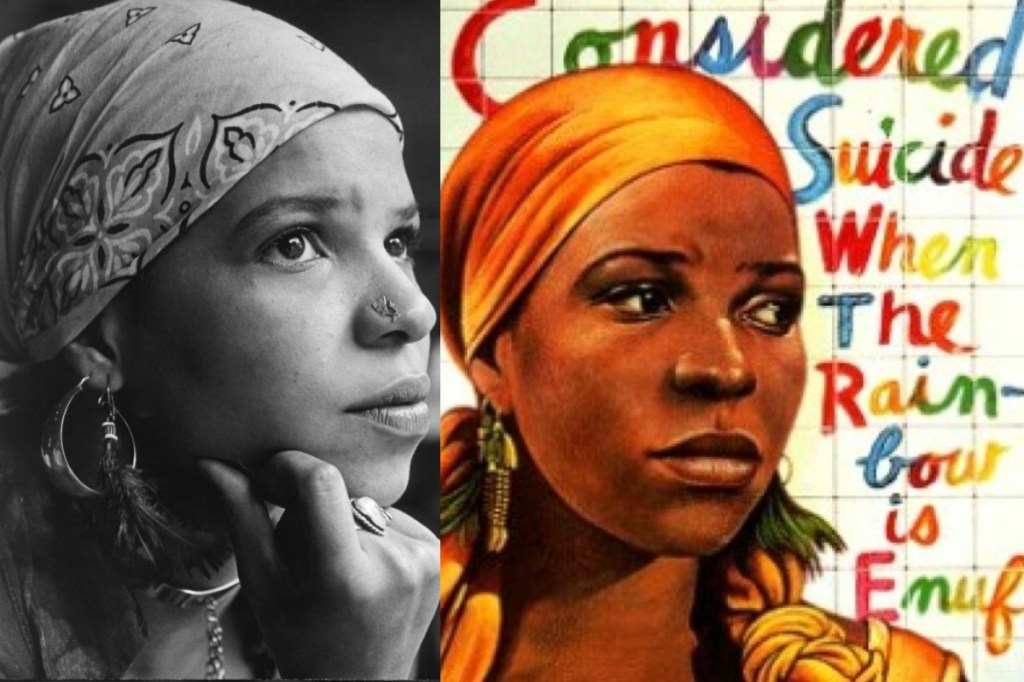
We follow the stories of seven very different Black women in America, including themes of abuse, addiction, and violence, both overt and institutional. In this 1982 performance of the award-winning play, we are witnesses to combinations of music, poetry and dance, painting a raw portrait of intersectionality, misogynoir and mental health in Black women. In this time of uncertainty around Coronavirus, it would do us well to remember the impact mental health has in Black communities. We are one of the most at-risk groups (much ado with societal pressures / prejudice) but also a people who are less likely to ask for help. Mental health services have been under immense pressure in this crisis, and we must not forget their contributions as keyworkers as well.
Jaws (1975) – Dir. Steven Spielberg
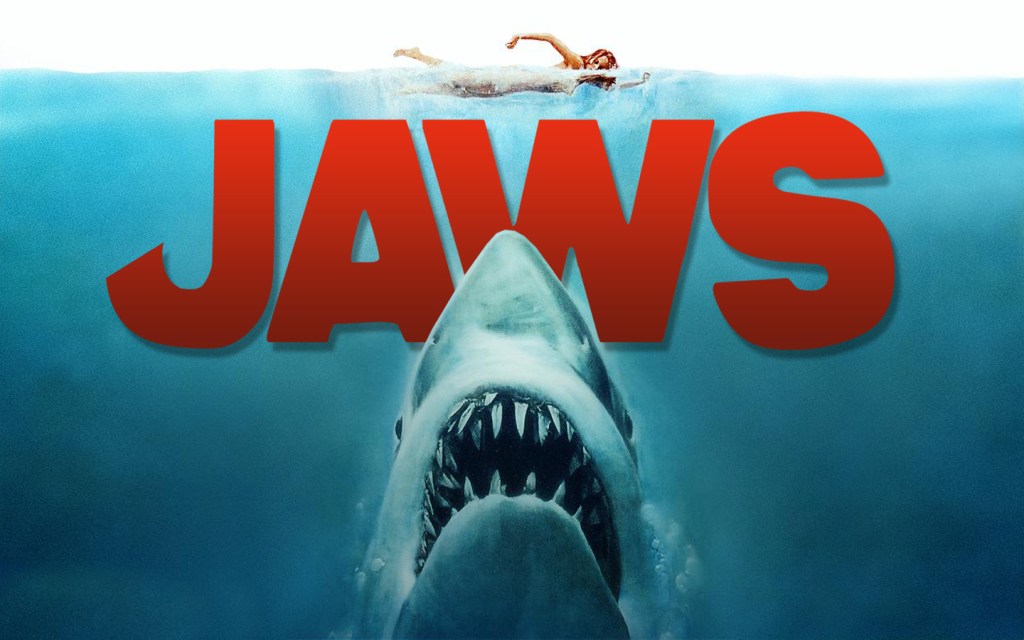
When a hungry Great White shark starts terrorising the people of Amity Island, the police chief (Roy Schnieder), an oceanographer (Richard Dreyfuss) and a rugged shark-hunter set their sights on killing it. Earth’s seas and oceans will never be truly safe but sometimes it’s worth the risk (not that I’m much of an outdoorsy type myself). This is the tragic story of man must be number one. All of these characters are encouraged by a corrupt mayor (Murray Hamilton) trying to gather what’s left of Amity’s tourist industry. And the only crime this shark committed was being hungry, taking on one of the few species on the planet that does not kill to survive. In a time when some are willing to put capitalism ahead of people’s lives, I did struggle not to draw comparisons between the sub-themes of the Spielberg classic and Coronavirus, as meglomaniacs lead Britain and the United States into uncertain doom!
Rebecca (1940) – Dir. Alfred Hitchcock
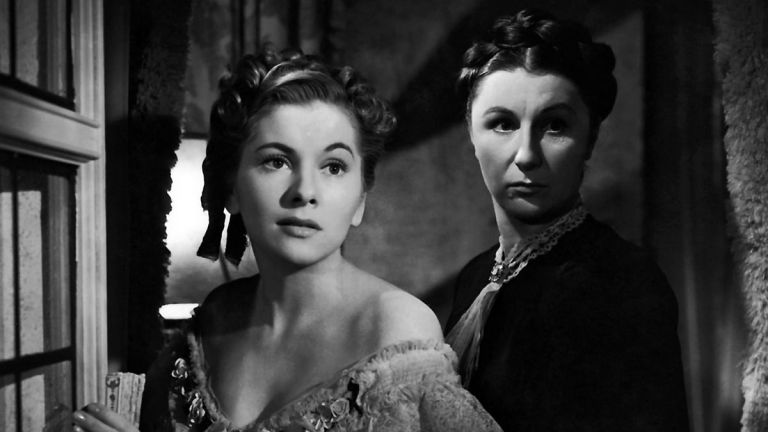
On holiday in Monte Carlo, the rich, handsome widower Maxim de Winter (Laurence Olivier) meets a young woman (Joan Fontaine), becoming the next Mrs de Winter. Taken aback by the massive Manderley estaste, she must learn to be waited on, and to exist in the company of Mrs. Danvers (Judith Anderson). Though and behold, things get strange when a mysterious secret is found under the sea close by to Manderley.
Criminally, the only Hitchcock film to ever win a Best Picture Oscar, this is one of his lesser-knowns but my favourite Hitch project nonetheless, with Judith Anderson giving one of the best performances in any film I have had the pleasure to lay my eyes on. Turning eighty this year, Rebecca still surprises me, from its use of light and shadow to how Hitch captures you in the anticipation of the act rather than the act itself. Truly, The Master of Suspense. And isn’t that entire introductory sequence simply enchanting?
Life, Animated (2016) – Dir. Roger Ross Williams
As a toddler, the animated Owen Suskind went mute, lost to autism with seemingly no way back. Nearly four years later, the only stimuli that engaged him were the films of Disney. Animation. One day, his father donned a puppet of Iago, from the film Aladdin. “What’s it like to be you?” Iago (Owen’s dad) said. Owen replies with the next line. This documentary tells the heartbreaking and inspirational story of how a young boy learned language and how to make sense of the world through Disney animation.
For someone who studied Creative Writing at university; for someone that loves stories; for someone that lived for Disney as a youth and raves by Disney+ as an adult, Life, Animated was it. Whilst it’s about someone with autism, feeling the world doesn’t understand you is not exclusive to people with autism and I think there is a high possibility introverted, and highly sensitve personalities (HSPs), will take a lot from this film as well.
These are five of my favourite films I have watched whilst locked down (in no particular order), that give alternate views of seeing the world, people and society; and I hope after COVID, society changes – seeing the world different
Share this:


8 Kids and Judging
Written by @bethanyrdavies with contributions from @haleysread
Big Families are unique, the current average family size is 2.4 (Office for National Statistics, 2017) which has declined but remained as such for the past decade. Being 1 of 8 Children is unique, it’s an interesting fact both myself and Haley (also a former graduate and also 1 of 8) both fall back on when you have those awful ice breakers and you have to think of something ‘special’ about yourself.
There is criminological research which identifies ‘large families’ as a characteristic for deviance in individuals (Farrington & Juby, 2001; Wilson, 1975). It’s argued alongside other family factors, such as single-parent households, which maybe more people are familiar with in those discussions. In fact, when looking for criminological research around big families, I didn’t find a great deal. Most of what I found was not looking at deviance but how it affects the children, with suggestions of how children in big families suffer because they get less attention from their parents (Hewitt et al. 2011). Which may be the reality for some families, but I also think it’s somewhat subjective to determine an amount of time for ‘attention’ rather than the ‘quality’ of time parents need to spend with children in order to both help fulfil emotional and cognitive needs. This certainly was not the case from both Haley’s and experience.
When I first thought about writing this piece and talking to Haley about her experiences. I did question myself on how relevant this was to criminology. The answer to that I suppose depends on how you perceive the vastness of criminology as an academic field. The family unit is something we discuss within criminology all the time, but family size is not always the focus of that discussion. Deviance itself by definition and to deviate from the norms of society, well I suppose myself and Haley do both come from ‘deviant’ families.
However, from speaking with Haley and reflecting on my own experience, it feels that the most unique thing about being part of a large family, is how others treat you. I would never think to ask anyone or make comments such as; “How much do your parents earn to look after you all?” or “Did they want a family that big or was it lots of accidents?” or even just make comments, about how we must be on benefits, be ‘Scroungers’ or even comments about my parents sexual relationship. Questions and comments that both I and Haley have and occasionally still experience. Regardless of intent behind them, you can’t help but feel like you have to explain or defend yourself. Even as a child when others would ask me about my family, I had always made a point of the fact that we are all ‘full siblings’ as if that could protect me from additional shame , shame that I had already witnessed in conversations and on TV, with statements such as “She’s got 5 kids all different dads”. Haley mentioned how her view of large families was presented to her as “Those on daytime television would criticise large families” and “A couple of people on our street would say that my parents should stop having kids as there are enough of us as it is.”
Haley and I grew up in different parts of the UK. Haley grew up in the Midlands and describes the particular area as disadvantaged. Due to this Haley says that it wasn’t really a problem of image that the family struggled financially, as in her area everyone did, so therefore it was normal. I grew up in a quite affluent area, but similar to Haley, we were not well-off financially. My childhood home was a council house, but it didn’t look like one, my mum has always been house proud and has worked to make it not look like a council house, which in itself has its own connotations of the ‘shame’ felt on being poor, which Haley also referenced to me. It was hard to even think of labeling us as ‘poor’, as similar to Haley, we had loads of presents at Christmas, we still had nice clothes and did not feel like we were necessarily different. Though it appears me and Haley were also similar in that both our dads worked all the hours possible, I remember my dad worked 3 jobs at one point. I asked my dad about what it was like, he said it was very hard, and he remembers that they were working so hard because if they went bankrupt, it would be in the newspaper and the neighbors would see. Which I didn’t even know was something that happened and has its own name and shame the poor issues for another post. Haley spoke of similar issues and the stress of ‘childcare and the temporary loss of hot water, electric and gas.’
The main points that came from both mine and Haley’s discussions were actually about how fun it is to have a large family, especially as we were growing up. It may not seem like it from my earlier points around finance, but while it was a factor in our lives, it also didn’t feel as important as actually just being a part of that loving family unit. Haley put it perfectly as “I loved being part of a large family as a child. My brothers and sisters were my best friends”. We spoke of the hilarity of simple things such as the complexities of dinner times and having to sit across multiple tables to have dinners in the evening. I had brothers and sisters to help me with my homework, my eldest sister even helped me with my reading every night while I was in primary school. Haley and I both seemed to share a love for den making, which when your parents are big into DIY (almost a necessity when in a big family) you could take tools and wood to the forest and make a den for hours on end. There is so much good about having a large family that I almost feel sorry for those who only believe the negatives. This post was simply to share a snippet of my findings, as well as mine and Haley’s experience. At the very least I hope it will allow others to think of large families in an alternative way and to realise the problems both me and Haley experienced, weren’t necessarily solely linked to our family size, but rather attitudes around social norms and financial status.
References:
Juby, H. and Farrington, D., 2001. Disentangling the Link between Disrupted Families and Delinquency: Sociodemography, Ethnicity and Risk Behaviours. The British Journal of Criminology, 41(1), pp.22-40.
Office for National Statistics. (2017). Families and households in the UK, Available at: https://www.ons.gov.uk/peoplepopulationandcommunity/birthsdeathsandmarriages/families/bulletins/familiesandhouseholds/2017 (Accessed: 5th June 2020).
Regoli, R., Hewitt, J. and DeLisi, M., 2011. Delinquency In Society. Boston: McGraw-Hill Higher Education.
Wilson, H., 1975. Juvenile Delinquency, Parental Criminality and Social Handicap. The British Journal of Criminology, 15(3), pp.241-250.
Share this:


When I grow up what will I be?
Wherever I go in life, whatever I do, as long as I am helping others and making a positive difference, I will be happy”
For many years, that has been my take on looking for jobs – helping people, and making a positive difference.
What will I do with my life? Where will life lead me? I’ll say my prayers, and find out!
As a child (between 5-9 years old), I wanted to be a nurse; I have a caring nature, and love helping people! Imagining myself in a nurse’s uniform, and putting bandages on patients and making them better, was something I dreamed about.
Life moves forward, and at the age of 13 I wanted to be so much!
I considered becoming a teacher of either English or Religious Studies. At 13, I loved English and learning about all world faiths. It fascinated me! My teacher had a degree and masters from Oxford University; and I absorbed everything I could! Religious Studies was my favourite subject (alongside art, drama and English) I also had my first, most profound spiritual experience, deepening my Catholic faith (written in more detail in chapter 1 of Everyday Miracles).
My hobbies included reading, writing and drawing. Throughout my teenage years, I devoured the Harry Potter books, the Lord of the Rings books, and Phillip Pullman’s His Dark Materials books. I had a library card, and would borrow books from the library in my village and would read regularly at home. I wanted to be an artist and author, and would often write poetry and short stories, and kept a sketchbook to do drawings in. I dreamed of being a published author, and to be an artist – however, these were seemingly beyond my reach. I prayed to God, that I would be able to fulfil these life ambitions one day.
Alongside of this, I also did some charity work – any change that I got from my lunches, I would put in an empty coffee jar and save them up. I was given the rather cruel nickname, ‘penny picker’, which resulted in bullying from people across different year groups, because I picked up pennies off the floor and put them in my charity pot. Though I did get a mention in the school newsletter stating that the money I raised amounted to quite a large sum, and went to CAFOD, and a homeless charity. I have always done charity work, and still do charity work today!
In school, there were 2 sets in each year; the A-band and the B-band. The A-band were the high academic performers, and those who got high grades. The B-band was the lower set… the set which I was in… This meant that when it came to picking GCSEs, I could only choose 2, not 3, which the A-band students were able to do.
In my Citizenship and Religious studies lessons, I began learning more about the globalized world, human rights, and social issues. Here, I learned in great detail about slavery (slightly covered in history too), prejudice and discrimination, the Holocaust, and 3rd world issues, such as extreme poverty, deprivation, and lack of basic human necessities, such as water, food and sanitation. We even touched upon the more horrific human rights abuses such as extraordinary rendition, religious persecution, torture, and rape and sexual violence.
My ambitions began to evolve more, and I dreamed of becoming a lawyer and even a judge. I wanted to serve justice, make communities safer, and to do more to combat these issues. With my soft heart, and a love of helping people, I knew that being a lawyer would help with doing this!
Moving forward to Year 10; choosing my GCSEs…. I spoke with one of the school heads, and asked for advice. I was still adamant on being a lawyer, and so was advised to do drama and history. Drama as it would boost my confidence, public speaking and expressive skills. History, because of the analytical thinking and examination of evidence that lawyers need when presenting their arguments. I was very happy with this! I loved drama and I enjoyed history – both the teachers were great and supportive!
At the age of 15, I was diagnosed with Asperger Syndrome – this explained so much about me and my idiosyncrasies. Ironically, it was my drama and my history teacher who picked up on it, due to my odd gait, social skills, and how I processed information. At parents’ evening, both teachers discussed with my mum about the diagnosis, and getting support. It was a big shock when I spoke with each of my teachers individually about the diagnosis.
At the end of doing my GCSEs, I was a pretty average student with mostly C grades. When it came to picking A-levels, I was unable to to the subjects that I really wanted to do…. Philosophy, Theology, Law and Psychology…. After a few weeks of battling and trying to get onto a course that would accept me, I ended up doing Travel and Tourism, A-level Media, Applied Sciences and Forensics (which had a criminology module), and, in Year 13, I took on an Extended Project, to boost my chances of getting into university.
I felt somewhat disillusioned… I’m studying courses that will only accept me because of my grades – an odd combination, but a chance to learn new things and learn new skills! In my mind, I wondered what I would ever do with myself with these qualifications…
Deciding to roll with it, I went along. I was much more comfortable in my Sixth Form years as I learned to embrace my Asperger’s, and started being included in different socials and activities with my peers.
Those 2 years flew by, and during my science course, when I did the criminology unit, I was set on studying that joint honors at a university. Criminology gripped me! I loved exploring the crime rates in different areas, and why crime happens (I had been introduced briefly to Cesare Lombroso, and the Realist theories). I have always loved learning.
Fast forward, I decided to go to Northampton University to do Criminology and Education, and even had the hope that I may be able to get a teaching job with the education side. However, due to an education module no longer being taught, I majored in Criminology.
However, in my second year of studies, I did a placement at a secondary special needs college, and helped the children with their learning! All the children would have a day at a vocational training centre doing carpentry, arts and crafts, and other hands on and practical courses. Back in their classrooms, they had to write a log of what they learned. The students I helped were not academic, and so I would write questions on the board to guide them with their log writing, and would write words that they struggled to spell – my opportunity to help students with their education! Later in life, I worked as a Support Worker for students with additional needs at both Northampton, and Birmingham City University, so still learning whilst helping others.
July 2015, I graduated with a 2:1 in my degree, and I had been encouraged to do an LLM in International Criminal Law and Security – a degree in law! It was unreal! From being told I could not do A-level law, here, I was able to do a masters in law! I applied for the Santander Scholarship, and got enough money to cover my course and some living costs – basically, a Masters degree for free!
During those 2 years of being a part time post graduate, I set up and ran the Uni-Food Bank Team and continued with running Auto-Circle Spectrum Society. January 2016 saw a downward dive in my mental health and I was diagnosed with severe depression (When the Darkness Comes).
I learned to cope and found my own way of healing myself through art and painting (which I later began painting on canvasses and sold at arts and crafts fayres).
February 2018 – I graduate with my LLM; the first on my dad’s side of the family to go to university, and on my mum’s side, the first to have a masters’ degree.
Going back to the question of this blog; When I grow up, what will I be?
I will be everything that I ever wanted to be! I am now a published author (mentioned at the start of the blog), have done freelance writing and art (everything I have written on every platform used can be accessed here: Blog Home Page: Other Writing Pieces)! I got a degree in Criminology with Education, and a Masters degree in International Criminal Law and Security!
I have have utilised my knowledge of human rights to fight for the rights of Persecuted Christians, political and social activists, and write to someone on death row too! (Serving Our Persecuted Brothers and Sisters Globally, I See You, Prisoners of Conscience, Within Grey Walls
I still do loads of charity work, and support my local food bank along the side too! (Brain Tumor Research; Helping Those in Need)
It’s safe to say that God answered every single one of my prayers, and even gave me strength in some circumstances!
Currently, I am working as the administrator of an an addiction recovery unit in my home village! A job I thoroughly enjoy – it is challenging, my colleagues are the funniest bunch I have ever met! I have learned so much, and am thriving!
Most importantly, as I’ve grown up, I’ve learned to be happy, learned to overcome all odds that are against me, and to always help others regardless of the circumstance. I’ve learned to be compassionate and strong ❤
Share this:


The pandemic and me – Lessons I’ve learnt from the #lockdown

This lockdown has certainly given us time to think and perhaps reflect on a variety of topics and situations. I’ve shared a few thoughts below and I wonder just how many are universal in some way.
I need to ensure I have a structure to my day and week. I think we all need some sort of structure to our lives and that structure is often given to us by work and perhaps other sociable events such as going to the gym or going to a coffee shop. It may be that the weekly shopping provides us with an anchor, Saturday may be a shopping day or religion might dictate a visit to a place of worship on a particular day. At times I’ve found myself getting confused about what day it is, Groundhog Day, I think. However, for the most part, I think I’ve got it sorted out. My wife and I discuss our schedule every morning over a cup of coffee. We have sorted out a routine of work, daily chores, fun bits and exercise.
My willpower is tested but I can be determined. I have never been a heavy drinker, the occasional binge, yes but then who hasn’t? It is however, quite easy to slip into the habit of having a glass or two of wine in the evening, every evening and perhaps a gin and tonic or two. I can’t go anywhere so thinking about having to drive the next day is not an issue. It’s not until you start totting up the consumption that you realise maybe you might have to reign this in. ‘School nights’ are back again, no drinking in the week. I make up for it at the weekend though.
I’m not risk adverse, I just like to think I’m logical. I don’t think it takes a rocket scientist or in fact any scientist to work out that the government (particularly a Conservative government) would not enforce the cessation of most business in the country without a very, very, very good reason. Stay in has been the mantra and of course we all know how difficult it is and we all know that as usual, the most vulnerable in society have been hit the hardest by this pandemic. Logic dictates, well at least to me, that going out to any store anywhere carries a risk. Some risks are necessary, for instance a trip to the chemist to pick up a prescription, but a trip to a DIY store, really? I’m sorry but given the risks, I think it’s a no brainer. Not only do I not want to catch the virus, but I would be distraught if I thought that through my own selfishness I had passed it onto someone else.
I never really thought about all those people that are truly special. We clap every week for the carers and the NHS and all those involved who are truly remarkable. I do ask myself though, would I want to turn up to work in a supermarket? Would I want to be out delivering parcels or the post? Would I be a NHS volunteer? Would I be happy working on public transport or emptying dust bins? There are so many people doing ordinary, even mundane jobs and volunteering roles that I now appreciate more than ever. And I would go far as to say I am humbled by what they do and continue to do despite the risks.
I appreciate the world around me. Not being able to go out and socialise in some way, be that work, or friends or family has provided more time for other activities. Our walks to the next village and back on roads devoid of most traffic has revealed an astonishing array of wildlife to be gazed upon and appreciated. That is of course if you’re not gasping for breath following a walk up a steep hill (well I call it steep but in a car its barely noticeable).
Some things don’t change. I’ve also noticed the gate to the footpath across the fields near our house has gone. A heavy wooden gate which, apparently has been stolen. On our walks we have noticed the increased number of cyclists whizzing along the road. Most give a wide birth, but some don’t seem to have a care for others, one nearly colliding with us as he flew around the corner. It seems with the reduction of cars; the idiotic driver has now given way to the idiotic cyclist.
What will a ‘new normal’ look like. At some stage we will get back to normal but its difficult to contemplate when that will be and what it will look like. Maybe getting back to the old normal is not what is needed. I’m trying to envisage how I will make changes in consideration of what I have learnt during this lockdown. What changes will you make?

 Thoughts from the criminology team