

#CriminologyBookClub: The Unexpected Inheritance of Inspector Chopra
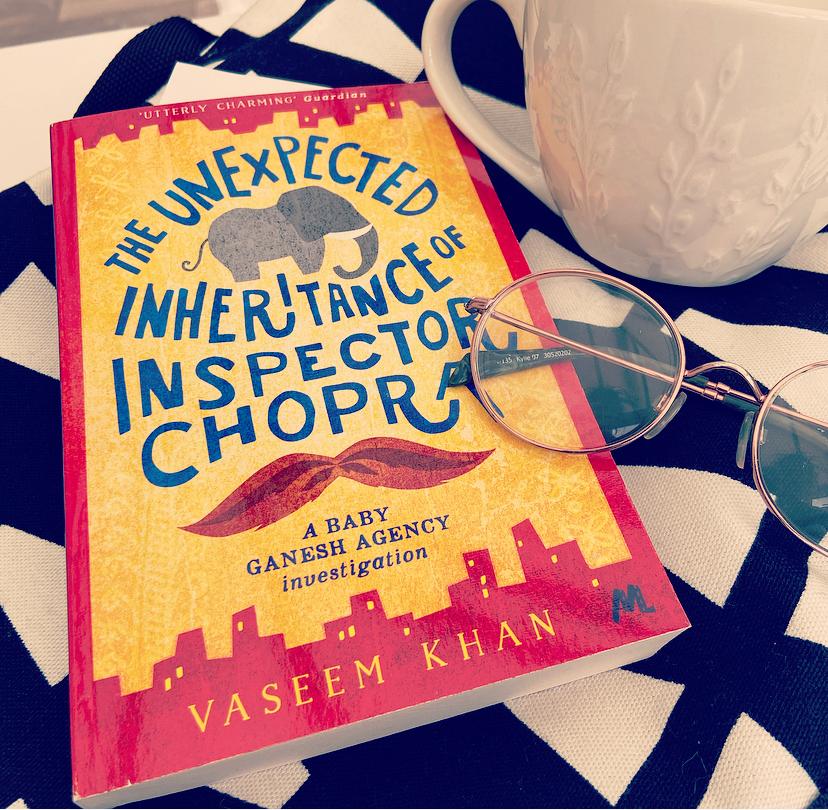
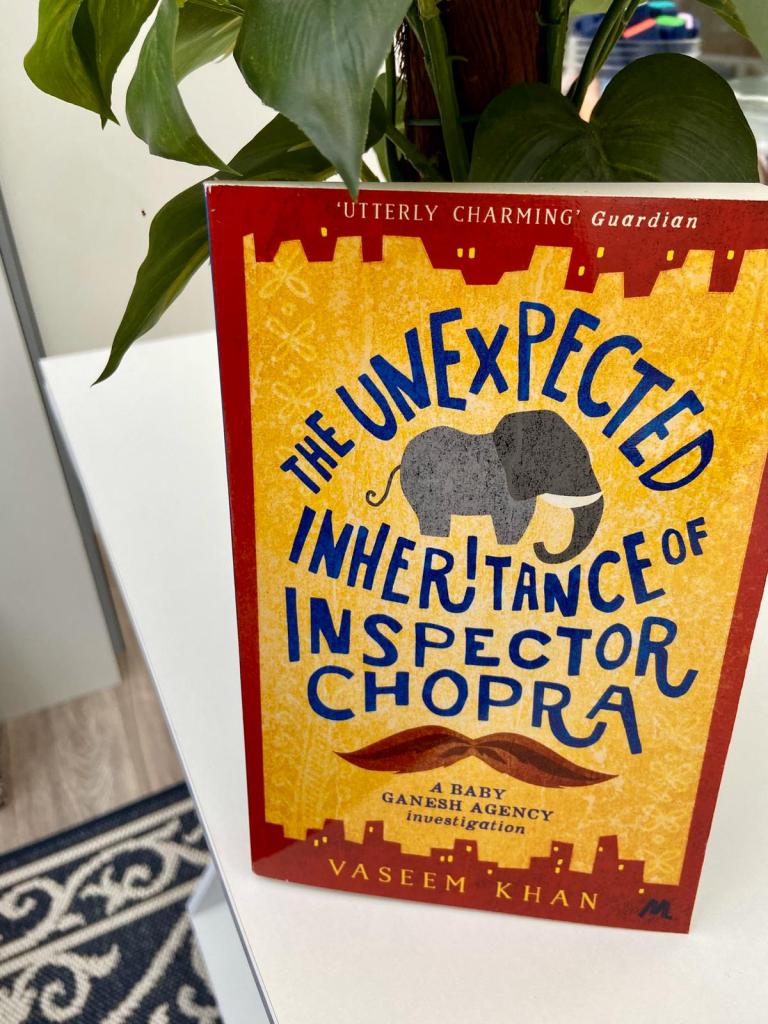
As you know from our last #CriminologyBookClub entry a small group of us decided the best way to thrive in lockdown was to seek solace in reading and talking about books. This blog entry is very different from any other we’ve published before, in that it has seven bloggers contributing! There is a very good reason why and that is because @manosdaskalou managed to choose a book that delighted all of us, and believe me, that is a challenge for a group of bibliophiles. Without more ado, let’s see what everyone thought:

“The second book of book club was a huge success- excellent choice @manosdaskalou! The Unexpected Inheritance of Inspector Chopra by Vaseem Khan was delightful! Whilst fulfilling all the ‘usual stuff’ associated with a crime novel, it also adds a layer of fantasy and wonder which is usually alien to crime fiction. As I raced through the novel, falling in love with characters- Poppy is kick ass, the complete opposite of drippy Carol (The Yellow Room) and safe to say I now want a baby Elephant; I was transformed into another world, something which crime fiction has never done for me before. It brought back feelings of nostalgia and memories of reading David Eddings and Derek Landy in the summer after GCSEs, when life was simpler and full of joy! A wonderful, intriguing and mysterious crime novel with a hint of fantasy, pulling you away to a different place. An enchanting and wonderful read which blends serious social injustices and issues with mystery, suspense and humour- I cannot wait to see what Inspector Chopra and Ganesha get up to next!”
@jesjames50

“The problem with writing a mere paragraph for a blog about a book that I really did enjoy is that I fear I won’t be able to do it justice. The story, well I’m sure others might tell you what the book is about but, if you want to know, really want to know, read it. Rarely can I say that I couldn’t wait to finish the book and yet didn’t want it to finish. The characters come to life, especially the elephant, in a way that makes it seem almost real, but not quite. The story moves on at a fast pace and yet has a steadiness to it. There are surprises along the way and, yet they are almost expected, it was always going to be that way. Within the narrative there is a demonstration of what we know to be good in humans and, yet it encompasses so much of what we know to be bad. How then can I have left the final page, sad that the book was finished, but uplifted by the narrative and almost salivating at the anticipation of reading the next in the series? The plaudits on the cover don’t do it justice, to answer my question, all I can reiterate is that you have to read it to understand.”
@5teveh
“When I first received this book, I was a bit sceptical, as I did not know how an elephant was going to be incorporated into a detective crime novel. However, I was pleasantly surprised. The first book in the series was a delight and a much-needed escape in these uncertain times. This book captured my attention very quickly and whisked me off on a colourful, picturesque adventure to Mumbai, with the amazing inspector Chopra and of course the star of the story, Ganesh the mysterious baby elephant. The book introduces you to an interesting plot. At first you are made to think that the focus of the book will be on Inspector Chopra investigating the murder of a young man. However, you are quickly introduced to the wider issues that sit at the heart of social and economic challenges present in India. Without leaving you glum, the book has a nice balance of crime and mystery, coupled with humour, great food, wonderful scenery and lovable characters. I liked this book as it was unique to any other books that I have read. I am looking forward to continuing the Baby Ganesh Detective Agency series.”
@svr2727
“Vaseem’s novel had me from to get-go. Set in bustling Mumbai this novel has more depth than the usual “whodunit” scenario. This book is a criminologist’s dream, as yes, we all find out who did it in the end, and yes the case is also solved but there are also issues of poverty and corruption to contend with. The story would not be complete without Ganesha the elephant who makes solving the case possible (and survivable). Ganesha goes through a lot in the story. From being depressed and chained up outside an apartment complex, to being mistakenly left to drown during heavy rain and fed chocolate. Despite all of this, Ganesha is often the hero of the hour, so for me the book symbolises the true greatness of animals: We do not deserve them.”
@haleysread
“I really enjoyed this book. It was great to lose myself in a different country and culture and to meet so many relatable characters there – even (especially?) the chocolate loving elephant! I can’t wait to find out what happens next…”
@saffrongarside
As well as having the joy of reading The Unexpected Inheritance of Inspector Chopra, we also had the very unexpected pleasure of welcoming the author Vaseem Khan to our book club meeting today. To be able to hear about Vaseem’s motivations for creating the colourful world in which Inspector Chopra and Ganesha work and play was fascinating. The opportunity to ask questions was fantastic and we’d like to say a big thank you to Vaseem for allowing us a peak inside his world of writing. It is now easy to see where Inspector Chopra gets his generosity of spirit from. And now we’ll leave the final word to @manosdaskalou….after all he did choose the book 😉
“What does a gang of criminologists do at lockdown? We read crime books and talk about them. On this occasion The Unexpected Inheritance of Inspector Chopra was a welcomed distraction from reality. The book introduces the retired inspector with a very unusual sidekick! The retired inspector is a very honourable, incorruptible professional whose investigation will bring him in conflict with the criminal underbelly of Mumbai. The retired inspector is not fazed, and he is determined to carry on regardless. The investigation takes inspector Chopra around the city; which gives the reader a unique opportunity to get to know a metropolitan megapolis.”
@manosdaskalou
Share this:


Things I Miss (And Don’t) – Bethany

I was inspired by @5teveh’s post about what things we may be struggling to be without, as well as what beauty we are finding in this new way of living.
I think it’s easier to start with what I don’t miss, which like many I am sure, is commuting. Some days I can commute a total of 3 hours round trip, and I am not even doing a lot of miles, but traffic is just bad. That’s 2 I guess, commuting and traffic. While I am at it, I don’t miss the things that go along with a long journey, such as trying to make up for the time I feel I’ve lost or, to be honest, thinking about my journey – that in itself can be a burden.
Me time! now, this isn’t a strictly-miss/don’t miss but rather something I have gained more of in the lockdown. Like us all, we have more time to ourselves, which for me has meant more time for reading. I tend to read every day anyway, but with the added time I’ve managed to devour 10 books in my 4 weeks of lockdown.
I am lucky that I am not in lockdown alone, I have my partner and my beautiful dog, who luckily is so small she doesn’t need frequent walks. However, this leads me on to what I miss. I miss walking freely with my partner and the dog, deep in the countryside, saying hello to other dog walkers and letting the dogs play, walking with friends and family and chatting while taking in the fresh air. This is one of my favourite things to do. It clears my mind and I miss it every day.
As mentioned above, but also like everyone, I miss my family, I do not live that close to my family, so when I visit them or they visit me, it’s a real occasion, for which we have planned what we will do, where we will eat and when the next visit will be. Not knowing when this will be is the hardest.
I think I echo others when I say that I miss the freedom and miss having (or at least the feeling of having) some control. I am aware of my privilege, I know the lockdown can bring the worst out of us sometimes, we moan about things that can seem trivial, especially when others are suffering more. I feel guilty, more than I did before I was forced to think about it every day. I miss not feeling guilty that I could be doing productive things like others, like filling every second with yoga (never done yoga before- why now?) or some other new activity.
The lockdown has made me think more simply, think of things day by day, there is joy in that, but I also take joy in picturing the moment where it all feels a bit better, I don’t think that will be the day the lockdown ends, but in months maybe, where I’ll be on a walk amongst the trees, with my favourite people and my favourite dog.
Share this:

Angie Smallwood thought we were bank-robbers #BlackenAsiaWithLove
Thus far, this has been the only time someone has called the cops on me – excluding those late-night noise violations at university for my 21st birthday parties. Plus a few routine traffic stops back home, two of which involved routine racial profiling. I’m lucky. There are far too many stories when these police encounters didn’t go well.
What if Ms. Angie had notified the guard, and he’d then decided to take things into his own hands? What if the police had come in pointing guns as they are want to do? What if my mother weren’t clasping tightly to my hand – as far as they knew – a senior citizen in need of (their) protection, a long-time customer of the bank discussing the mortgage on my grandparent’s old house? I have to wonder about these possibilities, to be sensitive and aware :-(. To be Young, Gifted and Black :-).
Dead giveaway
Like Charles Ramsey, “I knew something was wrong” when I saw two cops circle the bank and enter from two different directions. They weren’t there for banking and there weren’t any other customers. This was hubby’s (then boyfriend) first visit to my hometown, so I’d explicitly warned him to sit down while we waited in the lobby for my mother to handle her business. It was a small branch, yet still, like many banks at the time, the safe sat wide open, as if for inspection. Hubby was hovering. I even gave him change so he could get a lollipop from the charity pot sitting on several teller stations. You’d think someone would come over and offer a tour.
I had entered the small office once or twice. I greeted the agent speaking with my mother, then let momma know where we waited. Meanwhile, hubby insisted on wondering around – he’s generally restless. He was looking at all the posters promoting the bank’s services. Incredibly high-interest rates! Few savings options! He’s fascinated with the levels of credit exploitation permitted in America; the average German has net assets while most all us Americans have debt! He couldn’t even understand how a nation would let its population not have access to a basic bank account – as a right. He measured everything by good German standards.
How do people in America live with such instability! At that time, all this was totally foreign to him. At least in our neighborhood most folks were homeowners, so hubby and I understood one another on that. We’d both grown up taking care of our family’s homes and helping the neighbors. We’ve mowed many a lawn and trimmed many a hedge. We still do now.
“Me and my boyfriend,” the new Bonnie & Clyde
Angie Smallwood’s branch has now closed. After being heavily frisked, ID-ed and having the car license plates checked, the manager told us that Angie Smallwood had been involved in “5 or 6 armed robberies.” He explained – in that managerial tone where you know you’re being handled – that Angie had become suspicious because of hubby’s foreign accent. I found that part hilarious and yet most plausible then and there, in Louisville, KY. In spite of their constant romanticization of their European roots, they couldn’t communicate with one actual F.O.B. standing right in front of them. As a European, hubby needed this education about his own whiteness.. He even came up with his own phrase for the phenomenon “those are not my white people.”
I suppose the manager was suggesting that Angie Smallwood was trigger happy. Or, perhaps he was just trying to elicit our sympathies. It’s not as if we were going to cause a scene, the cops were still standing menacingly by. Of course, my husband blurted out why they’d placed someone so traumatized on front desk duty anyway? I am also not certain if they expected my mother to continue her business with them, or if they even cared, but the cops did ask hubby and I to leave – as if my mother was just going to go back inside. At least the manager could have apologized to my mother. He could not.
“Like I said, we just got a call about a potential crime.”
What if my mother didn’t have outstanding credit, or relationships with other banks, and therefore didn’t have other options? Angie’s antics would have just ruined that. This was the most disrespectful part – their staunch, comprehensive reminder that there’s systemic power behind their individual prejudices. Their silences. My silence.
My silence: I had already policed myself. I dressed for success, sat calmly in a visible area, not made any noise and not touched anything save for the flyer next to me on the table. I used my best diction and inside voice when I made sure to smile and greet every staffer I could see. I showed them my teen as if to announce “I’m not a threat.” If all that hadn’t disarmed them, it occurred to me – yet again- that they could not be appeased.
No level of respectability would protect me in public – we were all a part of a system, and as far as they were all concerned, everyone was just doing their job. Imagine, not only could the cops not offer any apology, they couldn’t even stand down from their hostile posture and tone. I actually felt sorry for them – as big, armed and trained as they were, they acted threatened by us!
At the time I thought they’d refused to de-escalate the situation, perhaps pride? The cops had no kind words for my mother whom they’d found out was there on legitimate business. Naw, they escorted us outside and menacingly watched us drive away. Sometimes I feel that even screwball ‘Police Academy’movies from the 80’s showed more emotional intelligence than that.
Though hubby usually drives, momma insisted that she take the wheel under the cops’ eyes, worrying they’d then challenge the foreigner’s right to drive. Yet, now I’m convinced they couldn’t have de-escalated the situation. Cops’ weeks of training doesn’t routinely include conflict resolution. They don’t know no better. They just got a call, and so they could no longer be human.
Educate cops. Arm them with de-escalation tools so that the public sees their power. Arm cops with non-violence so that they model this behavior for our society. Teach cops to be able to identify emotional distress as much as any professional would. Don’t let a weapon be their only peacemaker.
Share this:


From Poplar to Grenfell, and the lands between
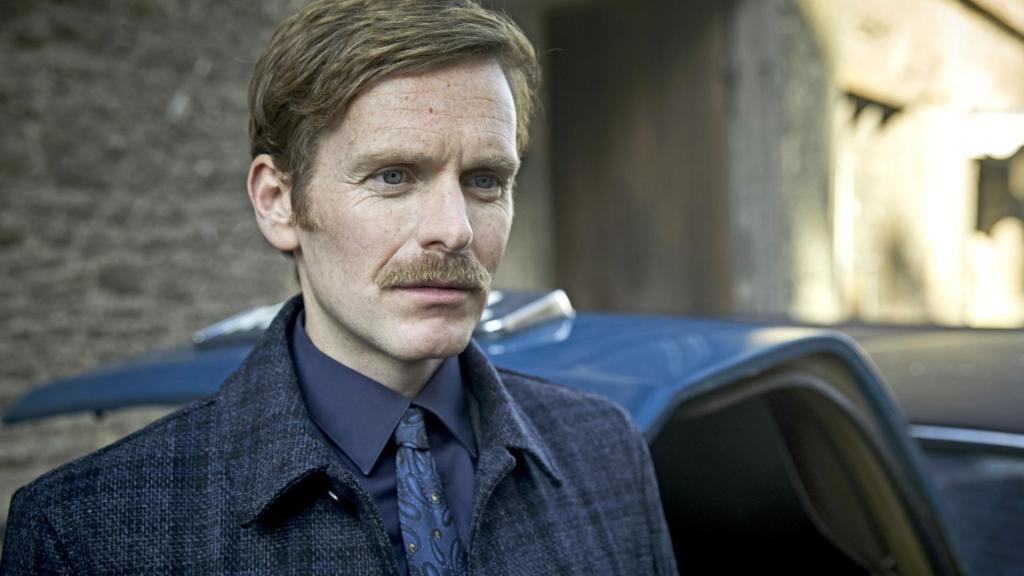
In a previous blog post, I commented how the Period Drama is my favourite genre to watch. This year, it was interesting to see two of my favourite series talk about tower blocks. As we reach the third anniversary of Grenfell , I saw both Call the Midwife and Endeavour comment on how these tower blocks were optimistic schemes. As the tower blocks multiply in the London East End, a new society rises. Meanwhile, in Endeavour a tower block collapses in Oxfordshire (quite like Ronan Point in Canning Town: London, 1968). Watching both these shows, we know how this story ends, in ashes; poor people, immigrants, refugees, Black and brown people, people with disabilities as victims of the Grenfell Tower fire.
It is also tragic to see that in the stories of tower blocks in both series, there is also a Black history that goes beyond the show. In Call the Midwife’s ninth season, we encounter a patient with Sickle Cell, common in those of African descent. “The population around here is changing, I have to be prepared to deal with new things” says Dr. Turner. The arrival of the Windrush Generation, tied with the baby boom brought challenges for the state. Where would they house people? People in a society where Enoch Powell feared “the Black man would hold the whip hand over the White man.”

In Endeavour, the Cranmer House collapses, which may be inspired by the true-to-life incident of Ronan Point, a tower block in the Canning Town district in the East End of London. Ronan Point partially collapses a year and half before the events of ‘Degüello’ in the sixth season of Endeavour. In London, there were four fatalities and an additional seventeen were injured. Initially said to be a gas explosion, like at Cranmer, it was later deduced that Ronan Point’s collapse was due to structural deficiencies. Laws were eventually changed in hope of preventing incidents like this.
Though, that did not help those that died at Grenfell, where seventy-two (that were accounted for) lost their lives on June 14, 2017, including still-born Logan Gomes after his parents escaped the tragedy in the south-west of London.
However, this episode of Endeavour must be one of my favourites of any show I have seen. Not only for its sociohistorical significance, but for its ability to tell a story with excellent pacing in a way that I only really see in journalism films, such as The Post (starring Meryl Streep and Tom Hanks) Not at any moment is this boring to watch (nor is the entirety of the series). Each episode of Endeavour plays out almost like a film noir. Especially ‘Degüello’, which makes me think of Roman Polanski’s Chinatown (1974).

When a librarian is murdered at Oxford’s world famous Bodleian, DS Endeavour Morse and DI Thursday have no leads but a pair of muddy boot prints. With both suspects having motives, Morse explores into their pasts, showing bribery and corruption at the highest level, including links to Cranmer and the murder of their colleague DC George Fancy. In its ninety minutes, ‘Degüello’ is pure edge-of-your-seat drama. It must be one of my favourite season finales of all-time. And that is high praise, indeed.
Early on we already begin to see the cracks in Cranmer. Quite literally. When tragedy strikes, it is up to Morse and company to find the survivors in the rubble of what was supposed to be an optimistic look at Britain of the future. Watching shows set in the 1960s, it’s eerie to know how this story ends (if it has ended at all). In this time of Coronavirus we are in a country with a 30,000+ death toll, many of which could have been prevented. The same can be said with Grenfell, where stakeholders seemingly cut corners to save money and at least seventy-two people unnecessarily lost their lives.

With these two shows set in the same time period, both with commentaries on tower blocks (CTM’s being a looser narrative), we in the present have the gift of hindsight. Yet, with Grenfell we continue to make the same mistakes. If they are mistakes at all. Did the state’s contempt for the working class begin with Grenfell? No, just look at Charles Dickens novels, or how the characters of Wuthering Heights treat Heathcliff who Mr Earnshaw brought back from Liverpool. These are works of fiction, but how fictional are they? Art imitates life, but when life starts imitating art is what scares me.
For centuries, those that have, have always treated those that don’t with disdain. Whether that’s the actions of the British Empire; or the use of child labour (see the Factory Act, didn’t do much). Or the Mines Act (1842) prohibiting girls and women working the mines. Nonetheless, today’s progress on equalities, including the Human Rights Act (1998) would also dictate that the Factory Act (1833) as not fit for purpose, with age ten as the minimum age for boys to work the mines. English common sense indeed!

How fictional are the stories of Dickens, the Bronte Sisters, or Thackeray’s Vanity Fair that comment on class? With the ongoing investigation into the Grenfell Tower tragedy, how will the history books look back on it, in say a century? What about the Windrush Scandal? In the ‘Case of Jarndyce and Jarndyce’, in Bleak House, it ends with nobody getting anything. Years of legal fees and legal jargon that nobody understands. Both Call the Midwife and Endeavour show characters at the mercy of systems. A London tower block black as coal doesn’t discriminate but institutions do, systems do.
When you run Grenfell, Ronan, Cranmer, or even the Coronavirus pandemic parallel to British history, is it really surprising that the state is cutting corners, readily throwing society’s most vulnerable, including the poor, under the bus?
Share this:


“My Favourite Things”: Natalie Humphrey (President of the UoN Criminology Society)

My favourite TV show - Gogglebox. There is nothing I love more on a Friday night than watching others watch TV, especially if a Chinese takeaway is involved. I do have my binge tv shows too, such as Brooklyn 99 and I love a Louis Theroux documentary

My favourite place to go - During term time, it's to go to the pool at the local gym and de-stress. It helps when I’m getting stressed about uni work or even work itself. I always come out refreshed, ready to take on the day. However, I can’t go to the pool for the foreseeable future, which is a downside to liking a sport you cannot do from home. At the moment, sitting in the garden is a good way to get away and have some me time

My favourite city - Barcelona. It so full of culture and bright colours. It has the most beautiful architecture and a stunning beach front. I will definitely be giving it another visit after lockdown and hope to visit Barcelona many more times

My favourite thing to do in my free time - be with my family, go on long dog walks and just relax

My favourite athlete/sports personality - I suppose it would have to be Rebecca Adlington. I think she is an inspirational person and her passion for swimming inspired me to take it up, however I don’t think I’ll be going pro

My favourite actor - This is a hard one, I love most genres of films. Robin Williams would be very top of that list. He was such an inspirational person, and Mrs Doubtfire is one of my favourite classic films. I also absolutely love Aladdin, and his part as the genie is just amazing, there was nothing that man couldn’t do

My favourite author - I have been very slack with my reading in recent years. As a child, Jacqueline Wilson was my absolute favourite. They are brilliant books, even to me now, with such meaningful messages behind the story

My favourite drink - If we are going with alcoholic, it has to be raspberry gin and pink lemonade. Nothing like it on a warm summers evening and a BBQ

My favourite food - This is a tricky one because I love so much food. I’d probably have to go with a burger. But I also love Chinese, Indian, pizza, pasta, the list could go on and on. The only food I’m not too bothered about is sweet food. I much prefer savoury. But on special occasions a sticky toffee pudding goes down very well

My favourite place to eat - The Cherry Tree in Olney. They do the best burgers around and have so many great gins. The bar area is lovely and cosy which is important because the dog goes everywhere with us. They have a biscuit tin for dogs and he loves that, its his favourite place to go to

I like people who - tell it how it is and like me for who I am. These are the best kind of people

I don’t like it when people - are not truthful and patronise me

My favourite book - I don’t really read, but now I have quite a lot of time on my hands it is something I have started doing. I am about halfway through The Handmaid's Tail and is one of the best books I have read so far

My favourite book character - Hetty Feather, a well-known character from Jacqueline Wilson, who is very defiant and strong willed. She has not come from much but is determined to make something of herself. I admire her for that

My favourite film - Probably the High School Musical trilogy, they remind me of my childhood, and I will forever love Zac Efron. Although I do enjoy a true story, such as The Darkest Hour and Saving Private Ryan. I also enjoy a cheesy rom-com, I think I’ve seen the majority of them on Netflix

My favourite poem - The Caged Bird by Maya Angelou. I studied Maya Angelou during A level English Literature and found her to be an inspiring woman with an extraordinary story to tell. The poem compares the lives of those who are free and those who are not, and I believe this to be an important message in our society

My favourite artist/band - Def Leppard are probably my number 1, although I like so many more

My favourite song - This changes on a monthly basis, at the moment its anything by Harry Styles

My favourite art - Girl with a pearl earring. Its just such an iconic painting and I would love to see it one day

My favourite person from history - Princess Diana. Nothing more needed to say. Such an inspirational woman with so much to give the world
Share this:


“My Favourite Things”: madams1965
My favourite TV show - So many to chose from! Recently finished Narcos and Narcos Mexico. Currently watching Better Call Saul and The Crown

My favourite place to go - Lyme Regis in Dorset. My parents retired there almost 20 years ago & we go down every Easter to enjoy bracing walks along The Cobb, leisurely lunches in village pubs, and fish and chips on the seafront. It’s the first place we’re going once Lockdown is over!

My favourite city - I have two: New York and Rome. I love the energy of New York, the friendliness of the people, the restaurants, theatres and bars – it just has something indescribable. In contrast, Rome is so laid back and chilled. I could sit outside a café in the Piazza della Rotonda, across from the Pantheon all day, just drinking coffee and watching the world go by, and the occasional street entertainers, before they are moved on by the Carabinieri.

And Heidelberg! Sorry I’m just being greedy now, but that is probably one of the most beautiful cities. And nothing beats a lazy cruise down The Necker River in the sun surrounded by all that lush green German countryside

My favourite thing to do in my free time - Read, read, read! Or watch Netflix! Or travel

My favourite athlete/sports personality - Not a sports fan I’m afraid

My favourite actor - Tom Hardy or Gary Oldman

My favourite author - I’ll read anything by anyone, but Jane Austen stands out from the crowd. I also love biographies

My favourite drink - Edinburgh Gin Rhubarb and Ginger Liqueur with ice and lemonade is beautifully refreshing in summer. In the winter I love a coffee flavoured Baileys with a shot of brandy. And all year round it’s red wine. Anyone will do, I’m not fussy!

My favourite food - As you can tell, I love all food!

My favourite place to eat - At home when my husband cooks his signature lamb pasanda

I like people who - don’t judge others, who are respectful and kind, and who make me laugh.

I don’t like it when people - dominate conversations, interrupt or are dismissive of others. And I don’t like bullies

My favourite book - So many I don’t know where to begin. A few of the best books I’ve read would have to include The Five by Hallie Rubenhold, Fanny and Stella by Neil McKenna, and The Fact of a Body by Alexandria Marzano-Lesnevich. I am currently reading The Poisonwood Bible by Barbara Kingsolver, and before that I read The End of the Affair by Graeme Greene, and One Flew Over the Cuckoo’s Nest by Ken Kesey

My favourite book character - At the moment (because I’m reading it) it’s Rachel from The Poisonwood Bible. She’s the eldest daughter of a bible thumping missionary who took his family to The Congo in the 1960s. Rachel is sassy and funny and thinks she’s worldly-wise at the age of 17 but mispronounces her big grown-up words and is completely oblivious to the danger around her!

My favourite film - There are so many brilliant films that I watch over and over, but my all-time favourite has to be Brokeback Mountain. Apart from the fact that the cinematography and music score are amazing, it’s just a story about such pure love and heartbreak, I cry more each time I watch it

My favourite poem - W. D. Auden’s Funeral Blues

My favourite artist/band - Showing my age here – Johnny Cash, U2, Queen, Elton John, but also Florence and The Machine, Coldplay and Mumford and Sons

My favourite song - Coldplay’s Fix You

My favourite art - I don’t have a favourite but like all sorts from Banksy to Lowry to Monet

My favourite person from history - Jane Austen

Share this:


Putting the I back into responsibility

As I sit in our ensuite, I gaze around with pride remembering how I built this. I built the room structure before plumbing in a toilet, sink and shower. I tiled the walls and laid the flooring. The only thing I didn’t do was plaster the walls, not really my forte and sometimes we have to recognise our own limitations. A few weeks ago though, I wasn’t admiring a job well done; the shower leaked. Nothing drastic, but nonetheless there would be a small pool of water outside of the shower after use. The problem being that the floor wasn’t level, therefore the shower tray wasn’t level, and this left a gap under the shower door. I’d tried to adjust the frame but had taken it to its limit which meant the door was wobbly. I didn’t think much of the mastic job around the shower either, uneven and already starting to lift slightly in places.
The problem is obvious, the floor is not level, I didn’t build the house so that’s someone else’s fault. There’s not enough compensation in the frame to rectify the first problem, poor shower design if you ask me. I can’t think of an excuse for the mastic debacle.
Now I can sit in the ensuite every morning for as long as I like lamenting others’ poor workmanship and poor design, and I did for a while, but it won’t solve the problem.
I decided to try to fix the issue, after all, in the current climate we do have to try to keep ourselves amused. Thinking about this, I really ought to have made a better job of levelling the shower tray in the first place. Too late now though, it’s bonded in place. I decided to move the shower frame away from the wall slightly, this adjustment was enough to stabilise the door, why I didn’t do this in the first place I can’t say, probably too focused on finishing the job, maybe a bit of laziness crept in. The adjustment also meant that the gap below the door was minimised and this solved the leak. I took all the mastic off around the shower tray and started again. A far better finish was achieved.
In deciding to do something about the problem, I stopped seeing it as a problem, stopped blaming others and stopped thinking about my misfortune. I took responsibility for my own poor workmanship, realising that I had failed to take into account the fact the floor wasn’t level.
Sometimes we spend too much time complaining about problems, finding fault in others, that we fail to see where we might have done better. When we fall short, we blame others or blame circumstances, rarely do we consider that we could have done the job better or handled the situation differently. If we start to take responsibility for our own shortcomings, then the world becomes a better place. Putting the ‘I’ back into ‘responsibility’ really is quite empowering. ‘When fate hands us a lemon, let’s try to make a lemonade’ (Carnegie, 1998:185).
Reference
Carnegie, D (1998) How to Stop Worrying and Start Living, London: Vermilion
Share this:


Things I miss (and don’t) – Jes

Considering what I miss/do not miss during this time has led me to the conclusion that I am extremely privileged and fortunate. And in a sense it shames me that the things I miss or do not miss are exceptionally minor in the grand scheme of things. Nevertheless…
At the beginning of lockdown I was, as I am sure many were, struggling to cope with the concept of time. What was time now I spent every day at home? What day of the week was it? After a few days of feeling quite unsettled by this, I soon accepted and believed that I did not miss time, as with time can restrictions, deadlines and an atmosphere of rushing. I enjoyed taking my time with mundane household chores, with reading in the sunshine, pottering around, playing video games, answering emails: all without having to rush. However fast forward to today and I miss time. I miss having to rush to fit things in, or making a decision about what will have to wait till another day because I do not have time today. And I really miss being able to tell (without looking at a calendar) what day it is.
Like many, I also miss my family, friends and colleagues. I have older relatives who I am facetiming often, but normally would only see once maybe twice a year (they live a fair distance away), and I am making a mental note to make more of an effort to see them when we return to whatever will constitute normalcy. But is this an empty thought? Will I actually make more of an effort? I see lots on social media about how this has made us more grateful and aware, but is this just empty reflection? When push comes to shove will we just fall back into the same problematic ways? Maybe some will, maybe some won’t: I am hopeful I won’t, but I am not making this statement with conviction. Whilst I miss seeing my family, I am thankful that we are able to keep in regular contact and in some ways I talk more regularly with my family now than before lockdown.
Rather than what I do not miss, I will share what I am enjoying whilst in lockdown (even though it is not the same as not missing something). I like how empty the roads are: I have started to run around Northampton via walkways and roads as part of my daily exercise rather than the park routes which I used to do. The roads are empty and it is lovely! I am enjoying (in my experience) how smiley people are towards supermarket workers and hope that it is genuine. I am also enjoying not driving: I rarely drive nowadays anyway, but I would drive to the gym on the occasional evening and to visit friends. As time has very little meaning to me currently, and I live close to local amenities, I am walking everywhere which is pleasant.
It is a strange time and whilst I think there are lots of things I miss, I am not sure that there actually are. I am lucky in the sense that I have (at least I feel like I have) adapted well to being in lockdown. So whilst there are a number of little things I think I miss, actually I’m getting by well enough to question if I actually miss them. Although, in all honesty, I miss being able to walk to the shop as frequently as required for chocolate! This once a week shopping is resulting in me buying lots of chocolate, and eating it within the first half of the week and leaving me all stroppy when we run out! I think if I was unable to go out daily for exercise, and ran out of coffee, then I would not feel as relaxed as I currently do.
Share this:


Another one bites the dust #AhmaudAbery #BlackenAsiaWithLove
There is newly released video evidence of Maud, as he was known to kin, minutes before he was shot to death during a so-called citizen’s arrest. On the video, Maud paused during his job, caught his breath, and for exactly six minutes can be seen on video surveillance surveying a neighborhood construction site shortly before he was killed by a “homegrown posse.” This is exactly as my husband would do along his jogs.

‘Let’s get in Formation!’
My husband is fascinated with how things work, and how they are built. He can repair and engine, a toilet, a lawn-mower, locks, hinges, and plenty of things on our house. He got that from his daddy, who has an entire workshop in their basement dedicated towards up-keeping their home. He even made hubby and I a bench. My husband grew up in a German village believing that owning property was a communal enterprise. He certainly feels entitled to inspect any work that impacts the landscape of the hood. So now when he ‘inspects’ things, he behaves as if he has the right to know what’s going on in the world. I don’t have those rights.
A citizen’s arrest means an entitled citizen can stop and attain anyone whom they believe to be a criminal; legally they must have witnessed the crime. On the 9-1-1 call, Maud’s killers couldn’t even tell the emergency responder what crime they’d supposedly seen, nor were there records of these so-called string of break-ins that had allegedly occurred, justifying their anger and pursuit of the unarmed jogger. “Why make a citizen’s arrest when 9-1-1 was an available option?” emphasizes one cable news pundit during the rolling coverage of yet another Black boy slain.

I hasten to think of how Fox News is covering this story. Does it matter that he was unarmed? So what if the law doesn’t consider Maud’s right to stand his ground? Why even mention that some neighbors regularly saw Maud out jogging? Who cares that Maud was loved? We’ll forget that Maud’s alleged crime does not fit the punishment.

We make our own videos. Beyoncé’s controversial music video Formation ends in a back alley, a little Black boy slays a whole SWAT team in attack formation, with the graffiti: “Stop killing us” This directly echoes the censored ending to Michael Jackson’s 1991 Black or White video. After the music finishes, a black panther morphs into our hero, who then slays racist graffiti in the back alley of a fancy Hollywood studio. Ouch. Importantly, “as his skin became whiter, his work became blacker,” observed one Guardian writer 11 years after the singer’s tragic death. Jackson removed it and apologized after public outcry over his violence and crotch-grabbing. Maybe it reminded folks of a lynching!
-No justice, no peace.
Share this:

Technology and Learning: A baby and the bathwater moment

I recently shared some thoughts about the problems with technology and working from home. I suppose the nub of the matter was twofold firstly, if I have problems with technology, why would this not also impact some of my colleagues and students, thus limiting what can be delivered online. Secondly, whatever is delivered online does not suit everyone and whilst as educators we need to adapt to circumstances and new ways of working, we should be cognisant that simply imposing the new ways on students does not always suit what they want or more importantly, what they need. If we acknowledge that everyone learns in different ways at different times, then a one size fits all approach is not delivering anything like a premium learning environment.
In writing my previous blog, I also started to think about how difficult it is to be motivated whilst working from home and how my experiences have at least partially prepared me for this. I say partially because past experiences did not encompass being in lockdown.
When I was 15, I returned from overseas and went to the local college to study for my ‘O’ levels (GCSE now) rather than a school. It was far more relaxed in respect of attending classes. This was a time when at 16 people could leave school, so the college was full of students who were 16 and essentially independent from the school regime. I turned 16 whilst at college. I remember not going to every class, sometimes perhaps because I preferred to spend time playing football in the sunshine and at other times because there was some casual work somewhere that would earn me a bit of money. There were no distractions such as computers and mobile phones so actually attending college was in the main better than being bored outside of it. That was one incentive to engage in my education, I had others such as friends being at college but probably above all I recognised I needed some qualifications. I think my parents might also have been a little peeved if I’d not done anything. I had a structure to my life and a major part of it was getting up in the morning and attending college on my bicycle; rain or shine, for the most part I was there.
At an early point in my policing career, I decided I would like to take the promotion exam to sergeant. An annual exam which incorporated, as I recall, three two-hour papers, one relating to crime, one traffic and one general police duties. An awful lot of legislation and procedure was to be tested and all of it could be found in the regularly updated promotion manual. A tome, if ever there was one, divided into various sections that covered everything a would-be sergeant needed to know and in addition, legislation for the inspector’s exam. Years went by with well intentioned attempts to study, followed by a lack of action. I just couldn’t get my head round how to do this, despite trying to answer the questions in the promotion section of the Police Review magazine.
I can’t remember exactly when it was but there was an announcement that the promotion process was to change, the exam which gave you a ticket to a promotion board, was to be replaced with an assessment centre. This new way involved not only an exam, but scenario based assessments. That year I decided I really needed to pass the promotion exam to avoid the new process, so I purchased access to a correspondence course. It wasn’t cheap, and it was before computers as we know them. I received a plethora of books each divided up into various chapters and each requiring me to answer questions that were then sent by mail to someone to mark and provide feedback. What this required was organisation and commitment. I was lucky, I was working in a very disciplined job, organisation and commitment were to some extent, if I set my mind to it, second nature. And two added incentives, an easier passage to promotion as I saw it, and I’d paid out a lot of money that I wasn’t going to waste. That year I passed the sergeants and the inspector’s exam, two in the bank although it was still some time before I was promoted.
When I embarked on my degree, I had to apply the same self-discipline. Despite it being part-time, attendance for lectures and seminars was difficult, there was no way I could attend everything whilst doing shift work, but I tried my best. I even had to take time out because I was involved in a major investigation that took me away from home for 6 months. By this time, I had a very young family, so every assignment was a challenge to complete and there was no online Google access to papers and blogs and the like. It was library based work, sometimes the university library, other times local libraries and often late nights in the office at work. What it needed was self-discipline, commitment and a structure to each day, well as best as possible given the demands of shift work, major enquiries and long working hours. Every time I faltered I reminded myself that I’d done a lot of work, put a lot into this and I wasn’t about to throw all of that away.
When I embarked on my Ph.D. my commitment and self-discipline was sorely tested at times. Tragedy and life altering events pushed me to the limits, but I managed to maintain that commitment and self-discipline, sometimes aided by others at work who tried to make things a little easier. The office at work provided space for both my day job and my Ph.D. The two morphing into one at times.
Why tell you all of this, well its simply this. I ask myself what makes a student engage in their course and more importantly, what inhibits them? Firstly, they need self-discipline. When I went to college, there were a number of things that ensured I would turn up; my parents wouldn’t have countenanced my staying in bed or around the house all day; day time telly was rubbish (only three channels) and there wasn’t an awful lot else to do. My friends were either at school, at college or working and there were no mobile phones, so contact was either at college or in the evenings and weekends. Learning could only be done at college, no recorded lectures or Collaborate or e-books. I also recognised I needed qualifications to get on in life.
When I embarked on my promotion exams I recognised the need to have a structure to my learning. This was partly provided by the correspondence course and the way it was set up and partly provided by discipline I learnt in my work. It did though need a structure provided by the course and an incentive to do it at that moment in time.
My degree also needed self-discipline, nobody chased me to turn up and nobody chased me for assignments. Not being there, meant missing out on discussions and learning from other students, not just the lecturers. I’d paid for this as well so another incentive to succeed, this was not some loan to be possibly paid in the future, this was real money, my money up front. And the more I did the more determined I became that I wasn’t going to waste my efforts.
Anyone will tell you that a Ph.D. is challenging and that for the most part, the achievement is not about knowledge or brilliance but about gritted determination to complete it. That determination requires self-discipline and that self-discipline for me was aided by tagging the Ph.D. onto my job. My office at work was my sanctuary, it was easier to stop working on one thing and then seamlessly move onto writing up the Ph.D. I had a structure to my studying and my work.
So, I begin to wonder, do recorded lectures, Collaborate, ebooks, the internet, social media and a plethora of other advances really help students? Why get up in the morning to attend lectures if you can watch a recorded version of it later, ‘a must get round to it moment’? Why bother to go to the library when you can Google stuff and read, well at least skim’ e-books? Why bother with classes when you can chat with your mates and so called ‘friends’ on Facebook or the plethora of other social media apps. There is no financial incentive when the payment for the course is made on your behalf and whilst you have a massive debt on paper, the reality is that you will never pay it back (If you don’t believe me, have a look at the Martin Lewis website). There are no parents to get you up in the morning or to scorn your lethargy, at worst any failure will be chided sometime in the misty future. All that students can rely on is self-discipline and their own belief in commitment. A hard ask when you don’t have all the anchors you had at school and college. I was lucky, I grew up in an era of much fewer distractions. I was employed in a job that required a high degree of disciple, so self-discipline was much easier. I was also a mature student so could call on a vast amount of experience.
I’ll leave you with a thought. The year 1840 saw the introduction of the first stamp, the Penny Black. Despite the advent of emails, texts and the internet, nearly two hundred years later, Royal Mail are still delivering letters and packages. Whilst you can get your bank statements online, you can still have paper copies. Whilst you can read books on Kindle and other contraptions, book stores still exist, and hard copy books are still sold by the millions. Whilst, music can now be delivered in so many different electronic formats, there is still a clamour for vinyl records. Whilst films are available at home in so many different ways, people still go to see films at the cinema.
Technology is wonderful and is a great enabler in so many ways. That doesn’t give us licence though to ignore the value of what by some may be seen as ‘old fashioned, stick in the mud’ structures, processes and transactions. Sometimes things are the way they are for a reason, change them and there are at times problematic unintended consequences. Making changes through the use of technology and ignoring tried and trusted methods might actually be akin to ‘throwing out the baby with the bathwater’.

 Thoughts from the criminology team