
Home » 2018 (Page 9)
Yearly Archives: 2018

Out early on good behaviour
Dr Stephen O’Brien is the Dean for the Faculty of Health and Society at the University of Northampton
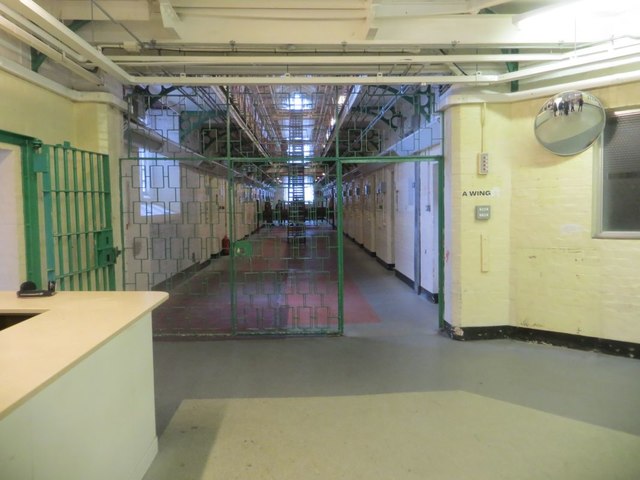
The other week I had the opportunity to visit one of our local prisons with academic colleagues from our Criminology team within the Faculty of Health and Society at the University of Northampton. The prison in question is a category C closed facility and it was my very first visit to such an institution. The context for my visit was to follow up and review the work completed by students, prisoners and staff in the joint delivery of an academic module which forms part of our undergraduate Criminology course. The module entitled “Beyond Justice” explores key philosophical, social and political issues associated with the concept of justice and the journeys that individuals travel within the criminal justice system in the UK. This innovative approach to collaborative education involving the delivery of the module to students of the university and prisoners was long in its gestation. The module itself had been delivered over several weeks in the Autumn term of 2017. What was very apparent from the start of this planned visit was how successful the venture had been; ground-breaking in many respects with clear impact for all involved. Indeed, it has been way more successful than anyone could have imagined when the staff embarked on the planning process. The project is an excellent example of the University’s Changemaker agenda with its emphasis upon mobilising University assets to address real life social challenges.
My particular visit was more than a simple review and celebration of good Changemaker work well done. It was to advance the working relationship with the Prison in the signing of a memorandum of understanding which outlined further work that would be developed on the back of this successful project. This will include; future classes for university/prison students, academic advancement of prison staff, the use of prison staff expertise in the university, research and consultancy. My visit was therefore a fruitful one. In the run up to the visit I had to endure all the usual jokes one would expect. Would they let me in? More importantly would they let me out? Clearly there was an absolute need to be on my best behaviour, keep my nose clean and certainly mind my Ps and Qs especially if I was to be “released”. Despite this ribbing I approached the visit with anticipation and an open mind. To be honest I was unsure what to expect. My only previous conceptual experience of this aspect of the criminal justice system was many years ago when I was working as a mental health nurse in a traditional NHS psychiatric hospital. This was in the early 1980s with its throwback to a period of mental health care based on primarily protecting the public from the mad in society. Whilst there had been some shifts in thinking there was still a strong element of the “custodial” in the treatment and care regimen adopted. Public safety was paramount and many patients had been in the hospital for tens of years with an ensuing sense of incarceration and institutionalisation. These concepts are well described in the seminal work of Barton (1976) who described the consequences of long term incarceration as a form of neurosis; a psychiatric disorder in which a person confined for a long period in a hospital, mental hospital, or prison assumes a dependent role, passively accepts the paternalist approach of those in charge, and develops symptoms and signs associated with restricted horizons, such as increasing passivity and lack of motivation. To be fair mental health services had been transitioning slowly since the 1960s with a move from the custodial to the therapeutic. The associated strategy of rehabilitation and the decant of patients from what was an old asylum to a more community based services were well underway. In many respects the speed of this change was proving problematic with community support struggling to catch up and cope with the numbers moving out of the institutions.
My only other personal experience was when I spent a night in the cells of my local police station following an “incident” in the town centre. This was a case of being in the wrong place at the wrong time. (I know everyone says that, but in this case it is a genuine explanation). However, this did give me a sense of what being locked up felt like albeit for a few hours one night. When being shown one of the single occupancy cells at the prison those feelings came flooding back. However, the thought of being there for several months or years would have considerably more impact. The accommodation was in fact worse than I had imagined. I reflected on this afterwards in light of what can sometimes be the prevailing narrative that prison is in some way a cushy number. The roof over your head, access to a TV and a warm bed along with three square meals a day is often dressed up as a comfortable daily life. The reality of incarceration is far from this view. A few days later I watched Trevor MacDonald report from Indiana State Prison in the USA as part of ITV’s crime and punishment season. In comparison to that you could argue the UK version is comfortable but I have no doubt either experience would be, for me, an extreme challenge.
There were further echoes of my mental health experiences as I was shown the rehabilitation facilities with opportunities for prisoners to experience real world work as part of their transition back into society. I was impressed with the community engagement and the foresight of some big high street companies to get involved in retraining and education. This aspect of the visit was much better than I imagined and there is evidence that this is working. It is a strict rehabilitation regime where any poor behaviour or departure from the planned activity results in failure and loss of the opportunity. This did make me reflect on our own project and its contribution to prisoner rehabilitation. In education, success and failure are norms and the process engenders much more tolerance of what we see as mistakes along the way. The great thing about this project is the achievement of all in terms of both the learning process and outcome. Those outcomes will be celebrated later this month when we return to the prison for a special celebration event. That will be the moment not only to celebrate success but to look to the future and the further work the University and the Prison can do together. On that occasion as on this I do expect to be released early for good behaviour.
Reference
Barton, R., (1976) Institutional Neurosis: 3rd edition, Butterworth-Heinemann, London.
Share this:


The trials of Theresa May

Not long after starting my new post at the University of Northampton, I one day remarked ‘you know, I do feel a bit sorry for Theresa May’, or words to that effect. Well, my colleagues were shocked and stunned, clearly I had touched a nerve. But you know what, they were absolutely right to feel this way. Let me first explain myself. I was reflecting on the challenges she has faced as Prime Minister overseeing our exit from the European Union and the seemingly constant questions over her legitimacy and capability as a leader. She had faced a humiliating election result on top of everything else and was criticised for holding Donald Trump’s hand as a symbol of her courting favour with someone many find…..distasteful. So, I thought, she must be feeling attacked from all sides. Also, I did definitely say I was feeling ‘a bit’ sorry for her. However, my colleagues’ reaction did make me think about this view. They pointed out her decisions had led to this and, as it turns out, they also reveal a pattern of behaviour which reinforce their views, not mine. When you examine this from her time as Home Secretary and as Prime Minister, there are numerous examples which show her limitations as a leader.
Let us start with Theresa May, Home Secretary. In 2010, the Conservative-Liberal Democrat coalition promised to tackle the budget deficit and through the ‘Big Society’ initiative, reclaim communities for the ‘law abiding majority’. Theresa’s speech to the Police Federation struck a triumphant tone, and presented a plea to accept her deal to cut spending, to allow the police more autonomy, less bureaucracy and less focus on targets. She celebrated the police as heroes, the front line in the fight to fix the ‘broken society’ and deal with the criminals we were all living in fear of. The slogan of the Conservative Party campaign was reiterated, to tell the police that ‘we’re all in this together’. She promised to always back the police, always fight for them and support them.
Her 2015 speech was less conciliatory and did not celebrate the work of the police. In her announcement to the Police Federation in May 2015, she accused the police service and management of scaremongering as they presented evidence on the impact of cuts, especially on neighbourhood policing functions. Perhaps bolstered by the recent Conservative party election win, she went in all guns blazing. Neighbourhood policing was described as an ‘endangered species’ by serving officers, and they also took this opportunity to plead with her to listen and not resort to her usual position of dismissing their concerns (BBC News, 20 May 2015). For the police service, preserving neighbourhood policing was clearly important. It offers safety, reassurance, a visible police presence and a conduit between the police and public to uphold their legitimacy and consent (Johnston, 2001; Rowe, 2008). Reduced budgets are bound to impact these services not deemed a priority, even though they can help to prevent crime and enable productive partnerships between the police and the citizens they serve (Thurman et al, 2001). For Theresa however, the falling crime rate was proof positive to justify cuts to spending, and that ‘angry and demoralised’ officers with their claims of putting the public in danger were ‘crying wolf’ (BBC News, 20 May, 2015).
It is not surprising then that at the end of Theresa May’s speech, polite applause was all that could be offered. The process of reflection and consideration of the premise that one can be wrong that I undertook, is something Theresa May seems unable to grasp. Her performance at Police Federation conference has further demoralised the police and embedded a sense of hopelessness that anything would change under her leadership. The need for the police to plead with her to listen to them is also a real concern – good leaders should not need to be flattered or cajoled into listening to those who deliver front line services such as policing.
So, as we now seem to be hurtling towards an exit from the EU which means we leave the Custom’s Union, despite the concerns about the impact this will have on the economy and Northern Ireland, Theresa remains resolute, and firmly aligned with the belief that hard Brexit is the way to go. This is presented as appeasing the hard Brexiteers in the Conservative party, who are ready to pounce should she not deliver what they want. However, her speech at Lancaster House presented Brexit as the promise of a new ‘global’ Britain, taking advantage of the opportunities outside the EU, while also offering the hand of friendship with platitudes about our European partners, that we will remain ‘reliable partners, willing allies and close friends.’ Also, she voted remain. She campaigned to keep Britain in the EU in the interests of business and jobs, to maintain security and protections against terrorism and crime, for trade access – and I quote ‘it is in the national interest to remain a member of the European Union.’ I am an ardent remainer, so on this, the Theresa May campaigning in 2016 and I agree. But now we are poles apart.
This is where I have seen the error of my ways to feel sorry for her. Her stance in 2010, celebrating the work of the police when she was new in post, was clearly to cement her status as Home Secretary, so she asked nicely for them to accept the reductions in spending. In 2015, she made a clear shift, to tell the police to stop whining, that there is no more money and she made no reference to the heroic efforts of the police at all. In fact, to her, they were making things worse. The same pattern of shifting loyalties to preserve her position seems to occur on a weekly basis, as we lurch back and forth from soft Brexit to hard Brexit (remember, at one point it was a red, white and blue Brexit?).
So, my problem is not just that we disagree, it is that she does not make decisions based on evidence and what is best for the country. She certainly does not offer leadership in which we can feel reassured about our future. She seems to bend to the will of mysterious others, editors of right wing press, hard Brexiteers and then, occasionally, softens her stance after meetings in Brussels. Or, what I like to call, a reality check. But I no longer think she is struggling to deal with tensions between her belief in a Hard Brexit and the evidence presented to her from her negotiations with the EU. She is also seemingly ignoring concerns raised by MPs, business sectors, universities, and the many who voice their concerns about the legitimacy and consequences of this goal of a hard Brexit. Her leadership style is reflected in the frustration of the press and public when she repeats meaningless platitudes. Remember, ‘strong and stable’, the classic ‘Brexit means Brexit’, prefixing everything with ‘let me be clear’, and then being anything but this. Good leadership is meant to empower others, and in policy making is defined as an approach to generate collective responsibility as found in Belbin’s (1993) ‘team leader’ approach. This is a form of leadership is distinct from role of managers, as they must act to seek new opportunities, transform activities of a group, to be a visionary, to be clear on their goals. The divisions in the Conservative party do not reflect this. It seems that the Maybot’s leadership programming setting has defaulted to her true self and her goal of self-preservation. Therefore, it is not merely a misjudgment to feel even a ‘bit’ of sympathy for her, it is an act of delusion.
Susie Atherton
Senior Lecturer in Criminology
University of Northampton
References
BELBIN, R.M. (1993). Team Roles at Work. Oxford: Butterworth-Heinemann
BBC NEWS (2010) Police Federation crying wolf over cuts, says Theresa May, (see http://www.bbc.co.uk/news/uk-32806520)
JOHNSTON, L. (2001) ‘Crime, fear and civil policing’, Urban Studies, 38(5/6), 959–77.
PRIME MINISTER’S OFFICE (2017) The government’s negotiating objectives for exiting the EU: PM speech (see https://www.gov.uk/government/speeches/the-governments-negotiating-objectives-for-exiting-the-eu-pm-speech)
ROWE, M. (2008) Introduction to Policing. London: Sage.
THURMAN, Q., ZHAO, J. and GIACOMAZZI, A. (2001) Community Policing in a Community Era: An Introduction and Exploration California: Roxbury Publishing Company
Share this:


Justice on Trial
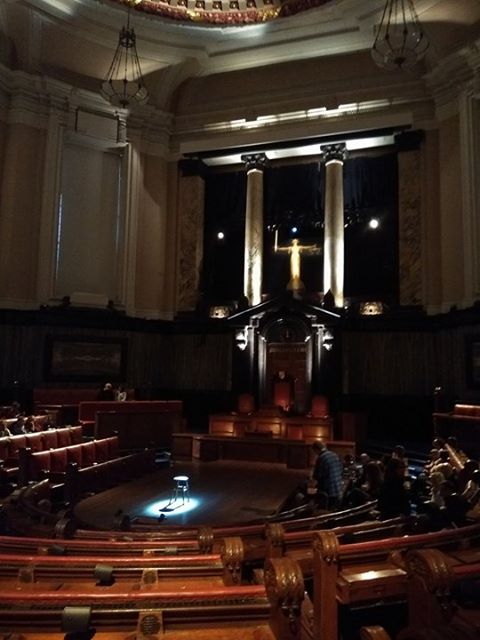
Last weekend I was fortunate enough to be treated to theatre tickets for Agatha Christie’s Witness for the Prosecution. The setting – London’s County Hall – was exquisite, the play sublime and the actors fabulous. An afternoon of sheer escapism, even for a die hard Christie fan like myself. Having read the short story/play many times is no replacement for seeing this on the stage. The theatre offers the opportunity to see the action from all perspectives; you can put yourself in the shoes of the defendant, the court actors and of course, the witnesses. Such a perspective vividly demonstrates the immense power of the State, not only through physical violence (although this is also evident) but through verbal dexterity. To see the defendant – Leonard Vole – on trial; so small and defenceless against the majesty of the courtroom, is thought provoking. Furthermore, this environment is staffed by legal professionals, who unlike him, understand the world in which they operate. The cut and thrust of legalistic argument performed in the play (and in modern day courts daily) conceals the sheer ferocity of authority’s attack on the individual. Remember at the time the play was written, the death penalty was still in force, and Leonard Vole is on trial for the capital crime of murder. In essence, he is openly fighting for his very life, but subjected to the machinations and mediation of professionals who openly profess to be seeking justice. When he tries to speak, to argue, to cajole, he is silenced. There is no place for the defendant’s perspective unless it is expressed via the mandated professional who speaks on his (or her) behalf.
In the twenty-first century (and indeed, for the latter part of the twentieth century), capital punishment in the UK has not been a sentencing option. Whilst defendants may not be faced with a possible date with the hangman, the finality of sentencing and punishment is no laughing matter. Whilst there is no doubt that dramatic denouements have their place in the theatre, in the serious business of the criminal courts such antics seem out of place. If we look at the criminal court as a theatrical scene, we start to observe all manner of incongruity (cf. Carlen, 1976). For starters; the language used and the costumes worn. For anyone that has ever grappled to understand the works of Shakespeare or the Brontë’s, such reading requires patience and perseverance to understand the beauty of such writing. In 2018, we would not request that our surgeons operate on us without the benefit of anaesthesia, neither would we want to be treated with procedures such as bloodletting or trepanning. Similarly, we don’t expect soldiers to carry muskets or form into schiltrons just because that’s how it used to be. Yet we accept and arguably, expect our courts to run as if they were stuck in time. What chance does the individual defendant have in this archaic, theatrical setting? After all, they are the star of the show, yet they have neither costume, nor the opportunity to learn their lines. It is hard to argue, that such practices are conducive to the pursuit of justice.
On the surface, going to the theatre appears to offer a pleasurable break from academia, yet the reality is it offers the opportunity to consider criminology from a novel perspective. Reading (and you all know how keen I am on reading!!) is only part of Criminology; talking, listening, thinking and exploring away from the classroom are equally important. My advice; get out, explore – the arts; theatre, cinema, literature, museums – and add this experiential knowledge to your academic studies. See things from a different perspective and unleash your Criminological Imagination (Young, 2011).
References:
Carlen, Pat, (1976), ‘The Staging of Magistrates’ Justice,’ The British Journal of Criminology, 16, 1: 48–55
Christie, Agatha, (2018), Witness for the Prosecution, Directed by Lucy Bailey. London County Hall, [11 February 2018]
Young, Jock, (2011), The Criminological Imagination, (London: Polity)
Share this:


Criminology for Children

Helen is an Associate Lecturer teaching on modules in years 1 and 3.
Last term, my 9-year-old son’s class topic was “Crime and Punishment”. They took a historical perspective, comparing punishments across different periods of time and they began their topic with a “creative kickstart”: a visit to the National Museum of Justice in Nottingham (albeit two weeks later than planned because the bus failed to turn up!). They had a whale of a time! They were photographed with a range of gruesome artefacts and they took part in a mock trial (a re-enactment of a genuine historical case). My son’s group acquitted the defendant, Isabella, who was accused of stealing clothes, on the basis of insufficient evidence, but the other group from his school found her guilty.
Part of the class’s enthusiasm for this topic undoubtedly stems from the fascination of 9-year-old children with blood and guts. The teacher reported that they were particularly excited to learn about criminals who had been hung, drawn and quartered (although she refrained from playing them the clips from Gunpowder which depicted what this actually looked and sounded like!!). My son drew great pleasure from thinking about what it would be like if he was actually allowed to impose mediaeval punishments on his arch enemy. However, exploration of issues of crime and punishment has value far beyond satisfying a fascination for the gory.
Thinking about crime and punishment requires critical reasoning skills. What is fair? What is reasonable? How much evidence do I need? How good is this evidence? Why do we do things differently now? And critical reasoning skills are essential for navigating a world of social media, peer pressure, advertising and fake (or at least dubious) news that these children will soon be entering. My son’s class had a debate on the death penalty. When I asked him his views later, over tea, he thought carefully and told me that the death penalty was a good thing because if someone had done something really bad, they deserved a really serious punishment. It was a very good example of level two moral reasoning (Kohlberg, 1964): what you would expect from a reasonably well-adjusted 9-year-old. But the class vote at the end of the debate was split equally for and against, demonstrating a range of views. As we ate our tea, I explained my own position on the death penalty (formulated much later, when I was a post-graduate student), that there are some things that a good society just should not do and killing its own citizens, for whatever reason, is one of those things. That argument might have been a bit abstract for my son to take on board, but it is exactly through discussion and debate and exposure to different views that we develop and improve our critical and moral reasoning skills. It’s never too early to start!
Reference
Kohlberg, L. (1964) Development of moral character and moral ideology. In M. Hoffman and L. Hoffman (Eds.) Review of Child Development Research, Vol. 1. (pp. 381-343). New York: Russell Sage Foundation.
Share this:


A Bloody Shame

I find it fascinating that when I ask my students whether they watch or read the news the reply is generally in the negative. Maybe part of the reason might be found in the fact that so much news resides only temporarily in our conscience before it is replaced by yet another item of news, ‘fake or not’ and we are bombarded with information churned out 24/7, minute by minute. What is alarming is that important issues are reported on, sometimes in a somewhat perfunctory manner, and lost in the mix of other important and less important issues.
And so it is for an item of news that caught my eye just before Christmas. I didn’t really think much about it until somewhere in the back of my mind I had a niggling feeling that just can’t be right. The news item, as I recall it, related to a protest outside Downing Street about women’s sanitary products. A young lady led the protest about the lack of availability of the products for young people, or was it that V.A.T was being added to the products? I just remember the banal comments made by some supporting actress and what I thought were somewhat distasteful banners being displayed. But on reflection all of this masked a serious issue, that of equality and Human Rights. Part of the storyline behind the news was that some young women were not going to school at certain times because they could not afford sanitary products. I couldn’t even imagine the embarrassment this must cause for young ladies. And then I thought about how it might affect other women on low or no income.
There has been much in the news about equality for women recently, most notably around the issue of equal pay. But this issue of sanitary products is even more fundamental. If you don’t have a decent education, how can you get into the work place, let alone achieve parity on pay?
The last time I looked, education was a Human Right. I don’t think the basis of this was something along part time education according to certain times of the month. Women did not ask to be put into this position and it isn’t something that afflicts men. I bet if it did, sanitary products would be available in every public toilet for free and you could probably order your free delivery on line.
I’m not sure how it should work but if we believe in Human Rights and we believe in equality, sanitary products, or the lack of should not be allowed to hold women back. There may be a cost but the payback would be tremendous.
More recently in the news, the Prime Minister, Mrs May, has been visiting China and according to the news had some difficult conversations about Human Rights records. I would suggest that perhaps she ought to look closer to home. And as for the media, perhaps some issues should linger longer to have a chance of embedding themselves in the public’s conscience.
Share this:


Why you should trust your work

Bethany Davies is an Associate Lecturer teaching modules in the first year.
It is only human to doubt yourself in certain situations; however, academia can be a problematic situation to doubt your ideas and abilities. It can lead you to change your standpoint unnecessarily and also create so much stress that you give up on an idea or project entirely.
I deal with this less so now since my university experience but still regularly and I felt it may provide comfort to those currently studying or recently graduated, these examples are personal and are only two of many. In particular I want to address doubting your own ideas and work and how important it is to keep challenging those thoughts.
Upon starting university, my first ‘big essay’ (I describe this with humour as it was 3000 words, but as a first year that can seem like quite the ask) was a biographical assignment. This assignment required an interview with a family member or anyone who would be willing to talk to you and to apply that to research by highlighting some key events/accomplishments. I feared writing that essay as I had many friends with parents who were lawyers or grandparents who had been in the war or immigrants. These stories surely would be so interesting and my essay on my dad who worked in a warehouse would be seen as boring, perhaps. This was my first experience with fear and doubt over my work, but then I did the interview, wrote the essay, took a deep breath and submitted. Turns out it was one of my favourite pieces of work and the programme leaders liked it. It was an honest essay and while not glamorous, it was personal to me and that made the approval and grade that more rewarding.
In my second year, I conducted my placement at a probation office and based my research around a case study of one male who was doing an English class and aimed to discuss the success of that class. After around 8 weeks of observations and an interview with the male. I went to my seminar leader at the time (@paulaabowles) in a complete panic and almost teary-eyed. I told her how I felt my research was not good enough because the male was lying to me, in fact he was almost lying to the whole probation experience as he was more or less just turning up to tick the boxes he needed but then conducting his behaviour differently to me in certain situations and the interview. I felt I had failed as a researcher and also as a teacher almost, as I was assisting in the teaching of the class he was in. I was then told some of the great truths of research and also why I had not failed and actually I had done very well. My research was good research and I just had not realised it. The research didn’t find what I wanted it to, in fact it found the opposite, which was still good research. My research which I had titled ‘Playing the system’ had actually proved to not be a failure and my doubts were unnecessary but not anything to be ashamed of. As in my quest at the time to find answers of why was I such a ‘bad researcher’ and interviewer, I found a plethora of other people online and among peers with the same doubts over some great work they had produced.
Whether it be doubts or fear of speaking up in fear of failure or sounding stupid, I hope others may be able to see not only are they not alone, but actually you are normal because of these doubts. We should just maybe work on believing in our work more and not waiting to get the approval of others for those ideas. With this I feel it is fitting to use one of my favourite quotes from Bertrand Russell:
“The whole problem with the world is that fools and fanatics are always so certain of themselves, and wiser people so full of doubts.”
Share this:


Is education more fun than building a Lego Yellow Submarine? Discuss

This week some students, independently and across the years, introduced me to the novel idea that education should be “enjoyable” and “fun”. Furthermore, if it wasn’t enjoyable, it wasn’t being done right. Given Criminology’s subject matter is often grim, dark, focusing on the worst aspects of humankind, enjoyable and fun are not descriptions that often appear in relation to the discipline. Certainly, such a perspective is not one that I personally recognise; a day at an art gallery, playing Hungry Hippos with two little people, a nice bottle of wine, lunch with friends, building a Lego Yellow Submarine etc are things that I would say are enjoyable, perhaps even fun. But education……I’m not convinced! What follows are my vague ramblings around a subject which is very close to my heart (you are warned!).
All of the enjoyable activities I have described above are ones that I spend very little of my time doing and that to me, is part of their enjoyability (if such a word exists). They are attractive because they are rare and unusual, in my life at least. But education, learning, knowledge are part and parcel of my everyday existence, and dare I say fundamental to who am I. However, does any of this preclude education from being fun? Maybe, I just take for granted my thirst for knowledge in the same way as my thirst for water, just everyday appetites that need to be fed to maintain equilibrium and optimal performance.
I love considering new ideas and new perspectives, particularly if they challenge my thinking and jolt me out of complacency, so I want to consider this concept of enjoyable education. I’ve always been a curious person, there’s lots of questions that I want to know the answer to and they generally begin with “why”? Like all children, I expect I drove my parents mad with the constant questions; never fully satisfied with the answer. I can trace my first early, tentative steps into criminological thinking to when I was a child and regularly had to pass HMP Holloway[1] on the way to various hospital appointments. I used to wonder who lived in this huge, forbidding building, why they were there, what had they done, when would they get out and where would they go? Some decades on, I have answers to some of those questions but I’m still actively searching for the others. This, of course, is experiential learning and children’s books (at that time) offered little by way of answers to such profound criminological questions.

At school, the type of learning I liked best was when I could explore for myself. An experienced and knowledgeable teacher or lecturer explaining complex ideas could open the door so far, but I wanted to find out for myself as much as possible. For me, the best educationalists are those that gently guide and enable, not those who deliver information on demand. They also engender self-confidence and self-discipline encouraging the scholar to take control of their own intellectual journey. All of this leads me to the conclusion that learning is intrinsically neither enjoyable nor fun, although both may be by-products. Education, knowledge, learning, all of these are painful, challenging, at times they appear almost impossible. But! The level of personal satisfaction, achievement and growth means that ‘some kind of happiness is’, not as the Beatles suggest ‘measured out in miles’, but through intellectual endeavour (Lennon and McCartney, 1969). And to answer the essay question I set in the title, Lego has many charms but independent, self-direction is not one of them. Provided you follow the step-by-step illustrated instructions you will have your very own Yellow Submarine, but there are no surprises, whether positive or negative, which means I have no intellectual investment in the process. Furthermore, take the instructions away and I would not be able to recreate this “masterpiece”. Having said that, it does look rather lovely on my book case 🙂
Lennon, John and McCartney, Paul, (1969), Hey Bulldog, [LP]. Recorded by The Beatles in Yellow Submarine, Northern Songs: Apple
[1] HMP Holloway closed its doors for the final time in July 2016.
Share this:


Modern University or New University?
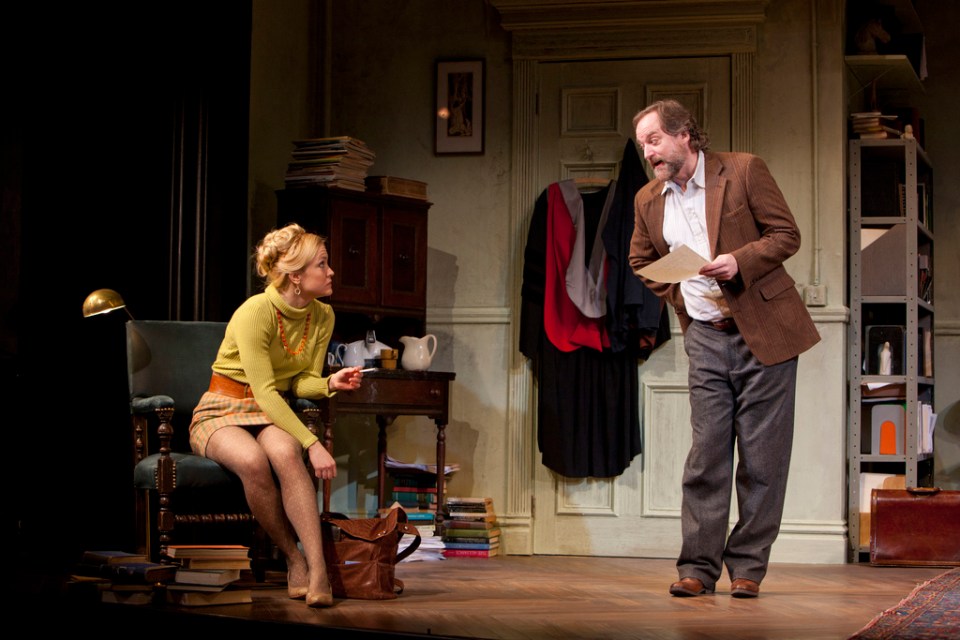
As I am outside the prison walls on another visit I look at the high walls that keep people inside incarcerated. This is an institution designed to keep people in and it is obvious from the outside. This made me wonder what is a University designed for? Are we equally obvious to the communities in which we live as to what we are there for? These questions have been posed before but as we embark in a new educational environment I begin to wonder.
There are city universities, campuses in towns and the countryside, new universities and of course old, even, medieval universities. All these institutions have an educational purpose in common at a high level but that is more or less it. Traditionally, academia had a specific mandate of what they were meant to be doing but this original focus was coming from a era when computers, the electronic revolution and the knowledge explosion were unheard of. I still amuse my students by my recollections of going through an old library, looking at their card catalogue in order to find the books I wanted for my essay.
Since then, email has become the main tool for communication and blackboard or other virtual learning environments are growing into becoming an alternative learning tool in the arsenal of each academic. In this technologically advanced, modern world it is pertinent to ask if the University is the environment that it once was. The introduction of fees, and the subsequent political debates on whether to raise the fees or get rid of them altogether. This debate has also introduced an consumerist dimension to higher education that previous learners did not encounter. For some colleagues this was a watershed moment in the mandate of higher education and the relationship between tutor and tutee. Recently, a well respected colleague told me how inspired she was to pursue a career in academia when she watched Willy Russell’s theatrical masterpiece Educating Rita. It seems likely that this cultural reference will be lost to current students and academics. A clear sign of things moving on.
So what is a University for in the 21st century? In my mind, the university is an institution of education that is open to its community and accessible to all people, even those who never thought that Higher Education is for them. Physically, there may not be walls around but for many people who never had the opportunity to enjoy a higher education, there may be barriers. It is perhaps the purpose of the new university to engage with the community and invite the people to embrace it as their community space. Our University’s relocation to the heart of the town will make our presence more visible in town and it is a great opportunity for the University to be reintroduced to the local community. As one of the few Changemaker universities in the country, a title that focuses on social change and entrepreneurship, connecting with the community is definitely a fundamental objective. In this way it will offer its space up for meaningful discussions on a variety of issues, academic or not, to the community saying we are a public institution for all. After all, this is part of how we understand criminology’s role. In a recent discussion we have been talking about criminology in the community; a public criminology. One of the many reasons why we work so hard to teach criminology in prisons.
Share this:


A personal account of the NHS

A personal tale about the NHS – I am one of the lucky ones
This blog recounts the experience of the care of my parents in the last two years, which has been exemplary and, in the context of the recent reports about the crises in the NHS, reminds me how lucky I was to experience this. It also reveals how well the NHS can perform when it is not under stress, is properly resourced and valued, even when dealing with health problems associated with old age and during the extra strains which occur during winter.
My father passed away at the end of August last year, after 2 years under the care of an NHS facility specialising in caring for dementia patients. The illness had not just affected his memory, but had also led to aggressive behaviour which required him being sectioned under the Mental Health Act. This was obviously a stressful time for us all, but also a time when we understood this was the only option. He soon settled into a new routine, in a home where he felt safe, cared for and where his needs could be met. It was also vital that this was located near his home in North Yorkshire, so that my mother could visit three times a week, and maintain the bond of their marriage, providing both of them with the companionship they so valued. Visiting could be difficult if he had a bad day, but most of the time he appreciated the company and was clearly happy to be in a place where he just did not have to worry about anything.
What struck me most about the place was the demeanour of the staff – they were helpful, kind, accommodating, caring – all the things you would want from those in the health and social care professions. This facility brought these sectors together in a partnership to meet the many physical health needs of dementia patients, while remembering their role as carers. It was not just about administering the medication needed to keep patients calm, it was also about interacting with them, taking them for walks, days out and bringing in a variety of forms of entertainment. Patients celebrated Halloween, Christmas, Easter and engaged in activities which took them back to places and people they could remember, often through music of various genres. Dad always liked jazz, and occasionally classical, with a real fondness for Ella Fitzgerald. These times were so important, for 2 years, even though things had changed, the Dad we knew was back during some of our visits, and we could just appreciate this time until he passed away.
I feel sadness now at his loss, but also because I know not everyone with dementia who needs this sort of care will get it. In the lottery of health and social care, we won, and the prize was the sort of care I think everyone should have access to. What angers me about this is that it is NHS Trusts across the country, simply cannot provide this. They have to make decisions about the care of citizens based on budget spreadsheets and staff availability, rather than what is understood to be the best practice, clinically sound and will create the best outcomes for patients and relatives. The recent BBC report on the ‘10 charts that show why the NHS is in trouble’ (see http://www.bbc.co.uk/news/health-42572110) clearly illustrate why not everyone receives the care my Dad received. For example, it emphasises that we have an ageing population, meaning the NHS is dealing with increased numbers of patients with chronic conditions such as diabetes, heart disease and dementia. These are conditions which are described as ‘more about care than cure’ where patients need support, where healthcare requires as much of a focus on social care as it does on medical interventions. This has financial implications, as care for ‘average’ patients over 65 years old costs the NHS 2.5 times more, compared to the ‘average’ 30 year old, and this only increases with age.
Spending on the NHS has decreased from 6% of the government budget during 1997 to 2009, to 1% as part of the austerity agenda of the Conservative/Liberal Democrat coalition, with a slight increase back up to 2.5% under the current government. This also represents a lower proportion spent on healthcare compared to other EU countries such as Germany, Sweden and France – who are all above the EU average. They do this by through increased taxes, and this seems to be the crux of the matter. Would the citizens of the UK tolerate a rise in taxes to have better provisions in health and social care, for themselves and their family? According to a poll by Ipsos MORI, 40% would back a rise in income tax, with 53% supporting an increase in National Insurance payments. However, it was also revealed that the majority of participants valued the NHS and did not wish to change to an insurance based system.
So, a choice must be made. Personally, with what I experienced with my Dad and more recently, when my Mum had heart surgery to replace a valve, from which she is recovering very nicely, I cannot imagine not having the NHS. Perhaps we do not recognise its value until we need it, but given the strains it is under now, and that one way to alleviate this is to increase funding, then governments should surely consider tax rises to provide this. The NHS provides health and social care we will need one day, if not for us, then for loved ones, and it seems to be a model of healthcare most people in this country would prefer. With an ageing population, the current investment being below the average of 4% provided to the NHS since its inception in 1948, is having an impact. It is an impact which Jeremy Hunt and Theresa May seem to bat away as isolated problems, not trends, and as problems they are dealing with. I do not think we should be discussing our health service as being able to cope with crises and unexpected demands. We should be discussing in terms of being able to provide equality of care, even in the face of the unexpected, using a service which reflects the values of the welfare state, to ensure wellbeing, safety and healthcare from cradle to grave, for all citizens.
Susie Atherton
Senior Lecturer in Criminology
Share this:


Homelessness: Shedding an unfavourable light on a beautiful town!

Let me start by apologising for the tone of this blog and emphasis that what follows is rant based on my own opinion and not that of the university or co-authors of the blog. On 3 January I was incensed by a story in the Guardian outlining comments made by Simon Dudley, the Royal Borough of Windsor and Maidenhead’s Conservative leader, regarding homelessness and the impact (visually) that this could have on the forthcoming royal wedding. Mr Dudley commented that having homeless people on the streets at the time of the wedding would present “a beautiful town in a sadly unfavourable light” and that “Windsor is different and requires a more robust approach to begging” (Dudley, cited in Sherwood, 2018, online). Unfortunately, I am no longer shocked by such comments and have come to expect nothing less of Conservative leaders. I am however profoundly saddened that such a deep rooted social issue is brought back into the spot light, not because it reflects wider issues of inequality, disadvantage, poverty, or social exclusion that need addressing but because of a class based narrative driven by a royal wedding. Is Windsor really in need of special treatment? Is their experience of homelessness really worse than every other city in the UK? Or is simply that in an area with such wealth, and social connection, showing the world that we have a problem with homelessness is taking it a step too far. Whatever the reason, Shelter’s[1] (2017) tweet on the 29 December reminds us that homelessness is ‘…a crisis we are not handling as a country’.
As we approached the Christmas period it was estimated that children experiencing homelessness had reached a 10 year high with headlines like ‘Nearly 130,000 children to wake up homeless this Christmas’ (Bulman, 2017) marking our approach to the festive season. Similarly, Shelter warned of a Christmas homeless crisis and as the temperatures dropped emergency shelters were opened across London, contrary to the policy of only opening after three consecutive days of freezing temperatures (TBIF, 2017). Yet the significance of these headlines and the vast body of research into the homelessness crisis appears lost on Mr Dudley whose comments only add to an elitist narrative that if we can’t see it, it isn’t a problem. My issue is not with Mr Dudley’s suggestion that action is needed against aggressive begging and intimidation but with his choice of language. Firstly, to suggest that homelessness is a ‘sad’ thing is a significant understatement made worse by the fact that the focus of this sadness is not on homelessness itself but the fact that it undermines the tone of an affluent area. Secondly, the suggestion that the police should clear the homeless from the streets along with their ‘bags and detritus’ (Dudley, cited in Sherwood, 2018) is symbolic of much of the UK’s approach to difficult social issues; sticking a band aid on a fatal wound and hoping it works. Thirdly, and more deeply disturbing for me is the blame culture evident in his suggestion that homelessness is a choice that those begging in Windsor are ‘…not in fact homeless, and if they are homeless they are choosing to reject all support services…it is a voluntary choice’ (Dudley, cited in Sherwood, 2018). Homelessness is complex and often interlinked with other deeply rooted problems, therefore this blame attitude is not just short sighted but highly ignorant of the difficulties facing a growing proportion of the population.
Shelter. (2017) A safe, secure home is a fundamental right for everyone. It’s a crisis we are not handling as a country [Online]. Twitter. 29 December. Available from: https://twitter.com/shelter?lang=en [Accessed 4 January 2018].
Sherwood, H., (2018) Windsor council leader calls for removal of homeless before royal wedding. The Guardian [online]. Available from: https://www.theguardian.com/society/2018/jan/03/windsor-council-calls-removal-homeless-people-before-royal-wedding [Accessed 04 January 2018].
The Big Issue Foundation. (2017) TBIF joins the Mayor of London’s Coalition to tackle rough sleeping [Online]. The Big Issue Website. Available from: https://www.bigissue.org.uk/news [Accessed 4 January 2018].
[1] a charity offering advice and support to those facing or experiencing homelessness

 Thoughts from the criminology team