
Home » Posts tagged 'Travel'
Tag Archives: Travel
Who owns the past?
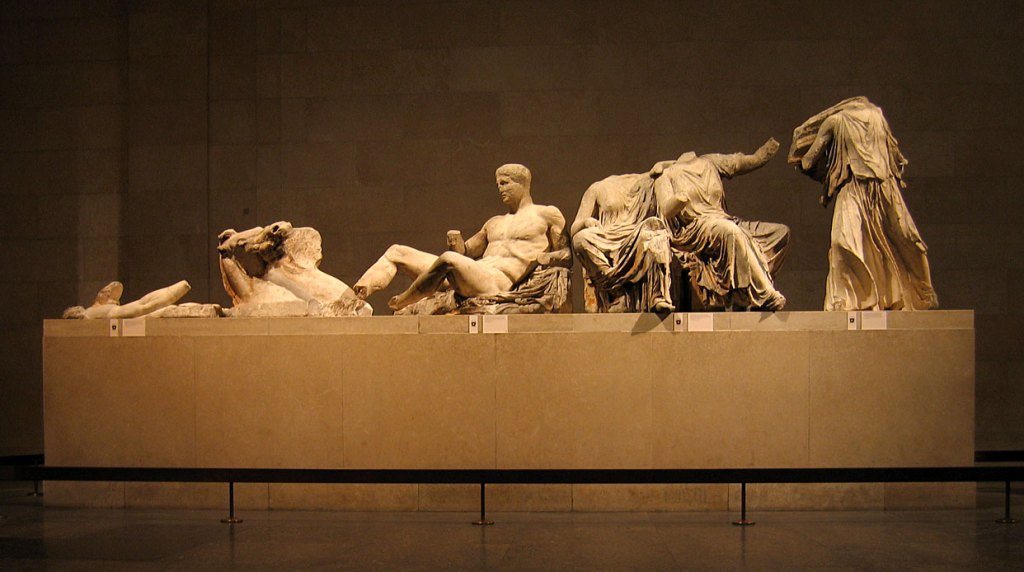
The question of whether museums remain relevant comes up often in discussions about heritage and old artifacts. Yet the evidence suggests they continue to play a vital role in modern society. People still visit them in huge numbers, and schools rely on them as living classrooms. According to the Department for Culture, Media and Sport, museums in the UK welcomed over 40 million visitors in the past year, with attendance peaking in the summer months and during school holidays. Clearly, the appetite for museums hasn’t faded.
Part of their enduring appeal lies in their diversity. There are museums filled with towering dinosaur skeletons, others dedicated to technology from just a decade ago, and countless spaces in between. Among these institutions, some of the oldest — like the British Museum — continue to spark debate and fascination. Its vast collection spans human history, art and culture from across the world. Within its walls you’ll find globally significant artifacts such as the Parthenon Sculptures, the Rosetta Stone, the Ife Head from the Benin Bronzes, and the enigmatic Hoa Hakananai’a from Rapa Nui.
These objects draw millions not only because they are beautiful or ancient, but because they connect us to stories far larger than ourselves. Whether museums should continue to hold such items is an ongoing conversation — but their relevance, at least in the public imagination, remains undeniable. A statue in a museum can provide some understanding about sculpture and carving techniques but in the case of Hoa Hakananai’a it misses the context of its purpose.
The relevance of museums becomes even more pronounced when the objects they display belong to the heritage of other cultures. Calls for repatriation have grown louder in recent decades, often framed as reminders of a colonial past in which powerful nations acquired “beautiful” or culturally significant objects simply because they had the means to do so. For many communities, these artifacts are not just historical items but living symbols of identity, memory and continuity — and their absence is felt as a loss.
Museums often argue that they preserve artifacts and ensure their longevity for future generations. They present themselves as spaces where millions of visitors can immerse themselves in global culture. That is their position, but recent events, such as the Louvre heist, make it harder to accept this claim without question. Even more troubling is the way many of these artifacts were originally removed from their countries of origin. It is difficult to frame these actions as preservation rather than a form of cultural piracy.
The Parthenon Sculptures are a striking example. They were hacked into transportable pieces in the early 19th century to be displayed in what was intended to be the private museum of a Scottish aristocrat. Their removal took place a decade before Greece gained independence through revolution. When that aristocrat later fell into bankruptcy, he sold the sculptures to the British Museum for half his original asking price. This is just one of many transactions that undermine the argument that such acquisitions were motivated by respect for other cultures. Instead, they reveal a pattern of opportunism that continues to shape the debate today.
Therefore, it becomes reasonable to question whether some museums function as relics of a colonial past — institutions that still hold objects taken under unequal power dynamics. Returning artifacts to the communities and regions they originate from is increasingly seen as a step toward cultural justice. Although the Kingdom of Benin no longer exists in its historical form, the Edo people of Nigeria continue to identify with the bronze casts of the Obas (kings) they depict, and they have long called for their return.
The movement for repatriation is gaining international momentum as governments and museum authorities begin to return culturally significant pieces to their rightful communities. If the history and identity of people are the most important parameters, then why insist on keeping the originals in foreign institutions while offering only copies to the cultures that created them?
This leads to a deeper question: who owns the past? How do we curate the history and culture of peoples who endured colonial rule, displacement, or even extermination? Human history may be collective, but the cultural significance of certain artifacts reminds us that we must confront the crimes of the past — the looting, the violence, and the erasure — and recognise the need for justice for those who were wronged.
In the end, the relevance of museums in the twenty‑first century depends on their willingness to confront the legacies that shaped their collections. These institutions can no longer rely solely on their educational value or their role as guardians of global culture; they must also reckon with the histories of extraction, violence and inequality that brought many treasured objects into their halls. Repatriation is not about emptying museums but about rebalancing relationships, restoring dignity and acknowledging that cultural heritage carries meaning far beyond its aesthetic or historical worth. If museums choose to evolve to collaborate, to return what was taken, and to tell fuller, more honest stories they can remain vital spaces for learning and connection. But their future relevance will be measured not by the number of visitors they attract, but by the integrity with which they address the past and the justice they help shape for the generations to come.

Share this:


Tis very quiet on a Friday…

Fridays are an especially busy day for the BA Criminology and BA Criminology with Psychology students and staff: for some there are 6hours of classes today, finishing their Friday at 6pm! What a way to finish off the ‘working’ week: packed full of interesting discussions and learning. However, the vibe on the roads in via the morning commute and the silence rolling through the Library at 10am would suggest not everyone shares in a full-on Friday experience!
Friday evenings would mark the end of a long week for many, and the, hopefully, exciting possibilities the weekend might hold. But as I travelled into Northampton, on my usually very early and busy commute, I couldn’t help but notice the lighter quieter roads. It makes a nice change up- can leave a little later than usual and do not have to comprehend with the stresses of the morning rush hour: but why? Why have Fridays become quiet?
As many staff and students will know: car parking can be a smidge of a challenge when arriving for 9ams: but not on a Friday. Usually, to beat the rush, it is ideal to arrive at campus before 0830: but not on a Friday. 0845 and there remain many car parking spaces- again excellent to set up for a long day of studying but why the sudden quietness on a Friday? Is this a symptom of a wider issue?
There is a peaceful sense around campus today- despite the busy day for some courses. It feels very much like the week is over: should this be so overtly felt at 9am instead of 6pm? I have asked friends not in academia, and this Friday quietness appears to be across industries. Friday appears to be a favourite day to work from home: a gentle ease into the weekend. But should we be easing into the weekend or ending the ‘working’ week a little frazzled and desperate for the weekend ahead? Does it really matter? The grey weather we’ve been blessed with today I am sure does not help, and it is a nice change up from the mid-week hustle and bustle which exists on campus. But why have Fridays crept into this sort of ‘start of the weekend’ status? The Friday evening I can see being that representation: but the Friday morning? Maybe it’s a one-off and next week the roads and campus will be buzzing and hopefully the sun will be shining. But for today, the last Friday in February: its very much a gentle atmosphere on campus.
Share this:


The coffee shop that’s worth more than its profit margin

Every morning follows the same rhythm. Finish my gym session, towel off, and head straight to the M&S café for my coffee. It’s not just about the caffeine – though God knows I need it. It’s about the ladies behind the counter who greet me with genuine warmth, who remember my order, who take pride in their work. In a world that often feels rushed and impersonal, their kindness has become my daily reset button.

But this isn’t really a story about my coffee ritual. It’s about what I’ve witnessed in that café—something far more important than any morning black americano.

The tables are always dotted with elderly faces. At first, I didn’t think much of it. But over time, as I’ve chatted with them, “I come here every Tuesday and Thursday,” one gentleman told me in the queue, staring at his menu. “Meet up with whoever’s about. Talk football, moan about the weather.” He smiled. “Beats sitting at home staring at the four walls, doesn’t it?” It’s beautiful, really. Watching strangers become friends over scones, toasties and crosswords. Seeing lonely people find their people, even if just for an hour.

The gentle hum of conversation about politics, memories, grandchildren, postwar Britain, the price of everything these days. This is what community looks like – unscripted, unglamorous, essential. I’ve become friends with some of them myself. They’ve told me about children who live too far away, partners they’ve lost, days that feel too long and too empty. For many, this café visit is their main activity. Their reason to get dressed. Their connection to the outside world.

A couple of days ago, I was at the gym when I overheard a conversation that stopped me mid-rep. They’re closing the café. The M&S café. Our café. I asked one of the staff members – one of those lovely ladies who makes this place what it is. She confirmed it quietly, almost apologetically, but couldn’t (or wouldn’t) share the details. The rumour mill says it’s about profit margins. The official line from M&S is that they’re repurposing spaces to create room for more popular products. More popular products!. And I felt something crack inside me.
If this is truly about profits, then we need to have a serious conversation about what we value as a society. Yes, businesses need to be viable. Yes, companies have shareholders and bottom lines and quarterly targets. I understand economics, I used to work in the financial services – a Bank to be precise, so I understand numbers. But when did we collectively decide that every single square foot of commercial space must justify its existence purely through revenue? This café might not be their most profitable location. But what’s the cost of closing it? Where exactly do we expect these elderly people to go?
“Just go to another café,” someone might say. But you’re missing the point entirely. This isn’t about coffee. It’s about familiarity. It’s about the staff who know your name. It’s about the community that’s been built, brick by brick, conversation by conversation, over months and years. You can’t just transplant that somewhere else. Community doesn’t work like that.
My elderly friends at the café (many of them in their 80s) represent a growing crisis we’d rather not acknowledge. Let me give you some numbers. According to a recent report on Age and loneliness in the UK, nearly 940,000 older people in the UK are often lonely – that’s one in fourteen people over 65 (Age UK 2024). And here’s the truly heartbreaking bit: 270,000 older people go an entire week without speaking to a single friend or family member.
Do you know how crazy that sounds? Not speaking to a single friend or family member!! A whole week!!
And loneliness doesn’t just make people sad—it kills. It increases the risk of depression, heart disease, stroke, dementia etc. This isn’t just about comfort or quality of life. This is a public health crisis. And yet, we’re closing the very spaces where people find connection. Where will they go? Costa? Starbucks? Even if they could afford the higher prices, those chains don’t foster the same sense of belonging. They’re designed for laptop workers and quick takeaways, not for lingering conversation and community building.
Councils cut funding for community centers – libraries operate on skeleton hours, now commercial spaces that accidentally became social lifelines are vanishing too.
I’m not naive. I know M&S isn’t a charity. I’m also aware they do good work by partnering with food banks and donating surplus food to people who need it. They clearly have a social conscience. But they brand themselves on quality, trust, and British values. Well, here’s a British value: looking after our elderly. Not abandoning them.
M&S, you have an opportunity here. An opportunity to position yourselves as a company that doesn’t just talk about community values but actually lives them. You could be the retailer that says, “We’re keeping our cafés open because we recognise they’re tackling one of the biggest health crises facing our aging population.” Imagine the goodwill. Imagine the respect. Imagine being the company that genuinely helps combat loneliness alongside all the good work you’re already doing – that’s how you truly stand tall amongst your peers.
There’s such thing as enough profit. There’s such a thing as being a responsible corporate citizen. There’s such a thing as recognising that some things – like providing a warm, safe space for lonely pensioners to find friendship – might be worth preserving even if it means slightly less room for those “more popular products.”
Our very own café will probably close. The space will be repurposed – maybe more retail shelving, maybe nothing at all. The decision-makers will never meet the people affected. They’ll never know about the Tuesday regular who’ll now have nowhere to go, or the widow who found a reason to leave the house, or the gentleman who finally made friends after his kids relocated to another country. And my morning ritual? I’ll find another coffee shop. I’ll survive.
But what about the people for whom this was so much more than coffee? What about the 270,000 older people who might go another week without speaking to anyone? What about your chance to be part of the solution instead of part of the problem?#
This is what the world is turning into: a place where community is a nice-to-have but never a must-have. Have we forgotten that sometimes the most valuable things can’t be measured on a balance sheet. We can do better than this.
What do you think? Are there spaces in your community facing similar threats? I’d genuinely love to hear your thoughts.
Reference list
Age UK (2024) Age UK’s new report shows ‘you are not alone in feeling lonely’. Available at: https://www.ageuk.org.uk/latest-press/articles/age-uks-new-report-shows-you-are-not-alone-in-feeling-lonely/ (Accessed: 27 October 2025)
Share this:


Cost of Living Crisis: Don’t worry it’s the Sovereign’s Birthday!*

On Saturday 31st May 2025, on Wellington Arch there was an increased presence of police. It was a sunny, albeit windy day in central London, and lots of people (tourists and locals) raised questions around why there appeared to be an increased police presence on this final Saturday of the May half term. At around 1pm approximately, what appeared to be hundreds of uniformed royal officers on horseback paraded through Wellington Arch into Hyde Park. They appeared to have come from Buckingham Palace. It was quite a sight to see! Every Sunday, there is a small parade, known as Changing of the Guard, but this was a substantially bigger ordeal. There is usually 2/3 police bikes that escorts the parade on the Sunday but not the numbers of Police (vans, bikes and officers) out on this sunny Saturday. It is over quickly, but the amount of people power, and I would imagine money, this has used seems quite ridiculous.
It turns out the large parade on May 31st was a ‘practice run’ for the Trooping of the Colour, which will occur on Saturday 15th June 2025. The Trooping of the Colour marks the ‘official’ birthday of the British Soverign and has done so for over 260years (Royal Household, 2025). It involves “Over 1400 parading soldiers, 200 horses and 400 musicians […] in a great display of military precision, horsemanship and fanfare to mark the Sovereign’s official birthday” (Royal Household, 2025). Having seen this every year, it is quite a spectacle and it does generate a buzz and increase in tourism to the area every year. I know the local small businesses in the surrounding areas are grateful for the increase in people, and it draws tourists in globally to view which generates money for the economy. But given the poverty levels visibly evident in London (not to mention those which are hidden), is this a suitable spend of money? Add on the more alarming issues with the monarchy and what it represents steeped in the clutches of empire and fostering hierarchies and inequalities, should this ‘celebration’ still be occurring? It’s the ‘Official’ Birthday of the Sovereign, but how many Birthdays does one need?
According to a Freedom of Information Request, the Ministry of Defence claimed in 2021, the Trooping of the Colour cost taxpayers around £60,000 (not the cost of the event, as there would have been other monies attached to funding this). Imagine what good this money could do: the people it could feed, the people it could provide shelter for, the medical treatment or research it could fund! Given this was 2021, I am going to hazard a guess that in 2025 this is going to cost significantly more. And for what? The Monarchy is the visual embodiment of empire, and according to the National Centre of Social Research, support for and interest in the Monarchy has been steadily declining for the past decade (NCSR, 2025). So even if people choose to ignore the horrific past of the British Sovereigns, it would appear that many are not interested in the Monarchy, regardless of its history (NCSR, 2025). I am aware the Royal family, and these ‘celebrations’, bring in income and generates global interest which translates to the argument that having a Monarchy is ‘economically viable’, but when you look at the disadvantage elsewhere, especially in London, its hard not to question clinging on to such traditions and the expense of meeting people’s basic needs. There is no critical consideration of what maintaining these traditions might suggest, or how they might impact those most effected by the British Empire and Colonialism. So why are these ‘celebrations’ persisting, and why are they having a practice run when steps away from them, in the underpass by Hyde Park Tube station there are people sleeping rough and begging for food? It feels as though there is a serious disconnect between what society needs (affordable homes, food, reasonable living wage, rehabilitation programmes, support and care) and what society will get (a glorified Birthday party for the ‘British Sovereign’).
*Note: the title of the blog should be read dripping in sarcasm.
References:
The National Centre for Social Research (2024) British Social Attitudes: Support for the Monarchy Falls [online]. Available at: https://natcen.ac.uk/news/british-social-attitudes-support-monarchy-falls-new-low [Accessed 4th June 2025].
The Royal Household (2025) What is Trooping the Colour? [Online]. Available at: https://www.royal.uk/what-is-trooping-the-colour#:~:text=The%20Trooping%20of%20the%20Colour,mark%20the%20Sovereign’s%20official%20birthday [Accessed 4th June 2025].


