
Home » Posts tagged 'Research'
Tag Archives: Research

Reflections and Perspectives from an Ex-masters Student and Current PhD Student
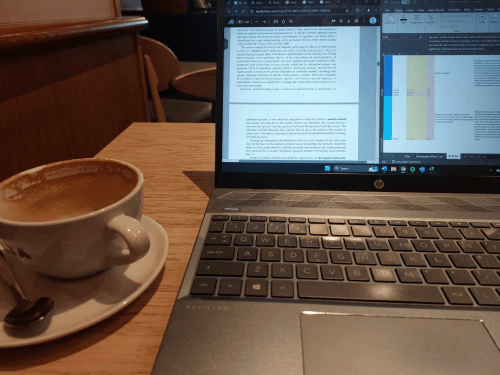
Back in September, I submitted my final dissertation for my Master of Science in International Social Policy and Welfare. The masters was not what I expected at all, but at the same time it was pretty much what I anticipated.
During my undergraduate degree, I never really felt that my socio-economic status effected my time at university that much. Of course, it did to a certain level, but it never felt overt. Perhaps the more diverse student population made me feel that way, as going to university and studying at undergraduate level is an opportunity that a range of people get, from a range of backgrounds. Since finishing my masters and beginning my PhD level study, I’m starting to appreciate how entering postgraduate study as a working class person can be particularly challenging. Applying for my masters, and my PhD, was extremely challenging as I didn’t know anyone else who had done it previously, being the first in my family and peers to continue so far with formal education.
In light of this, I really wanted to write this entry sharing some of the things I have learnt and realised during my postgraduate study. Hopefully this could maybe reach someone who is the first of their family or circle of friends, for whatever reason, to take the step into postgraduate education.
For context, my masters was a year at Anglia Ruskin University and entirely course work based with a fifteen thousand word dissertation carried out in the third semester. Here are some of my most prominent realisations and things to consider about postgraduate study in the social sciences.
1- A masters is not like a repeat of the third year of your undergraduate degree:
So perhaps I was slightly naïve when I started my masters thinking this would be the case. I thought I’d be writing 2,500- 3,000 word essays every so often then calling it a day, maybe 3,500 at a push. This wasn’t the case, some of my essays were 3,500 words, but the majority were 4,000 or 6,000 words typically. It felt daunting to start of with, but as you explore issues more critically, widely and with greater complexity, the word count really does get used up easily.
2- You might get to practise your presentation skills:
As someone who doesn’t typically enjoy presenting, this was difficult for me. But often your masters peer group is smaller, and your topic is really tailored to what you want to study, so its not as bad as doing it at undergraduate level, at my university, three out of the four modules I took involved some presenting.
3- The dissertation sounds scary to start off with:
I started my masters just under four months after finally finishing my undergraduate dissertation, so I had the stress and exertion still fresh in my mind. I was nervous thinking about how I was going to conduct research and write up a 15,000 word masters dissertation, especially as the dissertation module only formally started in the final semester (12 weeks before submission). But the whole point of education is learning how to do things you currently cannot do, if I attempted to do my research and masters dissertation in the first month of the course, I would have probably catastrophically failed, but that’s sort of the whole point. Writing lengthier essays, exploring ideas further and practising applying theoretical frameworks to other issues prepared me for the dissertation.
4- Make a Gantt chart:
Linked to number 3, my Gantt chart saved my life during my dissertation. You can easily make one on Excel, I also broke down my work into week chunks, and at the top I wrote any social commitments so I had a clear idea on how much work I could realistically aim to get done each week. You can see lots of examples of this time management strategy online by searching for google images of Gantt charts, below is an example of the one I’ve made for my PhD.

5- Read, read, read:
Demonstrate that you have wider understanding of a concept, that goes beyond the lectures and seminars. And read for pleasure too, reading long documents is a skill and skills need practise and rehearsal! But if there is a key document/ paper that you simply just can’t get into the groove of, copy and paste the text into a word document and use the text to speech function and listen to it like a podcast.
6- It’s really independent:
At my university, we had six hours of face to face contact per week. So this means a lot of independent study. I found trying to maintain self discipline and routine more helpful than maintaining motivation; motivation is something that can be really unstable depending on your mood, and you can’t necessarily gain motivation when you don’t have it. But sticking to routines and developing an environment of self discipline is something you have a bit more control over, but remember to carve rest periods into that routine.
7- A word on using AI:
Universities often have their own policy on using AI. Personally, I would avoid it and I haven’t used it for any of my university work across both degrees and I’m not planning on doing so for my PhD. However, that being said, if you do want to use it, check the university’s AI policy, clarify with your lecturers, double check information with additional sources and do not use it just to do your work. I know some students use it to gather preliminary sources or to time manage. For one of my Masters module, three people used AI to make their presentations, and it was painfully obvious, very embarrassing for them and it is academic misconduct.
8- Consider PhD options a few months into your masters:
Being extremely early on in my PhD journey (I started the programme in January) I can only give one piece of advice regarding it so far. Start considering things to do with your PhD a few months into your masters. I didn’t realise how extensive the application processes are, most universities will ask you to create a research proposal- universities I looked at ranged between a 1,000- 2,500 word count- and some ask for an academic and professional CV. Choosing a university isn’t as simple as undergrad or even masters study, you need to find a university that has supervisors that supervise the topic you want to research, then they sometimes like you to identify an appropriate supervisor and send the research proposal draft to them before submitting an application. Some supervisors may then want to talk to you about your research multiple times before recommending you to apply/ giving an offer to you. But don’t panic if you leave it later, or can’t cope with thinking about those things during your masters. I only started seriously applying a month after my Masters finished, and I still had just enough time to figure it all out and get it done in time.
Share this:


A Love Letter to Criminology at UON


In 2002, I realised I was bored, I was a full-time wife and parent with a long-standing part-time job in a supermarket. I first started the job at 15, left at 18 to take up a job at the Magistrates’ court and rejoined the supermarket shortly after my daughter was born. My world was comfortable, stable and dependable. I loved my family but it was definitely lacking challenge. My daughter was becoming increasingly more independent, I was increasing my hours and moving into retail management and I asked myself, is this it? Once my daughter had flown the nest, could I see myself working in a supermarket for the rest of my life? None of this is to knock those those that work in retail, it is probably the best training for criminology and indeed life, that anyone could ask for! I got to meet so many people, from all backgrounds, ethnicities, ages, religions and classes. It taught me that human beings are bloody awkward, including myself. But was it enough for me and if it wasn’t, what did I want?
At school, the careers adviser suggested I could work in Woolworths, or if I tried really hard at my studies and went to college, I might be able to work for the Midland Bank (neither organisation exists today, so probably good I didn’t take the advice!). In the 1980s, nobody was advocating the benefits of university education, at least not to working-class children like me. The Equal Pay Act might have been passed in 1970 but even today we’re a long way from equality in the workplace for women. In the 1980s there was still the unwritten expectation (particularly for working class children from low socio economic backgrounds) that women would get married, have children and perhaps have a part-time job but not really a career….I was a textbook example! I had no idea about universities, knew nobody that had been and assumed they were for other people, people very different from me.
That changed in 2002, I had read something in a newspaper about a Criminology course and I was fascinated. I did not know you could study something like that and I had so many questions that I wanted to answer. As regular readers of the blog will know I’m a long-standing fan of Agatha Christie whose fiction regularly touches upon criminological ideas. Having been born and raised in North London, I was very familiar with HMP Holloway’s buildings, both old and new, which raised lots of questions for a curious child, around who lived there, how did they get in and out and what did they do to the women held inside. Reading suffragette narratives had presented some very graphic images which further fed the imagination. Let’s just say I had been thinking about criminology, without even knowing such a discipline existed.
Once I was aware of the discipline, I needed to find a way to get over my prejudices around who university was for and find a way of getting in! To cut a long story short, I went to an Open Day and was told, go and get yourself an access course. At the time, it felt very blunt and reinforced my view that universities weren’t for the likes of me! Looking back it was excellent advice, without the access course, I would never have coped, let alone thrived, after years out of education.
In 2004 I started reading BA Criminology, with reading being the operant word. I had been an avid reader since early childhood (the subject of an earlier blog) and suddenly I was presented with a license to read whatever and whenever I wanted and as much as I could devour! For the first time in my life, people could no longer insist that I was wasting time with my head always in a book, I had “official” permission to read and read, I did! I got the chance to read, discuss, write and present throughout the degree. I wrote essays and reports, presented posters and talked about my criminological passions. I got the chance to undertake research, both empirical and theoretical, and lawks did I revel in all this opportunity. Of course, by looking back and reflecting, I forget all the stresses and strains, the anxieties around meeting so many new people, the terror of standing up in front of people, of submitting my first assessment, of waiting for grades….but these all pale into insignificance at the end and three years goes so very quickly….
In the summer of 2007, I had a lovely shiny degree in Criminology from the University of Northampton, but what next? By this point, I had the studying bug, and despite my anticipation that university would provide all the answers, I had a whole new set of questions! These were perhaps more nuanced and sophisticated than before but still driving me to seek answers. As I said earlier, human beings are awkward and at this point I decided, despite my earlier passion, I didn’t want to be put in a box labelled “Criminology“. I felt that I had finally cracked my fear of universities and decided to embark on a MA History of Medicine at Oxford Brookes. I wanted to know why Criminology textbooks and courses still included the racist, sexist, disablist (and plenty more) “theories” of Cesare Lombroso, a man whose ideas of the “born criminal” had been discredited soon after they were published.
But again the old fears returned….what did I know about history or medicine? What if the Criminology degree at Northampton hadn’t been very good, what if they just passed everyone, what if I was kidding myself? Everything at Brookes felt very different to Northampton, everyone on the course had studied BA History there. Their research interests were firmly centred on the past and on medicine, nursing, doctoring, hospitals and clinics and there was me, with my ideas around 20th century eugenics, a quasi-scientific attempt to rationalise prejudice and injustice. Along with studying the discipline, I learnt a lot about how different institutions work, I compared both universities on a regular basis. What did I like about each, what did I dislike. i thought about how academics operate and started to think about how I would be in that profession.
I successfully completed the MA and began to think maybe Northampton hadn’t given me good grades out of our pity or some other misplaced emotion, but that I had actually earnt them. I was very fortunate, I had maintained connection with Criminology at UON, and had the opportunity to tip my toe in the water of academia. I was appointed as an Associate Lecturer (for those not familiar with the title, it is somebody who is hourly paid and contribute as little or as much as the department requires) and had my first foray into university teaching. To put it bluntly, I was scared shitless! But, I loved every second in the classroom, I began to find my feet, slowly but surely, and university which had been so daunting began to seep into my very being.
Fast forward to 2025, I have been involved with UON for almost 22 years, first as a student, then as an academic, achieving my PhD in the process It is worth saying that the transition is not easy, but then nothing worth having ever is. I have gained so much from my studies, my relationship with two universities and the experiences I have had along the way. It is fair to say that I have shed many tears when studying, but also had some of my very highest highs, learning is painful, just watch a small child learning to read or write.
Hopefully, over the past decades I have repaid some of the debt I owe to the academics that have taught me, coached me, mentored me and supported me (special mention must go to @manosdaskalou who has been part of my journey since day 1). My life looks very different to 2002 and it is thanks to so many people, so many opportunities, the two universities that have provided me with a home from home and all of the students I have had the privilege to engage with.
I am so delighted to have been part of Criminology at UON’s 25 years of learning and teaching. To my colleagues, old and new, students, graduates and everyone I have met along the way, I raise my glass. Together we have built something very special, a community of people committed to exploring criminological ideas and making the world an equitable place.
Share this:


An annual reflection and a glance to the year ahead!

As we complete the last day before the Christmas break, I encourage you to sit back and reflect on what you have achieved this academic term. Some of you will have started university for the first time and will be getting to grips with the processes, the assessments, the staff and the learning styles of the university. Some of you will be navigating second year and the new expectations of you at this level, learning to move beyond discussion to instead evaluation and being critical, honing your research skills in preparation for your dissertations in the next academic year. For some of you this may have been a hard journey and one that will progress into the second semester, but please know that this will build up your skills and your confidence, turning you into the academic you need to be in order to succeed.
For some of you, you will have moved into your third and final year. With this comes more independence, and some of this may feel uncertain, confusing, and a bit unknown. Please know that again this does not last and you will find your feet. Whether that is a lightbulb moment with your dissertation, or finally finding the right article that helps you to write your essay. For those of you that have exams coming up in January, make sure you can enjoy the festivities and take a well earned break. But when you find those moments where you’re bored and have nothing to do, and you start to think about your criminology course, I think that will be a good indication to pick up a book, to read through your notes, or to practice some exam questions.
On a personal note as I reflect on this year there are things I am definitely proud to have achieved, and things I would like to work on in the future. One of my biggest achievements this year was completing my PhD. It has been a long, difficult journey, spanning over eight years, but the feeling of successfully completing my viva, making those final changes, and the recognition I feel when discussing my research to various people reminds me of its importance. The special moment of my graduation. At my graduation my research title was read aloud, I was applauded, and then welcomed into the academic community onstage to be seated with fellow academics such as my supervisors. This was a special moment I will cherish and having family there was all the more memorable and precious. Whilst the PhD journey has come to an end, new opportunities arise, so keep an eye out in 2025 for further publications!
In addition, this year, I navigated my new job at the University of Northampton. In the 12 months I’ve been here I have learnt a lot from colleagues, from the faculty, and from other departments. Looking ahead, the road is one of change and adjustment, but I am optimistic and ready for whatever changes may come.
I wish everyone a wonderful and restful Christmas. Like myself, I hope you return in the New Year with renewed energy ready to tackle any new adventures with poise and determination. Remember to push yourselves to get to the best version of you!

 Thoughts from the criminology team