
Home » Posts tagged 'Mental health'
Tag Archives: Mental health

Crime II: Nature and Nurture?
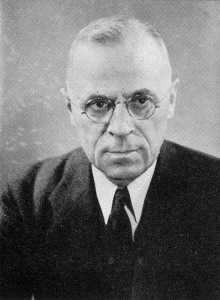
Fifty years after Lombroso’s theory of the “born criminal” an American criminologist explored the origins of criminality from a different perspective. For Edwin Sutherland people weren’t born criminal but more likely influenced by their environment. Differential association became a theory that changed the focus from biology to environment. This change signified the change of focus within criminology from biological attributes to social features.
This change, whilst it appears to have capture a wider social sciences debate at the time is also the outcome of trying to understand a world in motion. Sutherland’s theory comes in the early 20th century after the First World War and a massive economic crash. These placed in doubt the scientific and political economy of the time, putting many of these earlier ideas to the test. Popular movements challenged the authority of the state and the way hegemony suppressed people. Differential association was exploring how people learn crime by observing others; it becomes what Kornhouser called a ‘cultural deviance theory’.
What Sutherland articulated is that crime is learned through group conflict, again attempting to explain all types of crime like the biological theories before. The 20th century with its fast pace, European (World) wars, was the embodiment of modernity, progression and change. The world outside Europe began to rise against colonial rule, whilst civil rights became a rallying objective for many disenfranchised groups. In most countries worldwide women got the vote in the 20th century whilst, many countries recognised unions, and civil rights organisations, a consequence of people’s mobilisation.
It comes as no surprise then that differential association was a theory of crime that tried to account for social change and understand criminality as a process that moves within this change. The foundations of the theory in its simplest form are straightforward, covered in 9 main points:
1. Criminal behavior is learned from other individuals.
2. Criminal behavior is learned in interaction with other persons in a process of communication.
3. The principle part of the learning of criminal behavior occurs within intimate personal groups.
4. When criminal behavior is learned, the learning includes (a) techniques of committing the crime, which are sometimes very complicated, sometimes simple; (b) the specific direction of motives, drives, rationalizations, and attitudes.
5. The specific direction of motives and drives is learned from definitions of the legal codes as favorable or unfavorable.
6. A person becomes delinquent because of an excess of definitions favorable to violation of law over definitions unfavorable to violation of the law.
7. Differential associations may vary in frequency, duration, priority, and intensity.
8. The process of learning criminal behavior by association with criminal and anti-criminal patterns involves all of the mechanisms that are involved in any other learning.
9. While criminal behavior is an expression of general needs and values, it is not explained by those needs and values, since non-criminal behavior is an expression of the same needs and values.
The theory is more than a compilation of points and citing them is informative, but it doesn’t really explain the reach and extent. As a general theory of crime it can account for violent crime, theft and even white collar crimes. This reach of theory coincided with the wider discussion on “normative conflict” that focused on cultures. As discussions on cultural dominance, subcultures and the role of social groups became a sociological and criminological point these ideas introduced by Sutherland seemed to bare relevance.
There were questions already regarding the theory’s basis in terms of clarity as a cultural deviance theory, when culture focused away from poverty and social struggles. The cultural conflict seemed to resonate with certain crime categories, but it could not account for harm, leaving zemiologists to doubt the accuracy of its scope as theory. Furthermore, whilst the focus moved on from an arbitrary biology to the role of the environment some of the fundamental problems expected to be resolved in a general theory of crime remained unanswered.
So what is the answer? We can safely say that crime and most importantly criminality isn’t the product of a singularity nor its binary. How can we account for example for a social phenomenon whose definition of crime (in some instances) relies on law. A mechanism that the establishment uses to safeguard its privileges and position. The definitional factors therefore ought to transcend general conventions of biology or social interaction. Often they don’t, they merely describe the phenomenon but in closed cultural formats. There is a much more interesting and complex explanation that take us away from this binary. If you are more curious and you want to know more, why not join a criminology course and see if you can get the answer you expect or not. Criminology is a fascinating discipline not because we talk blood and bones but because we reflect on the current state of crime and imagine a world of crime (or free of crime) in the future. If you wish to share that imagination you can but join us!
https://www.northampton.ac.uk/courses/criminology-ba-hons/ https://www.northampton.ac.uk/courses/criminology-phd/ https://www.northampton.ac.uk/courses/criminology-with-psychology-ba-hons/ https://www.northampton.ac.uk/blog/why-i-chose-criminology/
Share this:


Is it time to unleash your criminological imagination?

In this blog entry, I am going to introduce a seemingly disconnected set of ideas. I say seemingly, because at the end, all will hopefully make sense. I suspect the following also demonstrates the often chaotic and convoluted process of my thought processes.
I’ve written many times before about Criminology, at times questioning whether I have any claim to the title criminologist and more recently, what those with the title should talk about. These come on top of hundreds of hours of study, contemplation and reflection which provides the backdrop for why I keep questioning the discipline and my place within it. I know one of the biggest issues for me is social sciences, like Criminology and many others, love to categorise people in lots of different ways: class, race, gender, offender, survivor, victim and so on. But people, including me, don’t like to be put in boxes, we’re complex animals and as I always tell students, people are bloody awkward, including ourselves! There is also a far more challenging issue of being part of a discipline which has the potential to cause, rather than reduce or remove harm, another topic I’ve blogged on before.
It’s no secret that universities across the UK and further afield are facing many serious, seemingly intractable challenges. In the UK these range from financial pressures (both institutional and individual), austerity measures, the seemingly unstoppable rise of technology and the implicit (or explicit, depending on standpoint) message of Brexit, that the country is closed to outsiders. Each of the challenges mentioned above seem to me to be anti-education, rather than designed to expand and share knowledge, they close down essential dialogue. Many years ago, a student studying in the UK from mainland Europe on the Erasmus scheme, said to me that our facilities were wonderful, and they were amazed by the readily available access to IT, both far superior to what was available to them in their own country. Gratifying to hear, but what came next was far more profound, they said that all a serious student really need is books, a enthusiastic and knowledgeable teacher and a tree to sit under. Whilst the tree to sit under might not work in the UK with our unpredictable weather, the rest struck a chord.
The world seems in chaos and war-mongers everywhere are clamouring for violence. Recent events in Darfur, Palestine, Sudan, Ukraine, Venezuela and many other parts of the world, demonstrate the frailty, or even, fallacy of international law, something Drs @manosdaskalou, @paulsquaredd and @aysheaobrien1ca0bcf715 have all eloquently blogged about. But while these discussions are important and pertinent, they cannot address the immediate harm caused to individuals and populations facing these many, varied forms of violence. Furthermore, whilst it’s been over 80 years since Raphäel Lemkin first coined the term ‘genocide’, it seems world leaders are content to debate whether this situation or that situation fits the definition. But, surely these discussions should be secondary, a humanitarian response is far more urgent. After all, (one would hope) that the police would not standby watching as one person killed another, all whilst having a discussion around the definition of murder and whether it applied in this context.
The rise of technology, in particular Generative Artificial Intelligence, has been the focus of blogs from Drs @sallekmusa, @5teveh and myself, each with their own perspective and standpoint. Efforts to combat the harmful effects of Grok enabling the creation of non-consensual pornographic images demonstrate both new forms of Violence Against Women and Girls [VAWG] and the limitations of control and enforcement. Whilst countries are rushing to ban Grok and control the access of social media for children under 16, it is clear that Grok and X are just one form of GAI and social media, there is seemingly nothing to stop others taking their place. And as everyone is well aware, laws are broken on a daily basis (just look at the court backlog and the overflowing prisons) and with no apparent way of controlling children’s access to technology (something which is actively encouraged in schools, colleges and universities) these attempts seem doomed to fail. Maybe more regulation. more legislation isn’t the answer to this problem.
Above I have briefly discussed four seemingly intractable problems. In each arena, we have many thousands of people across the globe trying to solve the issues, but the problems still remain. Perhaps we should ask ourselves the following questions:
- Maybe we are asking the wrong people to come up with the answers?
- Maybe we are constraining discussions and closing down debate?
- Maybe by allowing the established and the powerful to control the narrative we just continue to recycle the same problems and the same hackneyed solutions?
What if there’s another way?
And here we come to the crux of this blog, in Criminology we are challenged to explore any problem from all perspectives, we are continually encouraged to imagine a different world, what ought or could be a better place for all. I have the privilege of running two modules, one at level 4 Imagining Crime and one at Level 6 Violence. In both of these students work together to see the world differently, to imagine a world without violence, a world in which justice is a constant and reflection a continual practice. Walking into one of these classrooms you may well be surprised to see how thoughtful and passionate people can be when faced with a seemingly unsolvable problem when everything on the table is up for discussion. Although often misattributed to Einstein, the statement ‘Insanity is doing the same thing over and over again and expecting different results’ seems apposite. If we want the world to be different, we have to allow people to think about things differently, in free and safe spaces, so they can consider all perspectives, and that is where Criminology comes in.
Be fearless and unleash your criminological imagination, who knows where it might take you!
Share this:


The coffee shop that’s worth more than its profit margin

Every morning follows the same rhythm. Finish my gym session, towel off, and head straight to the M&S café for my coffee. It’s not just about the caffeine – though God knows I need it. It’s about the ladies behind the counter who greet me with genuine warmth, who remember my order, who take pride in their work. In a world that often feels rushed and impersonal, their kindness has become my daily reset button.

But this isn’t really a story about my coffee ritual. It’s about what I’ve witnessed in that café—something far more important than any morning black americano.

The tables are always dotted with elderly faces. At first, I didn’t think much of it. But over time, as I’ve chatted with them, “I come here every Tuesday and Thursday,” one gentleman told me in the queue, staring at his menu. “Meet up with whoever’s about. Talk football, moan about the weather.” He smiled. “Beats sitting at home staring at the four walls, doesn’t it?” It’s beautiful, really. Watching strangers become friends over scones, toasties and crosswords. Seeing lonely people find their people, even if just for an hour.

The gentle hum of conversation about politics, memories, grandchildren, postwar Britain, the price of everything these days. This is what community looks like – unscripted, unglamorous, essential. I’ve become friends with some of them myself. They’ve told me about children who live too far away, partners they’ve lost, days that feel too long and too empty. For many, this café visit is their main activity. Their reason to get dressed. Their connection to the outside world.

A couple of days ago, I was at the gym when I overheard a conversation that stopped me mid-rep. They’re closing the café. The M&S café. Our café. I asked one of the staff members – one of those lovely ladies who makes this place what it is. She confirmed it quietly, almost apologetically, but couldn’t (or wouldn’t) share the details. The rumour mill says it’s about profit margins. The official line from M&S is that they’re repurposing spaces to create room for more popular products. More popular products!. And I felt something crack inside me.
If this is truly about profits, then we need to have a serious conversation about what we value as a society. Yes, businesses need to be viable. Yes, companies have shareholders and bottom lines and quarterly targets. I understand economics, I used to work in the financial services – a Bank to be precise, so I understand numbers. But when did we collectively decide that every single square foot of commercial space must justify its existence purely through revenue? This café might not be their most profitable location. But what’s the cost of closing it? Where exactly do we expect these elderly people to go?
“Just go to another café,” someone might say. But you’re missing the point entirely. This isn’t about coffee. It’s about familiarity. It’s about the staff who know your name. It’s about the community that’s been built, brick by brick, conversation by conversation, over months and years. You can’t just transplant that somewhere else. Community doesn’t work like that.
My elderly friends at the café (many of them in their 80s) represent a growing crisis we’d rather not acknowledge. Let me give you some numbers. According to a recent report on Age and loneliness in the UK, nearly 940,000 older people in the UK are often lonely – that’s one in fourteen people over 65 (Age UK 2024). And here’s the truly heartbreaking bit: 270,000 older people go an entire week without speaking to a single friend or family member.
Do you know how crazy that sounds? Not speaking to a single friend or family member!! A whole week!!
And loneliness doesn’t just make people sad—it kills. It increases the risk of depression, heart disease, stroke, dementia etc. This isn’t just about comfort or quality of life. This is a public health crisis. And yet, we’re closing the very spaces where people find connection. Where will they go? Costa? Starbucks? Even if they could afford the higher prices, those chains don’t foster the same sense of belonging. They’re designed for laptop workers and quick takeaways, not for lingering conversation and community building.
Councils cut funding for community centers – libraries operate on skeleton hours, now commercial spaces that accidentally became social lifelines are vanishing too.
I’m not naive. I know M&S isn’t a charity. I’m also aware they do good work by partnering with food banks and donating surplus food to people who need it. They clearly have a social conscience. But they brand themselves on quality, trust, and British values. Well, here’s a British value: looking after our elderly. Not abandoning them.
M&S, you have an opportunity here. An opportunity to position yourselves as a company that doesn’t just talk about community values but actually lives them. You could be the retailer that says, “We’re keeping our cafés open because we recognise they’re tackling one of the biggest health crises facing our aging population.” Imagine the goodwill. Imagine the respect. Imagine being the company that genuinely helps combat loneliness alongside all the good work you’re already doing – that’s how you truly stand tall amongst your peers.
There’s such thing as enough profit. There’s such a thing as being a responsible corporate citizen. There’s such a thing as recognising that some things – like providing a warm, safe space for lonely pensioners to find friendship – might be worth preserving even if it means slightly less room for those “more popular products.”
Our very own café will probably close. The space will be repurposed – maybe more retail shelving, maybe nothing at all. The decision-makers will never meet the people affected. They’ll never know about the Tuesday regular who’ll now have nowhere to go, or the widow who found a reason to leave the house, or the gentleman who finally made friends after his kids relocated to another country. And my morning ritual? I’ll find another coffee shop. I’ll survive.
But what about the people for whom this was so much more than coffee? What about the 270,000 older people who might go another week without speaking to anyone? What about your chance to be part of the solution instead of part of the problem?#
This is what the world is turning into: a place where community is a nice-to-have but never a must-have. Have we forgotten that sometimes the most valuable things can’t be measured on a balance sheet. We can do better than this.
What do you think? Are there spaces in your community facing similar threats? I’d genuinely love to hear your thoughts.
Reference list
Age UK (2024) Age UK’s new report shows ‘you are not alone in feeling lonely’. Available at: https://www.ageuk.org.uk/latest-press/articles/age-uks-new-report-shows-you-are-not-alone-in-feeling-lonely/ (Accessed: 27 October 2025)
Share this:


What should criminologists talk about?

Recently, Criminology with Psychology graduate, now PhD student @zo3conneely wrote an entry focused on the rise of the Reform Party in British politics, which you can find here. In response, we received a comment via social media, asking what this entry had to do with Criminology. As we always say in Criminology, all questions are welcome and valid, after all, for many of us our mantra is ‘question everything’! From a lay perspective, the question indicates a particular understanding of academic disciplines, it presupposes that Criminology has a very narrow focus. In this view, criminologists should stay in their own lane and focus purely and simply on what is commonly understood as crime, i.e. actions which are against the law.
But hang on, doesn’t that fall under the purview of those who study or practice criminal law, something neither I not Zoe have undertaken? Alternatively, is it the business of those who work in the field of criminal justice, investigating and processing those believed to have been involved in law-breaking? Again, not something either Zoe or I have experience of. If my colleagues in law and criminal justice are the experts in actions against the law, where does Criminology fit in and why include a discussion on political parties such as Reform in a blog dedicated to the discipline?
However, the answer is more complex than the original question would indicate. The answer is also much longer than the question. Criminology has been described as a rendezvous or umbrella discipline, a space where everyone can gather to discuss crime from all perspectives. This includes disciplines as diverse as Drama, History, Literature, Philosophy, Psychology as well as many others, including Politics. It is therefore, expected that those who write for a Criminology blog will be drawn from a diverse range of academic backgrounds, for instance, whilst I have a BA and a PhD in Criminology, my MA is in the History of Medicine. For my fellow bloggers, their academic journeys will also be reflective of their curiosity and their developing academic knowledge and skills. It is therefore anticipated that each academic brings their own unique academic knowledge and personal experiences to the discussion table. It is this which enables Criminology to take a holistic approach, we don’t and should not seek consensus, but incorporate as many diverse views as is possible. Only then can we gain a real understanding of the phenomena we call crime, criminality, victimisation, and of course, the responses to such.
But what of crime itself? Do we all have a shared understanding of what ‘crime’ is? After all, much of the time we don’t see crime, only potentially some evidence that is has occurred. Furthermore, it depends very much on time and space. If we were living in 1960’s Britain, suicide, abortion and homosexuality would all feature heavily in our list of crimes. However, suicide was decriminalised in 1961, and abortion and homosexuality were partially decriminalised in 1967, with the latter further decriminalised in 2003. Likewise, if we were to look further afield we would crimes listed in statute books that we do not have here, for example adultery is a crime in Iran, Pakistan, Saudi Arabia, Somalia and was only repealed in Taiwan in 2020. Thus it is quickly evident that crime is not static, it can change drastically through time and place. We also have to recognise that crime can be decriminalised and recriminalised, for example the overturning of Roe vs Wade in the USA, removes the constitutional right for those pregnant to access abortions. If it taught us nothing else, the Covid-19 pandemic showed us rights can be granted and rights can be taken away, which means that criminologists need to keep a very careful eye on both the past and the present.
Whilst my colleagues in law have as their focus current legislation and how it is practised, and my colleagues in criminal justice seek to ensure that the law is enacted and used to the letter of that law, criminology is much freer. After all, we need to know who is making those laws and why. Whilst we can answer quite simply parliamentarians, this does not tell us very much. We also need to know who, for example only 14% of the current parliament belong to the Global Ethnic Majority, a smaller percentage than the population proportionately. Of these 90, 66 are drawn from the Labour Party, 15 Conservative and 5 Liberal Democrats. Likewise, at the 2024 election 40% of MPs are women, despite women making up over 50% of the UK’s population. Let’s not even get started on the disproportionate number of privately educated MPs, or the lack of visibility of disability, sexuality and so on…. Needless to say, the UK parliament does not look like the vast majority of the British public. Yet these are the people make our laws, and if we don’t understand that as a criminological issue, we will soon come unstuck.
We all need to understand what is happening once those laws have been passed, who is delivering justice for the UK? Whether we look at Judges, Barristers, Solicitors, we find a predominance of white men, only when we look at the magistracy we begin to find some real diversity. But don’t forget magistrates are unpaid, lay members of the judiciary, so it is perhaps unsurprising that women make up 57% of this particular field. So what about criminal justice practitioners? If we look at the police for England and Wales, over 91% are white, 65% are men. In relation to His Majesty’s Prison and Probation Service [HMPPS], over 54% are female, yet these are predominantly based within probation, not the prison service. So we begin to see that the people making, enacting and facilitation legislation and criminal justice do not look very much like the country’s population. Criminologically, this matters, how can we hope to tackle serious social harms like Violence Against Women and Girls [VAWG], homelessness, poverty etc when people have neither knowledge nor experience? Can we really talk achieve just outcomes if the people responsible do not look, sound like us, have very different, often privileged backgrounds which mean we have little shared experience?
Hopefully, this entry has gone a little way towards explaining why the discipline of Criminology (and of course, this blog) maintains an careful eye on politics, among a huge range of other interests. Don’t forget, Criminology is a positive discipline, focused on what could be, what ought to be, a fairer society for all of us.
Share this:


The Journey of a University of Northampton Criminology Graduate

On this Jubilee year, I ponder and reflect on my 3 years as a joint honours Criminology student, and where my life journey has taken me since
In 2012-2015, I did joint honours Criminology and Education studies, and later did the LLM in International Criminal Law and Security at from 2015-2017.
My journey as a Criminology Student alumni has lead me to all sorts of unique pathways.
Having a background in notetaking and student support at different universities, I worked for 6 1/2 years as a Co-op Member Pioneer (8th January 2018-10th August 2024), where, in the community I served, I supported the local police with crime related issues, and mediated between them and the public on crime issues that mattered to them and helped to support the police, as blogged about here ‘As a Member Pioneer Supporting the Police’ . Whilst this role was about connecting communities, supporting charities, causes and local people, I saw the opportunity to help the police and the community on crime related issues.
From December 2019-June 2020, I worked for 6 months in an addiction recovery unit. Here, I learned about addiction on a more deeper and personal level. I was one of 2 members of staff who were not addicts, and so the experience was eye-opening! The staff who had ‘come clean’ from their addictions would talk about their lives before becoming clean, and how they would resort to crime to fund their addictions. It was a vicious cycle for them as they were fighting traumatic battles which lead them down the route of addiction, and could not find their way out.
I was trained on taking phone calls, and spoke with so many devasted individuals who had lost their sons, daughters, husbands and wives to addiction, and were desperate to get them the help they needed. Seeing families torn apart by addiction, and meeting with new clients who had come in to get help and learning about their stories revealed deep sufferings and traumas, some of which were life-changing events, and harrowing cries for help.
I audited medication on a daily basis, worked with the Addiction specialist doctor to make sure all new clients had been seen to, and prepared folders for each client which the support team used in their care plans. I would also create certificates for all clients who had completed their time at the unit, and celebrated in their success.
When COVID struck, I was put on furlough, and later made redundant – such is life XD – Onto my next adventure!
Where am I now?
Fast forward to March 2021; after completing a lengthy job application and job interview, I landed myself a job in the Civil Service working for the Ministry of Justice! I do casework, work with the Judges on progressing cases, I clerked a few hearings previously too. Everyday is different, and every case I work on is different.
I process new claims and with the support of the Legal Officers, issue directions to the parties if any other information is required. I oversee the progress of cases and ensure all correspondence is up to date, all orders have been issued, and the case is ready to be heard.
Each day is different, and I love everything that I do working for the justice system.
Share this:


Why I refuse to join the hate train

In a world drowning in outrage, where every headline screams division and every scroll brings fresh fury, it’s easy to forget something fundamental: there’s still beauty everywhere.
Turn on the news and you’re bombarded with it all—bans, blame, and bitter arguments about who’s ruining what. Immigrants, the wealthy, the homeless, the young, the benefits claimants—everyone’s apparently the problem. It’s a relentless tide of negativity and moaning that can sweep you under if you’re not careful.
But what if we chose differently?
Here are a few things I noticed in the last couple of weeks:
I came across a book that someone left on a park bench with a note: “Free to a good home.” On another late night, a man saw a mother struggling—baby in one arm, shopping bags in the other—and didn’t hesitate to help her to her car. And if you’re thinking “why didn’t she use a trolley?” then you’re part of the problem I’m talking about, because there were no trolleys in that shop.
In another moment, a homeless person was offering water to a runner who’d collapsed in the heat, providing comfort when it mattered most.
Elsewhere, a teacher stayed late for his “troubled” student preparing for exams. When I asked why, he said: “Everyone calls him destructive. I refuse to lose hope. He’s just a slower learner, and I’ll support him as long as it takes.”
In another event, teenagers on bikes formed a protective barrier around an elderly woman crossing the road.
Small acts. Quiet kindness. The stuff that never makes headlines, doesn't trend on social media, and doesn't fuel debates.
The truth is, these things happen everywhere, all the time. While we’re busy arguing about who’s destroying society, society is quietly rebuilding itself through a million small kindnesses. The coffee lady in the Learning Hub who remembers your order. The elderly doorman at Milton Keyens Costco who draws smiley faces on reciepts and hands them to children on their way out, just to see them smile. The neighbour who randomly helps pick up litter in the neighbourhood with her girls every Sunday afternoon. The friend who texts to check in with the simple words “how are you?”
The truth is simple: for every voice spreading hate, there are countless others spreading hope. For every person tearing down, there are builders, healers, and helpers working in the quiet spaces between the noise.
Yes, problems exist. Yes, challenges are real. But so is the grandfather teaching his grandson about dignity and respect. So is the aunty teaching her niece how to bake. So is the library volunteer reading to the shelter dogs. So is the community garden where strangers become neighbours.
Today, I’m choosing to notice the nice. Not because I’m naive, but because I refuse to let the moaning and the loudest voices drown out the most important ones. The ones that remind us we’re more alike than different. The ones that choose connection over division.
Your turn: What nice thing will you notice today? Free your mind, pay attention—you'll see one.
Because in a sea of anger, being gentle isn’t weak or naive—it’s revolutionary.
Share this:


Does compassion have a place in Criminology or is this a forgotten element in Justice?
In recent months, I’ve been thinking about the idea of compassion and its diminishing presence in societies. Let me start by saying this blog wasn’t prompted by any specific event, but rather by observing the increasing prevalence of hate speech in media and public discourse. More and more, we are seeing this troubling pattern manifesting across all levels of society – from world leaders mocking marginalised populations, citizens spreading hate speech online, media outlets amplifying divisive rhetoric in the name of balanced reporting, workplaces failing their employees on many grounds, public institutions are becoming more and more intolerant of the ‘other’ – extending into criminal justice systems where overcrowded prisons, harsh sentencing guidelines, limited rehabilitation programmes, and the stigmatisation of former offenders all continue to reflect this absence of compassion.
Against this backdrop of increasing hostility, the teachings of Pope Francis (1936 – 2025) offer a powerful counterpoint that resonates beyond religious boundaries. He consistently championed respect, dignity, and compassion towards all people. You don’t have to be religious to recognise the universal truth in his words: “A little bit of mercy makes the world less cold and more just.” This intersection of justice and mercy naturally leads us to examine criminology through that very compassionate lens, because the moment we strip compassion from our criminal justice systems, the consequences become counterproductive. By this, I mean rehabilitation becomes secondary to punishment, criminogenic factors become ignored, recidivism rates become affected as former offenders encounter insurmountable barriers to reintegration and so forth.
The question I want you to ponder over this sunny weekend is: What defines us when compassion vanishes from our interactions? When hatred becomes our default response? Personally, I believe compassionate approaches to criminology do not weaken justice – they strengthen it by addressing root causes while maintaining accountability. I won’t elaborate further here, but if you’re interested in exploring these concepts more deeply, consider enrolling in my new module launching this September on global perspectives of crime, where a comparative approach to understanding and responding to crime will also be explored.
Have a lovely sunny weekend!
Share this:


Changing the Narrative around Violence Against Women and Girls

For Criminology at UON’s 25th Birthday, in partnership with the Northampton Fire, Police and Crime Commissioner, the event “Changing the Narrative: Violence Against Women and Girls” convened on the 2nd April. Bringing together a professional panel, individuals with lived experience and practitioners from charity and other sectors, to create a dialogue and champion new ways of thinking. The first in a series, this event focused on language.
All of the discussions, notes and presentations were incredibly insightful, and I hope this thematic collation does it all justice.
“A convenient but not useful term.”
Firstly an overwhelming reflection on the term itself; ‘Violence Against Women and Girls’ – does it do justice to all of the behaviour under it’s umbrella? We considered this as reductionist, dehumanising, and often only prompts thinking and action to physical acts of violence, but perhaps neglects many other harms such as emotional abuse, coercion and financial abuse which may not be seen as, or felt as ‘severe enough’ to report. It may also predominantly suggest intimate partner or domestic abuse which may too exclude other harms towards women and girls such as (grand)parent/child abuse or that which happens outside of the home. All of which are too often undetected or minimised, potentially due to this use of language. Another poignant reflection is that we may not currently be able to consider ‘women and girls’ as one group, given that girls under 16 may not be able to seek help for domestic abuse, in the same way that women may be able to. We also must consider the impact of this term on those whose gender identity is not what they were assigned at birth, or those that identify outside of the gender binary. Where do they fit into this?
To change the narrative, we must first identify what we are talking about. Explicitly. Changing the narrative starts here.
“I do not think I have survived.”
We considered the importance of lived experience in our narratives and reflected on the way we use it, and what that means for individuals, and our response.
Firstly, the terms ‘victim’ and ‘survivor’ – which we may use without thought, use as fact, particularly as descriptors within our professions, but actually these are incredibly personal labels that only individuals with such experience can give to themselves. This may be reflective of where they are in their journey surrounding their experiences and have a huge impact on their experience of being supported. It was courageously expressed that we also must recognise that individuals may not identify with either of those terms, and that much more of that person still exists outside of that experience or label. We also took a moment to remember that some victims, will never be survivors.
Lived experience is making its way into our narratives more and more, but there is still much room for improvement. We champion that if we are to create a more supportive, inclusive, practical and effective narrative, we must reflect the language of individuals with lived experience and we must use it to create a narrative free from tick boxes, from the lens of organisational goals and societal pressure.
Lived experience must be valued for what it is, not in spite of what it is.
“In some cases, we allow content – which would otherwise go against our standards – if its newsworthy.”
A further theme was a reflection on language which appears to be causing an erosion of moral boundaries. For example, the term ‘misogyny’ – was considered to be used flippantly, as an excuse, and as a scapegoat for behaviour which is not just ‘misogynistic’ but unacceptable, abhorrent, inexcusable behaviour – meaning the extent of the harms caused by this behaviour are swept away under a ‘normalised’ state of prejudice.
This is one of many terms that along with things like ‘trauma bond’ and ‘narcissist’ which have become popular on social media without any rigour as to the correct use of the term – further normalises harmful behaviour, and prevents women and girls from seeking support for these very not normal experiences. In the same vein it was expressed that sexual violence is often seen as part of ‘the university experience.’
This use of language and its presence on social media endangers and miseducates, particularly young people, especially with new posting policies around the freedom of expression. Firstly, in that many restrictions can be bypassed by the use of different text, characters and emoji so that posts are not flagged for certain words or language. Additionally, guidelines from Meta were shared and highlighted as problematic as certain content which would, and should, normally be restricted – can be shared – as long as is deemed ‘newsworthy.’
Within the media as a whole, we pressed the importance of using language which accurately describes the actions and experience that has happened, showing the impact on the individual and showing the extent of the societal problem we face… not just what makes the best headline.
“We took action overnight for the pandemic.”
Language within our response to these crimes was reflected upon, in particular around the term ‘non-emergency’ which rape, as a crime, has become catalogued as. We considered the profound impact of this language for those experiencing/have experienced this crime and the effect it has on the resources made available to respond to it.
Simultaneously, in other arenas, violence toward women and girls is considered to be a crisis… an emergency. This not only does not align with the views of law enforcement but suggests that this is a new, emerging crisis, when in fact it is long standing societal problem, and has faced significant barriers in getting a sufficient response. As reflected by one attendee – “we took action overnight for the pandemic.”
“I’ve worked with women who didn’t report rape because they were aroused – they thought they must have wanted it.”
Education was another widely considered theme, with most talk tables initially considering the need for early education and coming to the conclusion that everyone needs more education; young and old – everything in between; male, female and everything in between and outside of the gender binary. No-one is exempt.
We need all people to have the education and language to pass on to their children, friends, colleagues, to make educated choices. If we as adults don’t have the education to pass on to children, how will they get it? The phrase ‘sex education’ was reflected upon, within the context of schools, and was suggested to require change due to how it triggers an uproar from parents, often believing their children will only be taught about intercourse and that they’re too young to know. It was expressed that age appropriate education, giving children the language to identify harms, know their own body, speak up and speak out is only beneficial and this must happen to help break the cycle of generational violence. We cannot protect young people if we teach them ignorance.
Education for all was pressed particularly around education of our bodies, and our bodily experiences. In particular of female bodies, which have for so long been seen as an extension of male bodies. No-one knows enough about female bodies. This perpetuates issues around consent, uneducated choices and creates misplaced and unnecessary guilt, shame and confusion for females when subjected to these harms.
“Just because you are not part of the problem, does not mean you are part of the solution.“
Finally, though we have no intention or illusion of resolution with just one talk, or even a series of them – we moved to consider some ways forward. A very clear message was that this requires action – and this action should not fall on women and girls to protect themselves, but for perpetrators for be stopped. We need allies, of all backgrounds, but in particular, we need male allies. We need male allies who have the education, and the words necessary to identify and call out the behaviour of their peers, their friends, their colleagues, of strangers on the bus. We asked – would being challenged by a ‘peer’ have more impact? Simply not being a perpetrator, is not enough.
Share this:


National Autism Awareness and Acceptance Month


This blog is about national autism acceptance month and comes in a timely manner at the beginning of the month.
Autism Spectrum Disorder (ASD) is a neurological difference that affects communication, social interactions, and behaviour. However, no two autistic individuals are the same. Some may have heightened sensory sensitivities, while others excel in specific skills like pattern recognition or problem-solving. The key is recognizing that autism is not a disability—it’s a different ability.
ASD is becoming more understood and talked about in contemporary society. This is a great start and months like these also bring ASD into discussion. There are a few things that I would like to talk about in this blog.
Firstly, I want to talk about an interaction that I had with an autistic student. The student was from a different department and came to ask me where a room was. It was at the beginning of term and this was clearly a new student trying to settle into university life. I explained where the room was and this then led onto her explaining that she felt quite overwhelmed being in the classroom, and was a little scared to go back. The lecturer had encouraged her to join but she was unsure as it was a lot of information to take in. I explained to the student that if she felt able, she should definitely try to return to the class to see if she could get something out of it. I also suggested she have a further conversation with the module lead to see if there was anything else that could be done to support her. During the conversation it was clear that the student was feeling overwhelmed in part with interacting with myself in general. I could see that she was trying to regulate herself and had started to stim (this generally consists of repetitive movements, sounds, or actions that help to regulate or soothe the individual but this is not an exhaustive list) by squeezing a stress ball and then tapping herself on the head with it. It is examples like this that really highlight how every day conversations, interactions and experiences can really be challenging for individuals on the autistic spectrum. I must say that I felt honoured she was able to confide in me and also explain that she had autism. Individuals should be able to explain how they process things in a different way in order to get further support, and they should not feel any shame or judgement in doing so. As a university, and as a society more broadly, it’s important to create the safe spaces where conversations can be had and support can be provided.
Another example I would like to provide came about after watching a short clip from Survivor that has recently gone viral. In this TV show, individuals compete with each other in order to walk away with a cash prize. It can involve deceit and selfish actions in order to walk away victorious. One contestant, Eva Erickson, felt able to disclose her autism to a trusted teammate, Joe Hunter. In return, he explained how glad he was that she felt safe enough to confide in him and vowed that he would support her through the rest of the competition. Later on there was a task where Eva was struggling to complete it; she became visibly frustrated and overwhelmed towards the end. Despite feeling this way, she managed to compose herself enough to complete the task ahead of the other individual. This shows immense courage, strength, and resilience to be able to do this despite being overloaded in terms of the environment she was in. The second part of the video that was powerful and moving showed the aftermath. After the task Eva began to cry uncontrollably and scream as a result of being completely overwhelmed by the task she had just completed. Joe, who she had confided in, now on a competing team, never took his eyes off her and you could see and feel how intensely he felt her struggle, and at the same time wanted to support her. The presenter at this point asked him if he wanted to go over and give her a hug and with no hesitation he agreed, went over to give her a hug and helped her to regulate. In her earlier discussions with him she had told him that when she gets overwhelmed and has episodes, she needs somebody to give her hands a squeeze and help to calm her down. This is exactly what he did and he helped to regulate her until she had regained composure and was able to carry on. It was such a powerful moment that demonstrates the importance of compassion, the importance of understanding others needs, and also the importance of being selfless sometimes when others are in need. Individuals within society can support those with autism in the same way. If you haven’t seen the clip already I urge you to watch it, the clip can be found here and here.
Lastly, it was great to see a large display of colourful umbrellas in central Milton Keynes in support and recognition of neurodiversity as well as stalls and events.
The take away message from this blog is the following:
- Become more aware about neurodiversity and autism;
- Become more aware of the ways in which you can support individuals with autism, creating a positive sensory space for them;
- Advocate for changes within society in order to create more support for those of autism whether that be in schools, in the workplace, healthcare, the criminal justice system and other aspects of society.
We can all do our bit, so use this month to become more aware of ASD and the ways in which some individuals experience the world. Find out what you can do and implement it throughout the year rather than just for the month.

 Thoughts from the criminology team
