
Home » Posts tagged 'Hate crime'
Tag Archives: Hate crime

Does compassion have a place in Criminology or is this a forgotten element in Justice?

In recent months, I’ve been thinking about the idea of compassion and its diminishing presence in societies. Let me start by saying this blog wasn’t prompted by any specific event, but rather by observing the increasing prevalence of hate speech in media and public discourse. More and more, we are seeing this troubling pattern manifesting across all levels of society – from world leaders mocking marginalised populations, citizens spreading hate speech online, media outlets amplifying divisive rhetoric in the name of balanced reporting, workplaces failing their employees on many grounds, public institutions are becoming more and more intolerant of the ‘other’ – extending into criminal justice systems where overcrowded prisons, harsh sentencing guidelines, limited rehabilitation programmes, and the stigmatisation of former offenders all continue to reflect this absence of compassion.
Against this backdrop of increasing hostility, the teachings of Pope Francis (1936 – 2025) offer a powerful counterpoint that resonates beyond religious boundaries. He consistently championed respect, dignity, and compassion towards all people. You don’t have to be religious to recognise the universal truth in his words: “A little bit of mercy makes the world less cold and more just.” This intersection of justice and mercy naturally leads us to examine criminology through that very compassionate lens, because the moment we strip compassion from our criminal justice systems, the consequences become counterproductive. By this, I mean rehabilitation becomes secondary to punishment, criminogenic factors become ignored, recidivism rates become affected as former offenders encounter insurmountable barriers to reintegration and so forth.
The question I want you to ponder over this sunny weekend is: What defines us when compassion vanishes from our interactions? When hatred becomes our default response? Personally, I believe compassionate approaches to criminology do not weaken justice – they strengthen it by addressing root causes while maintaining accountability. I won’t elaborate further here, but if you’re interested in exploring these concepts more deeply, consider enrolling in my new module launching this September on global perspectives of crime, where a comparative approach to understanding and responding to crime will also be explored.
Have a lovely sunny weekend!
Share this:


St Valentines Day! Love and other emotions

This blog today is all about love…. or maybe not! As criminologists, we tend to see things slightly different, and our perspective is influenced by functions other than undying declarations of love.
Saint Valentine is associated with love and people celebrate the day with their special romantic person, or by pursuing any person of interest, with romantic cards. Greeting cards, bottles of wine, boxes of chocolates, bunches of flowers, heart shaped jewellery, lovely sonnets, sexy underwear, kinky gifts and over the top romantic gestures! All of the above are anticipated actions on this day. Any of these will act as a demonstration of love. In some ways the more enormous the gesture the greater the demonstration of love and intimacy to the intended special person. Many times, we hear those in a relationship rut complaining that “they don’t even buy me chocolates anymore” a sign that love has fizzled out.
Love is a powerful emotion, and I dare not to challenge it. Artists have created their best work on love! Religion has created its strongest appeal on love. People, the world over, have based their entire lives of how they feel about a person they choose to be their partner and share their lives with. So clearly love is important! Enough for an Austrian psychotherapist to create an entire theory on love and sex. We feel ready to go to war for love and we are completely convinced that love is the force that keeps us going. Love is strong and we feel it every day.
Therefore, it is slightly surprising that the patron saint of romantic love is a rather fictional character! The saint is meant to be a priest who lived in the 3rd century AD and martyred by tortured for his faith. There was no romance involved and there were no love poems written of the time. In fact, the Roman Catholic church did not recognise or mentioned this martyrdom at the time. The first accounts on St Valentine appear in the 6th and later the 9th centuries, some centuries later. Since then, the story of the saint is embellished further, until the 19th century when it becomes connected with romantic love in some tenuous way. For example, the more recent narratives claim that before his execution he would convert and cure the daughter of his jailer. He was also officiating wedding ceremonies between Christians which may have given him the romantic connection. In the 19th century we have the first mass production of love tokens dedicated to the day and in the 20th, century especially post 1960s the celebration was growing in popularity and appeal. Currently the day is a celebration that has a significant capitalist value. It is usually a commercial success midway between Christmas and Easter.
Some religious historians noted that in the Roman calendar in February there have been rituals and celebrations on fertility and cleanliness (physical, spiritual). It was the time presumably when young Romans prepared for sexual relations. Therefore, an amalgamation of the old practices and the then new religion overlap with an obscure Saint to act as the glue to connect them and reaffirm the importance of love. Ironically the Roman citizens of the time, in particular the patricians, would not recognise such acts! They married out of interest, connecting the wealth and power of different factions. In those cycles love was more of a chimera rather than a reality.
Romantic love with knights, towers, dragons and gestures of devotion will appear as fanciful tales. Who hasn’t heard of Odysseus and his beloved wife Penelope who remained faithful to him for 20 years! Her fidelity was not reciprocated, and Odysseus had multiple affairs and fathered several children across the Mediterranean. Not quite the romantic story people would like to believe. Romantic love was always a tale, with vivid twists and turns. Love appears almost pure, undiluted that lifts those in its path. Shakespeare wrote fantastic sonnets on love. Some of the best things ever written in English. Still his contemporaries did not recognise this love. The majority of people at the time died young, malnourished and exhausted. Those who barely survive cannot afford to embrace love. As for those in power their relationship with love can be summed up in the old mnemonic rhyme “divorced, beheaded, died; divorced, beheaded, survived”!
We presume that romantic love is a representation of two people having feelings for one other. That is a nice sentiment but historically weak. Love for women does not exist. Not because women are devoid of emotions; quite the contrary! Because women have been used in social transactions between men who barter and use them as part of their household. A feminist today can recognise, despite all assurances for equality, how unequal life is. Especially in the household! If anyone wants to see why love is not equal only see how domestic and intimate violence is spread between gender lines. Because St Valentine brings flowers and chocolates, but it also brings beatings and abuse. Across the year it is during holidays and significant dates, including St Valentines that violence against women surges. One can unfortunately deduce that love is not for women. Oh…. The irony as romantic novels and movies are presented mostly for women as “chick flicks”!
Earlier in this post, it was said that the bigger the romantic move the better! Who will do this big romantic gesture? A man with chivalrous intent. Our household data reveal that men will spend more than double on what women will spend on the day, making their romantic intent more obvious. Perhaps men are more romantic and feel the need to satisfy that internal need. Or maybe there are other emotions at play. Love is very powerful, but so is possessiveness. In a history of transactions men used women for trading, so their gestures may be a latent act of dominance, a fresh reminder of possession. Instead of giving them chocolates, you may as well urinate all over them. That way your beloved will have your scent and keep other suitors away. So, this is not love but control, jealousy and dominance. Every drop of wine, every piece of chocolate, every flower petal, is yet another link in the chain of ownership. In case this gets misunderstood, the individual who buys flowers isn’t a villain, but the history of this kind of love is pointing in this direction. Your partner may have the best intentions and the greatest love and regard for you, but our society has never really acknowledged the transactional relationship between men and women. It is similar to those who speak of the evils of slavery, but with no recognition of reparations. This love is not pure and clean. It is the darkest form of patriarchy that controls people making them to believe in an adult fairytale once the other story of Santa Claus is not believed any more.
Romantic actions target all incomes and all ages, but of course there is a drive to get younger people, new generations of customers, on the love spending machine. At this stage I shall write…what not to do when you are planning a romantic day! Do not go overboard. Love is something felt in the heart not in the pocket. Heart-shaped products do not say “I love you” more than square or round ones! Red is no more appealing than any other colour and of course if emotions are high, they tend to last more than a day! Ideally do not spend any money! In the unfortunate event that you do, do not cook your romantic meal with a sharp knife. You may pierce the palm of your hand and end up with stitches. Do not spread chocolate on a partner before establishing if they are allergic to any of the ingredients, you may end up in A&E. Do not offer them wine, if they have an intolerance to alcohol, they may vomit all over your pristine bedspread. Do not write something funny or profound if they are thick and unable to comprehend deeper meanings (in that case what are you doing with them???). Love is not an idea, a moment, a day, an instant. It is a lifetime however long or short it is. You will live in love and you will die in love. Even when you are by yourself love is in you and it cannot be defined by the actions of people around you. Finally, love is selfless so do not try to control them, “love is a rebellious bird that nobody can tame”!

Share this:


“BAFTA stands for ‘Black actors fuck off to America'” – Gina Yashere
Performing Arts has been part of my life for as long as I can remember, and arts in general is something I’m passionate about, more specifically: literature, theatre and film / television. However, the recent awards scandal with BAFTA is really just one more example of how institutional violence is something Britain refuses to come to terms with. Whether we’re talking the education sector, or policing (Macpherson 1999), criminal justice (Lammy 2017), or in government (Windrush Crisis), or Britain’s film and television industry.

There’s twelve and half years between me and my brother. Yet, ever since he was born he has shown an aptitude for the arts and great promise in both stage and screen, having done work with Screen Northants and Royal & Derngate, as well as with the Royal Shakespeare Company (The RSC).
He really is very good, but how the UK treats Black actors is atrocious. I know from discussions that he wants to be a serious actor and I wonder if he will have to fight the same racism and implicit bias that David Oyelowo and Idris Elba did. When will Black British actors stop having to prove themselves abroad before they are taken seriously in their own country?
“BAFTA stands for ‘Black actors fuck off to America'” joked comedian Gina Yashere in docuseries Black is the New Black
It’s funny because it’s true. And Britain’s close-minded attitudes towards race and diversity does not help the cause. Over the years, Black British actors, and even Black and brown Brits from other non-UK backgrounds have gone to America in hoards and made it. Whilst America is not famous for its racial harmony, it is at least thirty years ahead when it comes to race. And when it comes to diversity within acting and the performing arts industry, they are better off. If Ashton decided he wanted to jump ship and move to Los Angeles, or NYC (for theatre), I would help him pack!

We are losing talent because of Britain’s inability to change: Nathalie Emmanuel, Freeman Agyeman, Dev Patel, John Boyega, Riz Ahmed, Henry Golding, Gemma Chan, Daniel Kaluuya and Gugu Mbatha-Raw are just a handful of our great actors that followed the likes of Idris Elba, David Oyelowo, and Naomi Harris to the United States, a country that we criticise for its racism. But what of racism at home? Is Britain racist? “Definitely, 100%” said Stormzy. And I would argue his misquote was also true.
Idris Elba made it as Stringer Bell in The Wire before the BBC picked him up for Luther and David Oyelowo has been in a number of high profile Hollywood films, including Last King of Scotland and Selma. Don’t misunderstand me, America is not perfect but at least it doesn’t put a blue plaster on a tumour and call it progress. Our diversity, the thing we boast about is leaving, meanwhile BAFTA celebrated its seventh consecutive year of no women in the Best Directors race, let alone nods to women of colour.
Black Americans make 13% of the US population (est. 48.4m), but Black Britons only make up 3% of the UK population (est. 1.9m), so I guess this shows why there’s more visibility for Black actors in the United States.
However, I’m by no means saying America is a utopia, I just believe America is better put-together where diversity is concerned. Hamilton, one of the biggest musicals ever is a global phenomenon made up of almost entirely Black and brown actors, as will be the new adaptation of In the Heights directed by American director Jon. M Chu (Crazy Rich Asians), with songs written by Lin Manuel-Miranda, the mastermind behind Hamilton.
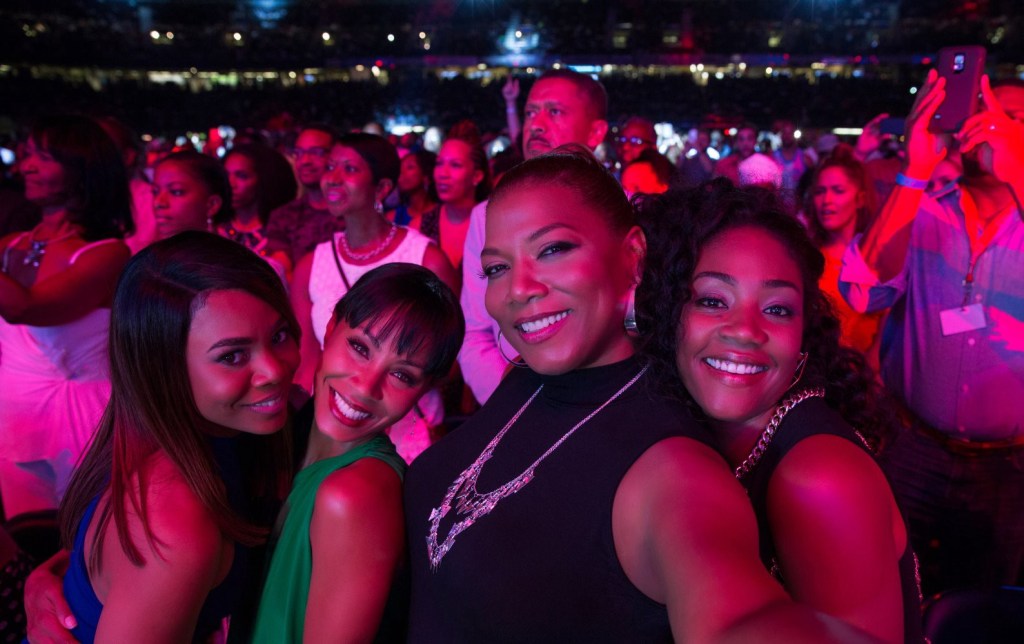
And America’s many sub-genres; from Spike Lee creating the Blaxploitation genre from the mid-80s to the world of Tyler Perry with Madea, and “Black” comedies like Girls’ Trip and Little, Black cinema is massive in the States. Whilst I don’t believe you can allot race to film and call it a genre, I do believe you can make films about Black lives and celebrate it. Whilst there is Black cinema in the UK, it’s a drop in the ocean and not mainstream.
My father named me for Tre from the classic 1991 film Boyz n the Hood, out of this film the world was shown a plethora of Black characters, including the mild-mannered Tre, but also his father played by an early career Laurence Fishburne. Black-led Rom-Coms like Girls’ Trip, most recently but even historically, such as Love and Basketball or even something more serious like Juice, or Poetic Justice, with musician-actor Janet Jackson.
If my brother at seventeen or eighteen years old decided to try his luck in Los Angeles or New York, I wouldn’t blame him. Black British actors are making waves in America. Black Britain has faced criticism from the likes of Samuel. L Jackson, where he suggested Jordan Peele’s Get Out would have been better with a Black American lead. Yet, what both countries share is Black actors fighting for roles whilst their White colleagues (i.e Cumberbatch, Streep, Blunt, Fassbender) don’t have to, nor are their White colleagues under the same criticism from their peers and the establishment.

In the essay collection, The Good Immigrant, in his essay ‘Airports and Auditions’, actor-poet Riz Ahmed states “the reality of Britain is vibrant multiculturalism, but the myth we export is an all-white world of lords and ladies.” The period drama genre for example has been under scrutiny for being too white. The Britain we sell overseas is Jane Austen novels, The Crown and Middlemarch. It’s the stuff in canon literature, not Hollyoaks or our close to two thousand-year history of Black people in the British Isles.
The Britain we sell overseas is not the Britain my brother is growing up in. My generation, the Harry Potter Generation; we grew up with Hogwarts Tamagochis and Beyblade. I grew up with Pokémon and Yu-Gi-Oh. And even in Harry Potter, in this diverse Britain we celebrate, the lack of Black characters or characters who weren’t White is blinding. And even the Dean Thomases and Cho Changs of that world have few lines between them.
And Ashton is growing up with more knowledge (and pride) around being a Black Briton, in the tint of great influences, incl. Stormzy, Afua Hirsch, Santan Dave, David Olusoga, and Reni Eddo-Lodge, all of whom speak truth to the power.
I don’t want him to feel low, but you must wonder if it was designed against people like him from the start? If #DecoloniseHE in the education sector is anything to go by, the answer is yes. Will he find roles for him, or will he be one of those Black British actors that effs off to America? Will he have to do what Noel Clarke (Kidulthood) did and write, direct and produce his own films because Britain’s film industry does not cater for its diverse talent?
And that is a sad state of affairs indeed. Tyler Perry being the first Black American to own a film production studio is a testament to what is possible in America. It’s not uncommon to see a Black professor in an American university. There are only 85 Black British professors in UK universities. It’s not rare to see Black lawyers or Black teachers in the US but there’s an over-representation of White British teachers in UK secondary schools and in HE.
As a writer in Northamptonshire, a county wrapped in classism, you also have to think about race’s impact on class. To enjoy theatre, but only on occasion seeing people and stories that reflect Britain’s diversity. Whilst my vocation is not reliant on looks, the struggle for Black actors is really a struggle. It was never meant to be easy. To live in a Britain that pushes images of us that can only succeed in entertainment and sports, but seem nonexistent when it comes to discussing Black intellect and political ideas.
And it’s really a solemn thought that this happy boy might one day be forced to go to America because in British style, like all our structures, it caters for the few, not the many.
Works of Note
Adegoke, Y and Uviebinené, E. (2019). Slay in Your Lane. London: 4th Estate
Advance HE (2018). ‘Equality in higher education: statistical report 2018,’ ecu.ac.uk, [online]. Available from: https://www.ecu.ac.uk/publications/equality-higher-education-statistical-report-2018/ [Last accessed 30 December 2019]
Ahmed, S. (2018). Rocking the Boat: Women of Colour as Diversity Workers. In: Arday, J., Mirza, S. (eds). Dismantling Race in Higher Education: Racism, Whiteness and Decolonising the Academy. London: Palgrave Macmillan, pp. 331 –348
Home Office. (1999). The Stephen Lawrence Inquiry. (Chairperson: William Macpherson). London: TSO
Ministry of Justice (2017). The Lammy Review. (Chairperson: David Lammy MP). London: TSO
Share this:


Hate crime in The Period Drama fanbase is endemic

After reading a blog by History’s Drew Grey on ‘Racism, Diversity and Contested Histories: Some Reflection on Christmas Just Past’, I began to think about my favourite television genre (by some distance), the Period Costume Drama. Reading his post took me back to when I saw David Olusoga presenting Black and British for the first time on the BBC, but more specifically his monologues about mixed-race families in Georgian Britain. Whilst Drew’s post boasts diversity in the latest adaptation of A Christmas Carol (based on the Charles Dickens story) by Peaky Blinders‘ Stephen Knight, diversity in the Period Drama fanbase is a contentious discussion.
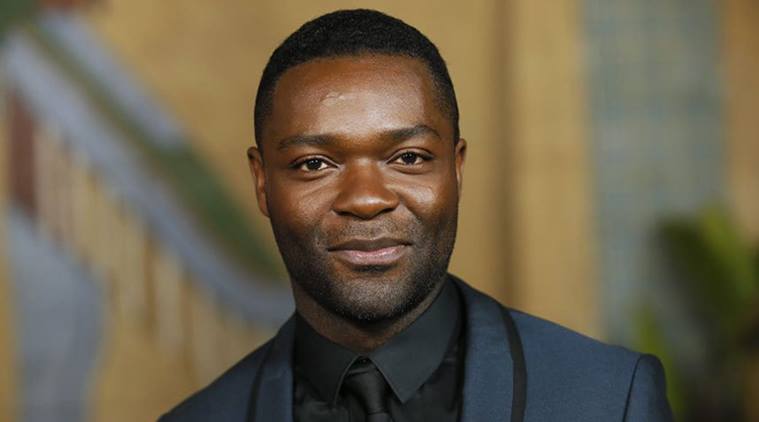
His post reminded me of my dissertation where I was looking at my roots. Finding myself. Lost in my race-identity politics, it feels like a decade ago reading Reni Eddo-Lodge’s Why I’m No Longer Talk to White People About Race for the first time. A text that colleague and blogger @paulaabowles calls “a machine gun,” (with a smirk). It’s simply relentless. However, it was David Oyelowo’s quote in the Radio Times that’s stayed with me ever since.
“We make period dramas [in Britain], but there are almost never any black people in them, even though we’ve been on these shores for hundreds of years. I remember taking a historical drama with a black figure at its centre to a British executive with greenlight power, and what they said was if it’s not Jane Austen or Dickens, the audience do not understand.” – David Oyelowo (in Eddo-Lodge, p55)
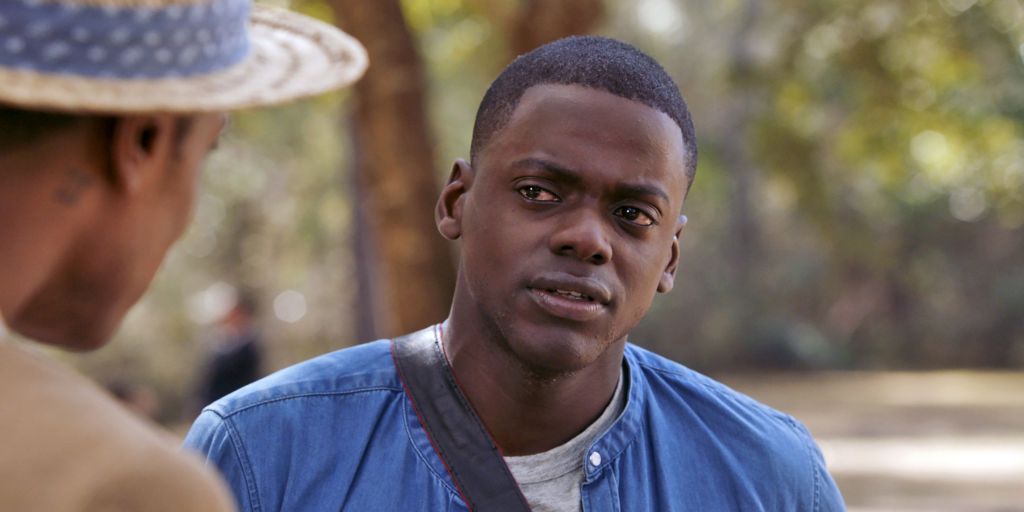
Oyelowo goes on to say “I thought – OK – you are stopping people having a context for the country they live in and you are marginalising me.” So, is it any wonder why so many of our Black actors have gone to Hollywood and made it big? Idris Elba made it as Stringer Bell in The Wire before we knew him as DCI John Luther. Oyelowo was Martin Luther King in Selma (as well as his British co-star Carmen Ejogo as Coretta Scott King), and has had roles in The Help, Queen of Katwe and Disney’s Star Wars Rebels. John Boyega was in Star Wars and Daniel Kaluuya slayed as Chris Washington in Get Out.
Whilst many of these works aren’t all costume pieces, the fact that Black actors have to go overseas bothers me. Yet, Black History to British audiences has always been African-American history. To find Black British history, you really have to look for it. So, when we see characters like Kitty Despard (Poldark) or Miss Lambe (Sanditon) or even Dev Patel as David in the upcoming The Personal History of David Copperfield, it’s in opposition to the histories we think we know, the histories we were taught at school.
So, why is there such a backlash to non-White people in this genre? Is it one more example of Black and brown people being where they shouldn’t? You know Black faces in White spaces? From the streets of Georgian London to Walter Tull mobbed by 20,000 Bristol fans in 1909. Or is it a consequence of a population bludgeoned by historical misinformation? After all, isn’t the best way to have complacent people, to cut them off from knowledge? And if you don’t know your own history, do you know who you really are?
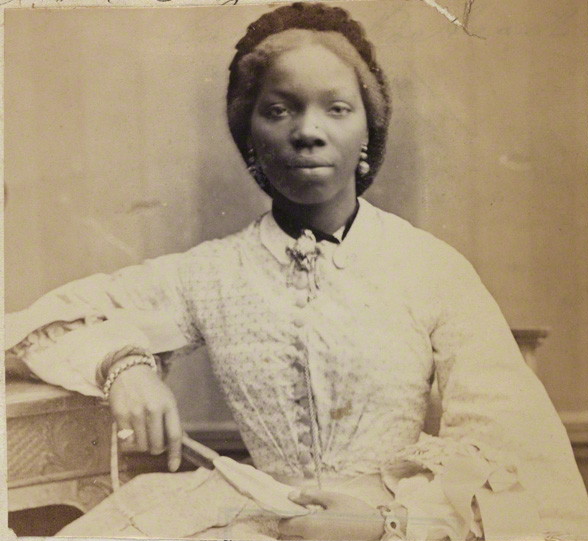
Photo Credit: Camille Silvy (September 1862)
In the same century Charles Dickens was writing about Jacob Marley, Scrooge and Tiny Tim, Queen Victoria’s African goddaughter Sarah Forbes Bonnetta was growing up in England wondering the streets of London, as “part of Britain’s imperial project.” It’s the story of Black Victorians, many of which could “only be told through the words of others” (Olusoga, p331).
Whilst these discussion forums, are majorly female, they are some of the most misogynistic places I’ve seen on the internet. There’s one Facebook group where I have been labelled a “troublemaker” for calling out racism and homophobia, as many members are also American, card-carrying Republicans who voted for Donald Trump. And feminism is only White. They see intersectionality as an inconvenient myth and the stories of non-White women in history an afterthought. That’s how White Privilege works.
This culture of hate against non-normative voices is dominant in the Fandom Menace, as I like to call it. The online forums are infested with racism, misogyny and homophobia: from Gentleman Jack to Beecham House, Drew’s descriptions of the backlash to the mixed-race Cratchit family act as a metaphor for a toxic fanbase, and contesting these histories can often be a homophobic act, a racist act, even if it’s born from ignorance.
There is an endemic problem within society, where we allow older generations, including “sweet old ladies” in The Period Drama fanbase to get away with hate speech because that’s “how they are” and they “don’t really know any different.”
What’s more, and what was great about A Christmas Carol was how unapologetic the makers were about their diversity. This family were Black and they were White. This was mixed-race Britain in the 19th century. Moreover, Mary Cratchit and how Black women take on everyone’s emotional labour. Be it modern times or Victorian times, Black women are in the business of saving grown-ass men from their own emotional work!
Mixed-race inclusion is a testament to our history and a thumb bite to Englishness as a synonym for whiteness, and the colonised imperatives that continue to dominant storytelling, as said (but not so bluntly) by Darren Chetty in ‘You Can’t Say That! Stories Have to be About White People‘. Due to the inherent whiteness of institutions, they recruit in their own image, and history is no different. What’s that saying about apples and trees?
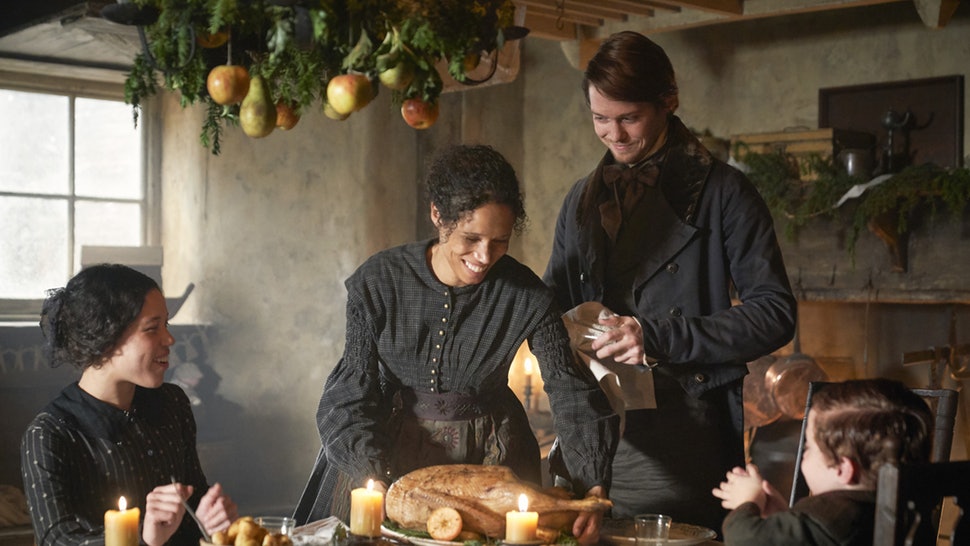
Certain members of the Period Drama community would like to believe Britain was only White before the 1950s. No, it’s simply the establishment has done a grand job of writing us out of British history books, but Black people have been part of every era of British history. I can tell you that.
BBC’s A Christmas Carol shows why representation matters and that history is not only the responsibility of historians. Artists also carry the load of telling these social histories (that’s what Dickens is) accurately and they can do better when it comes to the spectrum of diversity in the Period Drama.
And due to how History has been taught to every generation at all levels of education, is it surprising I encounter “sweet old ladies” using “historical (in)accuracy,” as a conduit to enable their racist, homophobic and misogynistic views?
Works Mentioned
Chetty, D. (2017). You Can’t Say That! Stories Have to Be About White People. In: Shukla, N (ed). The Good Immigrant. London: Unbound Publishing, pp. 96 – 107.
Kwakye, C and Ogunbiyi, O. (2019). Taking Up Space. London: Merky Books.
Lodge-Eddo, R. (2017). Why I’m No Longer Talking to White People About Race. London: Bloomsbury.
Olusoga, D. (2017). Black and British. London: Macmillan.
Share this:


The Unremembered: Churchill shrugs his shoulders at the 1m African war dead
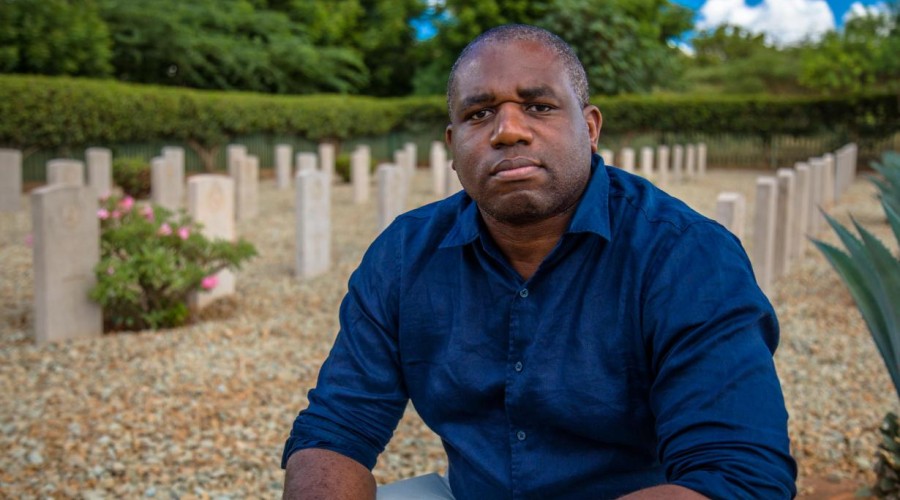
There’s something inspiring about seeing people that look like me speaking on something, in Britain, that’s been portrayed as a vocation for middle class White people (mainly men). Watching candidate for Tottenham David Lammy in the Commonwealth war graveyard in Voi (Kenya) talking about history took me back to when I first saw David Olusoga, a Black historian talking about history in a way that wasn’t detached in hope of being objective. Whilst Olusoga is a historian, Lammy is not. However, seeing Black people on British TV talking about history is not a narrative I’m familiar with.

In The Unremembered: Britain’s Forgotten War Heroes we are pushed to remember the two million Africans from British East Africa (now Kenya) dragged into the First World War, many of whom were press-ganged into service. One million joined the dead. In the Voi cemetery, we are witness to a site fitting for those who gave their lives for king, country and commonwealth. But they were White. Each decorated with a headstone, as written into the equalities policy by the Commonwealth War Grave Commission. However, if you were a Black African, then your service was not seen as equal to that of a White person. You were nothing. Forgotten.
“The erection of memorials to the memory of native troops, carriers etc, depends upon local conditions,” wrote the colonial secretary in 1919. “In ordinary circumstances, the Commission would not erect individual headstones but a central memorial in some suitable locality to be selected by the Government concerned.” That colonial secretary’s name was Winston Churchill, who’d go on to be knighted and elected as Britain’s prime minister. In his view, Black Africans (who were British subjects) did not fit into the Commission’s frame of reference for equality.
“I hate Indians, they are beastly people with a beastly religion.” – Winston Churchill
A century on, this year, is the centenary of the first remembrance service. Is it time we confront this legacy of discrimination and institutional racism? The bodies of Black Africans were not in the Voi cemetery, but beyond a fence under canopies of bushes. Here, we see how much the colonial office cared. David Olusoga wrote “Black soldiers were expendable – then forgettable.” Their corpses were in a wasteland under bushes and litter. Here’s the opening of the documentary, and so the investigation begins.
Whilst it can be interpreted as a harmless doc, it follows in the footsteps of The Unwanted: The Secret Windrush Files, as both show the institutional racism implemented by the British establishment against those of African heritage. Moreover, investigating how the imperial mindset and colonial-era racial thinking has been allowed to fester into modern Britain.
It’s no secret that British history is a study in erasure, and the stories of Black and brown people in our history books struggle to reach print. These stories really are scaling the walls to get noticed and the unmarked burial sites of hundreds of thousands of Black Africans, including women and children, is just one more example of structural racism. And that the only way to get these histories integrated, is to acknowledge that the establishment erased these stories because of its white supremacist thinking, evident in the heads of the gatekeepers, policy and colonial laws.
The Macpherson Report was in response to the police investigation into the murder of Stephen Lawrence. Its definition of institutional racism includes neglect and “failure to act.” His definition could as easily be applied to the plight of Black and brown colonial soldiers during the world wars, when they came home, and the Black war dead on the African continent.
“the collective failure of an organisation to provide an appropriate and professional service to people because of their colour, culture or ethnic origin” – Macpherson Report, 1999
Whilst MacPherson’s report is about the police, academic frameworks like Critical Race Theory argues that racism is ingrained in the fabrics of society, linking whiteness to power and blackness / brownness to social subordination, allowing White Privilege to thrive. CRT says it’s not about the individual racist, but the system as a collective. And is the system broken, if it was built “racistly” to benefit the White elite? Knowing this, in the mix of the colonial racial thinking in the system, is it really surprising that Black and brown soldiers were treated abominably, both in life and in death?
Channel 4’s documentary is riddled with devastating moments and really leaves no hope for the viewer. David Lammy meets Mwamkono Mwavaka, a man whose now dead grandfather was one of the Carrier Corps – men, women and children taken on to carry supplies on mules to the front lines. In Dar es Salaam sits a massive war cemetery, where British and Germans are buried side-by-side. Yet, no such love is given to the Native Africans who gave their lives. “Where do I go in my own country?” cries an interviewee.
The final act is a metaphor for talking about race in Britain – hostile and resistant to any critique. Lammy at the HQ of the Commonwealth War Graves Commission in conversation with its director general is uncomfortable viewing. “Do we have the names? I don’t believe we do,” says Victoria Wallace, hostilely. Refusing to talk about race, historically, and how institutions like the CWGC were complicit in systemic racial inequality.
The story ends with no apology, just a few words on some money for a plaque on African soldiers. And yet, no comments on how someone voted the Best Briton by the British public (Churchill) was a racist and complicit in some of the worst crimes in human history – from the Bengal Famine in what was then British India (in 1943) to the Boer War Concentration Camps.
Reparations is faceless: to some its money, but to me it’s historical awareness, which begs the question why there’s so much resistance to teaching colonial history, or is the establishment scared of what it potentially might find?

 Thoughts from the criminology team