
Home » Posts tagged 'Education'
Tag Archives: Education

Not reading criminology? That’s criminal!
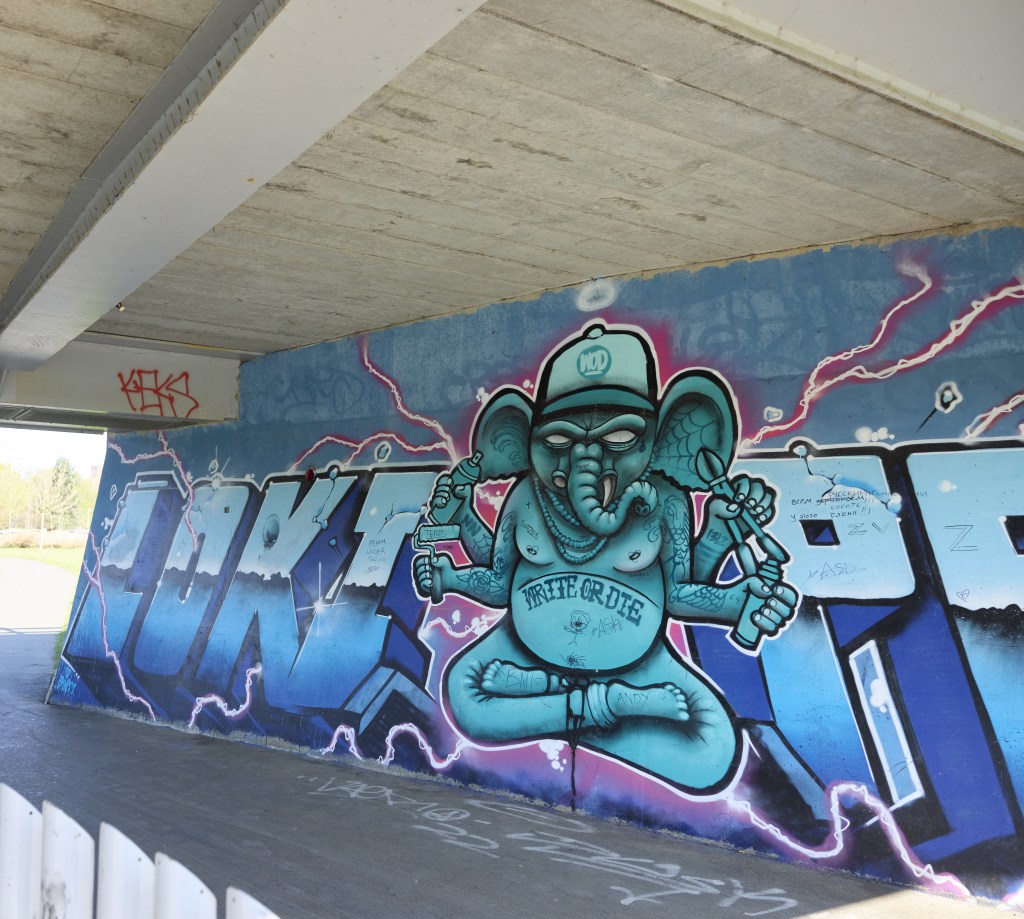
There are two kinds of criminology conversations I get embroiled in these days! Those with people who read criminology where we discuss many social/cultural phenomena under a specific lens or those with people who find criminology interesting, but consume popular crime instead. The first group with varying level of engagement is beginning to decode some tell-tell signs in current events, using their knowledge of the discipline, as a deciphering mechanism. The second group is quite different. Their understanding of crime is based on dramatisations and literary conventions around plots and characters. Even real crime is harbouring under the guise of some “exclusive” journalistic exposé…far from any basic criminological understanding.
Years ago, a colleague from Sociology told me a story regarding a family event. They were completing their PhD in the discipline, and they were questioned by an elderly person, as to what they would do when they finished their thesis. They responded in the usual way many graduate students tend to, about hoping to get into academia or get some funding for some further research. The elderly person didn’t seem satisfied…. they prompted further. What will be your specialism? What will you be able to tell people that you are proficient in? Society and people, the colleague replied! That’s hardly a skill, the old relative replied; we all live in society! The colleague was equally intrigued and offended. They thought that by offering a succinct response it would have helped their relative to understand without being confounded with notions on symbolic interactionism and ethnomethodology. This was a little anecdote that resonates with many social scientists, criminologists included, that whilst they try to explore people and culture around them, they are becoming distant to the actual people around them.
The degree of challenge in recent years seems to increase for disciplines where people in general have a vague idea of what it is. Many try to use psychological terms to explain other people’s behaviours, without realty appreciating, the clinical and scientific conditions of the term. That is relevant to criminology too. The representation of crime for public consumption has introduced some of the discipline’s terms into everyday parlance. From forensic terms on profiling, to the origins of criminality, expectations on crime are forged. A criminologist’s reaction to popular criminology pundits tends to be, well not quite, only to be met with disbelief of the criminology they know!
One of the ways to appeal to those interested in popular criminology and take them to the discipline will be to add some facts and figures that promote reality. Perhaps but that has been done before but only to give a gloss of “legitimacy” in fiction. It makes it more compelling, but it doesn’t really offer the depth of knowledge. To understand criminology, one must read criminology. The history is filled with colleagues who brought their imagination to the discipline. From Bonger’s Criminality and Economic Conditions to Jock Young and The Criminological Imagination there are books and papers that are waiting to be read by a new audience to try to figure out these ideas.
Maybe we all live in society and heard about crime and even experienced it, but to understand it we need some criminology. The discipline, as with all social sciences, is a dialogue between people ready to carry forward the next constructs that shall appear as crimes. If we read them and take part in these conversations maybe the area of harsh punishments, exclusion and persecution may not be as appealing. We are an academic discipline but at the same time we open the discussion to our community. So if you are neither a student, graduate, nor fellow academic and you are interested in criminology, why don’t you come to visit? https://www.northampton.ac.uk/about-us/contact-us/open-days/
Share this:


Is the UK a good place to live?: I

As part of preparing for University, new students were encouraged to engage in a number of different activities. For CRI1009 Imagining Crime, students were invited to contribute a blog on the above topic. These blog entries mark the first piece of degree level writing that students engaged with as they started reading for their BA (Hons) Criminology. With the students’ agreement these thought provoking blogs have been brought together in a series which we will release over the next few weeks.
The UK is widely favoured and known across the world due to its many attractions and key figures that reside in and outside of London, such as: the Harry potter franchise, the London eye, Buckingham palace, Shakespeare, Windsor castle, stone henge, big ben, and many more. But despite all of its magnificent attractions it raises the question “Is the UK actually a good place to live”?
What are the benefits of living in the UK?
- The NHS
- Education is free
- Diversity in culture
- Strong labour laws
In the UK we have something called the NHS (national health service), which allows UK residents to receive free healthcare when it’s needed due to it being primarily funded by general taxing and national insurance contributions. Although it’s important to note that the NHS isn’t subject to only the UK but also Scotland and Wales too.
Education is often looked at as one of the core necessities that a child must have, so it makes sense that it would be free right? Unfortunately, in many countries’ education is seen as a luxury (for certain demographics) rather than a need. Due to this, I would argue that it’s a benefit, no matter how obvious it may seem.
In the UK there are a variety of cultures and races which I personally believe is beautiful because not only are we able to enjoy the gift of multiple different cuisines, but we’re also able to grow up with the ideology that we’re not so different from one another even if we may appear that way (which is a valuable lesson for children to learn and cherish as they grow older).
The benefit of having strong labour laws also ties into my previous point about diversity since it protects citizens from discrimination (Equality act 2010) in the workplace. Not only that but it also ensures that workers are paid at least minimum wage, they don’t face unnecessary/unlawful wage deductions, they receive time off for holidays, workers will be protected if they report an incident at work, workers can’t be dismissed from work without good reason (Employments act 1966), and that they’re not overworked (48 hours a week max).
What are the disadvantages of living in the UK?
- Although most services are free, there are still charges that may apply to medications, prescriptions, dental treatment and eye care. However, it’s still important to note that if you’re in full education or you have other exemptions (such as universal credit or a disability) these may not apply; there are also other circumstances where they also may not apply.
- It’s true that the UK is incredibly diverse but that doesn’t mean there isn’t a constant problem of racism, it just means that there’s more people who can relate to the same issue. It goes without saying that even with labour laws in place, and the never ending resources that someone could use to educate themselves on a specific topic that is unique to a certain race, many people still experience discriminatory behaviours. While its understood that this is an issue everywhere in the world, I don’t think it should be normalised. Rather than dismissing it with a permissive attitude, I think everyone should work towards eradicating such ideologies and behaviours.
- The minimum wage isn’t enough to actually live on, which leaves multiple people homeless or struggling to stay afoot. Thus, leading to more unethical methods to gaining money or other necessities. It should go without saying that the minimum wage should be enough to be somewhat comfortable, or better yet survive on… which evidently isn’t the case for some.
What are the requirements for a good country? :
Those in power would have to love and care for their people. By that I mean- their own money shouldn’t be on the forefront of their mind when it comes to prioritising needs such as having a stable income to live on. Not only that but those in power shouldn’t have a secret racial or gender bias that peeks out whenever they’re trying to make a change. For obvious reason, this would be incredibly damaging to society on a whole, not just for those targeted. Last but not least, I believe that housing should be an option for everyone, even the less fortunate. It shouldn’t be a luxury to have a place to live, everyone deserves comfort, especially in their darkest moments; housing should be provided for those that need it, especially individuals with children.
Share this:

‘Do or do not, there is no try’

The Red Roses are playing in the rugby union world cup final on Saturday and I, amongst thousands, will be watching it on television with a heady mixture of anticipation, trepidation, excitement, fear and expectation. The England Women’s rugby union team is made up of some very talented individuals that come together as a team to produce some of the most electrifying displays of rugby, that is both mystical and awesome to watch. I won’t just be watching, I’ll be dodging every lunge, wincing at every tackle made, running like the wind, dotting down the ball and willing every kick over, I’ll be totally engrossed.
I will be watching elite athletes at the top of their game, and I know, not one of them got there by chance. To be an elite athlete requires hours of training, a strict dietary regime, and dedication. It requires mental agility, physical strength, sacrifice and focus. To get to the pinnacle of their chosen profession, requires total commitment, ‘Do or do not, there is no try’ (Yoda – The Empire Strikes Back).
We can’t all be elite athletes, for a variety for reasons, but what they demonstrate is that achievement is not chance. My life experience, like that of many others, has shown me that there is no such thing as a free lunch. Success, whatever that looks like, requires hard work, sacrifice and commitment. In any walk of life, people that are successful in what they do, have had to put in a lot of effort and make sacrifices. That effort and those sacrifices often started with study. Whether that’s study at school, further education or higher education, or study outside of the educational environment they have been committed to their learning and achieving the best they could. Some may have better opportunities than others but nonetheless, doing nothing, achieving nothing, rarely qualifies an individual to be a top executive in a company, a top lawyer, surgeon, politician, lecturer, sports person or anything else. Top footballers in both the men’s and women’s games don’t just turn up on a Saturday for a kick around. None of them allow themselves to be distracted from what they want to achieve. Some people may not be academically gifted but their success is predicated on hard work and dedication.
This week we welcome new students to the university and next week we will see familiar faces returning. To all our students I would urge you to remember why you are here, what it is you want to achieve? Education is a right but look around the world and you will see that not many can avail themselves of that right. You are privileged and whilst you may not be able to match the commitment shown by the Red Roses, few of us could, it is worth remembering that no one achieves anything without some commitment and sacrifice. Set your sights high and go for it, we are all willing you on. And like the Red Roses we want to rejoice in your success.
Share this:


Reflections and Perspectives from an Ex-masters Student and Current PhD Student

Back in September, I submitted my final dissertation for my Master of Science in International Social Policy and Welfare. The masters was not what I expected at all, but at the same time it was pretty much what I anticipated.
During my undergraduate degree, I never really felt that my socio-economic status effected my time at university that much. Of course, it did to a certain level, but it never felt overt. Perhaps the more diverse student population made me feel that way, as going to university and studying at undergraduate level is an opportunity that a range of people get, from a range of backgrounds. Since finishing my masters and beginning my PhD level study, I’m starting to appreciate how entering postgraduate study as a working class person can be particularly challenging. Applying for my masters, and my PhD, was extremely challenging as I didn’t know anyone else who had done it previously, being the first in my family and peers to continue so far with formal education.
In light of this, I really wanted to write this entry sharing some of the things I have learnt and realised during my postgraduate study. Hopefully this could maybe reach someone who is the first of their family or circle of friends, for whatever reason, to take the step into postgraduate education.
For context, my masters was a year at Anglia Ruskin University and entirely course work based with a fifteen thousand word dissertation carried out in the third semester. Here are some of my most prominent realisations and things to consider about postgraduate study in the social sciences.
1- A masters is not like a repeat of the third year of your undergraduate degree:
So perhaps I was slightly naïve when I started my masters thinking this would be the case. I thought I’d be writing 2,500- 3,000 word essays every so often then calling it a day, maybe 3,500 at a push. This wasn’t the case, some of my essays were 3,500 words, but the majority were 4,000 or 6,000 words typically. It felt daunting to start of with, but as you explore issues more critically, widely and with greater complexity, the word count really does get used up easily.
2- You might get to practise your presentation skills:
As someone who doesn’t typically enjoy presenting, this was difficult for me. But often your masters peer group is smaller, and your topic is really tailored to what you want to study, so its not as bad as doing it at undergraduate level, at my university, three out of the four modules I took involved some presenting.
3- The dissertation sounds scary to start off with:
I started my masters just under four months after finally finishing my undergraduate dissertation, so I had the stress and exertion still fresh in my mind. I was nervous thinking about how I was going to conduct research and write up a 15,000 word masters dissertation, especially as the dissertation module only formally started in the final semester (12 weeks before submission). But the whole point of education is learning how to do things you currently cannot do, if I attempted to do my research and masters dissertation in the first month of the course, I would have probably catastrophically failed, but that’s sort of the whole point. Writing lengthier essays, exploring ideas further and practising applying theoretical frameworks to other issues prepared me for the dissertation.
4- Make a Gantt chart:
Linked to number 3, my Gantt chart saved my life during my dissertation. You can easily make one on Excel, I also broke down my work into week chunks, and at the top I wrote any social commitments so I had a clear idea on how much work I could realistically aim to get done each week. You can see lots of examples of this time management strategy online by searching for google images of Gantt charts, below is an example of the one I’ve made for my PhD.

5- Read, read, read:
Demonstrate that you have wider understanding of a concept, that goes beyond the lectures and seminars. And read for pleasure too, reading long documents is a skill and skills need practise and rehearsal! But if there is a key document/ paper that you simply just can’t get into the groove of, copy and paste the text into a word document and use the text to speech function and listen to it like a podcast.
6- It’s really independent:
At my university, we had six hours of face to face contact per week. So this means a lot of independent study. I found trying to maintain self discipline and routine more helpful than maintaining motivation; motivation is something that can be really unstable depending on your mood, and you can’t necessarily gain motivation when you don’t have it. But sticking to routines and developing an environment of self discipline is something you have a bit more control over, but remember to carve rest periods into that routine.
7- A word on using AI:
Universities often have their own policy on using AI. Personally, I would avoid it and I haven’t used it for any of my university work across both degrees and I’m not planning on doing so for my PhD. However, that being said, if you do want to use it, check the university’s AI policy, clarify with your lecturers, double check information with additional sources and do not use it just to do your work. I know some students use it to gather preliminary sources or to time manage. For one of my Masters module, three people used AI to make their presentations, and it was painfully obvious, very embarrassing for them and it is academic misconduct.
8- Consider PhD options a few months into your masters:
Being extremely early on in my PhD journey (I started the programme in January) I can only give one piece of advice regarding it so far. Start considering things to do with your PhD a few months into your masters. I didn’t realise how extensive the application processes are, most universities will ask you to create a research proposal- universities I looked at ranged between a 1,000- 2,500 word count- and some ask for an academic and professional CV. Choosing a university isn’t as simple as undergrad or even masters study, you need to find a university that has supervisors that supervise the topic you want to research, then they sometimes like you to identify an appropriate supervisor and send the research proposal draft to them before submitting an application. Some supervisors may then want to talk to you about your research multiple times before recommending you to apply/ giving an offer to you. But don’t panic if you leave it later, or can’t cope with thinking about those things during your masters. I only started seriously applying a month after my Masters finished, and I still had just enough time to figure it all out and get it done in time.
Share this:


A Love Letter to Criminology at UON


In 2002, I realised I was bored, I was a full-time wife and parent with a long-standing part-time job in a supermarket. I first started the job at 15, left at 18 to take up a job at the Magistrates’ court and rejoined the supermarket shortly after my daughter was born. My world was comfortable, stable and dependable. I loved my family but it was definitely lacking challenge. My daughter was becoming increasingly more independent, I was increasing my hours and moving into retail management and I asked myself, is this it? Once my daughter had flown the nest, could I see myself working in a supermarket for the rest of my life? None of this is to knock those those that work in retail, it is probably the best training for criminology and indeed life, that anyone could ask for! I got to meet so many people, from all backgrounds, ethnicities, ages, religions and classes. It taught me that human beings are bloody awkward, including myself. But was it enough for me and if it wasn’t, what did I want?
At school, the careers adviser suggested I could work in Woolworths, or if I tried really hard at my studies and went to college, I might be able to work for the Midland Bank (neither organisation exists today, so probably good I didn’t take the advice!). In the 1980s, nobody was advocating the benefits of university education, at least not to working-class children like me. The Equal Pay Act might have been passed in 1970 but even today we’re a long way from equality in the workplace for women. In the 1980s there was still the unwritten expectation (particularly for working class children from low socio economic backgrounds) that women would get married, have children and perhaps have a part-time job but not really a career….I was a textbook example! I had no idea about universities, knew nobody that had been and assumed they were for other people, people very different from me.
That changed in 2002, I had read something in a newspaper about a Criminology course and I was fascinated. I did not know you could study something like that and I had so many questions that I wanted to answer. As regular readers of the blog will know I’m a long-standing fan of Agatha Christie whose fiction regularly touches upon criminological ideas. Having been born and raised in North London, I was very familiar with HMP Holloway’s buildings, both old and new, which raised lots of questions for a curious child, around who lived there, how did they get in and out and what did they do to the women held inside. Reading suffragette narratives had presented some very graphic images which further fed the imagination. Let’s just say I had been thinking about criminology, without even knowing such a discipline existed.
Once I was aware of the discipline, I needed to find a way to get over my prejudices around who university was for and find a way of getting in! To cut a long story short, I went to an Open Day and was told, go and get yourself an access course. At the time, it felt very blunt and reinforced my view that universities weren’t for the likes of me! Looking back it was excellent advice, without the access course, I would never have coped, let alone thrived, after years out of education.
In 2004 I started reading BA Criminology, with reading being the operant word. I had been an avid reader since early childhood (the subject of an earlier blog) and suddenly I was presented with a license to read whatever and whenever I wanted and as much as I could devour! For the first time in my life, people could no longer insist that I was wasting time with my head always in a book, I had “official” permission to read and read, I did! I got the chance to read, discuss, write and present throughout the degree. I wrote essays and reports, presented posters and talked about my criminological passions. I got the chance to undertake research, both empirical and theoretical, and lawks did I revel in all this opportunity. Of course, by looking back and reflecting, I forget all the stresses and strains, the anxieties around meeting so many new people, the terror of standing up in front of people, of submitting my first assessment, of waiting for grades….but these all pale into insignificance at the end and three years goes so very quickly….
In the summer of 2007, I had a lovely shiny degree in Criminology from the University of Northampton, but what next? By this point, I had the studying bug, and despite my anticipation that university would provide all the answers, I had a whole new set of questions! These were perhaps more nuanced and sophisticated than before but still driving me to seek answers. As I said earlier, human beings are awkward and at this point I decided, despite my earlier passion, I didn’t want to be put in a box labelled “Criminology“. I felt that I had finally cracked my fear of universities and decided to embark on a MA History of Medicine at Oxford Brookes. I wanted to know why Criminology textbooks and courses still included the racist, sexist, disablist (and plenty more) “theories” of Cesare Lombroso, a man whose ideas of the “born criminal” had been discredited soon after they were published.
But again the old fears returned….what did I know about history or medicine? What if the Criminology degree at Northampton hadn’t been very good, what if they just passed everyone, what if I was kidding myself? Everything at Brookes felt very different to Northampton, everyone on the course had studied BA History there. Their research interests were firmly centred on the past and on medicine, nursing, doctoring, hospitals and clinics and there was me, with my ideas around 20th century eugenics, a quasi-scientific attempt to rationalise prejudice and injustice. Along with studying the discipline, I learnt a lot about how different institutions work, I compared both universities on a regular basis. What did I like about each, what did I dislike. i thought about how academics operate and started to think about how I would be in that profession.
I successfully completed the MA and began to think maybe Northampton hadn’t given me good grades out of our pity or some other misplaced emotion, but that I had actually earnt them. I was very fortunate, I had maintained connection with Criminology at UON, and had the opportunity to tip my toe in the water of academia. I was appointed as an Associate Lecturer (for those not familiar with the title, it is somebody who is hourly paid and contribute as little or as much as the department requires) and had my first foray into university teaching. To put it bluntly, I was scared shitless! But, I loved every second in the classroom, I began to find my feet, slowly but surely, and university which had been so daunting began to seep into my very being.
Fast forward to 2025, I have been involved with UON for almost 22 years, first as a student, then as an academic, achieving my PhD in the process It is worth saying that the transition is not easy, but then nothing worth having ever is. I have gained so much from my studies, my relationship with two universities and the experiences I have had along the way. It is fair to say that I have shed many tears when studying, but also had some of my very highest highs, learning is painful, just watch a small child learning to read or write.
Hopefully, over the past decades I have repaid some of the debt I owe to the academics that have taught me, coached me, mentored me and supported me (special mention must go to @manosdaskalou who has been part of my journey since day 1). My life looks very different to 2002 and it is thanks to so many people, so many opportunities, the two universities that have provided me with a home from home and all of the students I have had the privilege to engage with.
I am so delighted to have been part of Criminology at UON’s 25 years of learning and teaching. To my colleagues, old and new, students, graduates and everyone I have met along the way, I raise my glass. Together we have built something very special, a community of people committed to exploring criminological ideas and making the world an equitable place.
Share this:


An annual reflection and a glance to the year ahead!

As we complete the last day before the Christmas break, I encourage you to sit back and reflect on what you have achieved this academic term. Some of you will have started university for the first time and will be getting to grips with the processes, the assessments, the staff and the learning styles of the university. Some of you will be navigating second year and the new expectations of you at this level, learning to move beyond discussion to instead evaluation and being critical, honing your research skills in preparation for your dissertations in the next academic year. For some of you this may have been a hard journey and one that will progress into the second semester, but please know that this will build up your skills and your confidence, turning you into the academic you need to be in order to succeed.
For some of you, you will have moved into your third and final year. With this comes more independence, and some of this may feel uncertain, confusing, and a bit unknown. Please know that again this does not last and you will find your feet. Whether that is a lightbulb moment with your dissertation, or finally finding the right article that helps you to write your essay. For those of you that have exams coming up in January, make sure you can enjoy the festivities and take a well earned break. But when you find those moments where you’re bored and have nothing to do, and you start to think about your criminology course, I think that will be a good indication to pick up a book, to read through your notes, or to practice some exam questions.
On a personal note as I reflect on this year there are things I am definitely proud to have achieved, and things I would like to work on in the future. One of my biggest achievements this year was completing my PhD. It has been a long, difficult journey, spanning over eight years, but the feeling of successfully completing my viva, making those final changes, and the recognition I feel when discussing my research to various people reminds me of its importance. The special moment of my graduation. At my graduation my research title was read aloud, I was applauded, and then welcomed into the academic community onstage to be seated with fellow academics such as my supervisors. This was a special moment I will cherish and having family there was all the more memorable and precious. Whilst the PhD journey has come to an end, new opportunities arise, so keep an eye out in 2025 for further publications!
In addition, this year, I navigated my new job at the University of Northampton. In the 12 months I’ve been here I have learnt a lot from colleagues, from the faculty, and from other departments. Looking ahead, the road is one of change and adjustment, but I am optimistic and ready for whatever changes may come.
I wish everyone a wonderful and restful Christmas. Like myself, I hope you return in the New Year with renewed energy ready to tackle any new adventures with poise and determination. Remember to push yourselves to get to the best version of you!
Share this:


Teaching, Learning, and Some Grey Areas: A Personal Reflection
Sallek Yaks Musa
Trigger warning: sections of this blog may contain text edited/generated by machine learning AI.

Growing up in a farming community, I gained extensive knowledge of agricultural practices and actively participated in farming processes. However, this expertise did not translate into my performance in Agricultural Science during senior high school. Despite excelling in other subjects and consistently ranking among the top 3 students in my class, I struggled with Agricultural Science exams, much to the surprise of my parents.
I remembered my difficulties with Agricultural Science while reflecting on the UK Professional Standards Framework (UKPSF) for teaching and supporting learning in higher education. This reflection occurred shortly after a student asked me about the minimum qualifications needed to become a lecturer in higher education (HE). Unlike in lower educational levels, a specific teaching certification is not typically required in HE. However, most lecturing positions require a postgraduate certification or higher as a standard. Additionally, professional memberships are crucial and widely recognized as necessary to ensure lecturers are endorsed, guided, and certified by reputable professional bodies.
Reputable professional organizations typically establish entry criteria, often through summative tests or exams, to assess the suitability and competency of potential members. In the UK, Advanced HE stands as one of the widely acknowledged professional bodies.
Advanced HE offers four levels of professional recognition: associate, fellow, senior, and principal fellows. Applicants must evidence proficiency and comprehension across three pivotal competency areas: areas of activity, core knowledge, and professional values, as outlined in the UKPSF Dimensions of the Framework. Among others, these competency areas emphasize the importance of prioritising the enhancement of the quality of education, evaluating assessment strategies, and recognizing and supporting diverse learners throughout their educational journey.
It was not until the third term of my first year in senior high school that I began to understand why I struggled with Agricultural Science. Conversations with classmates who consistently excelled in the subject shed light on our collective challenge, which I realized extended beyond just myself to include our teacher. With this teacher, there was little room for innovation, self-expression, or independent thinking. Instead, success seemed contingent upon memorization of the teacher’s exact notes/words and regurgitating them verbatim. Unfortunately, cramming and memorization were skills I lacked, no matter how hard I tried. Hence, I could not meet the teachers’ marking standard.
The truth of this became glaringly apparent when our teacher went on honeymoon leave after marrying the love of his life just weeks before our exams. The junior class Agricultural Science teacher took over, and for the first time, I found success in the subject, achieving a strong merit. Unsurprising, even the school principal acknowledged this achievement this time around when I was called for my handshake in recognition of my top 3 performance.
In our school, the last day of each term was always eventful. An assembly brought together students and teachers to bid farewell to the term, recognize the top performers in each class with a handshake with the principal, and perhaps offer encouragement to those who struggled academically. This tradition took on a more solemn tone on the final day of the school year when the names of students unable to progress to the next class were announced to the entire assembly. This is a memory I hope I can revisit another day, with deeper reflection.
My pursuit of Advanced HE professional membership stirred memories of my struggles with Agricultural Science as a student, highlighting how our approach to teaching and assessment can profoundly impact learners. In my own experience, failure in Agricultural Science was not due to a lack of understanding but rather an inability to reproduce the teacher’s preferred wording, which was considered the sole measure of knowledge. Since then, I have been committed to self-evaluating my teaching and assessment practices, a journey that began when I started teaching in primary and secondary levels back in September 2005, and eventually progressed to HE.
A recent blog by Dr. Paul Famosaya, questioning whose standards we adhere to, served as a timely reminder of the importance of continuous reflection beyond just teaching and assessment. It further reinforced my commitment to adopting evidence-based standards, constantly refining them to be more inclusive, and customizing them to cater to the unique needs of my learners and their learning conditions.
The Advanced HE UKPSF offers educators a valuable resource for self-assessing their own teaching and assessment methods. Personally, I have found the fellowship assessment tasks at the University of Northampton particularly beneficial, as they provide a structured framework for reflection and self-assessment. I appreciate how they spur us as educators to acknowledge the impact of our actions on others when evaluating our teaching and assessment practices. Certainly, identifying areas for improvement while considering the diverse needs of learners is crucial. In my own self-evaluation process, I often find the following strategies helpful:
- Aligning teaching and assessment with learning objectives: Here, I evaluate whether my teaching methods and assessment tasks align with the module’s intended learning outcomes. For example, when teaching Accounting in senior secondary school, I assess if the difficulty level of the assessment tasks matches or exceeds the examples I have covered in class. This approach has informed my teaching and assessment strategies across various modules, including research, statistics, data analysis, and currently research at my primary institution, as well as during my tenure as a visiting lecturer at another institution.
- Relatability and approachability: An educator’s approachability and relatability play a significant role in students’ willingness to seek clarification on assessment tasks, request feedback on their work, and discuss their performance. This also extends to their engagement in class. When students feel comfortable approaching their educator with questions or concerns, they are more likely to perceive assessments as fair and supportive. Reflecting on how well you connect with students is essential, as it can enhance learning experiences, making them more engaging and meaningful. Students are more inclined to actively participate in class discussions, seek feedback, and engage with course materials when they view the educator as accessible and empathetic. If students leave a class, a one-on-one meeting, or a feedback session feeling worse off due to inappropriate word choices or communication style, word may spread, leading to fewer attendees in future sessions. Therefore, fostering an environment of approachability and understanding is crucial for promoting a positive and supportive learning atmosphere.
- Enhancing student engagement: Prior to joining the UK HE system, I had not focused much on student engagement. In my previous teaching experiences elsewhere, learners were consistently active, and sessions were lively. However, upon encountering a different reality in the UK HE environment, I have become proactive in seeking out strategies, platforms, and illustrations that resonate with students. This proactive approach aims to enhance engagement and facilitate the learning process.
- Technological integration: Incorporating technology into teaching and assessment greatly enhances the learning process. While various technologies present their unique challenges, the potential benefits and skills acquired from utilizing these tools are invaluable for employability. However, there is a concern regarding learners’ overreliance on technological aids such as AI, referencing managers, discussion boards, and other online tools, which may lead to the erosion of certain cognitive skills. It is essential to question whether technological skills are imperative for the modern workplace. Therefore, one must evaluate whether technology improves the learning experience, streamlines assessment processes, and fosters opportunities for innovation. If it does in the same way that the changing nature of work favours these new skills, then educators and universities must not shy away from preparing and equipping learners with this new reality lest learners are graduated unprepared due to an attempt to be the vanguard of the past.
- Clarity of instruction and organisation: Evaluate whether students comprehend expectations and the clarity of instructions. Drawing from my experience in the not-for-profit sector, I have learned the effectiveness of setting objectives that are SMART (specific, measurable, achievable, relevant, and time-bound). Emphasizing SMART learning outcomes is crucial in teaching and learning. However, where learning outcomes are broad, ambiguous, or subject to individual interpretation, educators must ensure that assessment marking criteria are clearly articulated and made clear to learners. This clarification should be provided in assessment briefs, support sessions, and during class contacts. Reflecting on this ensures that students understand what is expected of them and prevents educators from inadvertently setting them up for failure. It becomes apparent that assessment criteria lacking validity and reliability hinder the accurate measurement of student understanding and skills, even if same has been consistently used over time. Therefore, continuous reflection and refinement are essential to improve the effectiveness of assessment practices. Afterall, reflection should be a mindset, and not just a technique, or curriculum element.
- Feedback mechanisms: The effectiveness of feedback provided to students is always important. Reflecting on whether feedback is constructive and actionable could help to foster learning and improvement, irrespective of how short or lengthy the feedback comments are. Anyone who has passed through the rigour of research doctoral supervision would appreciate the role of feedback in all forms on learner progression or decision to drop out.
- Inclusivity and diversity: In a diverse educational setting, it is imperative to engage in continuous reflection to ensure that teaching and assessment practices are inclusive and responsive to the varied backgrounds, learning peculiarities, and abilities of learners. Educators hold a significant position that can either facilitate or hinder the progress of certain learners. In cases where barriers are inadvertently created, unconscious bias and discrimination may arise. Therefore, ongoing reflection and proactive measures are essential to mitigate these risks and create an environment where all students can thrive.
- Ethical considerations: Teaching and assessment practices carry ethical responsibilities. Fundamentally, educators must prioritize fairness, transparency, and integrity in all assessment procedures, setting aside personal biases and sentiments towards any individual, cohort, or group of students. It is equally important to consider how one’s position and instructional choices influence students’ well-being and academic growth. Striving for ethical conduct in teaching and assessment ensures a supportive and equitable learning environment for all students.
End.
Share this:


Ain’t Nobody Never Muted No Gadget BEFORE No Class!
The cyber-lure and lull in class.
The solutions are simple, though the problem is grand and manifests in many micro ways; it’s so common that it’s difficult to see. Digital distraction looms over classrooms like a heavy fog.
You see them ensnared by invisible threads, blocking hallways and doorways, halted as they stand, transfixed and feverishly glued to their phones. Many arrive with restless fingers tapping away on these small screens. Others make a beeline for the nearest socket upon entering the classroom, clutching chargers and cables like lifelines. Some arrive engrossed in video calls – often on speakers – their faces illuminated by the glow of their screens. Still, others refuse to dislodge and stash their earbuds; perhaps they are simply unaware or incapable? Few arrive untethered from the grasp of cyberspace, their connection to reality tenuous at best. Throughout the session, the anxious behaviours rarely subside, as I witness them struggling to break free from the digital embrace clearly holding them captive.
Upon arrival, most students sit and place their phone right on the desk in front of them, ready to escape into cyberspace at a moment’s notice. Then, come the laptops and tablets. Most have two gadgets or more – including smartwatches – anything to shield them from being here, and anchor them there in cyberspace. A larger part of the educator’s role now is to reach: S T R E T C H into cyberspace and teach students how to anchor themselves here IRL.
Ain’t nobody never muted no gadget BEFORE no class!
Arriving in class, they are poised and prepped by social media for distraction, and entertainingly so. Through hours of rehearsal, they get to pay attention to whatever they want with a mere swipe. This applies to messaging, social media and news, dating family and group chats, spam emails and university announcements. The F2F classroom environment is competing with all this lure of the cyberworld. In spite of this daily evidence, folks still feel we’re in charge of the focus of our own attention, according to psychologist Prof Sherry Turkle. Worse, all this constant craving and distraction is diminishing our capacity for empathy.
Once distracted, UNESCO reports that “it can take students up to 20 minutes to refocus on what they were learning” according to one study. Subsequent studies have confirmed the attention lull, as have bans on phones in schools. A 2018 study found “More frequent use of digital media may be associated with development of ADHD symptoms.” When students arrive at university classrooms, it’s a blur.
Despite our initial hopes, the pull of the wholistic virtual environment has ultimately pushed away F2F dialogue. What’s more, the passive attention paid to social media creates a deficit in our conversation skills. We easily get caught up in the loop of reporting and responding to ‘what google said.’ In Teaching Critical Thinking, bell hooks says smashingly: “we are living in a culture in which many people lack the basic skills of communication because they spend most of their time being passive consumers of information” (44). Like a group of friends out for a night using google reviews to dictate every step, too often conversation in the classroom is reduced to trading ‘what google said’. Little attention is given to who said what and, why. Or, less so, what one thinks.
A low tech class.
While there are endless Apps, and gadgets to get students involved in learning, the few hours spent in any face-to-face session can be a respite from such hyper-cyber-immersion.
Share this:


Killed with kindness #RaceEd

What does it say about the education sector that we don’t say what we mean? What does it say that I attended a conference on racism at universities that didn’t have racism in the title? “Racial harassment” is what they called it, as in Westminster Higher Education Forum Keynote Seminar: Priorities for Tackling Racial Harassment & Improving the BAME Experience in HE. Racial harassment? Racism. Name it. Own it. We’re nearly in 2020 and we’re still wrapping these issues in bubblewrap to make it more palatable for, dare I say, senior management at UK universities (overwhelmingly White). Should we draw a nail? Pop. Pop. Pop.
Arising from my bed at 5:45am to make a 7:30am(ish) train, only to arrive at this conference feeling a bit awkward. The whole delivery felt “preachy” from the get-go. Being lectured on race by mainly White middle class people brought me back to first year on my Creative Writing degree where I did a number of literature modules, delivered by a lecturer who talked about slavery like a trivial matter. That’s my family history you’re talking there!
As Vice President BME at Northampton, I’m facing more and more problems with the language and rhetoric we use around race. The sector lumps all Black and brown students together and calls them BME / BAME. What about the term people of colour? I, too, am guilty of using “people of colour” and do myself have issues with it. It’s probably the best of the worst.
The term B(A)ME is not homogeneous. Even among Black people, there is differences. i.e between African and Caribbean, as well as Black British people whose families come from those places. Even to call someone African; there are fifty-four different nations in Africa, each with their own languages, culture, traditions and so on. Nigeria alone has over 250 different languages. But we continue with BME and BAME. Racial / cultural identity matters. Do we lump all White people together? No. And I bet if you called someone from Belfast, English, they’d have something to say!
Watching Dr. Zainab Khan (Assoc. Pro-Vice Chancellor at London Met) speak was a breath of fresh air, telling it like it is. And having been to a few conferences like this, it seems to me that the sector is more set on managing racism than taking to steps to eradicate it. Both Dr. Khan, and Fope Olaleye (Black Students’ Officer at NUS) brought a much needed clarity to racism (not racial harassment) at our universities, as well as institutional racism. It was great to hear comments on Macpherson and Critical Race Theory too.
And in my opinion, best practice is the brutal, honest truth. Not statistics, but qualitative data. Real life experiences and true stories by people on the ground experiencing this on a day-to-day.
The Royal Over-Seas League private members club was our host. Plaques to Britain’s colonial past in what was then British India hung on the wall. Staff meandered in capes and gowns, and plums in their mouths. What’s more, it was six speakers before a Black or brown person came to the floor. As a Students’ Union, we did not have to pay to attend. But others did pay the three-figure entrance fee. And there sat problem number one, why do these conferences seek money for attendance? Are they cashing in on Black and brown trauma? Is there an argument of ethics to be had here?
During the half-day conference there were four non-White speakers. This did not occur until towards the end of proceedings, in what felt like a very shoehorned state of affairs. Again, I felt that I was being preached at on my own narrative of racism in higher education. Whitesplaining is very real, when White British people talk about racism like its their lived experience.
At an event, wherein, we discussed things like the ethnicity award gap, decolonising the curriculum and anti-racist learning, to have a conference of this matter in a place that was overtly classist and elitist with nods to a system which in itself was built of white supremacy, it’s quite difficult to not see the irony in it all. We also discussed institutional racism in the same breath as decolonial thinking. Ha! And really, all you can do is laugh.

White British people organising events on behalf of Black / brown people on themes that impact us more than them, on symptoms that were originally created by the White elite – in the jaws of colonisation and the whims of European empires. The times that made Britain “great” – imperialism in the tint of gold, glory and god, eclipsed by the Ritz in London’s southwest as I bump into austerity and homelessness, like cold corpses by Green Park.
In the making of Westminster Higher Education Forum Keynote Seminar: Priorities for Tackling Racial Harassment, the White middle class stands tall as colonialism walks with us in the present. The bellowing voice of White privilege. I know plenty of students that would have come to this. Alas, this forum fell into the trap that many discussions have fallen into. Well-meaning White people telling us what we ought to do about racism.

Whilst I made some valuable connections, the wider narrative of whitesplaining ran riot, like Robert Redford and Meryl Streep spread-eagled across the plains in Out of Africa. Diversity in panel discussions is a must. It was functional in concept, but the swaggering thoughtlessness in venue, entry fee and panellists left for a very awkward-feeling in the audience.
If these types of conferences aren’t done properly (from diverse panels to organisational competence), are we not just feeding the racist systems we want to deconstruct?

 Thoughts from the criminology team