
Home » Posts tagged 'Diversity'
Tag Archives: Diversity

Teaching, Learning, and Some Grey Areas: A Personal Reflection
Sallek Yaks Musa
Trigger warning: sections of this blog may contain text edited/generated by machine learning AI.

Growing up in a farming community, I gained extensive knowledge of agricultural practices and actively participated in farming processes. However, this expertise did not translate into my performance in Agricultural Science during senior high school. Despite excelling in other subjects and consistently ranking among the top 3 students in my class, I struggled with Agricultural Science exams, much to the surprise of my parents.
I remembered my difficulties with Agricultural Science while reflecting on the UK Professional Standards Framework (UKPSF) for teaching and supporting learning in higher education. This reflection occurred shortly after a student asked me about the minimum qualifications needed to become a lecturer in higher education (HE). Unlike in lower educational levels, a specific teaching certification is not typically required in HE. However, most lecturing positions require a postgraduate certification or higher as a standard. Additionally, professional memberships are crucial and widely recognized as necessary to ensure lecturers are endorsed, guided, and certified by reputable professional bodies.
Reputable professional organizations typically establish entry criteria, often through summative tests or exams, to assess the suitability and competency of potential members. In the UK, Advanced HE stands as one of the widely acknowledged professional bodies.
Advanced HE offers four levels of professional recognition: associate, fellow, senior, and principal fellows. Applicants must evidence proficiency and comprehension across three pivotal competency areas: areas of activity, core knowledge, and professional values, as outlined in the UKPSF Dimensions of the Framework. Among others, these competency areas emphasize the importance of prioritising the enhancement of the quality of education, evaluating assessment strategies, and recognizing and supporting diverse learners throughout their educational journey.
It was not until the third term of my first year in senior high school that I began to understand why I struggled with Agricultural Science. Conversations with classmates who consistently excelled in the subject shed light on our collective challenge, which I realized extended beyond just myself to include our teacher. With this teacher, there was little room for innovation, self-expression, or independent thinking. Instead, success seemed contingent upon memorization of the teacher’s exact notes/words and regurgitating them verbatim. Unfortunately, cramming and memorization were skills I lacked, no matter how hard I tried. Hence, I could not meet the teachers’ marking standard.
The truth of this became glaringly apparent when our teacher went on honeymoon leave after marrying the love of his life just weeks before our exams. The junior class Agricultural Science teacher took over, and for the first time, I found success in the subject, achieving a strong merit. Unsurprising, even the school principal acknowledged this achievement this time around when I was called for my handshake in recognition of my top 3 performance.
In our school, the last day of each term was always eventful. An assembly brought together students and teachers to bid farewell to the term, recognize the top performers in each class with a handshake with the principal, and perhaps offer encouragement to those who struggled academically. This tradition took on a more solemn tone on the final day of the school year when the names of students unable to progress to the next class were announced to the entire assembly. This is a memory I hope I can revisit another day, with deeper reflection.
My pursuit of Advanced HE professional membership stirred memories of my struggles with Agricultural Science as a student, highlighting how our approach to teaching and assessment can profoundly impact learners. In my own experience, failure in Agricultural Science was not due to a lack of understanding but rather an inability to reproduce the teacher’s preferred wording, which was considered the sole measure of knowledge. Since then, I have been committed to self-evaluating my teaching and assessment practices, a journey that began when I started teaching in primary and secondary levels back in September 2005, and eventually progressed to HE.
A recent blog by Dr. Paul Famosaya, questioning whose standards we adhere to, served as a timely reminder of the importance of continuous reflection beyond just teaching and assessment. It further reinforced my commitment to adopting evidence-based standards, constantly refining them to be more inclusive, and customizing them to cater to the unique needs of my learners and their learning conditions.
The Advanced HE UKPSF offers educators a valuable resource for self-assessing their own teaching and assessment methods. Personally, I have found the fellowship assessment tasks at the University of Northampton particularly beneficial, as they provide a structured framework for reflection and self-assessment. I appreciate how they spur us as educators to acknowledge the impact of our actions on others when evaluating our teaching and assessment practices. Certainly, identifying areas for improvement while considering the diverse needs of learners is crucial. In my own self-evaluation process, I often find the following strategies helpful:
- Aligning teaching and assessment with learning objectives: Here, I evaluate whether my teaching methods and assessment tasks align with the module’s intended learning outcomes. For example, when teaching Accounting in senior secondary school, I assess if the difficulty level of the assessment tasks matches or exceeds the examples I have covered in class. This approach has informed my teaching and assessment strategies across various modules, including research, statistics, data analysis, and currently research at my primary institution, as well as during my tenure as a visiting lecturer at another institution.
- Relatability and approachability: An educator’s approachability and relatability play a significant role in students’ willingness to seek clarification on assessment tasks, request feedback on their work, and discuss their performance. This also extends to their engagement in class. When students feel comfortable approaching their educator with questions or concerns, they are more likely to perceive assessments as fair and supportive. Reflecting on how well you connect with students is essential, as it can enhance learning experiences, making them more engaging and meaningful. Students are more inclined to actively participate in class discussions, seek feedback, and engage with course materials when they view the educator as accessible and empathetic. If students leave a class, a one-on-one meeting, or a feedback session feeling worse off due to inappropriate word choices or communication style, word may spread, leading to fewer attendees in future sessions. Therefore, fostering an environment of approachability and understanding is crucial for promoting a positive and supportive learning atmosphere.
- Enhancing student engagement: Prior to joining the UK HE system, I had not focused much on student engagement. In my previous teaching experiences elsewhere, learners were consistently active, and sessions were lively. However, upon encountering a different reality in the UK HE environment, I have become proactive in seeking out strategies, platforms, and illustrations that resonate with students. This proactive approach aims to enhance engagement and facilitate the learning process.
- Technological integration: Incorporating technology into teaching and assessment greatly enhances the learning process. While various technologies present their unique challenges, the potential benefits and skills acquired from utilizing these tools are invaluable for employability. However, there is a concern regarding learners’ overreliance on technological aids such as AI, referencing managers, discussion boards, and other online tools, which may lead to the erosion of certain cognitive skills. It is essential to question whether technological skills are imperative for the modern workplace. Therefore, one must evaluate whether technology improves the learning experience, streamlines assessment processes, and fosters opportunities for innovation. If it does in the same way that the changing nature of work favours these new skills, then educators and universities must not shy away from preparing and equipping learners with this new reality lest learners are graduated unprepared due to an attempt to be the vanguard of the past.
- Clarity of instruction and organisation: Evaluate whether students comprehend expectations and the clarity of instructions. Drawing from my experience in the not-for-profit sector, I have learned the effectiveness of setting objectives that are SMART (specific, measurable, achievable, relevant, and time-bound). Emphasizing SMART learning outcomes is crucial in teaching and learning. However, where learning outcomes are broad, ambiguous, or subject to individual interpretation, educators must ensure that assessment marking criteria are clearly articulated and made clear to learners. This clarification should be provided in assessment briefs, support sessions, and during class contacts. Reflecting on this ensures that students understand what is expected of them and prevents educators from inadvertently setting them up for failure. It becomes apparent that assessment criteria lacking validity and reliability hinder the accurate measurement of student understanding and skills, even if same has been consistently used over time. Therefore, continuous reflection and refinement are essential to improve the effectiveness of assessment practices. Afterall, reflection should be a mindset, and not just a technique, or curriculum element.
- Feedback mechanisms: The effectiveness of feedback provided to students is always important. Reflecting on whether feedback is constructive and actionable could help to foster learning and improvement, irrespective of how short or lengthy the feedback comments are. Anyone who has passed through the rigour of research doctoral supervision would appreciate the role of feedback in all forms on learner progression or decision to drop out.
- Inclusivity and diversity: In a diverse educational setting, it is imperative to engage in continuous reflection to ensure that teaching and assessment practices are inclusive and responsive to the varied backgrounds, learning peculiarities, and abilities of learners. Educators hold a significant position that can either facilitate or hinder the progress of certain learners. In cases where barriers are inadvertently created, unconscious bias and discrimination may arise. Therefore, ongoing reflection and proactive measures are essential to mitigate these risks and create an environment where all students can thrive.
- Ethical considerations: Teaching and assessment practices carry ethical responsibilities. Fundamentally, educators must prioritize fairness, transparency, and integrity in all assessment procedures, setting aside personal biases and sentiments towards any individual, cohort, or group of students. It is equally important to consider how one’s position and instructional choices influence students’ well-being and academic growth. Striving for ethical conduct in teaching and assessment ensures a supportive and equitable learning environment for all students.
End.
Share this:


Fifty Shades of Beige: On BAFTA, yes I’m bitter

Almost all the Best Picture nominees for BAFTA and the Oscars are about White men, existential angst in toe (à la Joker). The exceptions are Once Upon a Time in Hollywood (on Sharon Tate, played by Margot Robbie) despite the mainly White-male-Cast, and Little Women. Whiteness prevails, irrespective of the gender, and intersectionality continues to be an inconvenient myth. Though, Cynthia Erivo picking up an acting nomination for Harriet has not gone unnoticed. But at this point, throughout the main categories, it just feels like Erivo being nominated is a “you should be grateful” tokenistic handout.” to the Black community “Yes, you can have this one.” One in, one out.
The Oscars did better than BAFTA, but by the skin of their teeth. Whilst BAFTA nominated Parasite for Best Picture, they also nominated Margot Robbie and Scarlett Johansson twice. And like the rest of Britain’s institutions, why shouldn’t BAFTA be bludgeoned with the tag of institutional violence? Why shouldn’t it be whacked with “racist”, “elitist” and “misogynistic?” In a year that gave us Portrait of a Lady on Fire, Atlantic and The Souvenir, there is really no excuse for this level of discrimination.
Racism to British culture is what to America is to apple pie. So, you really don’t have to think very hard why Black British and British Asian talented actors go to Hollywood for better opportunities when their own country treats them abominably. What’s more, Britain is miles behind the States as far as representation is concerned. And in a bold, almost-colonial move of Englishness, BAFTA asked Cynthia Ervio to perform, despite not being nominated for her performance as Harriet Tubman, nor any nominations going to Harriet director Kasi Lemmons (Eve’s Bayou).
Though, not really impressed with Greta Gerwig’s Little Women, and certainly letdown by Joker, I was impressed by The Irishman. Yet, when diversity does not directly impact you, it is possible to have a passive approach to it. i.e White, straight men. When most people in positions of power look like you (and you hire in your own image), it’s not something you notice, nor have to have an interest in. It in fact benefits your sociopolitical power and “whiteness” to not do diversity work.

Britain’s track record of stepping over minority groups is well-documented (i.e Grenfell) and as long BAFTA continues on this path, institutional violence will have a place in British society, no matter if we’re talking about screen media or criminal justice. When whiteness runs fluid, implicit bias cannot be denied and this goes to the very top of all of Britain’s institutions.
This being the seventh year in a row with no women (since Kathryn Bigelow, 2013) confirms that BAFTA is structurally misogynist and racist; and Britain’s national conscience’s denial of its historic and contemporary institutional violence, is just the latest example of why the decolonisation movement is bigger than just the education sector.
Share this:


But… but stories are about White people?
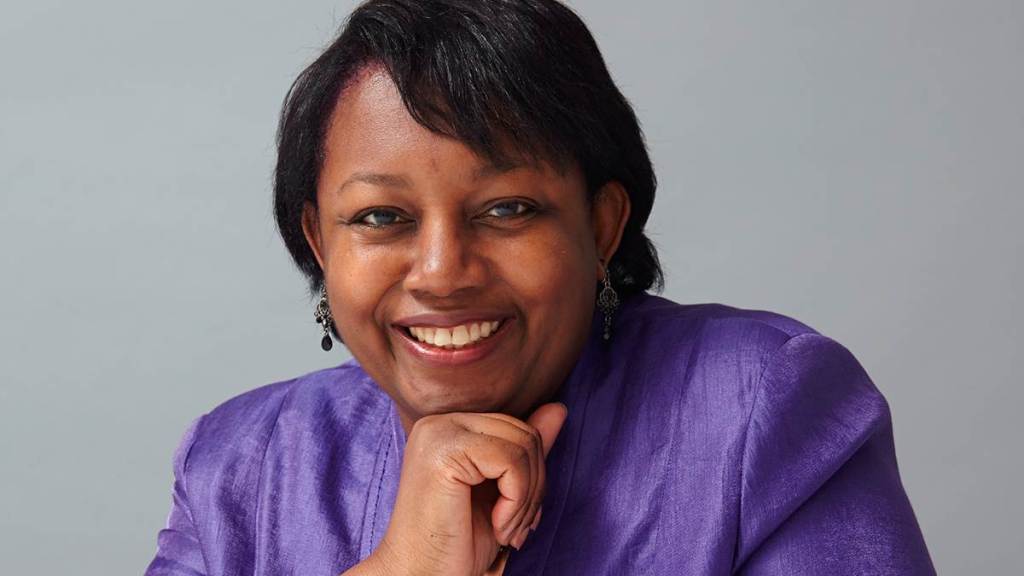
As someone who has loved the art of storytelling for all his short twenty-four years, on characters you are often told “it’s not about the colour of a their skin, but the content of their character” that keeps you engaged. Growing up I struggled to find characters like me in the stories I committed to. Malorie Blackman has been fighting the good fight for the best part of twenty years, but in one of my favourite literary genres, YA Fiction (Young Adults) , Black men are not a commonality. And that’s just the first layer. What about characters in coming-of-age stories for little Black girls? What about those children with non-White skin who happened to be dyslexic, dyspraxic, or even on the autistic spectrum? And this was one of the reasons I read Creative Writing. There were no characters like me growing up, so I started to write my own.
But reading young adults fiction, still even today, I see nothing much has changed. I’m still making the same comments I made when I was ten and twelve years old. Are there fewer authors of colour writing young adults fiction? Are there fewer Black and brown filmmakers wanting to make these films? Or is there a culture in the industry that what sells is “stale” and “pale.” And, you know, Wakanda and all that… but a Black Brit from Peckham has carried a trilogy of films in that little franchise called Star Wars. When John Boyega’s big Black face popped up in the first trailer for The Force Awakens, I cried. Diversity sells, but statistics in YA fiction are dire, whether we’re talking about the number of non-White lead characters or the lack of Black or brown authors getting published in this genre.
At its bones, Barry Jenkins’ Moonlight is a young adults drama but it was pushed as art house / drama / LGBT Cinema… to sell tickets. And LGBT Cinema is not a genre. YA comes in many forms. YA is John Hughes’ The Breakfast Club, and George Lucas’ American Graffiti, a film that’s so good that I forgave him for the prequel trilogy. But these films are still very White. Mean Girls, The Perks of Being a Wallflower, Carrie Pilby, The Fault in Our Stars, Call Me By Your Name, The Diary of a Wimpy Kid – the list goes on.
YA is whitewashed. When it comes to LGBT representation, we don’t see the intersectionality. Moonlight has become the go-to film for representation of gay Black men. And even there, “gay Black men” are not the focus. It’s more about class, race, and gender than sexuality. Internalised rage from repressed emotions. Its depictions of masculinity, whilst sexuality is marginalised. And as a straight ally who loves films, I struggle to name (mainstream) films about LGBT identity that include Black / brown people.
Moonlight and Tangerine come to mind but you do end up having to look outside of British film and Hollywood; there’s a plethora in non-English speaking cinema – I think of South Africa’s The Wound and it’s really something special.
Well-meaning White people say “it’s not about the colour of their skin [yap yap yap],” and to say that comes from a vantage point of privilege. Most people look like you, since society was built in your image. When you look at the history of Black actors in Hollywood, at how much they had to fight –from Diahann Carroll (Claudine) to Sidney Poitier (To Sir, with Love), to Denzel Washington (Training Day), Spike Lee (School Daze) and John Singleton (Boyz n the Hood), look how much it took to get Malcolm X made!

All this said, most of my favourite story characters have been White. In Carrie, from Caren Lissner’s Carrie Pilby I saw a version of myself. Hopelessly introverted with a love of literature and a realist approach to life. Blind faith? “Just go with it?” What the eff’s that? In Charlie, from Perks of Being a Wallflower, there were elements of child me. But neither Charlie nor Carrie had to contend with the first time they were called nigger when they were five years old, or being told “they were pretty for a Black girl,” as numerous Black women I know have been told time and time again.
Seeing yourself reflected in your environment is vital, and whilst we endlessly debate why we need to decolonise the curriculum, can we have a look at how media has often depicted African hair? And why we live in a society where texts like Don’t Touch My Hair by Emma Dabiri are necessary into understanding the nuances of race. Or if you want something less academic, there’s My Hair by Hannah Lee. “Unruly” and “like weeds” are only two of the phrases I’ve heard Black people’s hair described as. How do you think these comments and perceptions impact teenagers and children?
These experiences are YA (including children’s literature), as are the ones in Louisa May Alcott’s Little Women, or any John Hughes film or an Enid Blyton novel. Whilst here I am discussing young adult stories, this European-centric hetero-normative culture is rampant in almost every industry. From education to journalism, and especially publishing and arts.
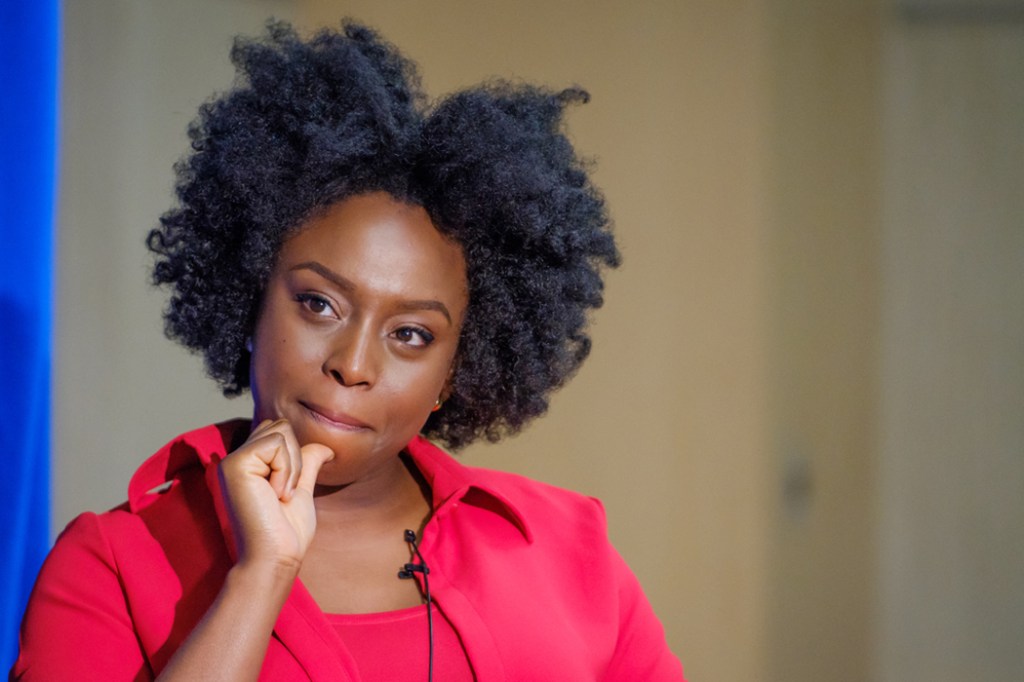
The politics of Black hair is a tale as old of time, but it has come
to redefine beauty standards, a standard that has always been set by The European
Seeing yourself reflected in your environment is necessary. And to White people, it may seem trivial. But really, most people look like you. I never had a teacher that wasn’t White British. The stats in our schools are damning. The closest thing I had to a teacher that looked like me was Diepirye @drkukustr8talk – who’s a family friend. He was a lecturer at the University, just not my lecturer, yet, still gave me a leg-up in my reading, via a number of authors through debate, conversations and critical thought.
When we are small, we often have our imaginations and dreams bludgeoned out of us by teachers who have lost the ability to dream. To draw a picture, to write a story, to act and express yourself, is no match for science, mathematics, history, geography, foreign languages or “proper subjects.” And retconning a nice shiny A into S. T. E. A. M is not a good look.
It’s a big old world; and it’s cruel enough as it is, but if our children and young people can’t find themselves in stories, how will they ever be able to find themselves in society?

 Thoughts from the criminology team