
Home » Posts tagged 'Criminology' (Page 3)
Tag Archives: Criminology
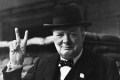
In Armistice, do Black lives matter?

Over a century ago in Sarajevo (Serbia), an Austrian archduke was shot. And next, millions more non-archdukes were shot, faffing about at The Front. And for what? And to me, learning about this war at school, it seemed more of a class war than anything else. Kaiser Wilhelm II being the grandson of Queen Victoria and his cousins being the monarchs of Britain and its vast empire, from India, to the Caribbean and bits of Africa.
And I never saw anyone that looked like me; I thought this war was for White people. And, I know now over four million non-Whites contributed, giving their lives, but that’s not the narrative I was sold at school. And at eleven o’clock on the 11th November 1918, screams sang into silence.
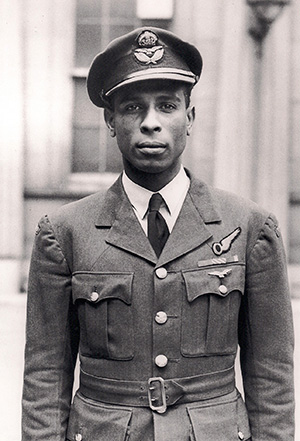
who went onto to be lawyer and instrumental
in Ghanaian independence in 1957
Knowing what I know now about history, even if it is just a basic knowledge (I’m no historian) Armistice Day does not mark peacetime. The fallout of the war to end all wars was a Pandora’s Box no signed treaty could contain. And in all conflicts it’s always the working-class who suffer most.
And it would be the archdukes of that world who would be having a jolly old time as if nothing had happened. But 1919 ushered in a wind of change: mass unemployment and uncertainty followed working-class communities from France and Belgium onto the streets of London, Cardiff and Liverpool.
When I think Armistice, I’m scratching my head as to when peacetime really does begin. 1919 brought in the Liverpool Race Riots where a one Charles Wotten was lynched at Albert Dock. Films like Doctor Zhivago depicting the Russian Civil War (1917 – 1922) remind me of the violence that occurred outside of the main narrative of the war (during and after). What of those calls for independence, Easter Risings on streets of Dublin?
HBO’s Watchmen, based on the Alan Moore comic – a vivid depiction of Tulsa, a section of American history most people haven’t heard of, including Black people. Why would people have heard of it? Vital parts of our own history have been erased, (I think) because it makes “the victors” look bad.
Tulsa, Oklahoma 1921:
Often referred to as the Tulsa Race Massacre (or Riot), this was when a White mob attacked the residents, livelihoods, homes and businesses of the majorly Black Greenwood area of Tulsa in the state of Oklahoma. This was what we’d now call a White supremacist attack and an act of domestic terrorism, or even genocide. Hundreds killed and thousands displaced.
In 1915, D. W. Griffith’s Birth of a Nation was released and has often been blamed for the resurgence of the Klu Klux Klan. After The War, there was a spike in racial tension in America, and Tulsa was basically Black Wall Street. The U. S Army was racially segregated in itself too. 1921 Greenwood was booming, a success story for Black business owners, despite high crime rates and racial segregation. However, history is a hotbed for Black excellence, but when Black people gain momentum, the establishment shoots them down, literally – from Fred Hampton to Medgar Evers.
At school, I was not taught, not once, about the four million non-Whites non-European that fought and laboured in those four years. I think if I was able to see myself in this history from when I was a child, I would have more time for Armistice. The great stage of the First and Second World War is tied up in Britain’s popular memory / national identity, and British identity is in crisis. Still, today, I’ve found to be British, is to be White.
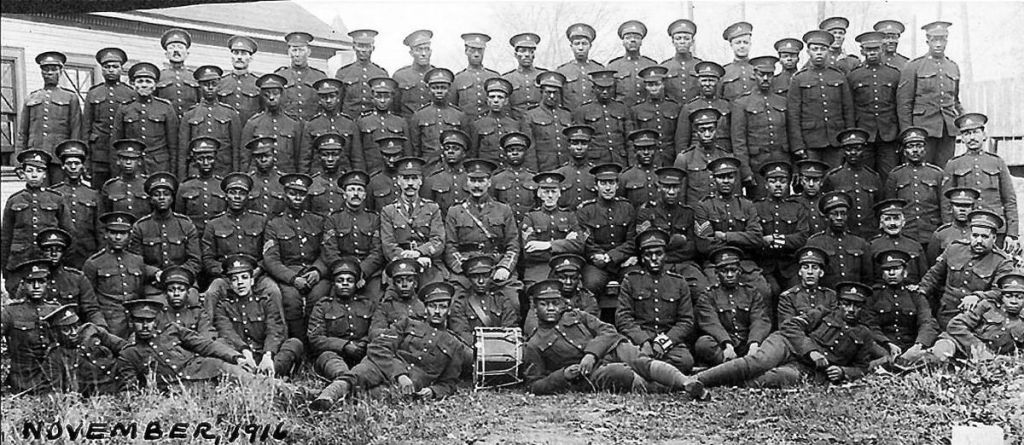
(The Black Cultural Center for Nova Scotia)
The yearly cycle of remembrance; from the procession in Northampton to interviews on BBC with veterans of the Second World War, I’ve always found it’s the voices of White British people. But there was racism at the front. The imperial mindset of European colonialism ran rampant in the British and German armies, tools of institutional racism, and by extension an instrument to whip up hate and institutional violence against colonial servicemen from places that included Senegal, China and the West Indies.
“Troops formed of coloured individuals belonging to savage tribes and barbarous races should not be employed in a war between civilised states. The enrolling, however, of individuals belonging to civilised coloured races and the employment of whole regiments of disciplined coloured soldiers is not forbidden.”
1914 Manual of Military Law
AND:
“Commissions in the special reserves of officers are given to qualified candidates who are natural-born or naturalised British subjects of pure European descent.”
1914 Manual of Military Law
Where are those stories of race at war? To be a soldier of colour, British-born or otherwise would not be the same as being a White (European) soldier, soldiers that toiled in France but also in the skirmishes of the African continent, Asia and the Middle East – erased out of our nationhood.
Over a million soldiers from what was then British India (pre-1947) fought for the allies, along with over two million from French Indo-China, as well as 100,000 Chinese labourers. But I did not have this on my history curriculum, when we looked at the stories between 1914 – 1918. But I was bludgeoned with images of White European soldiers having a great time.

To me, Armistice Day is in remembrance of a White Man’s war. And to (begrudgingly) mimic poet, colonialist and Jungle Book author Rudyard Kipling, it feels like a “White man’s burden,” even if people of colour fought too. In seeing how Britain portrays those wars in schools but also how they are represented in popular memory, can you blame activists and academics looking at the stories of race and racism on the front lines under a microscope?
Race / racial identity are massive factors in these conflicts, as historian David Olusoga talks about in his article. We would not need to keep talking about race if race wasn’t treated like a minor inconvenience and those often treating it like an that are White people, refusing to acknowledge their own whiteness and White Privilege.
However, if we really are serious about Armistice, we have to acknowledge that working-class people yet again were at the whim of the titled and the entitled. We remember the soldiers but never their victims, portraying death (murder) as honorable, as said in Wilfred Owen’s (from Horace) Dulce et Decorum Est “pro patria mori” (“it is sweet and proper to die for one’s country”). What is sweet about sending good men to the slaughterhouse?
Both wars are riddled with nationalism, and portray patriotism with grandeur. Great Britain raised at half-mast, celebrating Britain’s militarism –from Churchill to the Dreadnought (but no love for Bengal or Dresden). In how the wars are taught (popular nationalism), we encourage the living to join the dead, an ode to the Union Jack, even today in a postcolonial world.
“The colour bar on non-regular officers in the armed forces, designed and imposed by the political and military, is explicitly in the Short Guide to Observing a Commission in the Special Reserve of Officers, published by His Majesty’s Stationary Office in 1912.” – Phil Vasili
The world wars are full of people that are products of empire, in the ruins of class but also race. An archduke gets shot and millions of non-archdukes pay the price. Millions dead. After the war – widespread unemployment, uncertainty, race riots, class divides, The Depression, a grim state of affairs.
When you add the layer of race into that, it makes it more complex. Colonial soldiers coming to Britain after the First World War who were left out of the victory parades. Charles Wotten’s lynching in Liverpool. Men from British colonies who came here after the Second World War – to fill in labour shortages – White Supremacist fever and contested Britishness.

The narrative of Black soldiers goes all the way back to Roman Britain. Olusoga stated “Black soldiers were expendable – then forgotten” and I agree. In erasing Black and brown soldiers from the narrative, it’s a declaration of White lives being worth more than Black / brown lives.
And yes, we have the red poppy which is supposed to include everyone but it feels very exclusionary; and Britain’s popular memory is selective and needs to explore its colonial legacy – how imperial racial thinking played a role in both wars, otherwise we are continuing to tell stories that only include the experiences and memories of a White European majority.
“Black subjects had their actions during the war written out of history.” – Emma Dabiri
Works Mentioned
1914 Manual of Military Law
BBC Stories. “Alt History: White-washing black soldiers from WW1- BBC Stories.” YouTube. 27/06/19. Online. 10/11/19.
BBC Stories. “Alt History: A British lynching – BBC Stories.” YouTube. 13/07/19. Online. 10/11/19/
Birth of a Nation. Dir. D. W. Griffith. 1915, Epoch Producing Company. YouTube.
Channel 4 Documentary. “Dulce Et Decorum Est by Wilfred Owen: Read by Christopher Eccleston | Remembering World War 1 | C4”. Youtube. 07/11/13. Online. 08/09/19.
Doctor Zhivago. Dir. David Lean. 1965, MGM. DVD
History.com Editors. “Tulsa Race Massacre.” History.com. 2019. Web. Accessed: 10/11/19.
Lindeloff, Damien, creator. Watchmen. White Rabbit, Paramount Television, DC Entertainment, Warner Bros. Television, 2019.
Olusoga, David. “Black soldiers were expendable – then forgettable.” theguardian.com. 2018. Web. Accessed: 09/11/19
Vasili, Phil. Walter Tull, 1888 – 1918 Officer, Footballer […] Surrey: Raw Pres, 2010. Print.
Share this:


the place is Selma
When we look at Selma through the lens of class, we are looking at a tale as old as time, Black criminality in the face of institutional violence. Black people wanting to vote and being told no. To be Black is to be criminal – savage – beast. From slavery to Selma, DuVernay’s film lays it all out for us.
Last month, as part of Freshers’ fortnight, the Students’ Union screened Ava DuVernay’s Selma – based on the true story of that three-month period in 1965, during the Civil Rights Movement before the Voting Rights Act was signed. This was a part of history when Black people were not afforded their basic human rights. Like the vote, being systematically stopped from reaching the polls. And the same sort of voting fraud still happens today.
Following Dr Martin Luther King, Jr (David Oyelowo), the NAACP (National Association for the Advancement of Colored People), and this all-star cast (including Common (The Hate U Give) and Tessa Thompson (Creed) in support) we are taken on a journey showing what institutional discrimination does to communities, including the covert racism that made voting harder for a Black person than a White person – the systematic use of legal innovations to strip Black people of their rights, (and dignity).
Since Selma was released in 2014, Ava DuVernay has since made the documentary 13th showing the history behind mass incarceration in American prisons, including slavery and convict leasing. Additionally, she has made the miniseries When They See Us – looking at the story behind the Central Park Five and how the small print (in the US legal system) described in 13th was used to incarcerate these young Black and Hispanic boys.
What got to me in rewatching Selma is how important the racial thinking that (mostly) came out colonialism / slavery is in how we think about race today. The fact discrimination only became a crime in the UK in 1965 (with the Race Relations Act), and the idea we still endorsed blackface minstrelsy until the late 1970s. BBC television still had blackface as entertainment until 1978. However, slavery was outlawed in the USA in 1865 but the slave-owning class won the war on race, as Blacks continued to be treated like slaves even though they weren’t – from convict leasing to Jim Crow Laws.
One hundred years after the end of the American Civil War, like-racism (from slave days) continued. The Voting Rights Act was signed in 1965 and Jim Crow Laws were abolished as well, but those ideologies are what built America from the days of slavery, in both the North and the South. Seldom is it acknowledged that slavery existed in some northern states too.
We don’t talk about slave codes in places like Virginia, where it was stated within the law that if an altercation occurred between slave and master, and the slave died, it would not be a felony. In the slave codes for Virginia of the 1660s, it states within the laws that it was legal to kill a Black person. This was systematic use of the law to deny Black people their rights. Whether this was Virginia 1660 or Virginia 1960, not a lot had changed.
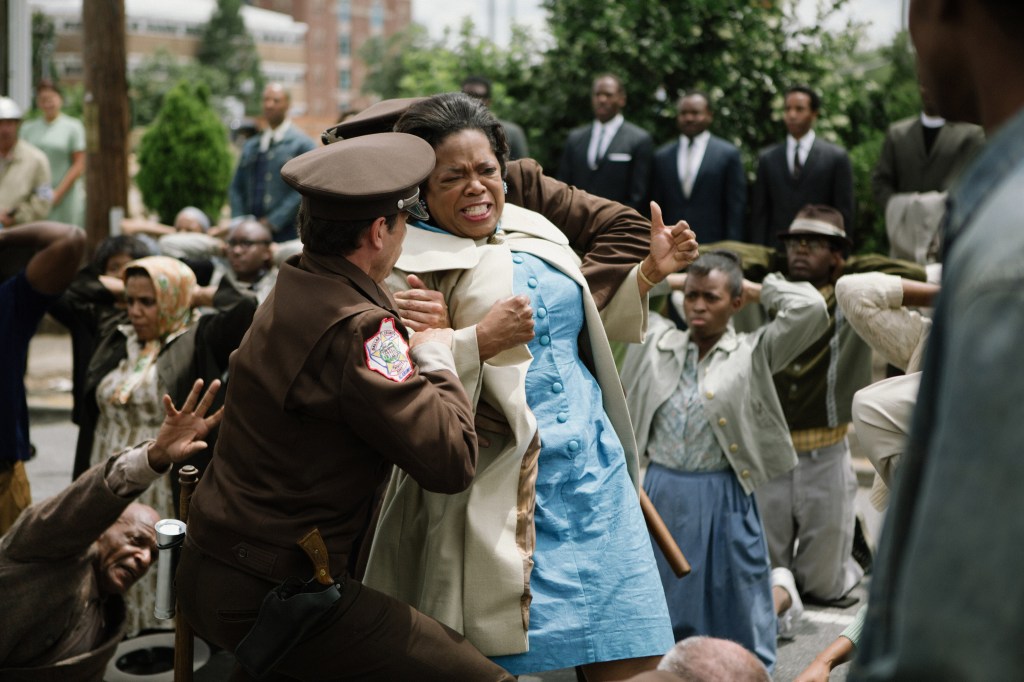
(Selma, Paramount Pictures, Pathé, and Harpo Films)
When Rosa Parkes sat down, she stood up to the establishment and unjust laws. And before Rosa Parkes, we had Collette Colvin. Moreover, when Black people boycotted the buses, they almost bankrupted the bus companies. They were seen as a nuisance. People thought they should stay in line. This old tale of Black resistance against White authority can be traced back to master, mistress, stately homes, cotton, cane and king sugar.
From the get-go, Ava DuVernay is at your throat, with her depiction of the 16th Street Baptist Church Bombing. This film was not made to score political points but it’s a film that tells it how it is, with vivid imagery of attack dogs, tear gas and police on horseback. Very much like the Klu Klux Klan killing defenseless people on the basis of race. Brutal. From Sandra Bland to Treyvon Martin, those stories of police brutality still ring true today. The history of disdain from Black communities to the police in Britain and America is one we’ve all heard, and it’s one that I think is in-part at least responsible for the lack people of colour joining up.
Why would Black, Asian and ethnic minority members of our society want to join an institution that has a historic pattern of discrimination? Why would they want to join an institution that talks about recruiting more BAME people, but still treats the ones they have already abominably?
Despite being a British viewer, there are many things I took away from this film, especially the subjectivity of the law. How White people in authority expect people of colour to be objective in the face of racism. The recent Naga Munchetty debacle with the BBC comes to mind. “You’ve got one big issue,” states LBJ (Tom Wilkinson) to King (Oyelowo). “I’ve got one hundred and one.” For most of the film, he does not appear to be taking the Black vote seriously, until it directly impacts him and what he’s trying to do.
Tim Roth as Governor Wallace (Alabama) is brilliant – spewing hate, hate and more hate with such venom. You hate him from the second his face appears on screen, and his scenes with Dylan Baker’s J. Edgar Hoover are brilliant. There is no love for Wallace. He is a White supremacist and director Ava DuVernay makes sure we know that. However, it got me asking questions about how we depict White supremacists in Britain. Mainly, with statues dotted around the country, including Parliament Square!
Is Selma a controversial film or is it simply no-nonsense and very American? It talks about things people feel uncomfortable talking about. In Britain, that includes anything remotely sounding like race, racism, colonialism or its role in Slavery. But critique Churchill or Nelson in anyway and you’re the enemy? But it does a great job recreating moments like Bloody Sunday, as state troops and local police let rip on the marchers.
“The whole nation was sickened by the pictures of that wild melee.”
Coretta Scott King (Carmen Ejogo)
From tear gas to men on horses with whips, it was riddled with symbolism, as well as truly fantastic cinematography, sound mixing and musical score. Oprah (one of the producers) was great in her role, and David Oyelowo is one of the most underrated actors working today, and a testament to an alternative image of Black men on screen. Whilst my grandparents’ generation had Harry Belafonte (Carmen Jones) and Sidney Poitier (To Sir, with Love), this current generation of Black people have David Oyelowo.
This film is rough when it needs to be but delicate when it needs to be. It’s engaging, emotional, and leaves a lump in your throat right up to and through the credits. It’s also very funny – “that White boy can hit” says Dr King after being decked by a racist local. All the speeches, all the symbols, all the nods to America’s history of slavery and oppression – it’s intertwined with how the US is today – Trump’s Twitter tantrums and all that jazz.
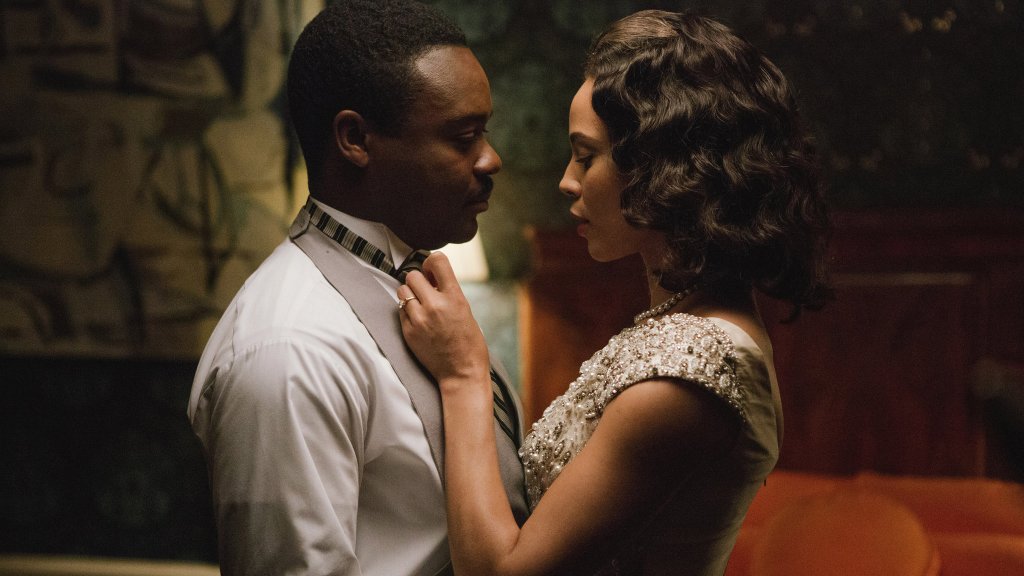
(Selma, Pathé, Paramount Pictures and Harpo Films)
“We must march! We must stand up! […] it is unacceptable that they use their power and keep us voiceless.”
Dr Martin Luther King, Jr (David Oyelowo)
Ava lingers on faces (especially eyes) in scenarios of extreme violence longer than what is humanly comfortable, much alike to Kathryn Bigelow with Detroit and what Steve McQueen did with Solomon Northup (Chiwetel Ejiofor) in 12 Years a Slave. From cinematography to acting, music, and sound, I have no complaints. And at moments, it was like documentary.
And nearly everyday, I’m hearing people say the system is broken; is it broken, or was it built this way, fit for purpose – for the use and upliftment of a White, male, patriarchal, able-bodied, hetero-normative society?
Bibliography
Dorsey, Bruce. “Virginian Slave Laws, 1660s”. History 41. n.p. n.d. Online. Access: 19th October, 2019.
Fryer, Peter and Gary Young et al. Staying Power: The History of Black People in Britain. London: Pluto Press, 2018. Print.
“Moral Mission.” Black and British: A Forgotten History, written by David Olusoga, directed by Naomi Austin, BBC, 2016.
Olusoga, David. Black and British: A Forgotten History. London: Pan Books, 2017. Print.
Selma. Dir. Ava DuVernay. Pathé, Paramount. 2014, Netflix.
n.d. “Slavery and the Law in Virginia”. history.org. n.p. n.d. Online. Access: 19th October, 2019.
n.d. “Slave Law in Colonial Virginia: A Timeline”. shsu.edu. n.p. n.d. Online. Access: 19th October, 2019.
Share this:


man does how he pleases with his property

“Does the bench and parliament not have a duty to uphold and create the laws that progress our morality, […] if not to protect us from others, then to protect us from ourselves? Laws that allow us to diminish the humanity of anybody are not laws. They are frameworks for crime.”
John Davinier (Belle)
When we discuss the worst acts of human history, events that are often brought up are household names. The extermination of the Jews under the Nazis comes to mind, what is often called Auschwitz or The Holocaust. Others include Nagasaki, Hiroshima, and The Black Death of the 14th century. But Britain’s bombing of Dresden is not a household event, nor is the Bengal Famine under Winston Churchill (voted the best Briton by the British public) – who we decided to put on the £5-note. What about the Congolese Genocide under King Leopold II of Belgium, or Lord Kitchener in those Boer Concentration Camps? Concentration Camps are a British design but it’s always linked to Germany, due to how that story’s been framed. And Winston Churchill is a household name, as is parliamentary abolitionist William Wilberforce. But in discussions on colonialism, why do we know nothing of Amritsar, the Mau Mau, or Morant Bay? And when discussing Britain’s role in the Transatlantic Slave Trade, why are those sorts of conversations more often than not, shutdown?
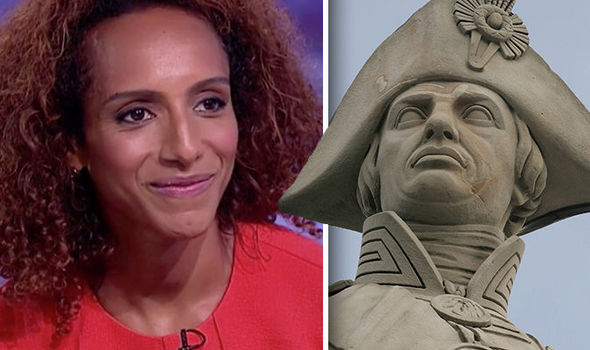
Britain still holds a nostalgia for its empire. Whilst Nelson is remembered as a war hero that led Britain to victory against the French and Spanish at Trafalgar, why do people seldom talk about his exploits as a man who protected slave ships crossing the Atlantic (for the Royal Navy), or married into a slave-trading family on Nevis? It was one of the jobs of The Navy to protect British commerce, including slaves. Property not people. Flesh for cash. We paint pretty pictures of British history that make this country look great, but when it comes to the darkness in our past, the establishment, and to an extent, the British public, slinks into its hole of historical amnesia.
Watching Amma Asante’s Belle last week made me ponder how we frame our colonial history in relation to national identity, but also institutional violence, then and now. Set in the backdrop of The Zong Case, the film follows (Black) mixed-race Georgian Dido Elizabeth Belle Lindsay (Gugu Mbatha-Raw), the niece of Lord Mansfield (Tom Wilkinson) – the ruling judge on that case and one of the most influential men in 1780s Britain.
“In the prolonged history of collective suffering which formed the story of Atlantic slave trading, few incidents compare to those of the Zong Case of 1781. Luke Collingwood, captain of the Liverpool ship, had 133 slaves thrown overboard to their death when supplies were running short, hoping to claim for their deaths on the ship’s insurance. The case came to court in London two years later, not for mass murder but as a disputed insurance claim.”
James Walvin

(Belle, Fox Searchlight Pictures)
We remember the history that makes us look good. We remember fifty years of abolition, and Dunkirk, but rarely do we shed light on the skeletons in the closets of “our heroes.” Are we too ashamed to admit that how Britain discusses its history and its icons is often too two dimensional? Are we too British to admit to feelings of guilt? We erect statues to White supremacists and slave traders, dumbing down our role in how we came to speak the terms “developing countries” and “third world struggle.” We put Rhodes in Zimbabwe, and named streets for monuments to king sugar and racism.
Belle brings a an alternative history, that slave stories happened within our borders too – from Buckingham Palace to the Merseyside River. Not only in distant lands in the American South and the West Indies. Reni Eddo-Lodge put it best, giving a snapshot of how in the 21st century the national psyche is so far removed from its past of genocide, conquest and stolen land.
“Although enslaved African people moved through British shores the plantations they toiled on on were not in Britain, but rather in Britain’s colonies. […] so, unlike the situation in America, most British people saw the money without the blood.”
Reni Eddo-Lodge
And in 2019, we need to ask why William Wilberforce is a household name, and Granville Sharpe isn’t; and are we really too British to come to terms with the guilt of our past, or will we just keep calm and carry on?
Bibliography
Eddo-Lodge, Reni. Why I’m No Longer Talking to White People About Race. London: Bloomsbury Publishing, 2018. Print
Walvin, James. A Short History of Slavery. London: Penguin, 2007. Print.

 Thoughts from the criminology team