
Home » Posts tagged 'Colonialism'
Tag Archives: Colonialism

Journeys Through Time: From British Empire’s Transportation Punishment to Contemporary Immigration Challenges
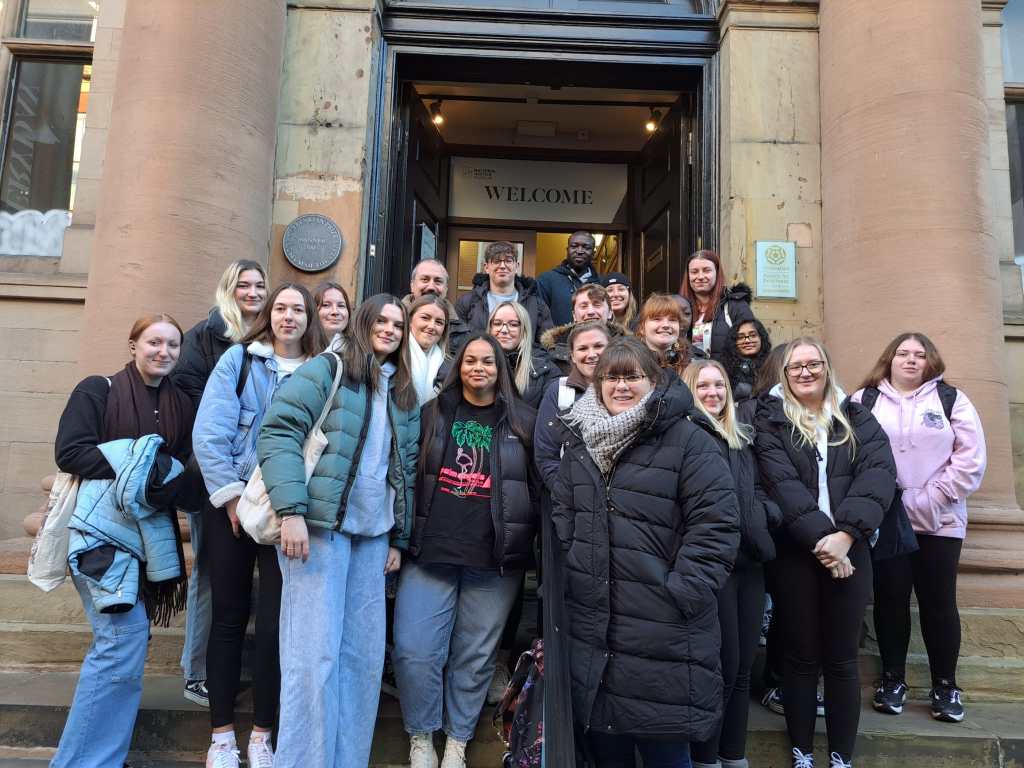
On November 29, 2023, our level 5 criminology students embarked on a visit to the National Museum of Justice in Nottingham. The trip had multiple objectives, including providing students with an out-of-classroom understanding of archives, immersing them in the crime and justice model in Britain from the 1840s to the 1940s, exposing them to rich historical records, deepening their understanding of archival research materials, and offering them first-hand experience on the treatment and conditions of suspected and convicted individuals in the past.
The museum, a vital historical site, not only facilitates reflection on the history of crime and justice in Britain but also offers an opportunity to ponder the trends and trajectory of changes since 1614.
Among the myriad opportunities for learning and research, transportation stood out for me. This form of punishment, prevalent in the British Empire from the 17th to the mid-19th centuries, forcibly removed convicted individuals from Britain to penal colonies, primarily in North America and later in Australia. This severe punishment involved separating convicts from their families and homeland, subjecting them to harsh and unfamiliar environments. Notably, individuals as young as nine were sent to America in 1614, with sentences ranging from 7 to 14 years or life. In addition to its punitive aspect, transportation provided forced cheap labour for the British government in exploited colonies, contributing to the expansion of the British Empire.
The deplorable conditions during transportation, its impact on the history of Australia and other colonies, and its role in the development of a unique convict society underscore its harsh and brutal nature. Despite its significant role, transportation was gradually abolished in the mid-19th century due to growing unpopularity and expense.
The historical context of transportation as a punitive measure serves as a backdrop for understanding current immigration and eviction plans in the UK, particularly concerning refugees and asylum seekers arriving in small boats. Though transportation was phased out in the mid-19th century, the echoes of forcibly moving individuals can be juxtaposed with contemporary immigration policies.
The British Empire’s transportation punishment, involving forced removal to distant penal colonies, parallels the challenges faced by today’s refugees and asylum seekers. While historical transportation was driven by criminality, current immigration plans involve vulnerable populations seeking refuge and safety, raising uncertainties about the safety they can find in Rwanda.
Examining the deplorable conditions of transportation provides a lens to scrutinize the humanitarian aspects of current immigration policies, emphasizing the toll on human life, challenges during migration, and impacts on indigenous populations.
Both transportation and the Rwanda plan share a common objective of removing unwanted individuals from British society, albeit for different reasons. Transportation aimed to punish criminals, while the Rwanda plan intends to deter dangerous journeys across the English Channel.
However, both policies face criticism from human rights groups, asserting their cruelty and violation of international law. Despite this, steps to implement the Rwanda plan are underway, indicating a willingness to sacrifice the well-being of vulnerable individuals for political expediency. The parallels between transportation and the Rwanda plan serve as a stark reminder of the dark side of British history, with asylum seekers and refugees sent to Rwanda facing the prospect of indefinite detention and potential persecution upon return to their countries of origin.
While transportation was abolished in the mid-19th century, exploring its historical significance encourages reflection on the complexities of modern immigration and eviction plans. This analysis highlights how punitive measures, whether historical or contemporary, shape societies, impact individuals, and contribute to a nation’s broader narrative.
Share this:


Should we be impressed by those who OBEy?
In the aftermath of the General Election, Britain continues to spiral with most of Europe down the hole of despair, into something that George Orwell wrote about in his 20th century novel, Nineteen Eighty-Four. And in this hysteria, imperial thinking is now back on the rise. But that’s not what this post is about. Well, not much.
Every year, the “best of the best” of this country are decorated by the Queen in what’s known as the Honours List. Knighthoods, MBEs, OBEs and CBEs. Nods to the British Empire, racism and colonialism. Watching debates on Sky News’ ‘The Pledge’ has shown me how resistant Britain is to talking about race, but deeper still, its ventures in colonialism overseas.
Amidst the Windrush Scandal and Brexit, that resistance was put onto the world stage. It got me to think about British history but also how specifically working-class people often defend the monarchy and patronage, an institution that despises them. Do people that have been honoured have a feeling of accomplishment by having those three letters after their name? Would their ancestors feel the same way? Or is it a feeling of “I’ve made it,” a ruse of passing from one class into another?
When people are named Member of the British Empire (MBE), it leaves me feeling icky inside. Seeing that after someone’s name, leaves me feeling sick. Order of the British Empire (OBE), Commander of the British Empire (CBE). It’s obsolete, drawing up thoughts of genocide, conquest and stolen land.
When I hear the word “empire,” especially in this country, I think about oppression of minority Britain in the jaws of Little England. It’s reminiscent of how my ancestors were slaves in the Caribbean. It’s Apartheid, the American Revolution, the Suez Crisis, Potato Famine, the Mau Mau, the Amritsar Massacre and so much more. To have that after your name is really to celebrate racism, classism, genocide, stolen land etc etc.
And it’s because of Britain’s nostalgia for this history that I grew up going to school being taught Black history as only slavery. We didn’t even get as far postwar immigration, as that’s the other common denominator of the Black British narrative. It’s because of that, why I don’t know my name.
Not Ventour, that’s a slave name. I don’t know the name my ancestors had before Ventour was forced upon them under the lynch and the lash of Caribbean plantation slavery.
My crisis of identity is not due to history, it’s more so due to the present day climate where British people of colour are routinely having their Britishness contested. I’m staunchly anti-monarchy and anti-empire. And there’s something weird about debating the concept of the Queen’s Honours with people who are either ambivalent to it or are so pro-monarchy that they can’t possibly acknowledge that there’s negative connotations with the Royal institution. I’ve been in quite a few discussions with people about the monarchy. Thankfully, none have gotten ugly and we’re still friends today.
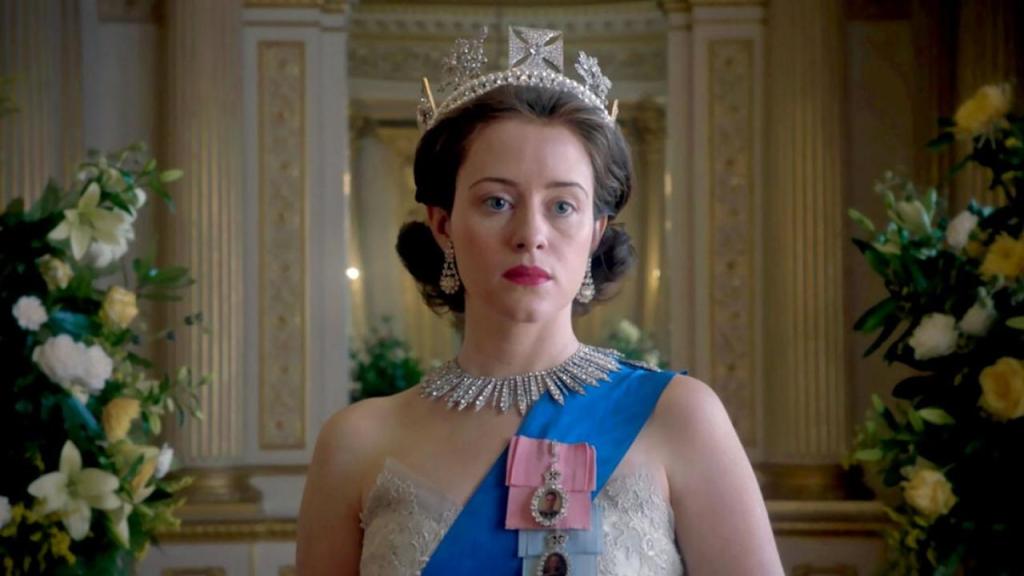
These Honours awards are to people that have made significant contributions to society through their professions — from arts, including: theatre, literature and film — to everyday people doing great work in the community, to journalists. That last one, I don’t like. Should journalists really be accepting awards from people they’ve critiqued, or even vilified?
The Honours awards are a slap in the face of multiracial / working-class Britain. When it comes to the British Empire, many have asked “Does the end justify the means?” And my reply to that is, no. How much is life worth to you? You cannot justify torture and genocide. Life isn’t flesh for cash. It’s not a business. And those colonial statues littered throughout Britain, including London, Bristol and Glasgow; all those British streets named for slave traders; all those White imperialistic university module choices.
The concept of “Honours” feels like Britain clinging on to a past bygone. Given the chance, would Britain enslave its Black British population? Would it let three million Indians die in the Bengal Famine if the circumstances were to present themselves again? Would it commit to a Scramble for Africa and a starving Ireland? If these circumstances were to happen again?
Institutionally, The Monarchy sanctioned slavery, and yet, millions still defend it. Truth is, I don’t understand how anyone, regardless of their background can accept awards with attachments as deeply horrific as these ones.
They came out of a system that oppressed people of colour, women and the LGBTQ+ community. There are many Black and brown people that love those awards. It makes them feel accomplished, whilst simultaneously speaking out against racism. Whilst being part of the system they speak out against, they’re some of its proudest members. They are activists against the ruling class but then accept invitations to Buckingham Palace. In breaking their backs for babylon, are they willing to accept chains on their ankles?
These awards go to Joe and Jane Bloggs. They go to musicians, authors, poets, businesspeople, celebrities and more. These awards are given to people, irrespective of class or colour. Seeing those three letters after their name feels like betrayal. Should I bow to them? Do I have to act impressed?
I’m a poet before anything else and have recited my own work, unpicking British history, including empire and conquest, and how those things impact the present day.
I’ve been called racist and anti-White (I’m anti-White Supremacy). But really, I want to reach an audience of people that are willing to listen. That the history we’re taught at school is what my mother would call “chang-chang” — in bits and pieces. Did Christopher Columbus discover America or was he only the first White man to get there? Could the same be said for Captain Cook with Australia? Is explorer a synonym for coloniser?
I’m a storyteller. What in the old days people would call a bard. What the Celts called the Awen. I probably will never be offered one of those awards. And if I was — to accept one would be to lose my dignity. I wouldn’t be able to look my younger brother in the eye. I would lose all pride and respect for myself. Which is why I have so much respect for people that decline them and live their best life, doing what they do best, living livelihoods without want of incentive, be it an OBE or being named Poet Laureate.
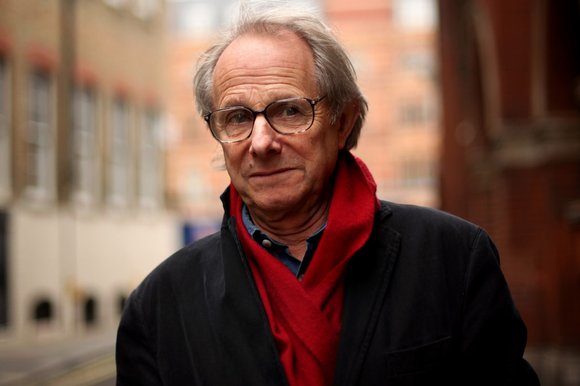
Your Benjamin Zephaniahs and Ken Loaches. Who both showed me that art is more than the Tate, The National Gallery or arthouse cinema.That poetry is more than Tennyson, Blake and Wordsworth, that history is written in black and white. It’s poor people, LGBTQ+ and women and…
“Look around, look around, at how lucky we are to be alive right now” — The Schuyler Sisters (Hamilton)
And anyone close to me will know why I despise January 1 and The Queen’s Birthday, since it’s the date the the Honours Lists are released. A better honour would be if the British Museum gave those stolen pieces back to places like Ghana and Greece. OBEs, CBEs, MBEs , knighthoods — genocide, slavery, torture, class oppression, massacres and more massacres, war and violence — and it’s 2020. When will the British Empire shut its mouth?
Let history be history. The British Empire is not cause for celebration. For every colonial statue in this land there should be a slave child next to it, or a starving woman, a symbol showing how the end doesn’t justify the means.
Let’s call the British Empire what it was: a business venture that consumed the lives of millions, not something to be worn like a badge of honour, because it is honourless.
Share this:


man does how he pleases with his property

“Does the bench and parliament not have a duty to uphold and create the laws that progress our morality, […] if not to protect us from others, then to protect us from ourselves? Laws that allow us to diminish the humanity of anybody are not laws. They are frameworks for crime.”
John Davinier (Belle)
When we discuss the worst acts of human history, events that are often brought up are household names. The extermination of the Jews under the Nazis comes to mind, what is often called Auschwitz or The Holocaust. Others include Nagasaki, Hiroshima, and The Black Death of the 14th century. But Britain’s bombing of Dresden is not a household event, nor is the Bengal Famine under Winston Churchill (voted the best Briton by the British public) – who we decided to put on the £5-note. What about the Congolese Genocide under King Leopold II of Belgium, or Lord Kitchener in those Boer Concentration Camps? Concentration Camps are a British design but it’s always linked to Germany, due to how that story’s been framed. And Winston Churchill is a household name, as is parliamentary abolitionist William Wilberforce. But in discussions on colonialism, why do we know nothing of Amritsar, the Mau Mau, or Morant Bay? And when discussing Britain’s role in the Transatlantic Slave Trade, why are those sorts of conversations more often than not, shutdown?

Britain still holds a nostalgia for its empire. Whilst Nelson is remembered as a war hero that led Britain to victory against the French and Spanish at Trafalgar, why do people seldom talk about his exploits as a man who protected slave ships crossing the Atlantic (for the Royal Navy), or married into a slave-trading family on Nevis? It was one of the jobs of The Navy to protect British commerce, including slaves. Property not people. Flesh for cash. We paint pretty pictures of British history that make this country look great, but when it comes to the darkness in our past, the establishment, and to an extent, the British public, slinks into its hole of historical amnesia.
Watching Amma Asante’s Belle last week made me ponder how we frame our colonial history in relation to national identity, but also institutional violence, then and now. Set in the backdrop of The Zong Case, the film follows (Black) mixed-race Georgian Dido Elizabeth Belle Lindsay (Gugu Mbatha-Raw), the niece of Lord Mansfield (Tom Wilkinson) – the ruling judge on that case and one of the most influential men in 1780s Britain.
“In the prolonged history of collective suffering which formed the story of Atlantic slave trading, few incidents compare to those of the Zong Case of 1781. Luke Collingwood, captain of the Liverpool ship, had 133 slaves thrown overboard to their death when supplies were running short, hoping to claim for their deaths on the ship’s insurance. The case came to court in London two years later, not for mass murder but as a disputed insurance claim.”
James Walvin

(Belle, Fox Searchlight Pictures)
We remember the history that makes us look good. We remember fifty years of abolition, and Dunkirk, but rarely do we shed light on the skeletons in the closets of “our heroes.” Are we too ashamed to admit that how Britain discusses its history and its icons is often too two dimensional? Are we too British to admit to feelings of guilt? We erect statues to White supremacists and slave traders, dumbing down our role in how we came to speak the terms “developing countries” and “third world struggle.” We put Rhodes in Zimbabwe, and named streets for monuments to king sugar and racism.
Belle brings a an alternative history, that slave stories happened within our borders too – from Buckingham Palace to the Merseyside River. Not only in distant lands in the American South and the West Indies. Reni Eddo-Lodge put it best, giving a snapshot of how in the 21st century the national psyche is so far removed from its past of genocide, conquest and stolen land.
“Although enslaved African people moved through British shores the plantations they toiled on on were not in Britain, but rather in Britain’s colonies. […] so, unlike the situation in America, most British people saw the money without the blood.”
Reni Eddo-Lodge
And in 2019, we need to ask why William Wilberforce is a household name, and Granville Sharpe isn’t; and are we really too British to come to terms with the guilt of our past, or will we just keep calm and carry on?
Bibliography
Eddo-Lodge, Reni. Why I’m No Longer Talking to White People About Race. London: Bloomsbury Publishing, 2018. Print
Walvin, James. A Short History of Slavery. London: Penguin, 2007. Print.

 Thoughts from the criminology team