
Home » Posts tagged 'chatgpt'
Tag Archives: chatgpt

Technology: one step forward and two steps back
I read my colleague @paulaabowles’s blog last week with amusement. Whilst the blog focussed on AI and notions of human efficiency, it resonated with me on so many different levels. Nightmarish memories of the three E’s (economy, effectiveness and efficiency) under the banner of New Public Management (NPM) from the latter end of the last century came flooding back, juxtaposed with the introduction of so-called time saving technology from around the same time. It seems we are destined to relive the same problems and issues time and time again both in our private and personal lives, although the two seem to increasingly morph into one, as technology companies come up with new ways of integration and seamless working and organisations continuously strive to become more efficient with little regard to the human cost.
Paula’s point though was about being human and what that means in a learning environment and elsewhere when technology encroaches on how we do things and more importantly why we do them. I, like a number of like-minded people are frustrated by the need to rush into using the new shiny technology with little consideration of the consequences. Let me share a few examples, drawn from observation and experience, to illustrate what I mean.
I went into a well-known coffee shop the other day; in fact, I go into the coffee shop quite often. I ordered my usual coffee and my wife’s coffee, a black Americano, three quarters full. Perhaps a little pedantic or odd but the three quarters full makes the Americano a little stronger and has the added advantage of avoiding spillage (usually by me as I carry the tray). Served by one of the staff, I listened in bemusement as she had a conversation with a colleague and spoke to a customer in the drive through on her headset, all whilst taking my order. Three conversations at once. One full, not three quarters full, black Americano later coupled with ‘a what else was it you ordered’, tended to suggest that my order was not given the full concentration it deserved. So, whilst speaking to three people at once might seem efficient, it turns out not to be. It might save on staff, and it might save money, but it makes for poor service. I’m not blaming the young lady that served me, after all, she has no choice in how technology is used. I do feel sorry for her as she must have a very jumbled head at the end of the day.
On the same day, I got on a bus and attempted to pay the fare with my phone. It is supposed to be easy, but no, I held up the queue for some minutes getting increasingly frustrated with a phone that kept freezing. The bus driver said lots of people were having trouble, something to do with the heat. But to be honest, my experience of tap and go, is tap and tap and tap again as various bits of technology fail to work. The phone won’t open, it won’t recognise my fingerprint, it won’t talk to the reader, the reader won’t talk to it. The only talking is me cursing the damn thing. The return journey was a lot easier, the bus driver let everyone on without payment because his machine had stopped working. Wasn’t cash so much easier?
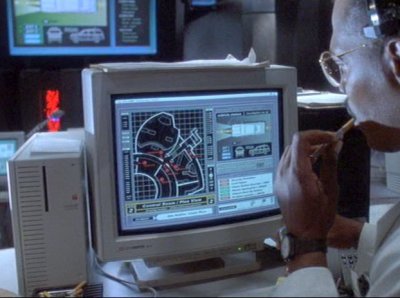
I remember the introduction of computers (PCs) into the office environment. It was supposed to make everything easier, make everyone more efficient. All it seemed to do was tie everyone to the desk and result in redundancies as the professionals, took over the administrative tasks. After all, why have a typing pool when everyone can type their own reports and letters (letters were replaced by endless, meaningless far from efficient, emails). Efficient, well not really when you consider how much money a professional person is being paid to spend a significant part of their time doing administrative tasks. Effective, no, I’m not spending the time I should be on the role I was employed to do. Economic, well on paper, fewer wages and a balance sheet provided by external consultants that show savings. New technology, different era, different organisations but the same experiences are repeated everywhere. In my old job, they set up a bureaucracy task force to solve the problem of too much time spent on administrative tasks, but rather than look at technology, the task force suggested more technology. Technology to solve a technologically induced problem, bonkers.
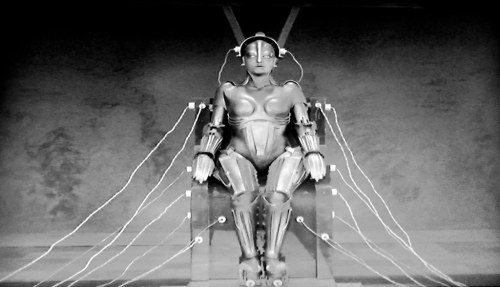
But most concerning is not how technology fails us quite often, nor how it is less efficient than it was promised to be, but how it is shaping our ability to recall things, to do the mundane but important things and how it stunts our ability to learn, how it impacts on us being human. We should be concerned that technology provides the answers to many questions, not always the right answers mind you, but in doing so it takes away our ability to enquire, critique and reason as we simply take the easy route to a ready-made solution. I can ask AI to provide me with a story, and it will make one up for me, but where is the human element? Where is my imagination, where do I draw on my experiences and my emotions? In fact, why do I exist? I wonder whether in human endeavour, as we allow technology to encroach into our lives more and more, we are not actually progressing at all as humans, but rather going backwards both emotionally and intellectually. Won’t be long now before some android somewhere asks the question, why do humans exist?
Share this:


How to make a more efficient academic
Against a backdrop of successive governments’ ideology of austerity, the increasing availability of generative Artificial Intelligence [AI] has made ‘efficiency’ the top of institutional to-do-lists’. But what does efficiency and its synonym, inefficiency look like? Who decides what is efficient and inefficient? As always a dictionary is a good place to start, and google promptly advises me on the definition, along with some examples of usage.

The definition is relatively straightforward, but note it states ‘minimum wasted effort of expense’, not no waste at all. Nonetheless the dictionary does not tell us how efficiency should be measured or who should do that measuring. Neither does it tell us what full efficiency might look like, given the dictionary’s acknowledgement that there will still be time or resources wasted. Let’s explore further….
When I was a child, feeling bored, my lovely nan used to remind me of the story of James Watt and the boiling kettle and that of Robert the Bruce and the spider. The first to remind me that being bored is just a state of mind, use the time to look around and pay attention. I wouldn’t be able to design the steam engine (that invention predated me by some centuries!) but who knows what I might learn or think about. After all many millions of kettles had boiled and he was the only one (supposedly) to use that knowledge to improve the Newcomen engine. The second apocryphal tale retold by my nan, was to stress the importance of perseverance as essential for achievement. This, accompanied by the well-worn proverb, that like Bruce’s spider, if at first you don’t succeed, try, try again. But what does this nostalgic detour have to do with efficiency? I will argue, plenty!
Whilst it may be possible to make many tasks more efficient, just imagine what life would be like without the washing machine, the car, the aeroplane, these things are dependent on many factors. For instance, without the ready availability of washing powder, petrol/electricity, airports etc, none of these inventions would survive. And don’t forget the role of people who manufacture, service and maintain these machines which have made our lives much more efficient. Nevertheless, humans have a great capacity for forgetting the impact of these efficiencies, can you imagine how much labour is involved in hand-washing for a family, in walking or horse-riding to the next village or town, or how limited our views would be without access (for some) to the world. We also forget that somebody was responsible for these inventions, beyond providing us with an answer to a quiz question. But someone, or groups of people, had the capacity to first observe a problem, before moving onto solving that problem. This is not just about scientists and engineers, predominantly male, so why would they care about women’s labour at the washtub and mangle?
This raises some interesting questions around the 20th century growth and availability of household appliances, for example, washing machines, tumble driers, hoovers, electric irons and ovens, pressure cookers and crock pots, the list goes on and on. There is no doubt, with these appliances, that women’s labour has been markedly reduced, both temporally and physically and has increased efficiency in the home. But for whose benefit? Has this provided women with more leisure time or is it so that their labour can be harnessed elsewhere? Research would suggest that women are busier than ever, trying to balance paid work, with childcare, with housekeeping etc. So we can we really say that women are more efficient in the 21st century than in previous centuries, it seems not. All that has really happened is that the work they do has changed and in many ways, is less visible.
So what about the growth in technology, not least, generative AI? Am I to believe, as I was told by Tomorrow’s World when growing up, that computers would improve human lives immensely heralding the advent of the ‘leisure age’? Does the increase in generative AI such as ChatGPT, mark a point where most work is made efficient? Unfortunately, I’ve yet to see any sign of the ‘leisure age’, suggesting that technology (including AI) may add different work, rather than create space for humans to focus on something more important.
I have academic colleagues across the world, who think AI is the answer to improving their personal, as well as institutional, efficiency. “Just imagine”, they cry, “you can get it to write your emails, mark student assessment, undertake the boring parts of research that you don’t like doing etc etc”. My question to them is, “what’s the point of you or me or academia?”.
If academic life is easily reducible to a series of tasks which a machine can do, then universities and academics have been living and selling a lie. If education is simply feeding words into a machine and copying that output into essays, articles and books, we don’t need academics, probably another machine will do the trick. If we’re happy for AI to read that output to video, who needs classrooms and who needs lecturers? This efficiency could also be harnessed by students (something my colleagues are not so keen on) to write their assessments, which AI could then mark very swiftly.
All of the above sounds extremely efficient, learning/teaching can be done within seconds. Nobody need read or write anything ever again, after all what is the point of knowledge when you’ve got AI everywhere you look…Of course, that relies on a particularly narrow understanding which reduces knowledge to meaning that which is already known….It also presupposes that everyone will have access to technology at all times in all places, which we know is fundamentally untrue.
So, whatever will we do with all this free time? Will we simply sit back, relax and let technology do all the work? If so, how will humans earn money to pay the cost of simply existing, food/housing/sanitation etc? Will unemployment become a desirable state of being, rather than the subject of long-standing opprobrium? If leisure becomes the default, will this provide greater space for learning, creating, developing, discovering etc. or will technology, fueled by capitalism, condemn us all to mindless consumerism for eternity?

 Thoughts from the criminology team