
Home » Posts tagged 'Capitalism'
Tag Archives: Capitalism

St Valentines Day! Love and other emotions

This blog today is all about love…. or maybe not! As criminologists, we tend to see things slightly different, and our perspective is influenced by functions other than undying declarations of love.
Saint Valentine is associated with love and people celebrate the day with their special romantic person, or by pursuing any person of interest, with romantic cards. Greeting cards, bottles of wine, boxes of chocolates, bunches of flowers, heart shaped jewellery, lovely sonnets, sexy underwear, kinky gifts and over the top romantic gestures! All of the above are anticipated actions on this day. Any of these will act as a demonstration of love. In some ways the more enormous the gesture the greater the demonstration of love and intimacy to the intended special person. Many times, we hear those in a relationship rut complaining that “they don’t even buy me chocolates anymore” a sign that love has fizzled out.
Love is a powerful emotion, and I dare not to challenge it. Artists have created their best work on love! Religion has created its strongest appeal on love. People, the world over, have based their entire lives of how they feel about a person they choose to be their partner and share their lives with. So clearly love is important! Enough for an Austrian psychotherapist to create an entire theory on love and sex. We feel ready to go to war for love and we are completely convinced that love is the force that keeps us going. Love is strong and we feel it every day.
Therefore, it is slightly surprising that the patron saint of romantic love is a rather fictional character! The saint is meant to be a priest who lived in the 3rd century AD and martyred by tortured for his faith. There was no romance involved and there were no love poems written of the time. In fact, the Roman Catholic church did not recognise or mentioned this martyrdom at the time. The first accounts on St Valentine appear in the 6th and later the 9th centuries, some centuries later. Since then, the story of the saint is embellished further, until the 19th century when it becomes connected with romantic love in some tenuous way. For example, the more recent narratives claim that before his execution he would convert and cure the daughter of his jailer. He was also officiating wedding ceremonies between Christians which may have given him the romantic connection. In the 19th century we have the first mass production of love tokens dedicated to the day and in the 20th, century especially post 1960s the celebration was growing in popularity and appeal. Currently the day is a celebration that has a significant capitalist value. It is usually a commercial success midway between Christmas and Easter.
Some religious historians noted that in the Roman calendar in February there have been rituals and celebrations on fertility and cleanliness (physical, spiritual). It was the time presumably when young Romans prepared for sexual relations. Therefore, an amalgamation of the old practices and the then new religion overlap with an obscure Saint to act as the glue to connect them and reaffirm the importance of love. Ironically the Roman citizens of the time, in particular the patricians, would not recognise such acts! They married out of interest, connecting the wealth and power of different factions. In those cycles love was more of a chimera rather than a reality.
Romantic love with knights, towers, dragons and gestures of devotion will appear as fanciful tales. Who hasn’t heard of Odysseus and his beloved wife Penelope who remained faithful to him for 20 years! Her fidelity was not reciprocated, and Odysseus had multiple affairs and fathered several children across the Mediterranean. Not quite the romantic story people would like to believe. Romantic love was always a tale, with vivid twists and turns. Love appears almost pure, undiluted that lifts those in its path. Shakespeare wrote fantastic sonnets on love. Some of the best things ever written in English. Still his contemporaries did not recognise this love. The majority of people at the time died young, malnourished and exhausted. Those who barely survive cannot afford to embrace love. As for those in power their relationship with love can be summed up in the old mnemonic rhyme “divorced, beheaded, died; divorced, beheaded, survived”!
We presume that romantic love is a representation of two people having feelings for one other. That is a nice sentiment but historically weak. Love for women does not exist. Not because women are devoid of emotions; quite the contrary! Because women have been used in social transactions between men who barter and use them as part of their household. A feminist today can recognise, despite all assurances for equality, how unequal life is. Especially in the household! If anyone wants to see why love is not equal only see how domestic and intimate violence is spread between gender lines. Because St Valentine brings flowers and chocolates, but it also brings beatings and abuse. Across the year it is during holidays and significant dates, including St Valentines that violence against women surges. One can unfortunately deduce that love is not for women. Oh…. The irony as romantic novels and movies are presented mostly for women as “chick flicks”!
Earlier in this post, it was said that the bigger the romantic move the better! Who will do this big romantic gesture? A man with chivalrous intent. Our household data reveal that men will spend more than double on what women will spend on the day, making their romantic intent more obvious. Perhaps men are more romantic and feel the need to satisfy that internal need. Or maybe there are other emotions at play. Love is very powerful, but so is possessiveness. In a history of transactions men used women for trading, so their gestures may be a latent act of dominance, a fresh reminder of possession. Instead of giving them chocolates, you may as well urinate all over them. That way your beloved will have your scent and keep other suitors away. So, this is not love but control, jealousy and dominance. Every drop of wine, every piece of chocolate, every flower petal, is yet another link in the chain of ownership. In case this gets misunderstood, the individual who buys flowers isn’t a villain, but the history of this kind of love is pointing in this direction. Your partner may have the best intentions and the greatest love and regard for you, but our society has never really acknowledged the transactional relationship between men and women. It is similar to those who speak of the evils of slavery, but with no recognition of reparations. This love is not pure and clean. It is the darkest form of patriarchy that controls people making them to believe in an adult fairytale once the other story of Santa Claus is not believed any more.
Romantic actions target all incomes and all ages, but of course there is a drive to get younger people, new generations of customers, on the love spending machine. At this stage I shall write…what not to do when you are planning a romantic day! Do not go overboard. Love is something felt in the heart not in the pocket. Heart-shaped products do not say “I love you” more than square or round ones! Red is no more appealing than any other colour and of course if emotions are high, they tend to last more than a day! Ideally do not spend any money! In the unfortunate event that you do, do not cook your romantic meal with a sharp knife. You may pierce the palm of your hand and end up with stitches. Do not spread chocolate on a partner before establishing if they are allergic to any of the ingredients, you may end up in A&E. Do not offer them wine, if they have an intolerance to alcohol, they may vomit all over your pristine bedspread. Do not write something funny or profound if they are thick and unable to comprehend deeper meanings (in that case what are you doing with them???). Love is not an idea, a moment, a day, an instant. It is a lifetime however long or short it is. You will live in love and you will die in love. Even when you are by yourself love is in you and it cannot be defined by the actions of people around you. Finally, love is selfless so do not try to control them, “love is a rebellious bird that nobody can tame”!

Share this:


Is it a wonderful life?
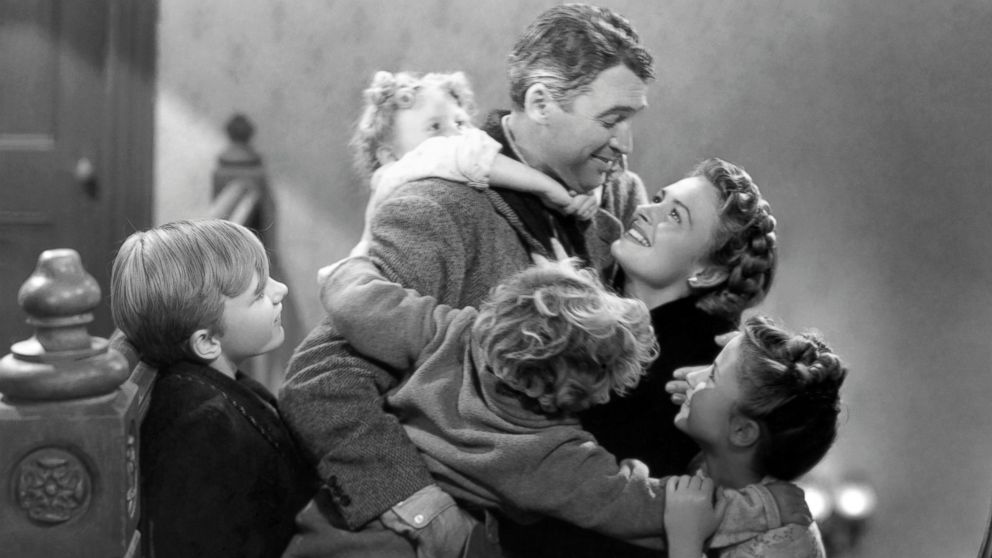
George Bailey (James Stewart) spent his life giving to The People of Bedford Falls. Overwhelmed by his family business, community responsibilities and life expectations, he feels rooted to a company he had no interest in working for, living a life he never wanted to begin with. As George morphs into a middle-aged man, he sees his life passing him by. Told from the perspective of some angels, he’s met by his guardian angel Clarence (Henry Travers), who shows George what Bedford Falls would be like if he had never been born.
Most people I know who watch this film every year love it for its warmth, and Victorian themes, what today we’d now call family values. Something that fits Christmas so well. However, my affinity to it is for it’s social commentary. For a Christmas film, it’s quite depressing – which is a contrary opinion to the many that have it as part of their annual traditions.
Released in 1946, Frank Capra’s Christmas cracker dropped right as America left one of the most difficult fifteen years (and a bit) of its history, from the Great Depression in 1929 up to the end of the Second World War in 1945. George Bailey is part of “The Greatest Generation,” the millions that came of age during the Wall Street Crash which ushered in the Depression of the 1930s. The undertones of this film, to me, are in that ruthless Wall Street capitalism via characters like Mr Potter (Lionel Barrymore).
Yet, the character of Mr Potter is a reminder for many people of what happened in 1929. Between The Crash and the end of The Second World War sat FDR’s New Deal. Within this time, we had The Banking Act of 1933, which is relevant to the characters of Frank Capra’s film, and the bank run. Whilst Capra’s film was released in 1946, Potter is a reminder of how it used to be before Roosevelt and the Democrats ushered through the New Deal.

(It’s a Wonderful Life, RKO Radio Pictures)
Once, communism could have been called anti-greed, anti-corporations, anti-fat-businessmen-with-a-cigar-in-their-mouth-getting-rich off-poor-people-in-slums. It’s a Wonderful Life is a voice for the working classes. It’s the I, Daniel Blake of its time, a stark indictment of a system that eats people below the poverty line for dinner. It comments on class and family values, but also austerity in America. In its time, FBI Director, J. Edgar Hoover donned it, (what was the buzz term of the post-war years), “anti-American.”
Watching this film, it’s hard not to draw comparisons with modern Britain, in its themes of class and austerity that laid the backbone for Jeremy Corbyn’s Labour Manifesto. This is a film that cares about people, the individual working people of America – where the American Dream is just that. A dream. Echoing the thoughts of Arthur Miller’s Death of a Salesman.
Slumlord Potter (Barrymore) describes the poor as “A thrifty working class,” which shows you the measure of the man.
In wake of the recent General Election, I will watch this film once more at Christmas for its straight-at-the-jugular representation of working-class communities. Britain has voted for five more years of austerity (oppression), more likely another decade under the Conservatives. It’s a Wonderful Life shows what happens when the powerful do not care about powerless. But isn’t that how they became powerful in the first place?
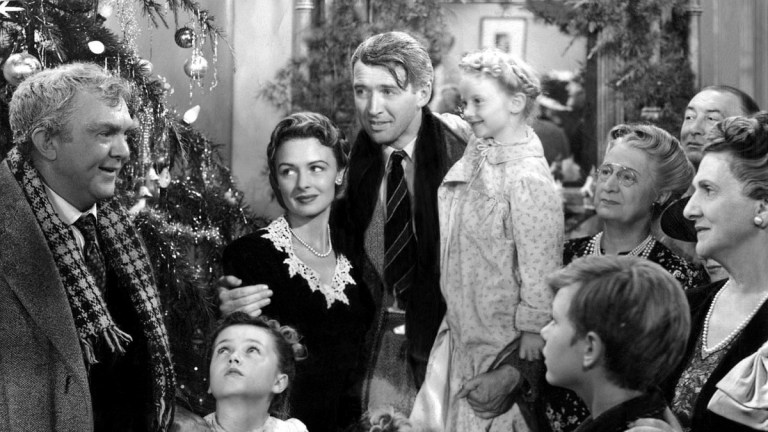
(It’s a Wonderful Life, RKO Radio Pictures)
For families around the world, watching this film is a yearly tradition. But as long as the powerful step on the powerless, this film’s legacy will endure. Institutional violence plods on. Bailey runs a business that helps poor people onto the property ladder. Played to perfection by James Stewart (Mr Smith Goes to Washington), this is a man who cares what happens to those around him. Potter is out for Bailey, wanting the company to close so he can swoop in, and coerce more residents into living in his slum-level housing.
Potter is a metaphor for power, the controlling state that denies people dignity in their own home. Call him Potter, or Boris, or Trump… every era has their tyrants who stop others from thriving, just because they can.
And as long as man is man, history is the last place he will look for his lessons, as history is written by the victors.

 Thoughts from the criminology team