
Home » Posts tagged 'blog'
Tag Archives: blog

Happy Birthday: The Blog in Pictures, Numbers and Words

Tuesday marked the 8th “official” birthday of our blog. I say official because although the site was created in November of 2016, the writing did not start in earnest until 3 March. Since that early foray into blogging, we’ve managed collectively to clock up quite a few vital statistics
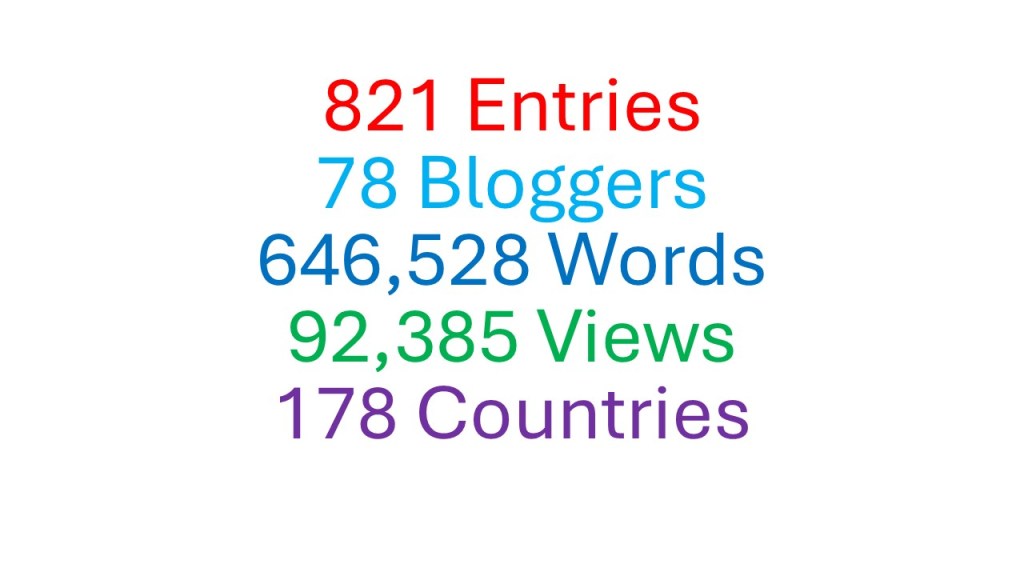
Our 78 bloggers are made of the Criminology Team (both past and present), students and graduates, as well as a number of honorary criminologists. Some have written only one entry, perhaps reflecting on their dissertation, while others have and continue to contribute on a regular or ad hoc basis. It has to be said that 9 of our top 20 most read entries come from students/graduates, another two come from non-criminologists. Certainly graduate and student entries are always very popular. Our most read, continues to be the front page which contains the latest entries, but many of our entries have shown remarkable longevity. For instance, then student, now graduate, Natalie’s (@criminologysocietyuon) thoughts around the “true crime” documentary Betty Broderick remains our most read individual entry, clocking up views ever since the day it was published. This demonstrates the enormous appetite for “true crime” that many people have. Likewise, Dr Stephen O’Brien’s (@anfieldbhoy) reflections on the 30th anniversary of the Hillsborough Disaster continues to be well-read, particularly around the anniversary on 15 April. In the words of the poet, Ella Wheeler Wilcox: ‘No question is ever settled, until it is settled right’ and there is certainly a long way to go to obtain justice for the 97.
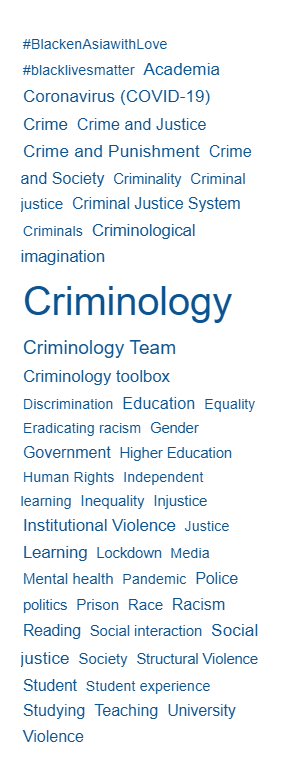
As can be seen from the word cloud, which appears on the front page of the blog and below, Criminology unsurprisingly occupies the attention of most of our bloggers and entries. However, it is also clear that social injustice, inequalities and various forms of violence appear regularly within our writing. There is also a strong focus on learning and teaching, as well as evidence of the lasting generational impact of the Covid-19 pandemic (our best year for readership to date).
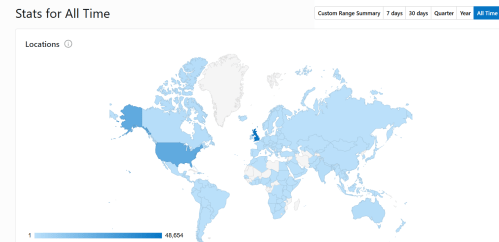
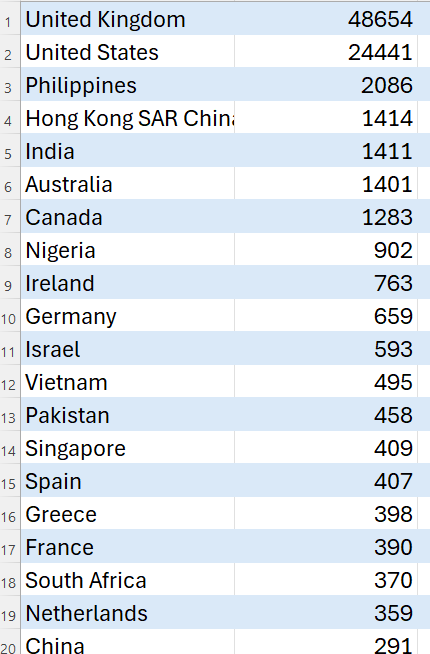
As you can see from the map the majority of our readers come from the UK and the USA, but we’ve also captured the criminological imagination of people from a diverse range of countries ranging from Albania to Zambia. Some of the countries can be explained through our bloggers’ diverse heritage, for instance, Greece, Nigeria, USA have obvious connections, others, we’ve no idea how our words have spread so far. Nevertheless, it is a very exciting to see the blog’s global reach.
As the saying goes, from small acorns to giant oaks, the germ of an idea has spread beyond any of our wildest dreams. The number of blog entries continues to grow on a weekly basis, it seems we never run out of criminological matters to write about. It has given all of us a space to ponder, to muse, to write through dark days and celebrations, and to continue to engage in Public Criminology. Similarly, the number of bloggers steadily rises, some are in their earliest foray into discovering Criminology, some have years of immersion in the discipline, but we are all learners. In the words of Nelson Mandela: ‘Education is the most powerful weapon which you can use to change the world’ so why would we ever want to stop learning?
When we started, we thought the blog would last for a year, maybe, either we’d run out of things to write about or we’d find other things to do with our time. Neither has happened and it seems there is still plenty of appetite from our bloggers and our readers. To both we raise a glass, without you, none of this would have been possible, so thank you! Now, let’s see how long we can keep this up!
Share this:


Why I refuse to join the hate train

In a world drowning in outrage, where every headline screams division and every scroll brings fresh fury, it’s easy to forget something fundamental: there’s still beauty everywhere.
Turn on the news and you’re bombarded with it all—bans, blame, and bitter arguments about who’s ruining what. Immigrants, the wealthy, the homeless, the young, the benefits claimants—everyone’s apparently the problem. It’s a relentless tide of negativity and moaning that can sweep you under if you’re not careful.
But what if we chose differently?
Here are a few things I noticed in the last couple of weeks:
I came across a book that someone left on a park bench with a note: “Free to a good home.” On another late night, a man saw a mother struggling—baby in one arm, shopping bags in the other—and didn’t hesitate to help her to her car. And if you’re thinking “why didn’t she use a trolley?” then you’re part of the problem I’m talking about, because there were no trolleys in that shop.
In another moment, a homeless person was offering water to a runner who’d collapsed in the heat, providing comfort when it mattered most.
Elsewhere, a teacher stayed late for his “troubled” student preparing for exams. When I asked why, he said: “Everyone calls him destructive. I refuse to lose hope. He’s just a slower learner, and I’ll support him as long as it takes.”
In another event, teenagers on bikes formed a protective barrier around an elderly woman crossing the road.
Small acts. Quiet kindness. The stuff that never makes headlines, doesn't trend on social media, and doesn't fuel debates.
The truth is, these things happen everywhere, all the time. While we’re busy arguing about who’s destroying society, society is quietly rebuilding itself through a million small kindnesses. The coffee lady in the Learning Hub who remembers your order. The elderly doorman at Milton Keyens Costco who draws smiley faces on reciepts and hands them to children on their way out, just to see them smile. The neighbour who randomly helps pick up litter in the neighbourhood with her girls every Sunday afternoon. The friend who texts to check in with the simple words “how are you?”
The truth is simple: for every voice spreading hate, there are countless others spreading hope. For every person tearing down, there are builders, healers, and helpers working in the quiet spaces between the noise.
Yes, problems exist. Yes, challenges are real. But so is the grandfather teaching his grandson about dignity and respect. So is the aunty teaching her niece how to bake. So is the library volunteer reading to the shelter dogs. So is the community garden where strangers become neighbours.
Today, I’m choosing to notice the nice. Not because I’m naive, but because I refuse to let the moaning and the loudest voices drown out the most important ones. The ones that remind us we’re more alike than different. The ones that choose connection over division.
Your turn: What nice thing will you notice today? Free your mind, pay attention—you'll see one.
Because in a sea of anger, being gentle isn’t weak or naive—it’s revolutionary.
Share this:


25th Year Reflection
I have been part of Criminology at UON as BA Criminology student, then Associate Lecturer then Lecturer in Criminology for about 13 years in total. My last reflection on my Criminology journey was in 2020 as I had just embarked on my new role as a Lecturer in Criminology. Every now and then I reflect on how lucky I am to be able to have a job role which has the potential to encourage a passion for learning, reading, writing, critical thinking as well as other life skills.
When reflecting on the 25th year Criminology anniversary I think mostly of the old Park Campus that I used to frequent and study at as a student. It had quite a nice feel to it and there was also enough surrounding nature for a famous badger to make this place part of its habitat! There were less books available online when I was an undergraduate compared to today so I have fond memories of going to the library often to have a browse and coming away with as many criminology related books that I could fit in my bag at once. Finding places where I could study for hours that were less frequented than the main library also gave me a bit of a buzz. There also used to be a Pavilion bar near to where the majority of exams would take place, one of my favorite past time memories is sipping on a beer in the Pavilion just after the end of my final third year Criminology exam season, (whilst secretly thinking of how I thought the exams went much better than expected).
When reflecting I am also reminded of how lecturers like Dr @manosdaskalou and Dr @paulaabowles can be incredibly inspirational and influential at guiding academic paths (such as my own!). The re-occurring ideas that ‘criminology is everywhere’ and that we should ‘question everything’ has boded well for helping me to make difficult decisions and in thinking about how I interacted with people when I was working within crime related industries.
In more recent years staff and students have moved to a new campus, have worked and studied through the challenges that come with Covid-19 and contextual uncertainties. This year has had some highlights for me, such as working on a new module Imagining Crime. Whereby we used inspiration from the novel 1984 by George Orwell to task students with committing weekly ‘thought crimes’ by seeing/hearing/reading about something criminological and questioning this by using critical thinking. Listening to the development of critical thinking via the ‘thought crime’ method has been a delight. The flexible, creative and multidisciplinary nature of criminology is also quite fabulous for maintaining interest in criminology over a long period of time but also for venturing into new and less explored areas. For instance, staff and students in Imagining Crime had the pleasure of attending a guest speaker session with @saffrongarside about children’s literature and the environment this academic year – at a time when Northampton itself seemed to be struggling to cope with flooding. Of course, this did highlight the importance of seeing environmental issues as criminological issues, but also the importance of considering children’s books as criminologically cultural artifacts, was something completely new and intriguing for me. I also gained a lot from hearing what our students (who are predominantly) young people think about environmental issues outside of the mainstream media angles that I have seen.
To round up, I loved my student life whilst studying BA Criminology and I am sure many others will say ‘ditto to that’. Long may the love for Criminology at UON continue!
Share this:


Realtopia?

I have recently been reading and re-reading about all things utopic, dystopic and “real[life]topic” for new module preparations; Imagining Crime. Dystopic societies are absolutely terrifying and whilst utopic ideas can envision perfect-like societies these utopic worlds can also become terrifying. These ‘imagined nowhere’ places can also reflect our lived realities, take Nazism for an example.
In CRI1009 Imagining Crime, students have already began to provide some insightful criticism of the modern social world. Questions which have been considered relate to the increasing use of the World Wide Web and new technologies. Whilst these may be promoted as being utopic, i.e., incredibly advanced and innovative, these utopic technological ideas also make me dystopic[ly] worry about the impact on human relations.
In the documentary America’s New Female Right there are examples of families who are also shown to be using technology to further a far right utopic agenda. An example includes a parent that is offended because their child’s two favourite teachers were (described as being) ‘homosexuals’, the parents response to this appeared to be taking the child out of school to home school the child instead, but also to give their child an iPad/tablet screen to use as a replacement for the teachers. Another example consisted of a teen using social media to spread far right propaganda and organise a transphobic rally. In the UK quite recently the far right riots were organised and encouraged via online platforms.
I would not advise watching the documentary, aside from being terrifying, the report and their team did very little to challenge these ideas. I did get the sense that the documentary was made to satisfy voyeuristic tendencies, and as well as this, it seems to add to the mythical idea that far right ideology and actions only exists within self identified far right extremist groups when this is not the case.
Mills (1959) suggests that people feel troubled if the society in which they live in has wide scale social problems. So might the unquestioning and increased use of technologies add to troubles due to the spreading of hate and division? And might this have an impact on our ability to speak to and challenge each other? Or to learn about lives different to our own? This reminds me of Benjamin Zephaniah’s children’s book titled People Need People (2022), maybe technologies and use of the internet are both connecting yet removing us from people in some way.
References
Mills, C. W. (2000) The Sociological Imagination. Fortieth anniversary edition. Oxford: Oxford University Press.
Zephaniah, B. (2022) People Need People. (London: Orchard Books)

 Thoughts from the criminology team